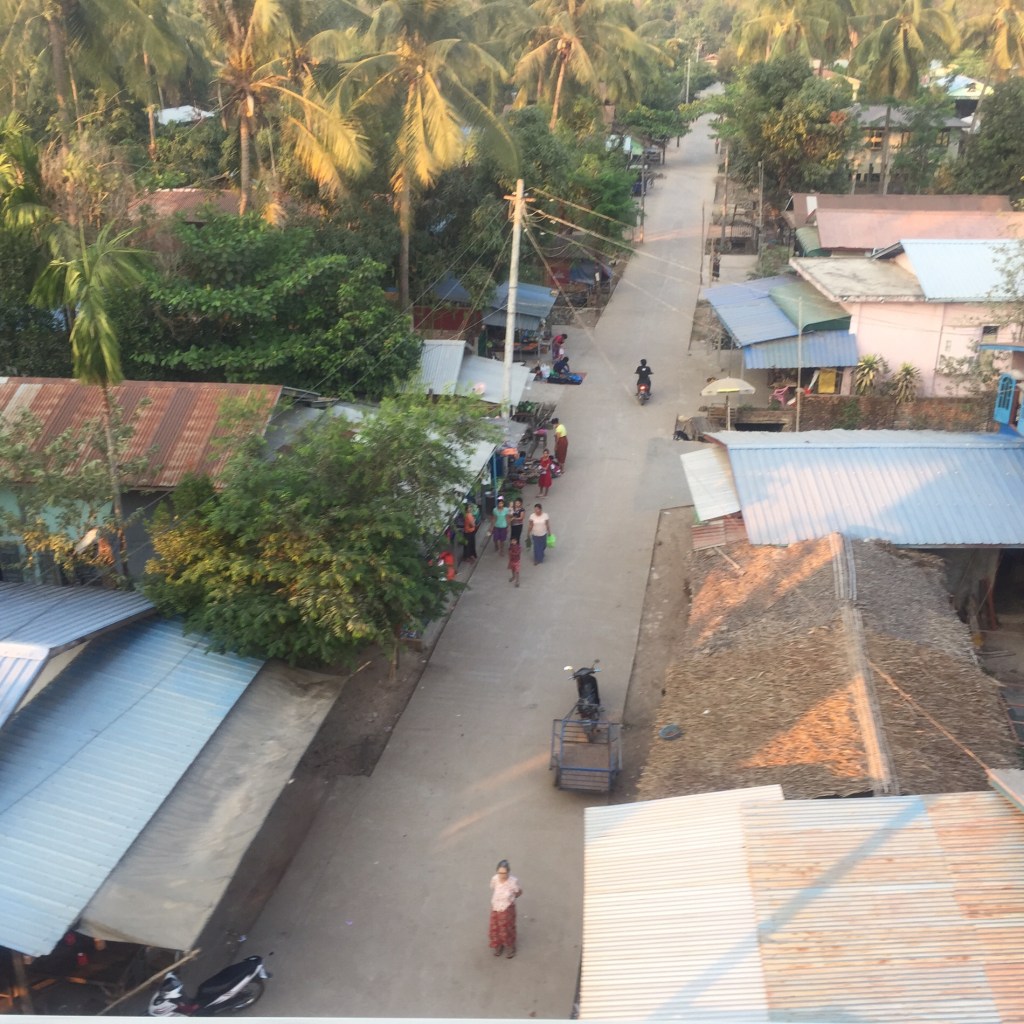
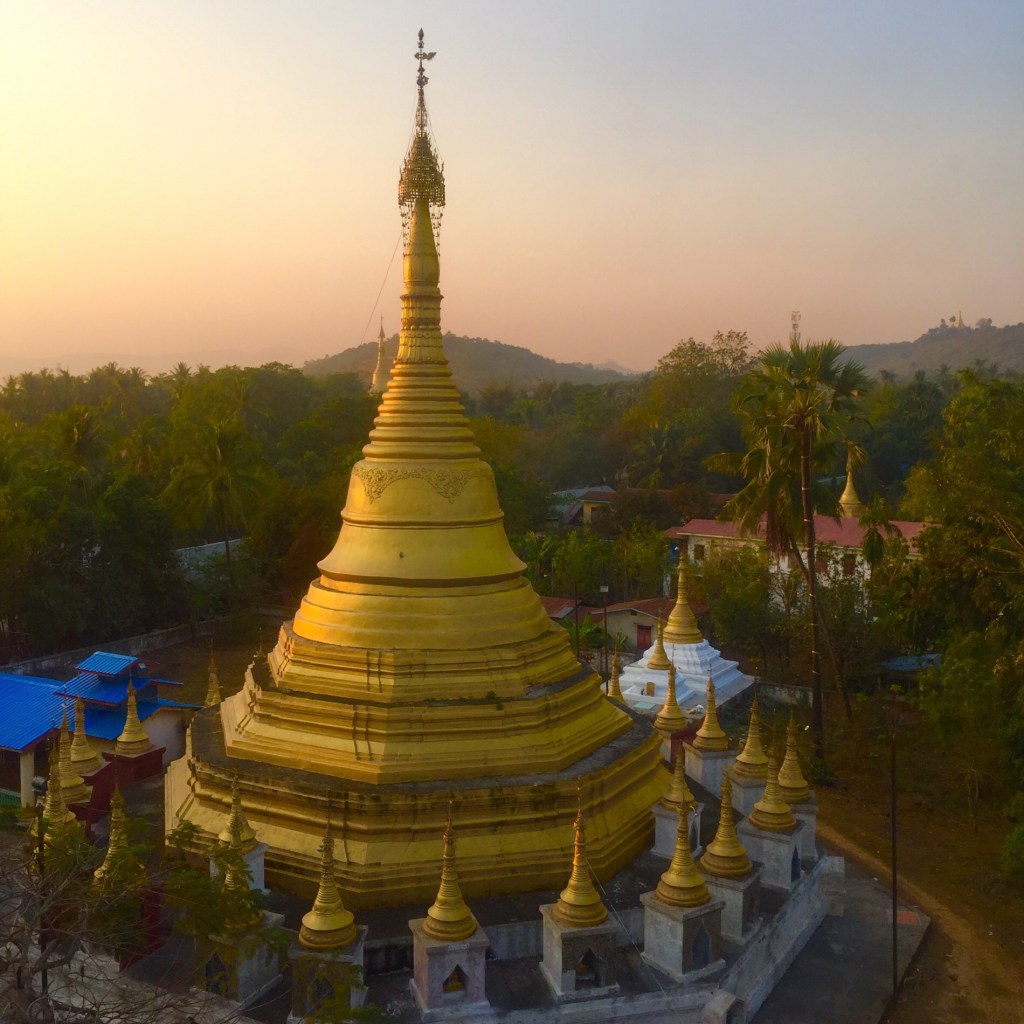
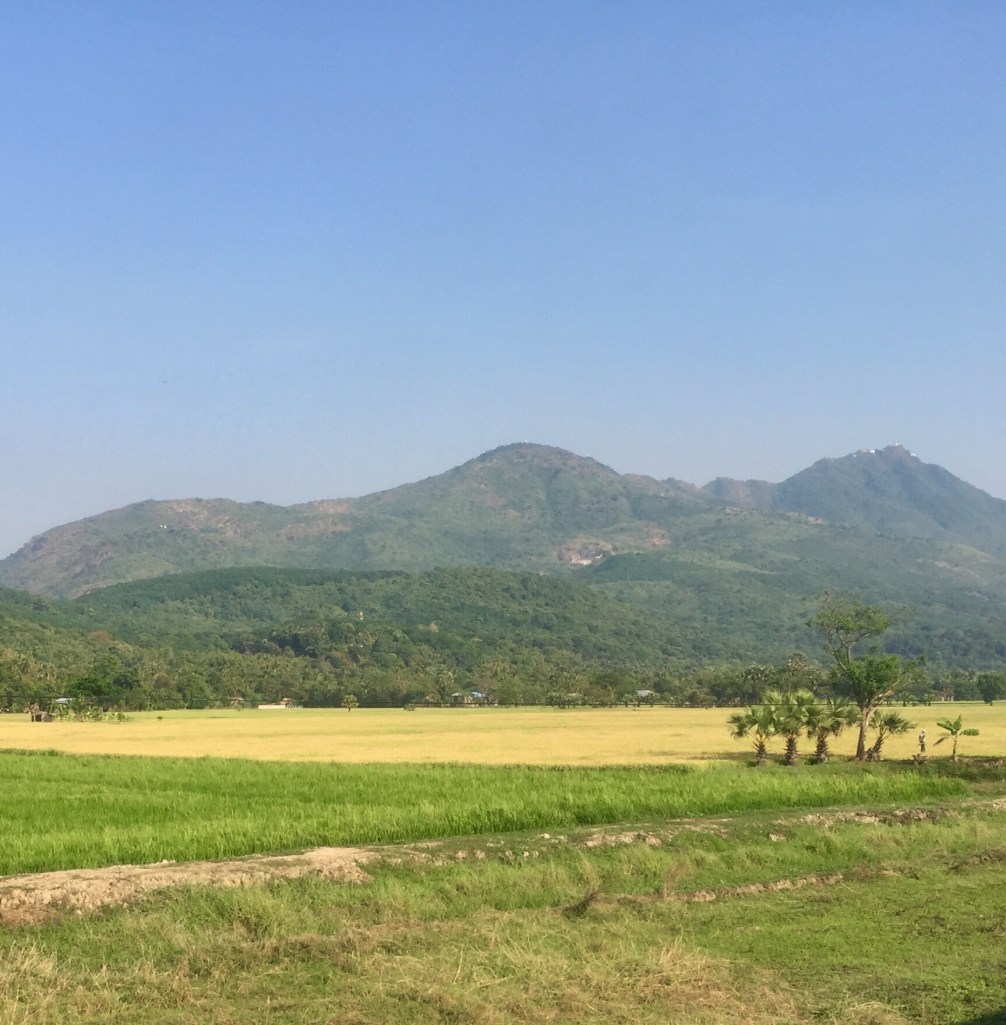
Buddhas and temples galore in Myanmar.

Around the end of march 2018, we left Inle Lake by night bus to Mandalay. It was a bouncy ride and I did not get a lot of sleep so I was happy when we could check-in early and go to bed for a couple more hours of sleep. The reason for our stop in Mandalay was a visit to the U Bein bridge in closeby Amarapura, We rented a motorcycle from the hotel and were soon on our way to Amarapura.
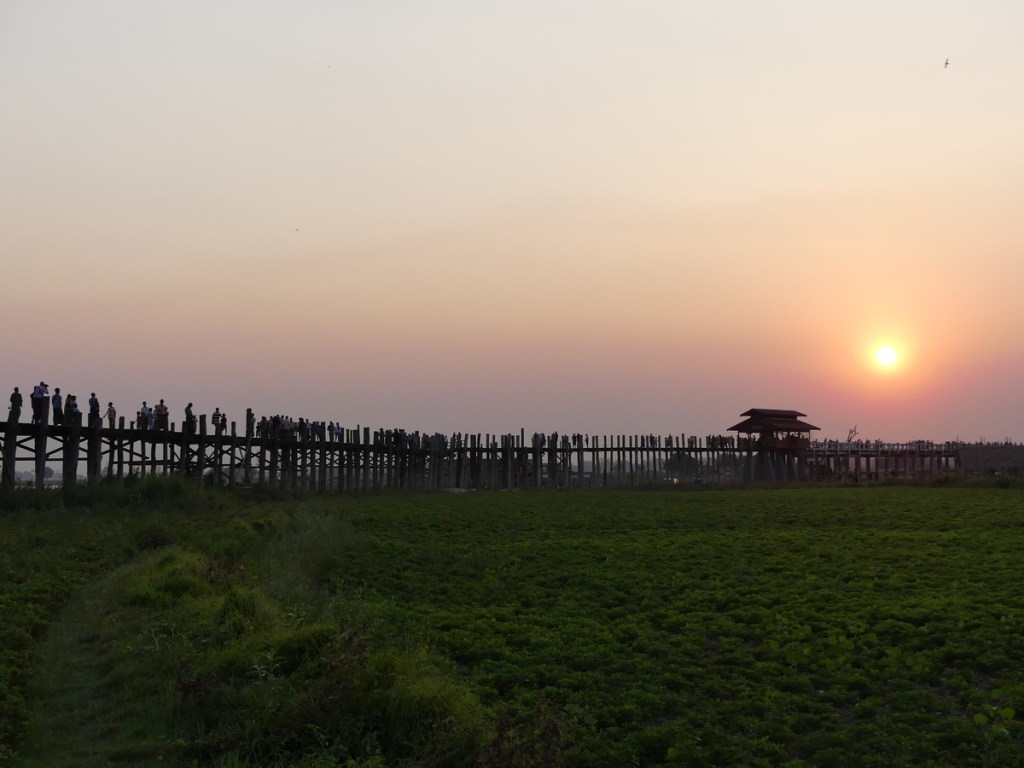

The U Bein bridge is with its 120m long, the longest teak footbridge in the world.
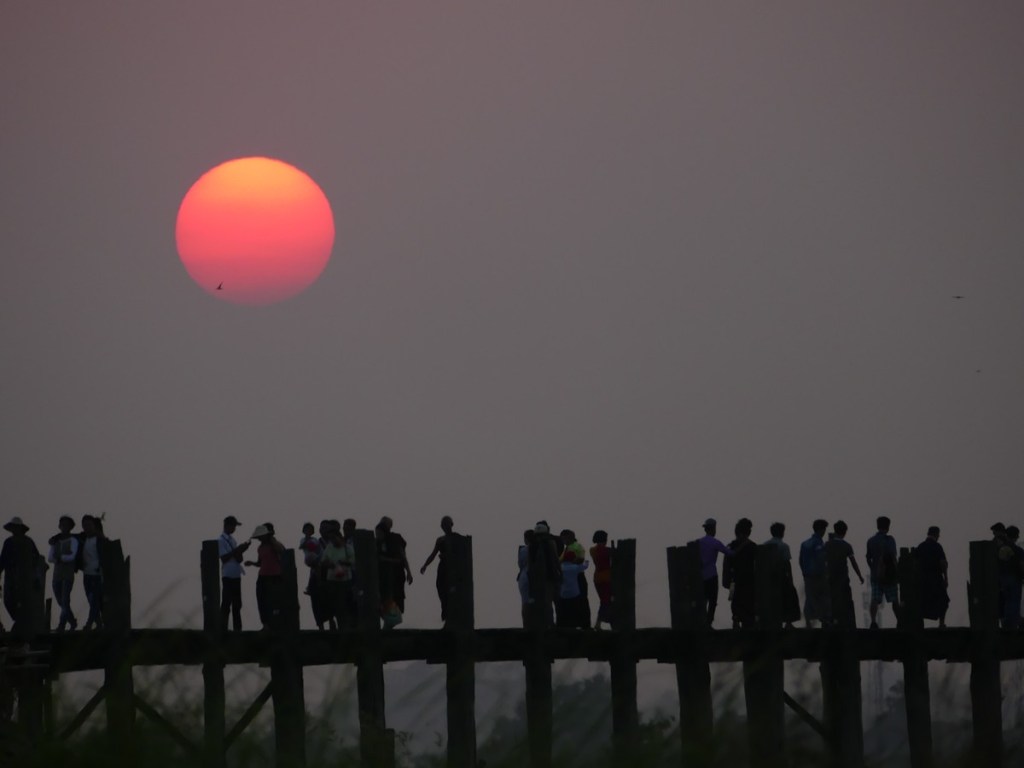
It was the mayor of Amarapura, U Bein, who decided to create the bridge using the teak supports from the abandoned palace in 1859. There are just over a 1000 pillars along the bridge.

While in Mandalay we decided to visit the Kuthodaw pagoda and the monastery of Shwe In Bin Kyaung.
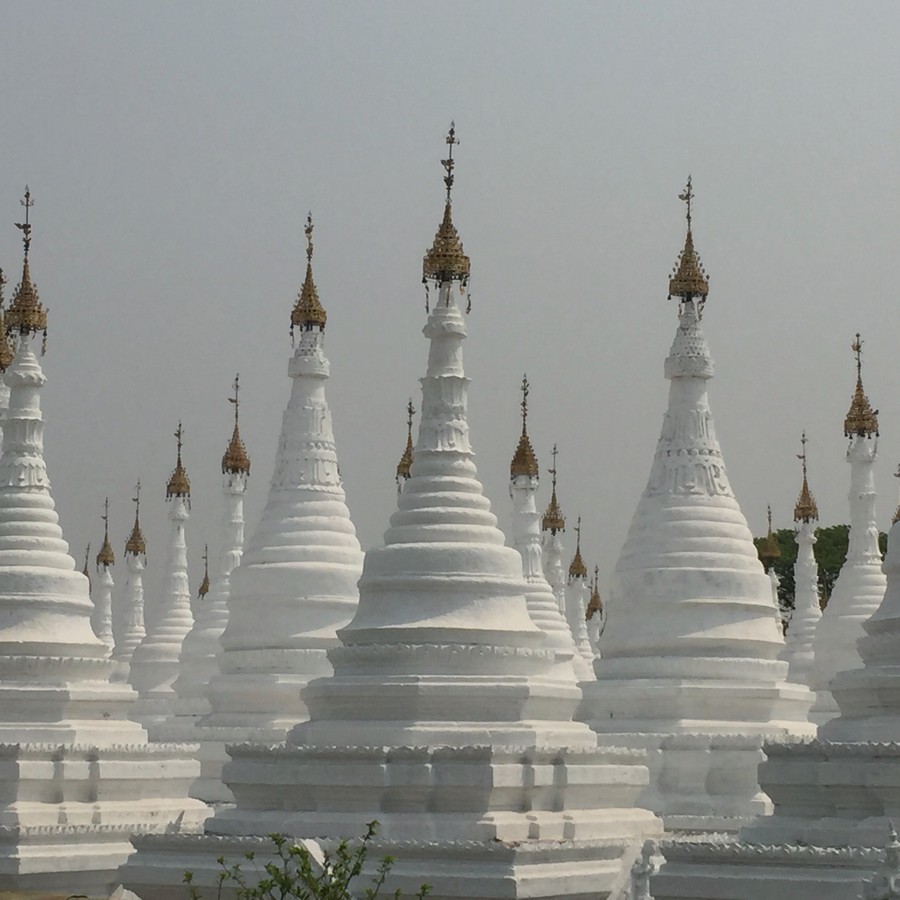

The “word’s biggest book”, 729 small stupas. Each of them protects a marble slab with writings of the 15 books of the Tripitaka.
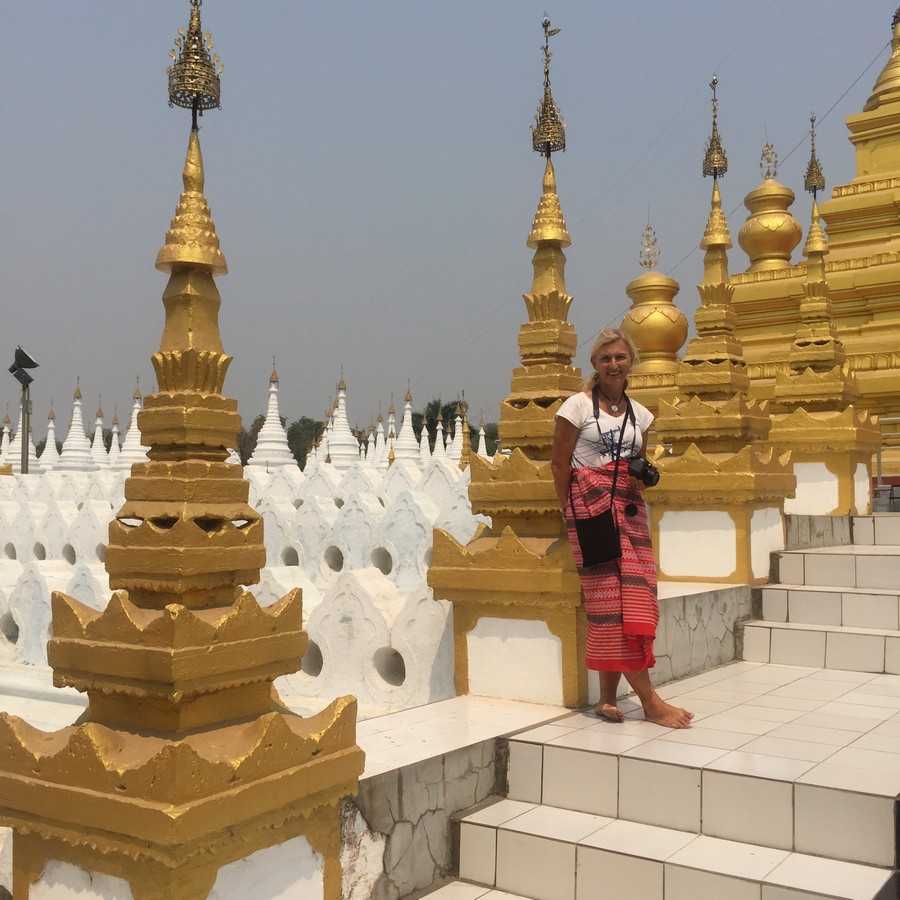
King Mindon commissioned the work in 1857 and it took more than a decade to complete and check for errors!

In the late afternoon we took a local van to Monywa, packed with at least 12 other people, AC not always working. We arrived 4 hours later.
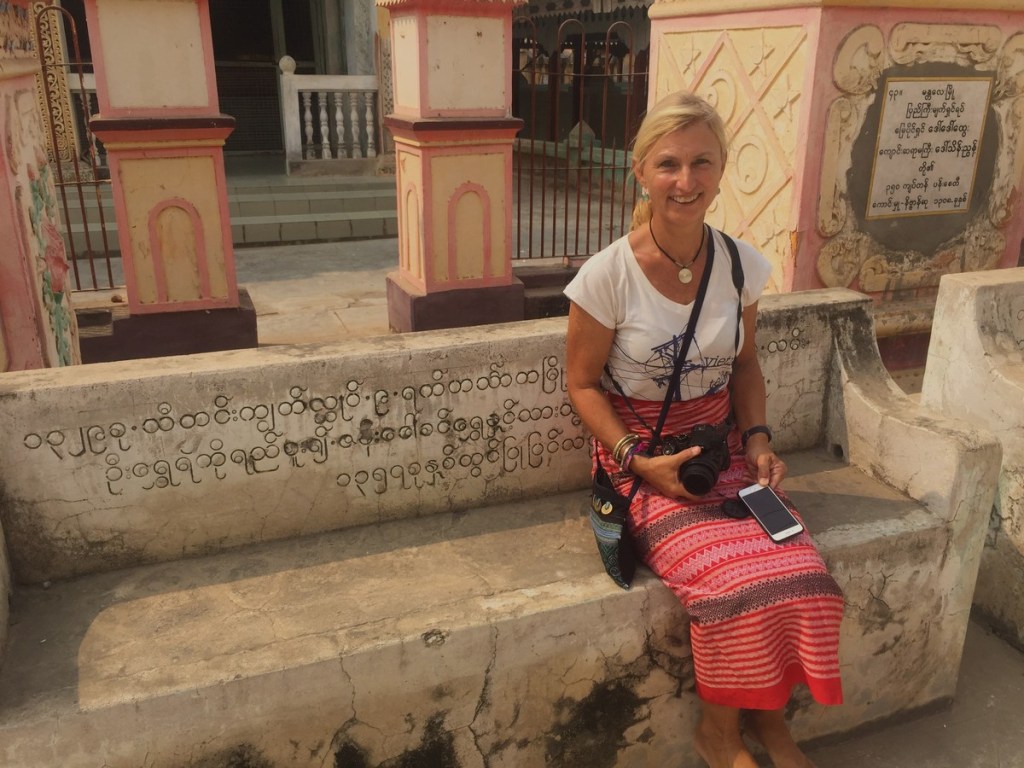

Thanboddhay Pagoda, feels like visiting a theme park. Lots of shrines and stupas in vivid colors.
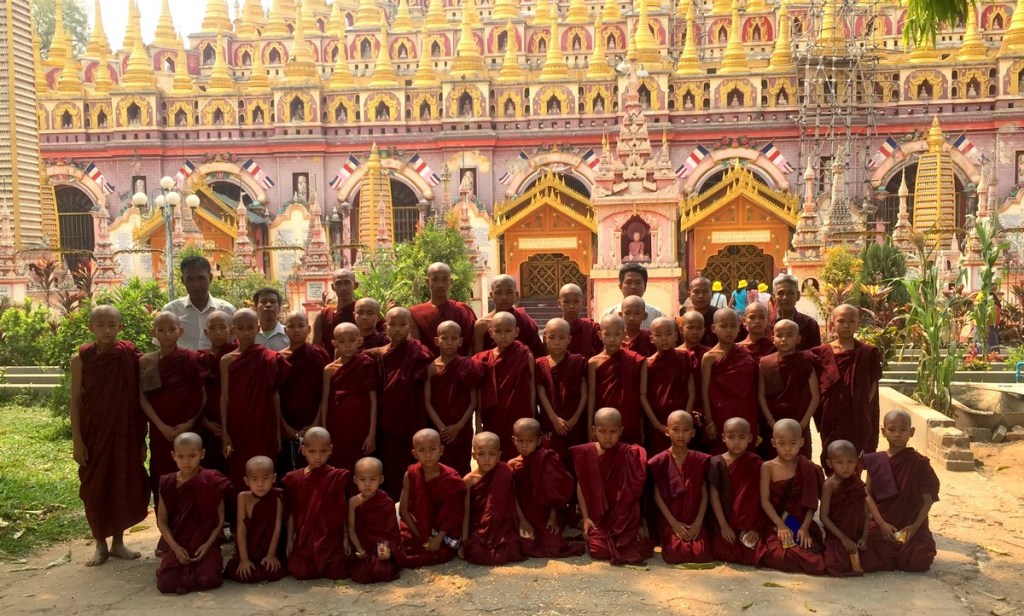
A group of young buddha monks were also visiting.
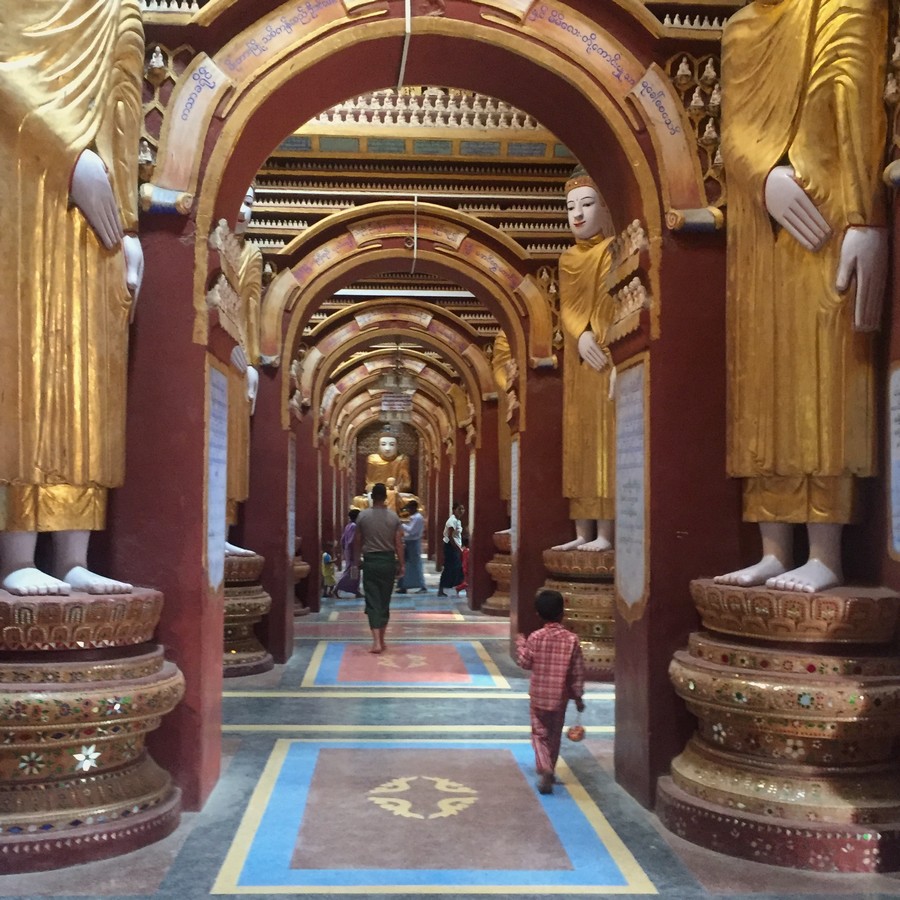
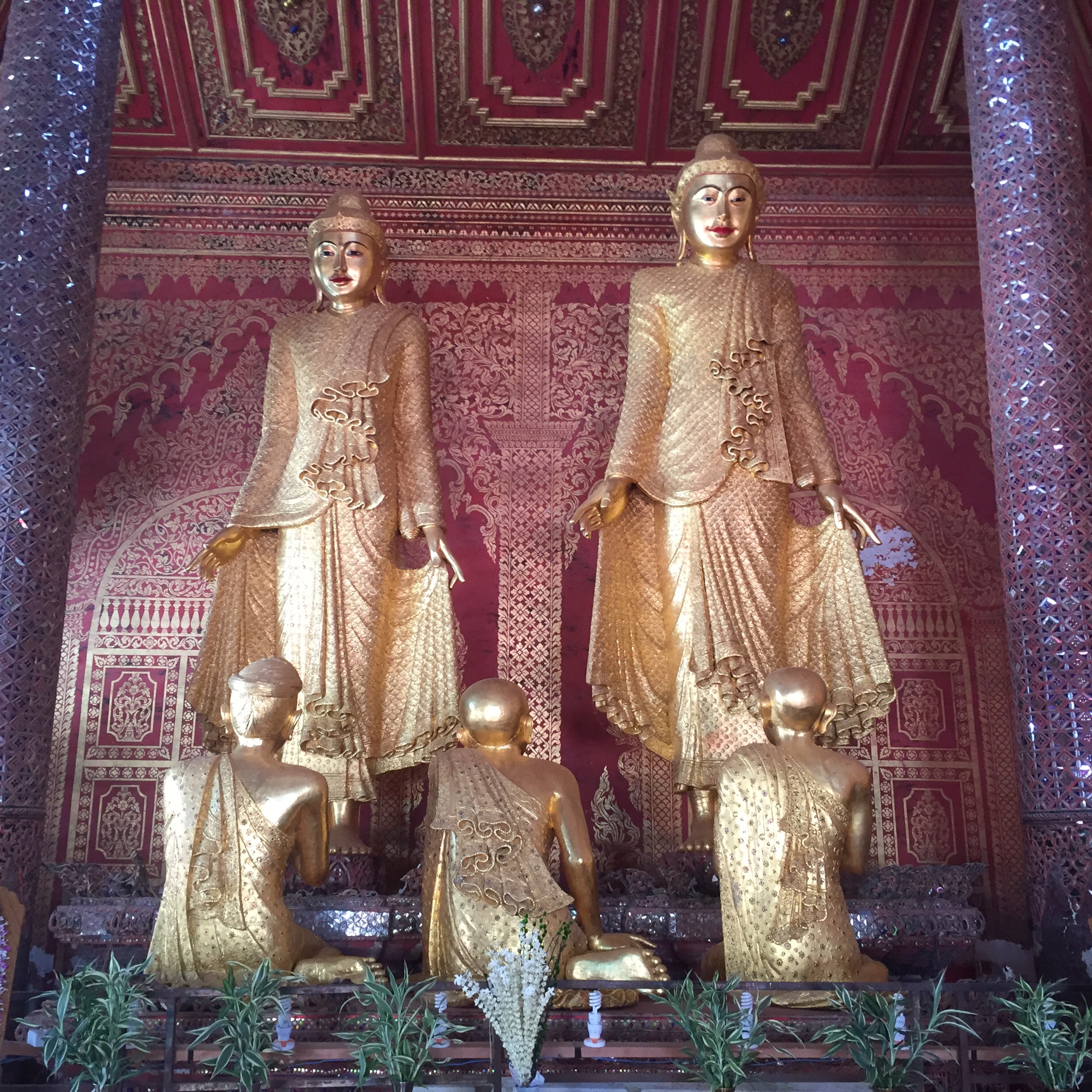
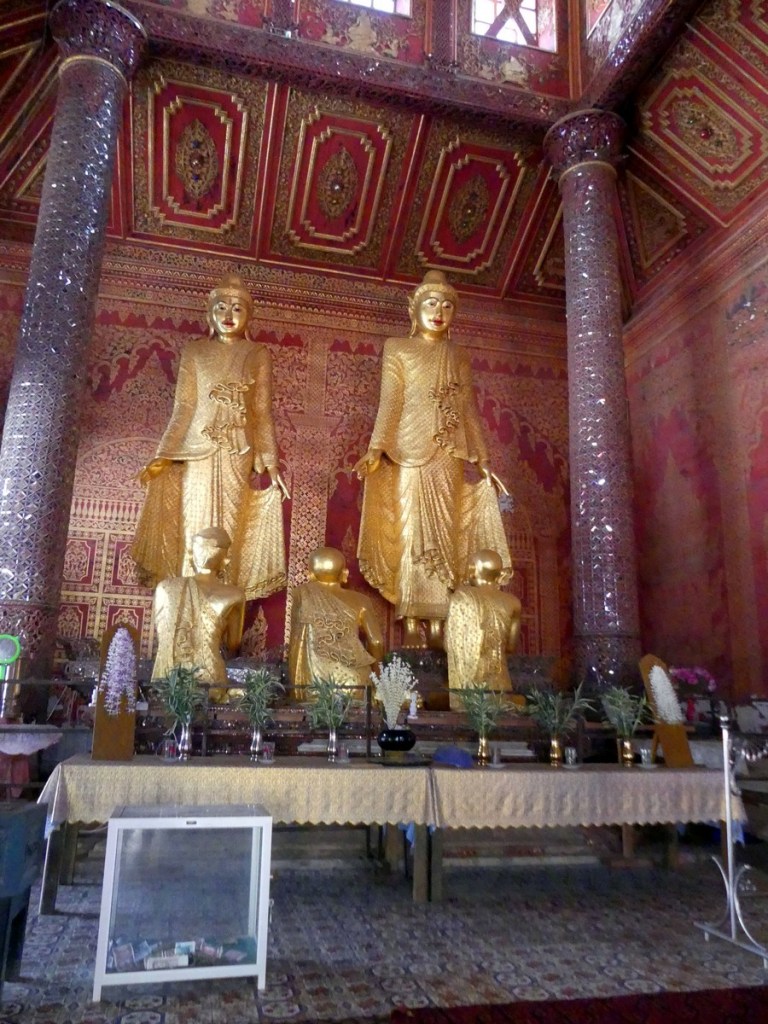
Inside: Buddhas in every corner.
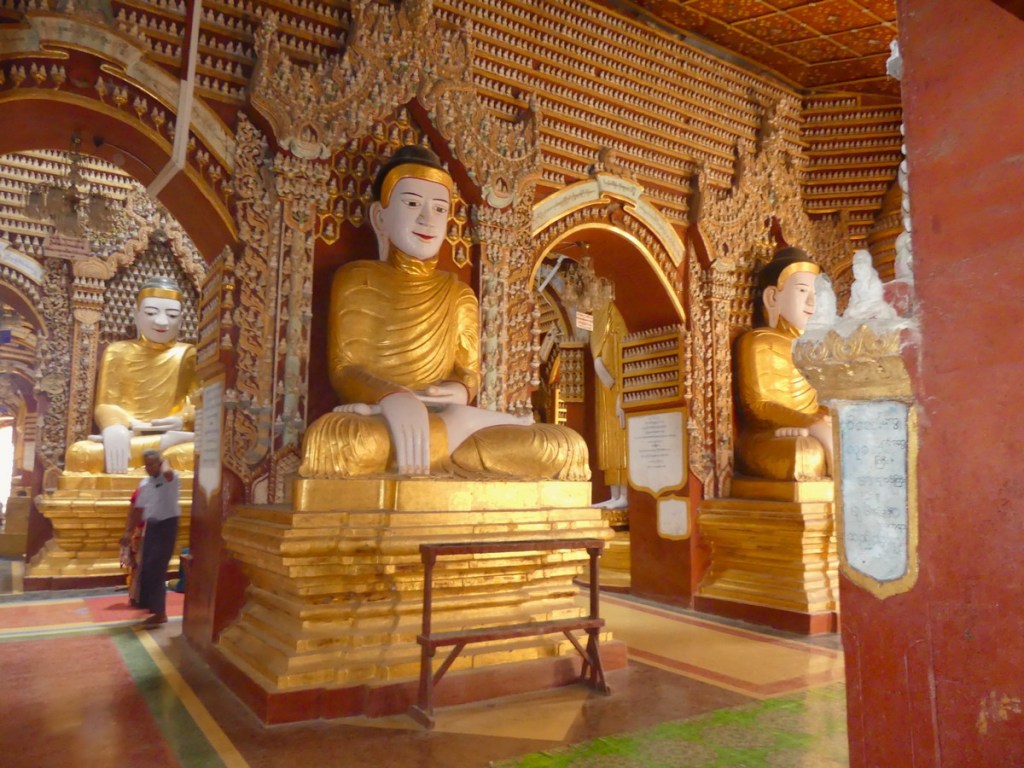
The walls are covered with more than 500.000 tiny Buddha statues.

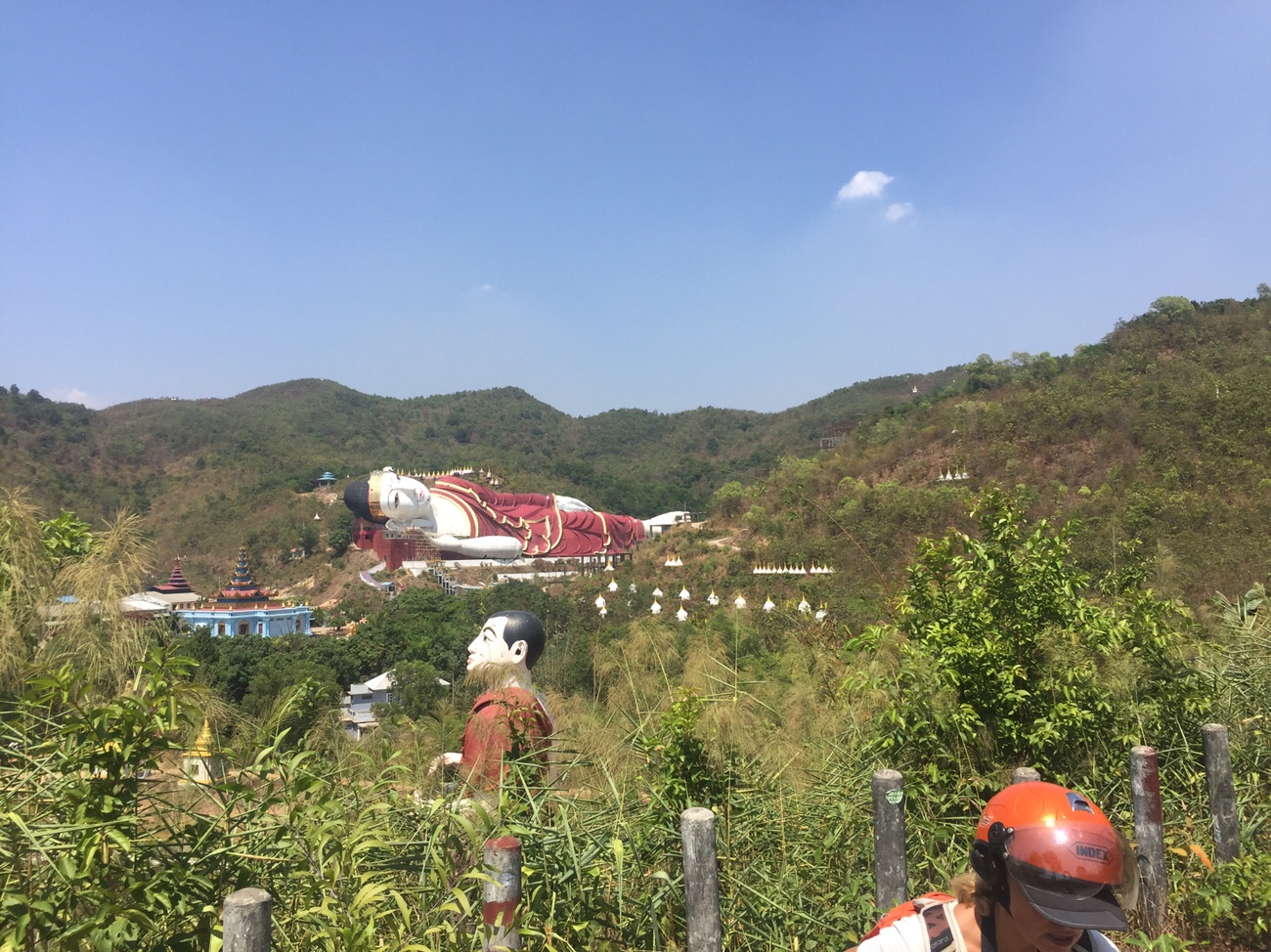
Our next mopedstop is the site Maha Bodhi Tataung built in 1960 and dominated by two of the world’s biggest Buddha statues.
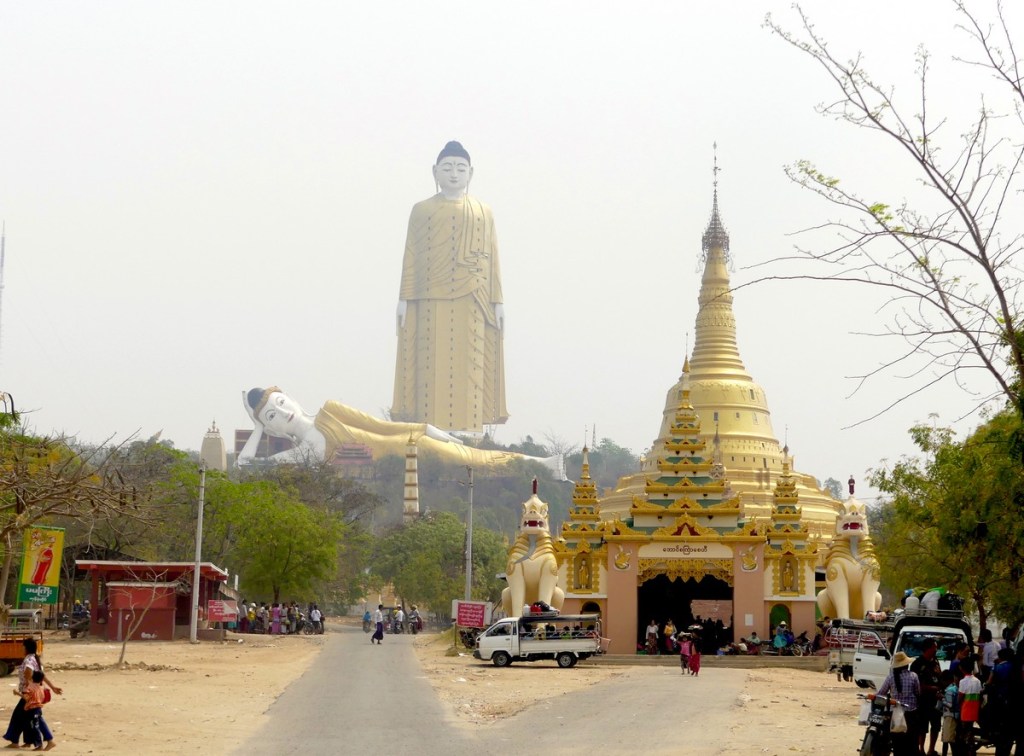

Arriving near the complex on our motorcycle was really impressive.

The standing Buddha was built between 1996 and 2008. It is the world’s second tallest statue, rising 116m high. The tallest one is in China. The statue is actually hollow with a 25 story building concealed inside, each floor decorated with vivid murals of Buddha’s life.
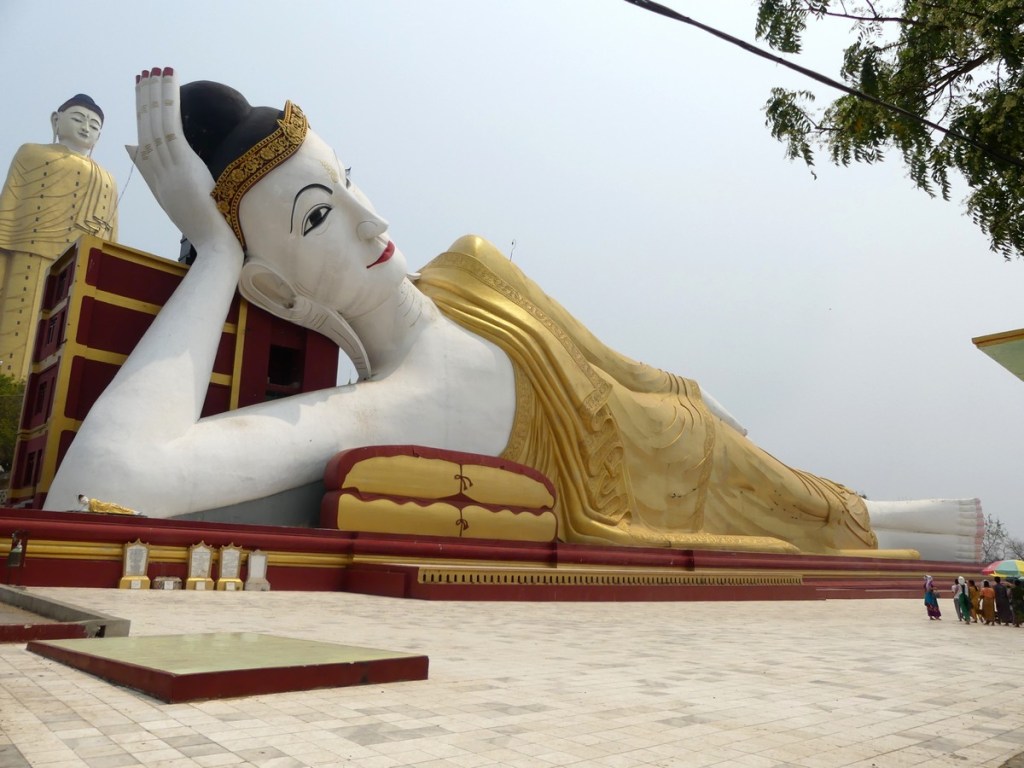

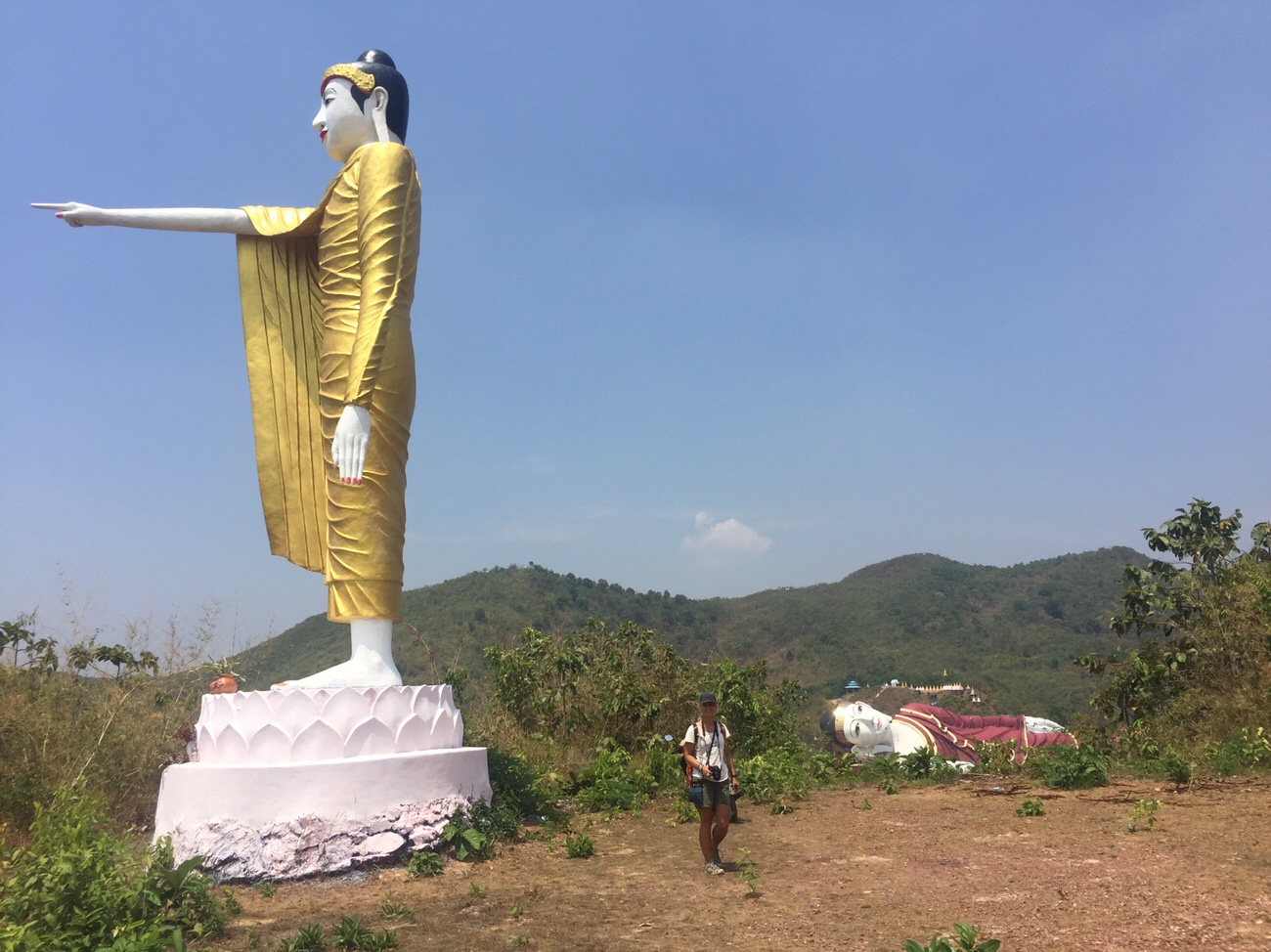
To grasp the size of these statues you need to look at the right hand corner where people are standing. Before the lying buddha of Mawlamyne  was made, this was the largest one in the world.

The reclining Buddha was finished in 1991 and is 95m long. Apparently there is a plan to construct a third sitting Buddha in the hills, but we did not see any construction of that. As if we did not see enough Buddhas, we decided to take a trip with the motorcycle (30km) to the caves of Pho Win Taung.
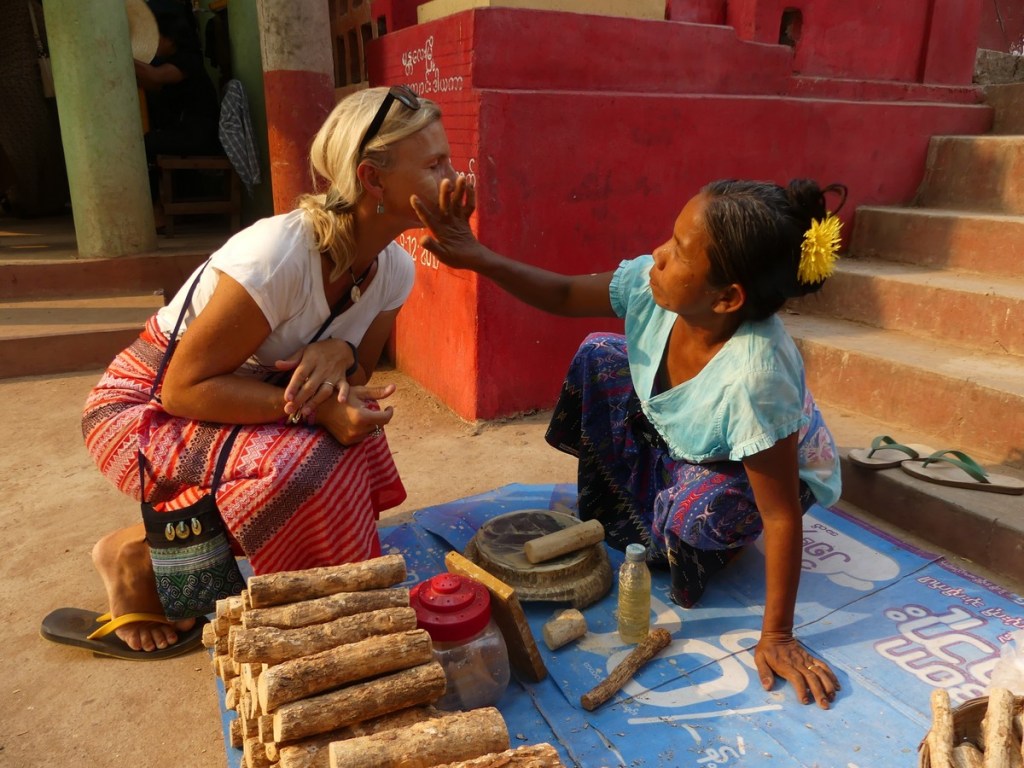

Before entering the caves, a Thanaka treatment for my face.
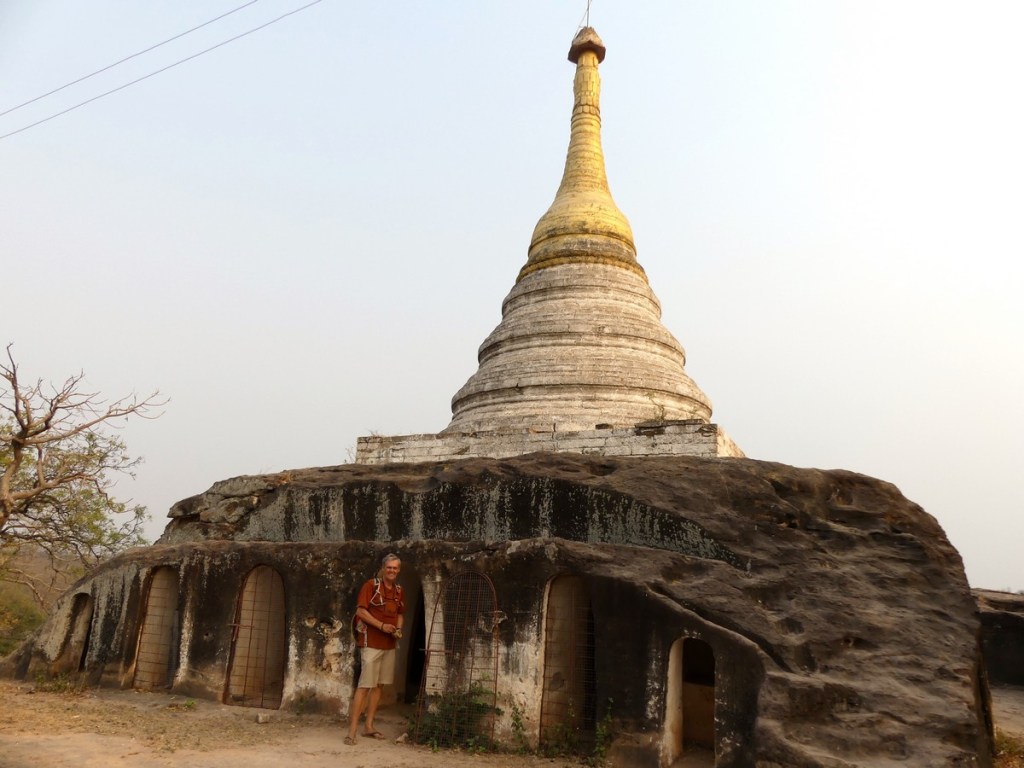
Hundreds of cave shrines were cut in the hillside between the 14th and 18th century.
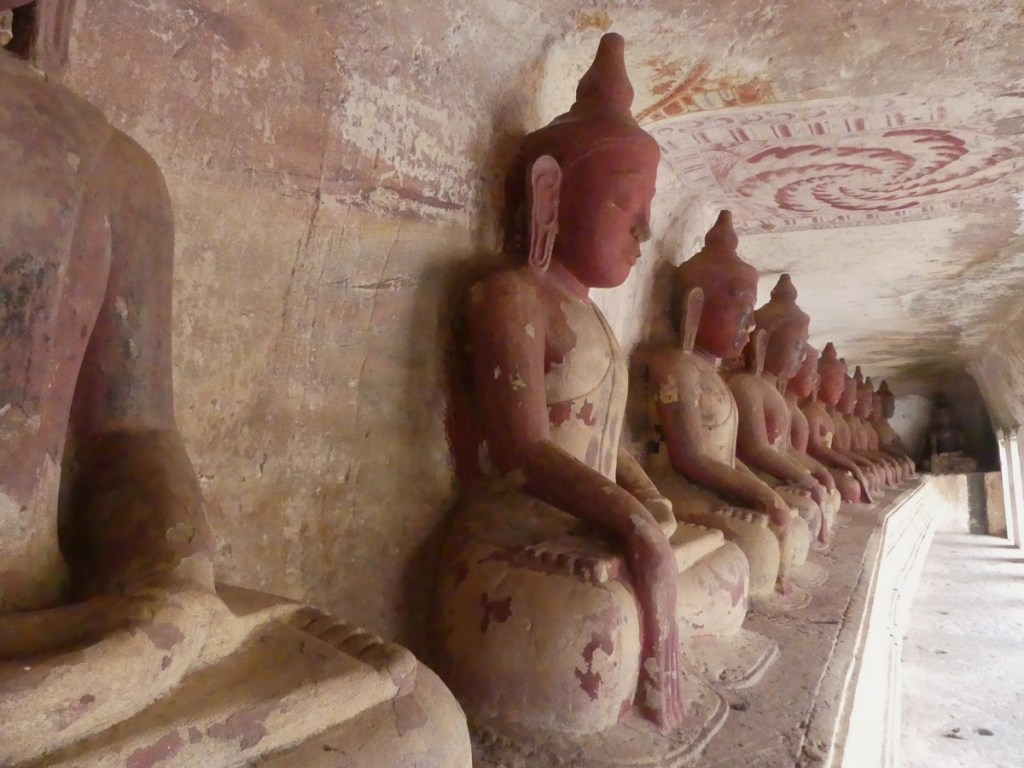
The Buddhas and mural paintings are really beautiful.
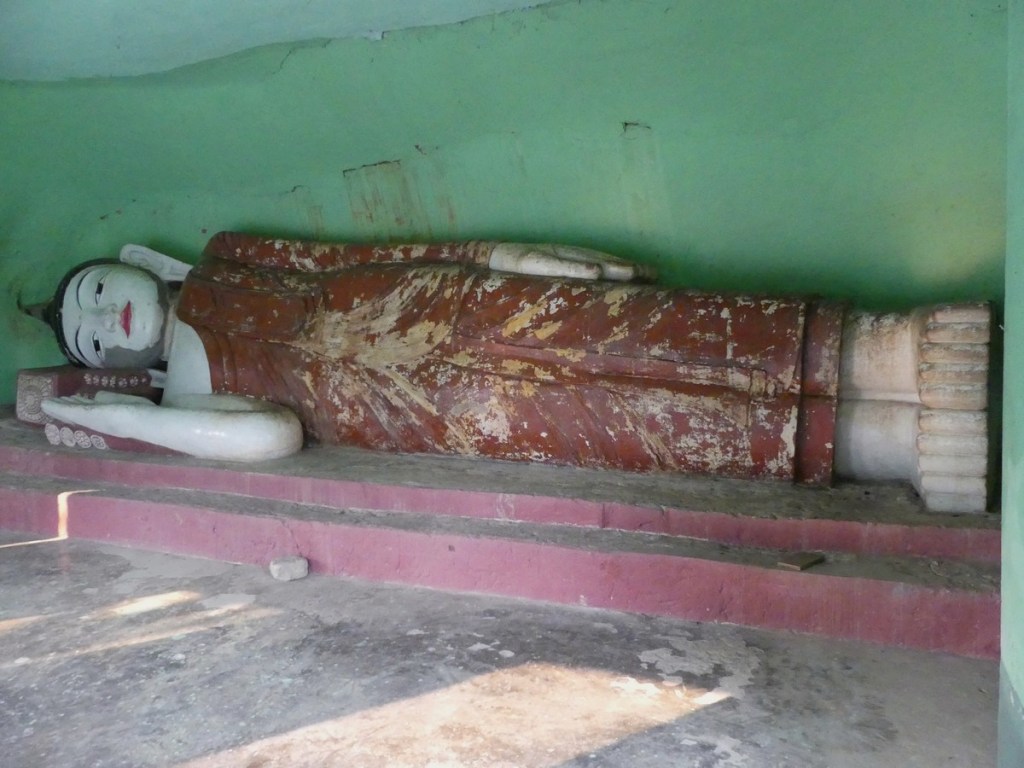
There are about 500 caves all with at least one Buddha inside.
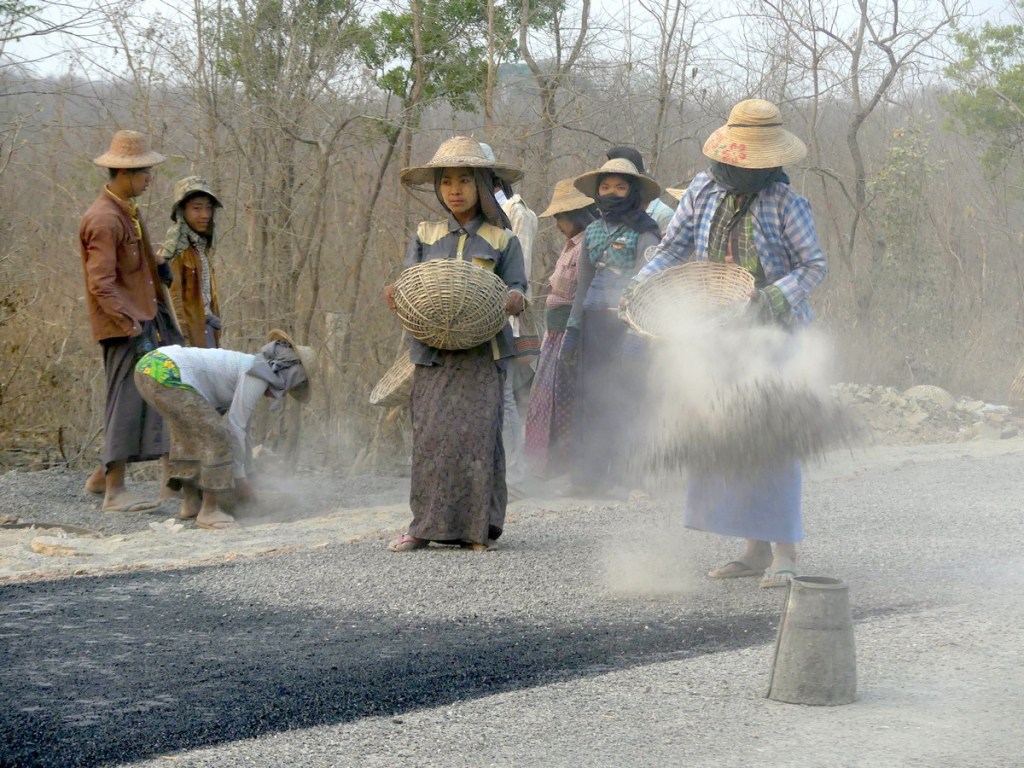
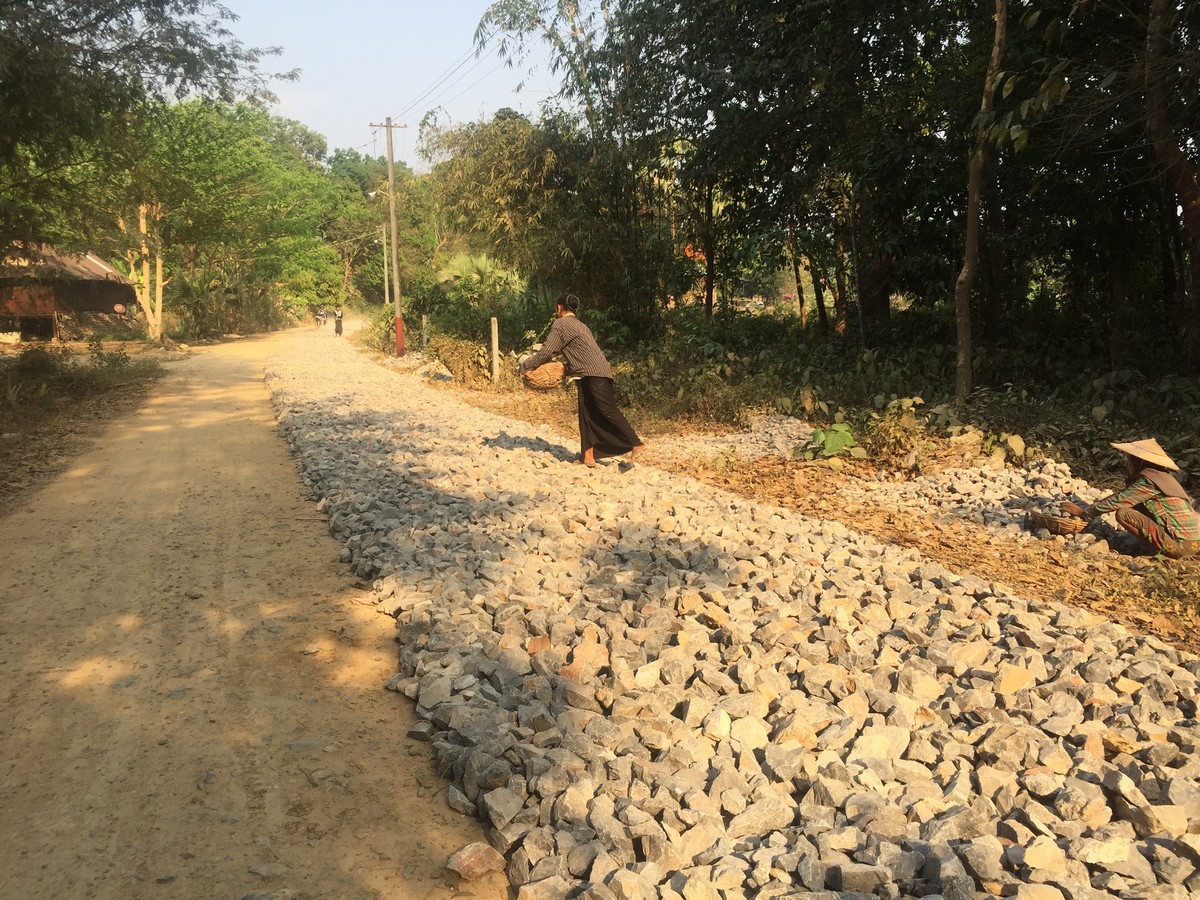
On our way we stopped to watched the road being repaired the Burmese way. Mostly women doing the heavy work.
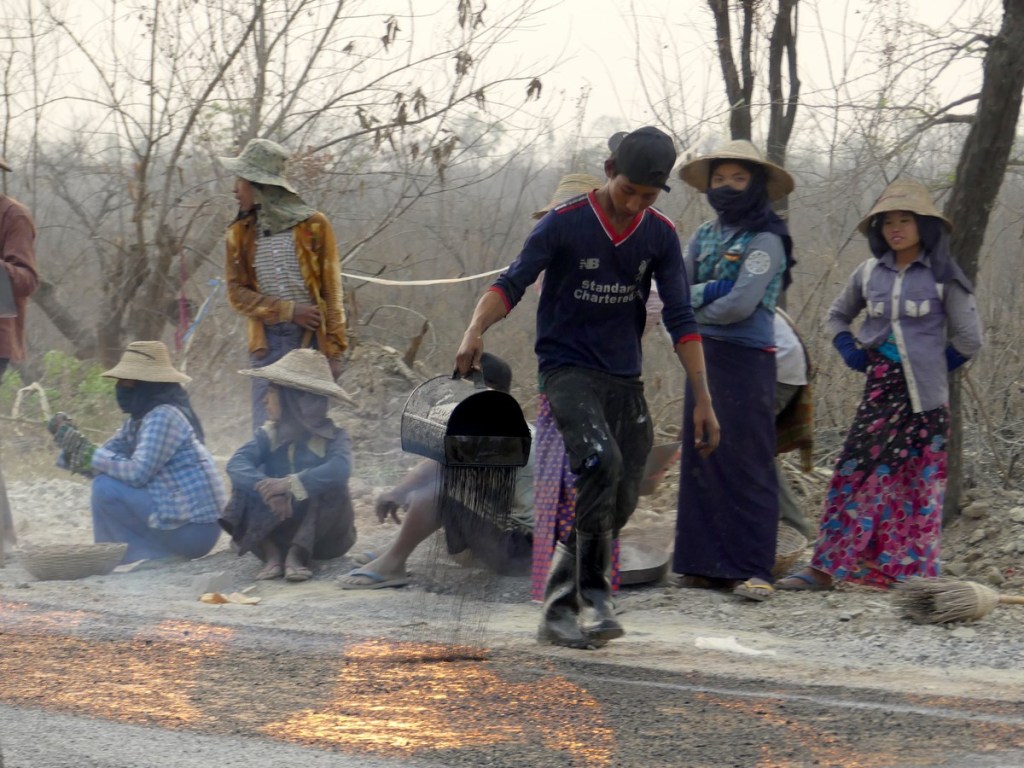
Tar is being poured on manually. In Stefan’s video you can clearly see how this is done.

Our heads were saturated with images of Buddha and we were ready for some lazy days at the pool! We travelled with another local van to Bagan, the main tourist attraction of Myanmar and our last stop on our journey before returning to Yangon to take the plane back to New Caledonia. We really enjoyed the 2 days at the pool of our beautiful resort hotel in Bagan (Bagan Heritage) but we still had lots of temples to visit and shopping to do in Bagan town.
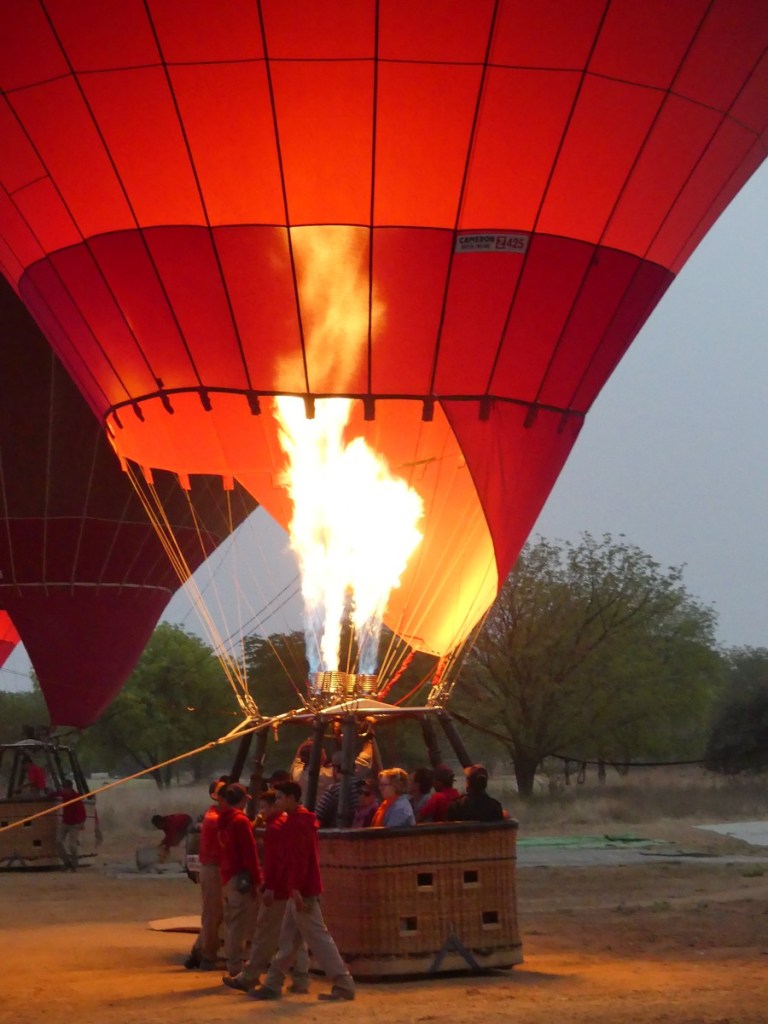

After some discussion of going on a balloon trip because it was very expensive (450USD), Stefan decided not to go and I would enjoy the experience of being in a hot air balloon over Bagan. I left at 6 AM in the morning with a group of Spanish tourists.
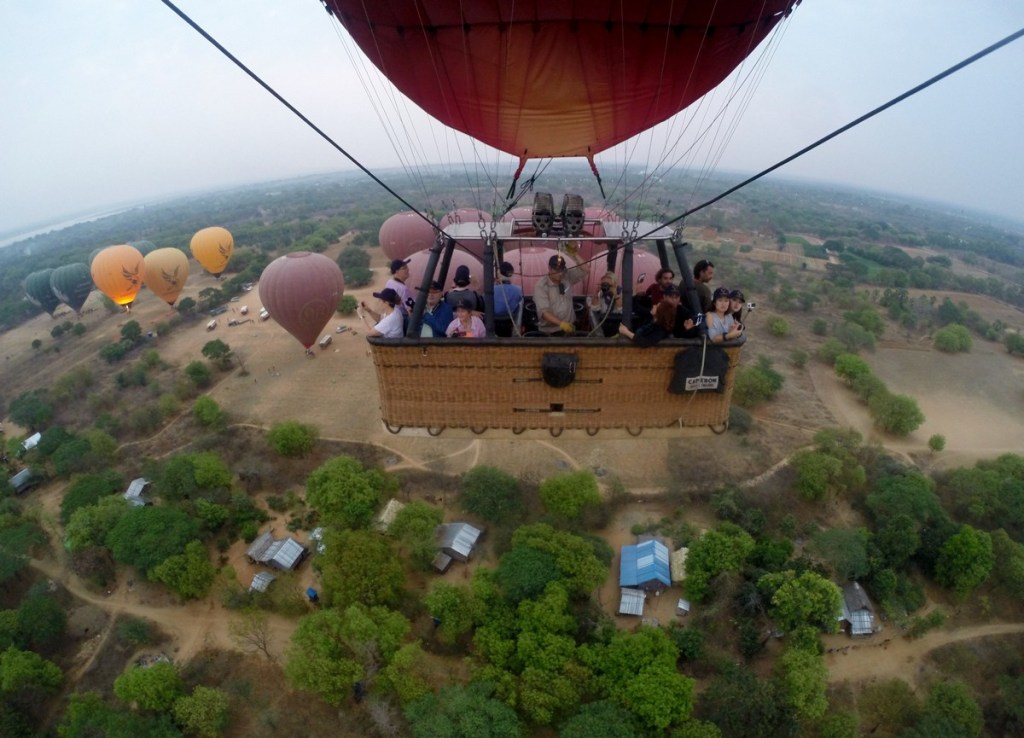
I was in the balloon with 10 people from Barcalona, who did not speak one word of english and had their translator with them. It was really great fun.
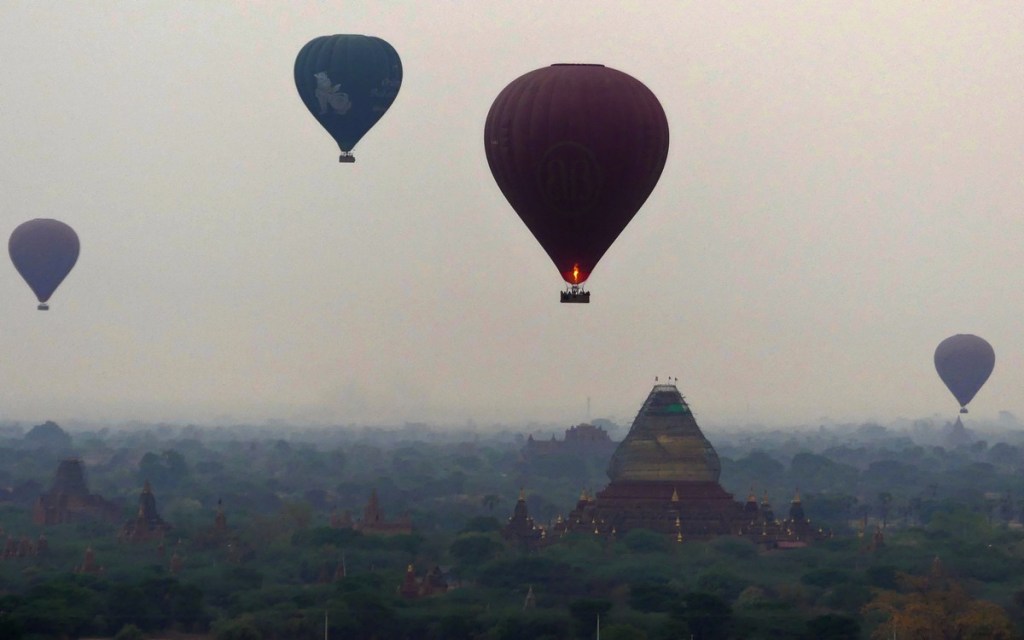
Balloons over Bagan.
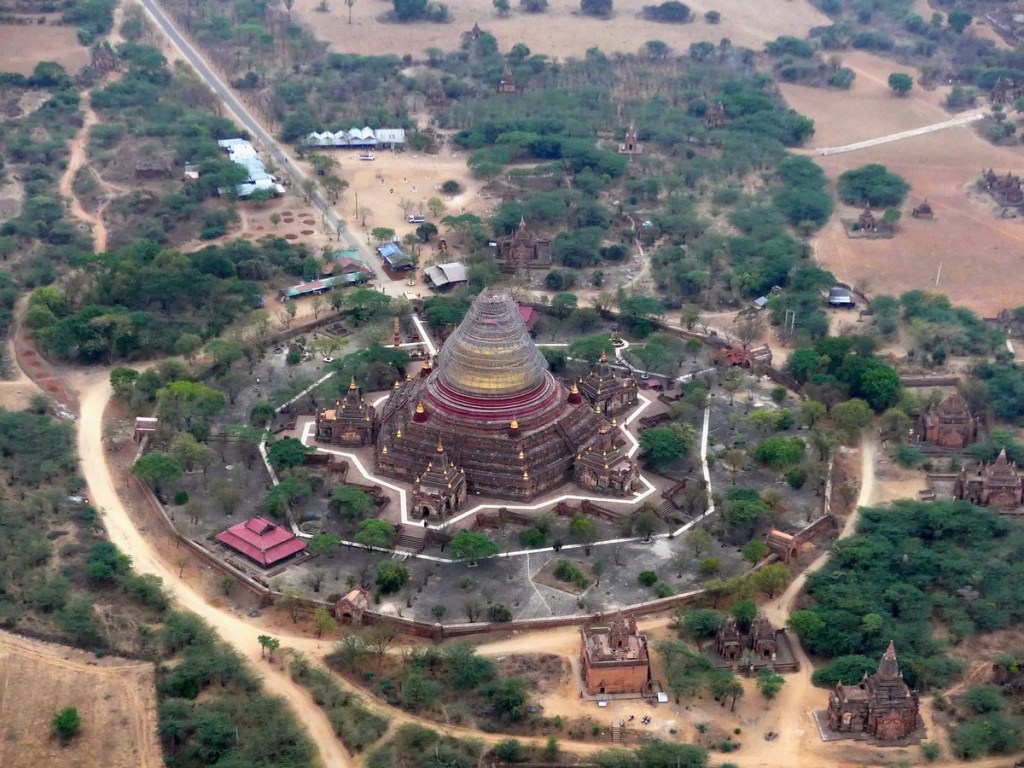
The Mingalazedi pagoda seen from the air.

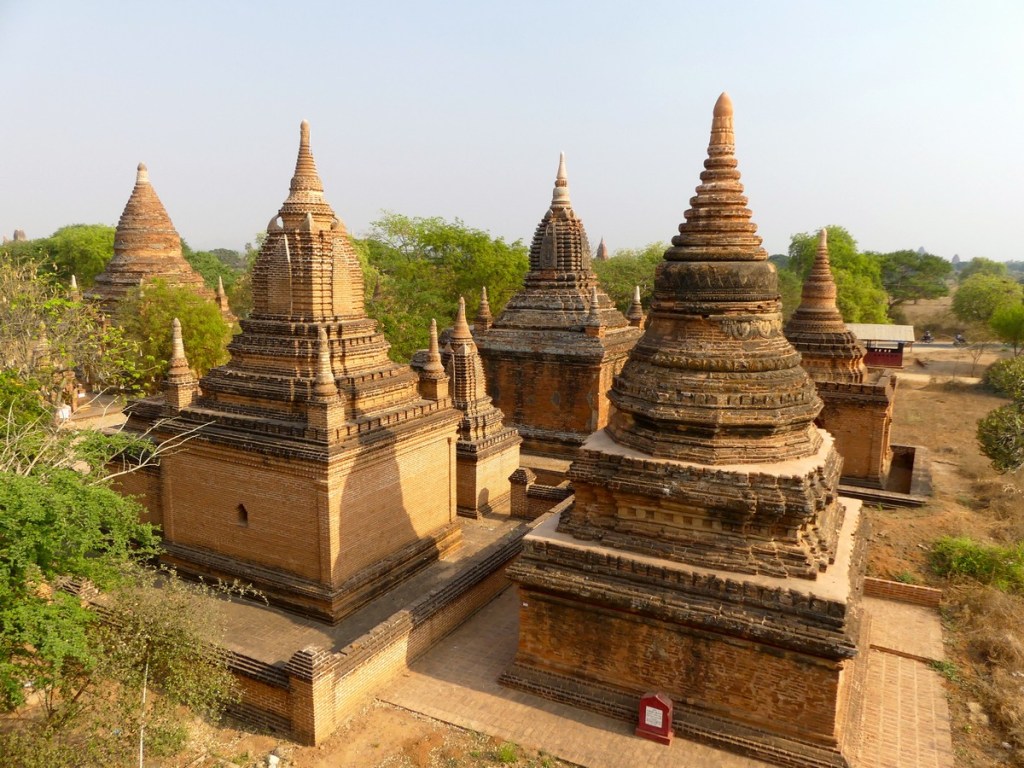
From 1044 to 1287, Bagan was the capital as well as the political, economic and cultural nerve center of the Pagan Empire. Over the course of 250 years more than 10.000 temples were built from which today there are about 2000 left. The Pagan Empire collapsed in 1287 due to repeated Mongol invasions. The old capital became a pilgrimage destination and the capital was moved to Pinle.

We had 5 days to visit the temples but with the heat – 36 Celsius around noon – we were “pooped” by 3 PM and ended our visits then with a cold beer (or two). I do not recall the names of all the temples but we were amazed at the variety of the Buddha statues and the very beautiful temples. Sometimes  there would be no other visitors but the famous ones  were always crowded with Burmese visitors. Myanmar tourism was very low while we were there. It was the low season but on top of that tourism is suffering because of the negative press with the Rohynia. Nevertheless, we always felt very safe in Myanmar.
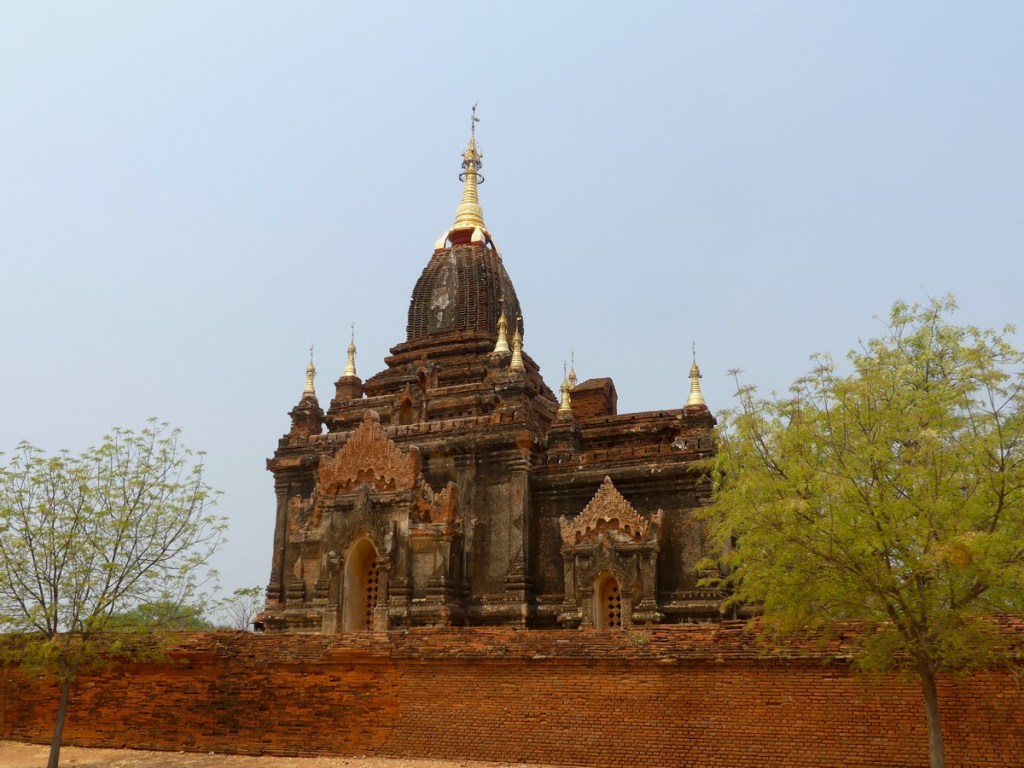

One of the many beautiful and yet deserted temples.
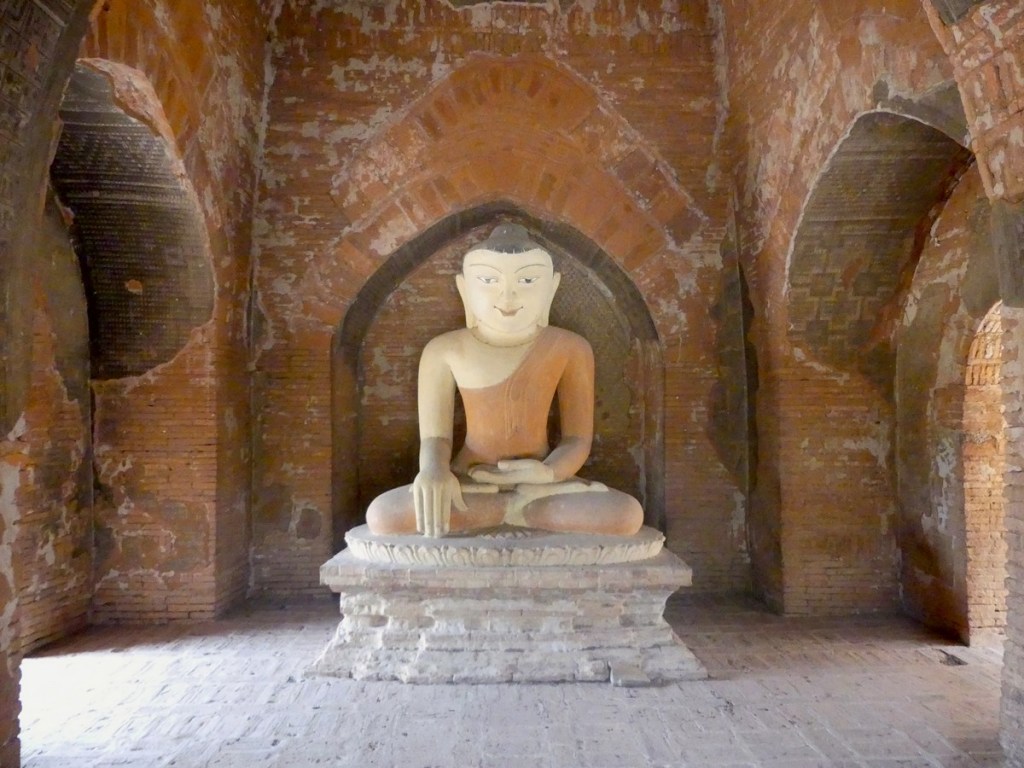
A simple Buddha. It was nice to stay inside for awhile and recover from the heat.
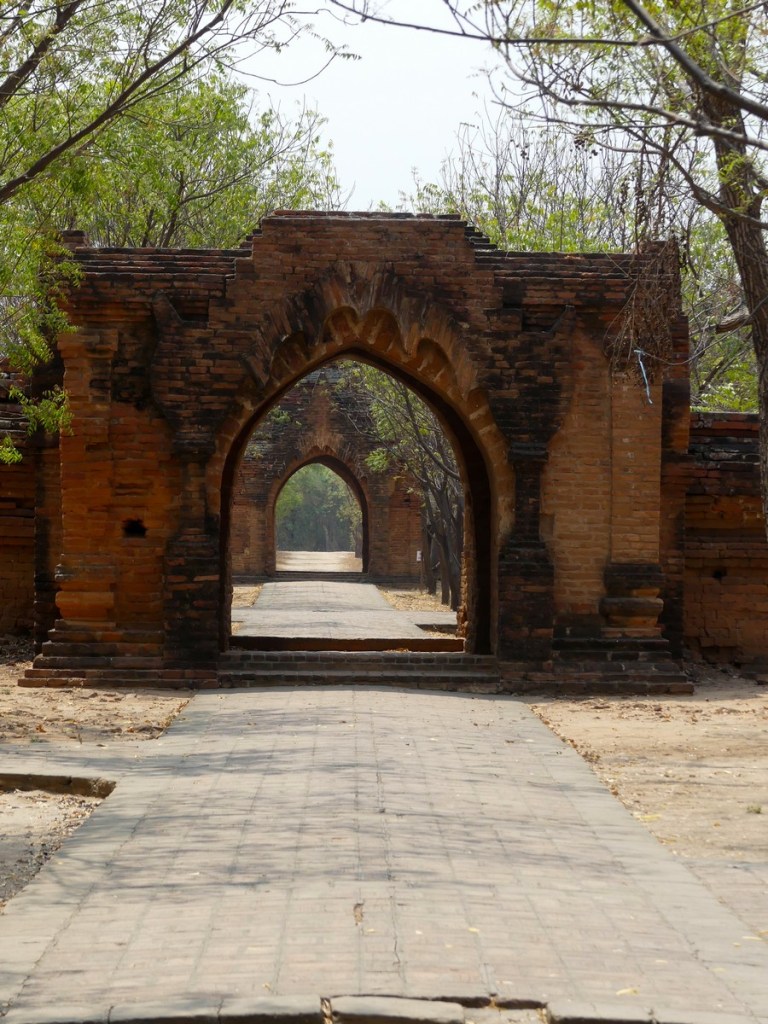
Everywhere at the entrance you need to take off your shoes and make sure your knees are covered. It was sometimes impossible to walk barefoot on the burning hot stones or sand and you had to run from one shaded area to the next.
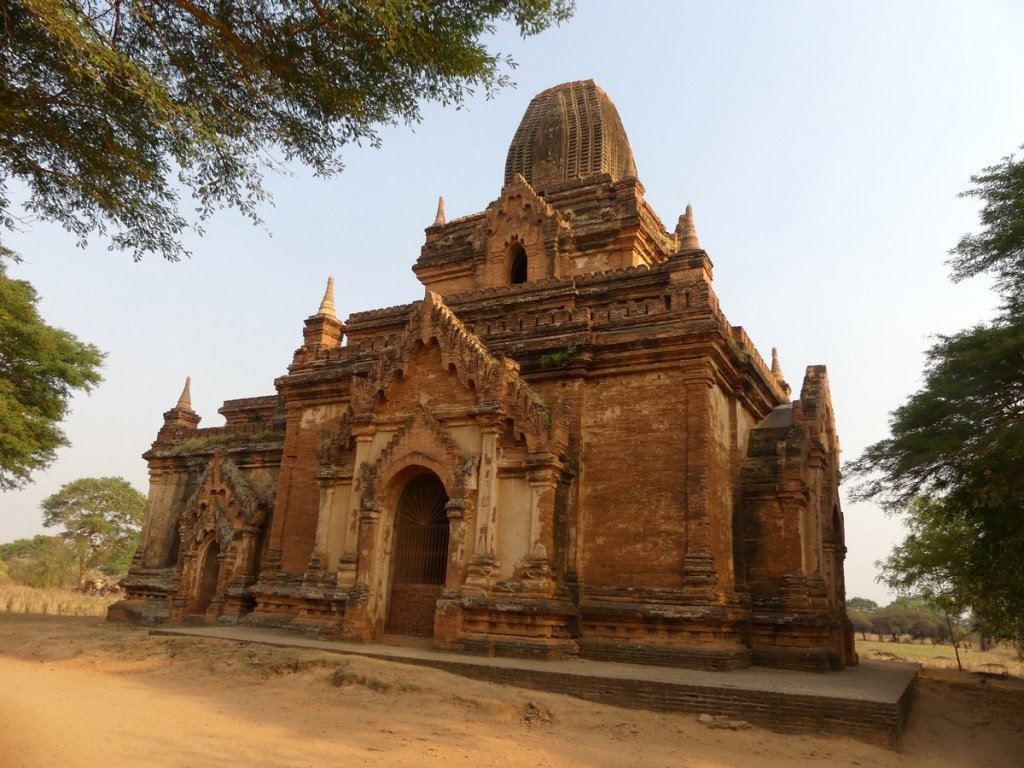
At the end of the day we were covered in dust. It was good we had a swimming pool at the hotel.
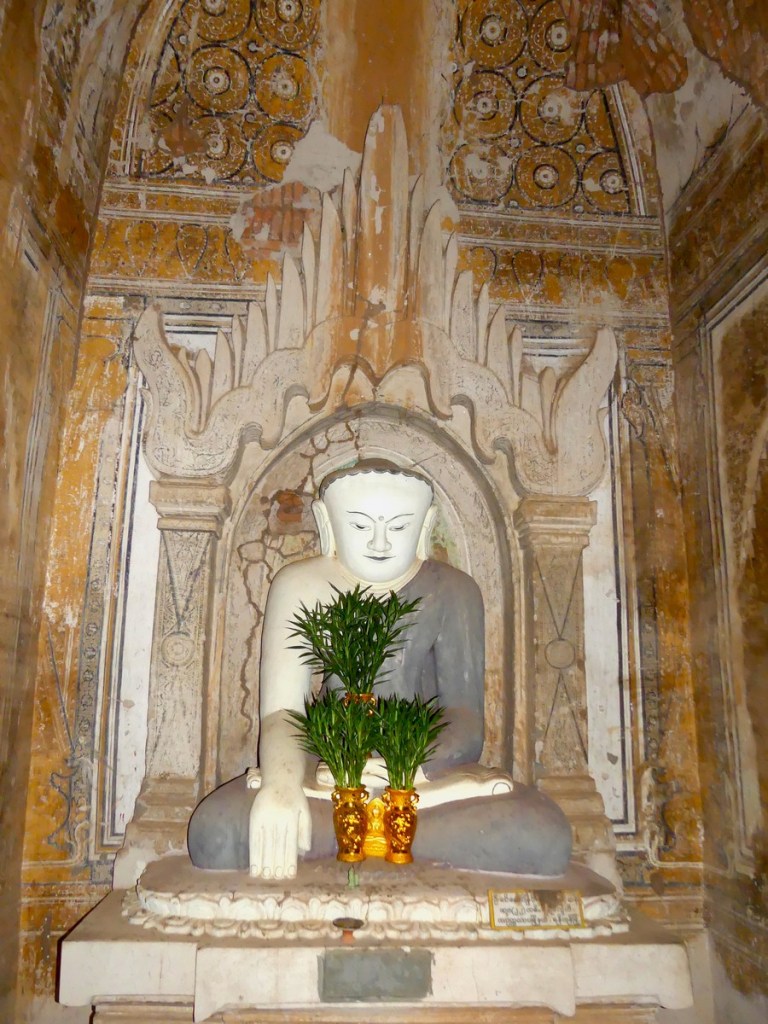
Being alone in a temple was really a great way to relax and enjoy the peaceful quiet.
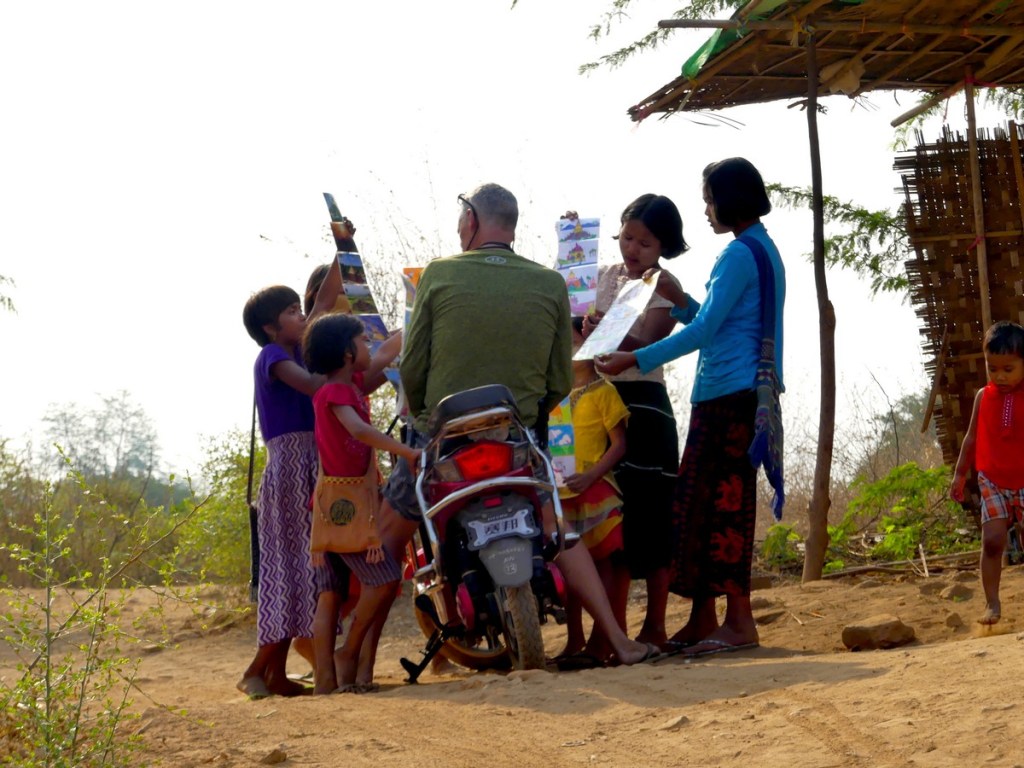
Children trying to convince Stefan to buy one of their self made postcards. Tourists in Bagan are not allowed to ride a motorcycle but luckily you can rent electrical bikes which come close to a motorcycle.
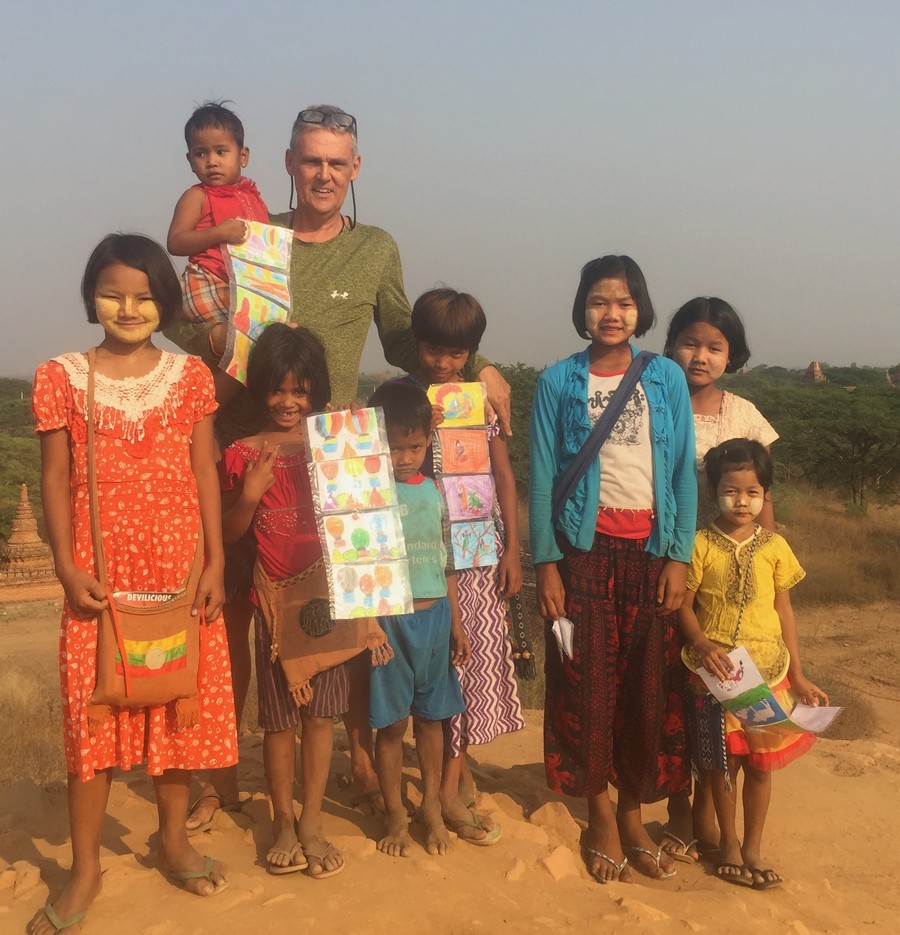
In the end we bought all the cards for a discounted price.
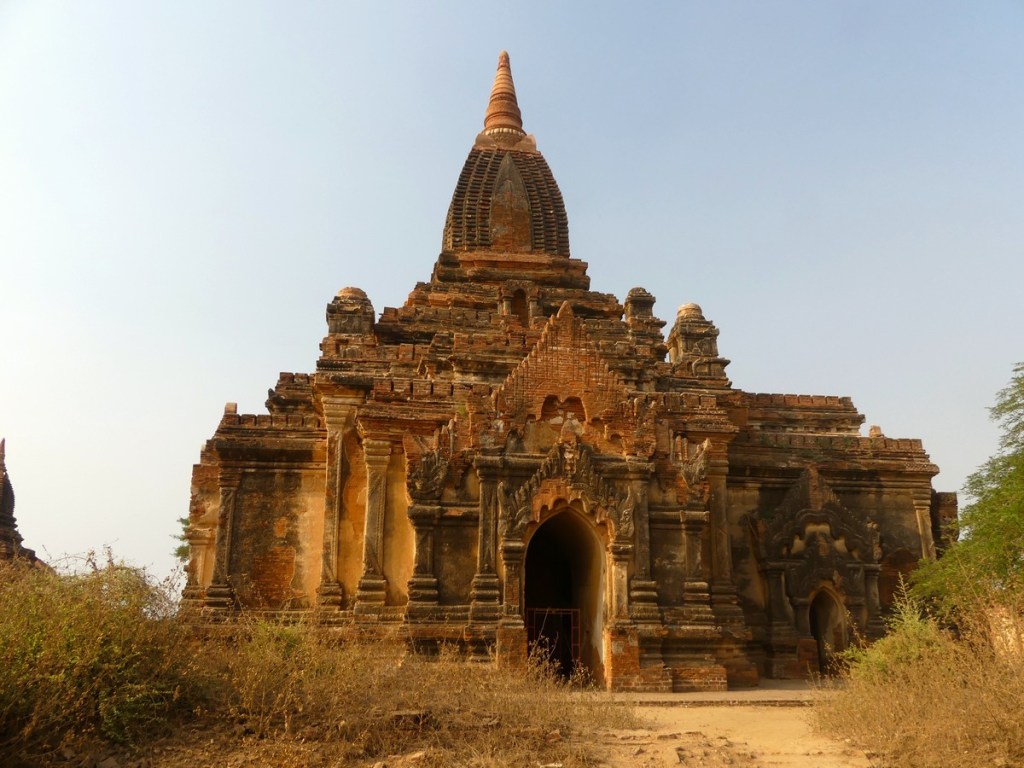
Bagan lies in an earthquake zone. Many temples were damaged during the earthquakes of 1975 and more recently 2016. Luckily, the damage was mostly minor.
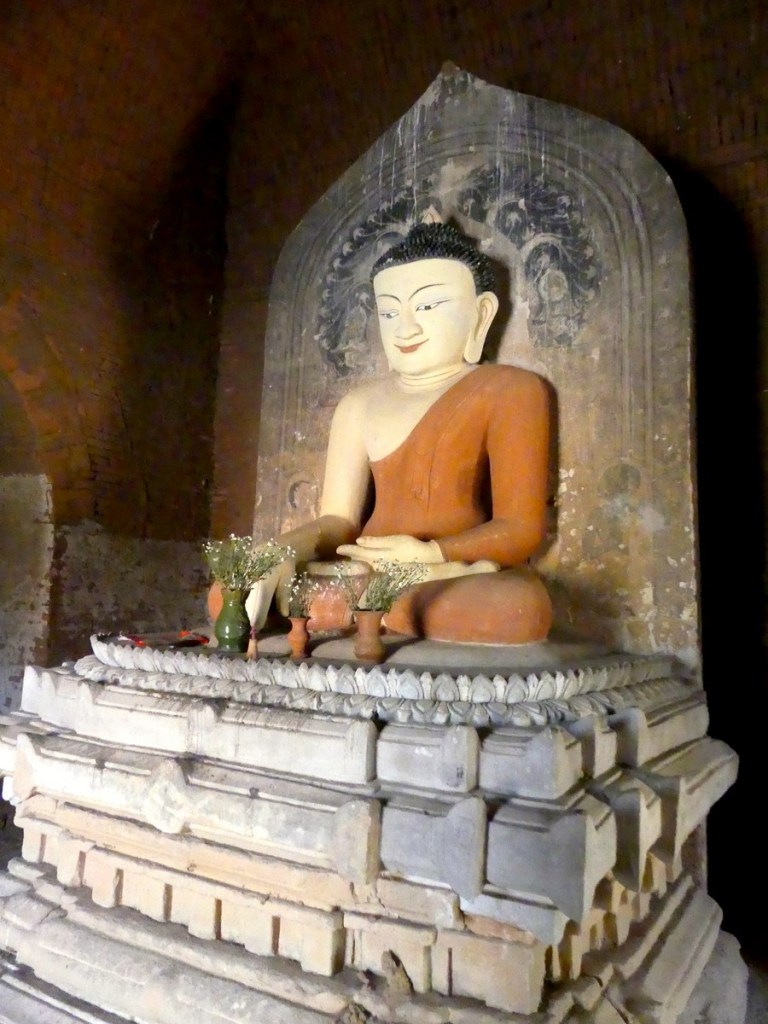
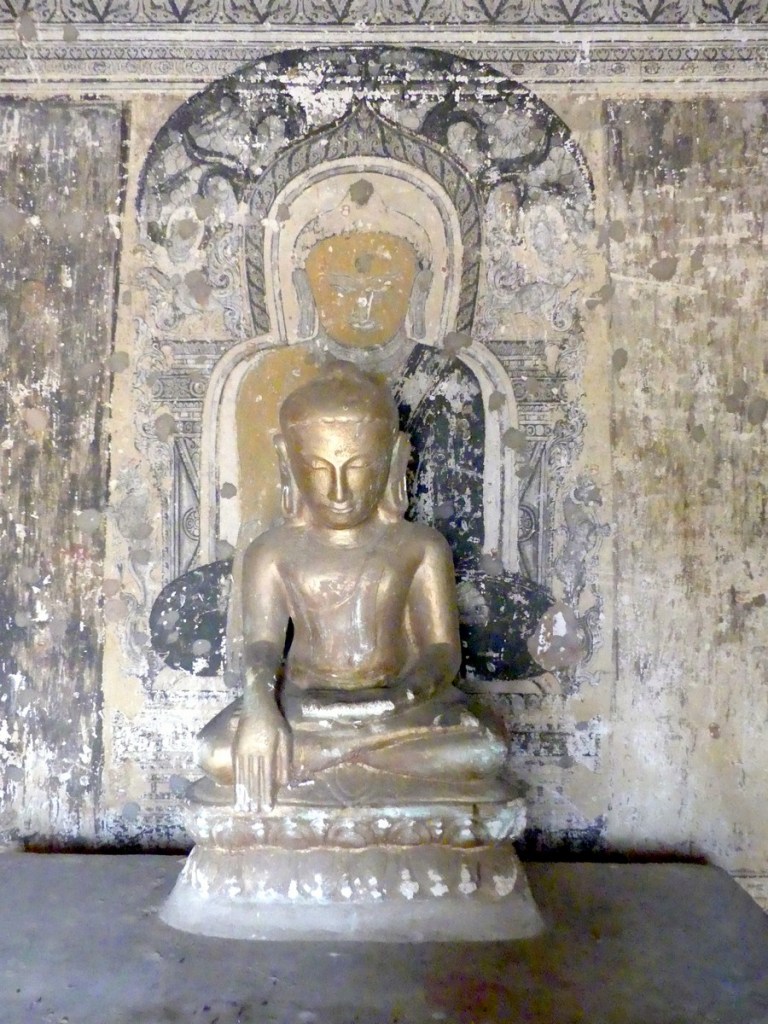
Even in the small stupas there are sometimes huge Buddha statues which fill the room completely.
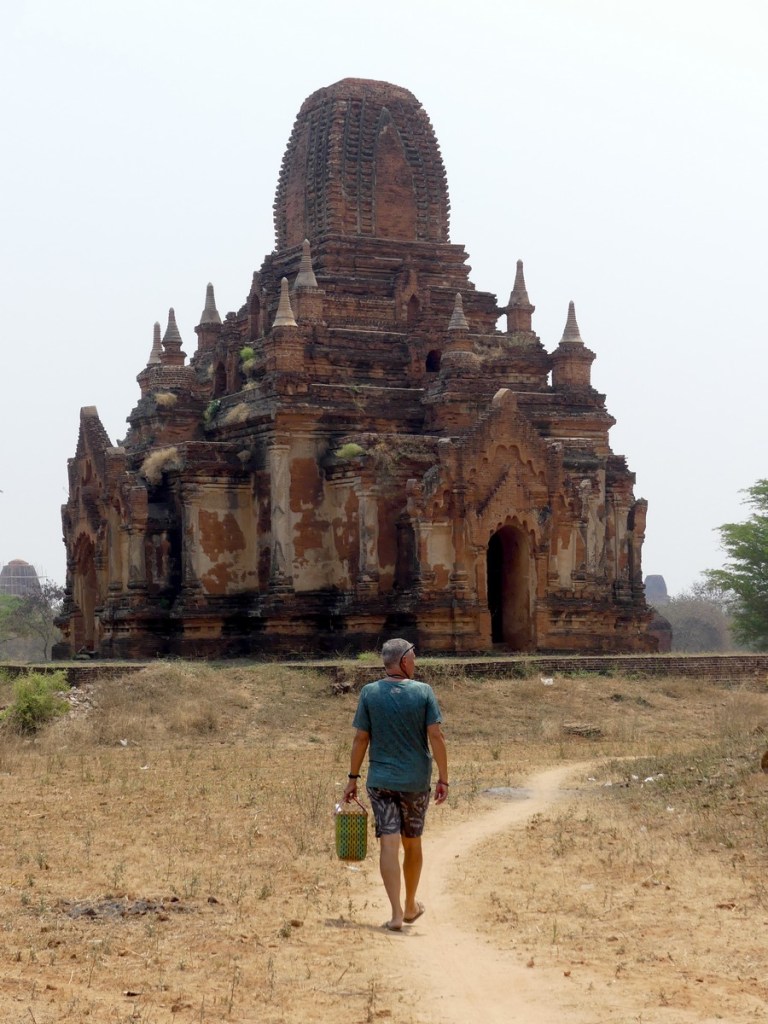
Stefan looked for a temple which you could still climb the stairs but we only found one. Because of the earthquake and a tourist falling to her death, they closed off the roofs in all the temples in 2016.
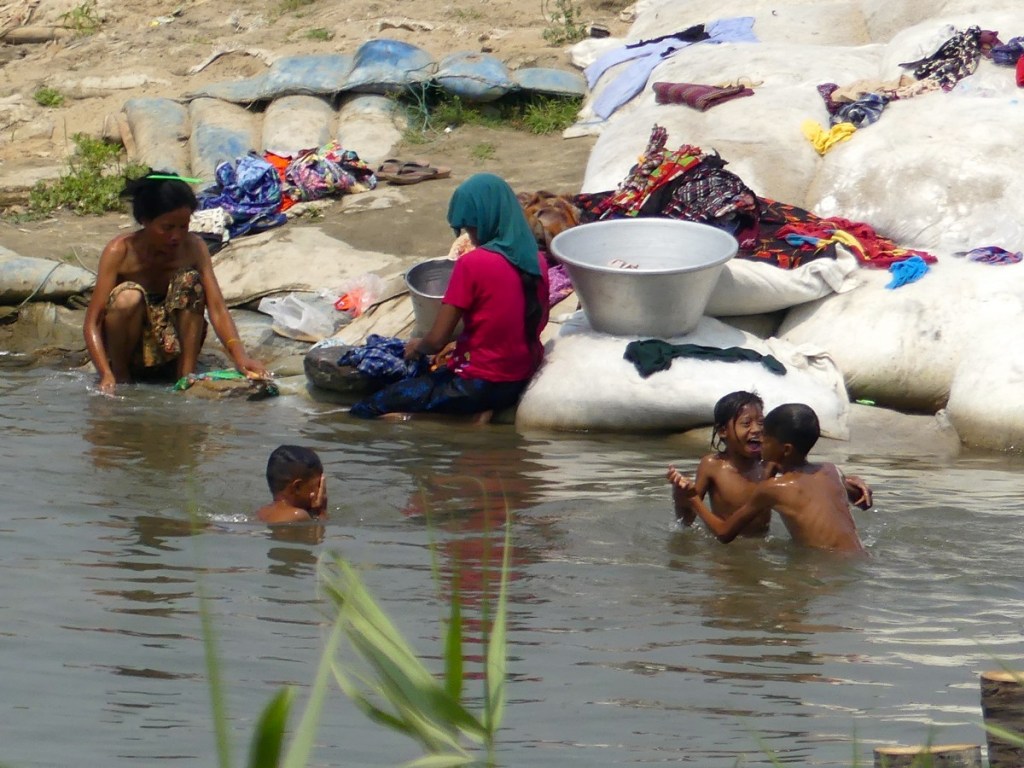
The Ayeryarwaddy river is a much needed refreshing and washing place in this dry area.
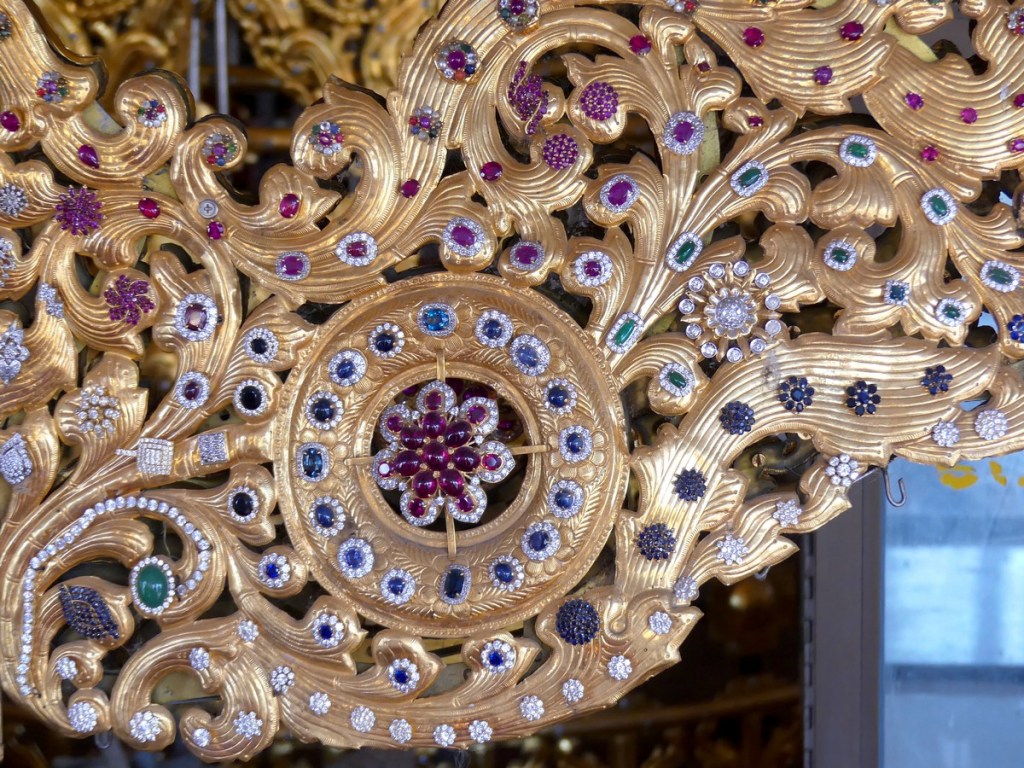
A detail of one of the gold crown that goes on top of the stupa. It is decorated with real diamonds, saffires, ruby, emerald etc. It is incredible how much money is spent on Buddhism in Myanmar.
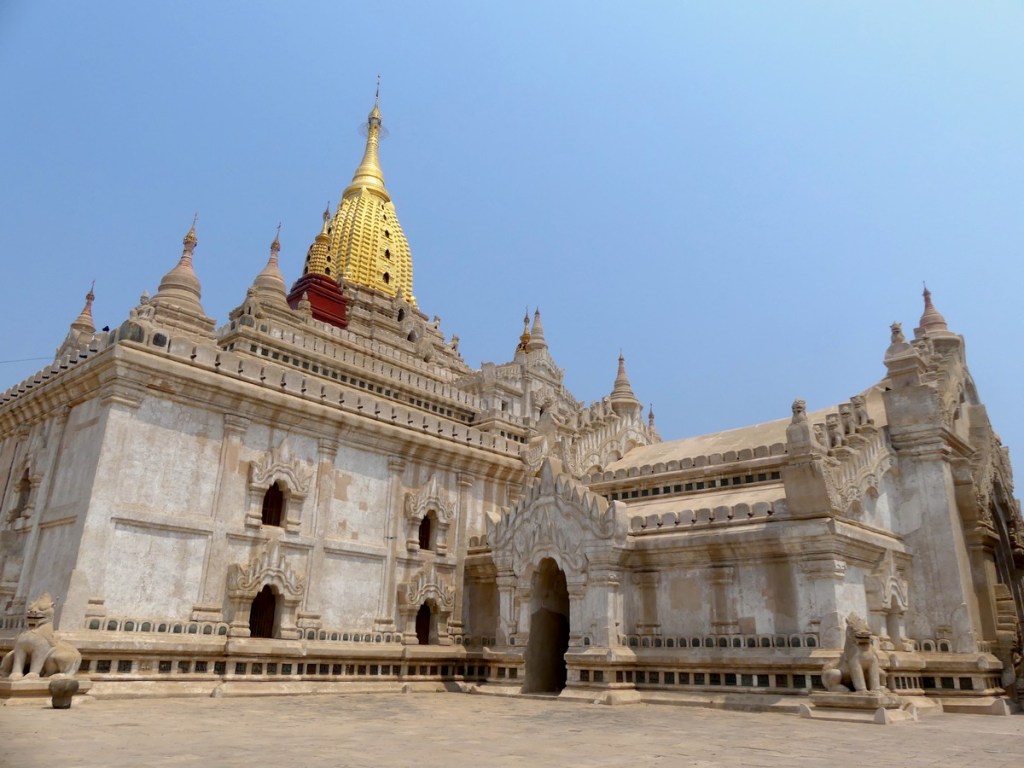
The Ananda Paya, completed in 1090 is one of the most beautiful in Bagan.
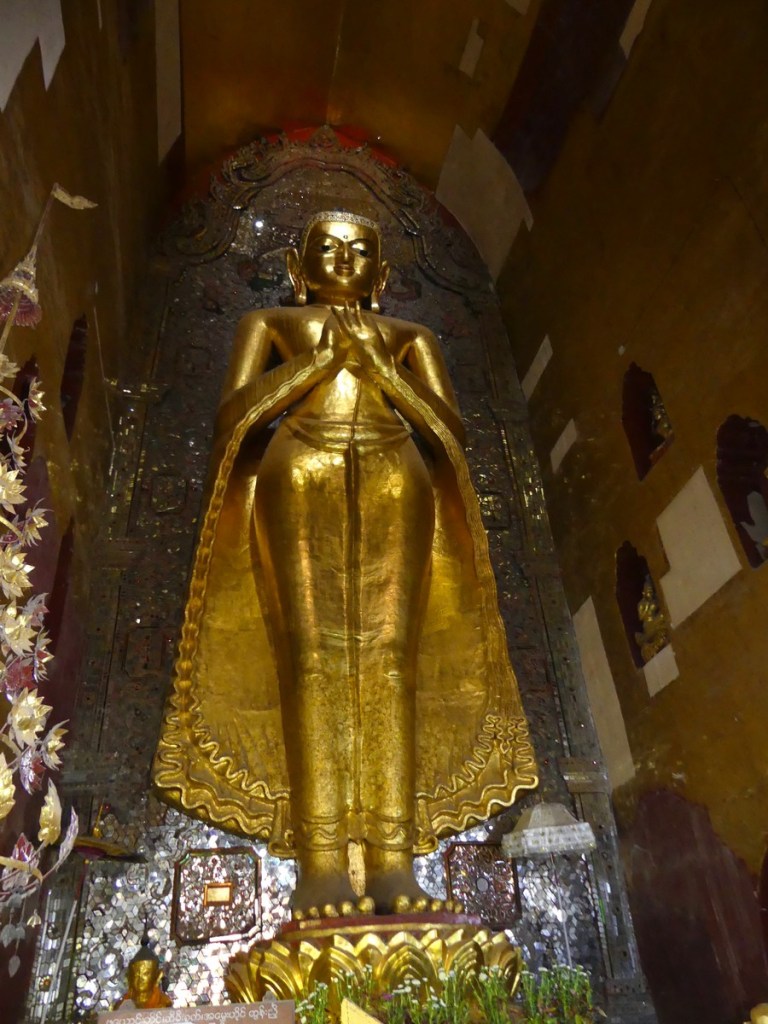
There are is a 9m high standing Buddha in each corner of the temple. They are made from teak wood (one piece)and covered with goldleaf.
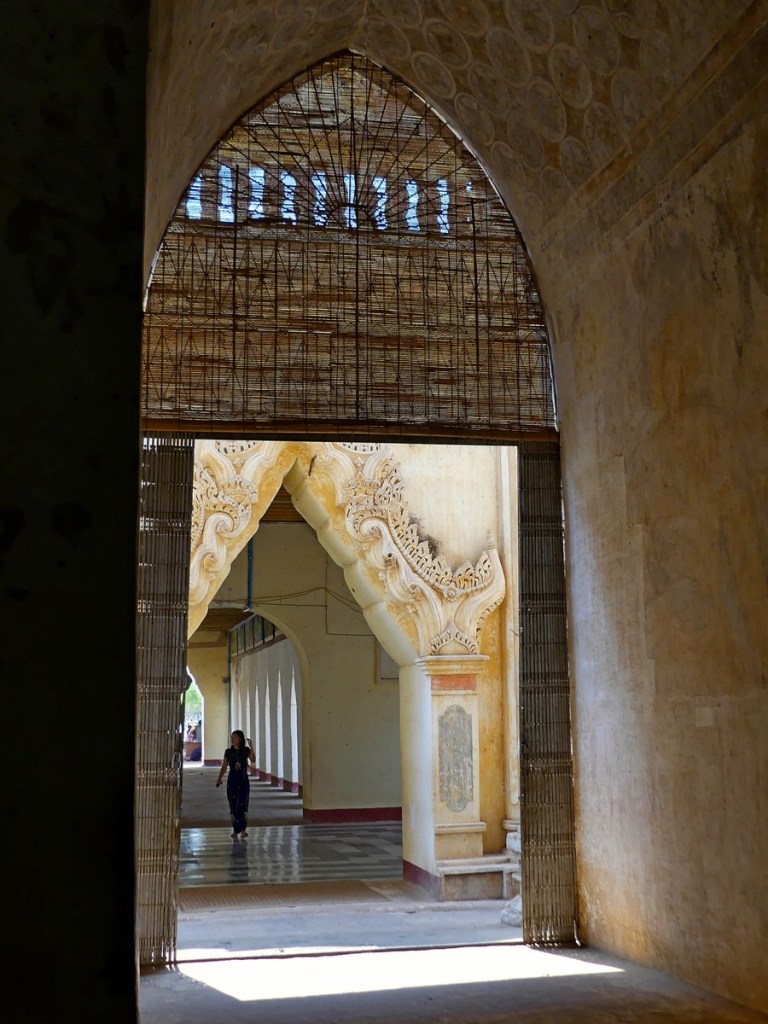
Nice and cool inside.
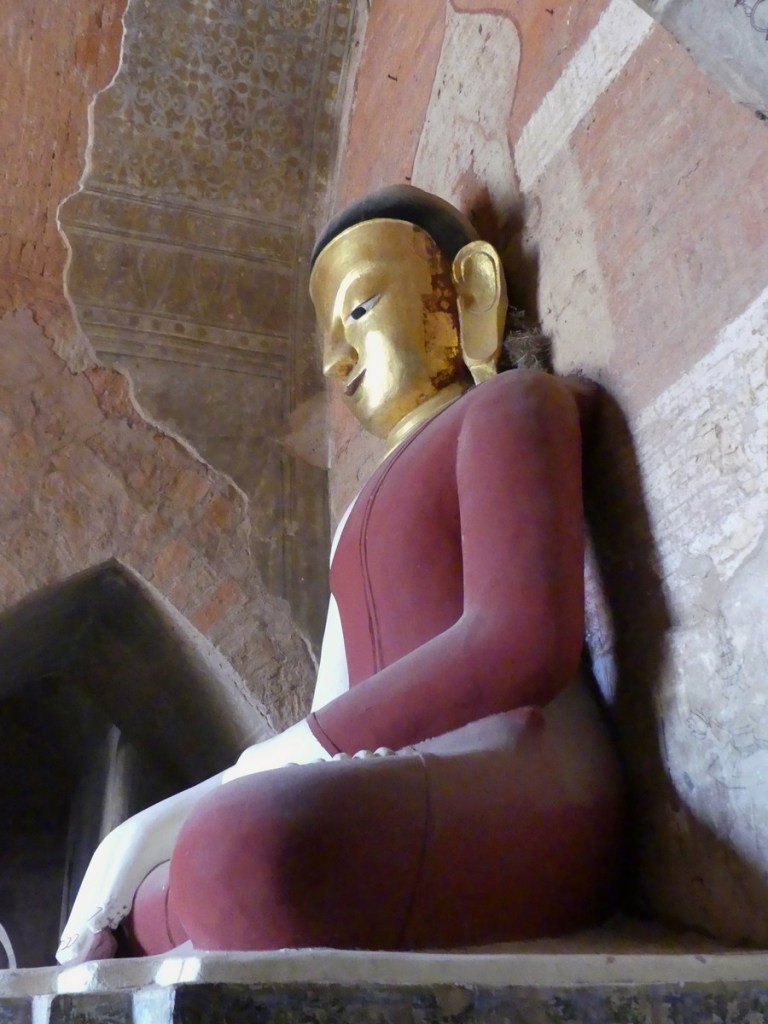
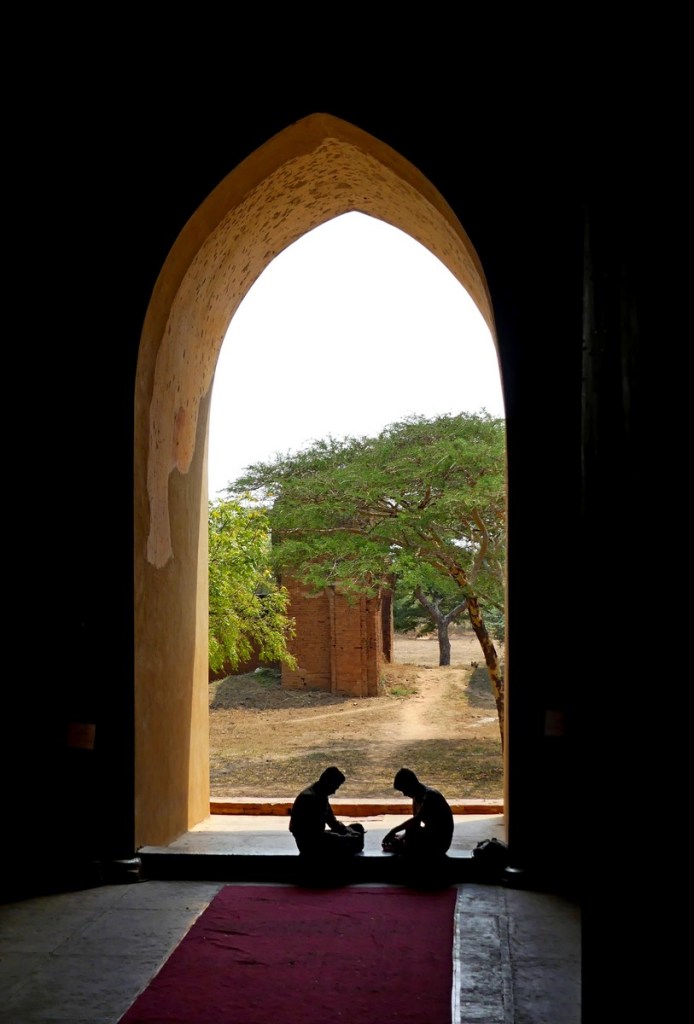
In many temples local people will hide from the heat, catch some sleep or sell handicraft items.
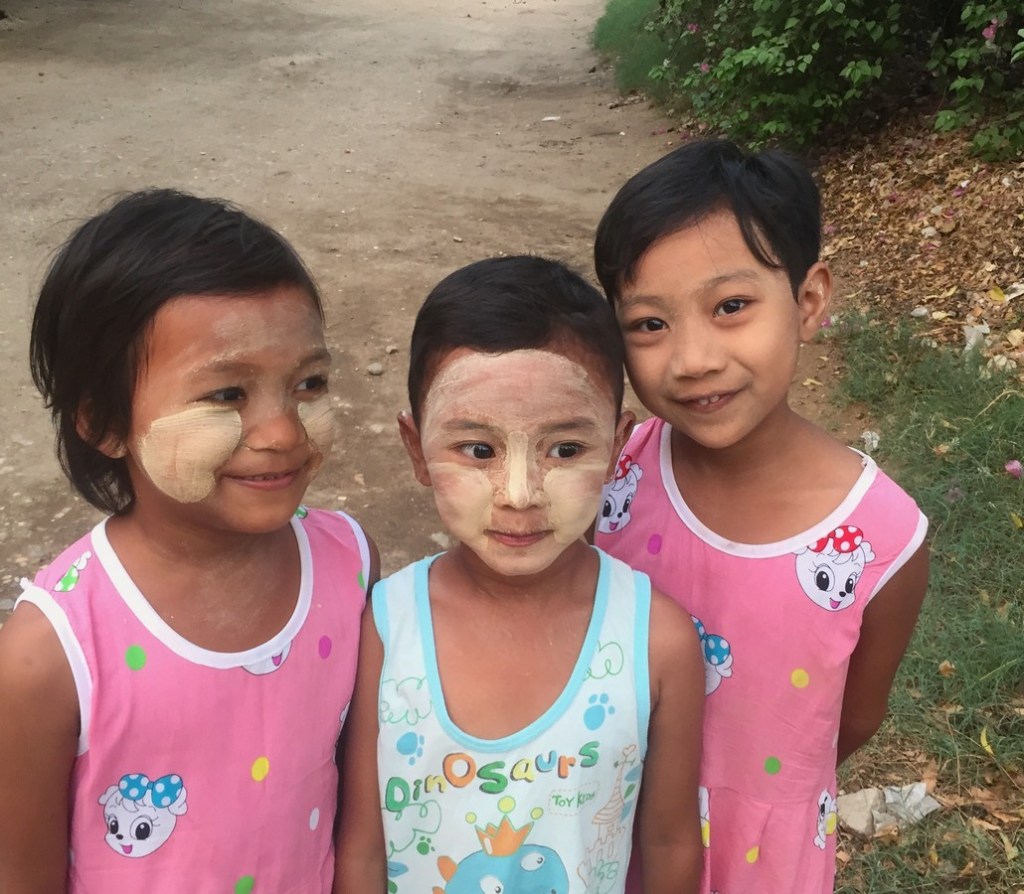
Typical smily Burmese children with their faces covered in thanaka to protect their delicate skin.
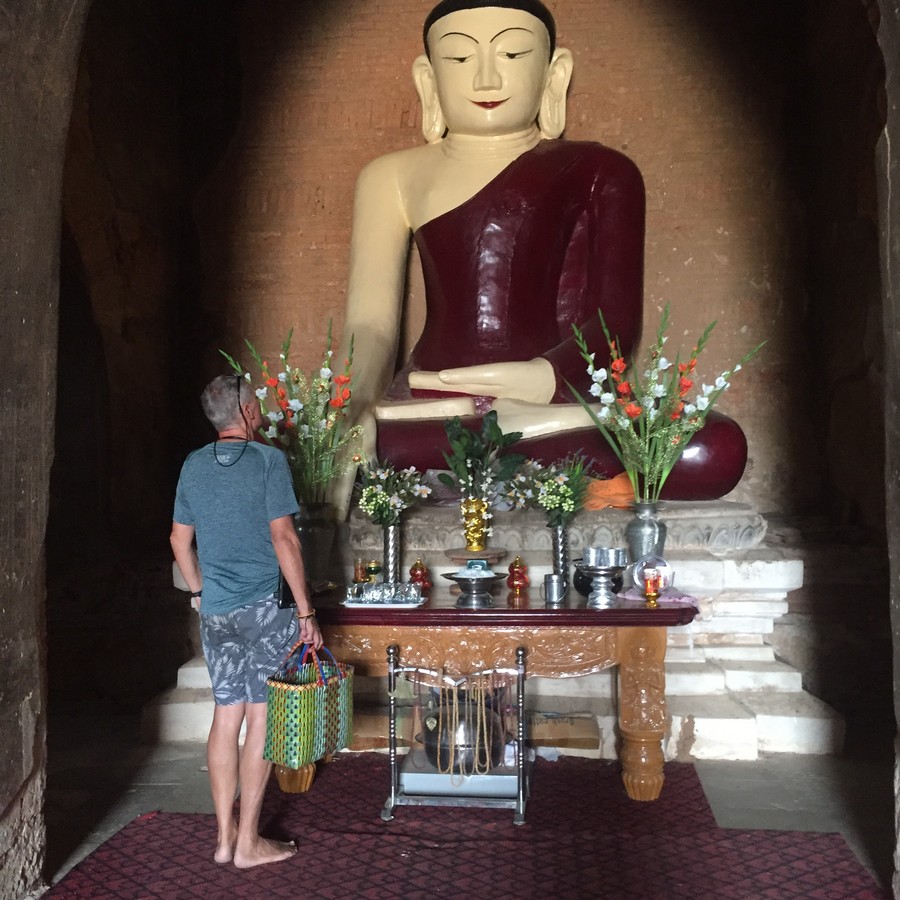
Stefan in admiration for yet another Buddha.
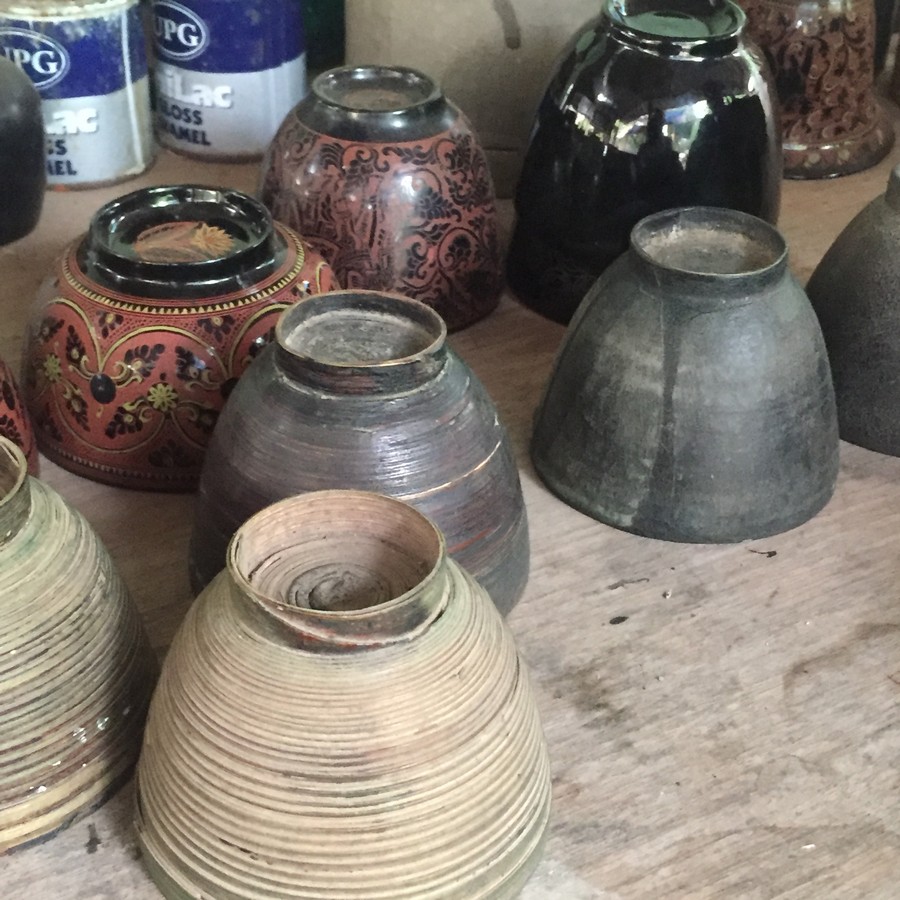
Bagan is famous for its lacquerware so we had to visit one of the local factories.
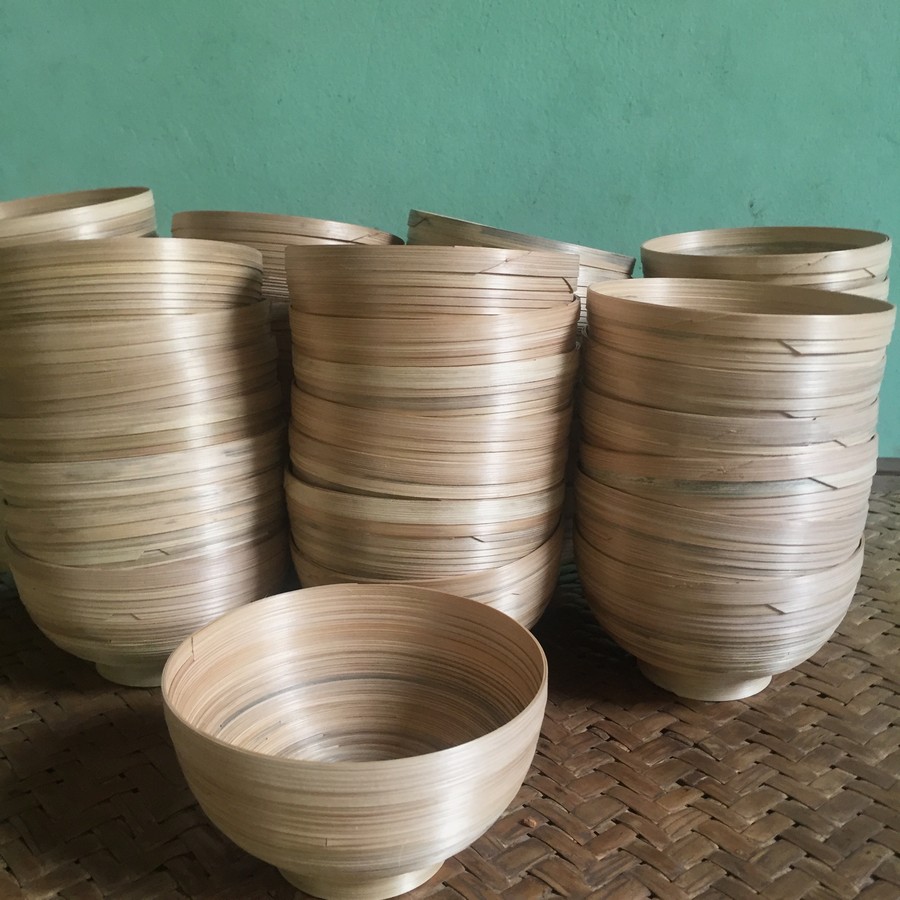
Lacquerware is made from bamboo with many layers of lacquer carefully dried and applied all by hand
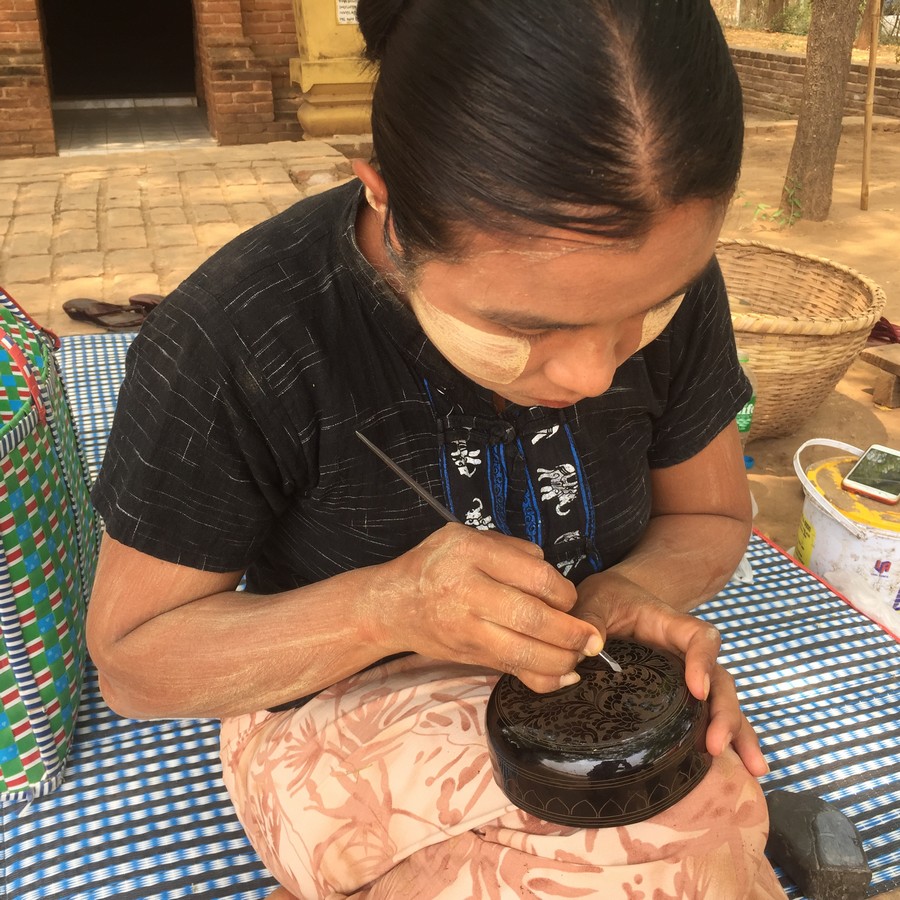
The more lacquer used the better the quality. The designs are all done by hand.
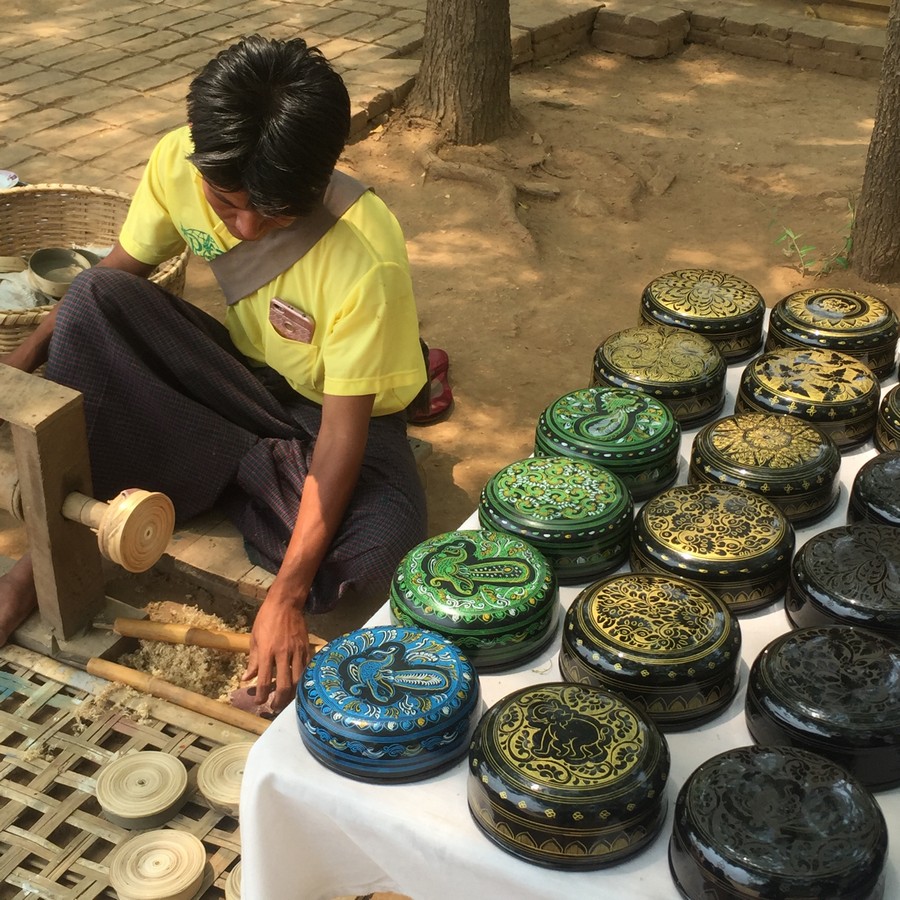
All colors are natural except for the blue and the purple.
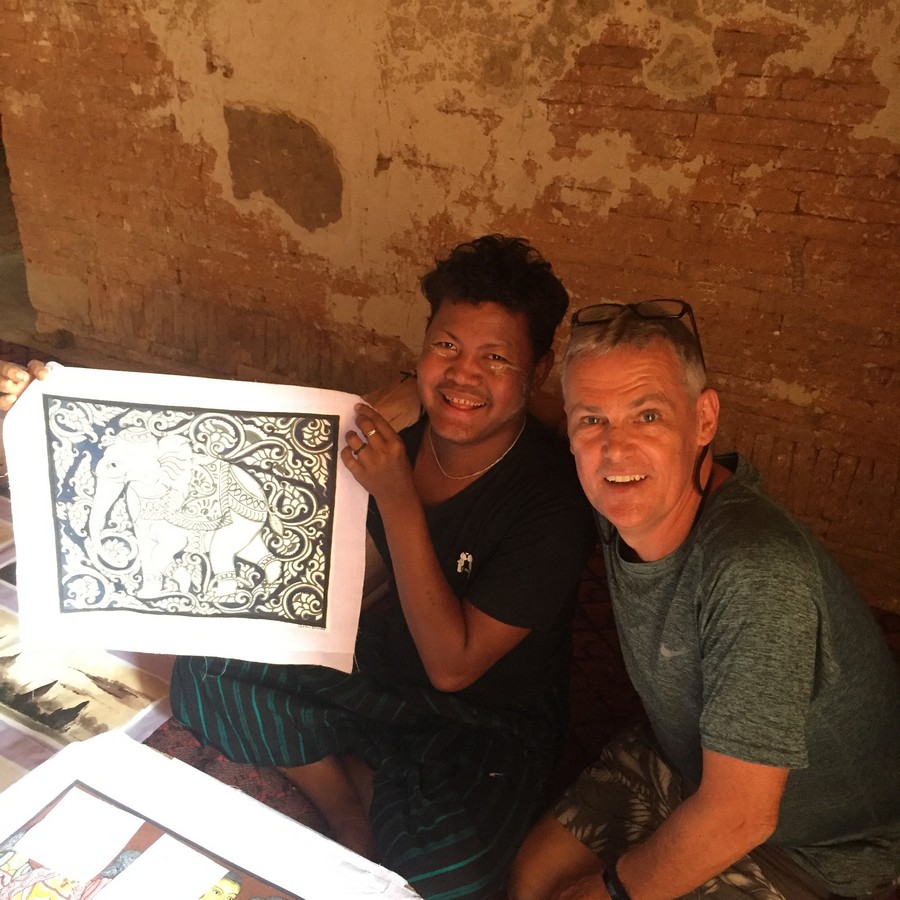
People are so friendly and never pushy to buy a souvenir but for many we were the only tourists that bought a souvenir in days. Sandpaintings are beautifully done.
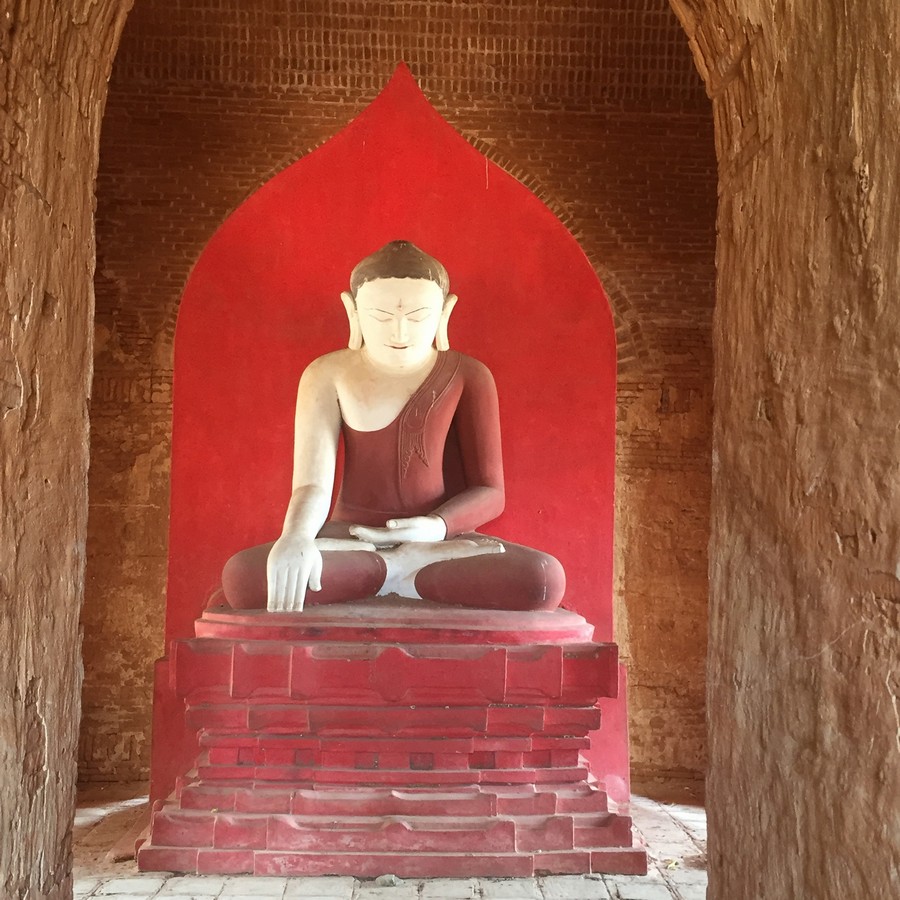
One of my favourtie Buddhas found in a small deserted stupa.

Stefan and I were happily surprised by Myanmar and its friendly people. I could go a second time but during the month of November or December after the rainy season when the countryside is not so dry. Our heads full of memories of places and beautiful people, our bags filled with souvenirs we were ready to go back home to Sanuk.
maart 2018 Hpa-An, Myanmar

In Mawlamyine gingen we nog met een groepje backpackers op een dagtrip naar een nabij gelegen eiland. Dat gaf ons de gelegenheid om op korte tijd veel kleine familiebedrijfjes te bezoeken. Alhoewel we de bomma en bompa van de groep waren, hadden we toch plezier met de andere groepsleden: twee Engelsen, een Ier (onverstaanbaar), twee Duitsers en een Francaise, allemaal van in de late twintig. Het geluk lachte ons toe, want plots kwamen we voorbij een trouwfeest. Onze gids, een charmante 75jarige Burmees troonde ons mee naar binnen. We troffen een zeer onwennige trouwer aan in zijn beste pak, naast zijn vlotte en Engels sprekende echtgenote. Na een halfuurtje vertrokken we terug, elk met een meeneem pakket eten dat uitmuntend bleek te smaken.

Op het eiland bezochten we ook nog een pijpmakerij (uitstervend beroep?), een kokosmatten fabrikant, een elastiekjesfabriek, een hoedjesmaker en een leienfabrikant voor de lokale scholen.

De elastiekjes productieccylus was interessant:

  1. rubber van rubberbomen wordt gemengd met ammoniak en een uur lang doorgeroerd.
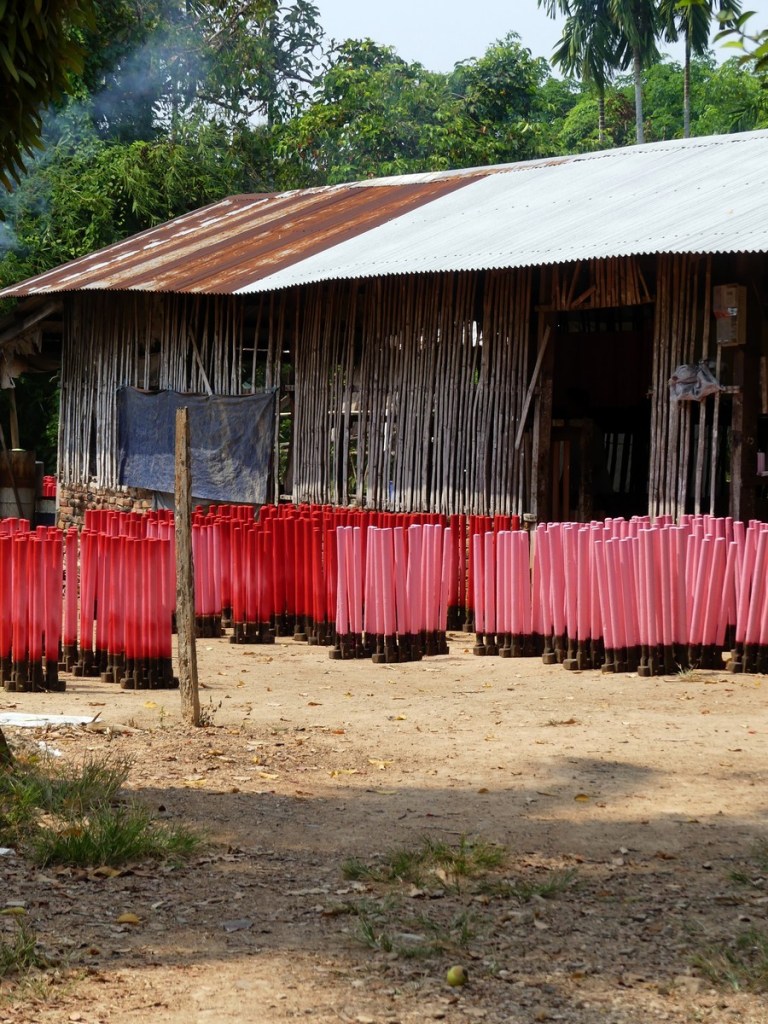
  2. houten palen worden in de gekleurde oplossing gedompeld en omgekeerd te drogen gezet. (Dus geen productie in het natte seizoen)
  3. de kapoten worden van de palen gerold en op een hoop gelegd.
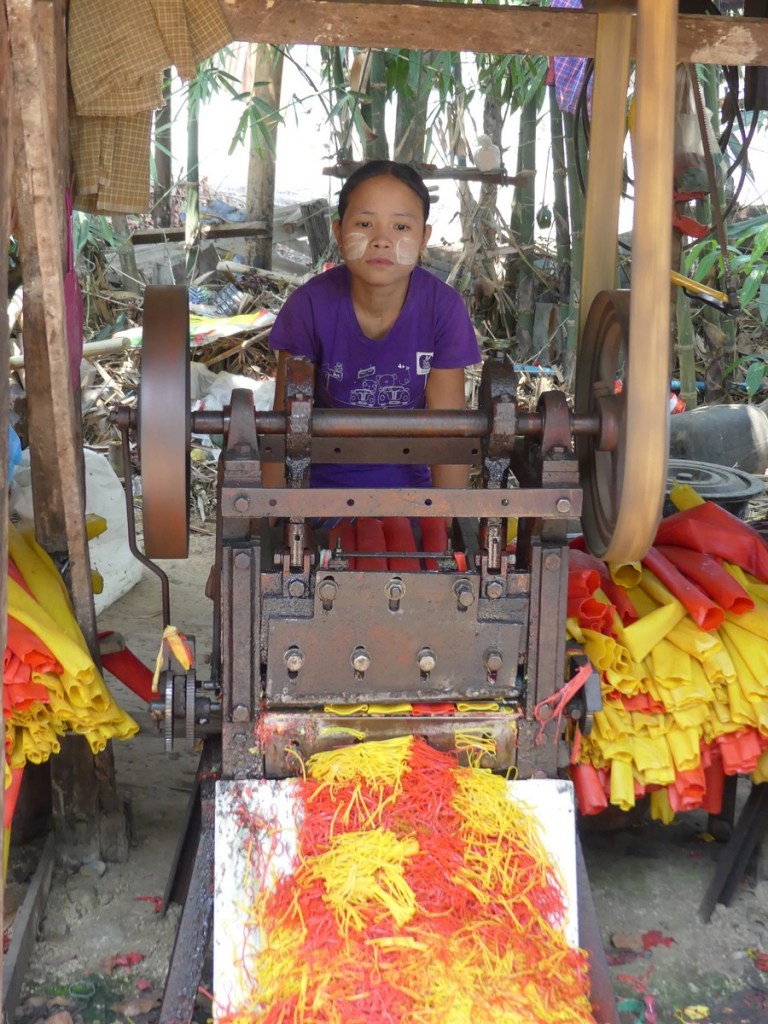
  4. De rubbers worden onder een snijmes in fijne reepjes gesneden
  5. De reepjes worden opgeraapt met een soort van stemvork om de goede van de slechte elastiekjes te scheiden. De elastiekjes worden nog eens op een grote hoop gedumpt om nog wat te drogen in de zon, vooraleer ze in zakjes gestopt worden.
  6. De toegebrande zakjes met elastiekjes worden blijkbaar over gans Myanmar verkocht en gebruikt.

De mensen van de elastiekjesfabriek verdienen elk ongeveer 3EUR per dag,als het weer werken toelaat en aan het gekuch van de werknemers te horen is dit niet een echt gezonde bezigheid.

In Mawlamyine namen we een boot om via de rivier naar Hpa-An te varen. Een trip van 6 uur, onderbroken door een halfuurtje bezoek aan een klooster langs de rivier. Het klooster was idyllisch rustig, er waren enkele moniken en een paar devote Burmeese bezoekers. Verder was er niemand.


In tegenstelling tot vele anderen hebben monniken geen last van luizen.

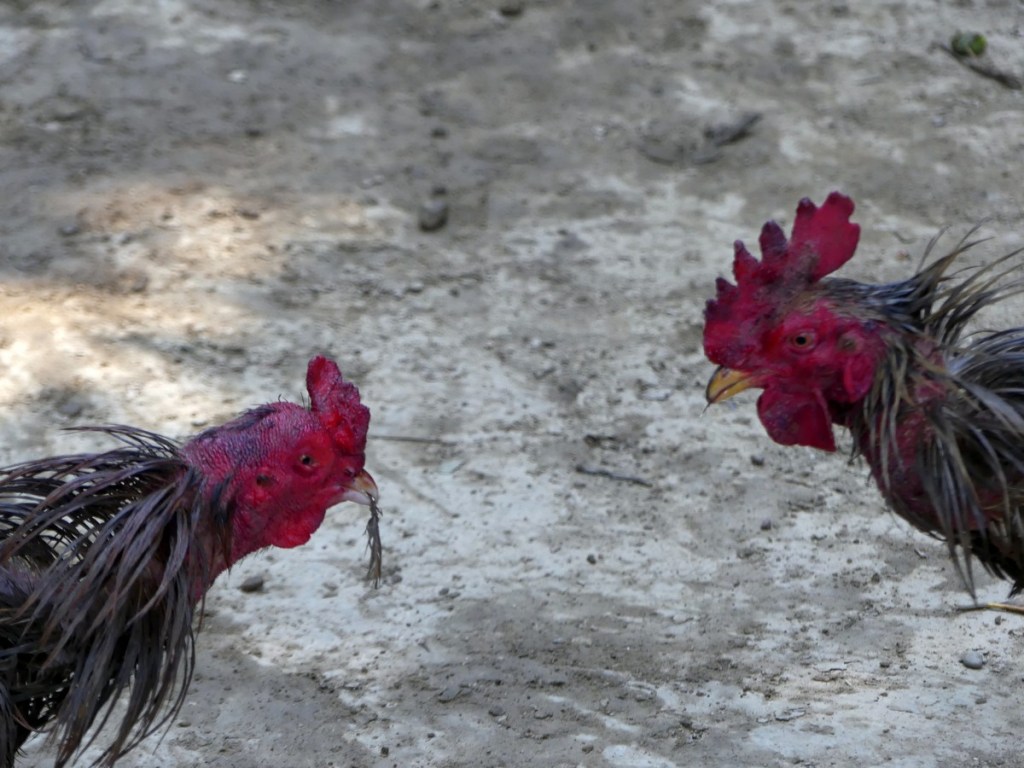
Op de terugweg van het klooster naar de boot kwamen we wel iets meer aktie tegen: een hanengevecht. Twee hanen met hun verzorgers (nou ja, managers) werden flink opgehitst door geblaas op hun achterwerk. (Ieder zijn ding he). Toen de hanen allebei moe waren werden ze elk in hun hoek van het canvas bijgewerkt door hun verzorger: kop gewassen, een soort van drug (suiker?) werd met water geforceerd binnengeduwd en er werd een pluimpje aan beide kanten van hun kop gestoken. Toen gingen ze weer tegen elkaar tekeer. Net toen ik wou te weten komen waar dat pluimpje goed voor was, werden we weggeroepen omdat onze boot terug ging vertrekken. Nu gaan we het geheim van de pluimpjes nooit weten..
Na een verdere tocht van 4 uur op de rivier, waarbij we kiezelbaggeraars en kanos volgeladen met grote families tegenkwamen, kwamen we aan in Hpa-An. Dit is een niet toeristisch stadje (want moeilijk bereikbaar) dat toch een paar heel leuke attrakties te bieden heeft. We bezochten twee grotten met mooie Buddha vereringen, een bedevaartsoord op de berg en we kwamen een groepje schoolkinderen tegen die een traditioneel dansje aan het instuderen waren. Vooral de beklimming van de Zwe Ga Bin berg was een ervaring: in het dal, bij de Lambini Garden, stonden 1100 bouddha in symmetrische opstelling tegen een achtergrond van de 723 meter hoge berg. We deden er twee uur over om boven te geraken (bij een temperatuur van tegen de 30 graden), namen boven een uurtje de tijd om de bouddha’s en de gelovigen in ogenschouw te nemen bij het nuttigen van een glaasje Birma thee, en keerden dan terug naar beneden langs dezelfde steile trap, maar wel een half uurtje vlugger. Een leuke ervaring waar we de dag nadien nog hebben kunnen van genieten (in de bovenbenen).

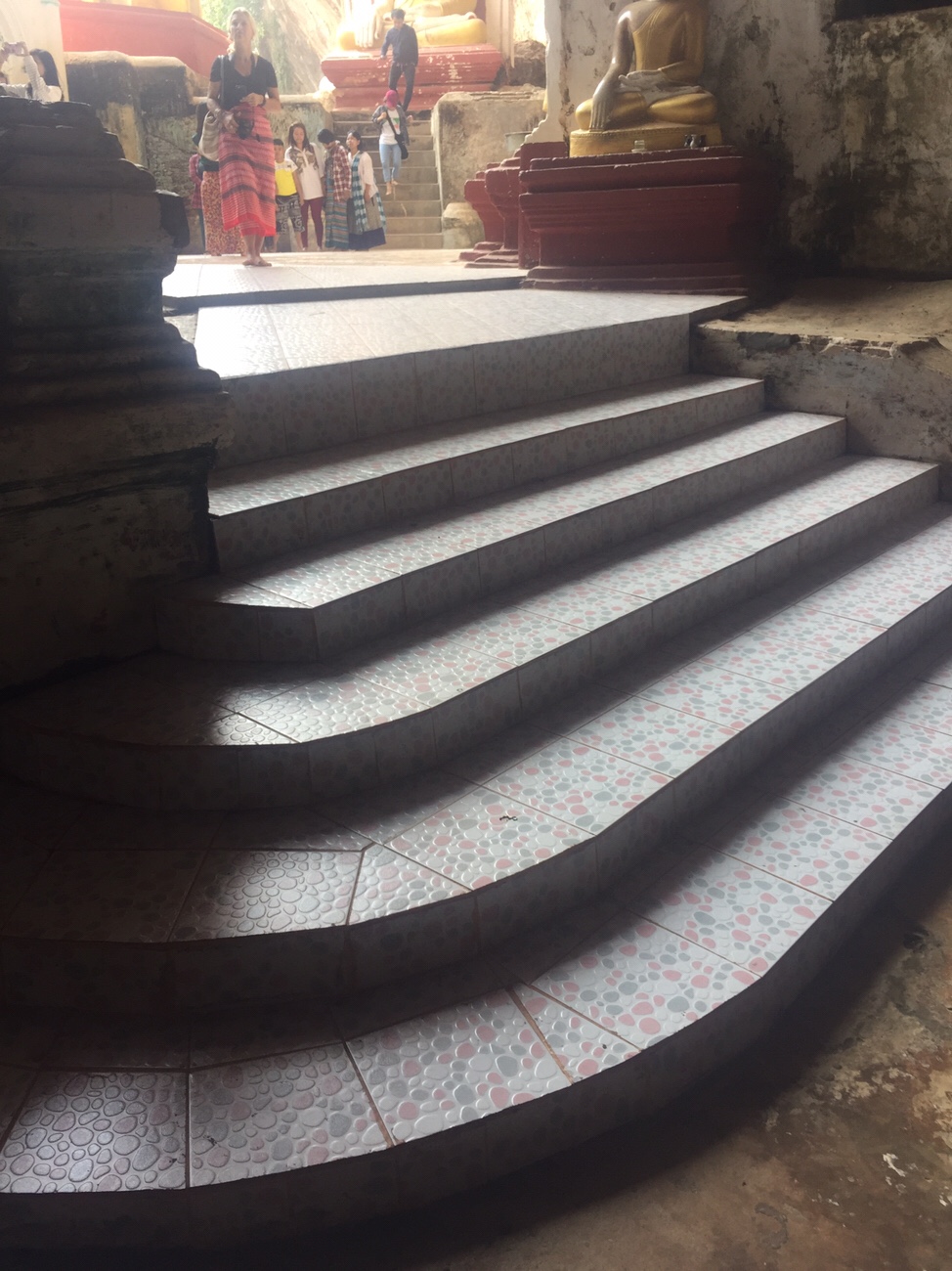
In de tempels moet je altijd goed uit je doppen kijken, ook in het halfduister. De bouwheer kijkt niet op een paar centimeter afwijking op de hoogte van een trede

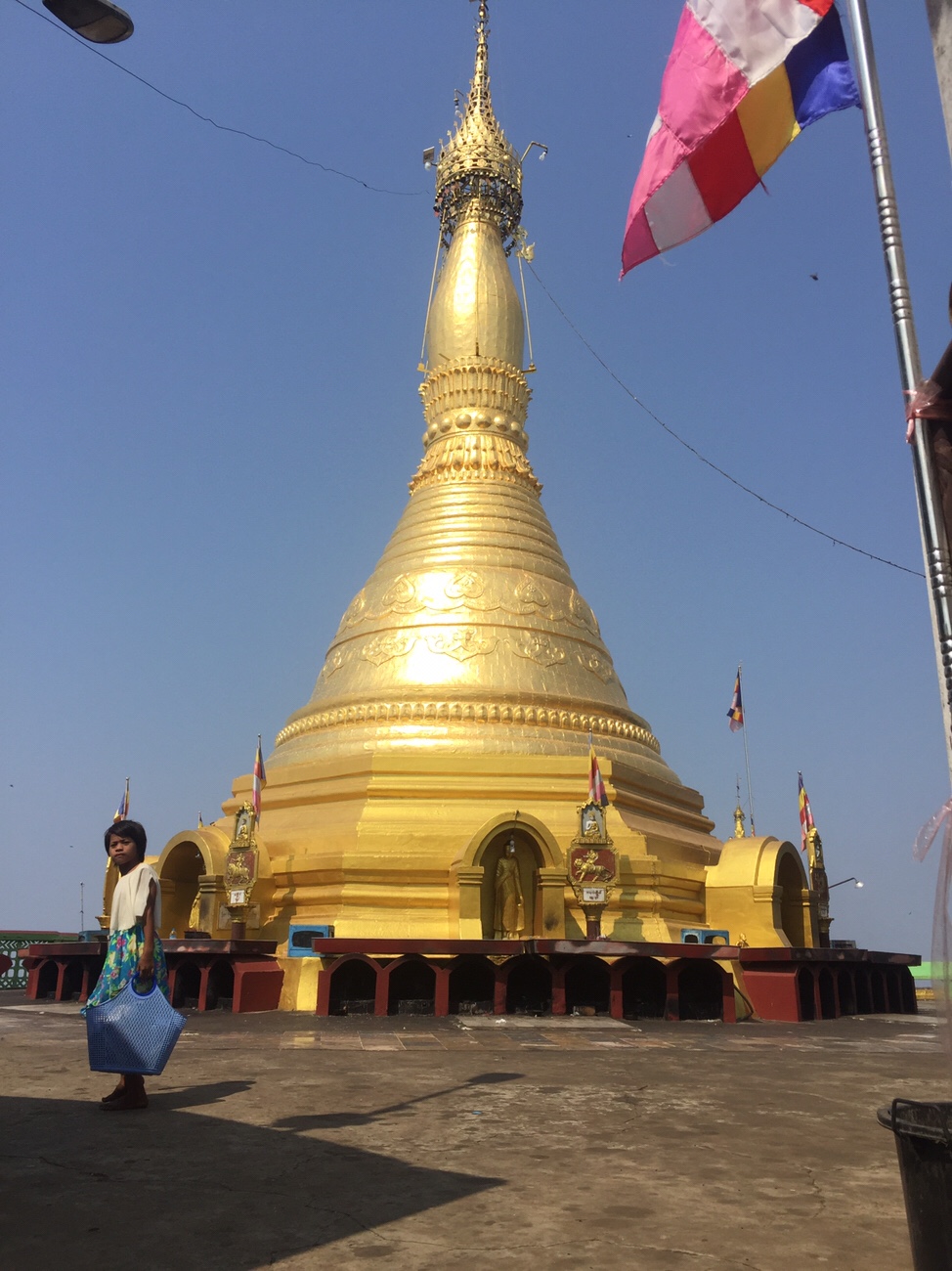
Elke speciaal wankele rots of hoge berg huisvest een pagode. Ook deze hebben we beklommen! (Maar ‘t was maar 50 meter hoog)

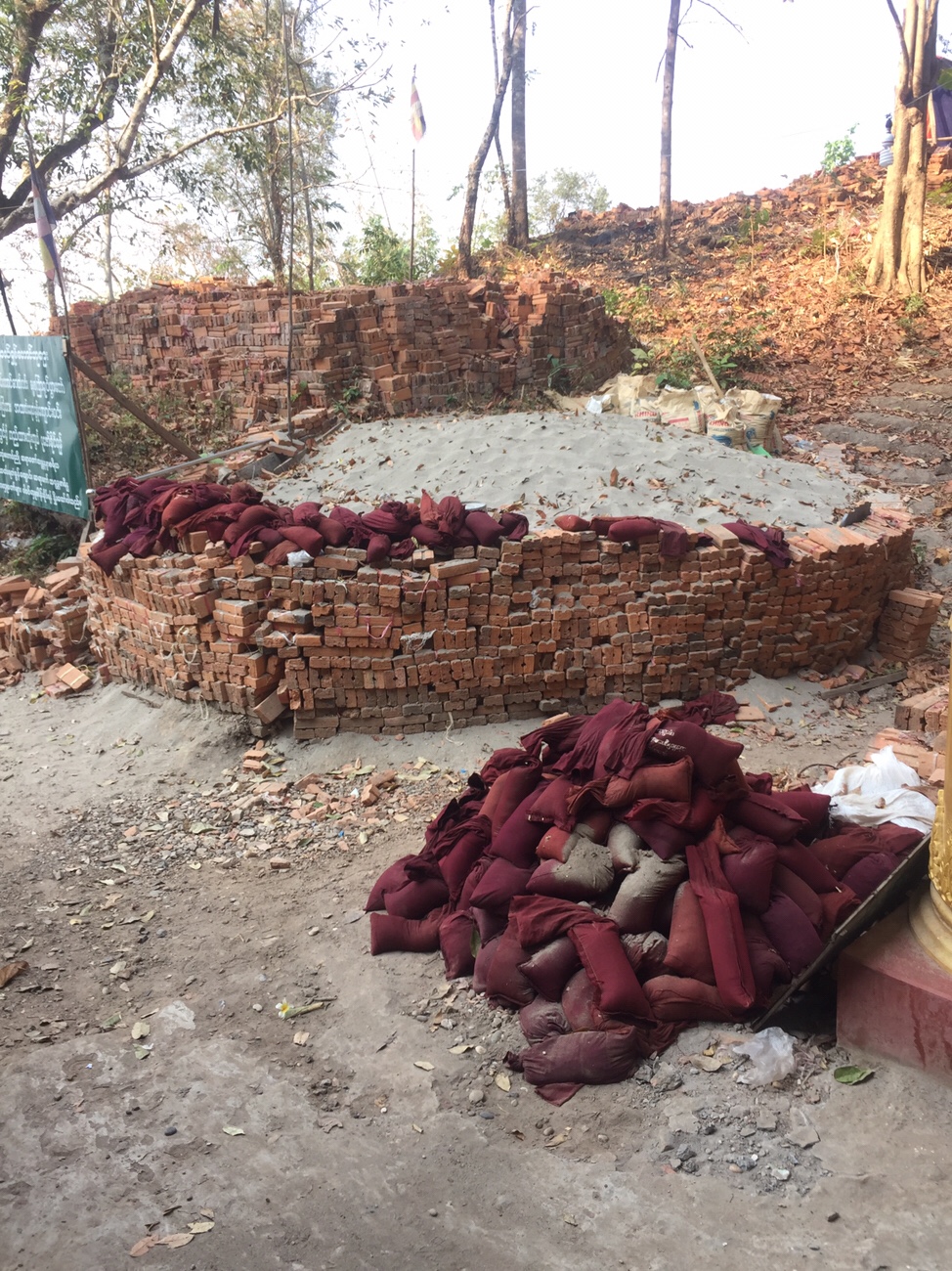
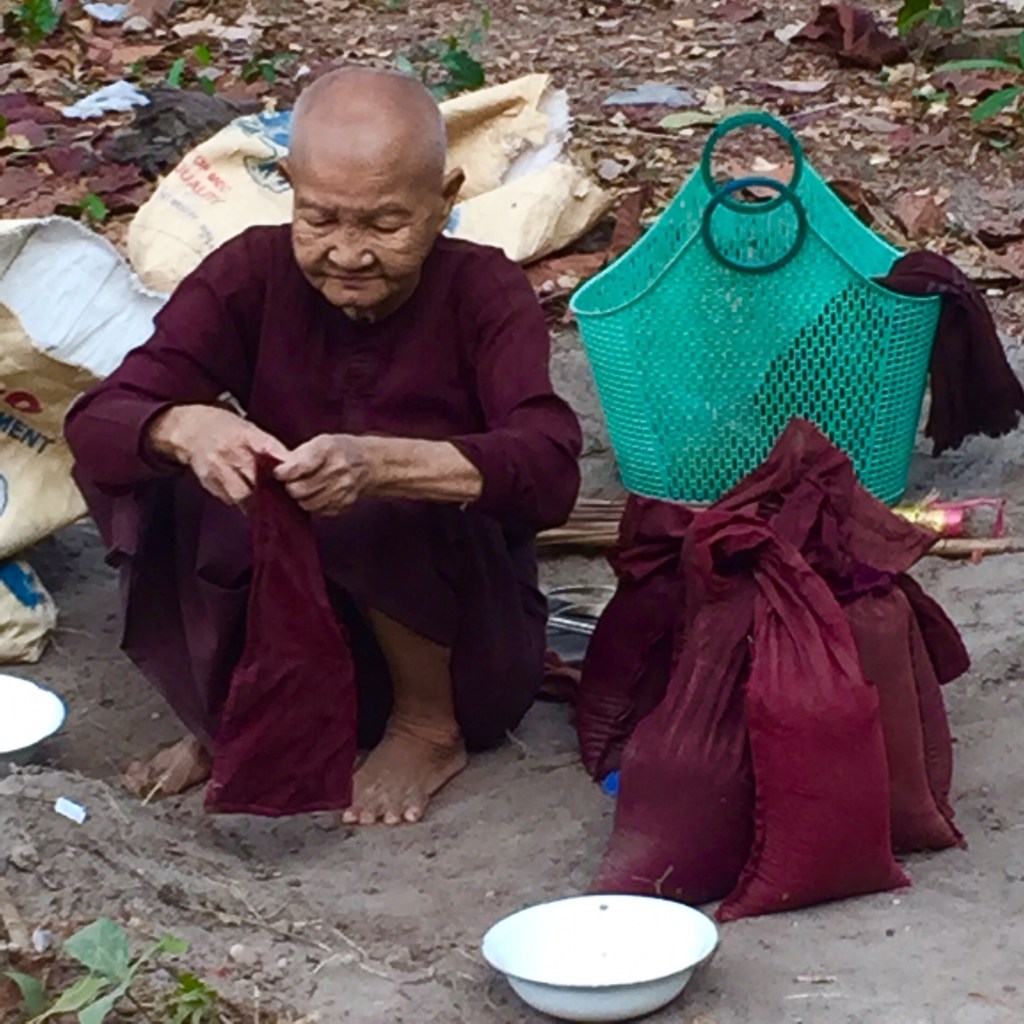
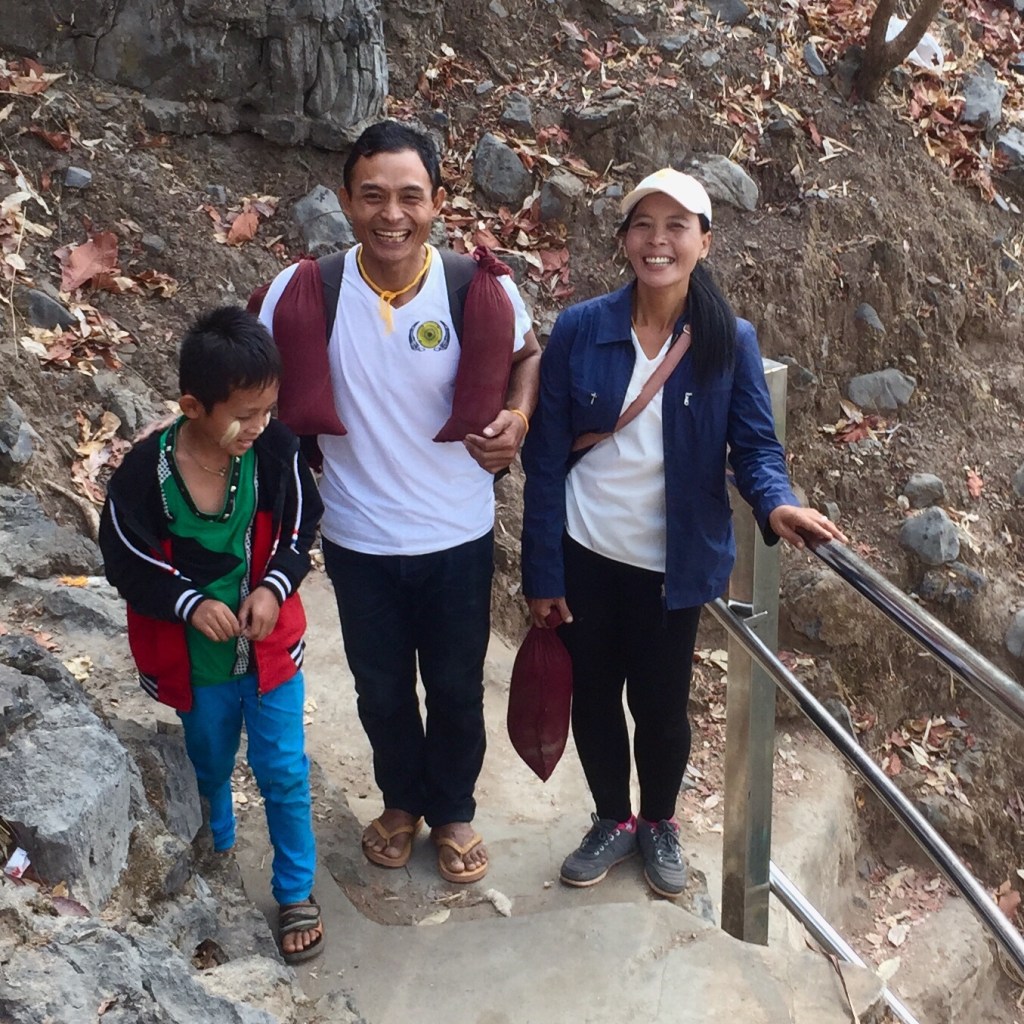
Veel gelovige Burmanen beklimmen ook de berg. Wij vroegen ons beneden af waarom er een monnik zand in pijkleurige zakjes zat te scheppen. Het bleek dat je je verdienstelijk kan maken voor de bouddhisten als je een pakje bouwzand of een baksteen deels meeneemt naar boven. Deze man droeg er zelfs 4!

Na een honderd hoogtemeters mochten de bakstenen of het zand achtergelaten worden.

Daar links in de verte trekken we naar toe. Maar nu moet ik gaan want anders kan ik Ilse niet meer inhalen…

En ‘t was toch weer niet een stupa die daar boven stond zeker!

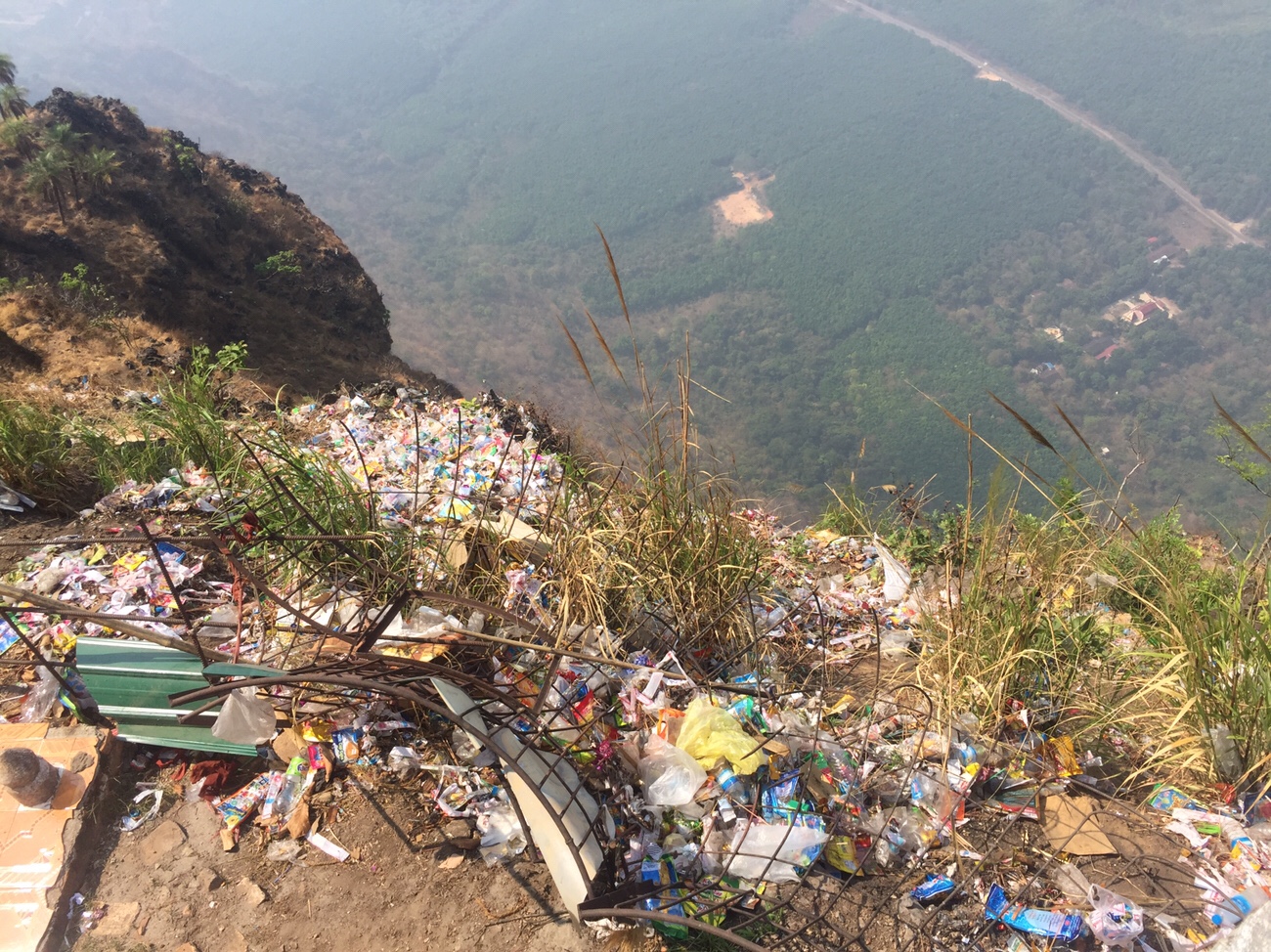
De keerzijde van de berg: de afvalberg. Ook dat is Myanmar.

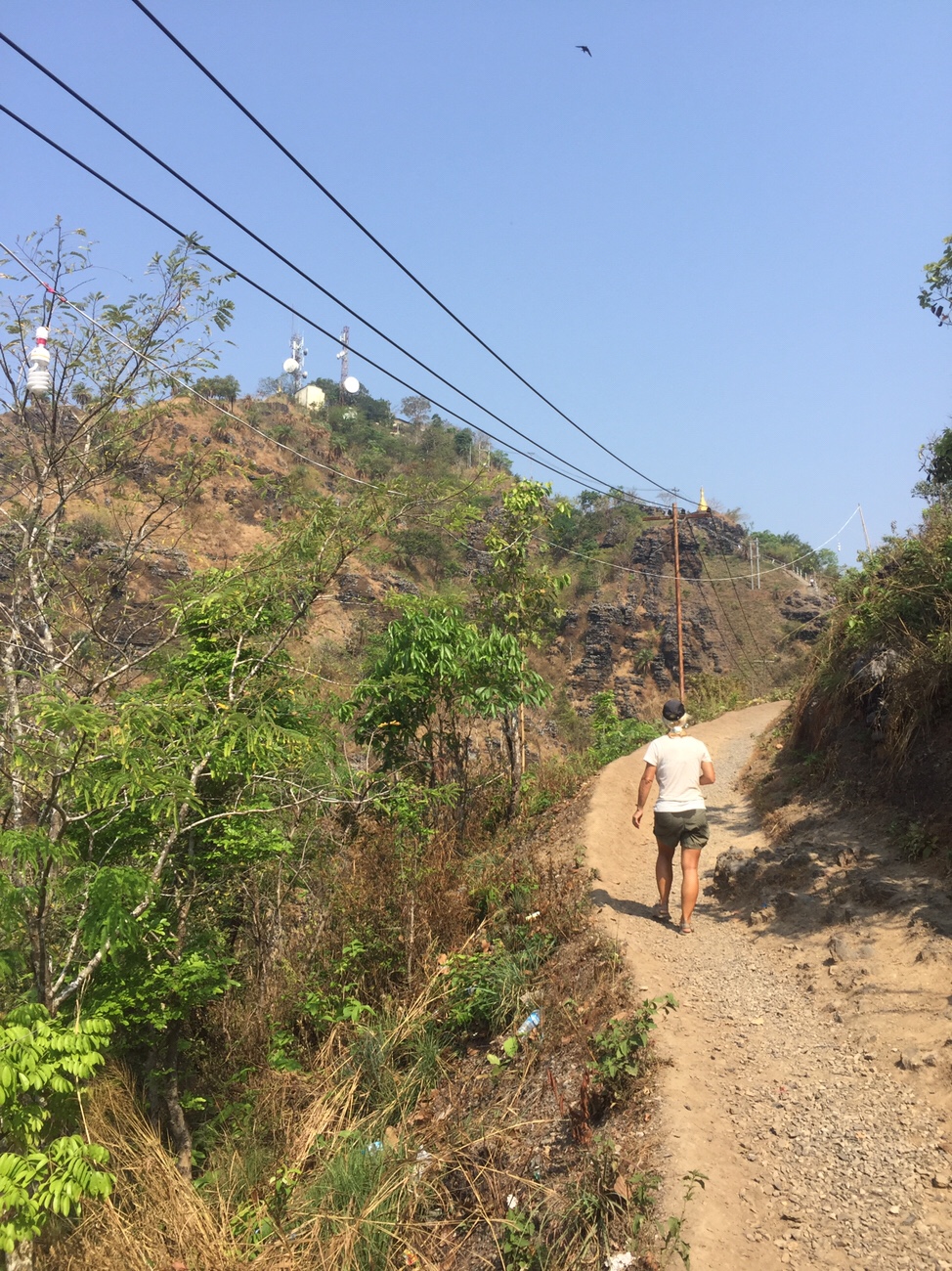
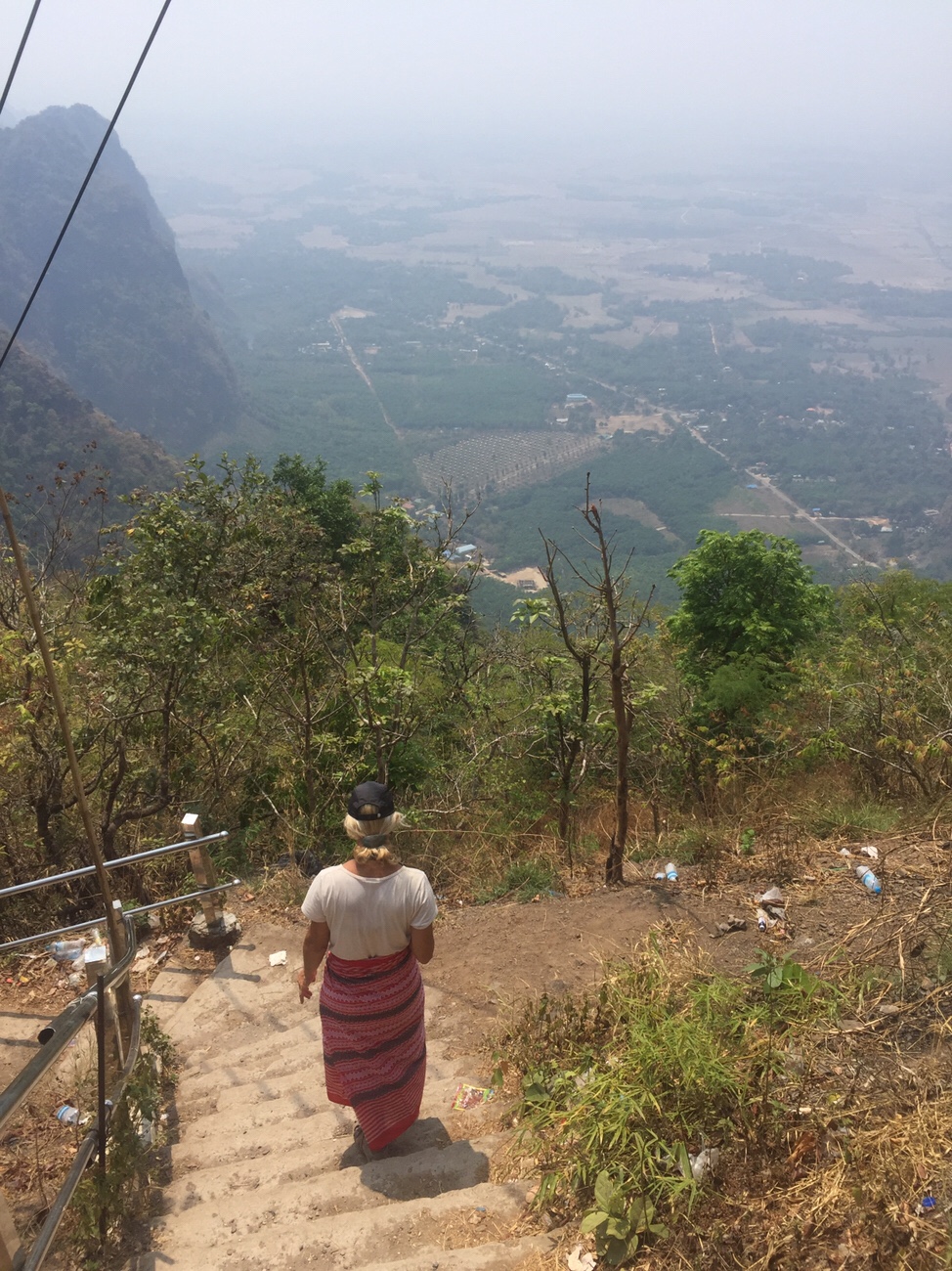
Het begin van onze afdaling terug naar de vallei en zijn 1100 budhha’s. Onderweg kwamen we ook vele koppeltjes tegen die de berg beklommen, maar soms moesten de meisjes haast de berg opgedragen worden… En dan ineens zie je 80-jarige vrouwen die zonder forceren de berg opmarcheren met het doel om voor donker boven te zijn. Boven is er voor de Burmanen steeds onderdak en eten te verkrijgen.

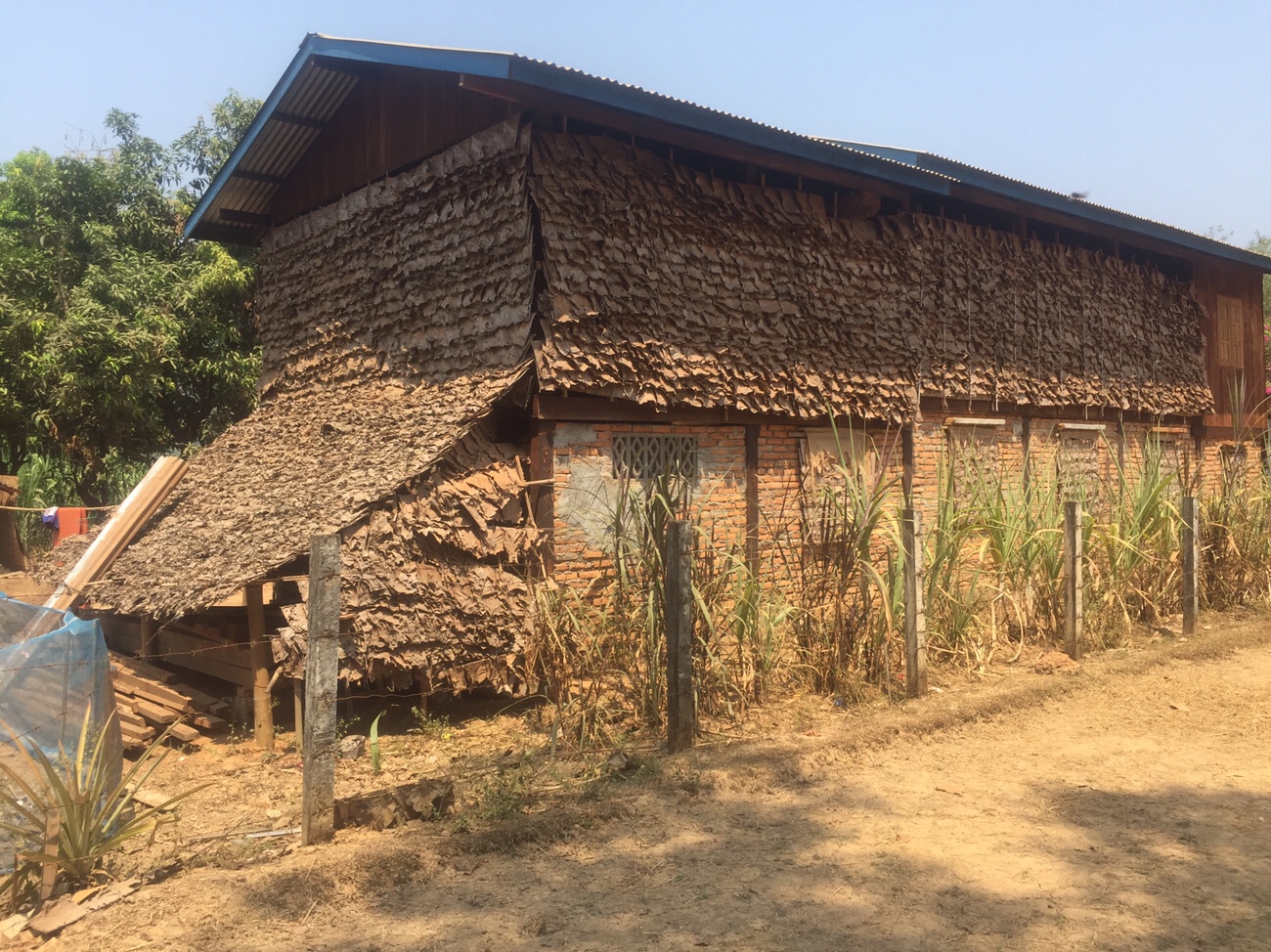
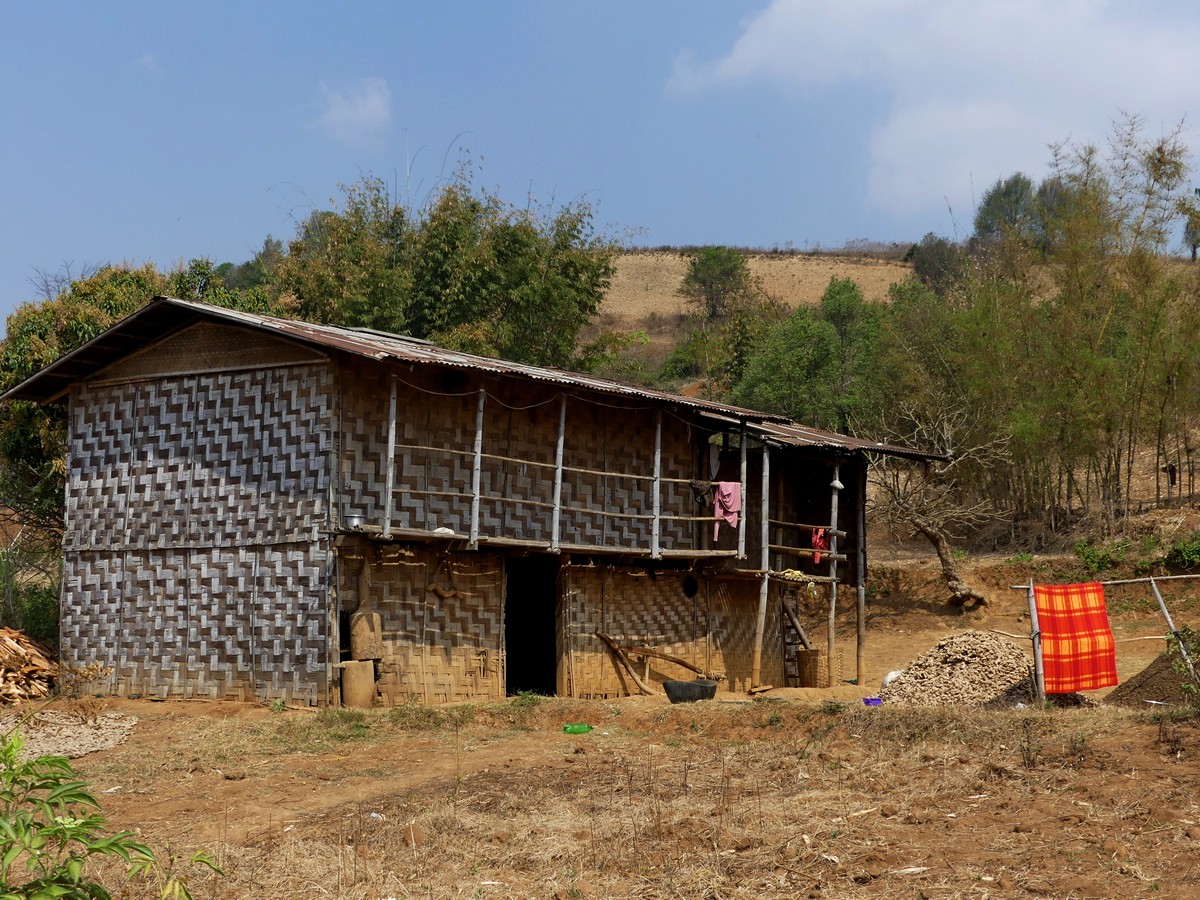
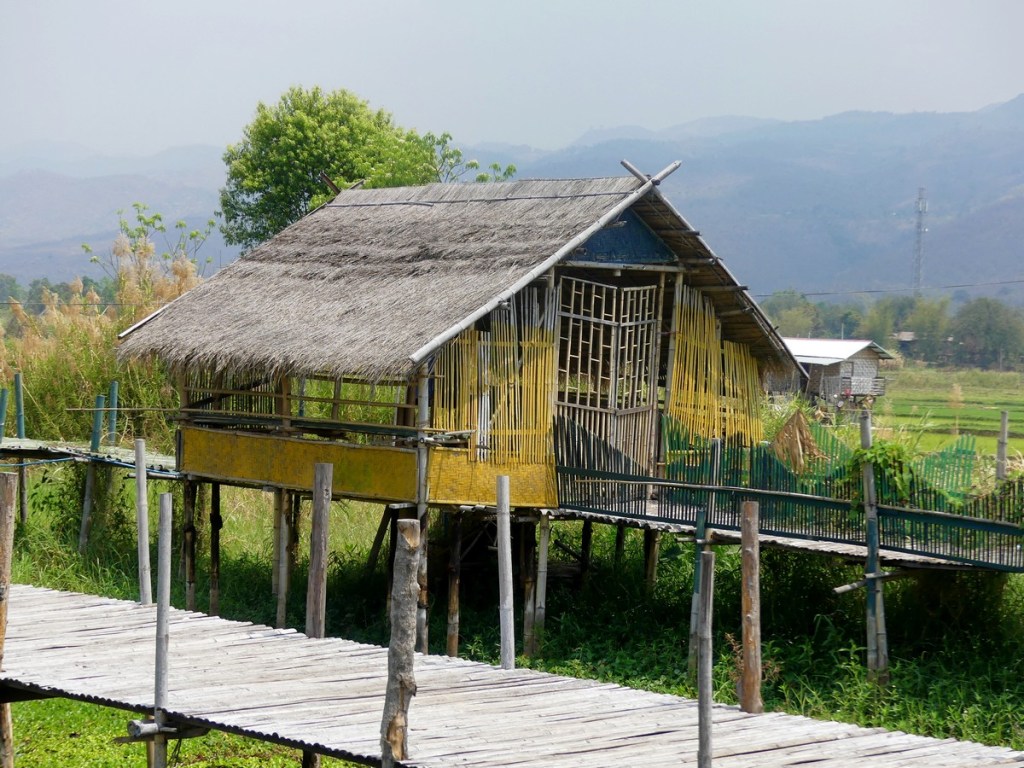
Omgeving van Hpa’An met de scooter: traditionele woning met bananenblaren dak en zijkanten

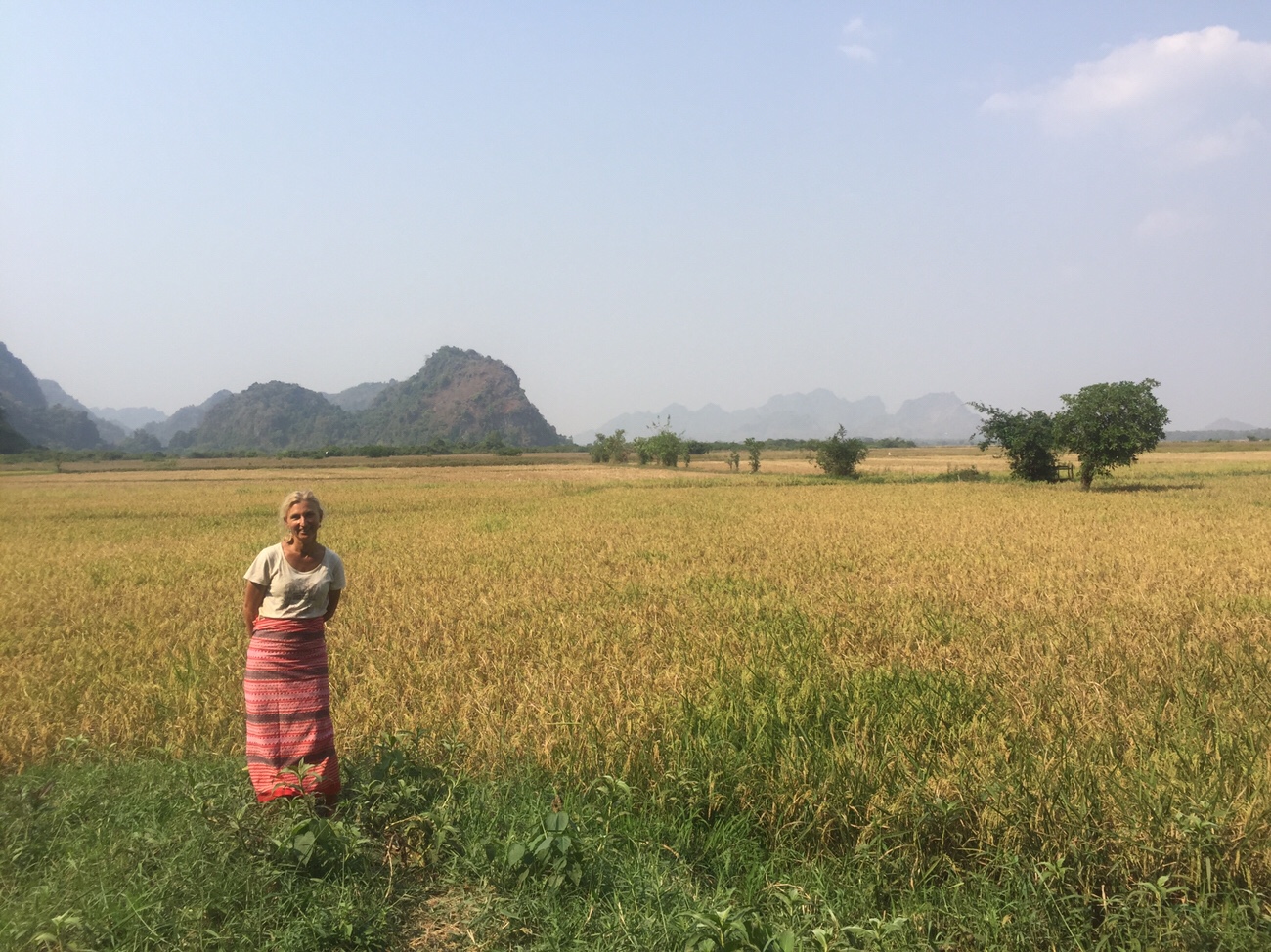
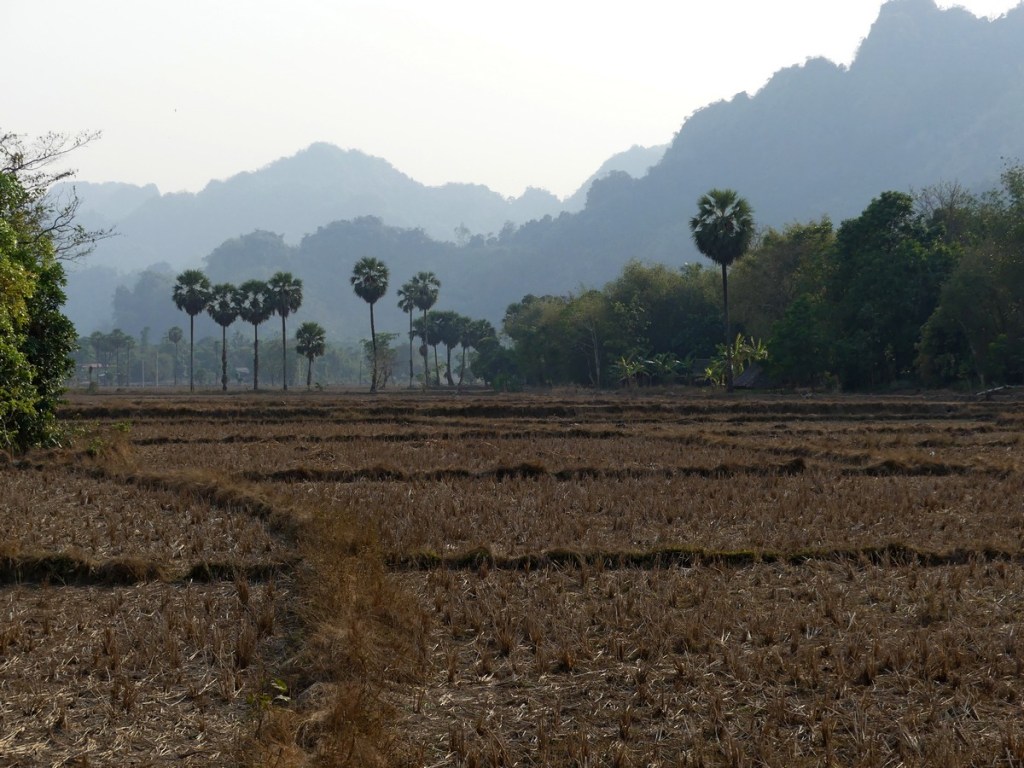
Net buiten de Saddan cave: goudgele rijstvelden. Mooi.

traditioneel huis

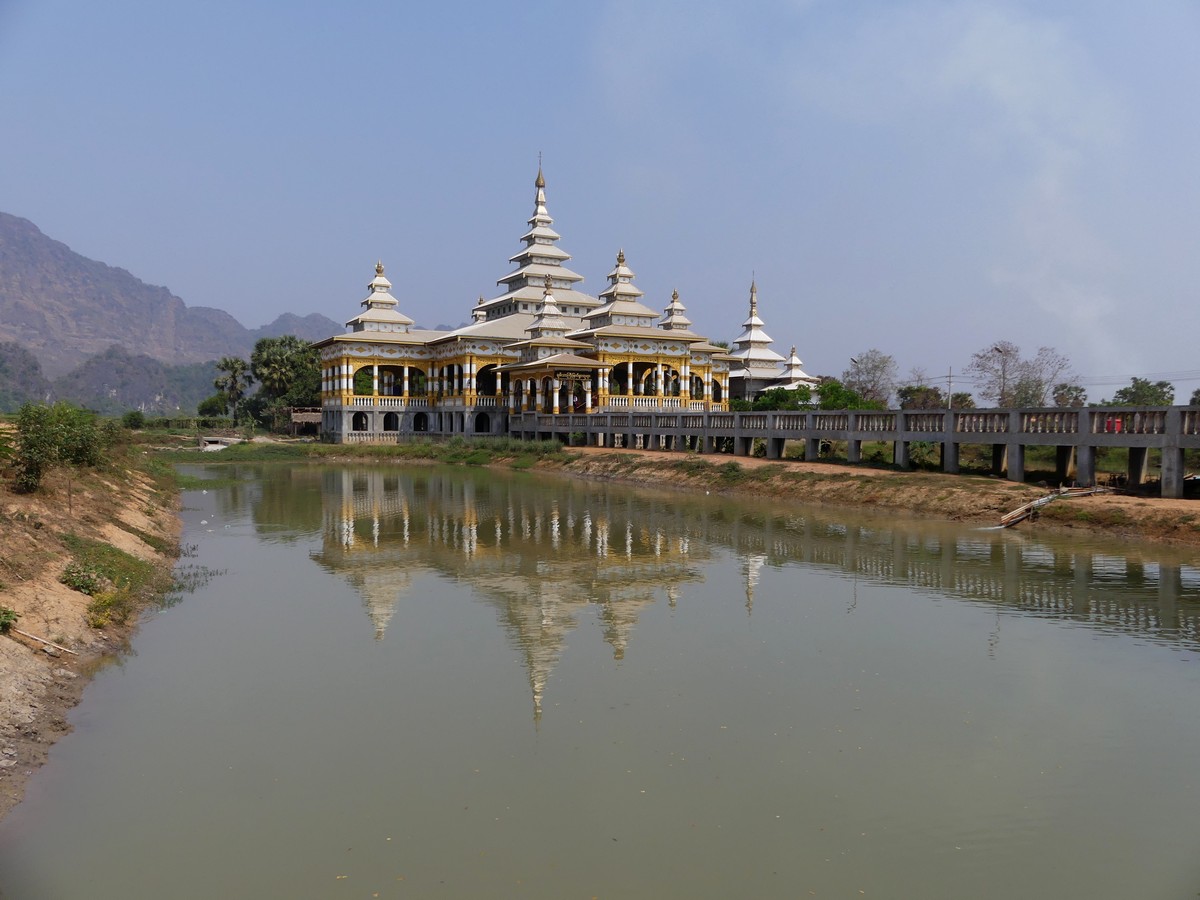
Een van de vele tempels, maar ze zijn allemaal anders

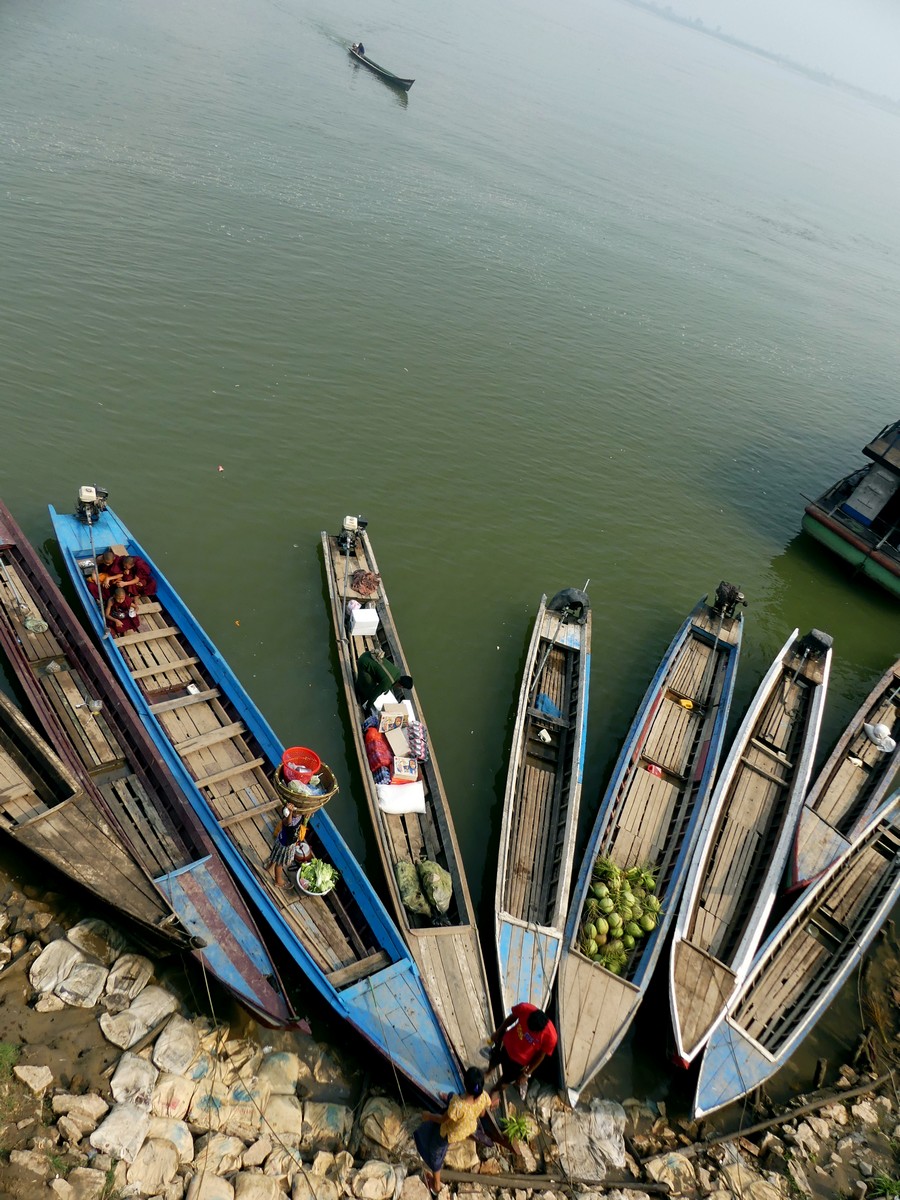
Hpa-An mensen van het platteland komen waren kopen en verkopen via de rivier

Lambini garden

Durex Myanmar afdeling

Een Belgische schone tussen de Birmaanse
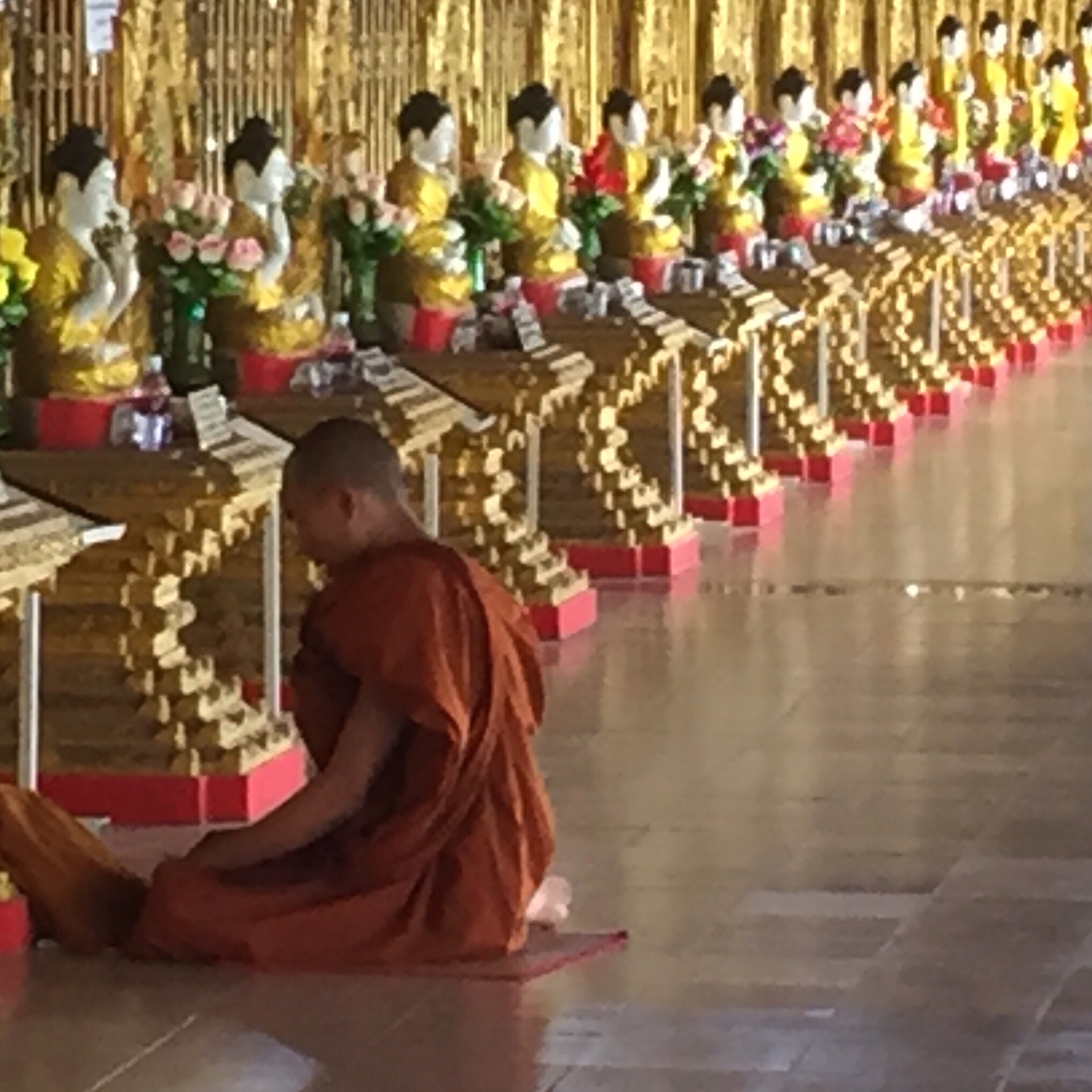
Er zijn steeds genoeg Buddha’s voor elke monnik

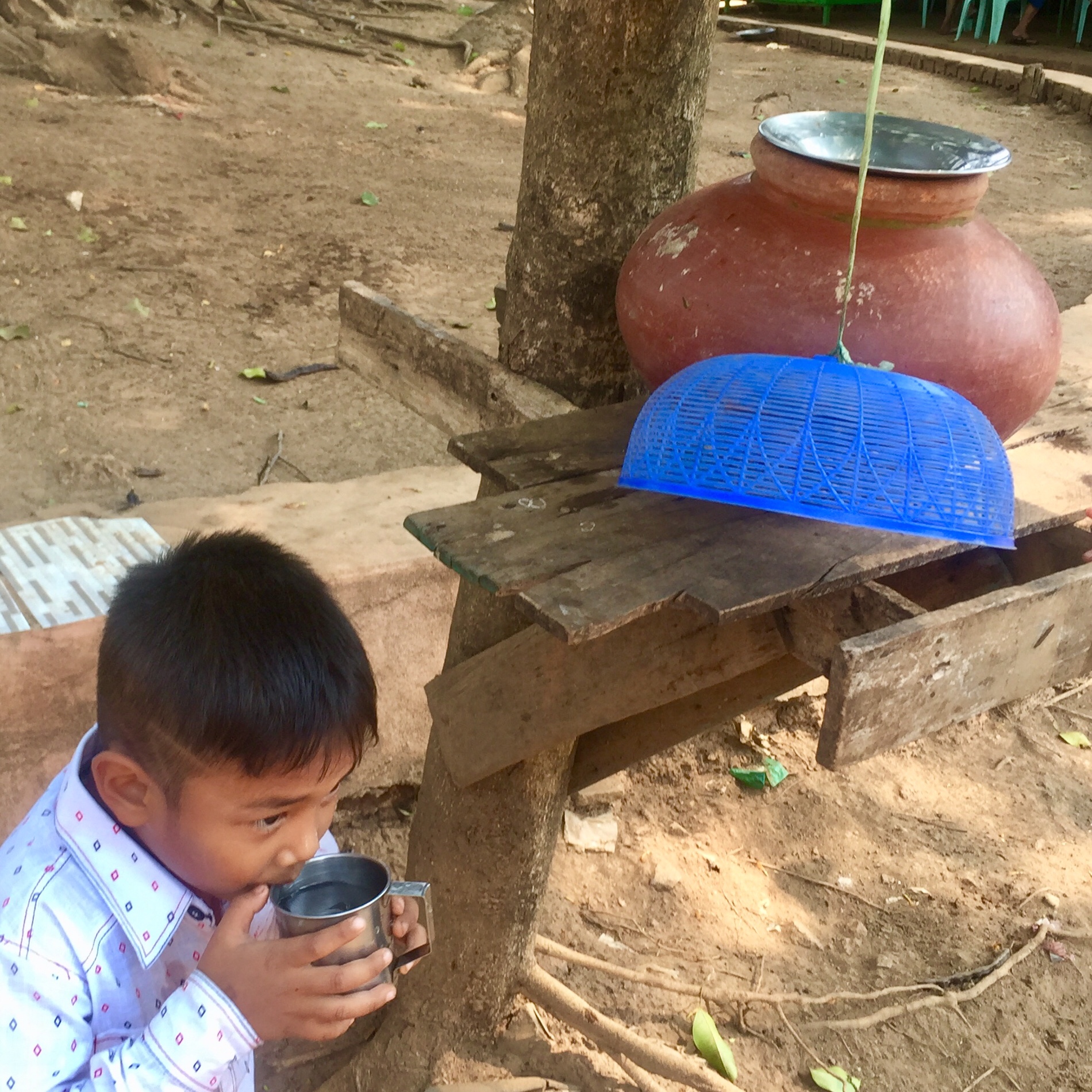
Overal vind je openbare waterkruiken om je dorst te lessen

Onze gids op het eiland: Antoine/Antonio/Antoon/Anthony

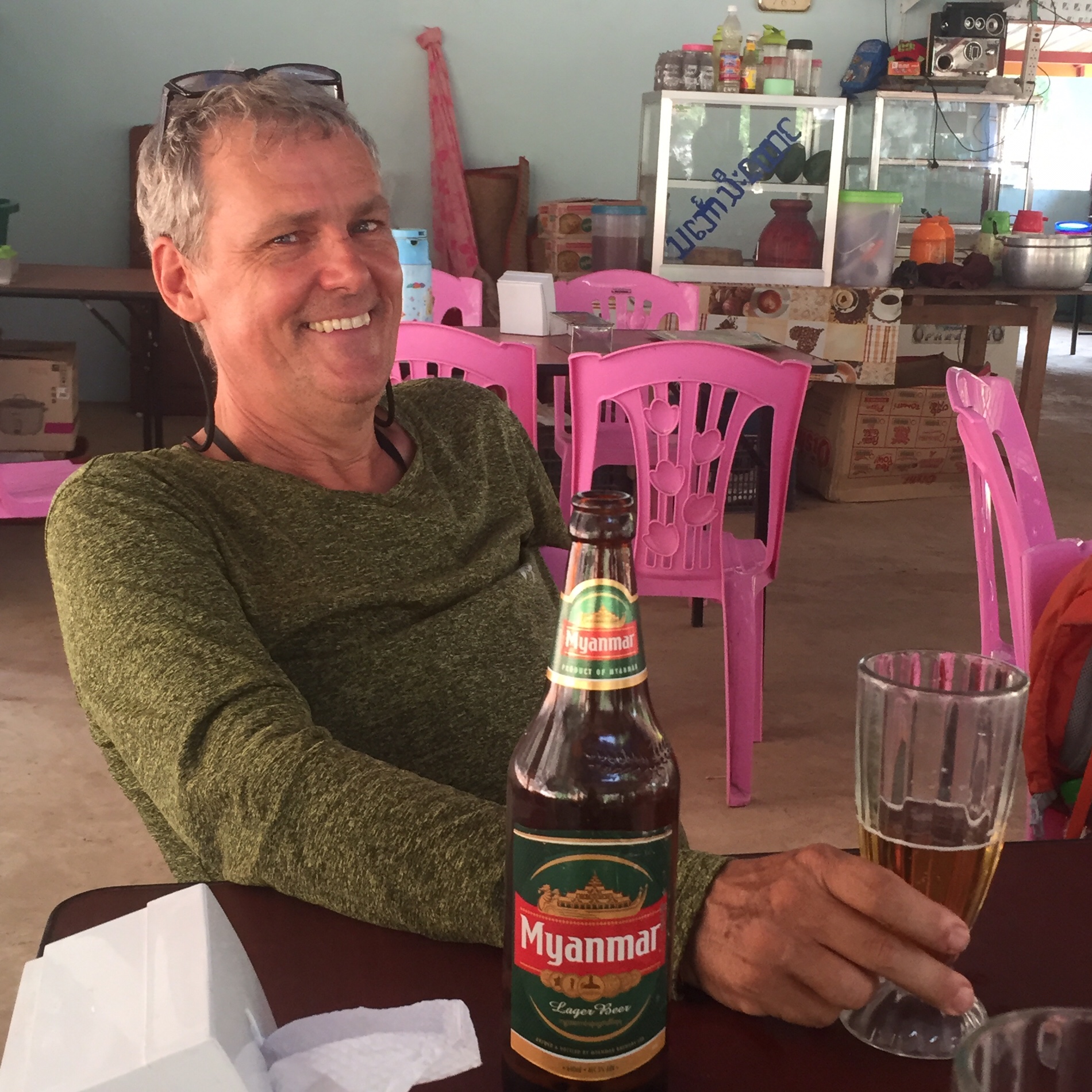
Het is wel geen Orvelo, maar het gaat binnen (geserveerd in het niet zo bijpassende glas… )

Alle budha’s noemen hier Waldo. Waar is Waldo?

Myanmar maart 2017: wegconstructie

Op onze tocht doorheen Myanmar zijn we een aantal keer op wegenwerken gestoten. Dat was wel leuk want ik beeld me in dat dit in de jaren 50 er in Belgie wellicht ook zo aan toeging.

Ik heb een aantal foto’s en video’s ervan gemaakt. Van onze reporter ter plaatse:

Vrouwen doen 90% van het werk, dat valt steeds op.

Hier is het grootste werk al achter de rug: het effenen van de ondergrond. Aan de zijkant worden de keien volgens grootte geschikt. Eerst gaan de grootste keien zorgvuldig gerangschikt op de zandondergrond. Daartussen komen de kleinere keien zodat er een effen ondergrond ontstaat.

Dan wordt het pek of teer opgewarmd, met natuurmiddelen:

Daarna wordt het vloeibare teer op de steenslag gegoten (mannenwerk):

en dan komt het vuile werk: steenslag op de teer (vrouwenwerk):

en nog een beetje aanrijden met de pletrol, laten drogen en de weg is klaar voor gebruik.
 

Hiking from Kalaw to Inle Lake, the country side of Myanmar.
I am writing this while sitting in the cockpit of Sanuk in Noumea. We are back in the water and it feels good 🙂

A couple of weeks ago we were sitting on a nightly 10 hour bus ride from Hpa-an to Kalaw. After a not so comfortable ride, we arrived early in the morning in the centre of Kalaw and found a taxi to take us to our beautiful hotel, “Hillock Villa”. We had a fabulous breakfast and went for a walk back to town to find a hiking tour company we could join the next 2 days to Inle Lake. After visiting 4 of those we decided on not the cheapest (too many people in a group) and not the most expensive, Uncle Sam looked like a good choice and Trip Advisor confirmed this.

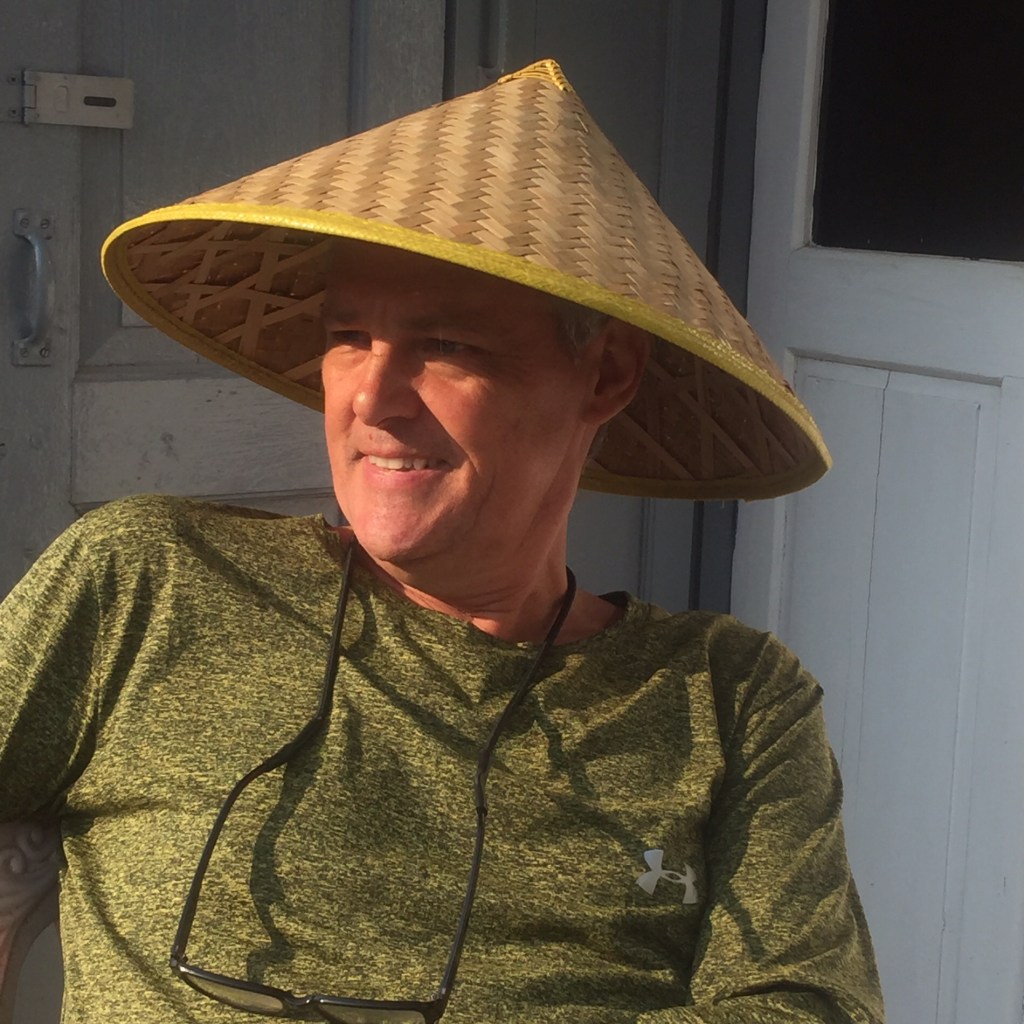
While in town we bought a hat for Stefan since he had left his other head 😉 somewhere in a restaurant.
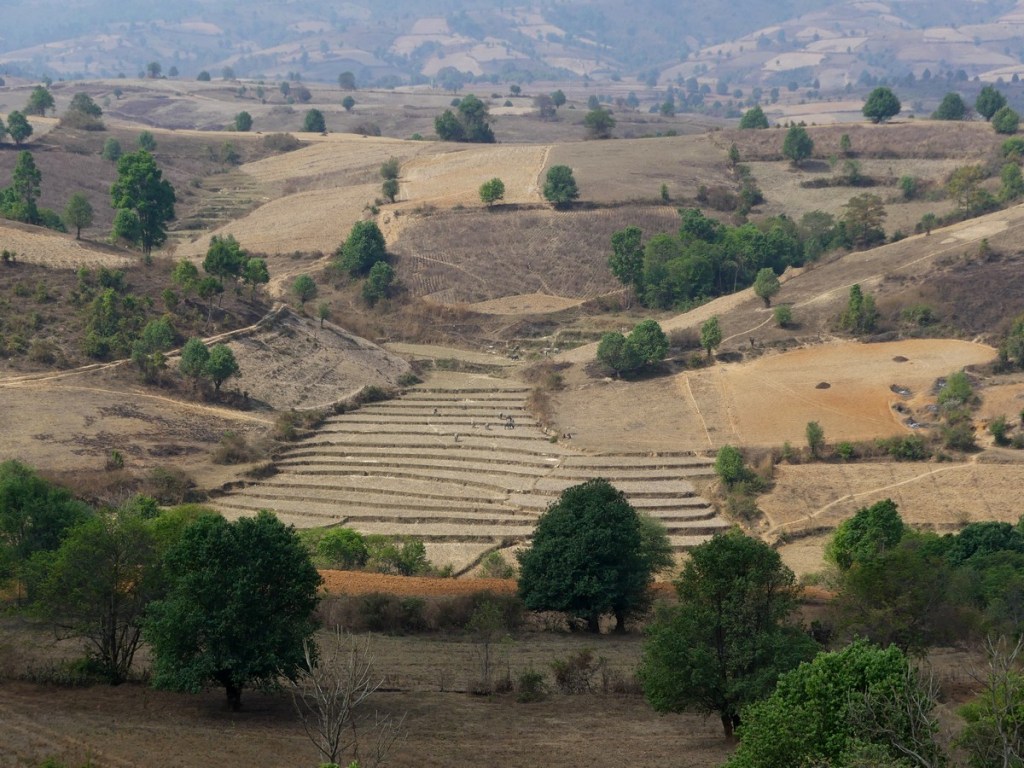
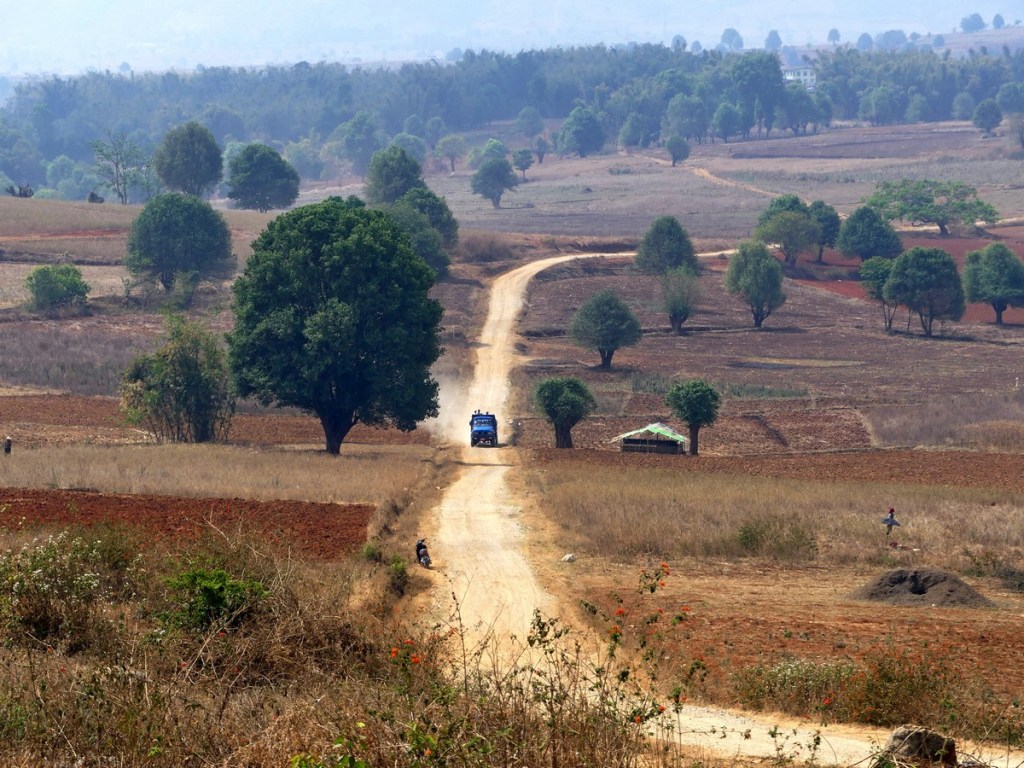
The scenic view at the start of our walk from Kalaw to Inle Lake. It is clearly the dry season ! The only crop in the ground is ginger. They are waiting now for the rains to come which will be in July.
The fun part of hiking with a guide is that you are able to connect so much easier with the people working in the farms and on the land.
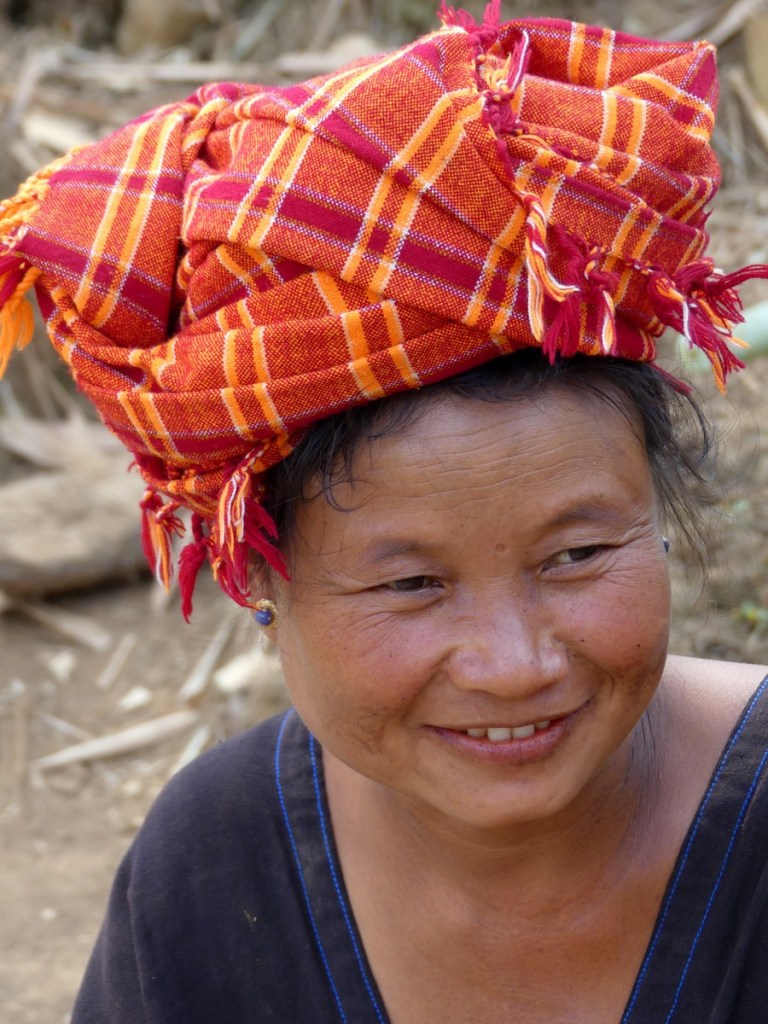
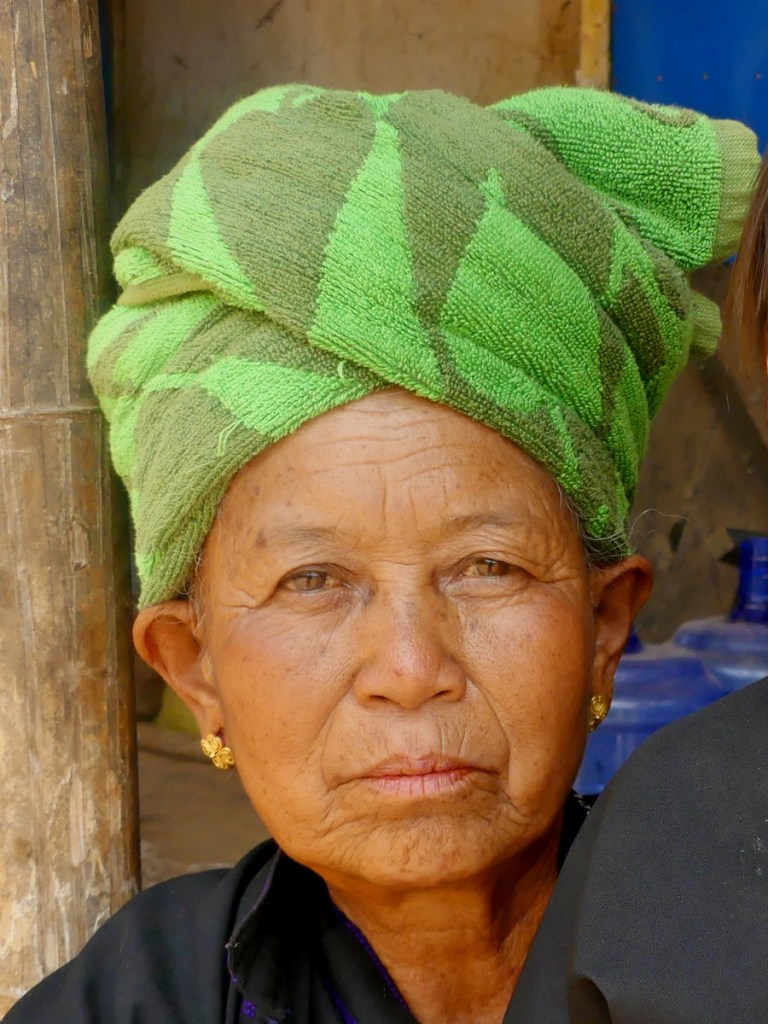
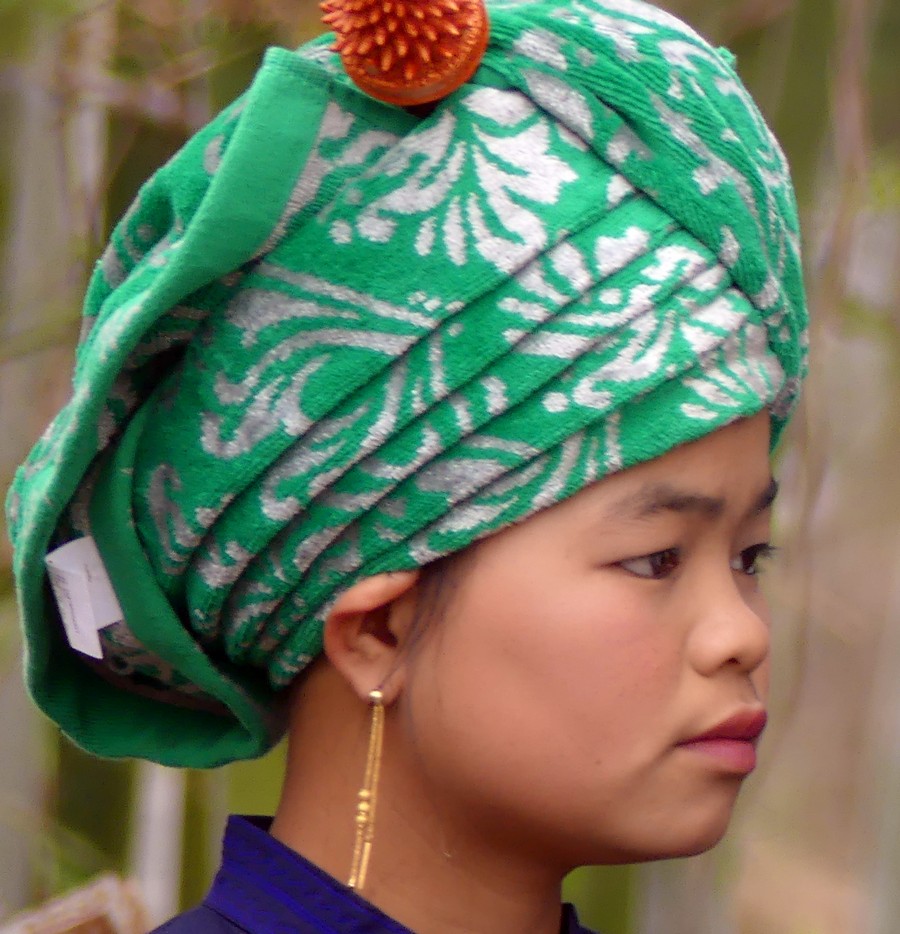
Beautiful women from the Pa’O tribe.
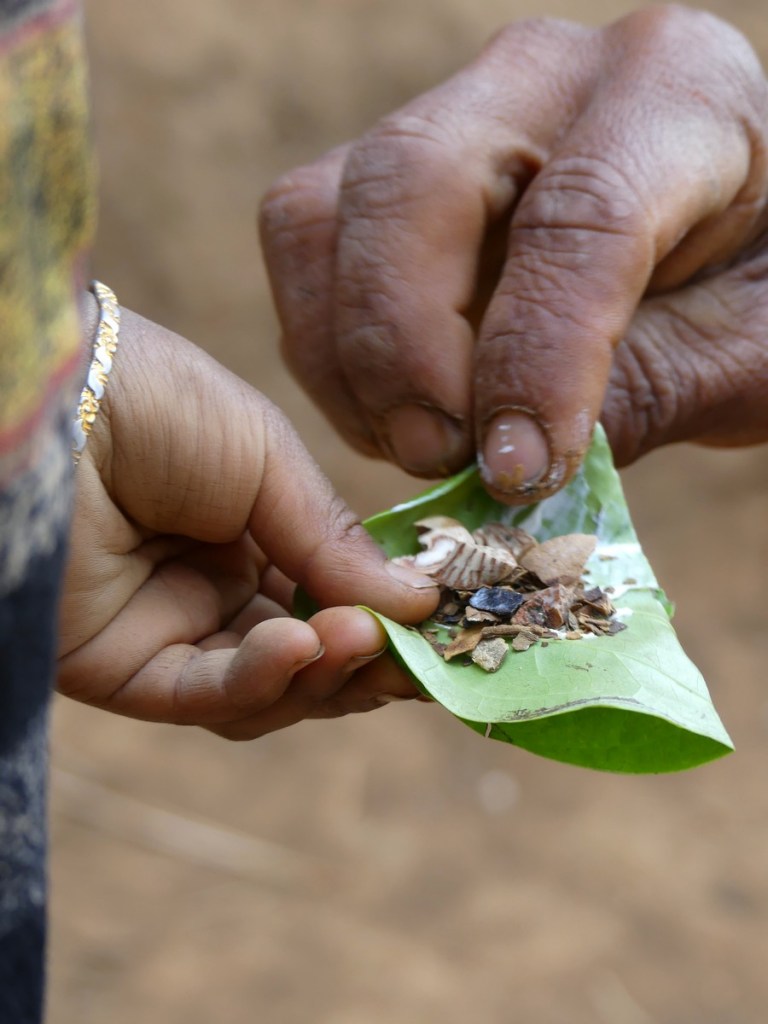
Kun-ya or betel nut chewing is one of the most popular traditions in Myanmar with men and women (a bit less). It is a mixture of betel nut (the areca nut) with slacked lime (calcium hydroxide) and catechu (black shiny piece) wrapped in a betel leaf. You have to place it between your cheek and gums and suck on it. Soon a red liquid will form in your mouth which you have to spit out. (hence the red spots on the pavement and streets) It is addictive and causes severe tooth decay and oral cancer in the long term. Everybody knows this but apparently it is too difficult to quit. The government has launched a anti-betel campaign because it is one of the leading causes of death in Myanmar.
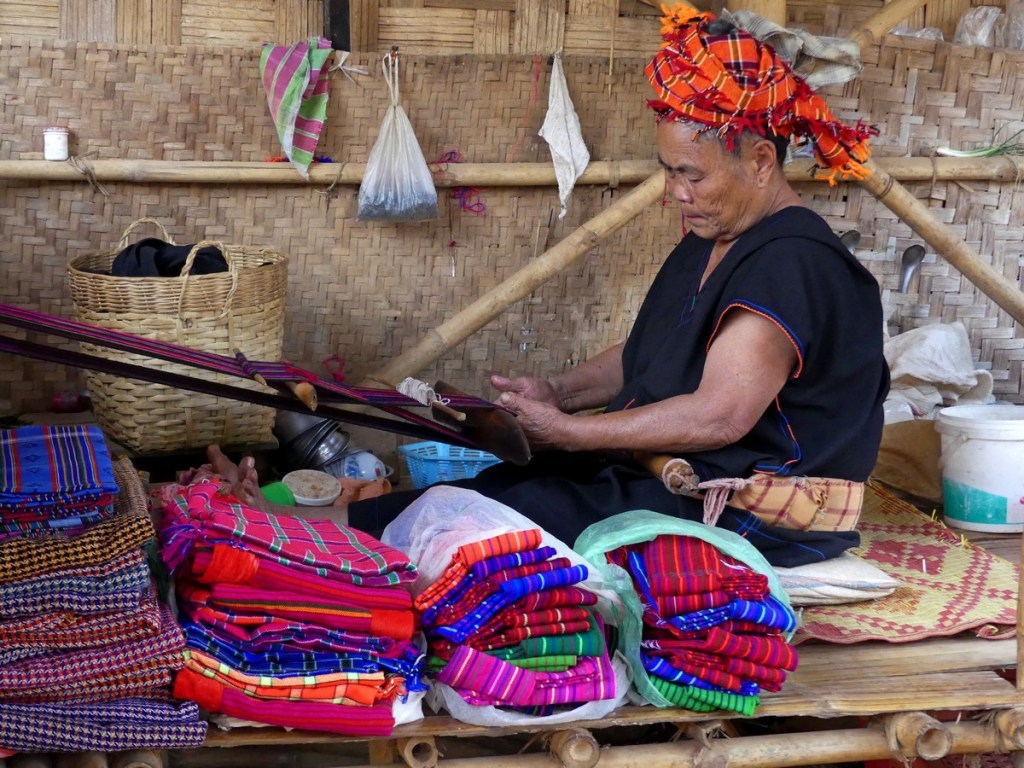
At 76 years old she is still working hard, sitting on just a mat weaving. I admire these strong women.
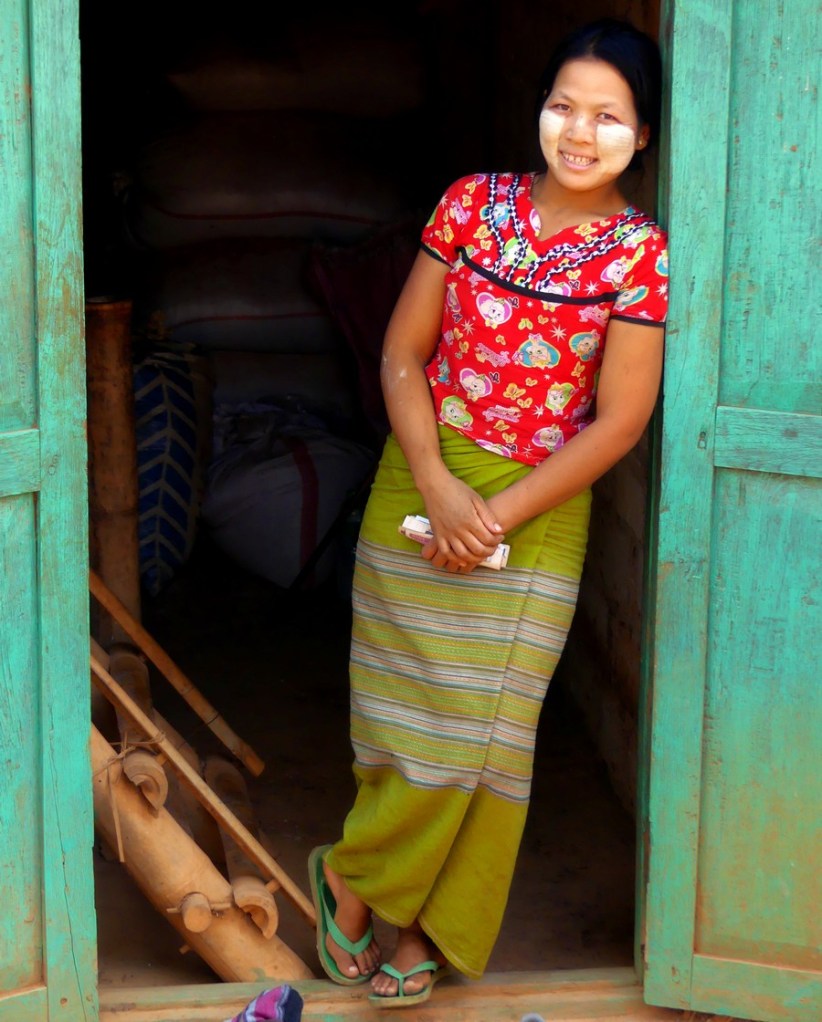
The typical Burmese woman, smiling with thanaka paste on their face. Thanaka is worn as a protection for the sun but mostly as a make-up. It is said that Burmese have been using thanaka for over 2000 years.
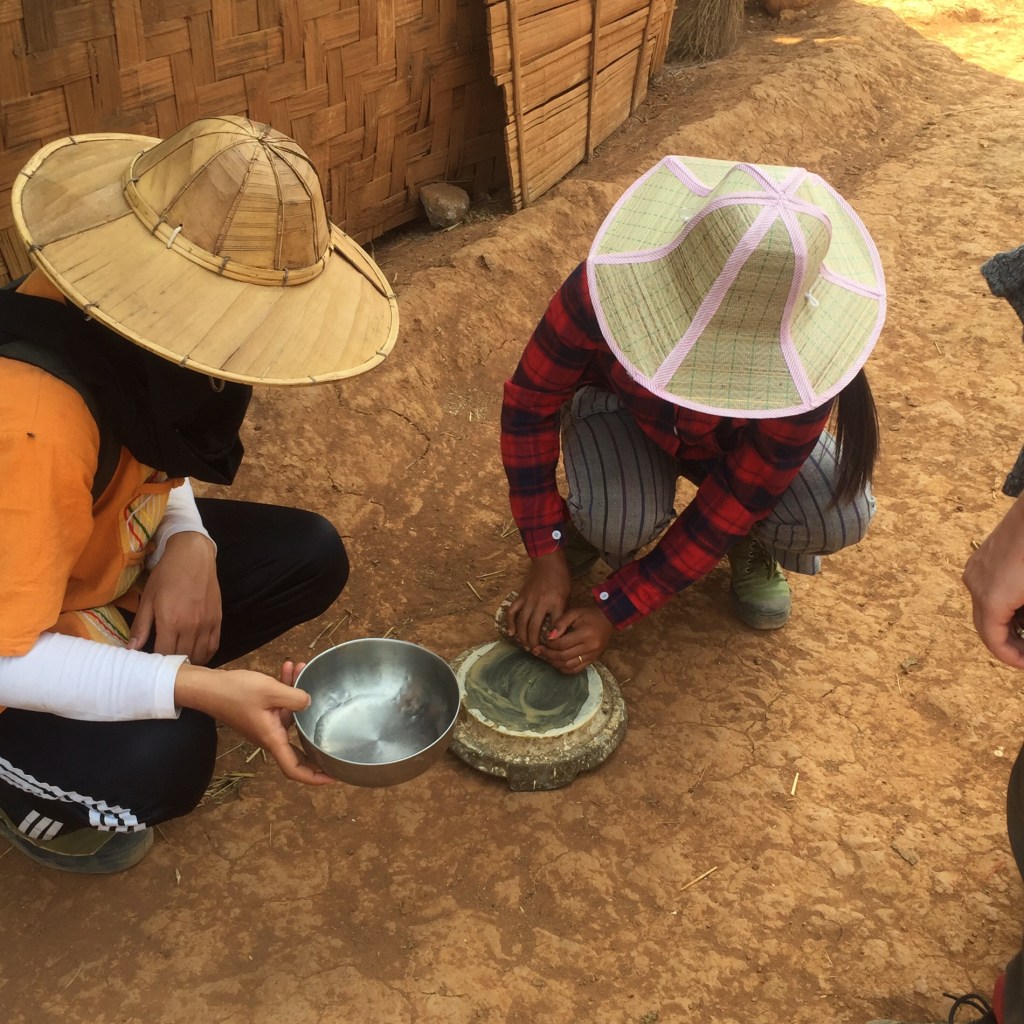
The thanaka is paste is made from grinding the bark on a flat wet stone and then immediately applied to the face as it dries quickly.
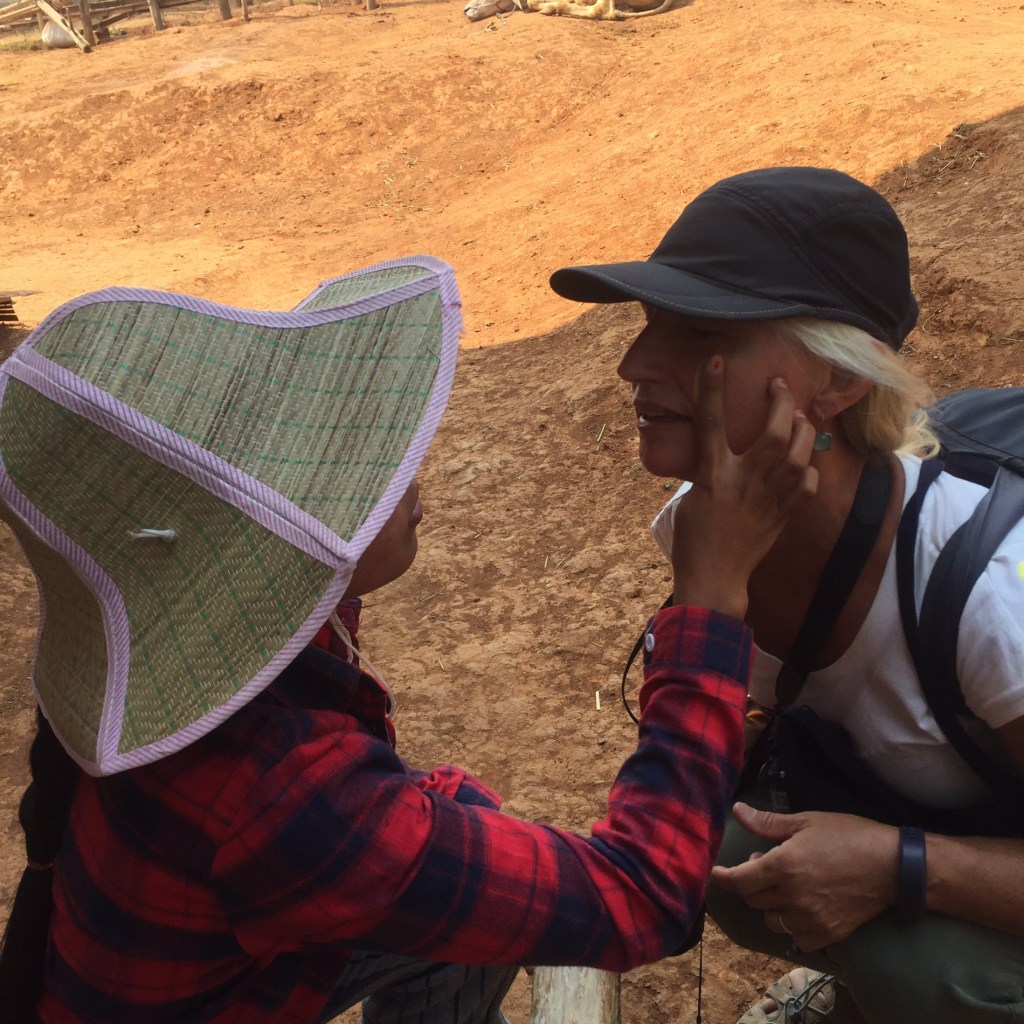
Our guide was happy to show us how it was done and apply it on our faces. According to the Burmese it is not only good as sun protection but also lightens the skin and even works against acne. I brought a jar of thanaka powder home :-).
The dry land, hard to imagine in the next months this will all be green. Some time I want to come back in november at the end of the raining season, it must be such a difference.
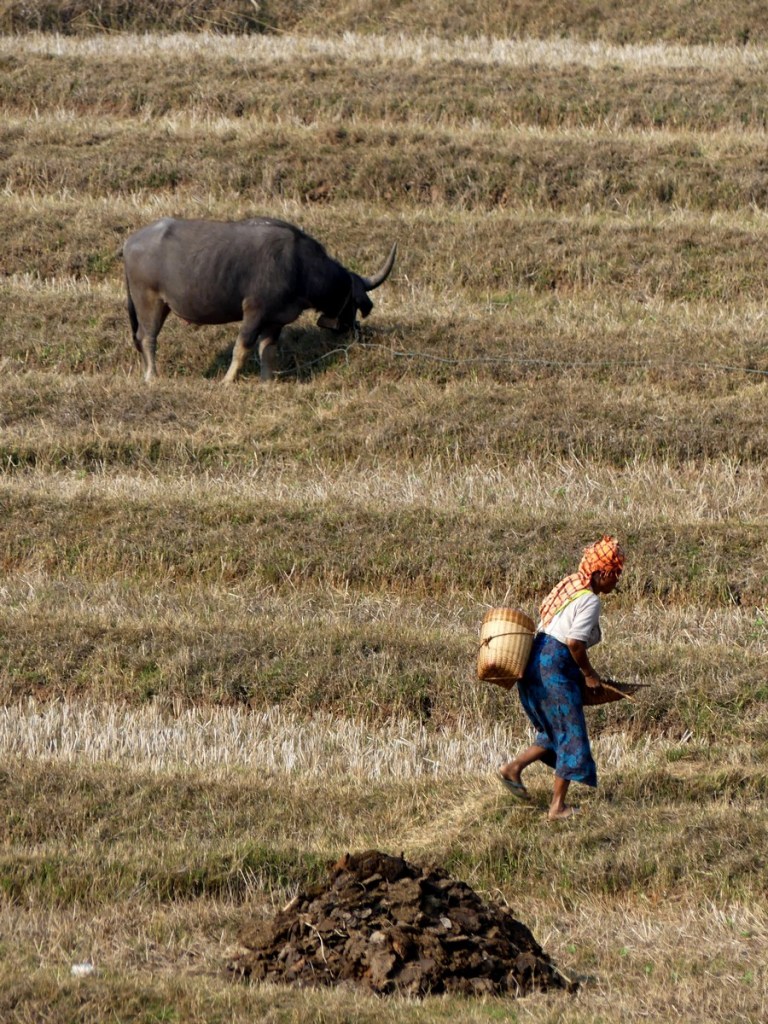
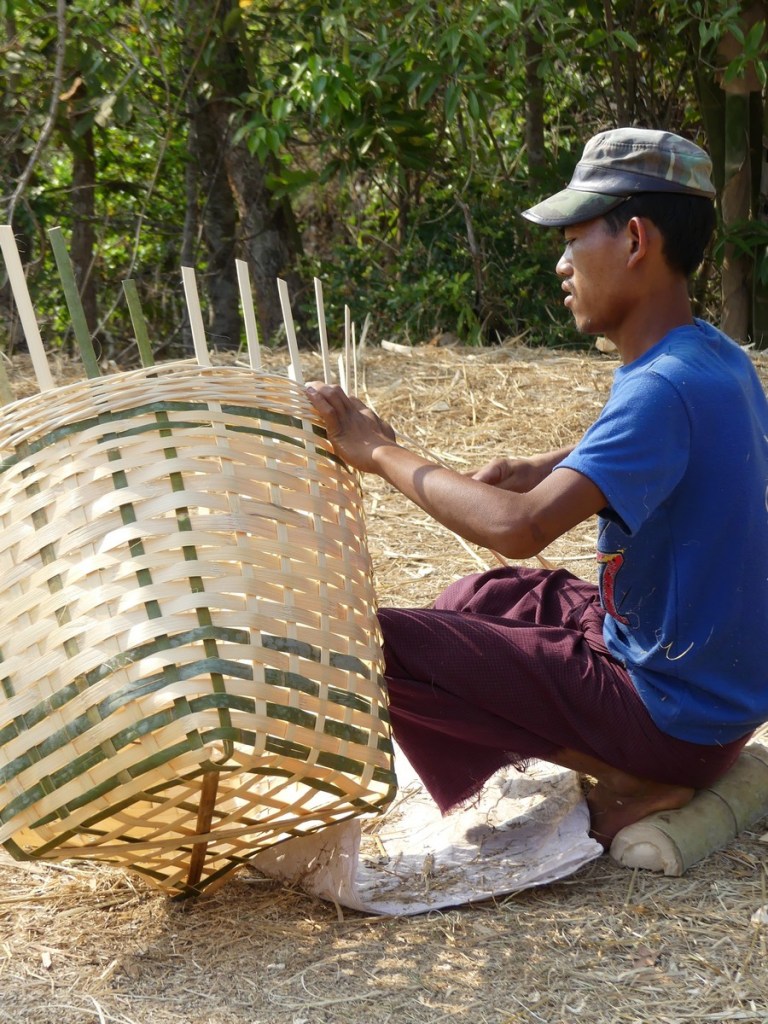
Another typical image for Myanmar, so much is still done by hand. We saw these men in the fields weaving baskets from bamboo.
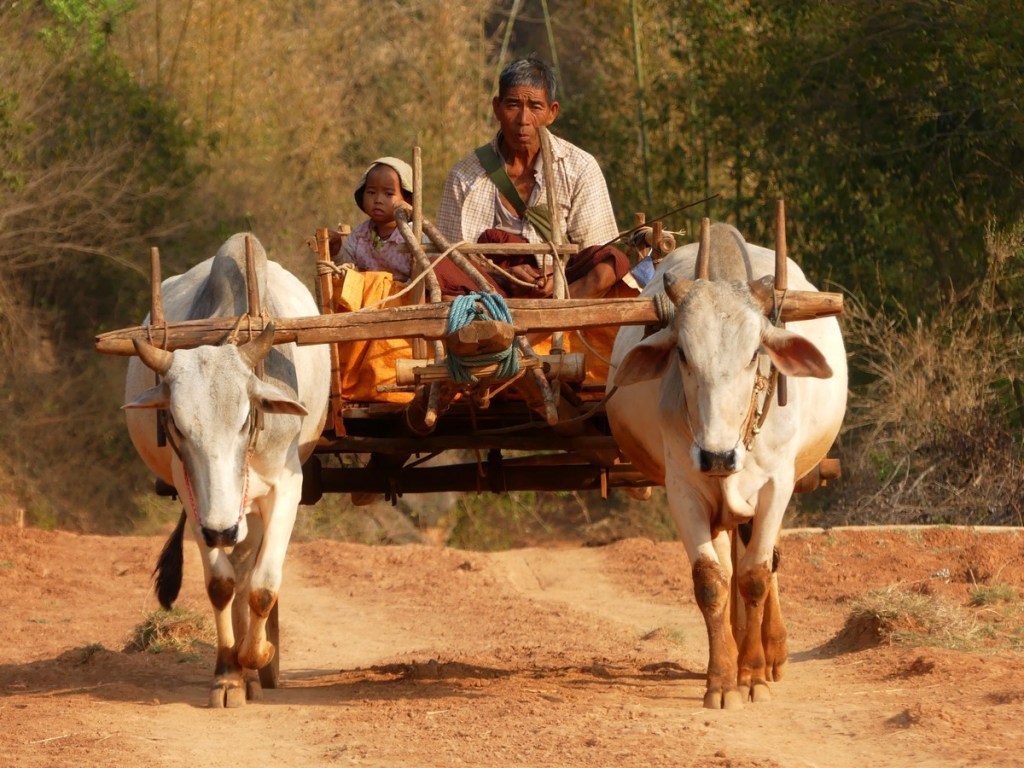
In the evening coming back from the field. An ox cart is still a very common sight in rural Myanmar.
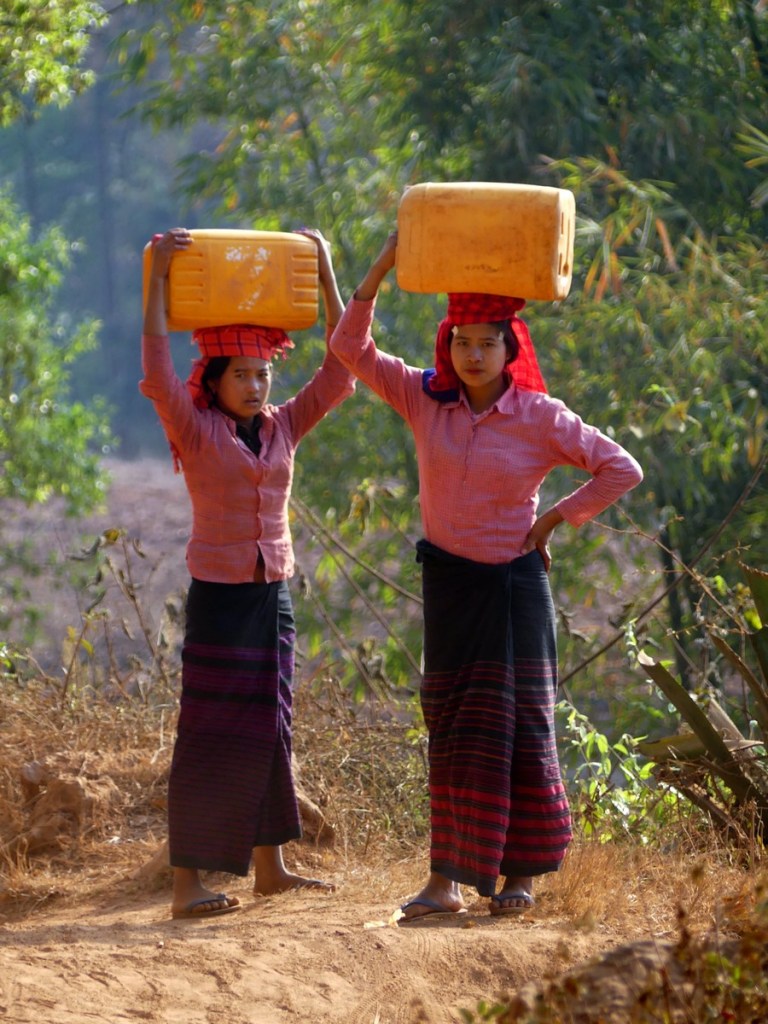
The girls getting water. I do not think long hot showers are an option here.
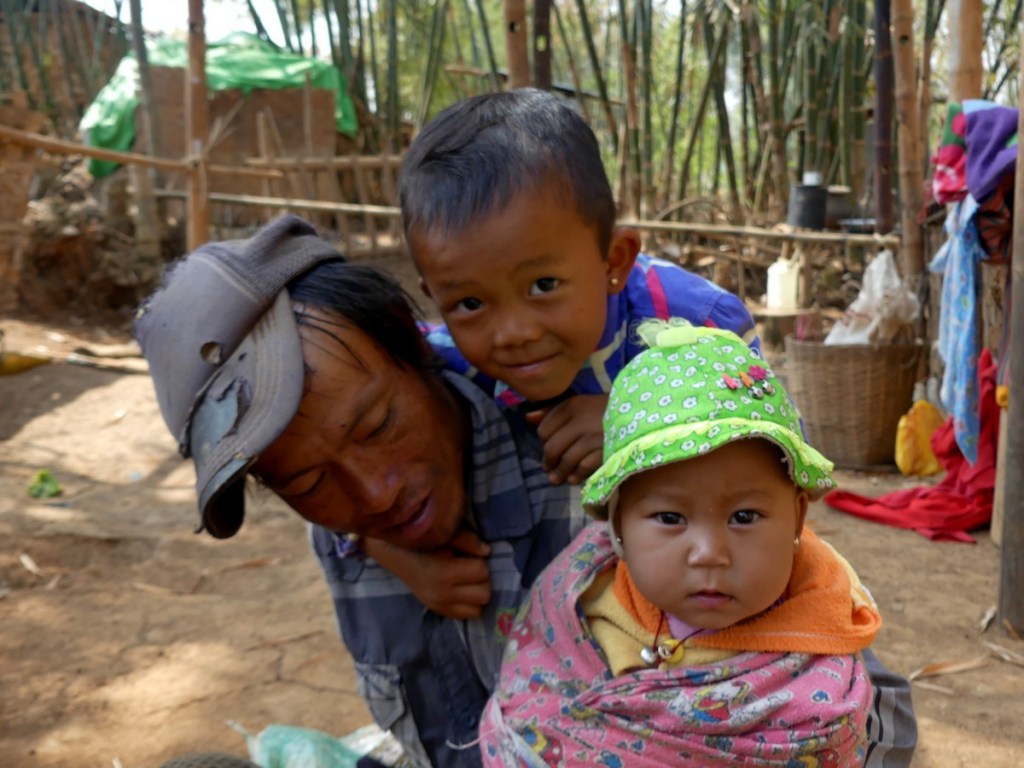
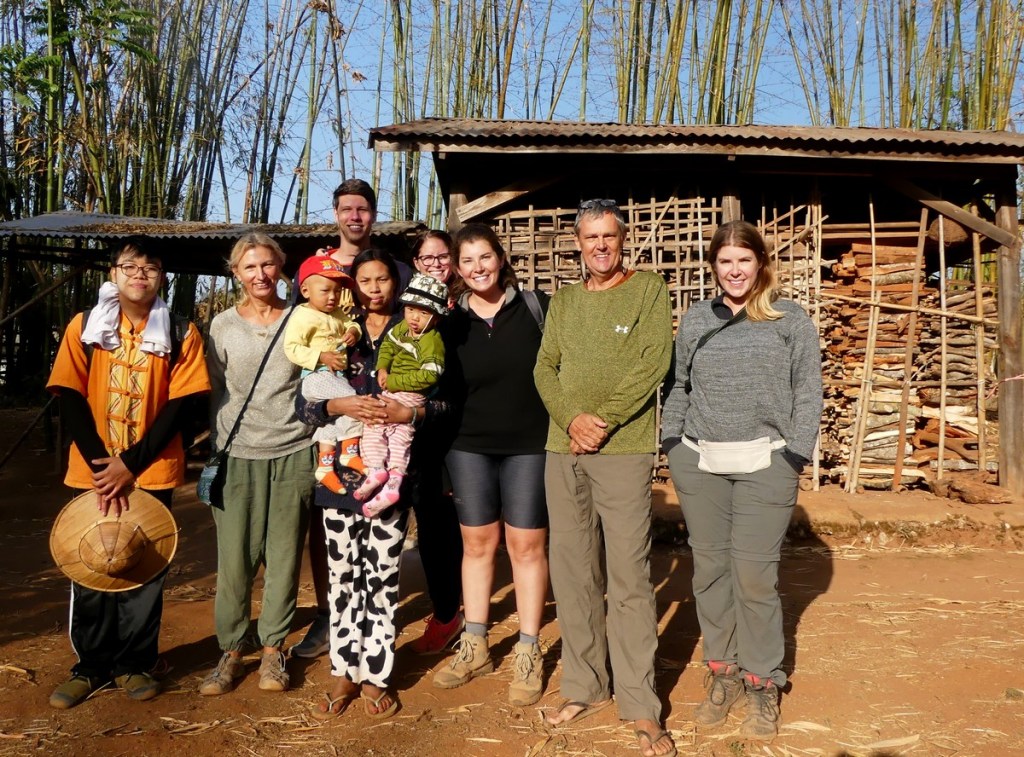
We spent the night with a local family. They prepared wonderful meals for dinner and breakfast, sleeping accomodation is very basic but for these people the tourists are an important source of income. Several houses in the little town were housing tourists with a local guide. Our group was really fun : on the right Celine (FR), Stefan (BEL), Helene (FR), Melanie ( GER) and in the back Alexander (GER), in front with the twin boys was our host family, Ilse (BEL) and one of our guides.
Our trekking continued through lots of dry fields but really beautiful scenery and friendly people. Unfortunately I lost all my pictures from the second day because something went wrong with the transfer to the computer :-(.
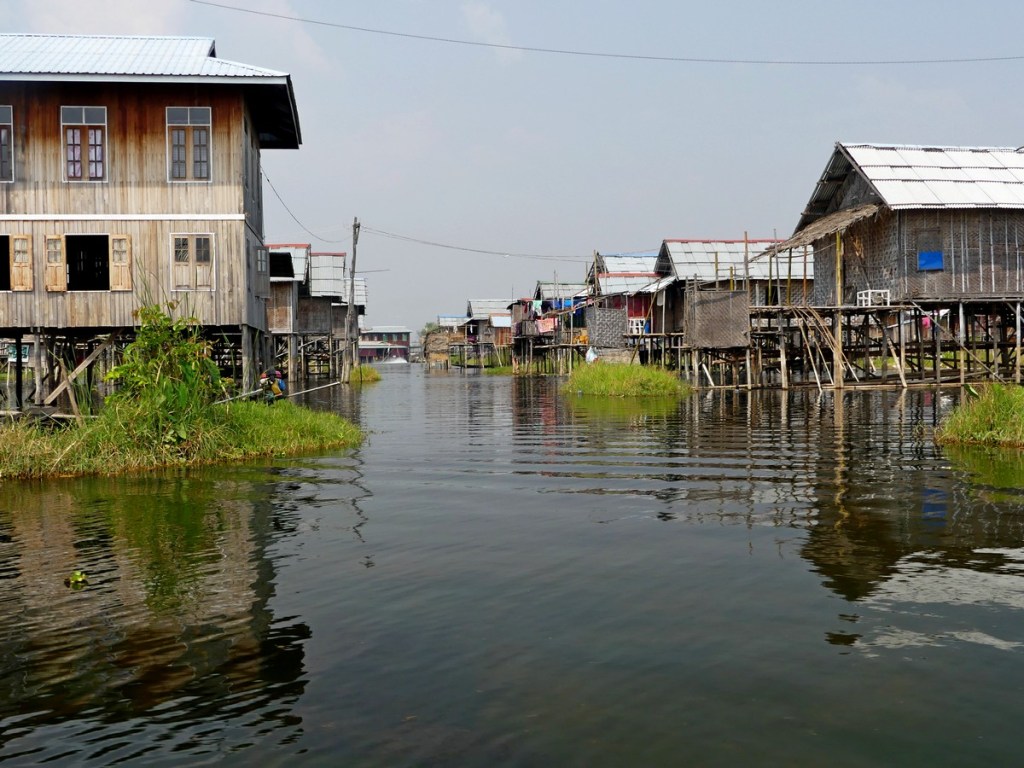
Inle Lake is the second largest fresh water lake in Myanmar and the highest (900m).. About 70.000 people are living on and around the lake, most of them are Intha people.
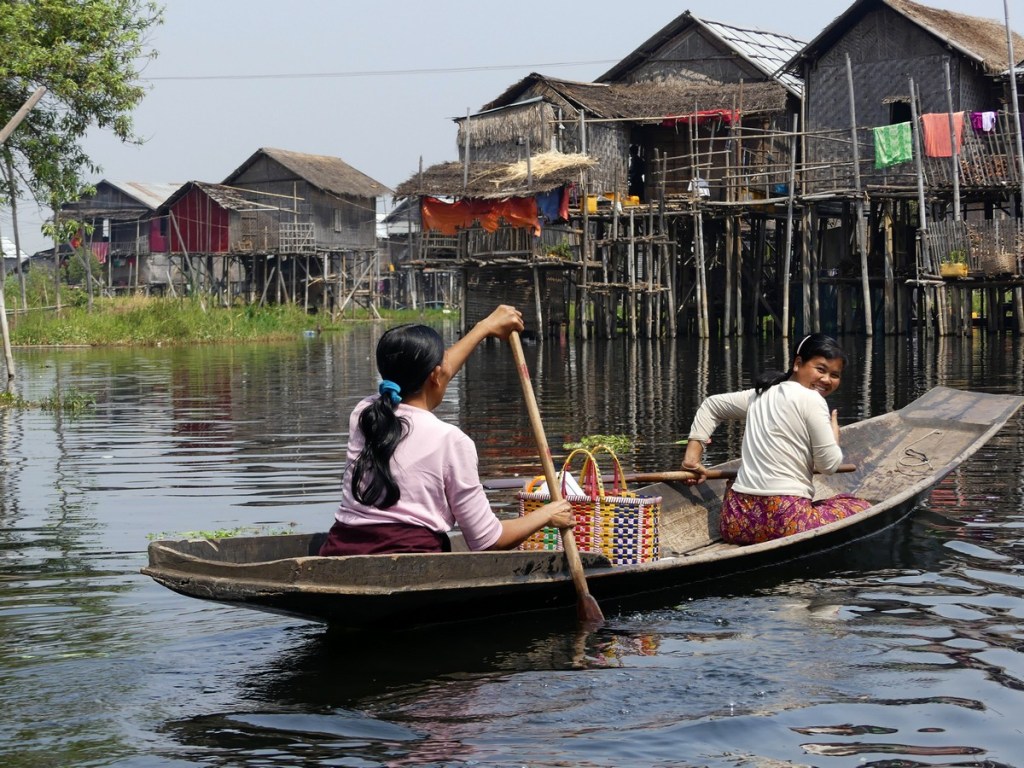
We rented a boat for the day at our hotel (beautiful Innthar Lodge on the lake) so we could get a taste of the life on the lake.
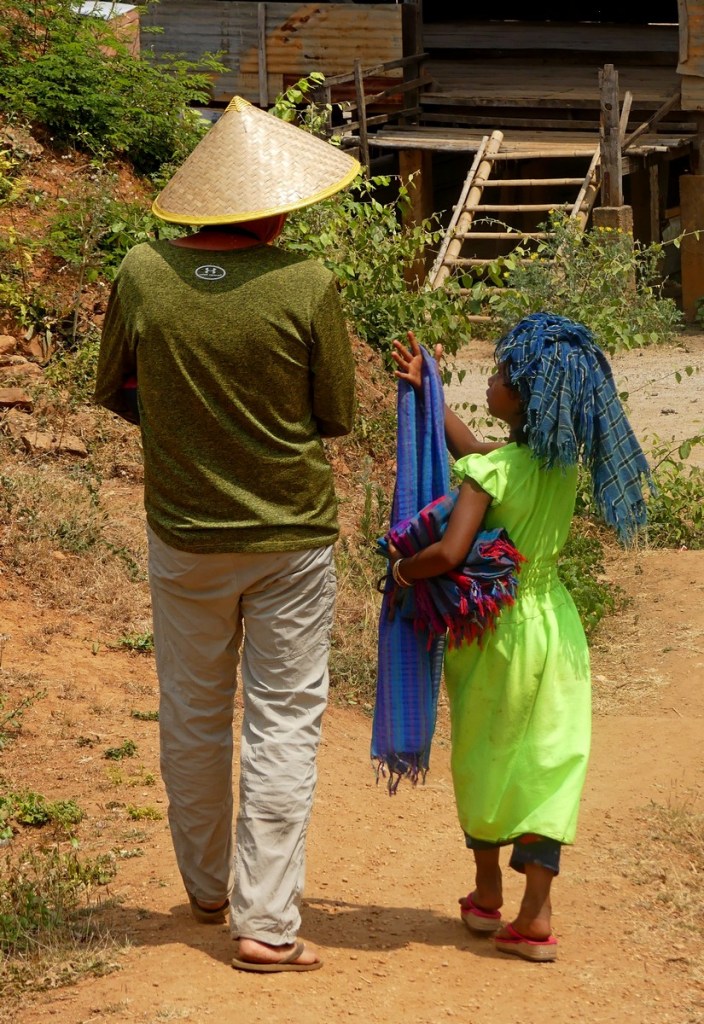
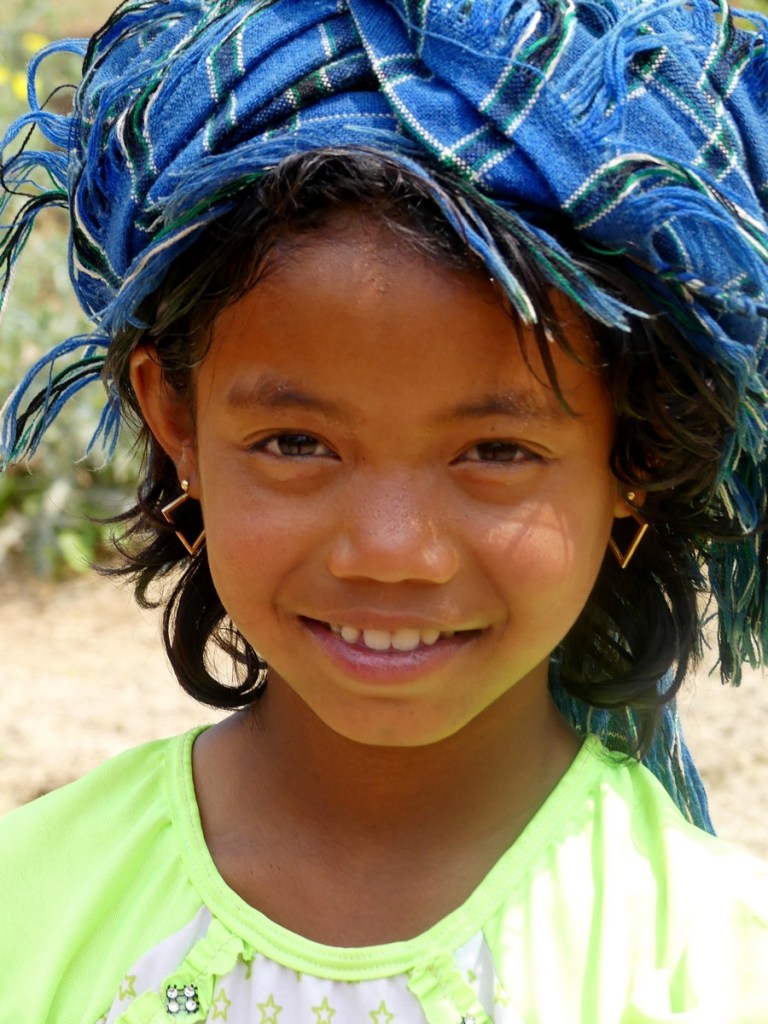
We made a stop at Indein village to visit the Shwe Inn Thein pagodas. A little girl tried to convince Stefan to buy a scarf.
We could not resist her smile and bought a scarf for 1000Kyat (60c).

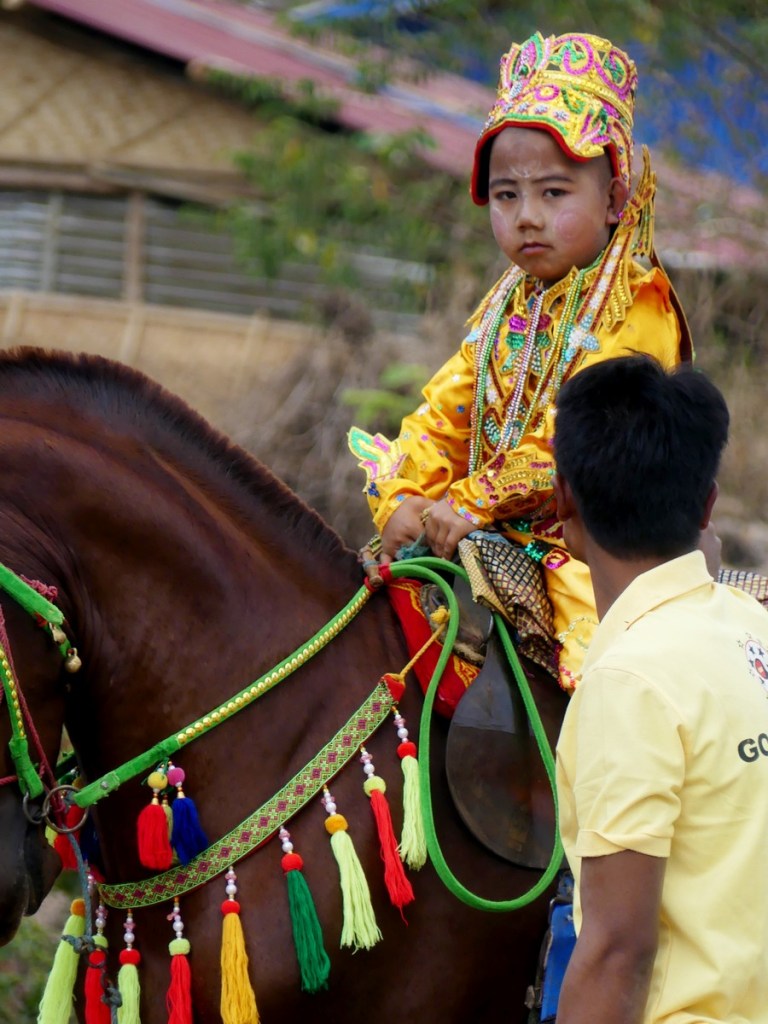
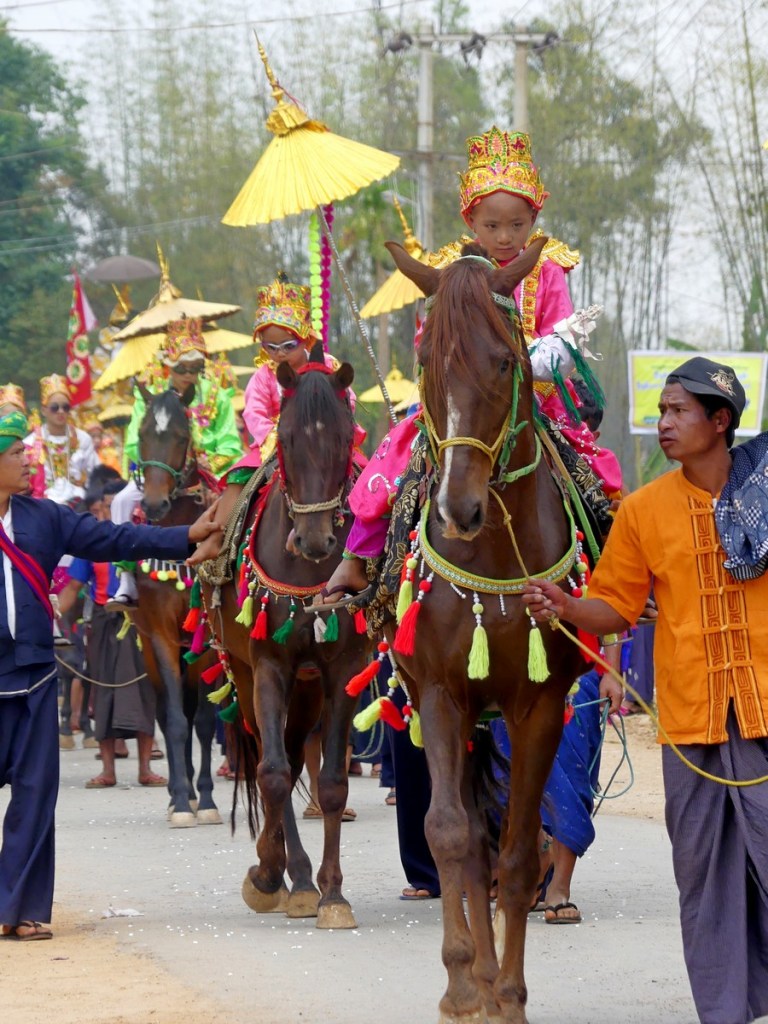
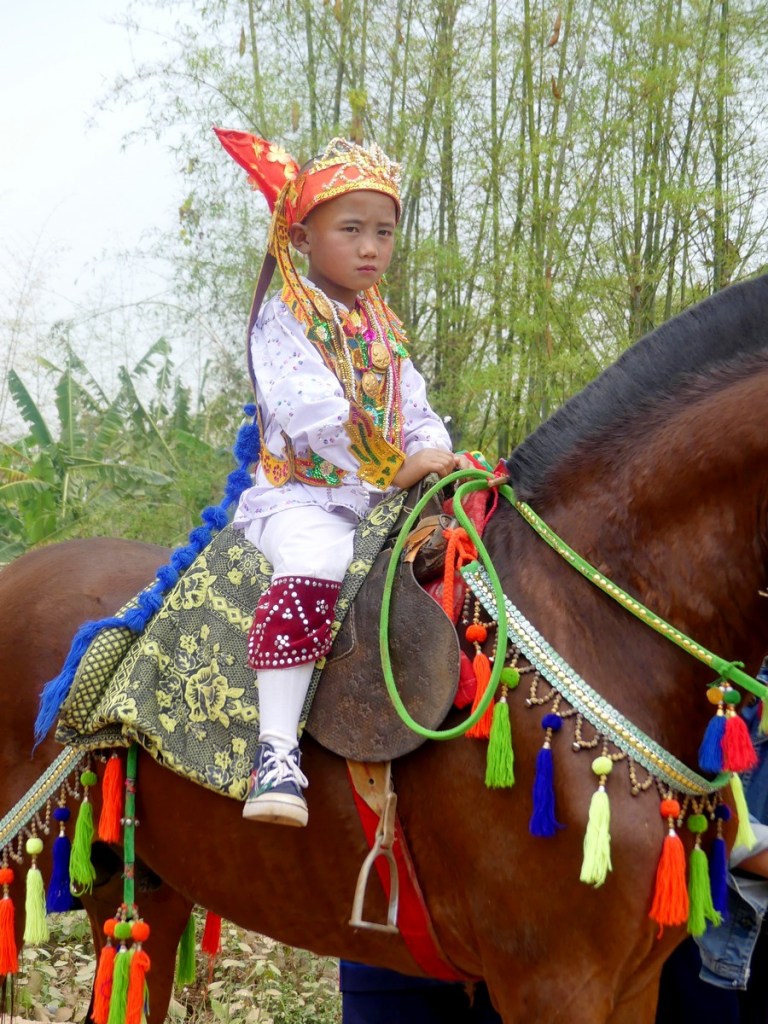
While we were walking in the little town we noticed a lot of dressed up Pa’O Hill people. It seemed we were at the right place at the right time, to witness an important rite of passage, the Buddhist Novitiation Ceremony in Myanmar. The Novitiate ceremony is when boys do their service to Buddhism and are entered into the order of the monks for a week or longer. Novitiation is the obligation of every parent and the most important gift to their sons. It is believed that this deed will prevent the parents from having an evil afterlife in Buddhist tradition.

The Pa’O hill tribe is the seventh largest minority in Myanmar.
The Pa’O have been in Myanmar since around 1000 BC.
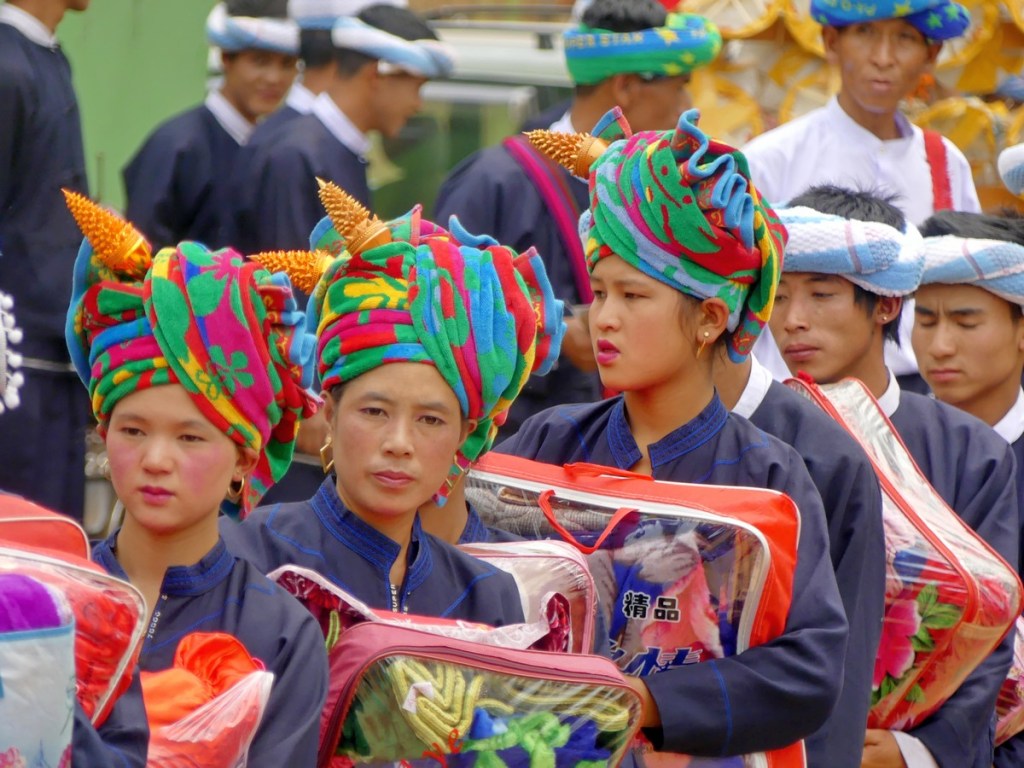
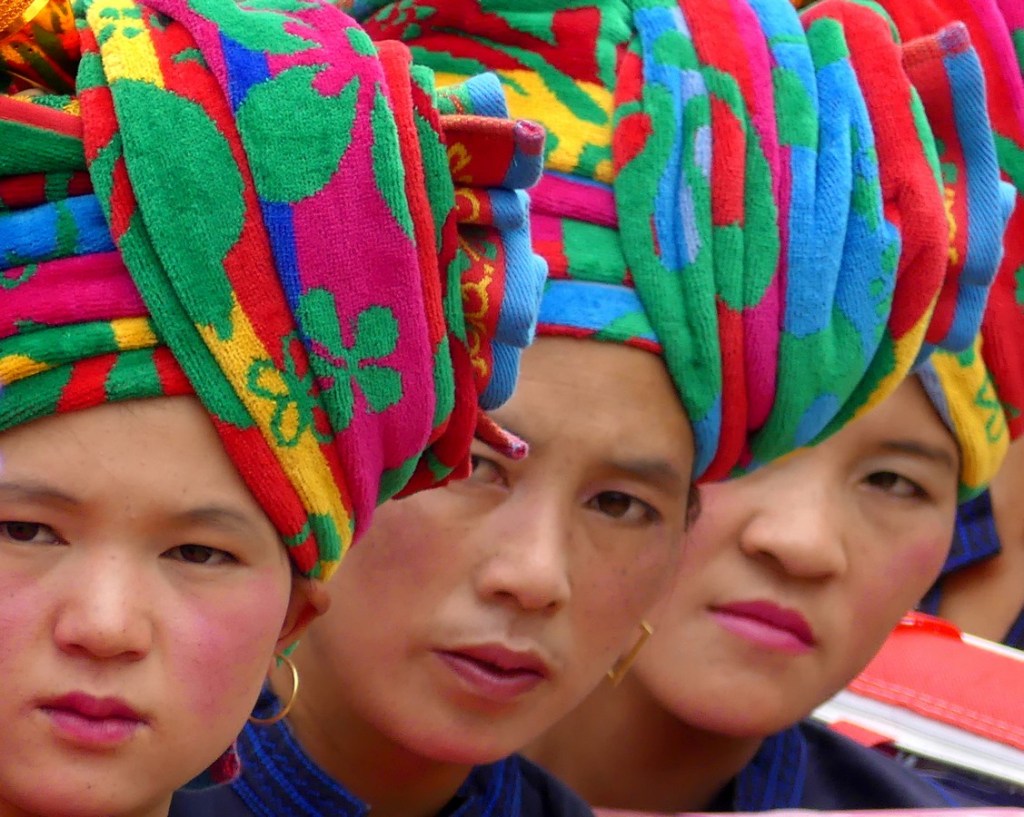
Forced to wear dark indigo-dyed clothing after the defeat of the Mon King Makuta of Thaton by King Anawratha in 1057, today the Pa’O are known for their brightly-coloured turbans.
It was so great to see all the beautifully dressed men and women for this novitiation or Shinbyu ceremony.
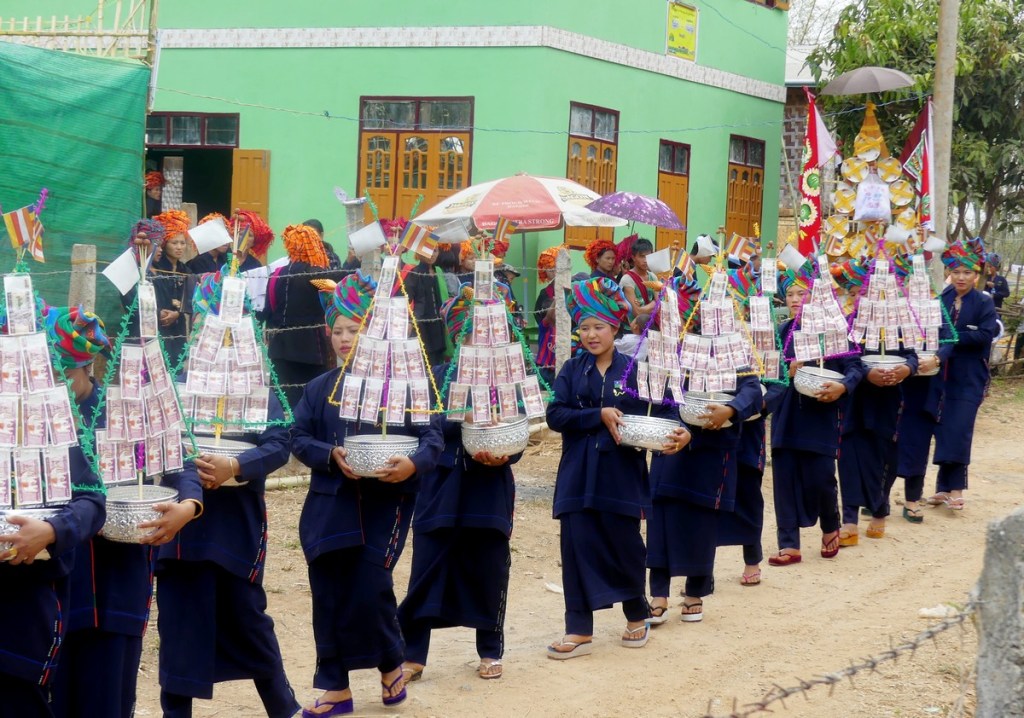
The Pa’O people were called“Black Karen” by the British colonialists because of the dark blue or black clothing. Here they are carrying offer money for the monastery.
The boys heads are shaven apparently earlier in the day. They are dressed in yellow, pink and green satin costumes with colourful make up .The costumes are symbolic of the look of a royal prince.
The procession with the monks-to-be protected from the sun by the golden umbrellas.
Like a little prince but not for long. After the ceremony the boys are undressed and the typical maroon robe is put on.

This was such a beautiful and unexpected event that we did not venture further to see the pagodas but just enjoyed watching the people. Happy with these impressions we looked for our boatman and returned to the lake.

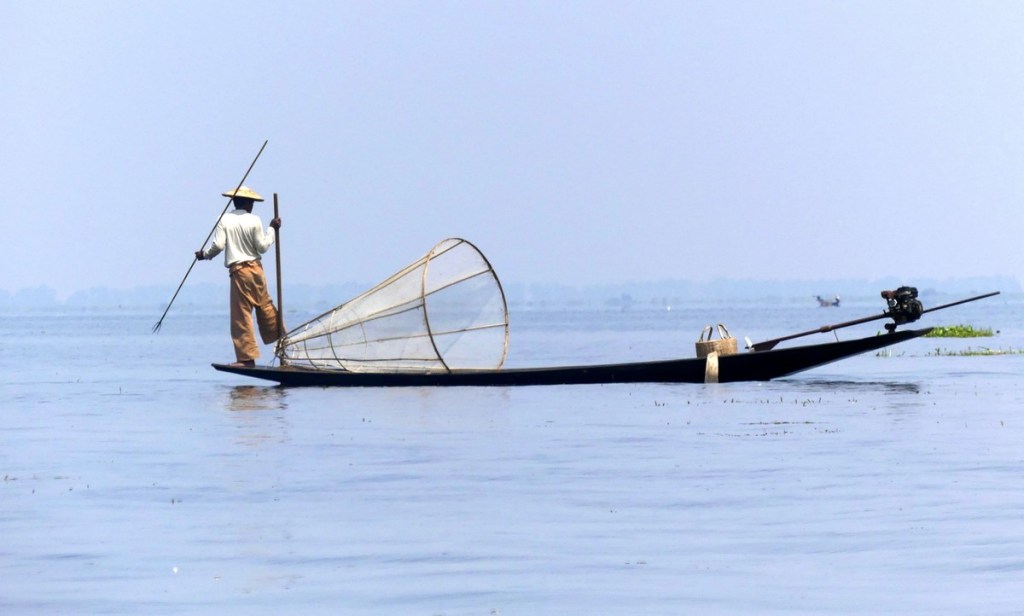
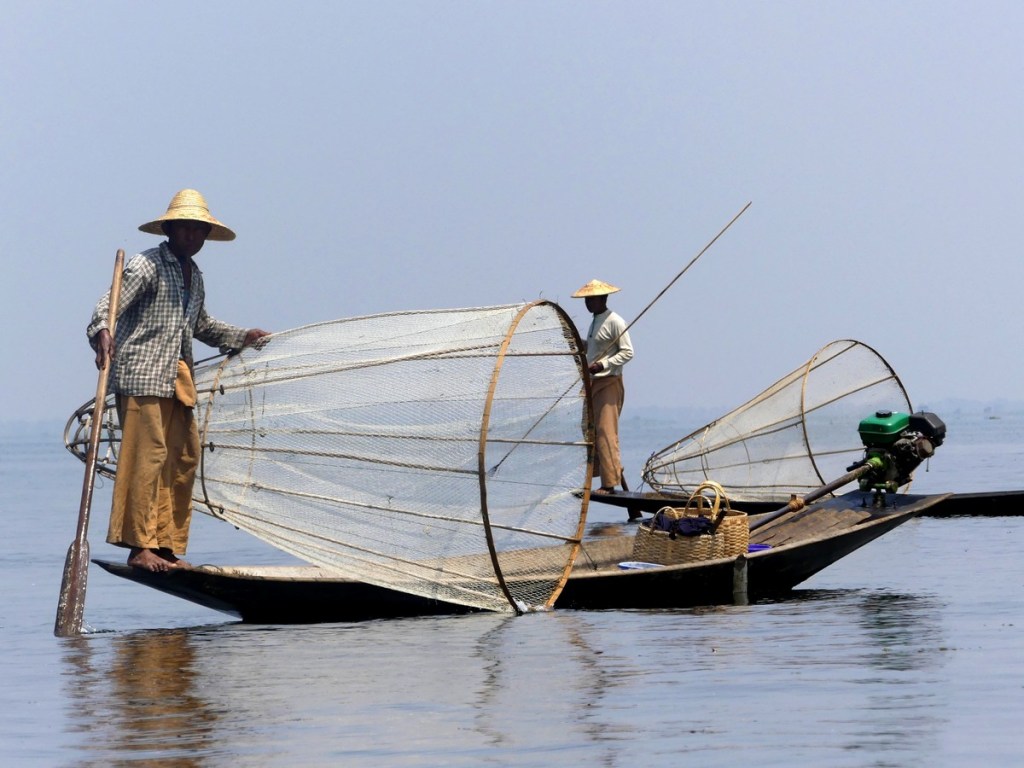
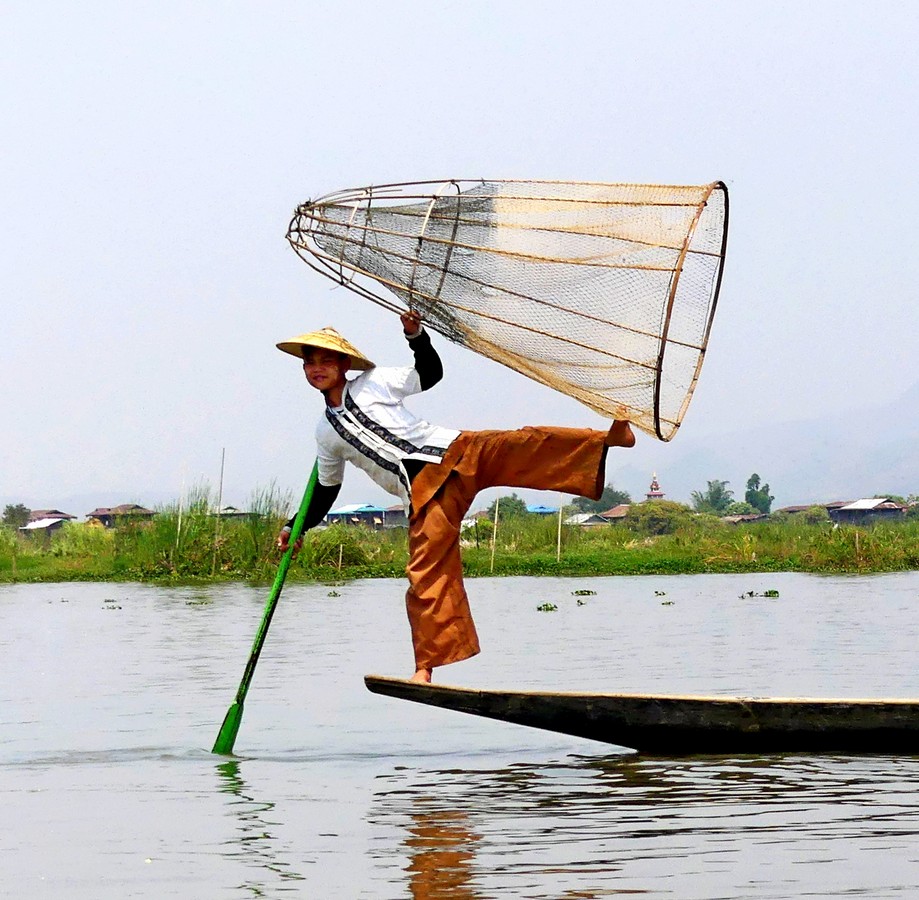
The famous leg-rowing Intha (‘”sons of the lake”)fisherman.
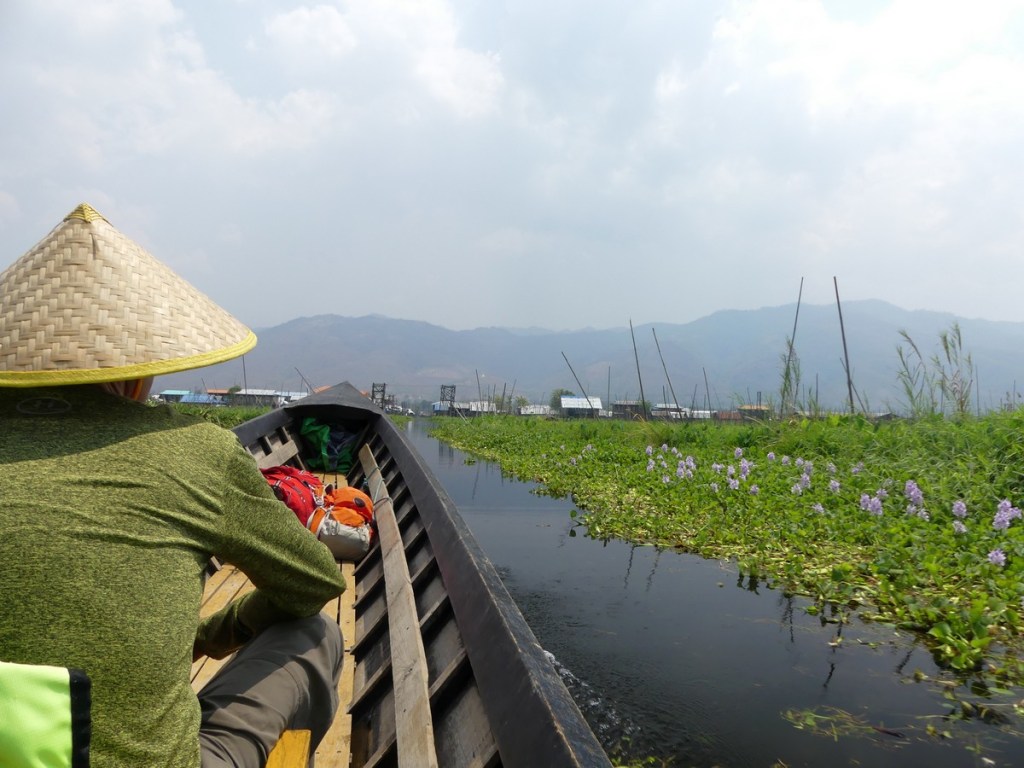
Reeds and other floating plants rise high out of the waters, so that when they are sitting low in a boat, it can be hard to see and to steer through the vegetation. It is for this reason that, while the local women still row their boats in the usual manner, the local fishermen developed their distinctive standing rowing style.
The water hyacinth (purple flower) is not native to Inle Lake but grows fast, clogging the smaller streams and depriving local plants and animals of light and food.
The fishermen like to show off their balance to tourists:-).
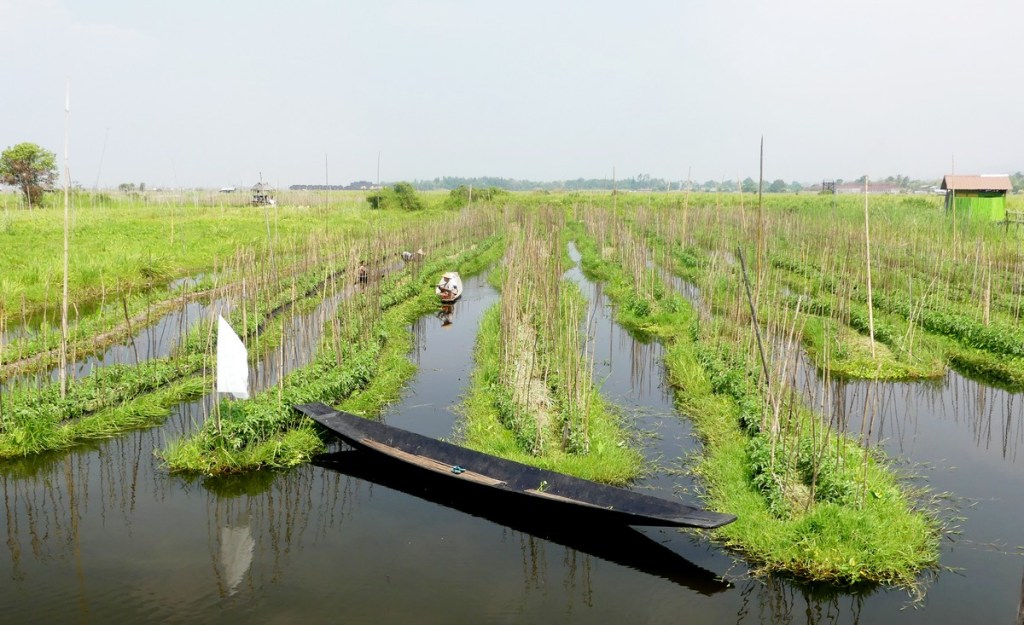
Roughly 25% of Inle Lake is covered by floating gardens where lots of manual labour produces tomatoes, beans and cucumbers. The farmers gather lake-bottom weeds from the deeper parts of the lake, bring them back in boats and make them into floating beds in their garden areas, anchored by bamboo poles. These gardens rise and fall with changes in the water level, and so are resistant to flooding.
The garden “shed” on the water.
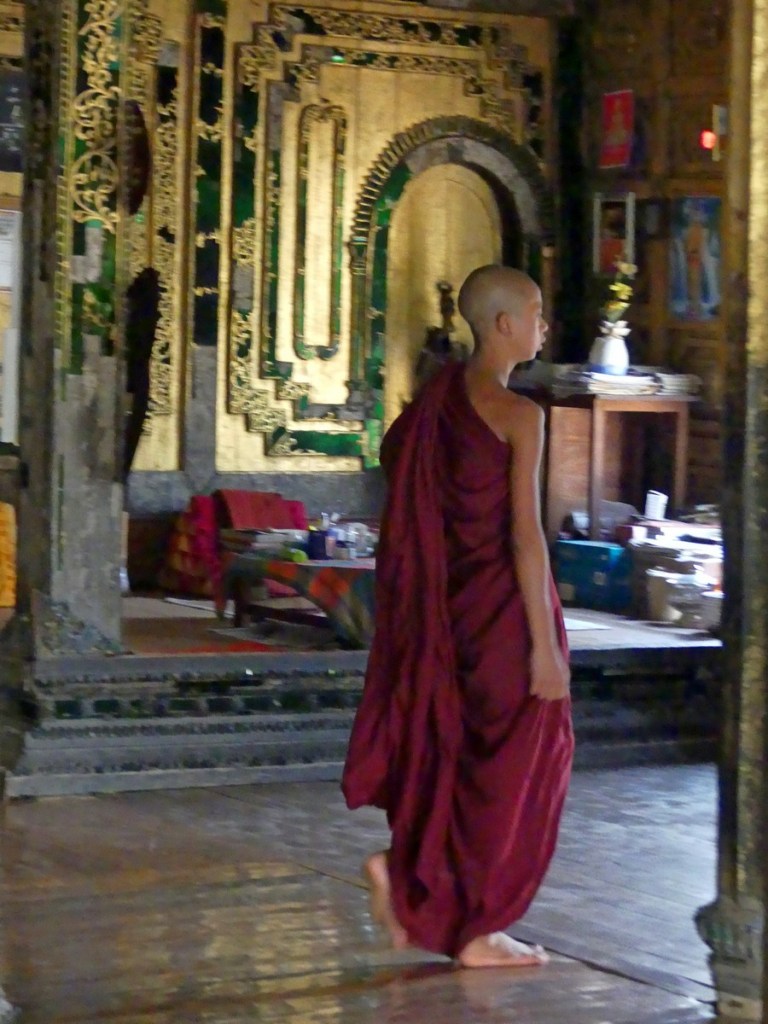
We visited one more monastery, forgot the name. It was 100 years old and the wooden walls were painted in  gold. I find these places so peaceful and enjoy just walking around watching the lifes of the monks.
How would it be to enter a monastery for a week or two ?

Next stop : Mandalay, Monywa and Bagan

Traveling in Myanmar or is it Burma ?

March 8th, we arrive in Yangon around 6PM after a short flight from Hanoi. Men in longyi offer their taxi services but we take our time to get a SIM card, get money and install the GRAB (UBER in Asia) app. Five minutes later we are on our way to our hotel.So easy,we are getting used to this :-).

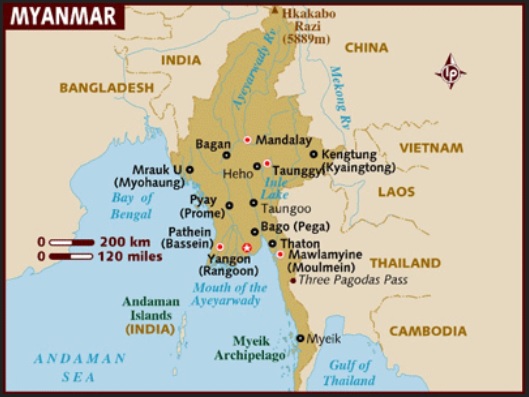
Myanmar has borders with Bangladesh, India,Thailand, Laos and China. We traveled the following itenerary: from Yangon to Mawlamyine, Hpa-an, Kalaw, Inle Lake, Mandalay, Monywa and Bagan before we returned to Yangon. We used the train, boat, motorcycles,e-bikes, buses, vans, tuk-tuk and our feet to get to our destination. We loved the train for its colonial experience but the motorcycle is definitely our preferred option. The military junta changed the name Burma to Myanmar in 1989 and also changed Rangoon to Yangon. Burmese people will mostly use “Burma” in daily life and “Myanmar” more in a formal, official way because this reeks of government. It is OK to use both. Myanmar has a population of 53,7 Mio in 2018, 82 people per km2. For comparison, Vietnam has 96 Mio people and 311 inhabitants per km2.

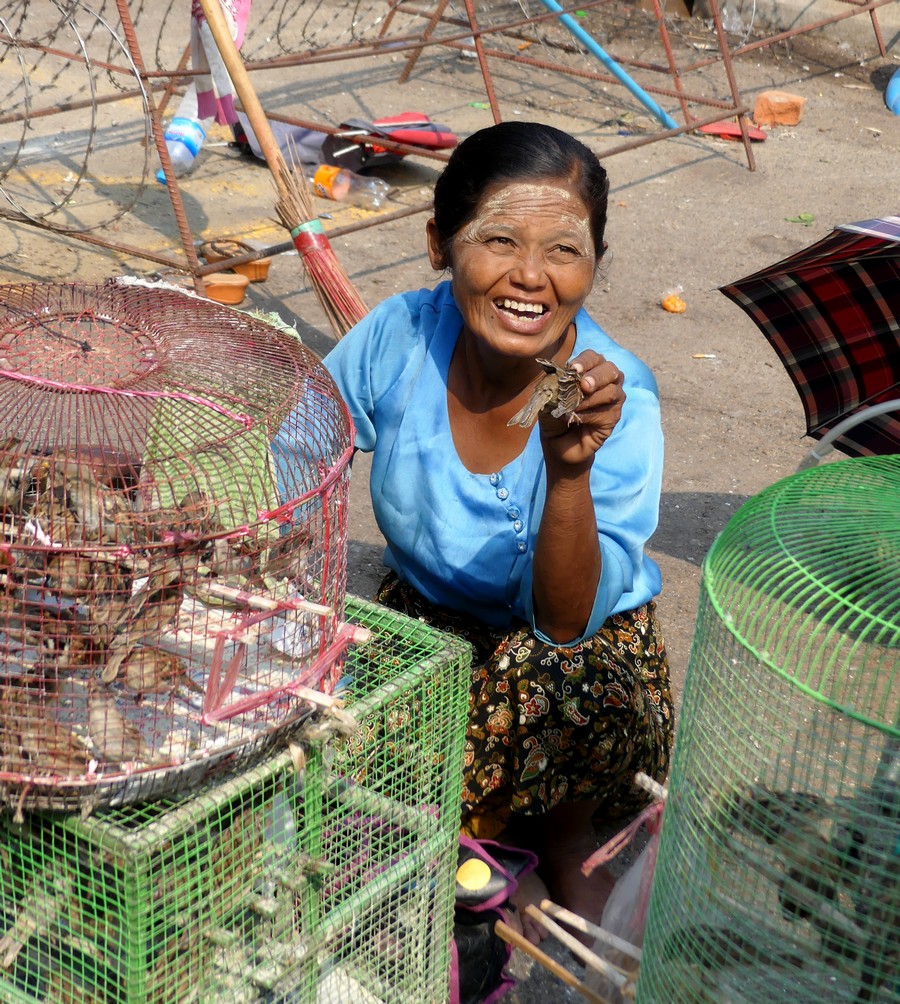
In front of the Shwedagon pagoda we bought a little sparrow to set it free but horror struck: when the bird flew up in the blue sky, a crow caught it and flew of with it. Was this an “omen” for bad luck?
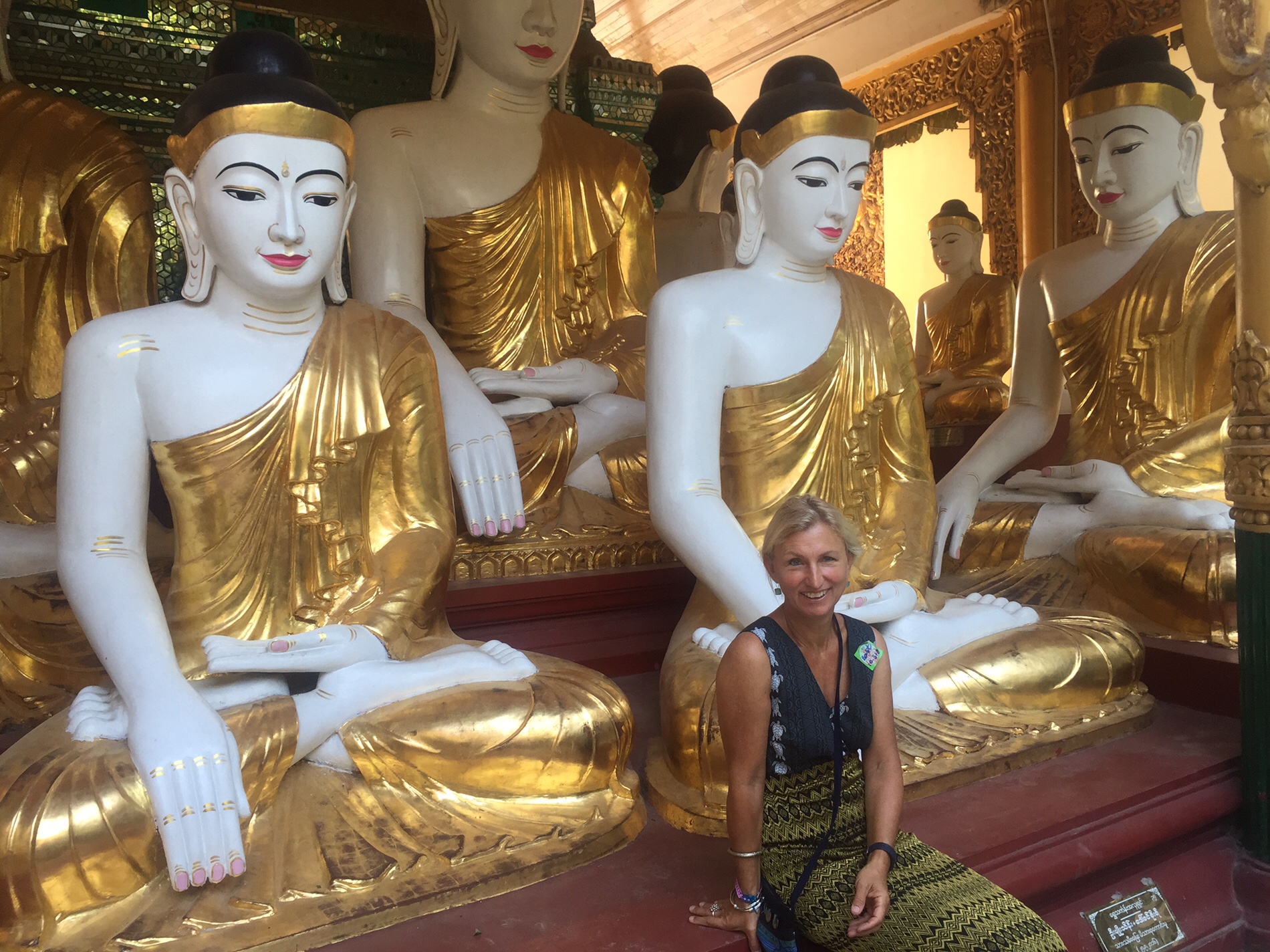
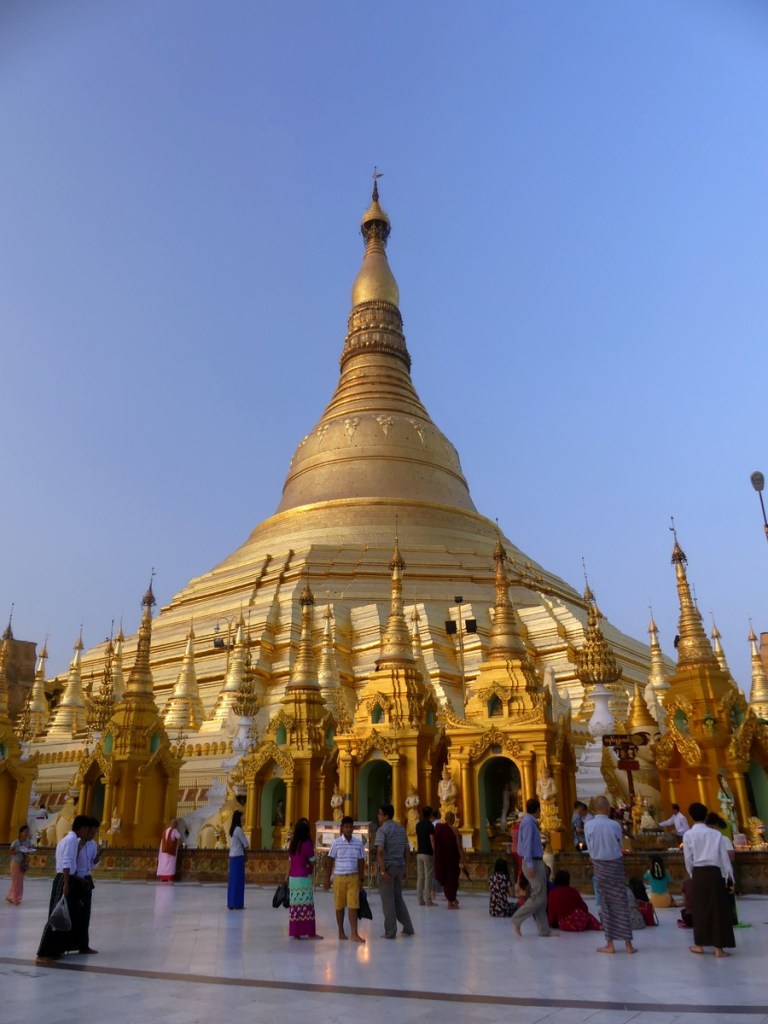
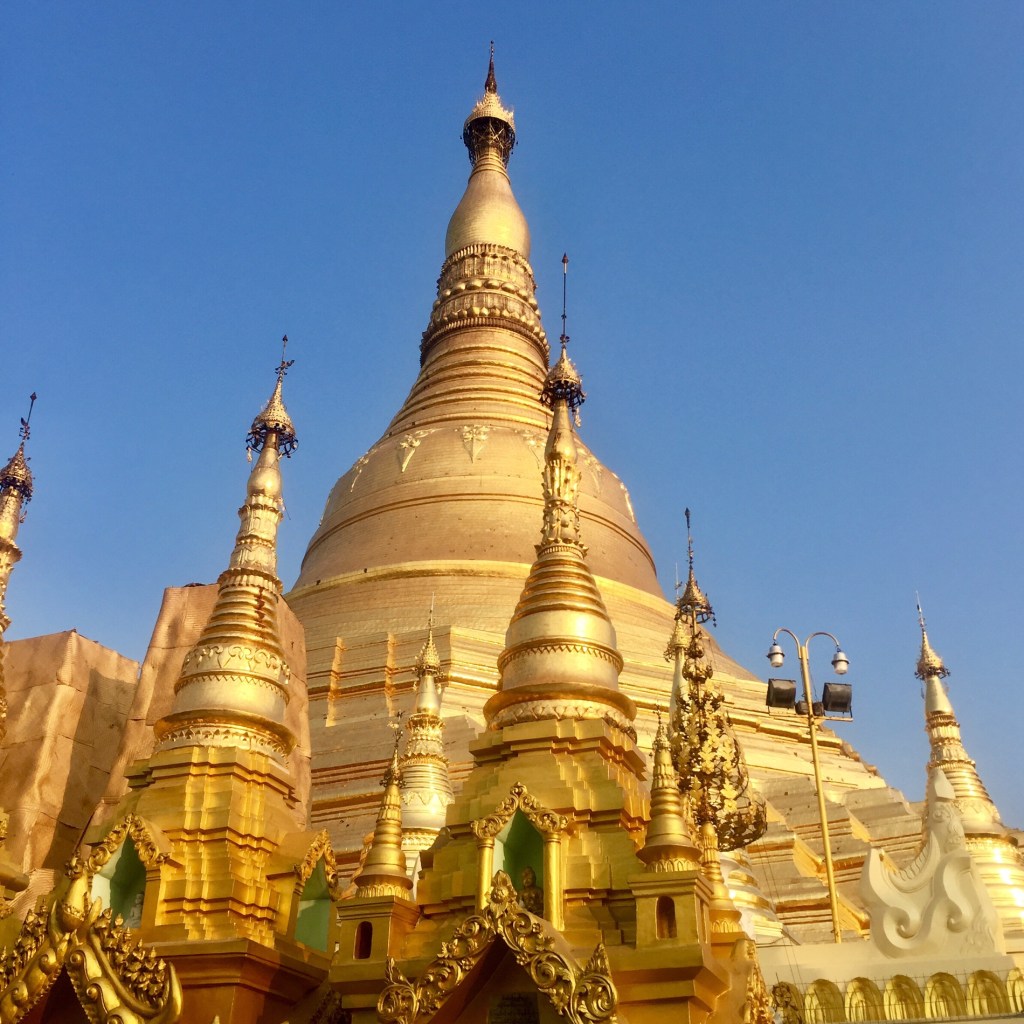
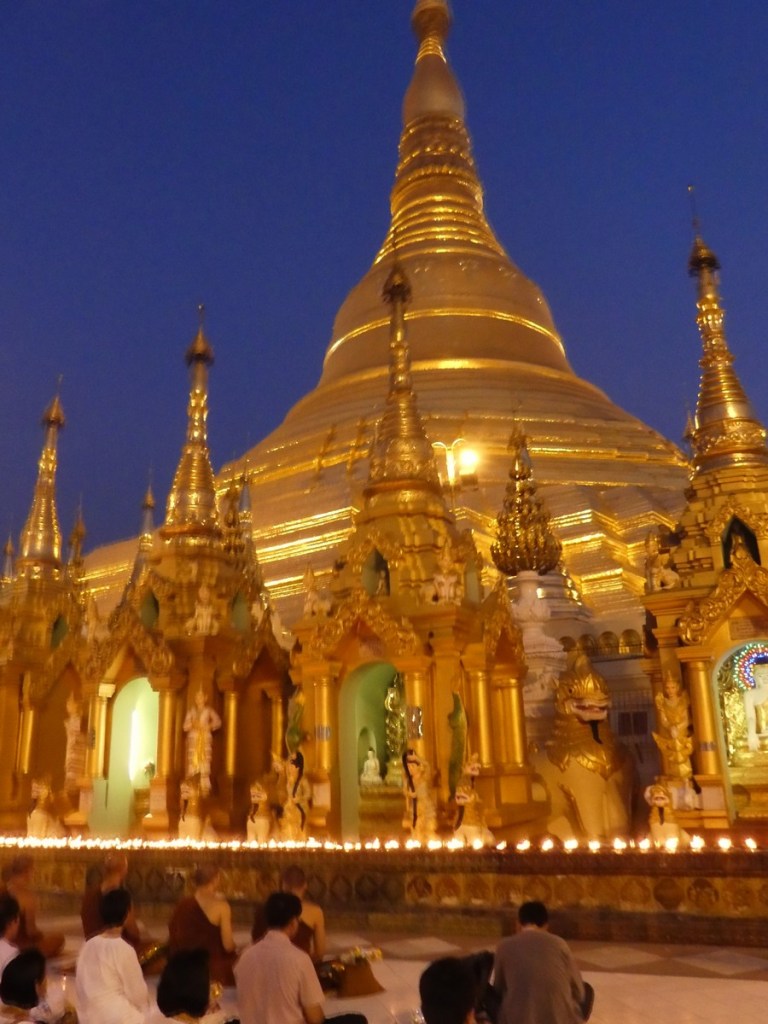
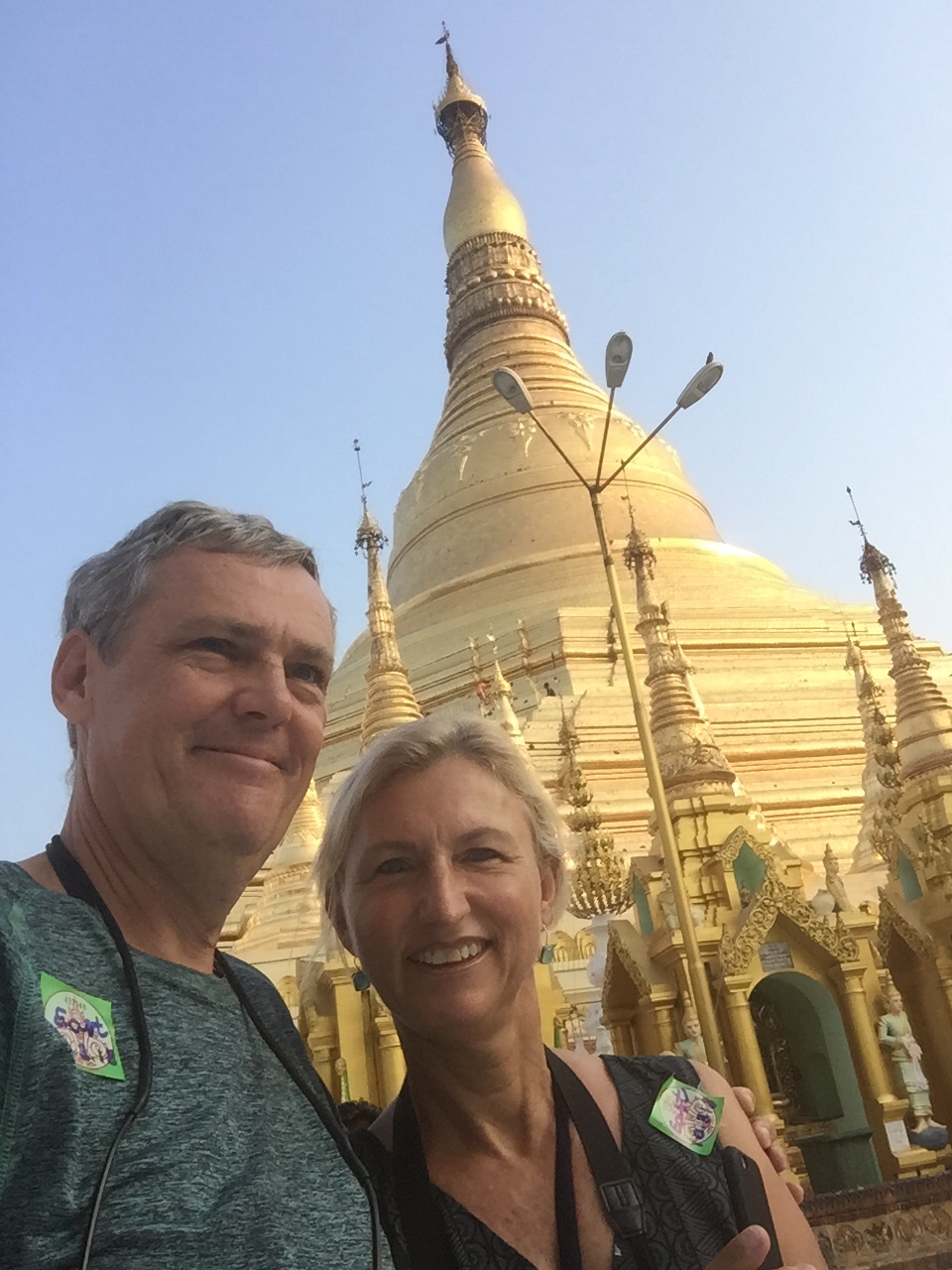
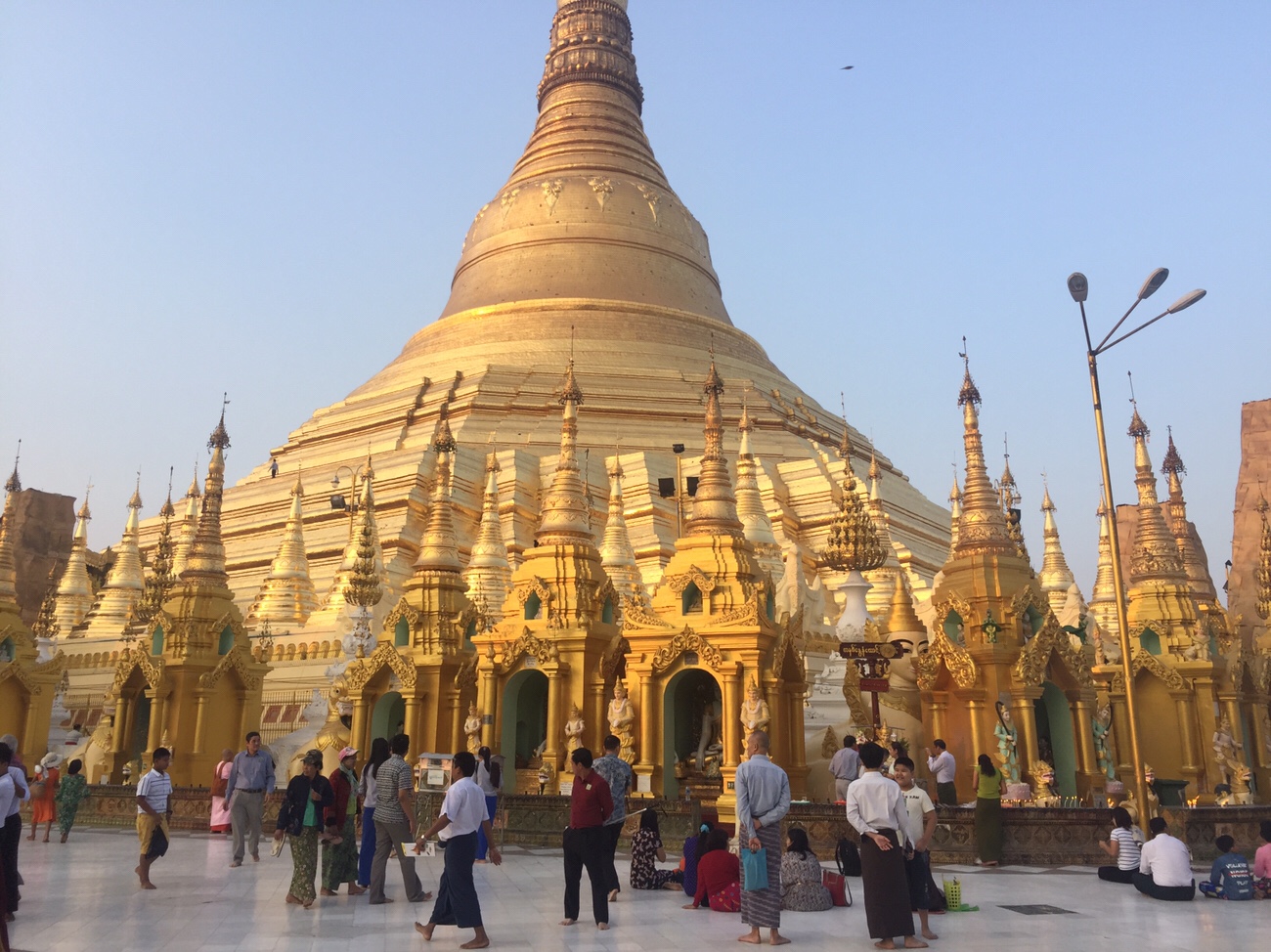
The Shwedagon pagoda stands 99m tall and is the most sacred Buddhist stupa in Myanmar. The gold seen on the pagoda is made of genuine gold plates and to make it even better, the top part is decorated with 5448 diamonds and 2317 rubbies. The very top – the diamond bud- is a 76 carat diamond!
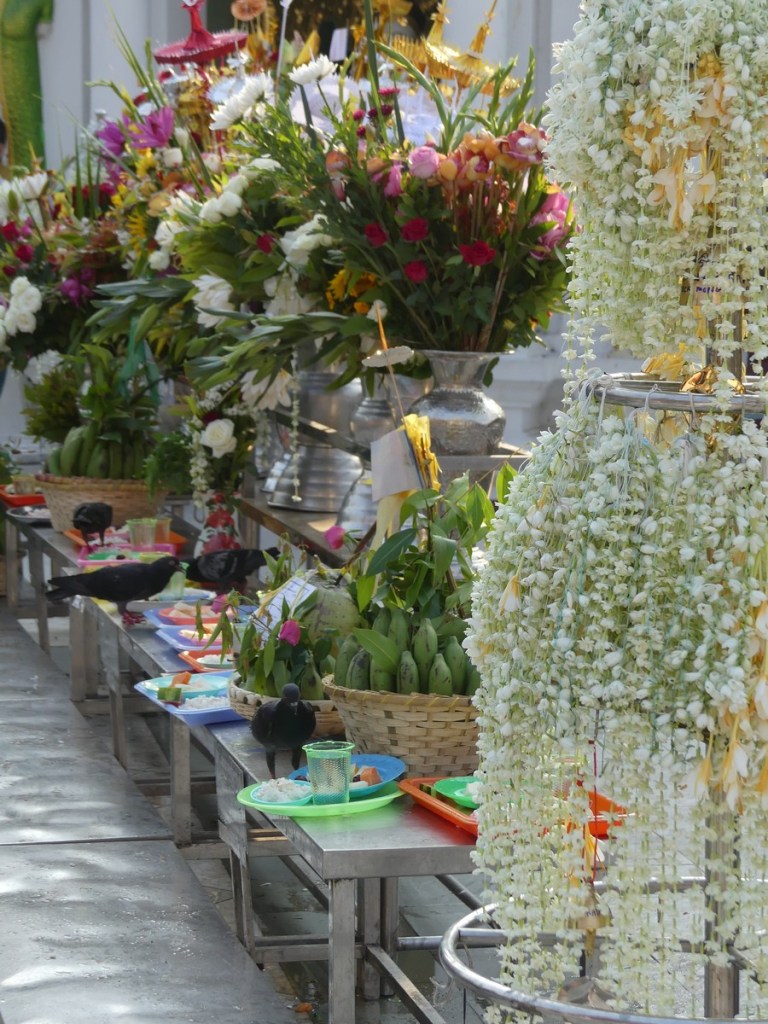
We were amazed at how much flowers, food and money is offered to Buddha. Myanmar is the most religious Buddhist country in terms of number of monks and income spent on religion.


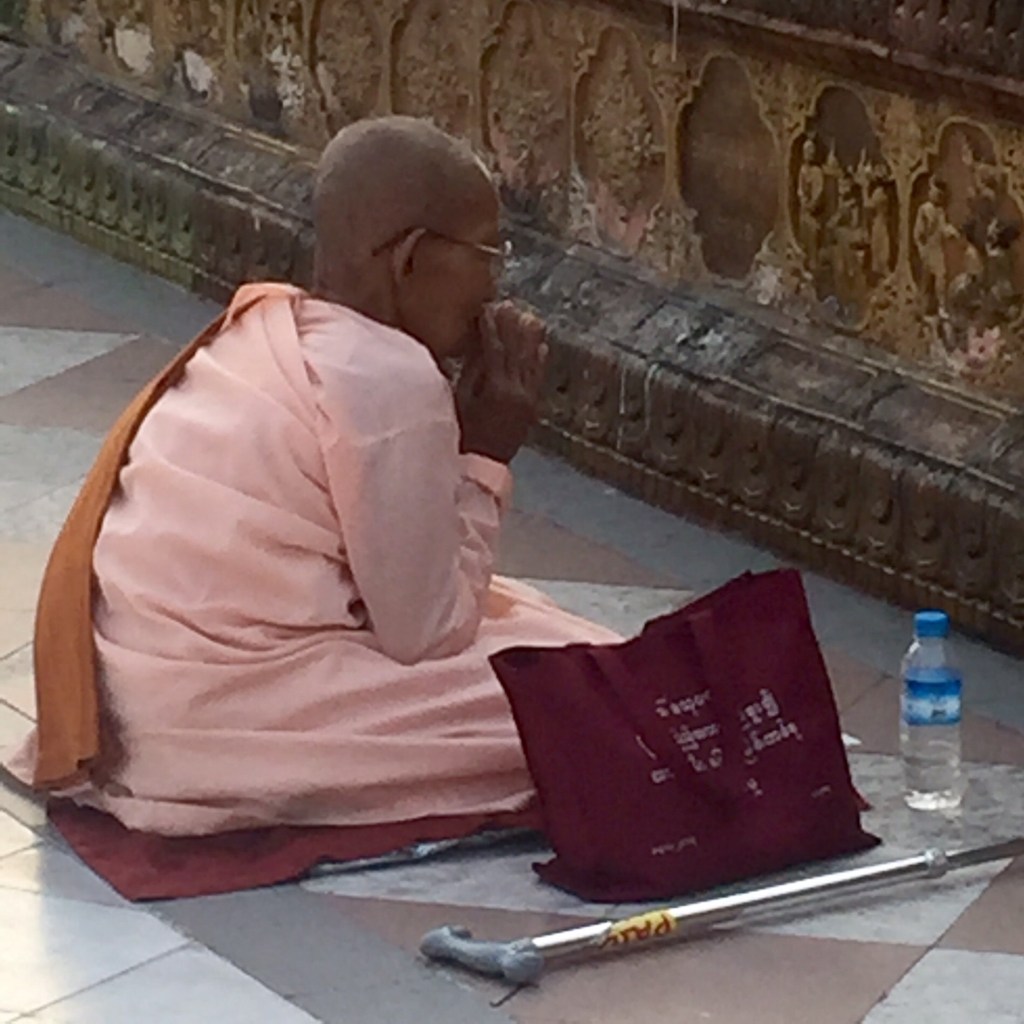
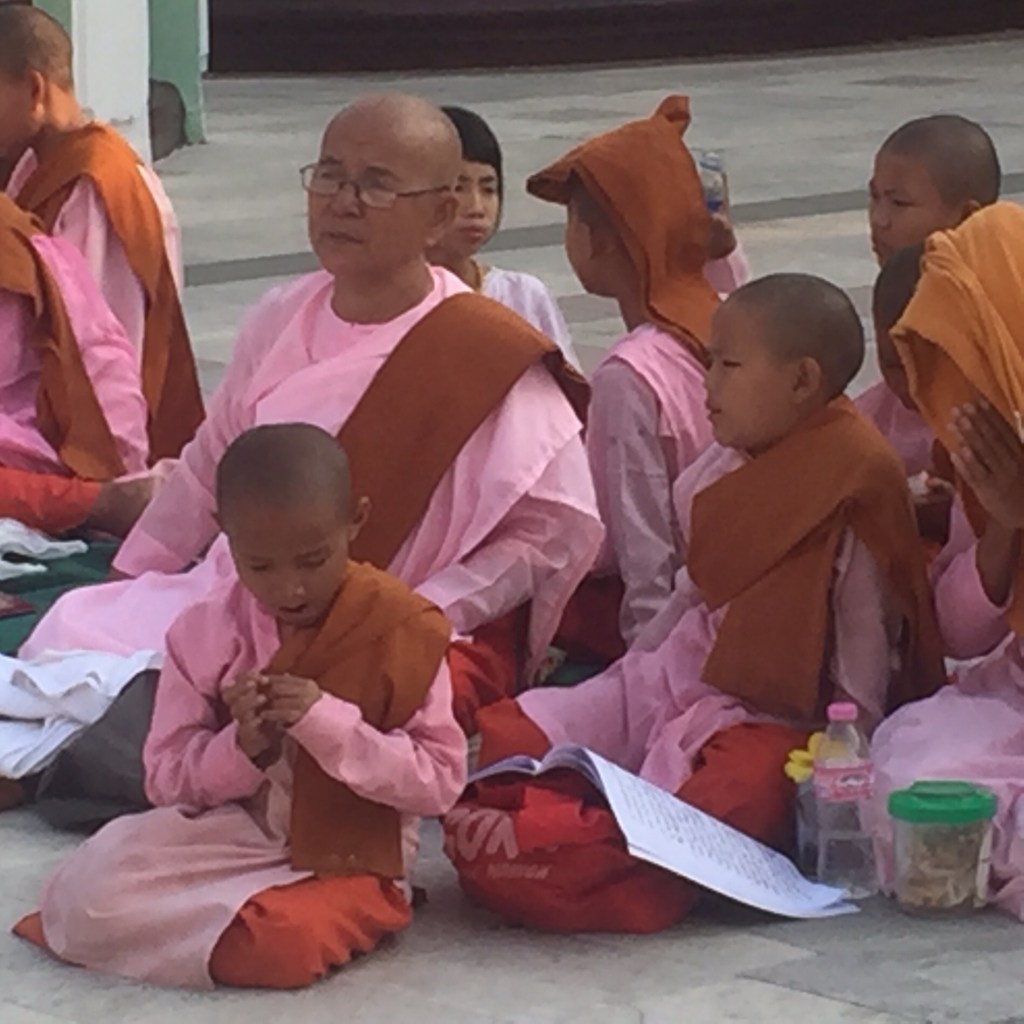
In Myanmar, buddhist nuns do not get the same respect as monks simply because they are a woman.
Then, a golden mystery upheaved itself on the horizon, a beautiful winking wonder that blazed in the sun, of a shape that was neither Muslim dome nor Hindu temple-spire. (Rudyard Kipling of his 1889 visit to Myanmar)
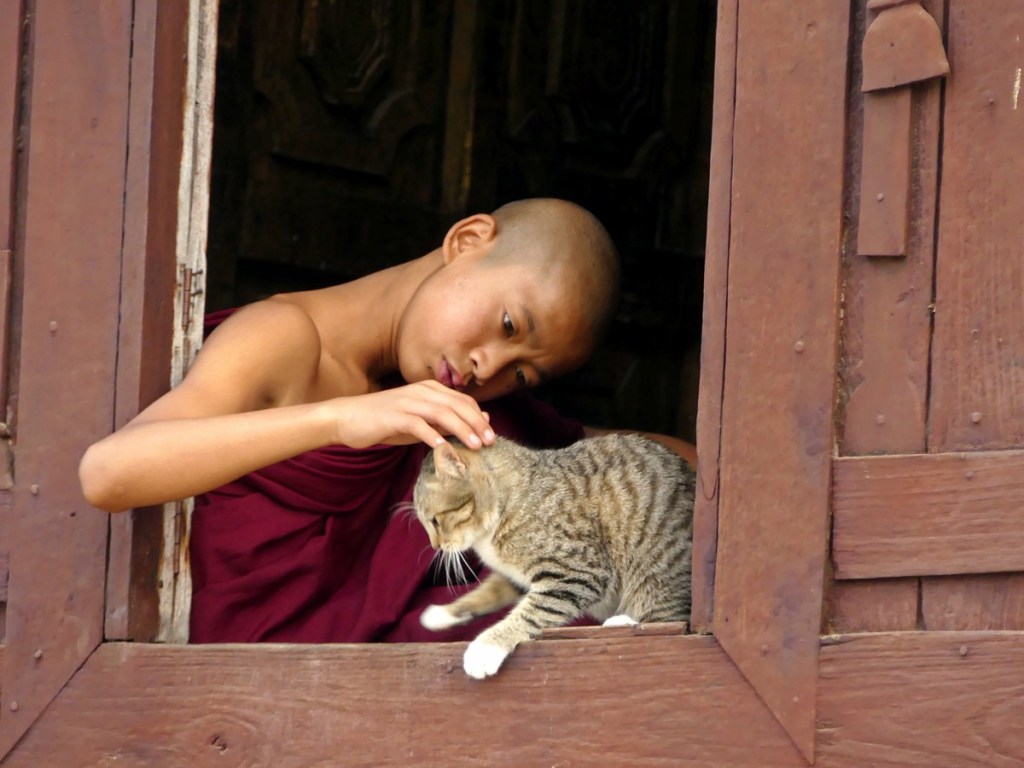
In Myanmar it is very common that children become a nun or monk for a week or a month. During school vacation many sign up to gain merit for loved ones or to learn more about Buddhist teachings.
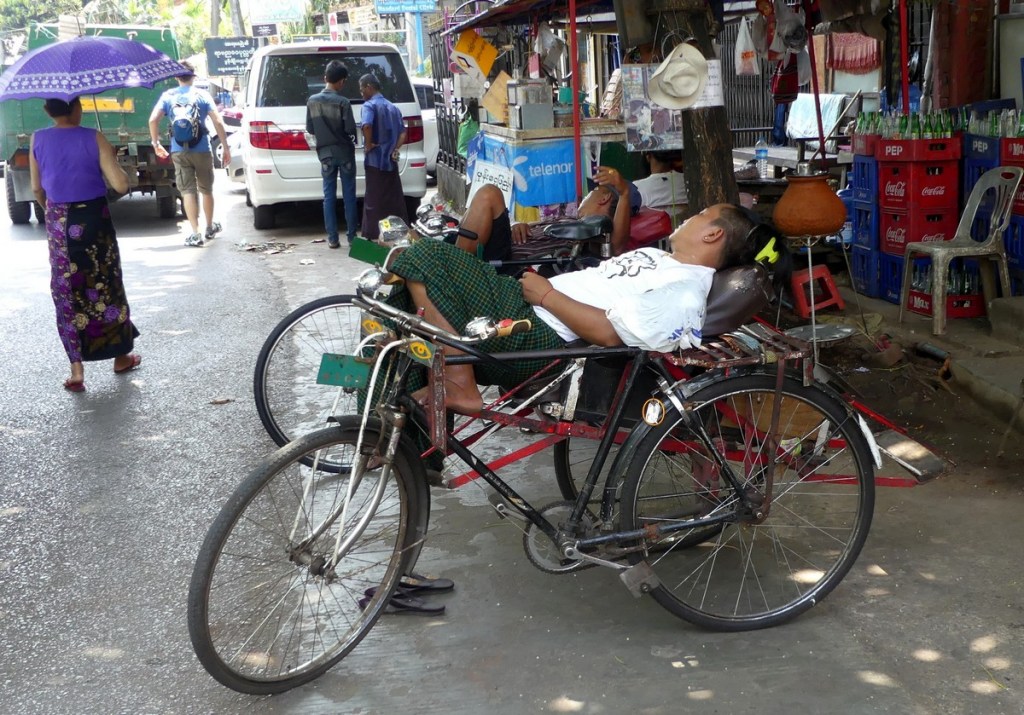
Since 2003 no motorcycles are allowed in the centre of Yangon.
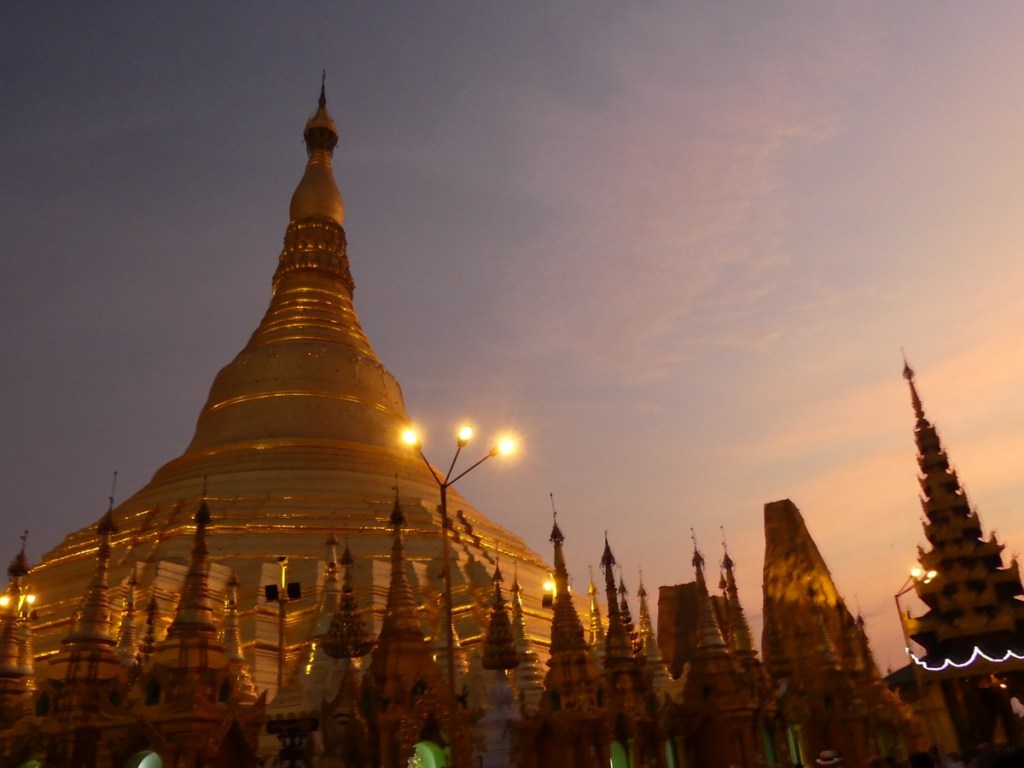
The Shwedagon pagoda at sunset.
Morning or evening, week-end or middle of the week, there are always a lot of worshippers at the pagoda.
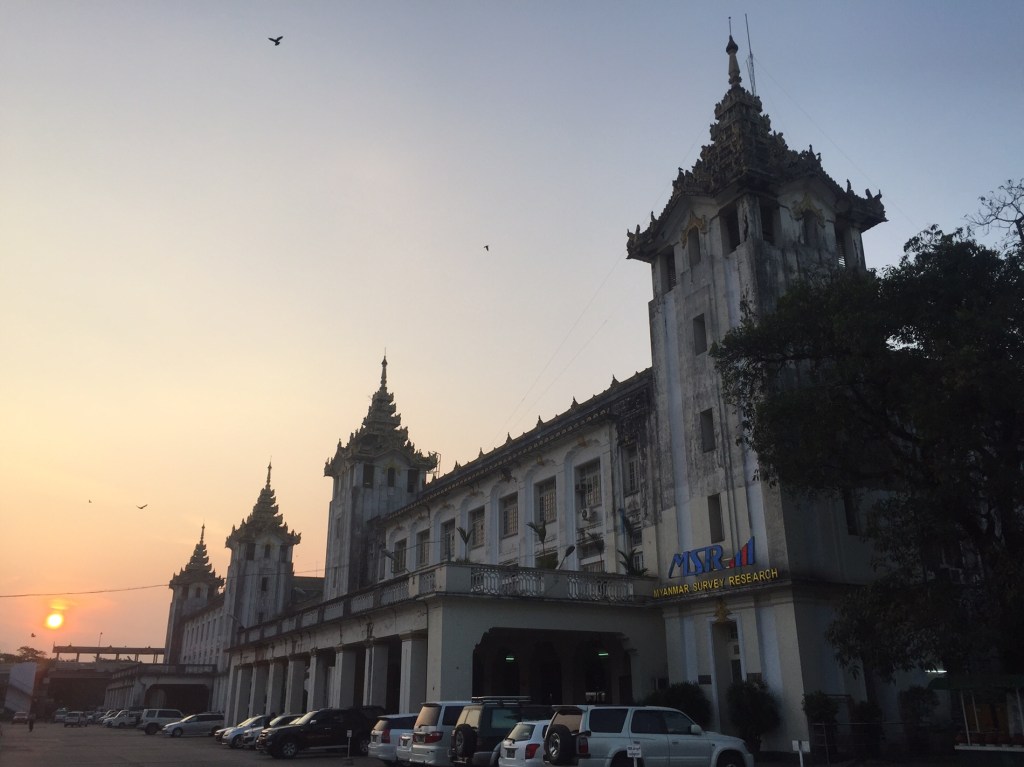
Yangon central rail station was completed in 1954 and is the largest railway station in Myanmar.
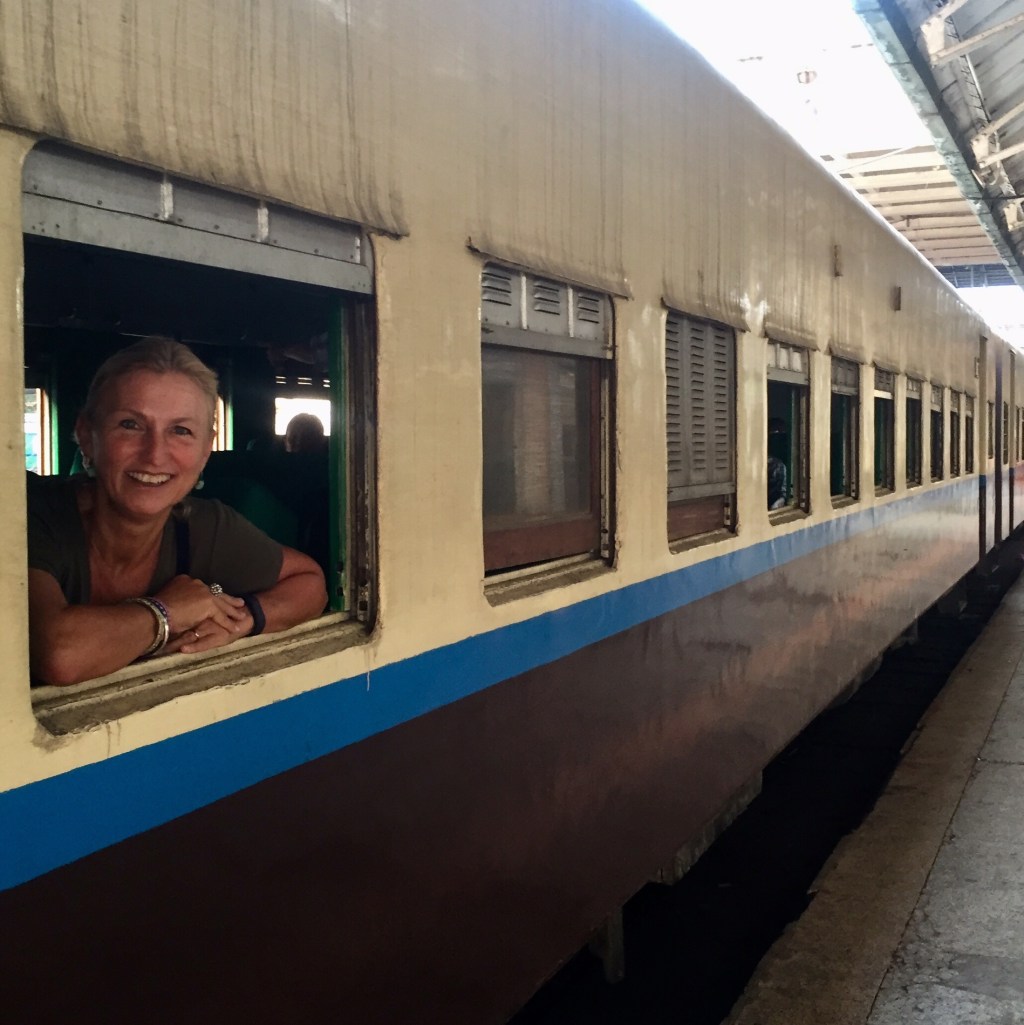
Windows and doors open, local people selling food and drinks, a lot of shaking on the rails, so much fun…
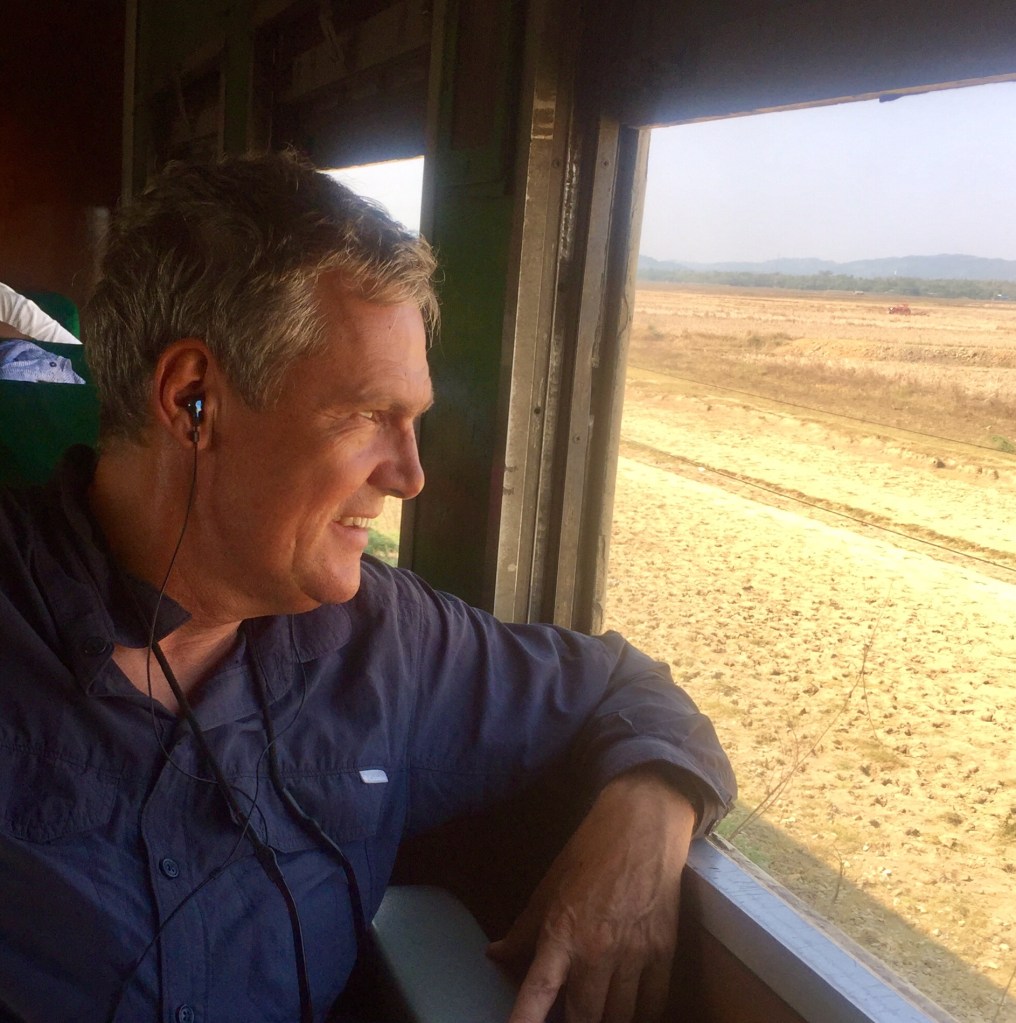
At 30km/h the train is an excellent way to enjoy the scenery.
A little town seen from the train.
Along the way there are sooo many stupas.
The yellow rice is ready to be harvested.
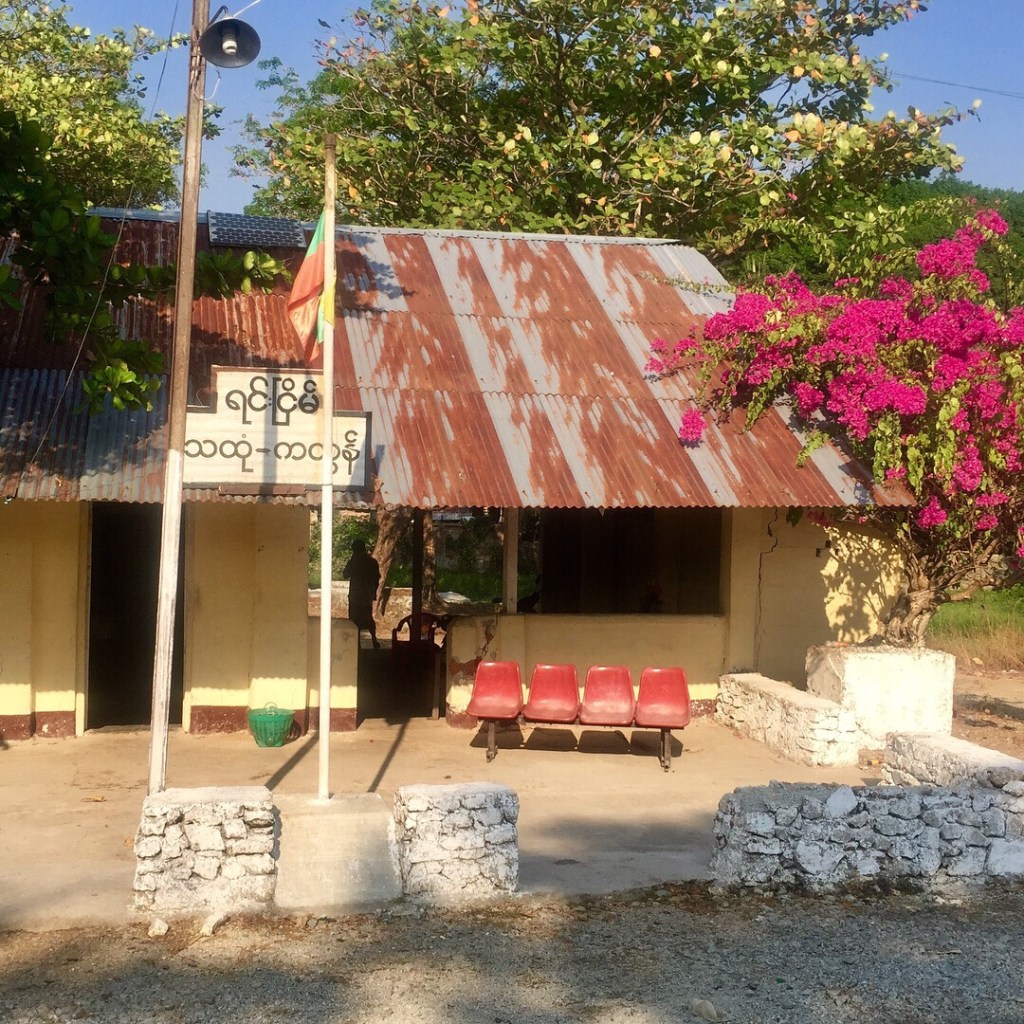
A railway station along the way.
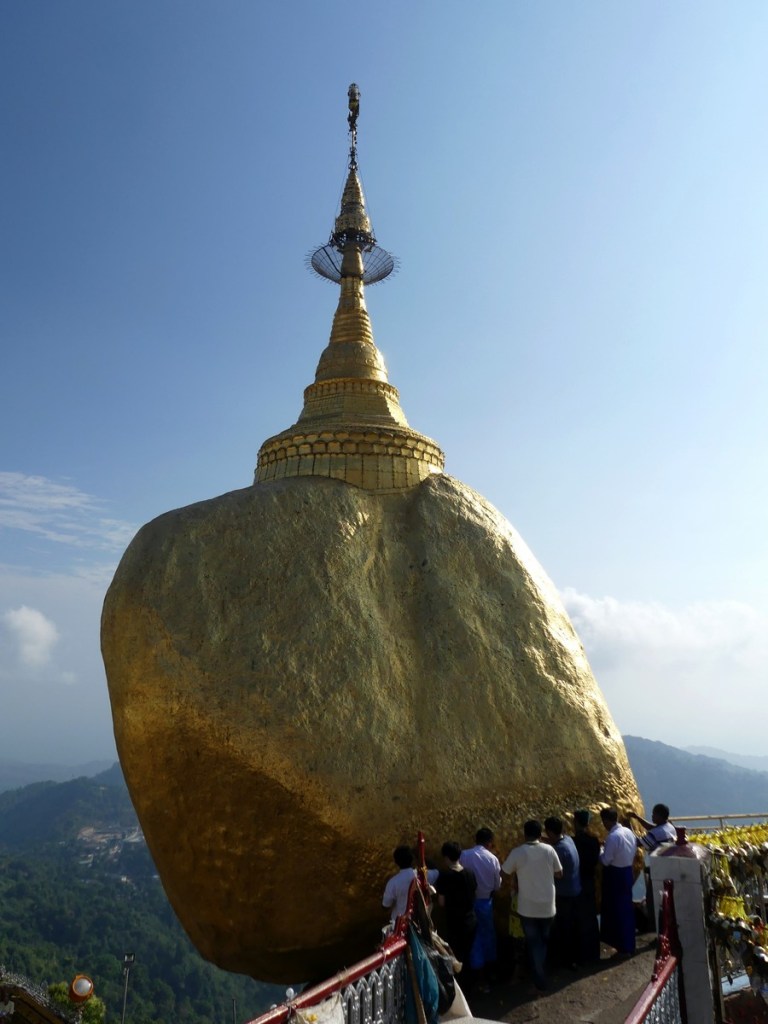
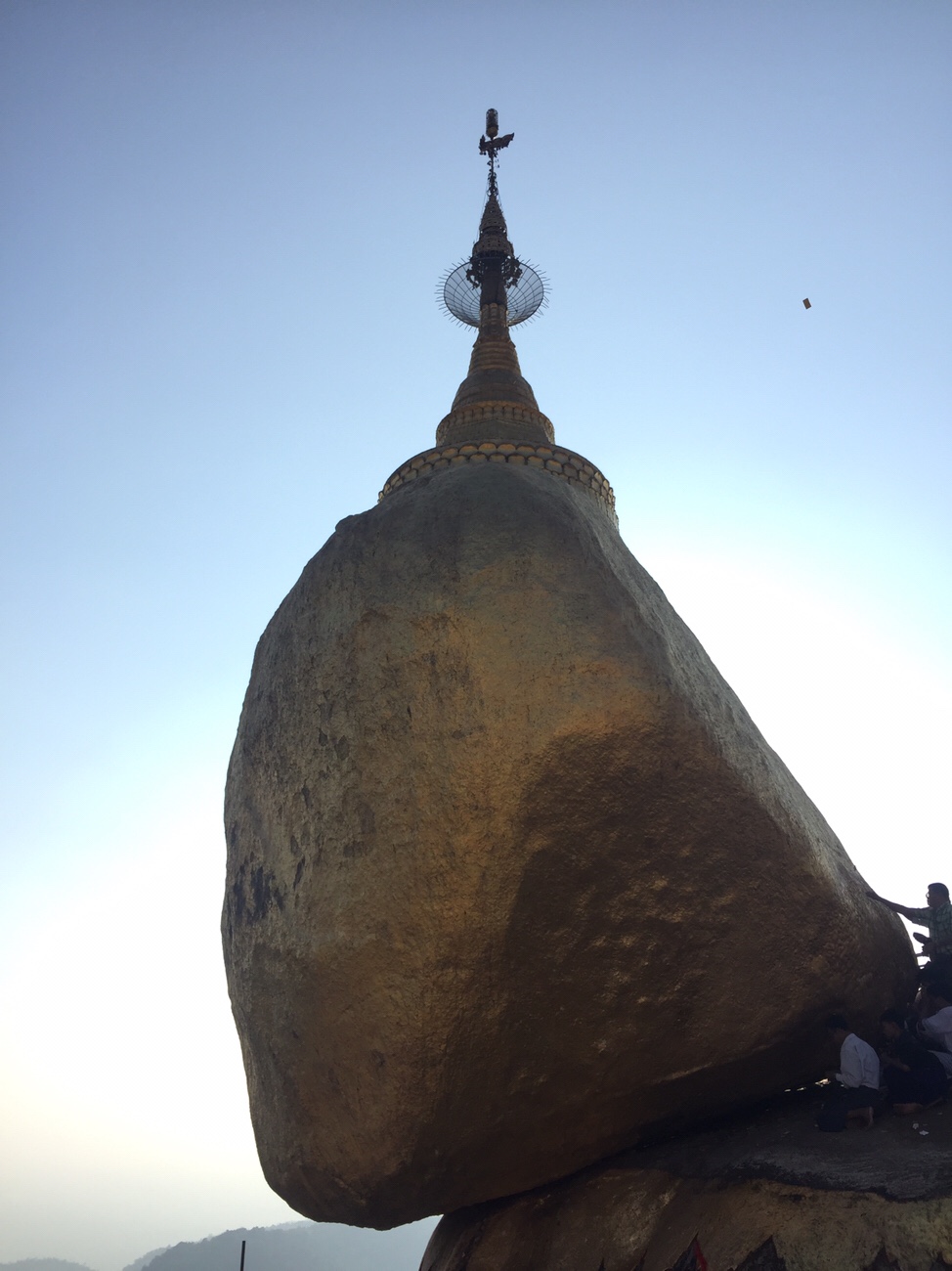
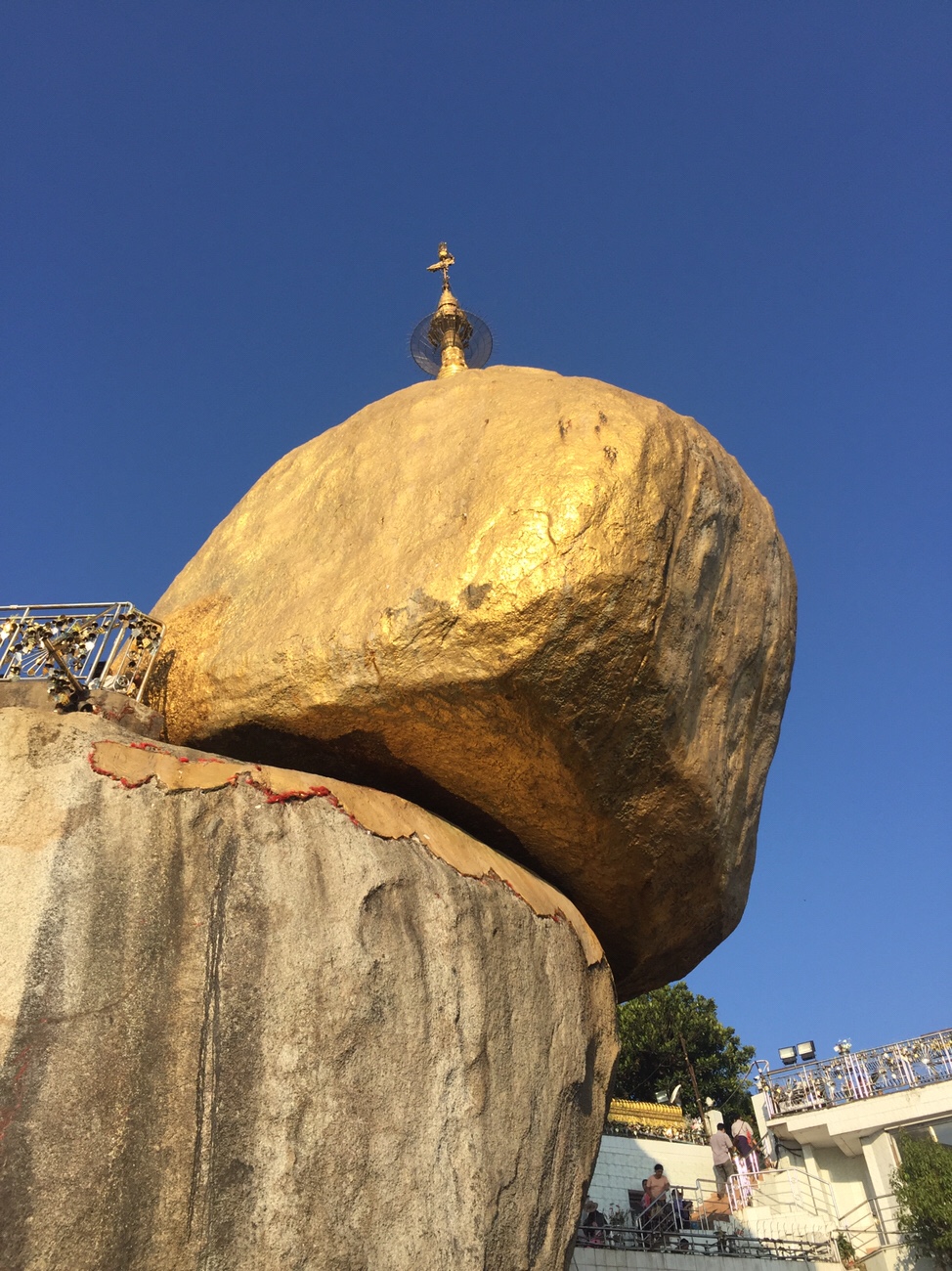
Golden Rock or Kyaiktiyo pagoda, only men are allowed to touch the rock. According to legend the rock is carefully balanced on a strand of Buddha’s hair.
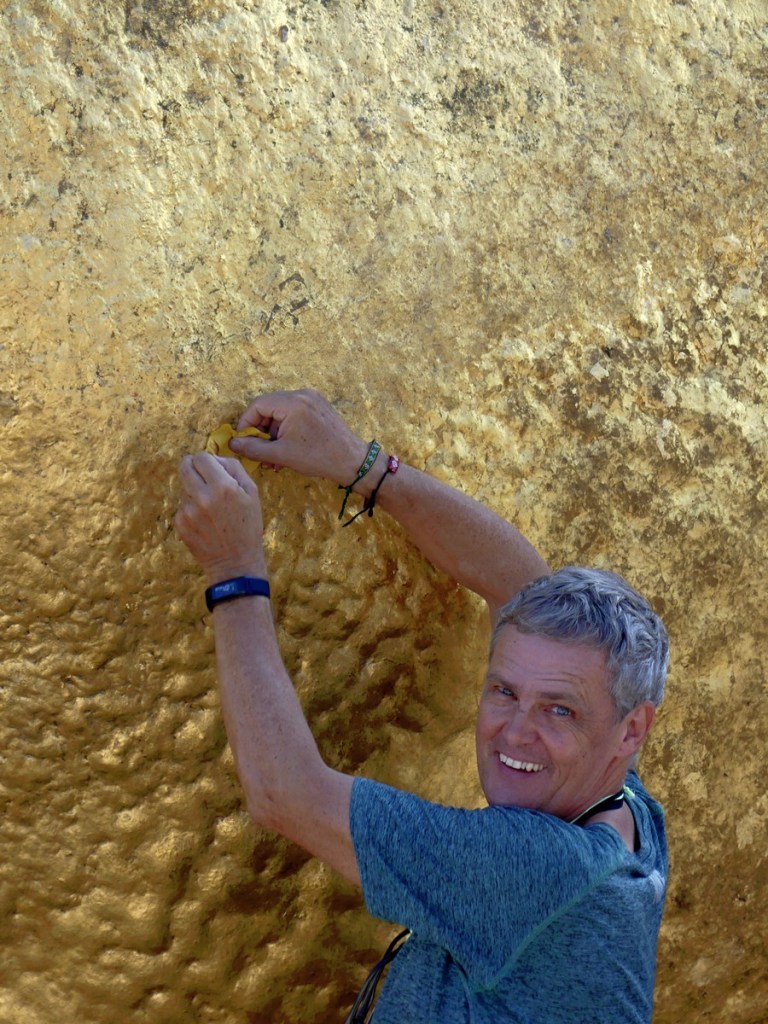
Only men are allowed at the Golden Rock. We bought some gold to stick on the rock and hope this would bring good luck :-). It is one of the three most religious sites in Myanmar again with many devotees.
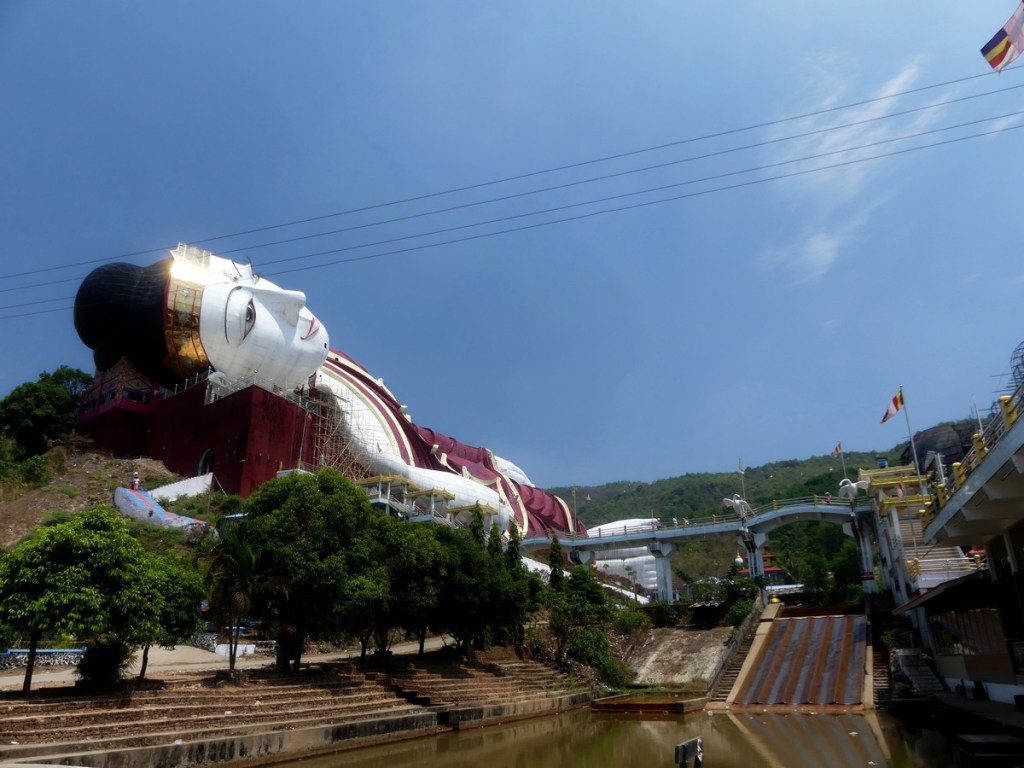
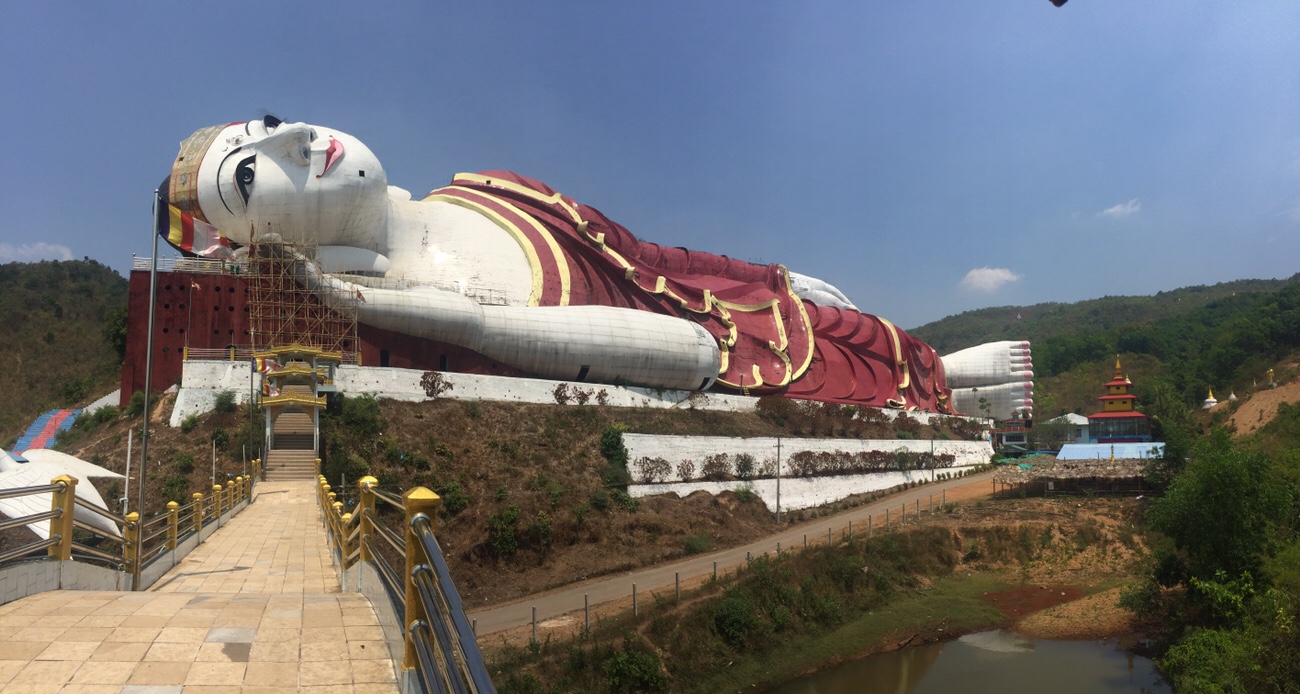
Win Sein Taw Ya near Mawlamyine, a 30m high and 180m long reclining Buddha, the longest in the world.
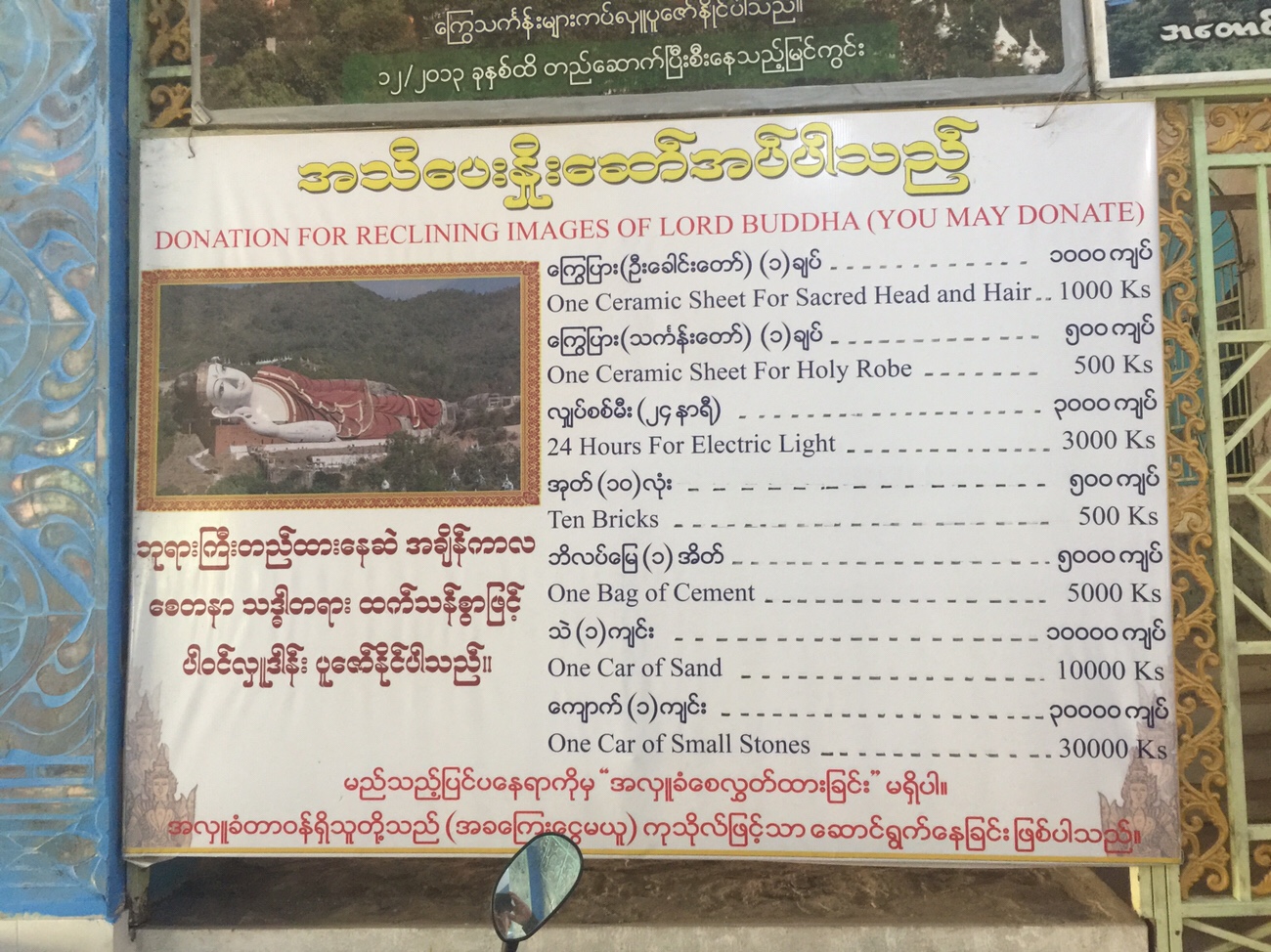
Inside the Buddha there are 8 floors but only 4 can be visited because of “work in progress”. Instead of just donating money we bought 4 red tiles so they could complete the outside dress from Buddha.
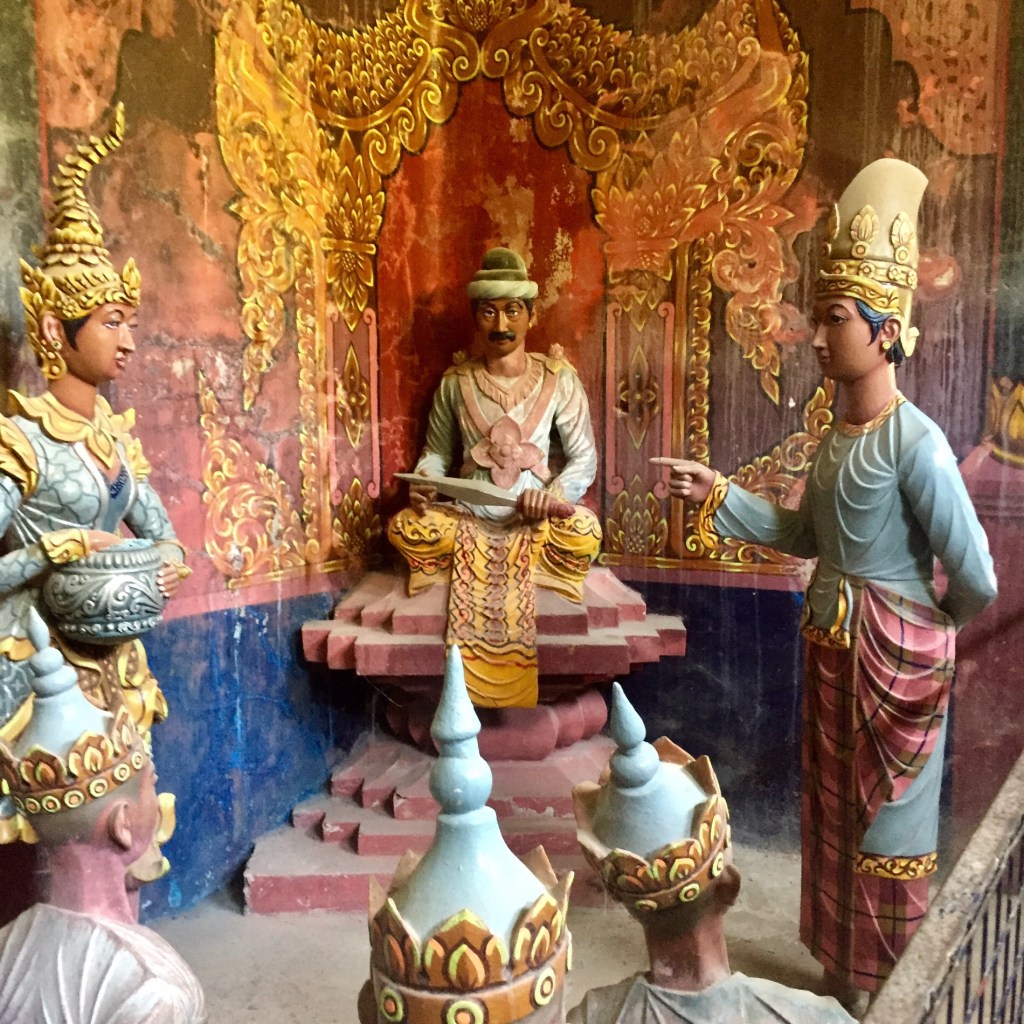
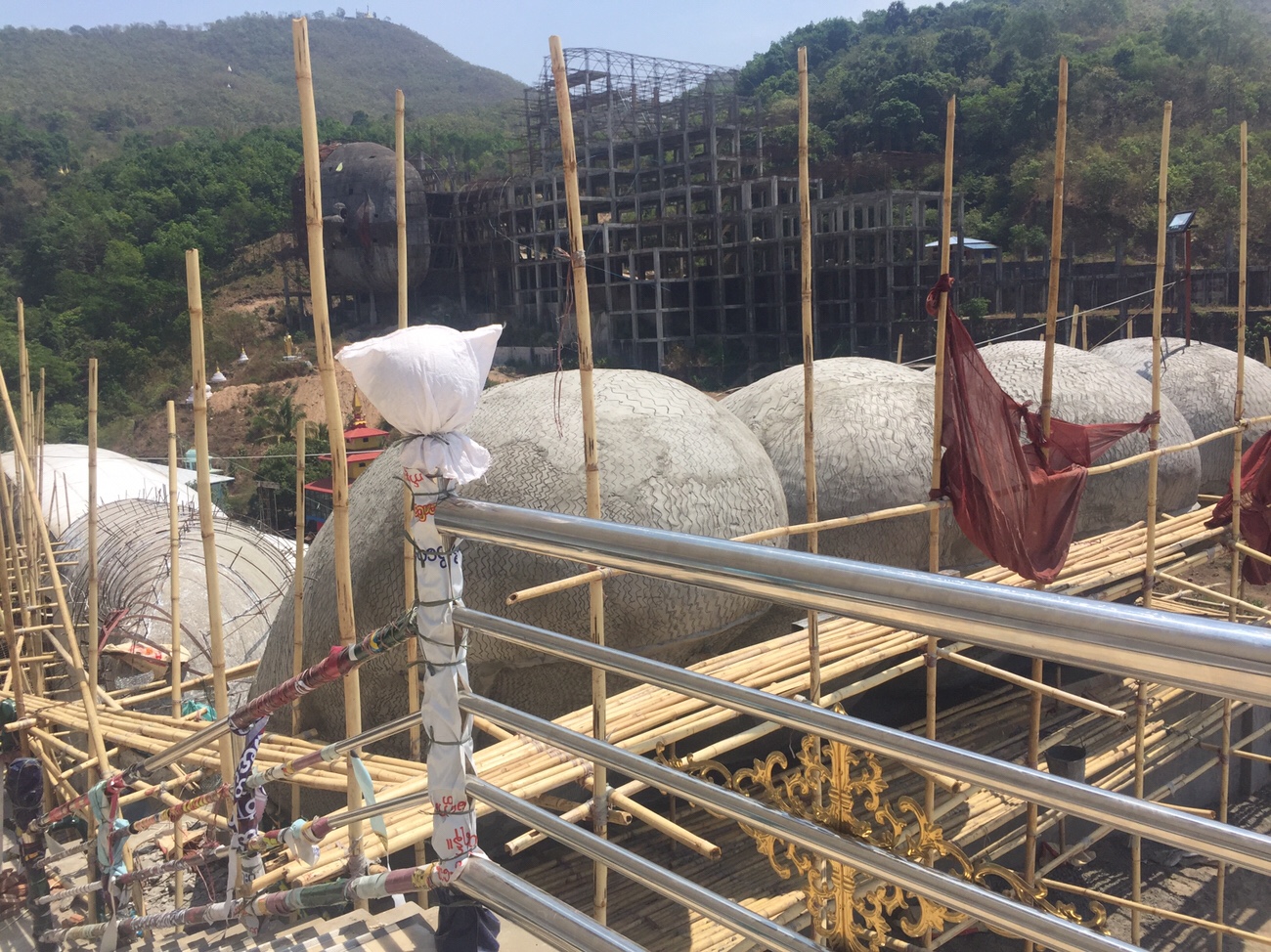
Inside the Buddha there were dioramas both finished and under construction about the life of Prince Siddharta before he became Buddha.
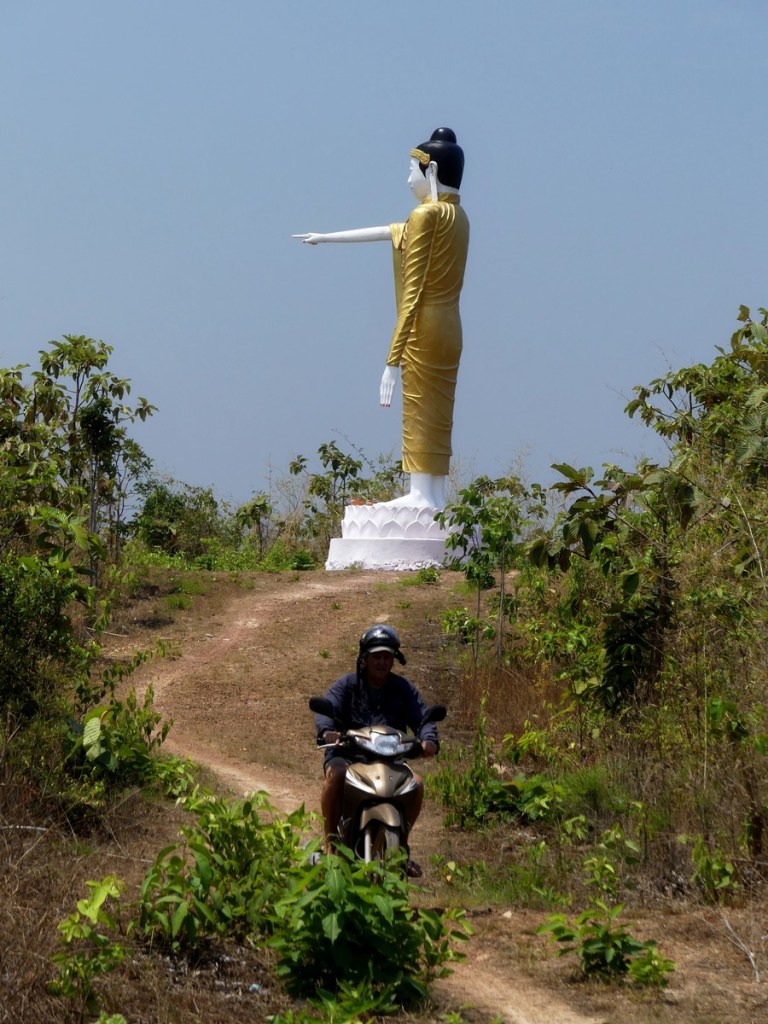
In the hills surrounding the lying Buddha there are even more statues and stupas. It was good to have our motorcycle and drive around and take it all in.
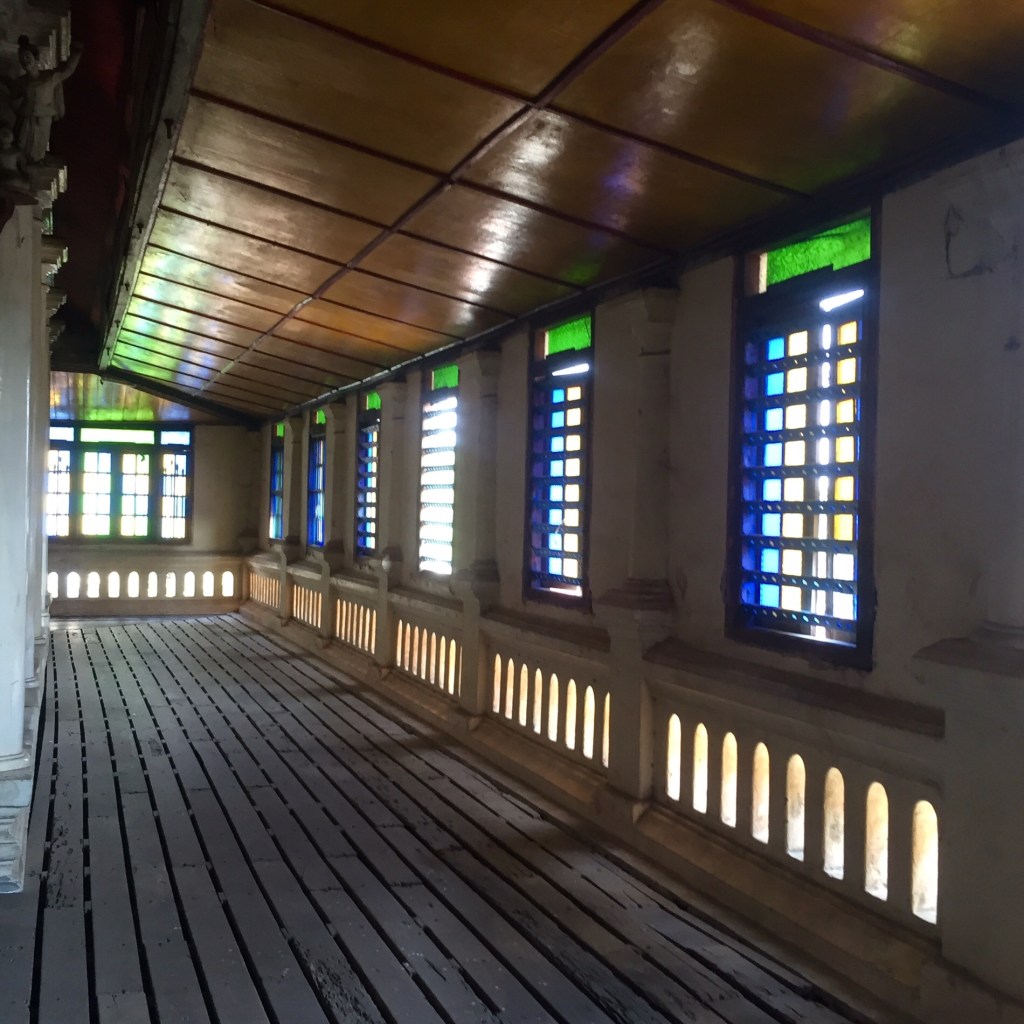
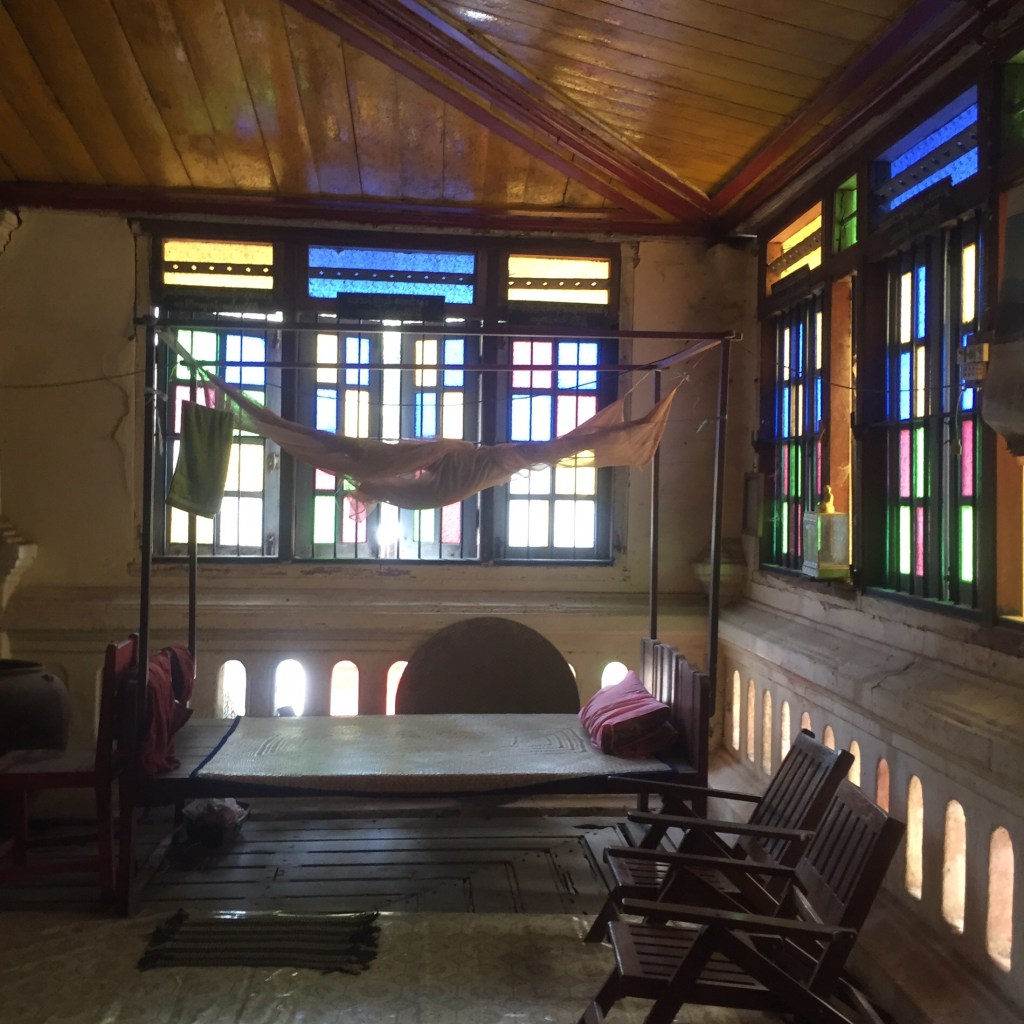
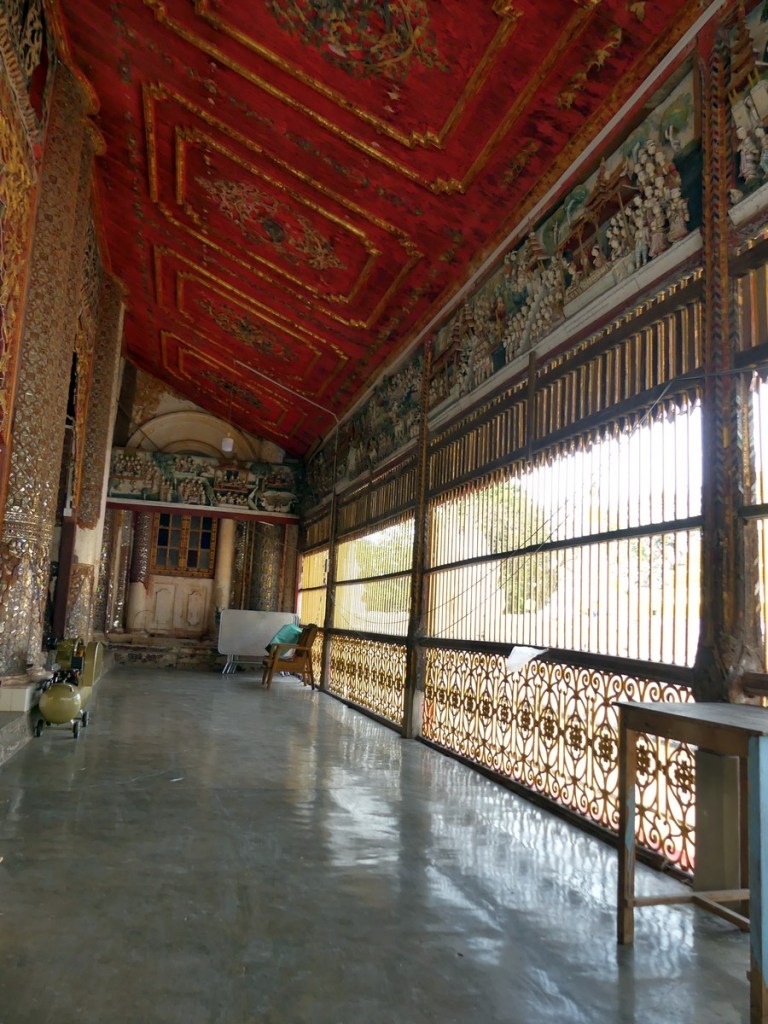
Seindon Mibaya Kyaung monastery in Mawlamyine, 100 years old, was built for the wife of King Mindon.
Today only 9 monks are living in the monastery and although still very beautiful it is in dire need of repair.
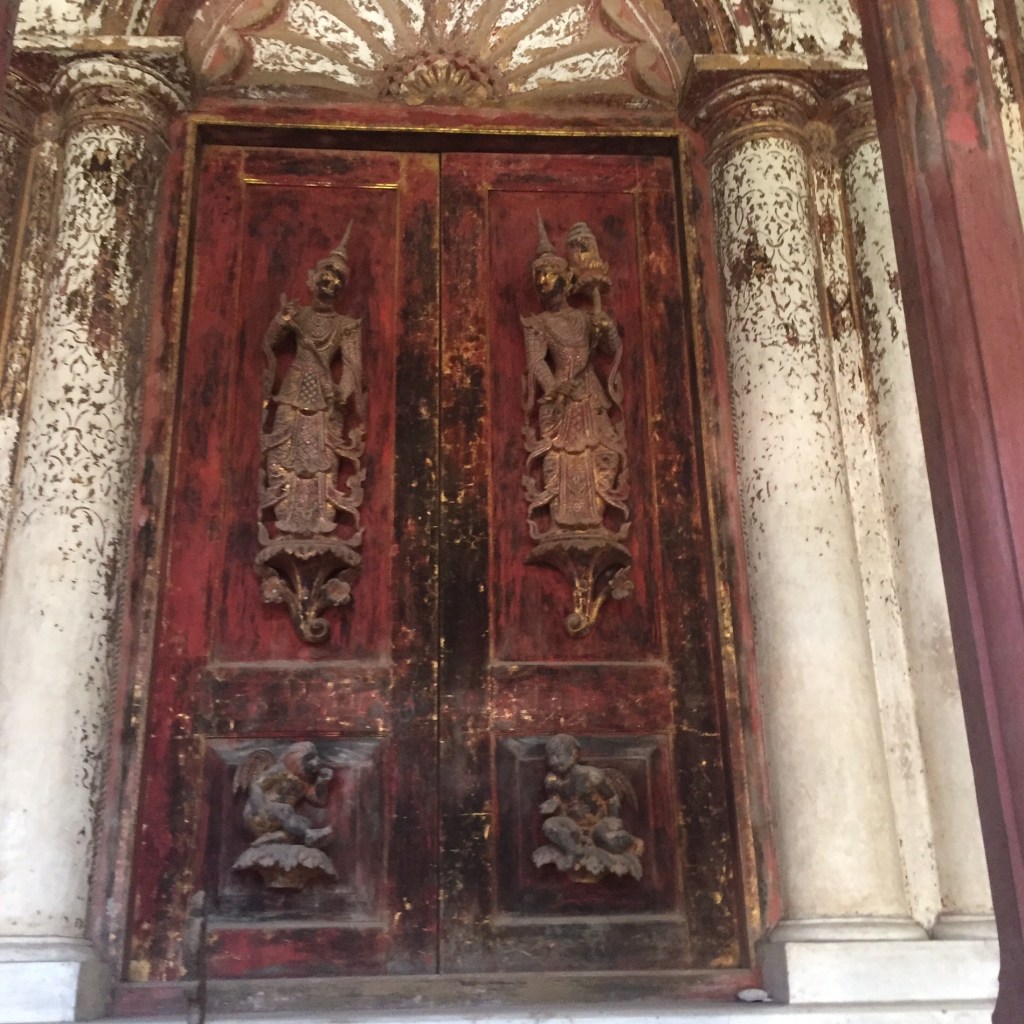
Beautifully carved reliefs on the doors in red and gold.
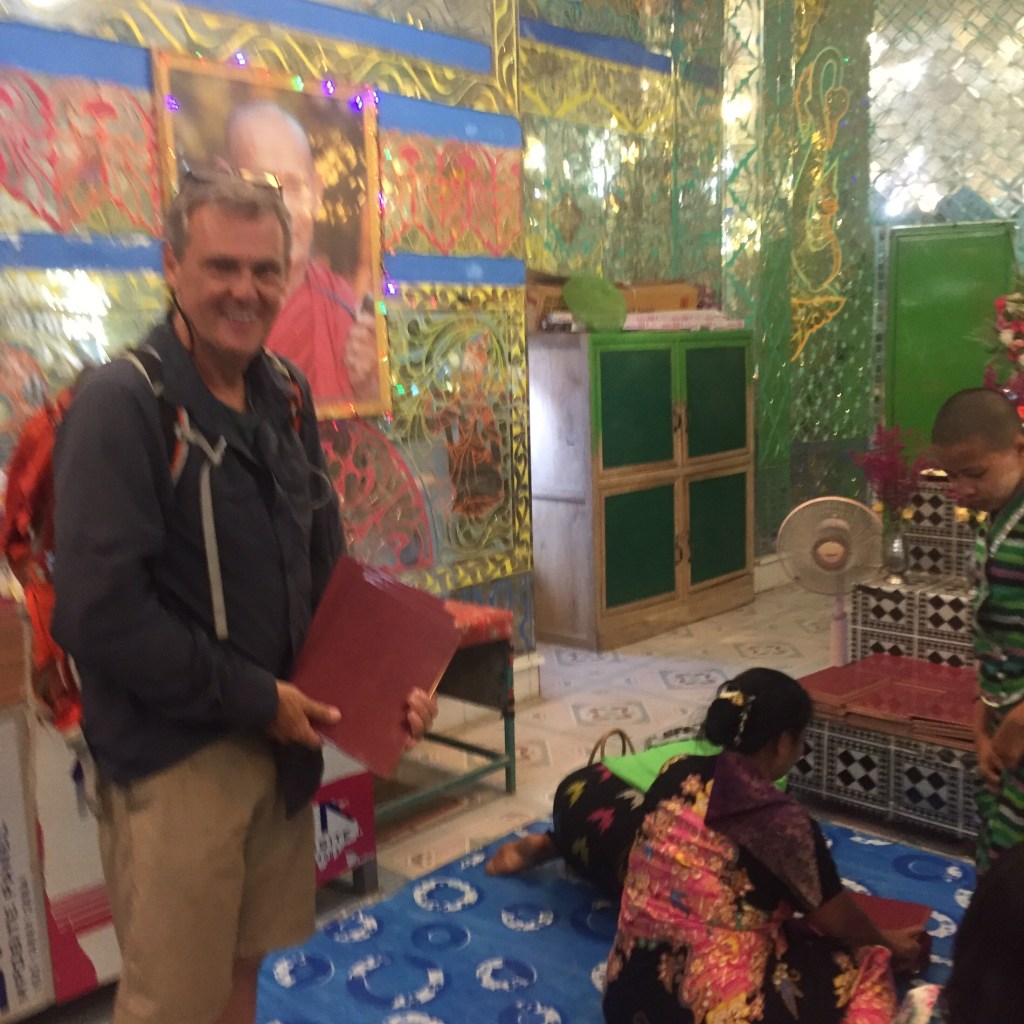
One of the monks turned on the lights for us and wanted us to sign a visitor book with our names and the amount of our donation to the monastery 😉
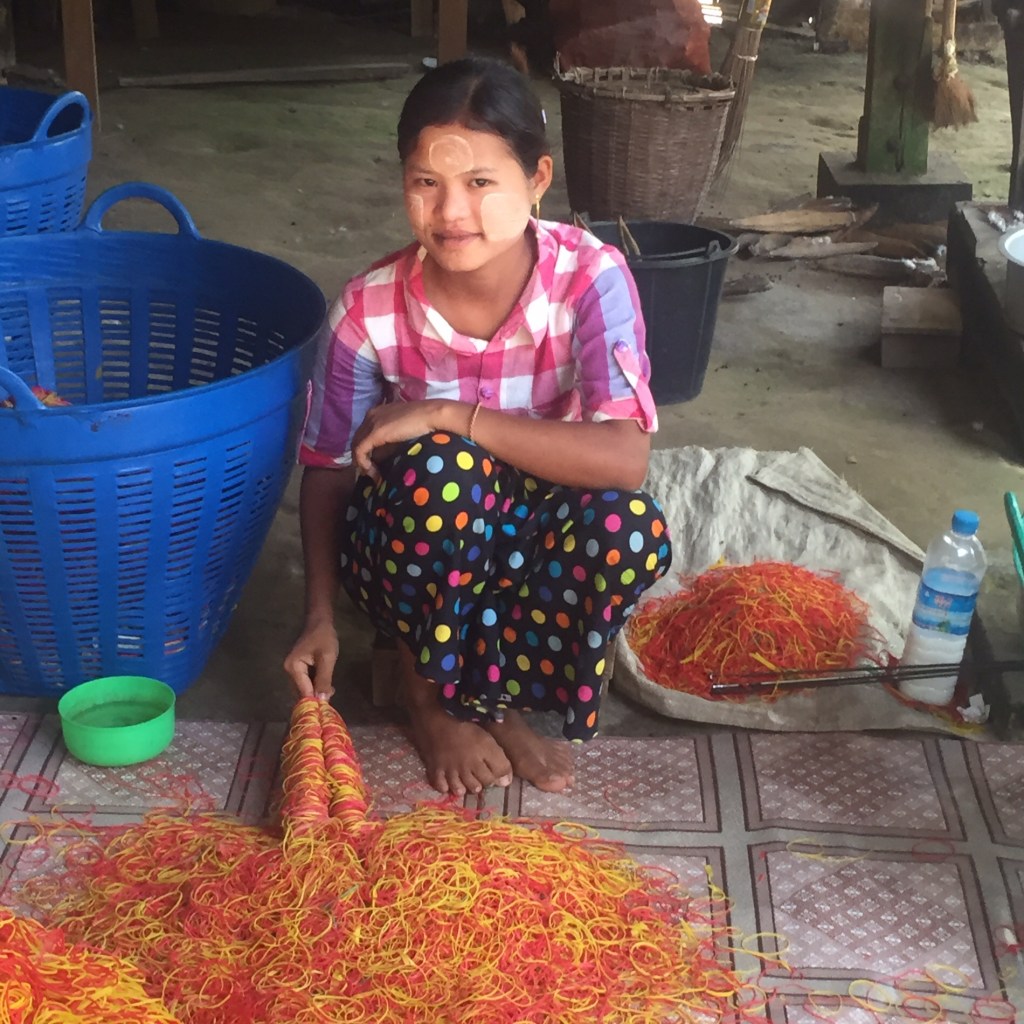
While we were in Mawlamyine we visited Bily Kyun (Ogre Island) with its many workshops. One of them was making elastic bands.
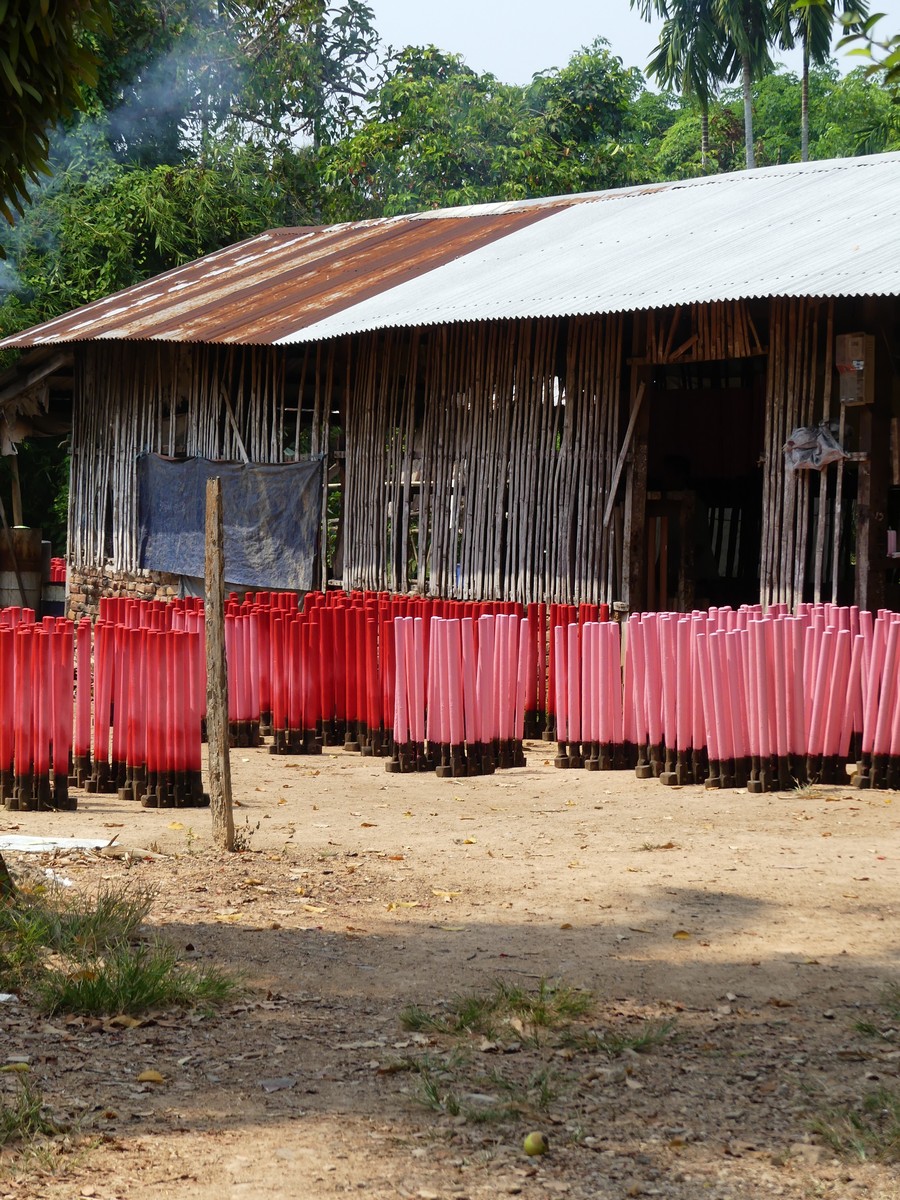
The rubber for the elastic bands drying in the sun made for colorful pictures.
Cutting the elastic bands, a lot of manual labor for about 4USD a day.
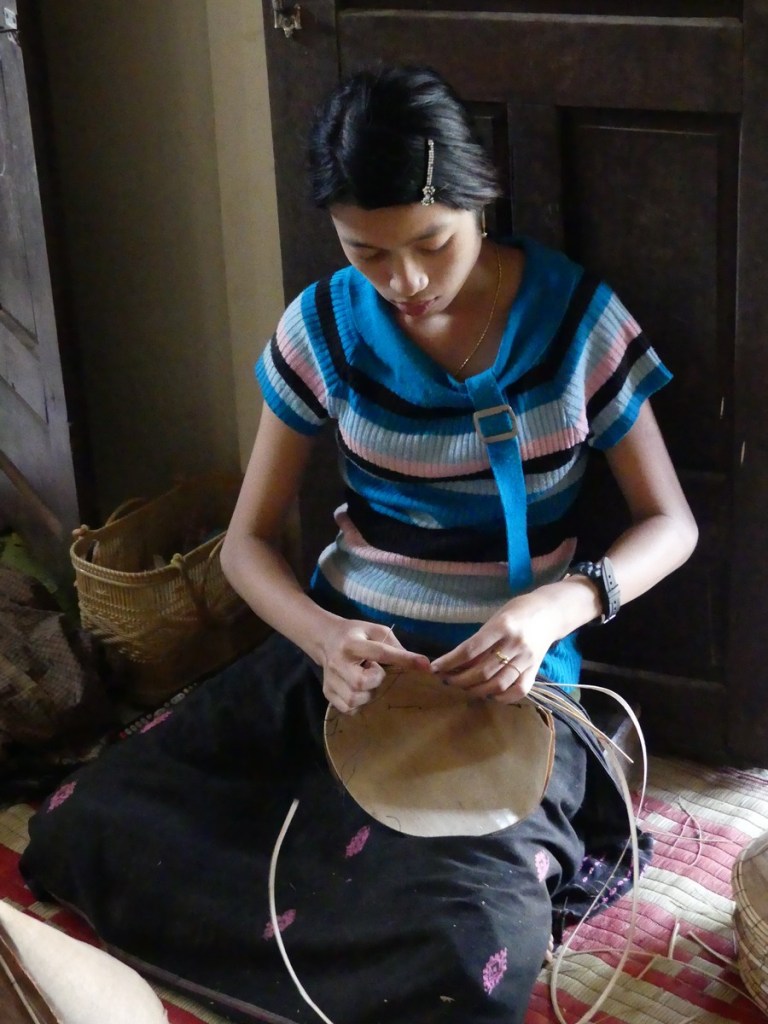
Making hats from bamboo all by hand.
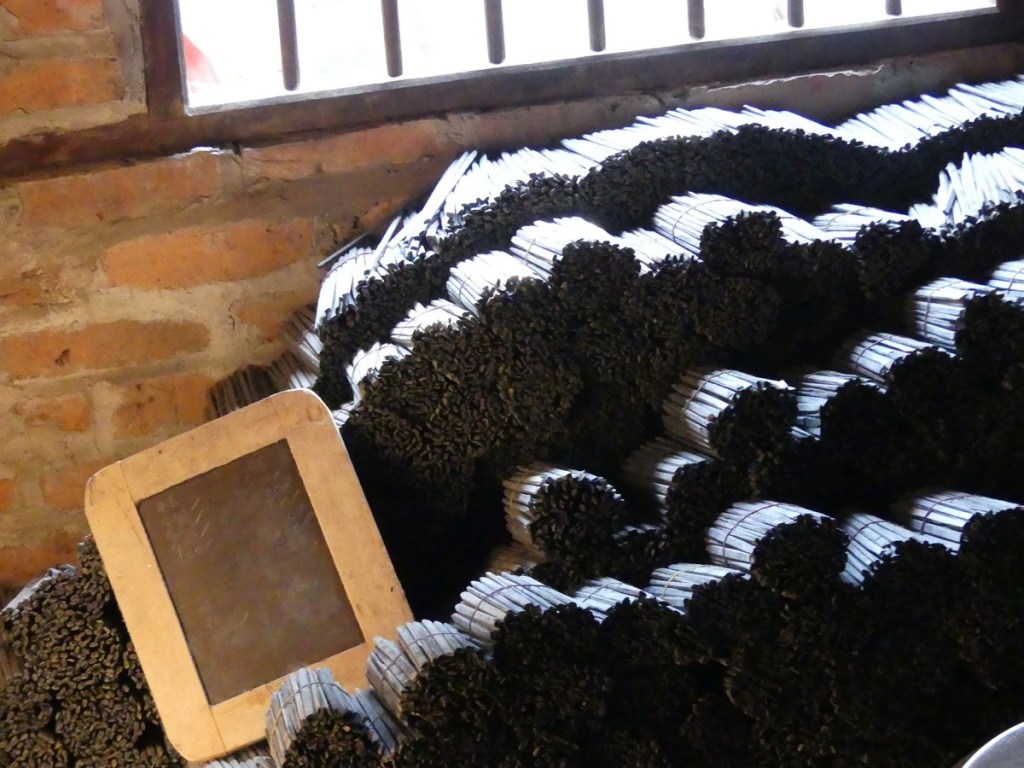
Once used in all the elementary schools in Myanmar slates are now becoming rare but still used in some schools. We visited one of the last slate making businesses in the village.
From Mawlamyine we went to Hpa-an by boat (6 hours) and on the way we made a short stop to visit the U Nar Auk monastery.
Two Buddhas each made from one trunk of teak and covered with gold leaf.
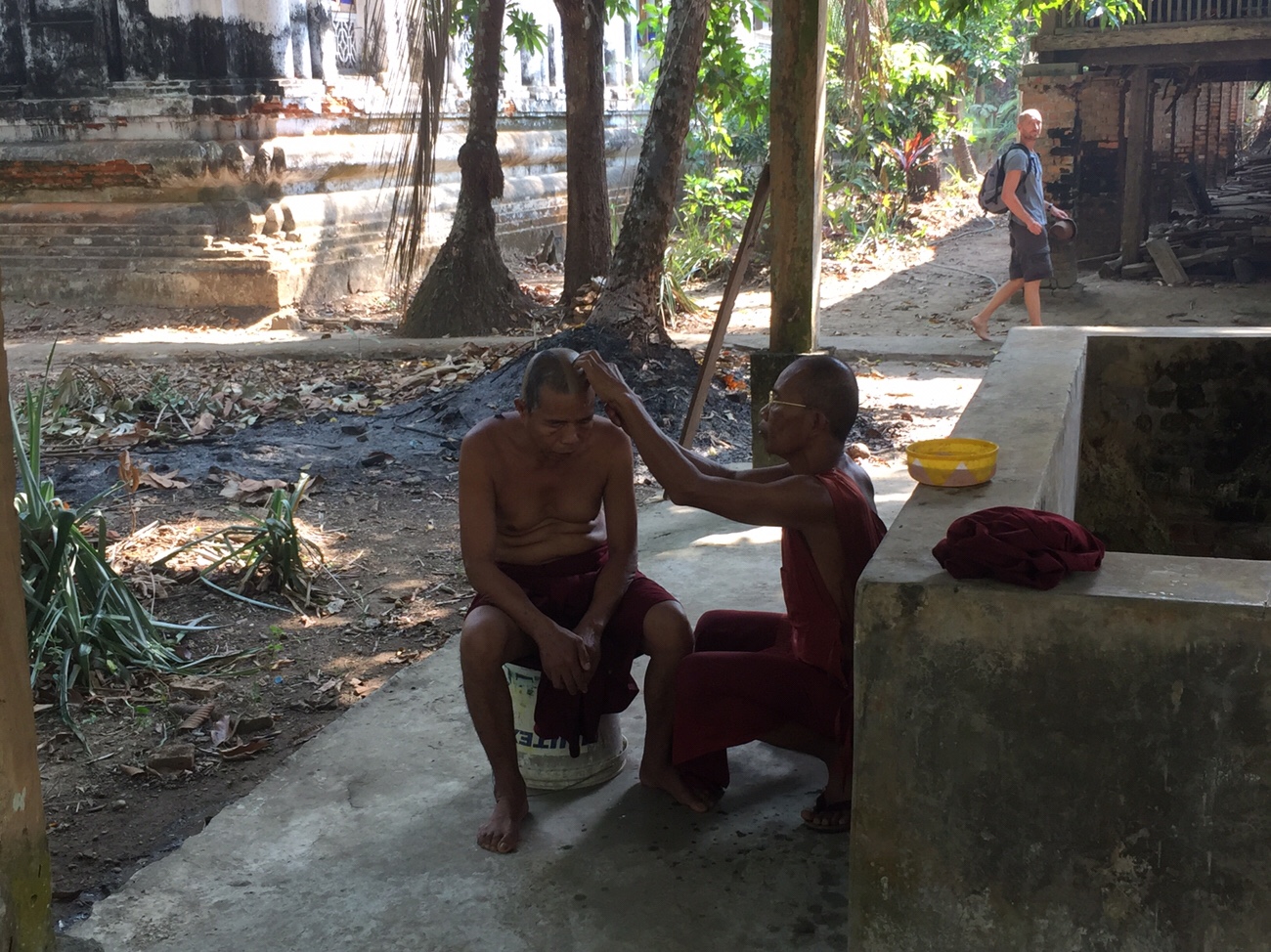
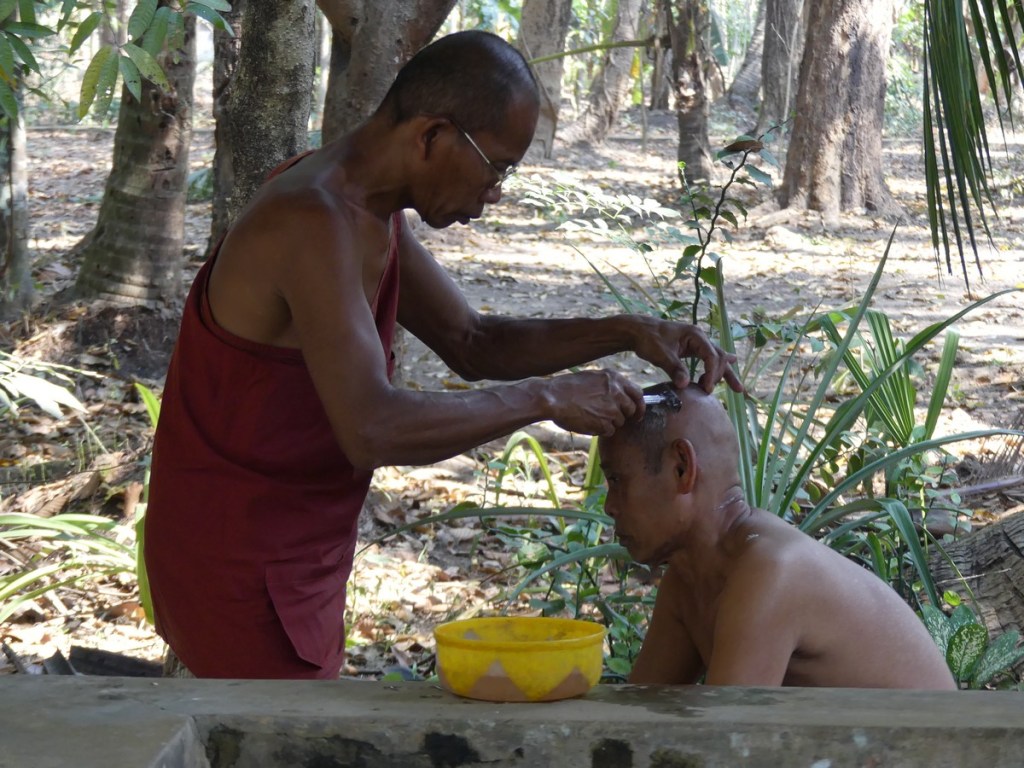
The monk’s hairdresser, according to Buddhist scripture the hair needs to be shaved with a razor every 2 months.
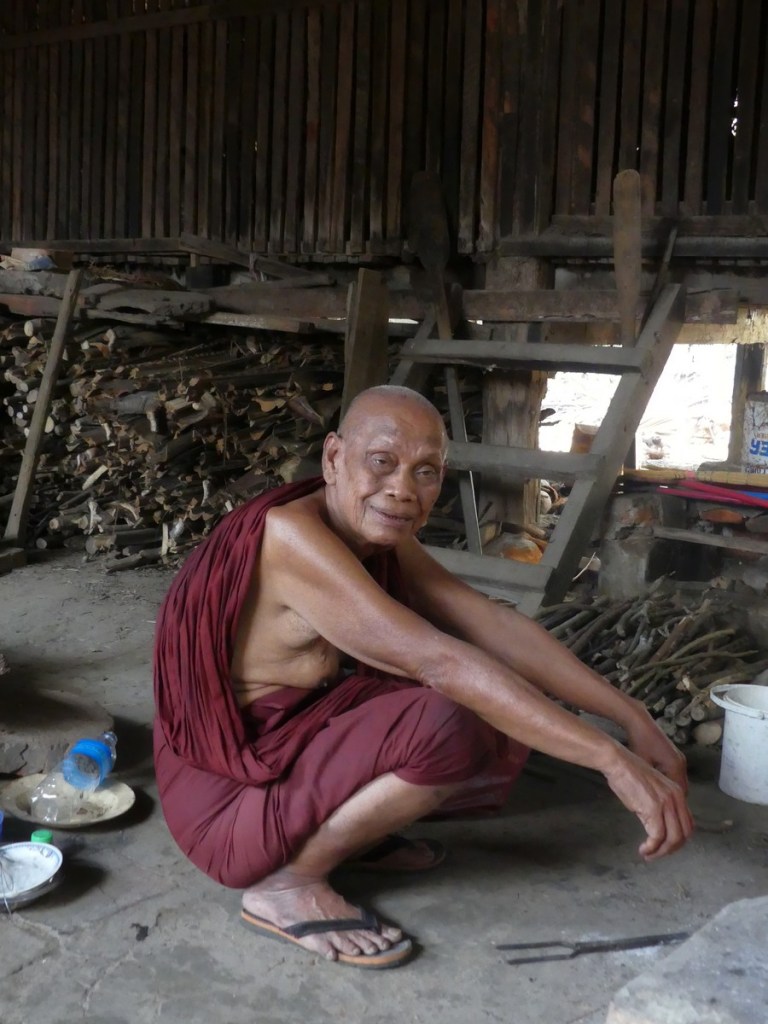
One of the monks preparing tea.
While on our way back to the boat we saw a cockfight although it is illegal in Myanmar, it happens (betting is not allowed) .
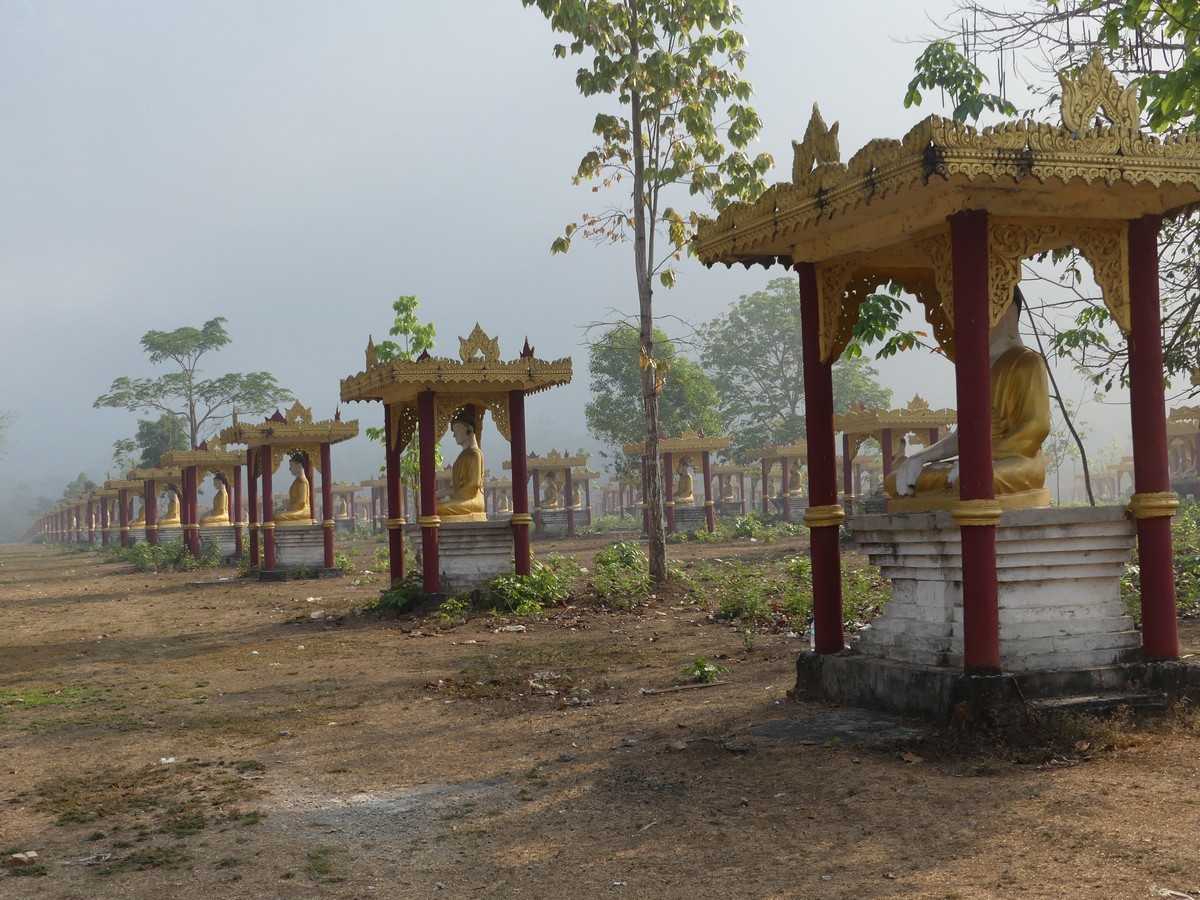
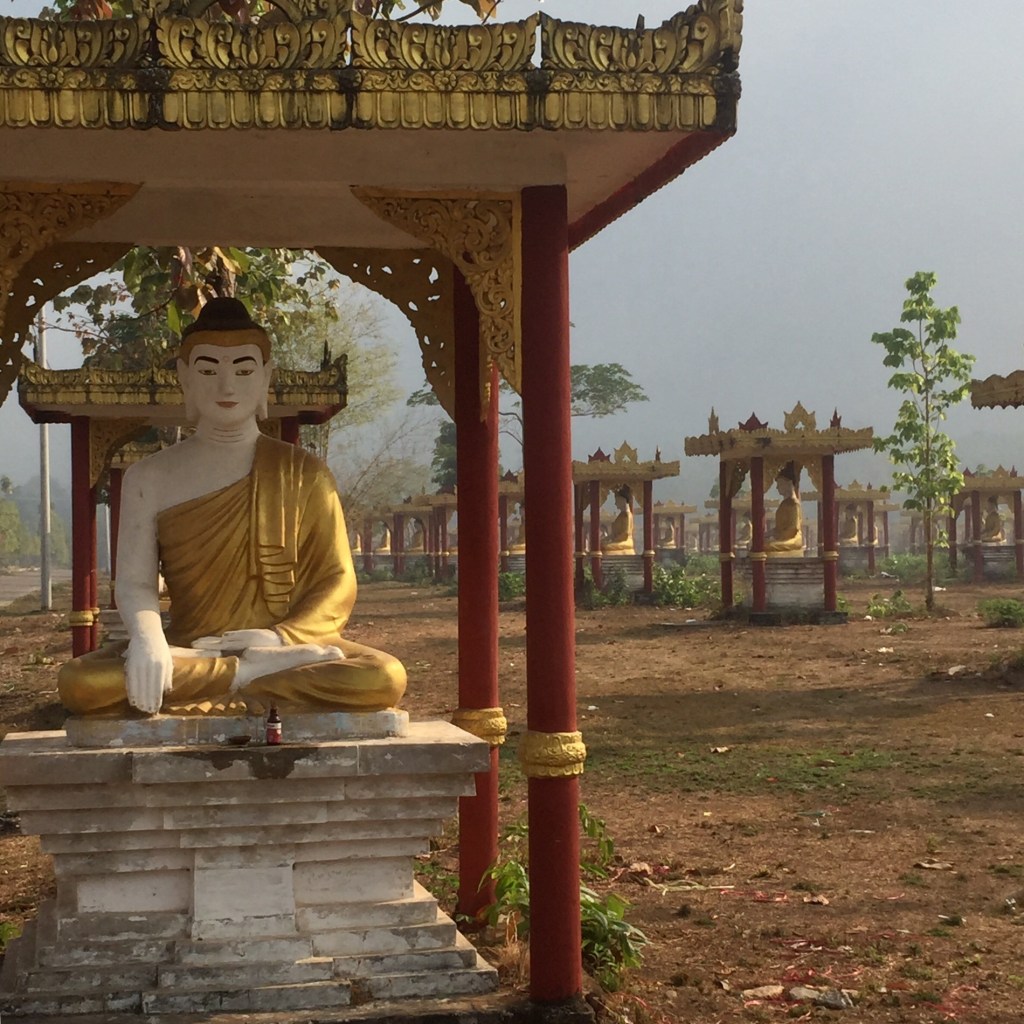
In Hpa-an we climbed Mount Zwekabin (722m) early in the morning. At the foot of the mountain, in Lumbini Garden, there are 1100 Buddha statues.
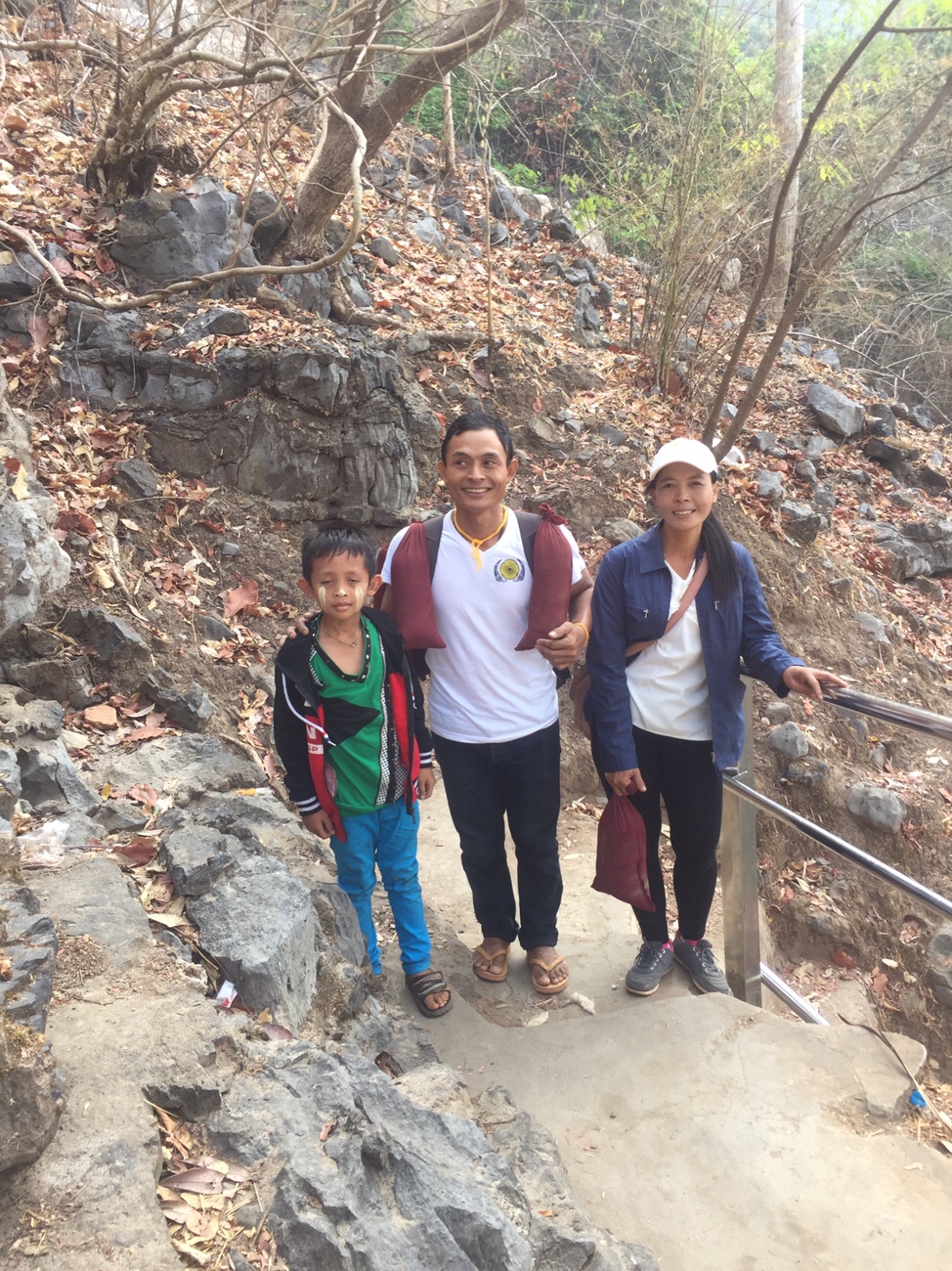
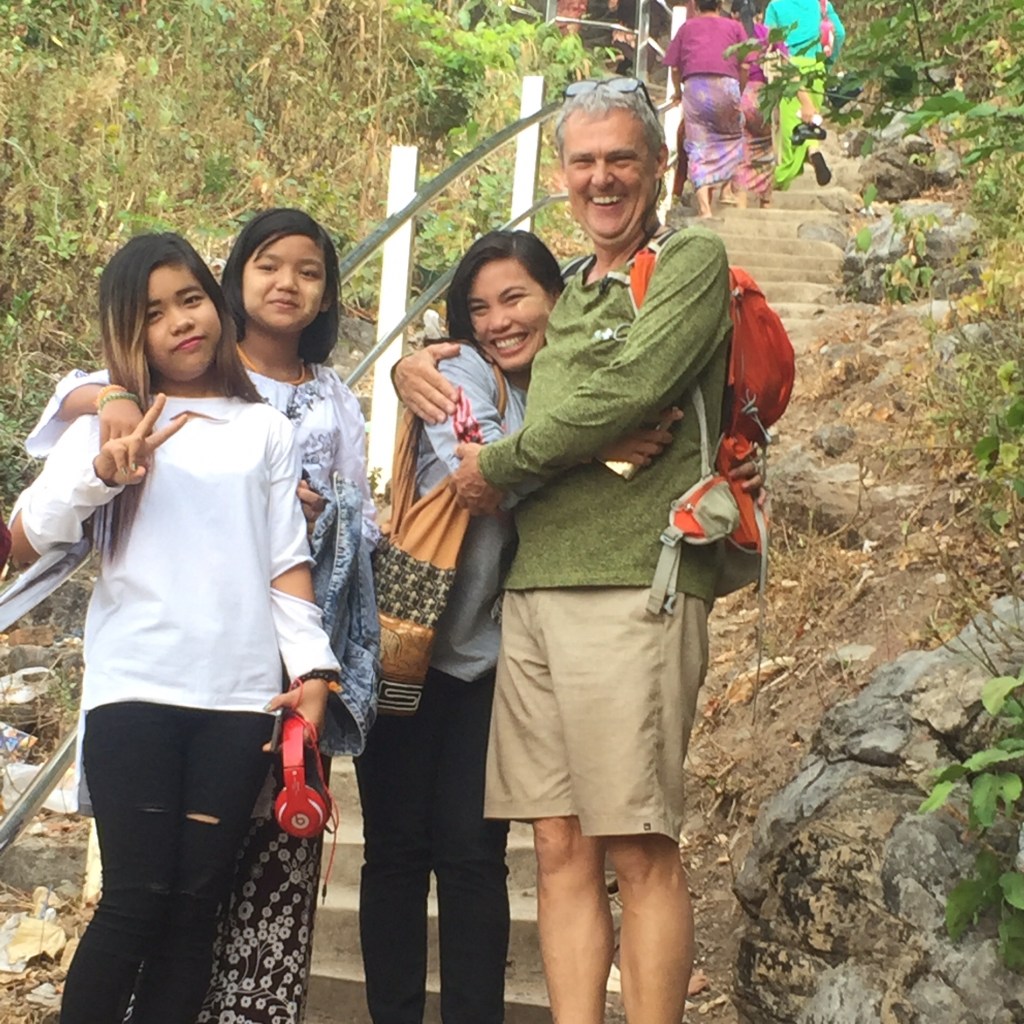
On our way to the top Stefan was stopped several times by Burmese girls to have his picture taken with them. Some were very enthousiastic :-). Stefan was happy with this sudden success.
A monk was filling bags with sand which worshippers  take up the mountain. The sand is used for construction of the pagoda on top of the mountain.
Burmese worshippers enthousiastic take the sand bags up the mountain for Buddha.
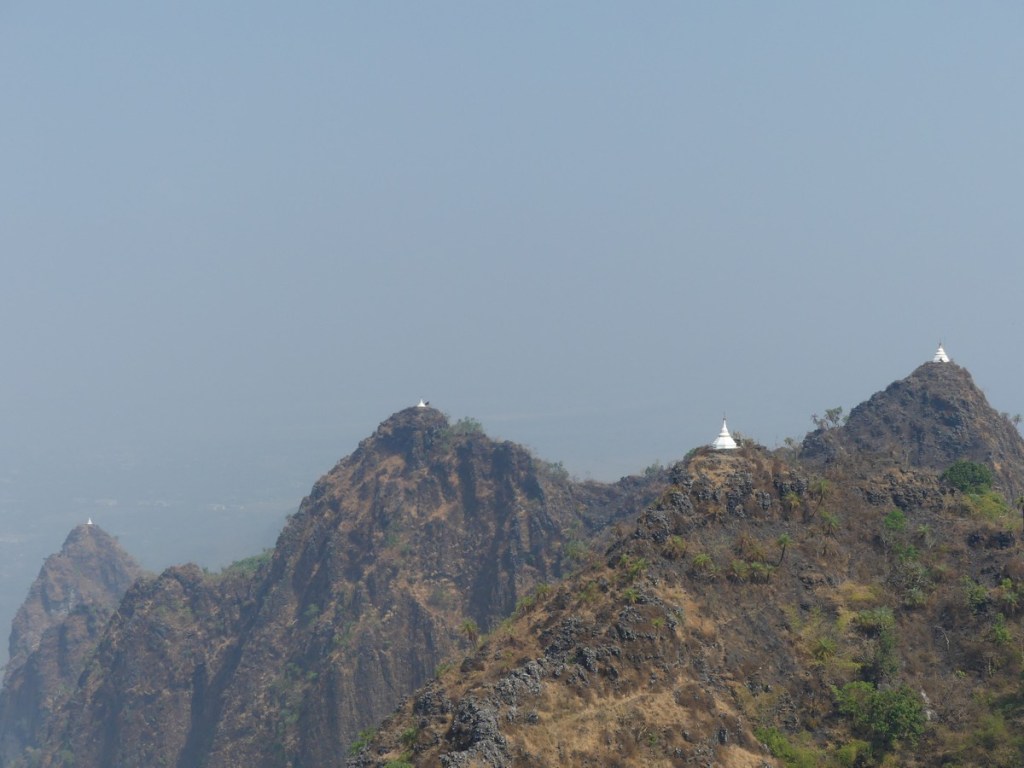
Once at the top we could see more stupas all around us. I was definitely not climbing there!
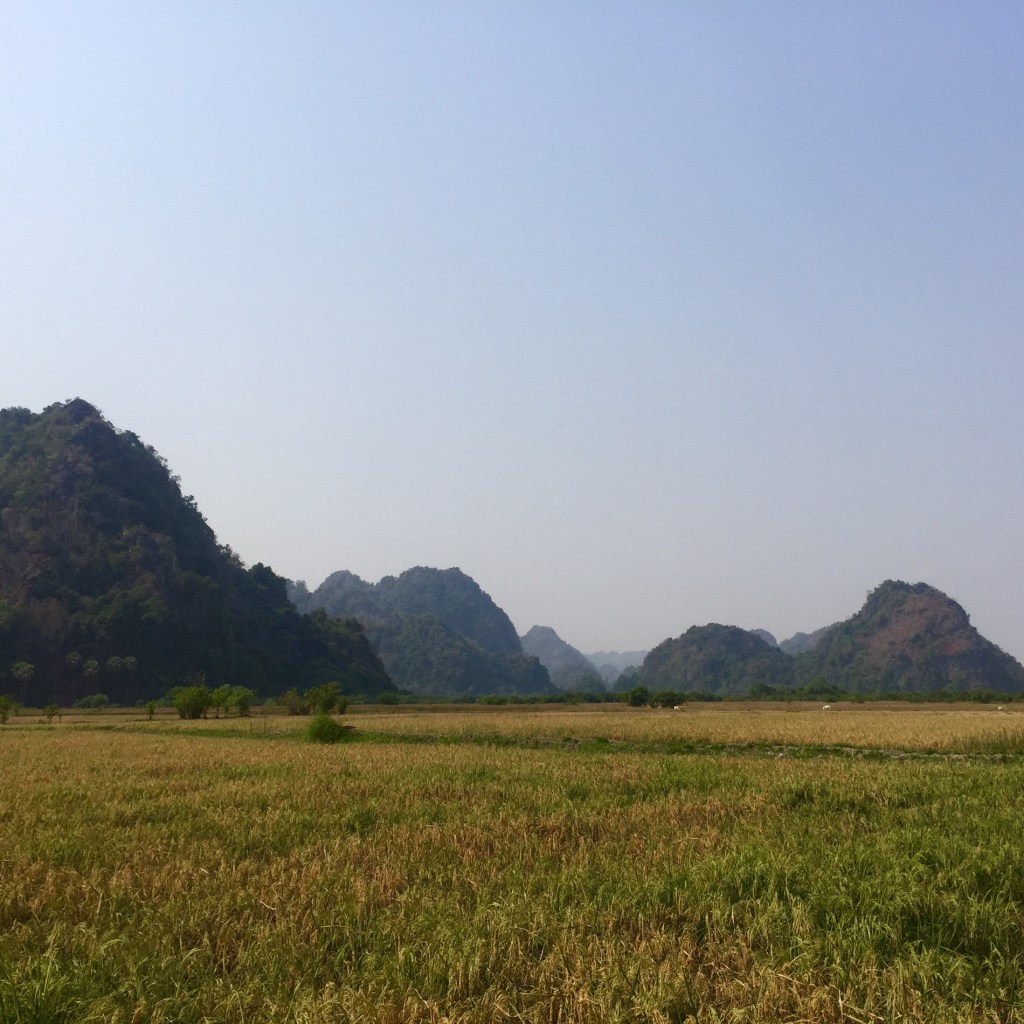
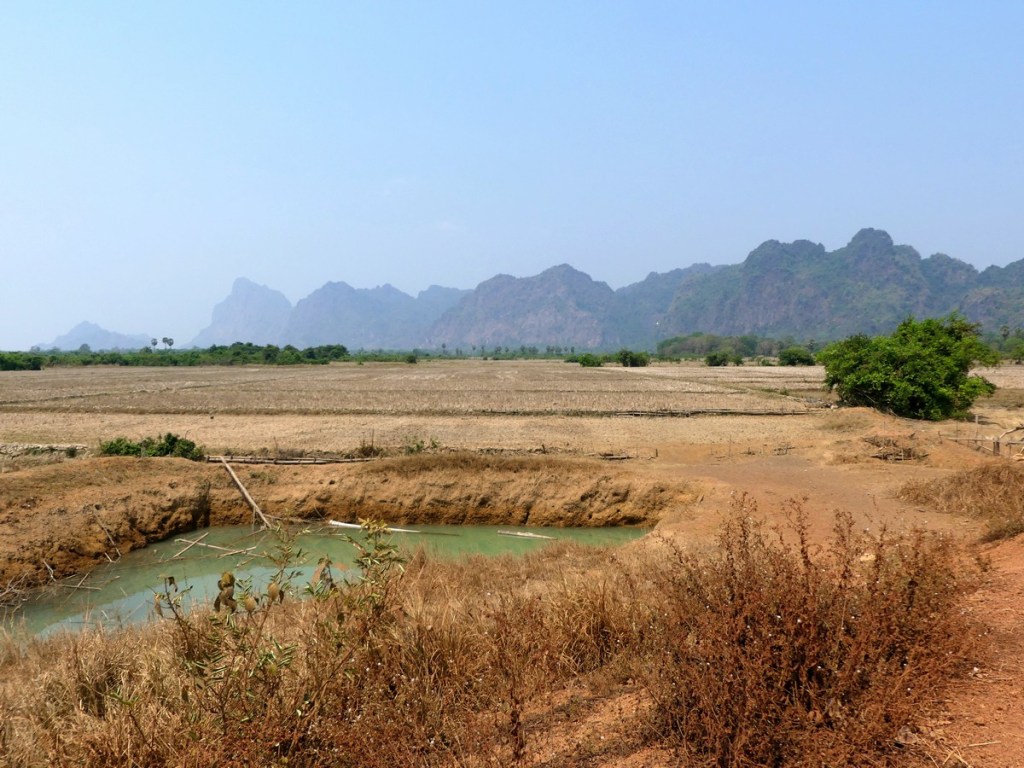
The country side in Hpa-an with its many karst mountains.
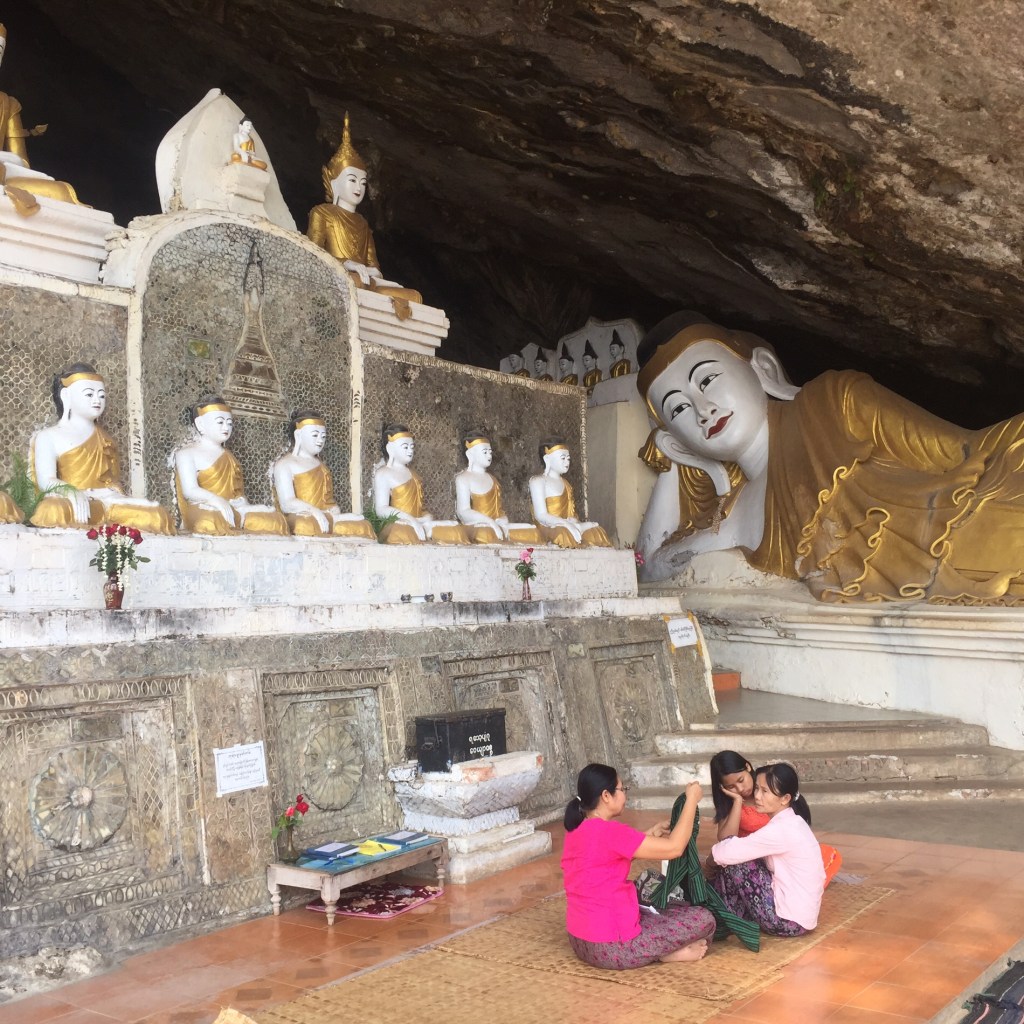
Saddan cave in Hpa-an, lots of Buddha’s, a stupa and an exit at a lake.
The Burmese like to take pictures of foreigners.
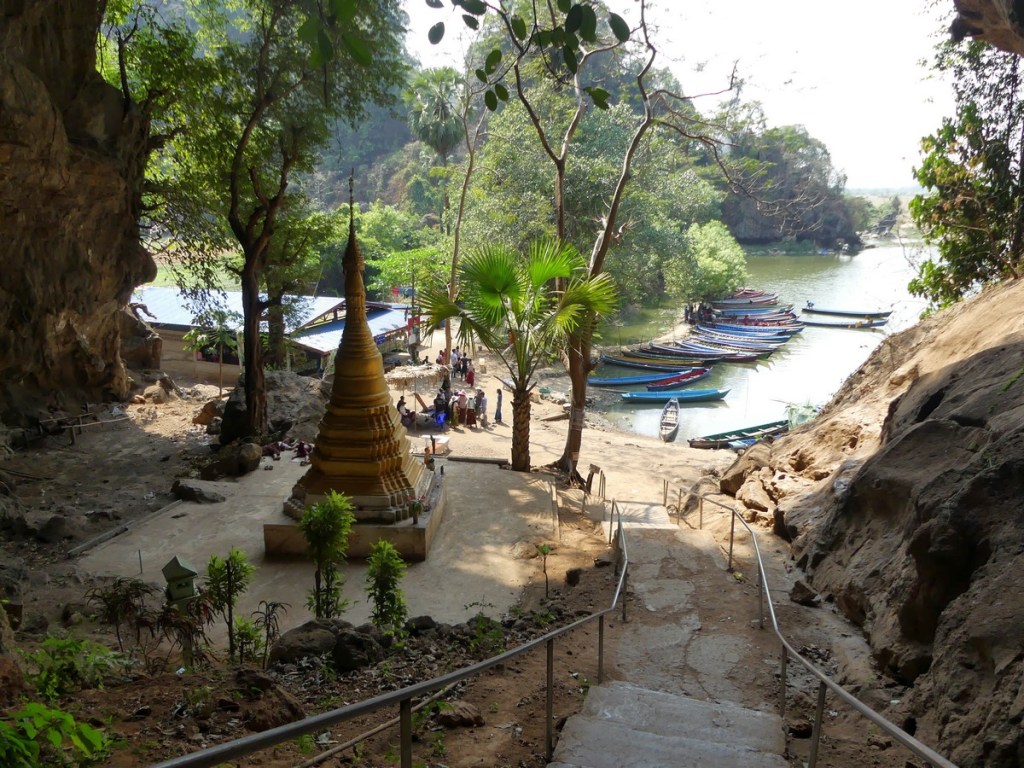
Exiting the cave. We had to leave our slippers at the entrance which was on the other side so we had to continue barefeet. Luckily we could take a boat but because of the low water we still had to walk through the fields for about a km.
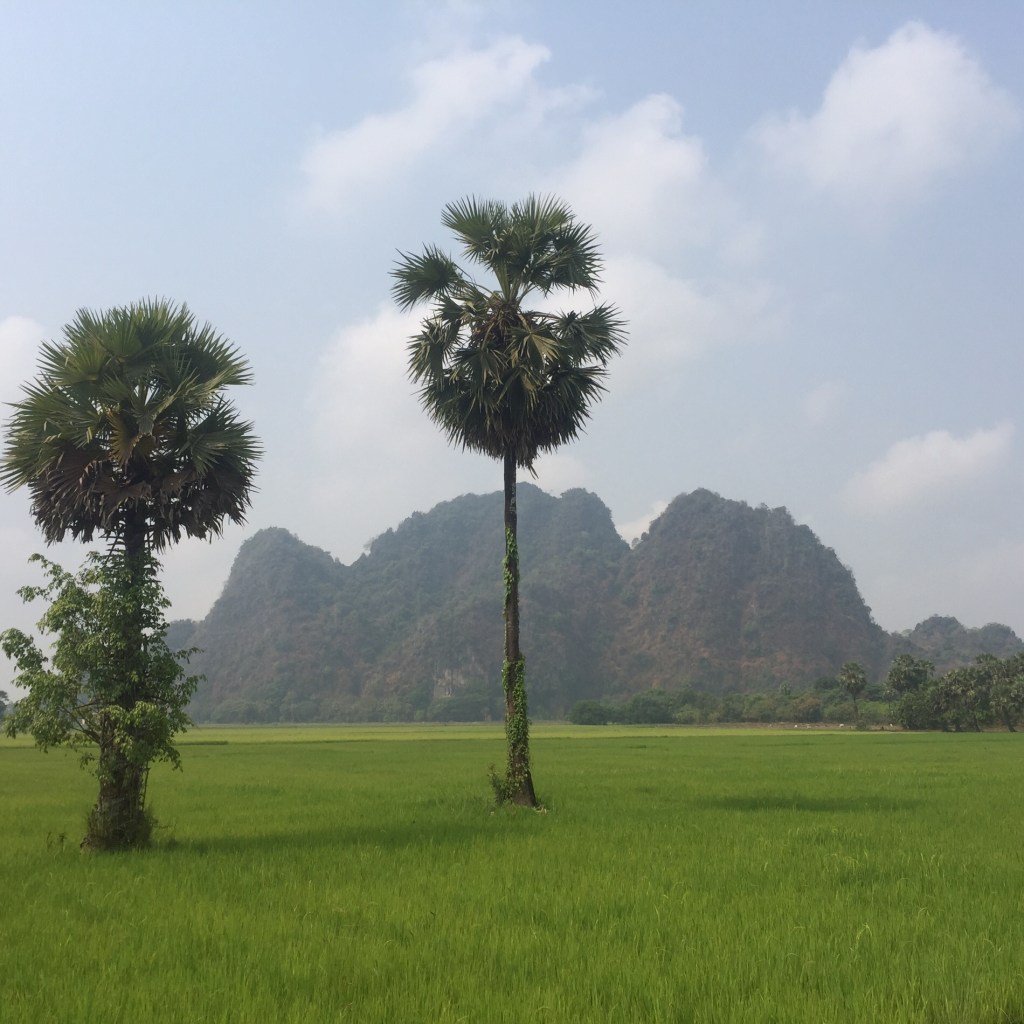
Rice and Karst mountains when we walked back to the entrance of the cave.
More beautiful scenery on our way to the next cave in Hpa-an.
On our way to Kawgun cave with our motorcycle, this reminded us of North Vietnam
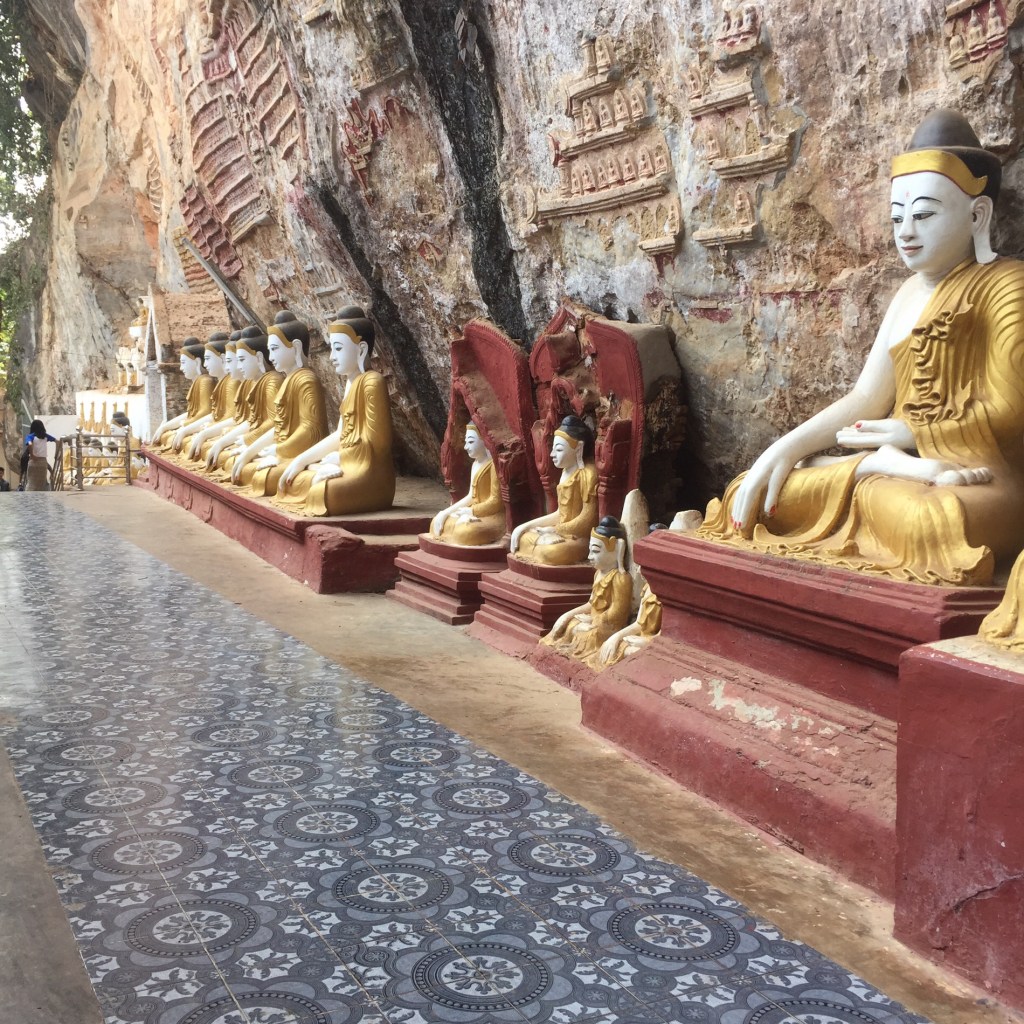
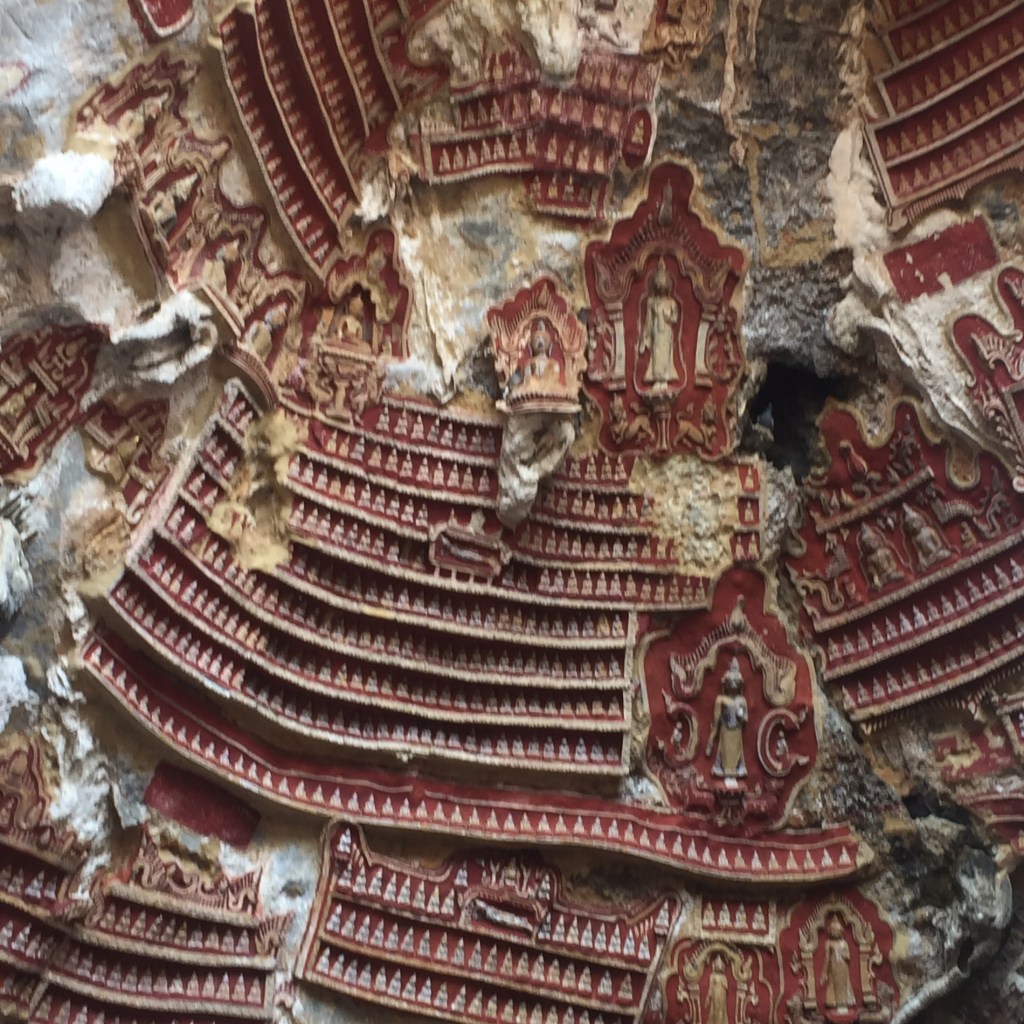
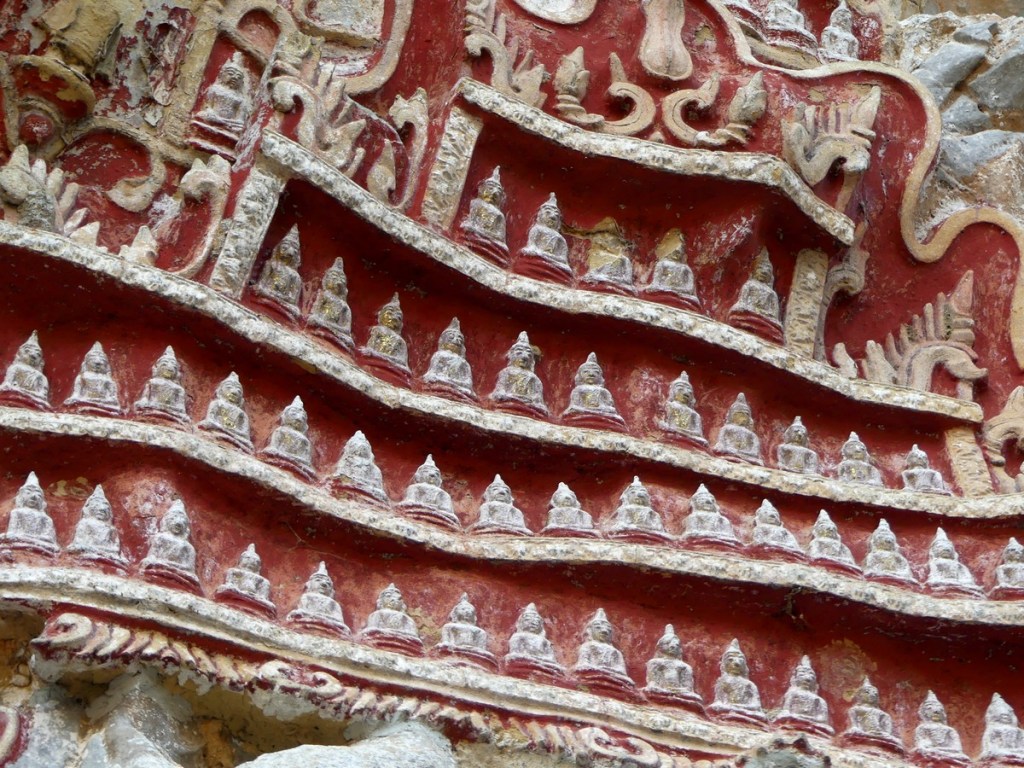
Kawgun cave is another spectacular cave in Hpa-an, with many seated and reclining Buddha’s but most importantly because of the little Buddha’s carved in the limestone walls.
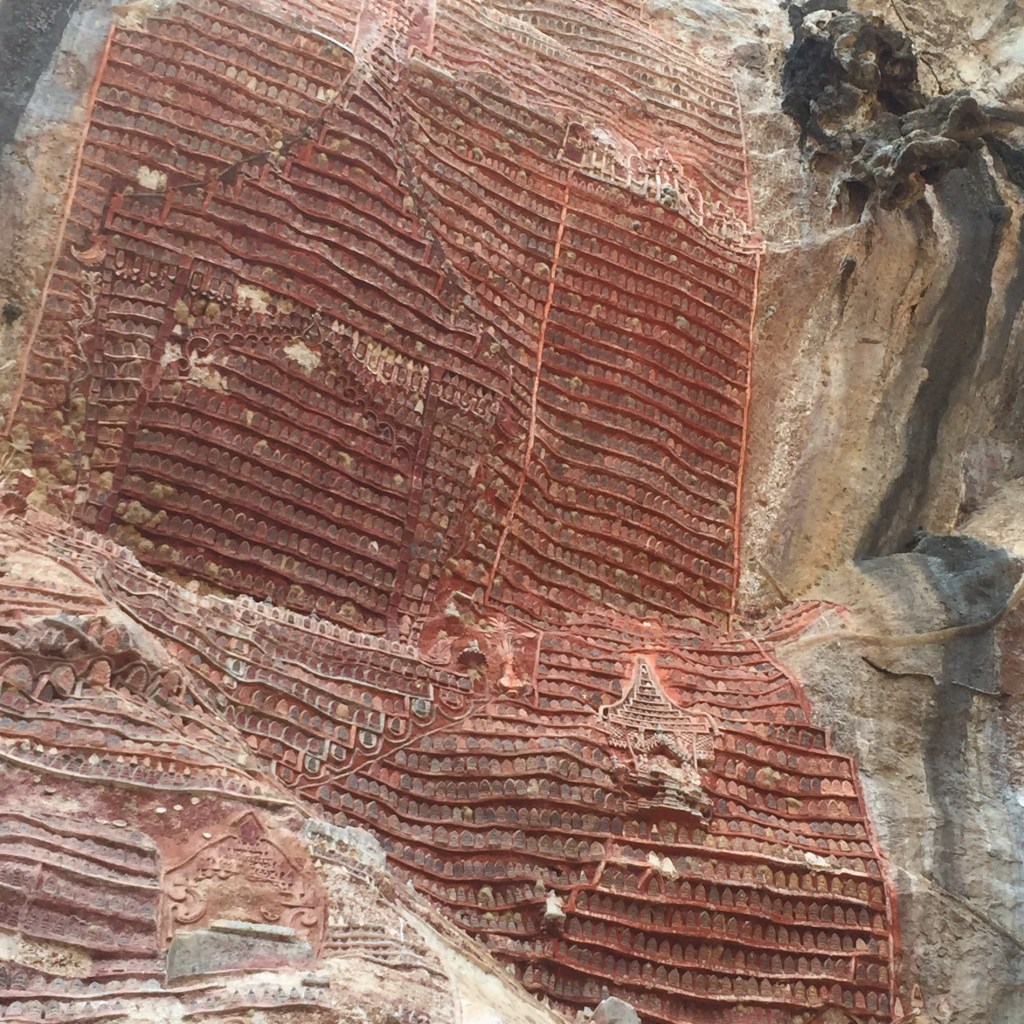
Thousands of little carved Buddahs. Some of them are very old but they are constantly adding new ones and removing the crumbled ones who suffered from rain, wind etc.
Kawgun cave has been used by local Mon Buddhists since the seventh century. Unfortunately many of the older statues have been destroyed by tremors resulting from the work of the nearby cement factory.
Many small Buddhas images were carved unbelievably sophisticated on the wall and all the way to its ceiling.
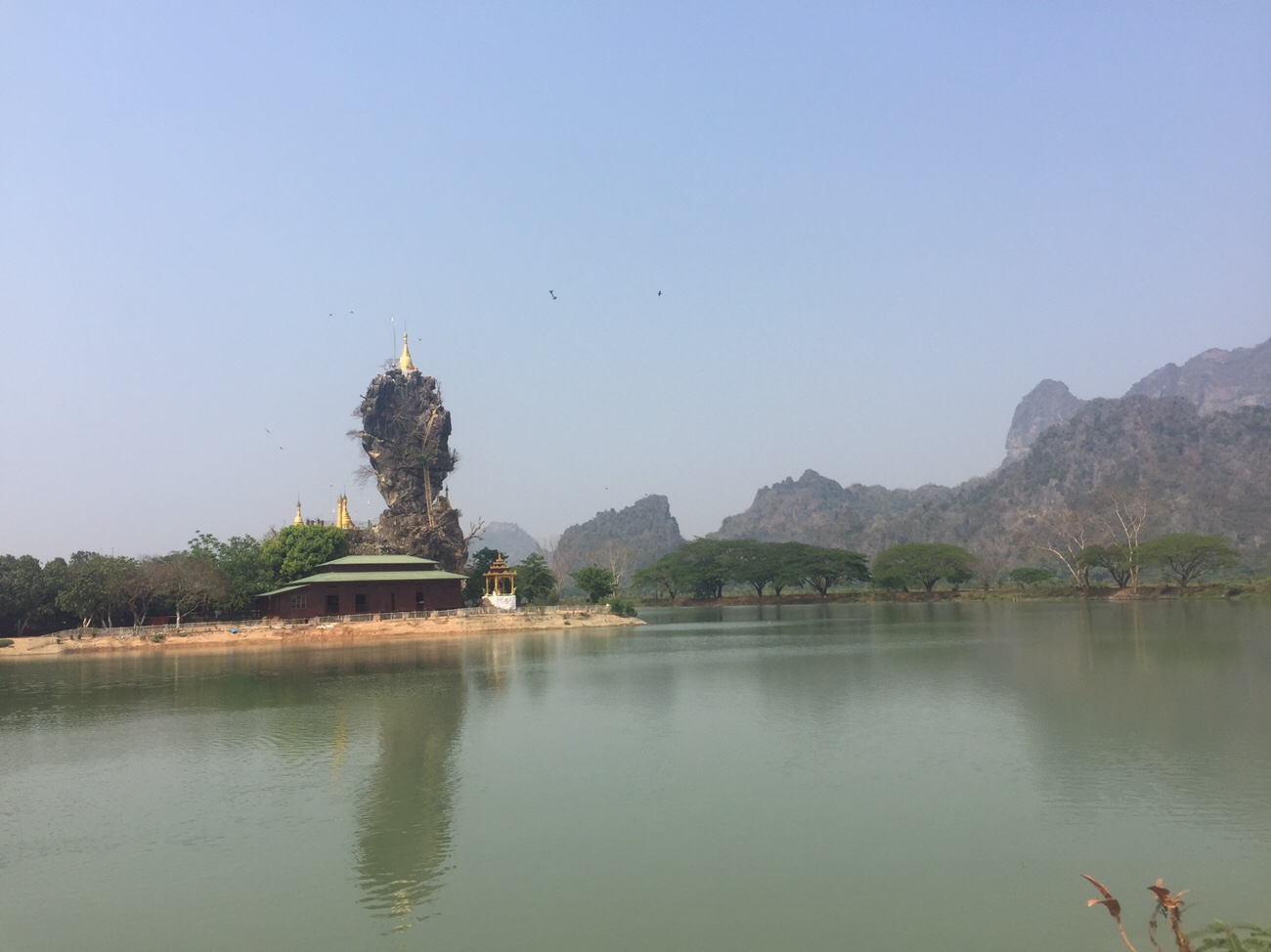
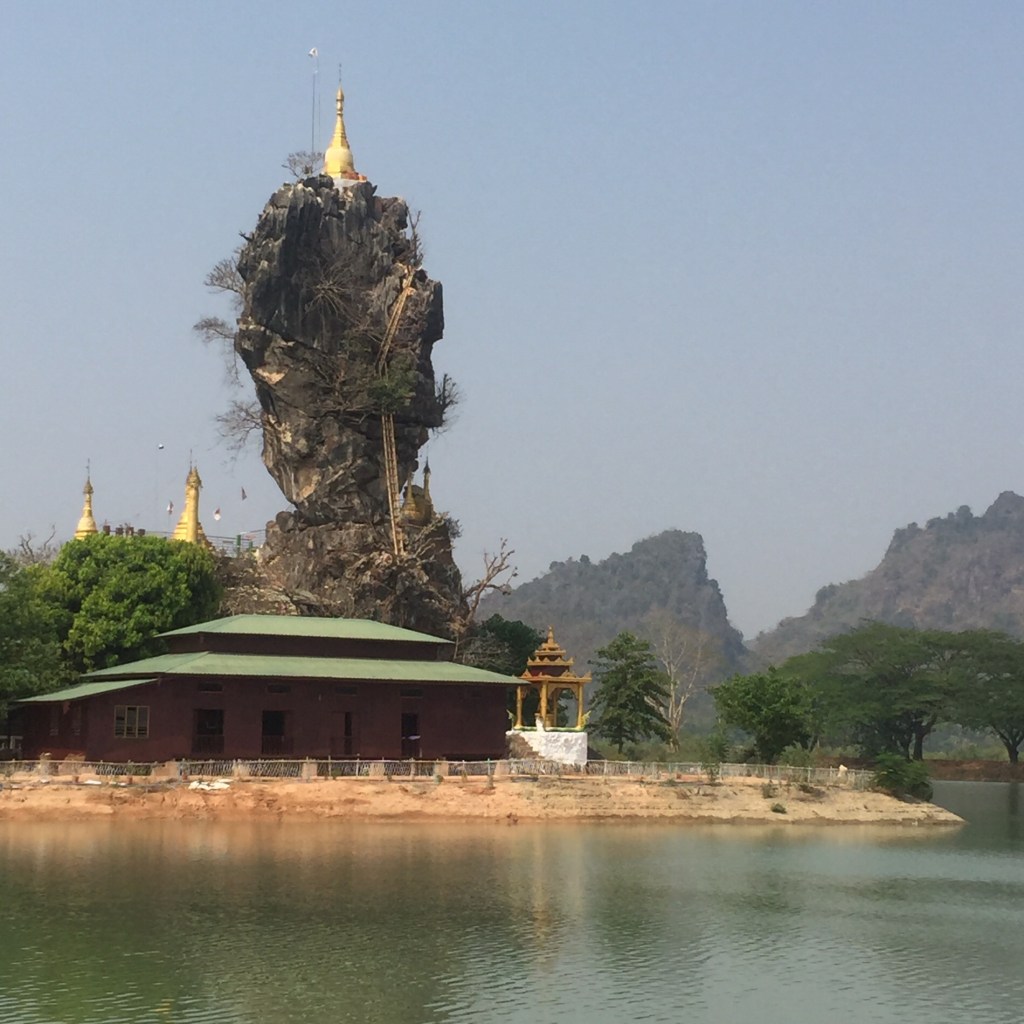
Kyauk Kalat Pagoda, a stupa balanced on a limestone pinnacle. Visitors can only go halfway to the top but even there the view is gorgeious.
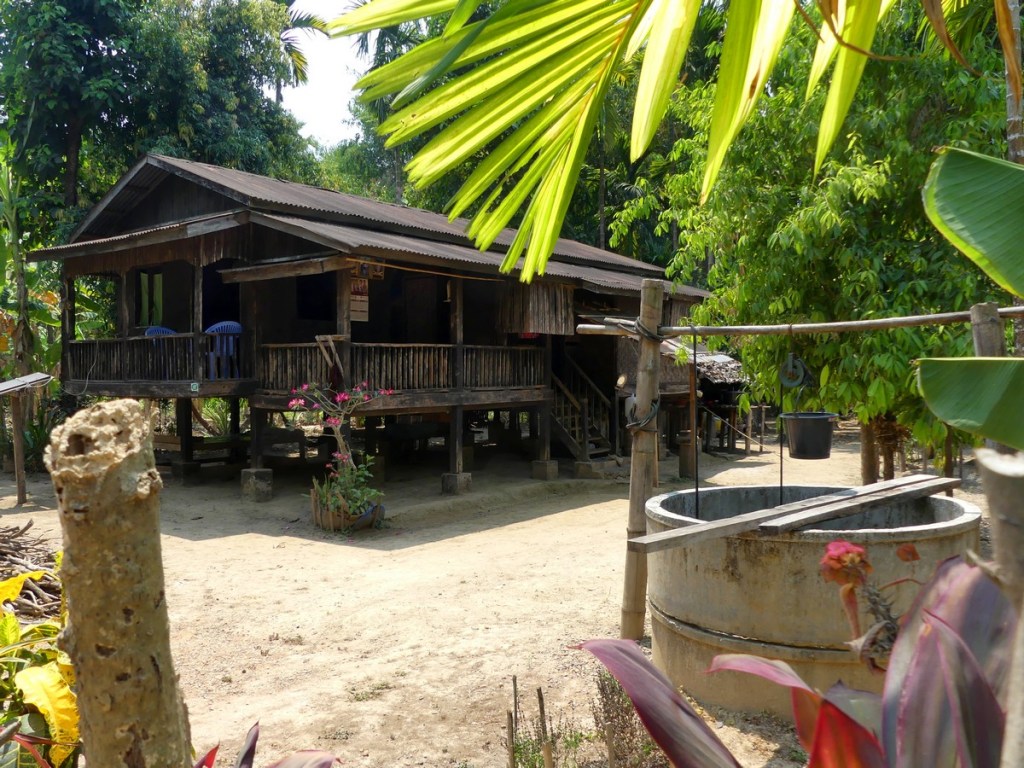
A typical house in a small village near Hpa-an

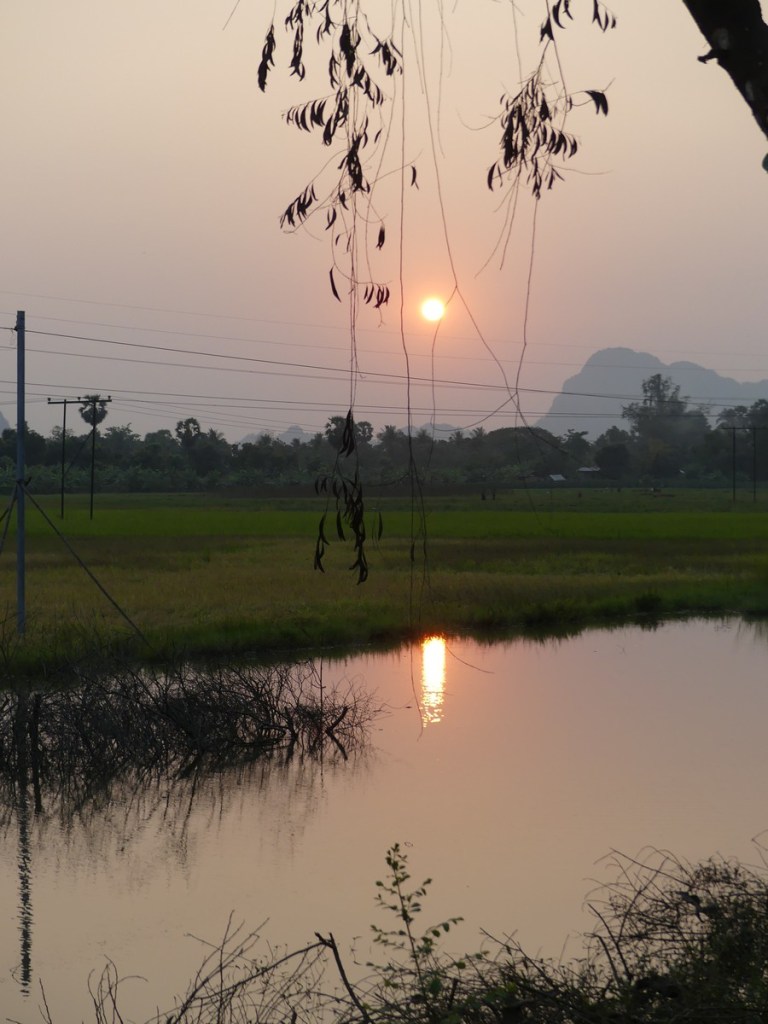
Sunset on our way to bat cave. Unfortunately the thousands of bats only left the cave when it was already dark so no pictures 😦

In my next blog we will travel from Hpa-an to Kalaw near Inle Lake, hike to Inle Lake and visit Mandalay.

maart 2018 Myanmar Mawlamyine bis

Nog een korte opvolger van mijn vorige blog, die apropos in een embryonale stadium werd gepubliceerd, Indien je geen fotos zag in de vorige blog, dan moet je die nog eens laden.

Ik heb nog wat videos van de reis naar Mawlamyine

Vroeger kon je niet met de trein tot in Mawlamyine, en moest je nog een overzet nemen om de rivier Thanlwin over te steken. Sinds een paar jaar is dit echter niet meer nodg.

En van onze zoektocht naar de monnik in de bosjes:


Uitsmijters:


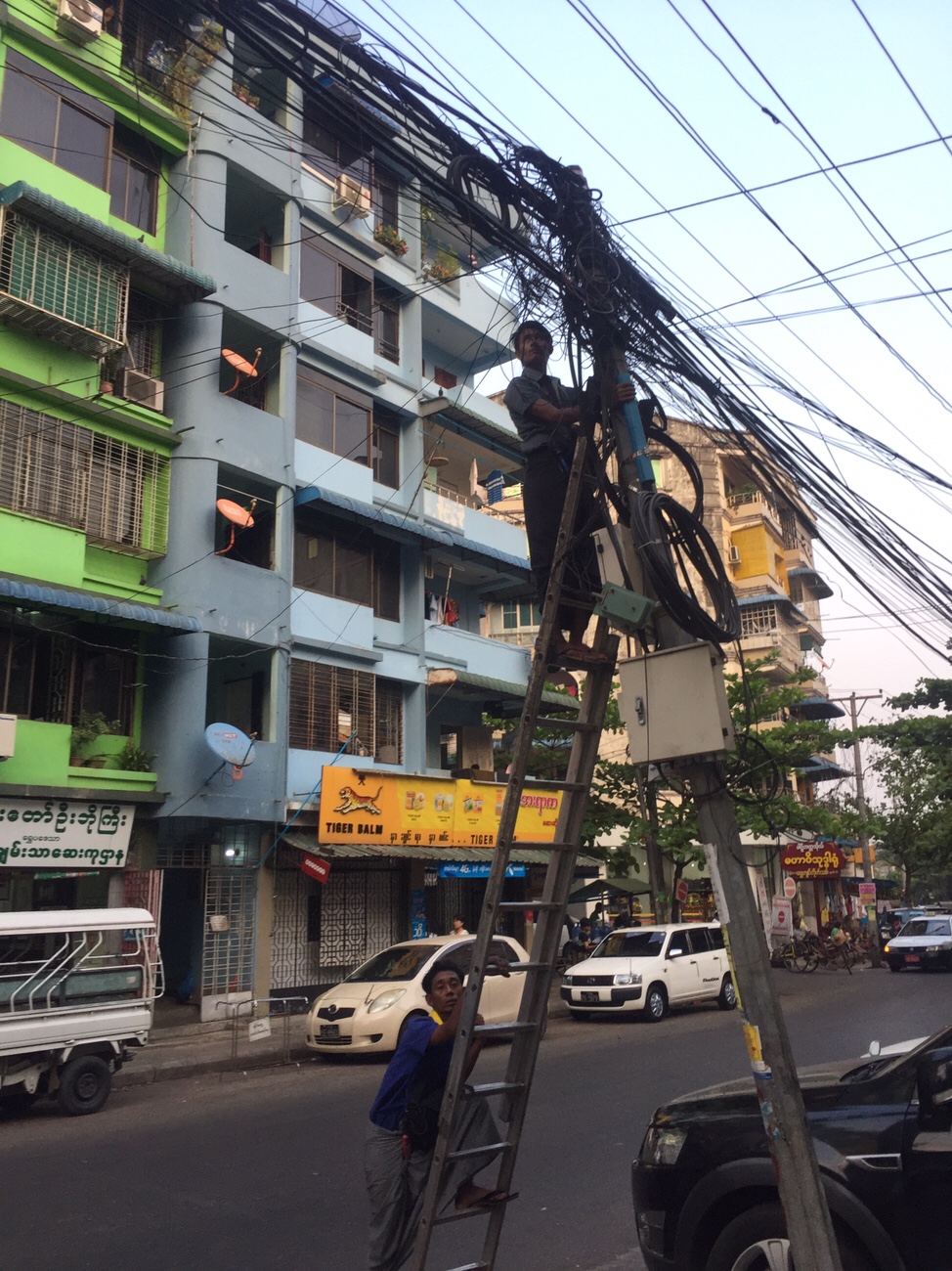
Myanmar telecom

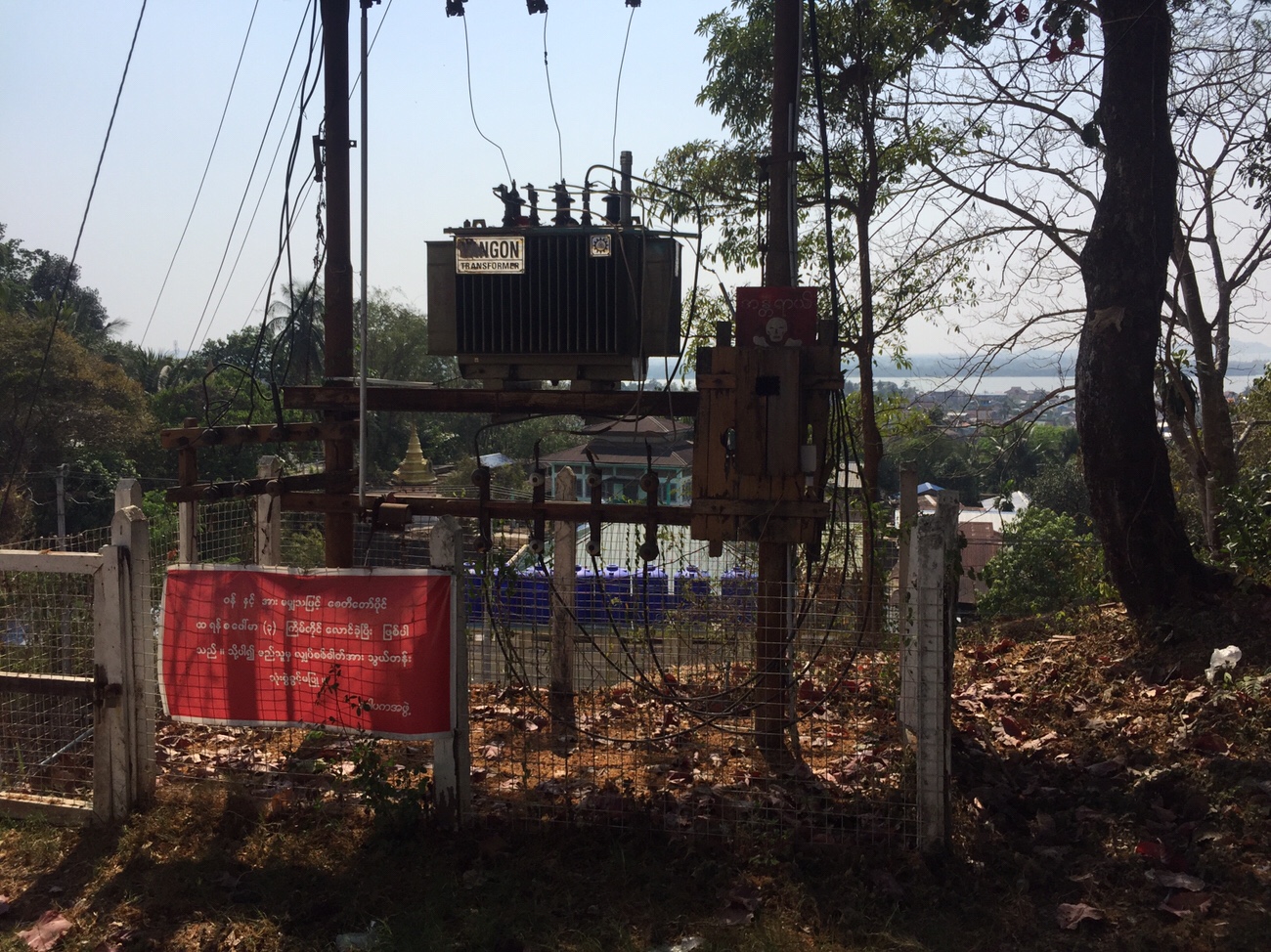
Myanmar electriciteit. Toch wat te toegankelijk vind ik. Ook in het stad vind je deze transformatoren op stahoogte.

8 maart 2018 Myanmar: Yangon Kyaik-Hti-Yo (golden rock) Mawlamyine

Na een korte vlucht van Saigon kwamen we aan op de luchthaven van Yangon. First things first: lokale munt (Kyat MMK spreek uit chjat) afhalen aan de ATM. Geloof de reisgidsen niet die zeggen dat je veel dollars moet meebrengen. Overal zijn ATMs en hoewel we wat dollars meebrachten, hebben we er geen enkele uitgegeven. Alles kan je betalen in Kyats. Tweede ding was een sim kaart kopen. We kochten 18 Gb data en 40 min bellen bij Oredoo voor omgerekend 13€. (Overal in het land 3G, meestal 4G). Het free WiFi in hotels kan traag zijn, maar wij hadden altijd snel internet. Na 4 maand overal goedkoop internet zullen we dat serieus missen op de boot!

Derde ding todo op de luchthaven: Grab app downloaden (de lokale Uber), ons nieuw telefoonnummer registreren en een taxi oproepen. Ongeveer de helft van de prijs van de gewone taxi’s, en geen gezeur over fooien en betalen. Tip: wandel met je gerief naar een straathoek waar weinig mensen staan, en roep daar je Grab. Zo is het veel eenvoudiger voor de taxi om jou te vinden.

We hebben drie dagen gespendeerd in Yangon, maar eigenlijk is er slechts een ding die je nergens anders in Myanmar vindt: de Shwedagonpagode, de grootste en heiligste pagode van heel Myanmar.


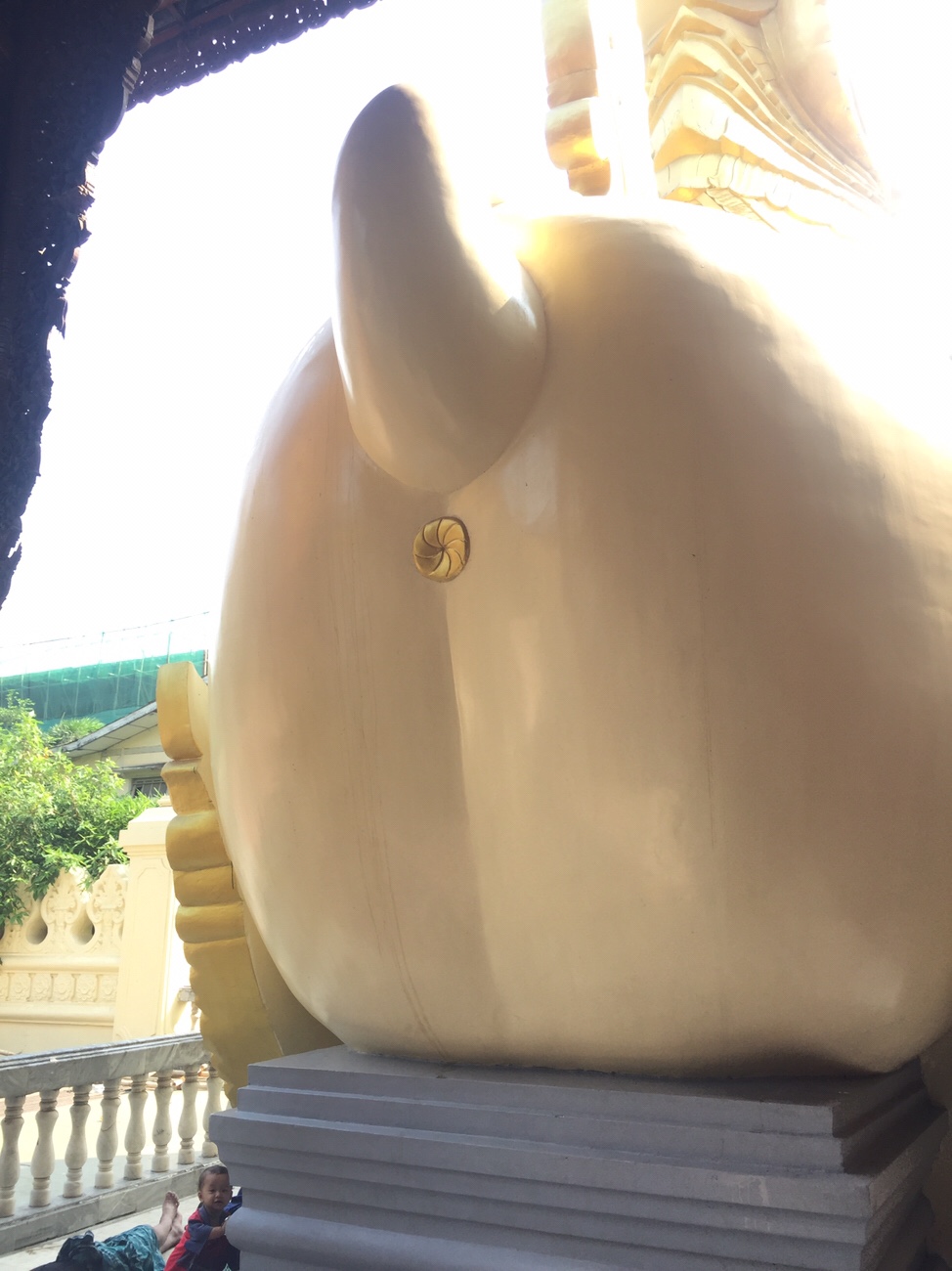
Even een poepje laten ruiken bij de leeuw aan de ingang (het Gouden Gat)


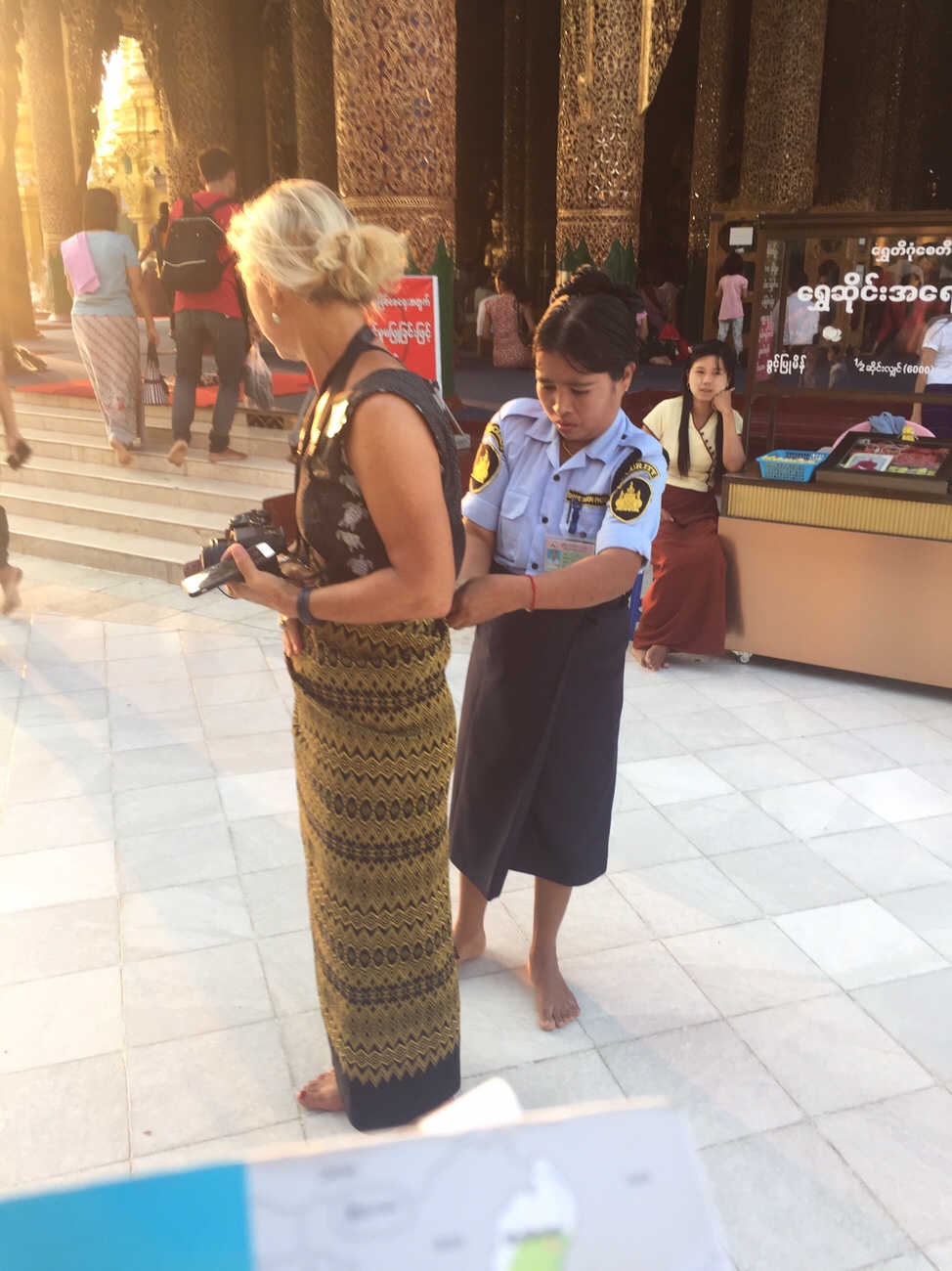
lokale hulp bij het aanpassen van de longyi, anders mag Ilse niet binnen

Na Yangon hebben we de trein gepakt naar golden rock Kyaik-Hti-Yo. Wat een belevenis! Over de koloniaal aangelegde sporen rijden drie treinen per dag naar onze bestemming. We kozen de dagtrein en kochten een upper class ticket, wat een gereserveerde stoel inhoudt. Het was wat zoeken om het reservatie loket te vinden (Hier geen e-loket: alles wordt nog op papier bijgehouden door de stationschef), maar de mensen zijn super vriendelijk en behulpzaam. Het werd een reis terug in de tijd: een koloniale wagon met alle vensters en deuren open die tegen max 50 km/uur door het idyllische landschap tuft. Op de weinige stops komen de ambulante verkoopsters aan boord en kun je al de lokale snacks uitproberen. Soms rijdt de trein stapvoets als hij langs onderhoudswerken passeert.

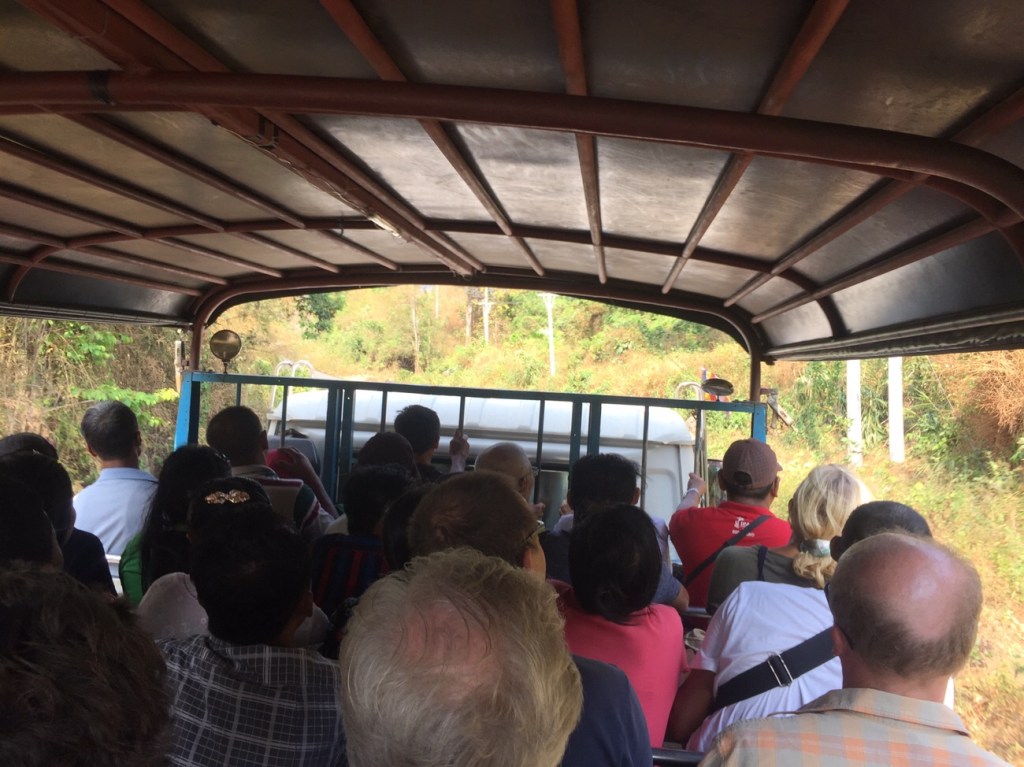
Na 5 uur relax schudden en wiegen waren we bijna op onze bestemming. Nog een lokale rit met de mensenvrachtwagen, en we waren in het gouden rots-dorp Kinmon. De Gouden rots ligt nog zo een 10 km bergop, maar er is een wel uitgebouwde navette naar de top: met 40 personen in een vrachtwagen die naar boven vliegt, de haarspeldbochten één voor één doorscheurt en ons 30 min later afzet, samen met honderden andere Burmaanse pelgrims. Wel onderweg twee keer gestopt: een keer om iedereen de kans te geven om een drankje te kopen (enkel de chauffeur kreeg zijn drankje, iedereen bleef zitten) en nog eens om twee mensen af te zetten bij de eerste kabelbaan van Myanmar. Dan moet je nog een wandelingetje maken langs een straatje afgezoomd met kraampjes die elke religieuze of culinaire wens in vervulling kunnen laten gaan. Wel zonder schoenen natuurlijk, want in een klooster of religieus gebouw moet je op blote voeten en met bedekte benen en schouders rondlopen (petje geen bezwaar), ook nog een kleine toeristenbelasting betaald van 6€.


Golden rock, een gelovige brengt nog wat bladgoud aan

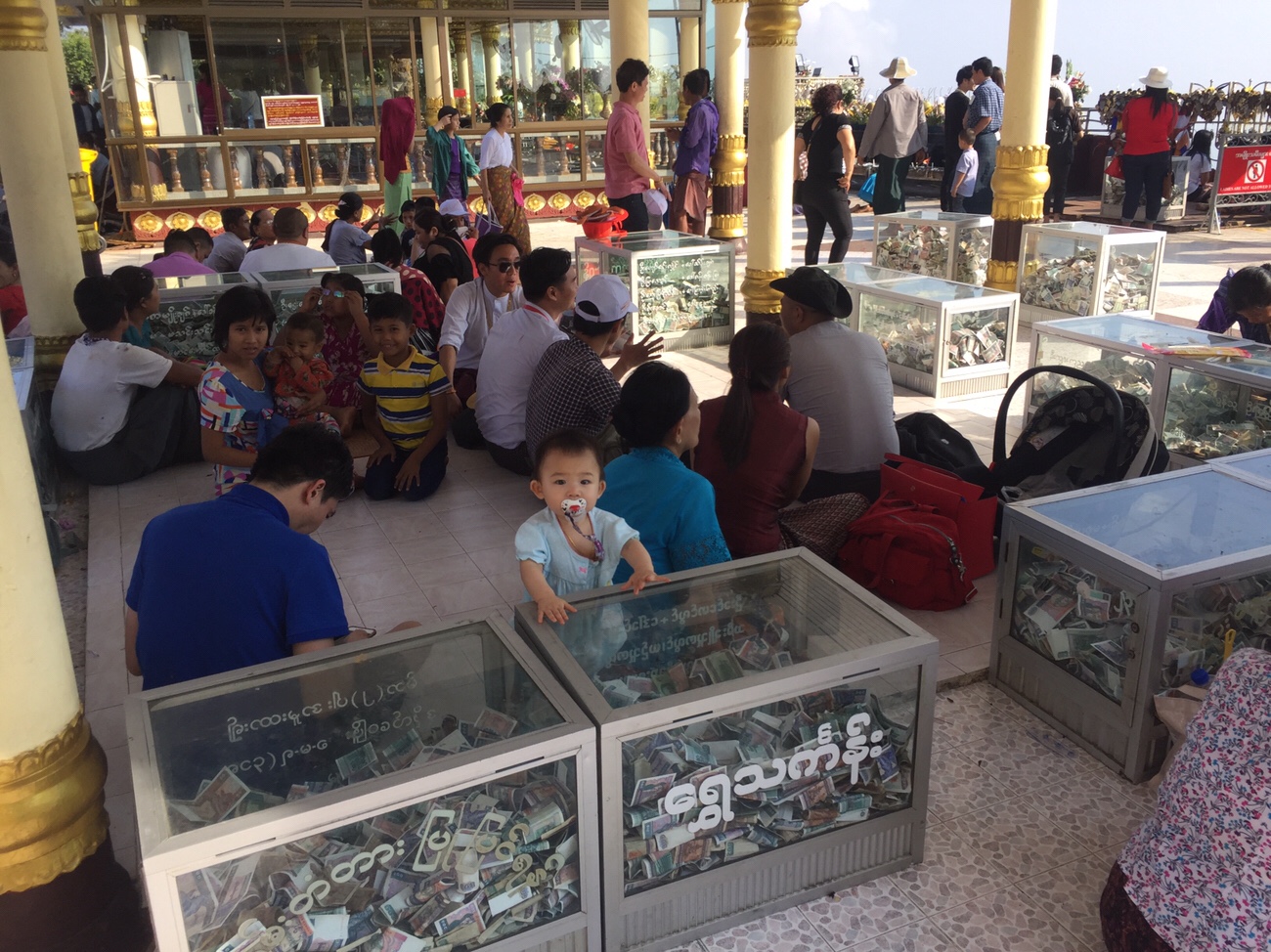
Overal families. En ja, dat zijn offerblokken voor de monniken met echt geld in. Het is zelfs geen gewapend glas, want niemand steelt hier, en zeker al niet van Boeddha!

Met de toeristen- en pelgrimsvrachtwagen de berg op. Al goed dat het niet te lang duurde, want …

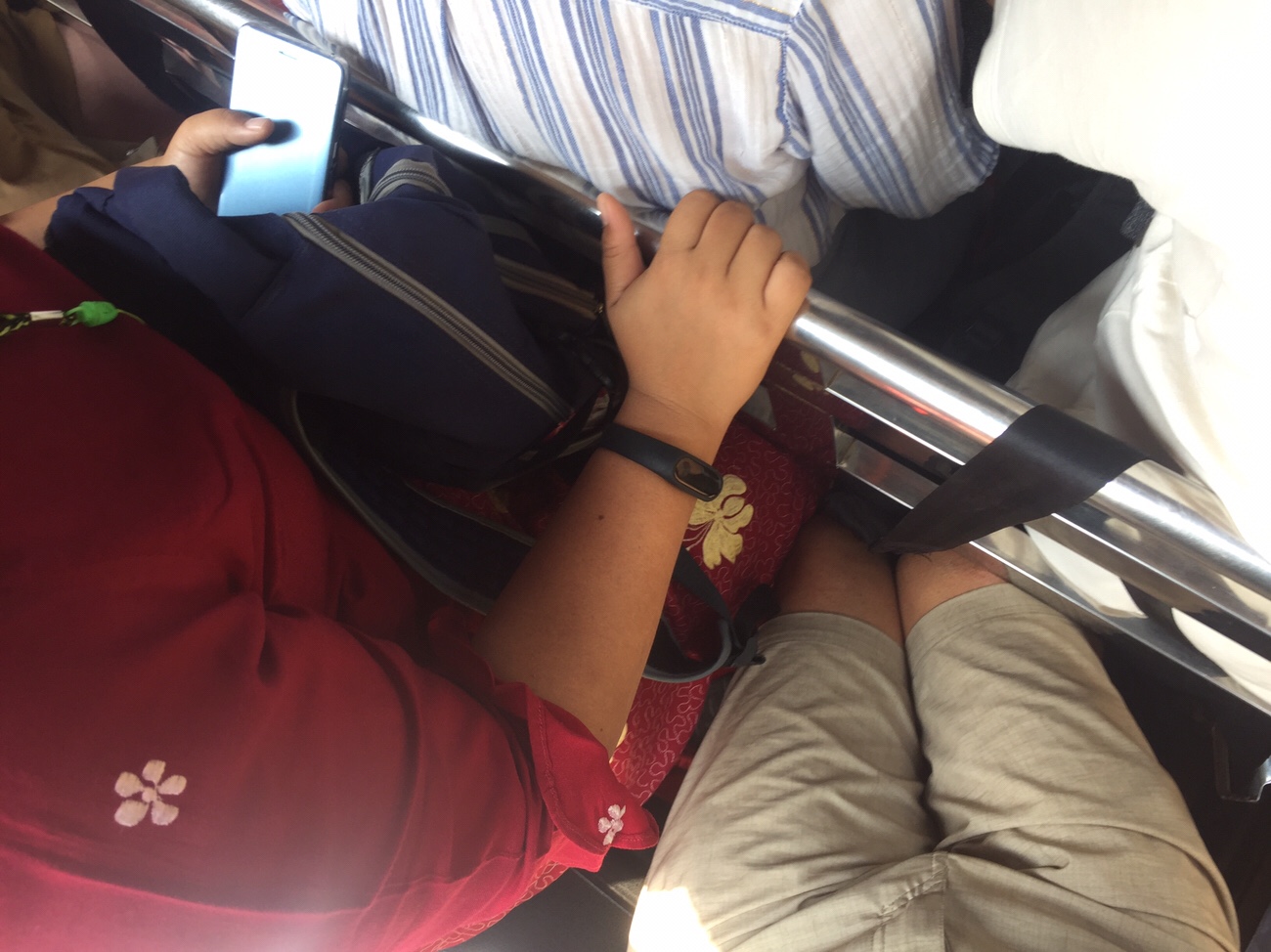
… vergeleken met dit heeft Ryanair riante beenruimte

Gelukkig wordt het bladgoud aan de goed kant geplakt, kwestie van het evenwicht niet te verstoren

De rots was spectaculaIr. Volledig in het goud geverfd, en daarna grotendeels met bladgoud overplakt door de gelovigen. Ook ik heb dat eens geprobeerd, maar dat bladgoud is zooo dun, dat het meeste aan mijn vingers kleefde of aan mijn kleren, en slechts een microgram aan de rots… A propos, dat was een mannenaangelegenheid, want vrouwen mogen niet aan de rots zelf komen. De laatste camion naar beneden was om 18:00 uur, en toch zagen we nog honderden pelgrims naar boven komen, om de nacht op de rots door te brengen (verboden voor toeristen). Een hele leuke belevenis.

De volgende dag trokken we verder met de trein voor nog een dagrit naar Mawlamyine, zo een 5 uur verder (150 km). Weerom een prachtdag, met uitzicht op weidse dorre steppen, eenzame dorpen in de vlakte, heuvels met gouden stupa’s en onderweg treinavontuur: stationnetjes, onderhoudswerkzaamheden, kinderen die hoopvol op een presentje meelopen met de trein, zwaaien naar mensen die voor de overweg staan, en ook hopen vuilnis aan de rand van elk dorp. Maar dat is iets waar we ondertussen stilaan gewoon aan geraken.

In het vroegere Moulmein, nu Mawlamyine zijn we een drietal dagen gebleven. We huurden een scooter en bezochten er de lokale bezienswaardigheden. Voor mij was de liggende boeddha een topper! 200 m lang, 40 meter hoog in 5 verdiepen.

Je kan hem al van ver zien liggen, deze world guiness boek Boeddha. Een monnik haalde het in zijn hoofd om de grootste liggende budha ter wereld te maken, en de gelovigen steunden hem hierin. Na een maand Myanmar kan ik gerust zeggen dat de boeddhistische monniken het grootste bouwbedrijf van Myanmar moeten zijn. Overal, werkelijk overal rijzen er pagodes of boeddha’s op. De mensen geven naast offer eten ook veel geld aan boeddha omdat ze geloven in een beter volgend leven. Heel origineel, bij de liggende boeddha was er geen entreegeld, maar je kon wel een donatie doen in bouwmateriaal: ik kocht 4 tegels en legde die neer bij het altaar.

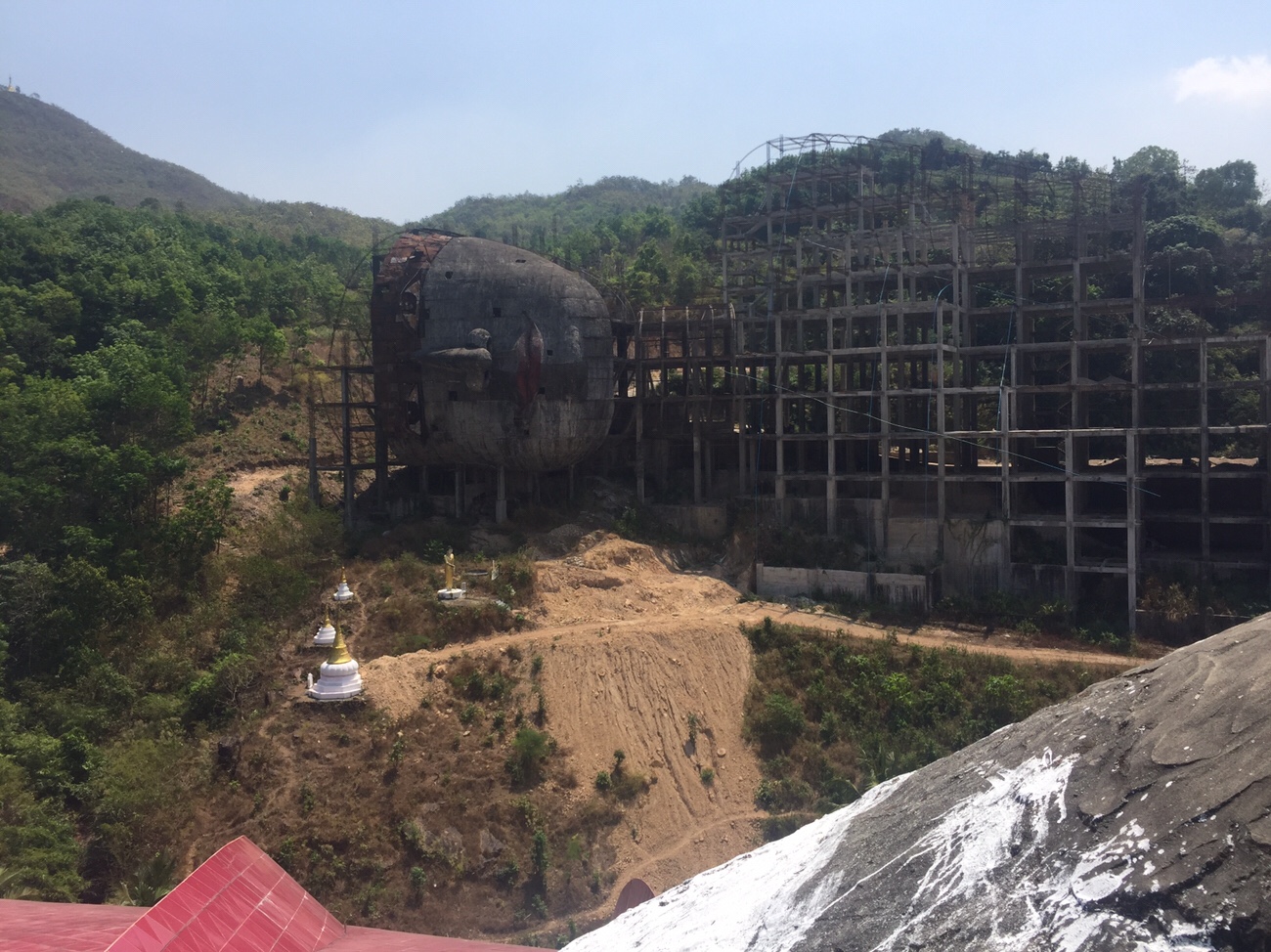
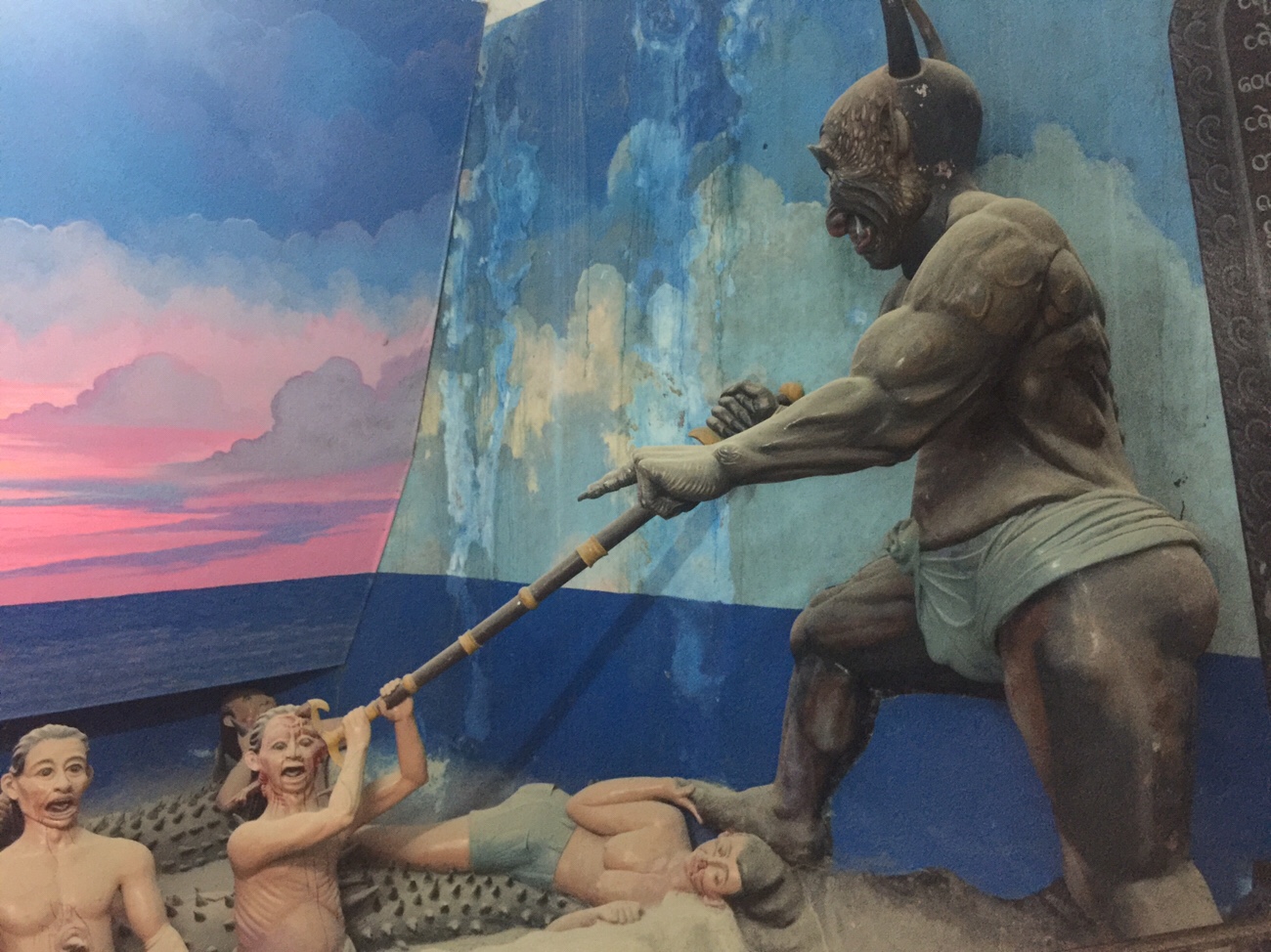
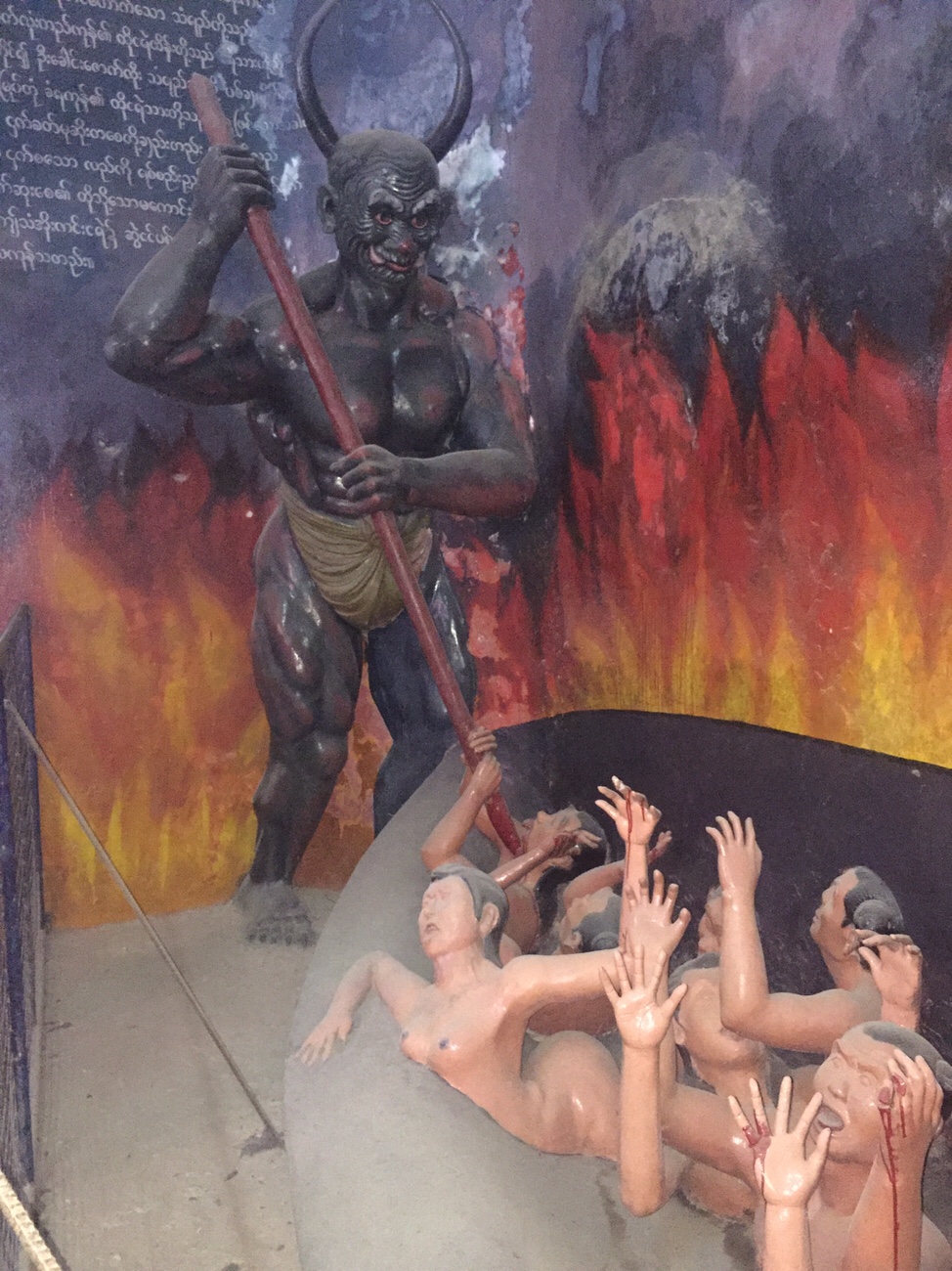
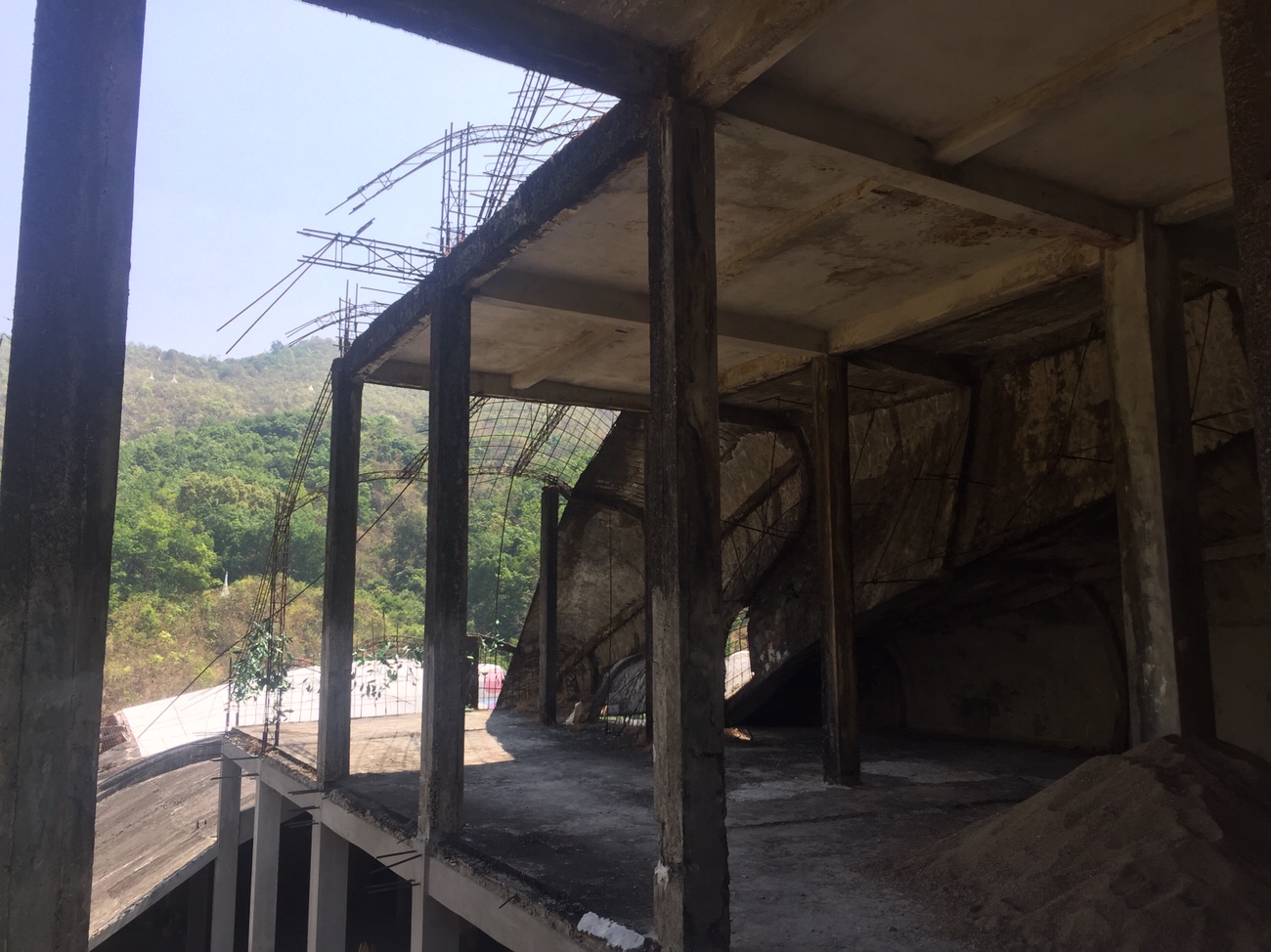
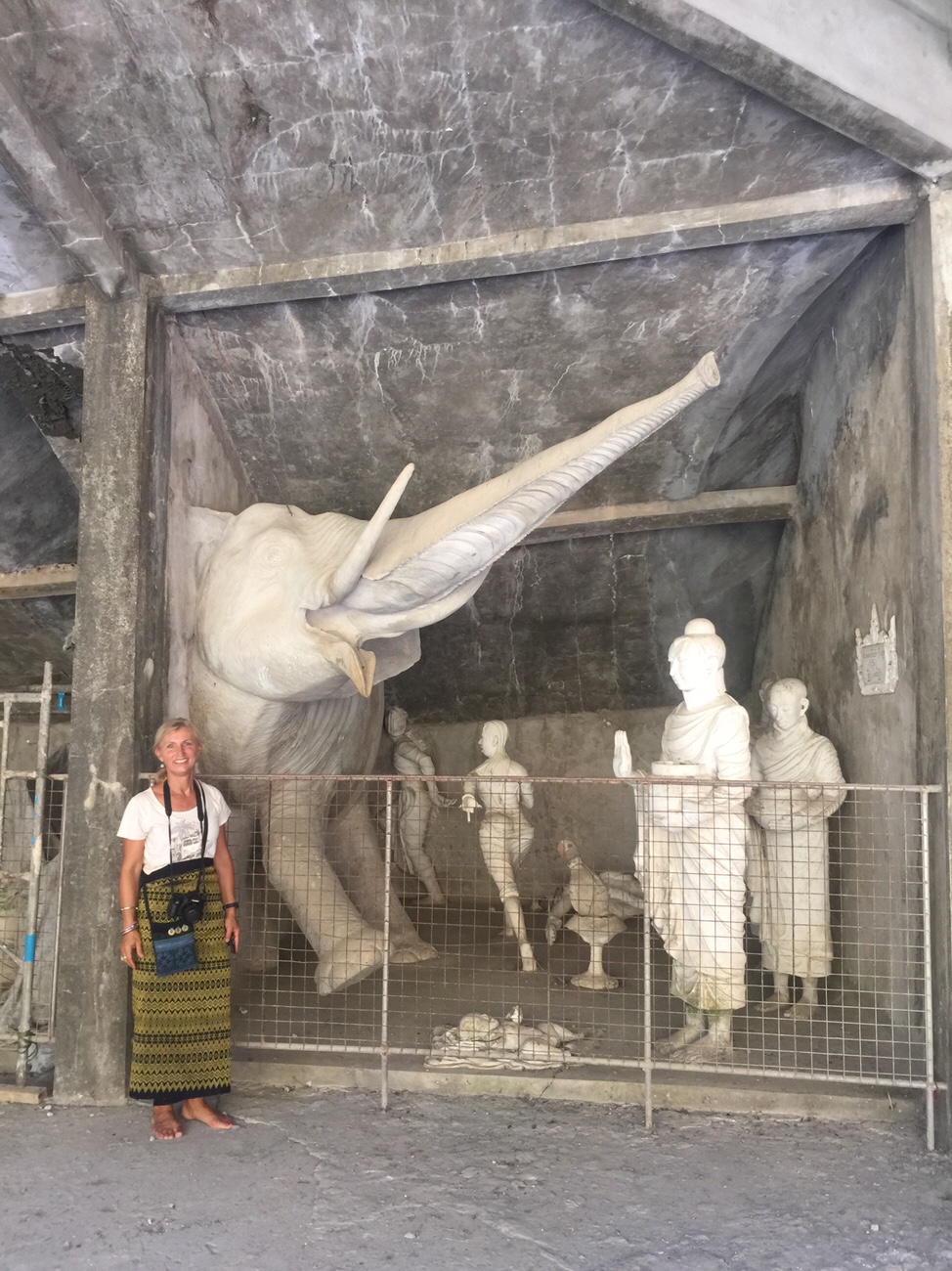
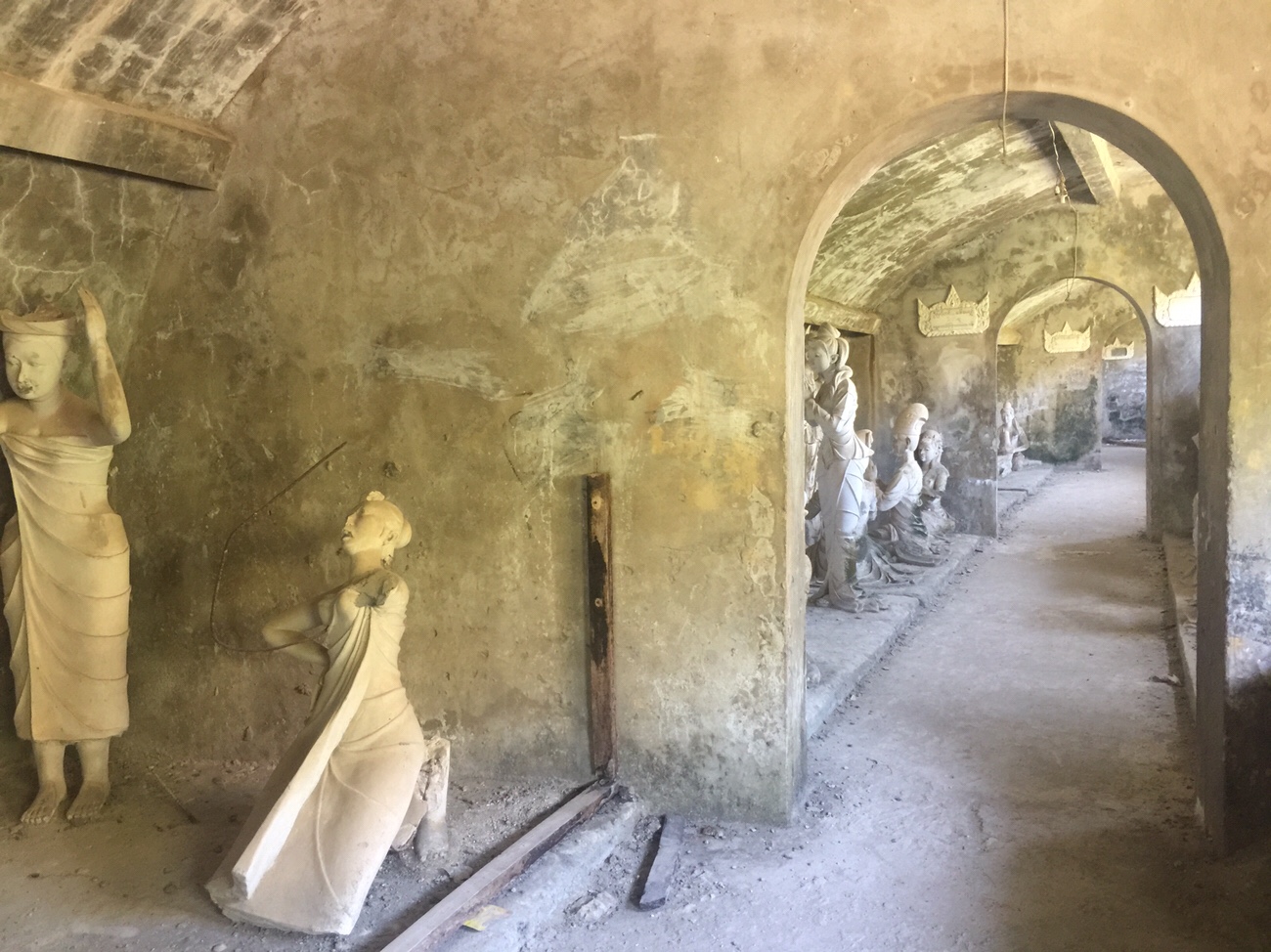
Alhoewel de 200 m lange boeddha nog niet af is, zijn ze toch al bezig met de fundamenten voor een overbuur van 250m lang. Terug bij onze eerste boeddha: het is een heel bizar schouwspel binnenin. In de halfduistere betonnen gangen loop je blootsvoets door een opeenvolging van boeddhistische taferelen. Zeer aanschouwelijk wordt het leven van prins Siddharta uitgebeeld in een 50tal scenes. De beschilderingen zijn gedetailleerd en mooi, maar overal is een dikke laag stof. Zowel hele families als verliefde paartjes lopen door de gangen. De kleinsten gapen naar de wel heel realistische uitbeeldingen van de hel. Toch is het werk niet af: naarmate je naar hogere verdiepingen klimt kom je meer en meer onafgewerkte beelden tegen. Ook is het nooit duidelijk of een trap naar een doodlopende gang leidt, of net naar de uitgang gaat. Eigenlijk wel spannend.


De liggende Boeddha in al zijn glorie

Zijn overbuur, de andere boeddha in aanbouw. Is me dunkt al aan renovatie toe.

Wij kochten bij de ingang 4 ceramic sheet for holy robe (1,2€) als donatie

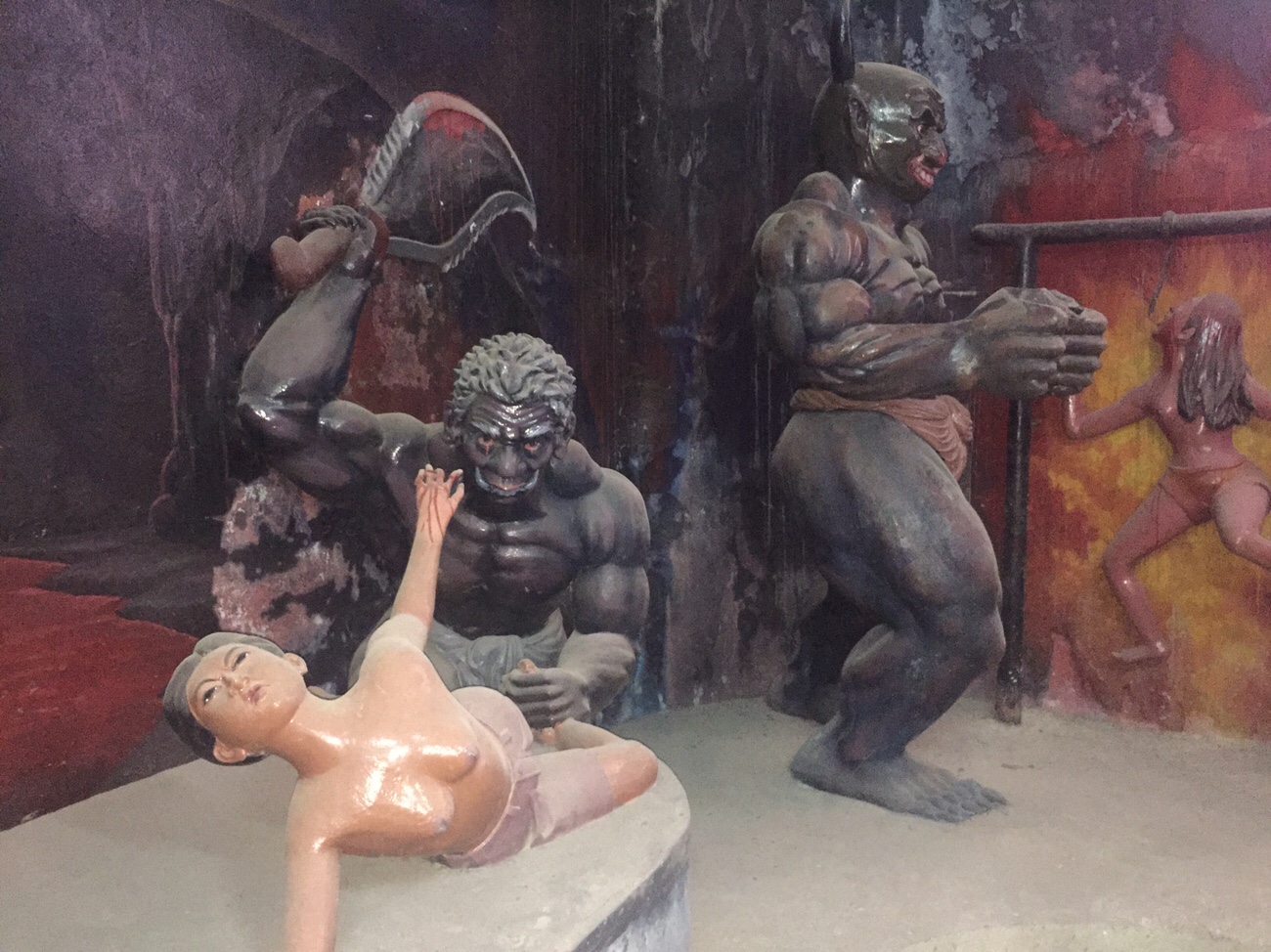
De boeddhistische hel, deel 1: trollen steken met spiezen door de stoute mensen

Deel 2: Chop Chop. A propos, dit is de enige keer dat ik een beeld met blotenborsten in Myanmar ben tegengekomen

zo ziet het vagevuur er wellicht uit

Naarmate je wat hoger gaat kom je soms stukken tegen die niet geheel afgewerkt zijn.

Dit tafereeltje moet nog geschilderd worden

De vingertoppen van boeddha zitten nog in de bamboe stelling

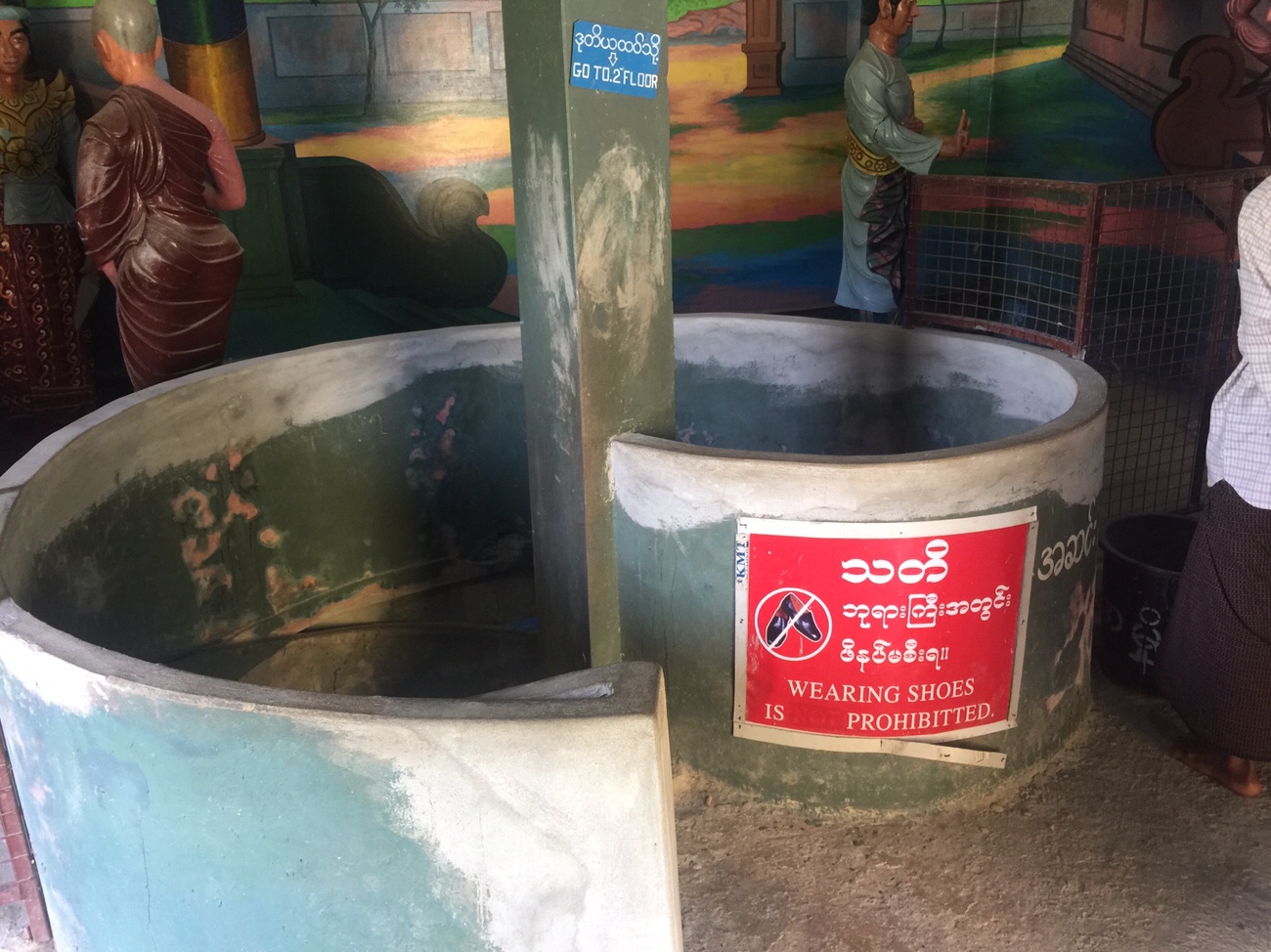
Grappig, een bouwwerf waar het verboden is om met schoenen in rond te lopen.

Zou het langs hier zijn?

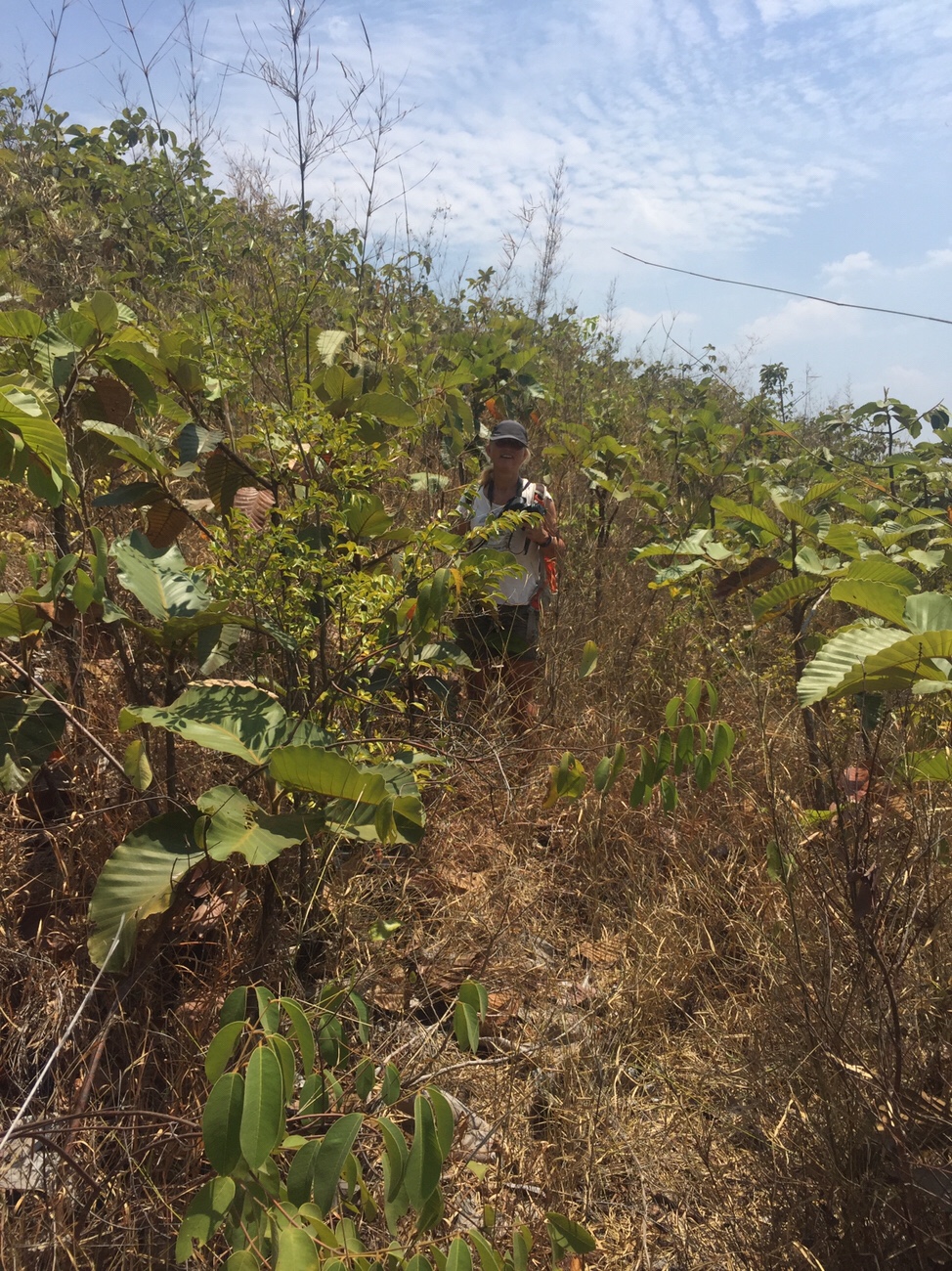
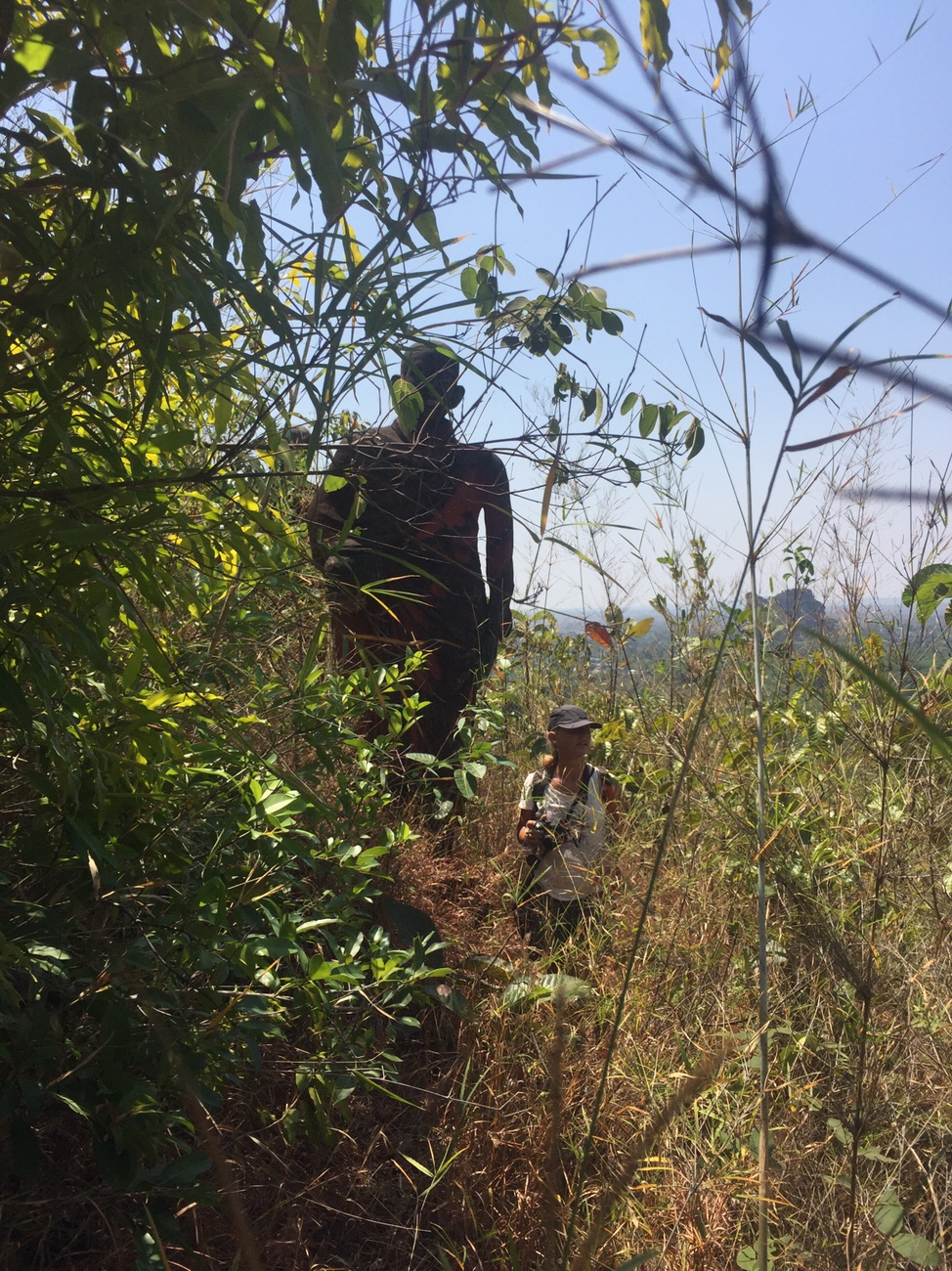
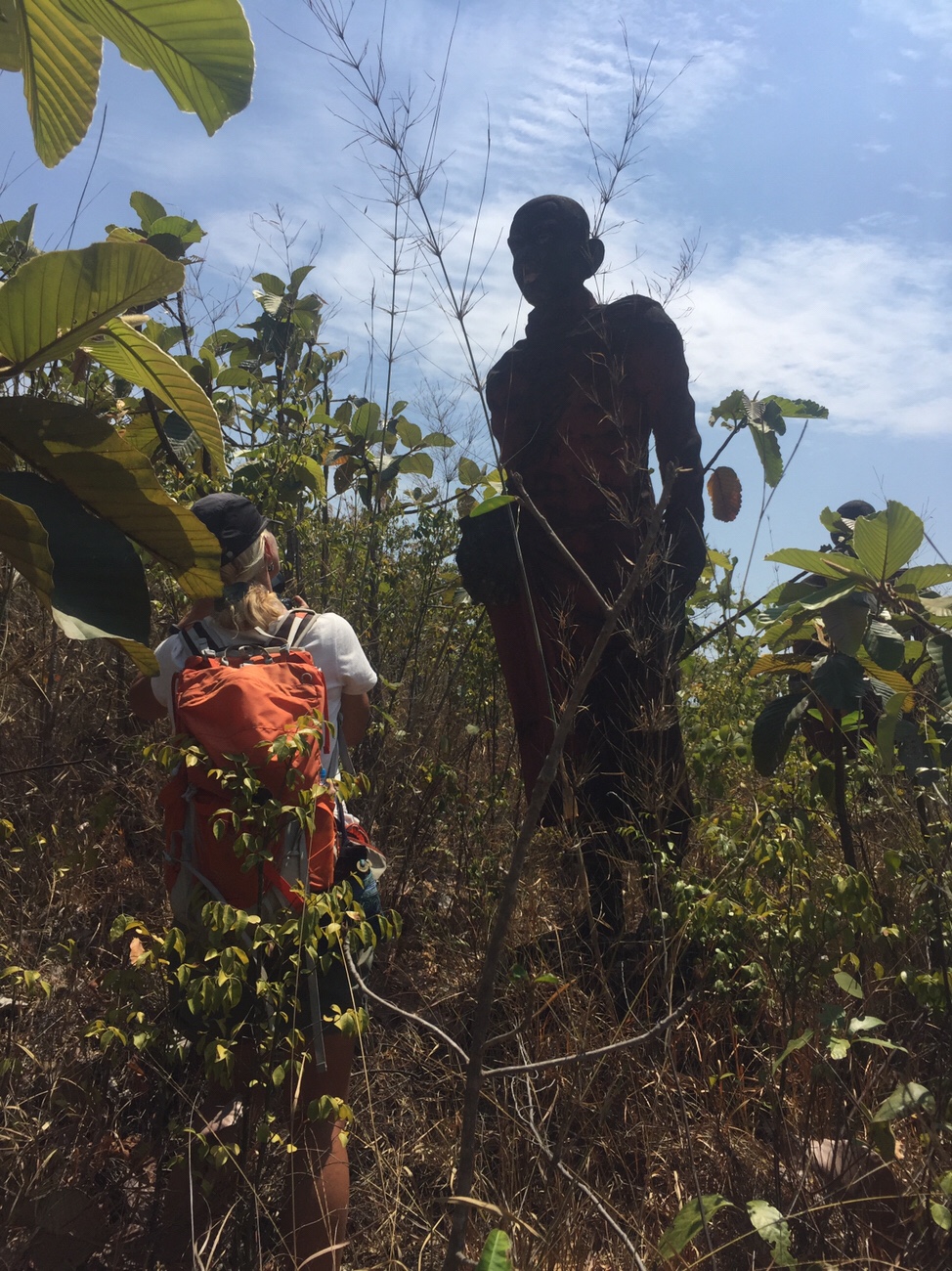
Na het memorabel bezoek aan de boeddha zijn we ook nog op zoek gegaan naar een rij van tientallen standbeelden van monnikken. In onze excellente Trotter gids stond er een foto van een monnikbeeld  midden in de begroeiing. Het heeft wat moeite gekost, maar we hebben ze gevonden. Boven op een nabijgelegen heuvel stond een staande boeddha, en drie stupa’s. En vandaar kon ik een rij van beelden zien, niet te ver weg, maar wel midden zeer hoge en dichte begroeiing. Er was geen pad, maar waar een wil is is een weg, en dat hebben we gevolgd! Ik denk niet dat dit een drukbezochte plek is…


Volgens de trotter gids staat hier een wegwijzer… Zie je hem? (Hint: groot uitgevallen)

Op zoek naar de monniken beelden in het struikgewas, gelukkig geen slangen.

Gevonden!

Zo stonden er tientallen, maar we hebben er maar 4 bezocht.