5 juni 2017 Bye Bye Frans Polynesie, het was aangenaam vertoeven bij jullie

De voorbije weken zijn er enkele geweest van onderhoud. Maar het einde is in zicht. We zijn nu op zee onderweg van Papaeete, Tahiti naar Raiatea zowat 120 zeemijl varen of een goede twintig uur.
Daar gaan we nog even een technische stop doen om de electronica na te kijken, en daarna vertrekken we naar ons laatste Polynesisch eiland(Bora Bora) waar we uitchecken uit FP en op weg zijn naar een nieuw land, de Cook Islands.

We hebben de voorbije weken vooral aan de boot gewerkt. De reis van Papeete naar Apataki waar de boot lag hebben we met de pakjesboot Cobia III gedaan. Langzaam aan met een redelijk wilde zee heeft het twee en een halve dag geduurd. Ik had de indruk dat we met Sanuk rapper zouden gevaren hebben, maar ze hadden last van de hoge golven. En wij ook een beetje, het is een ligreis geworden.
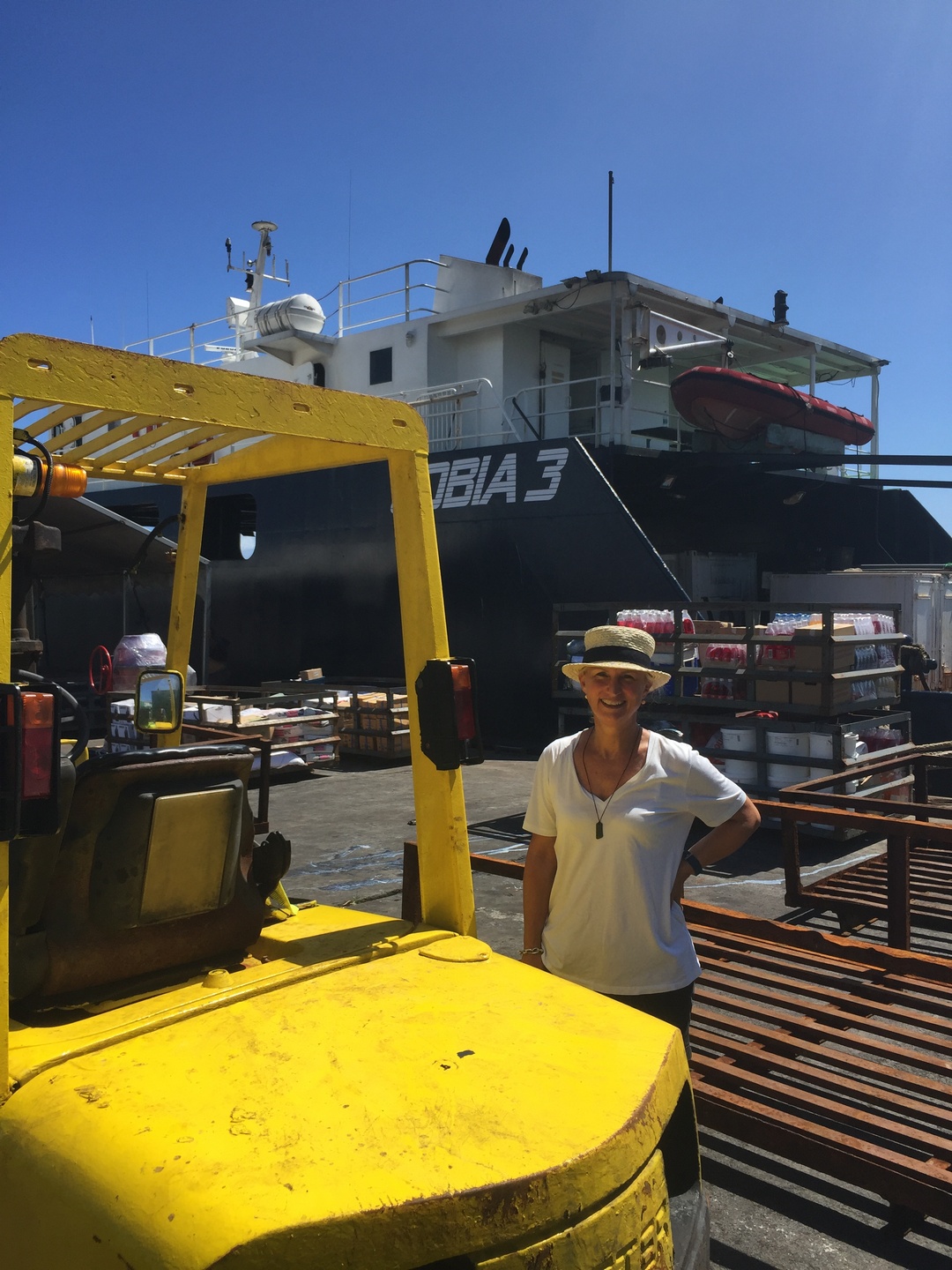
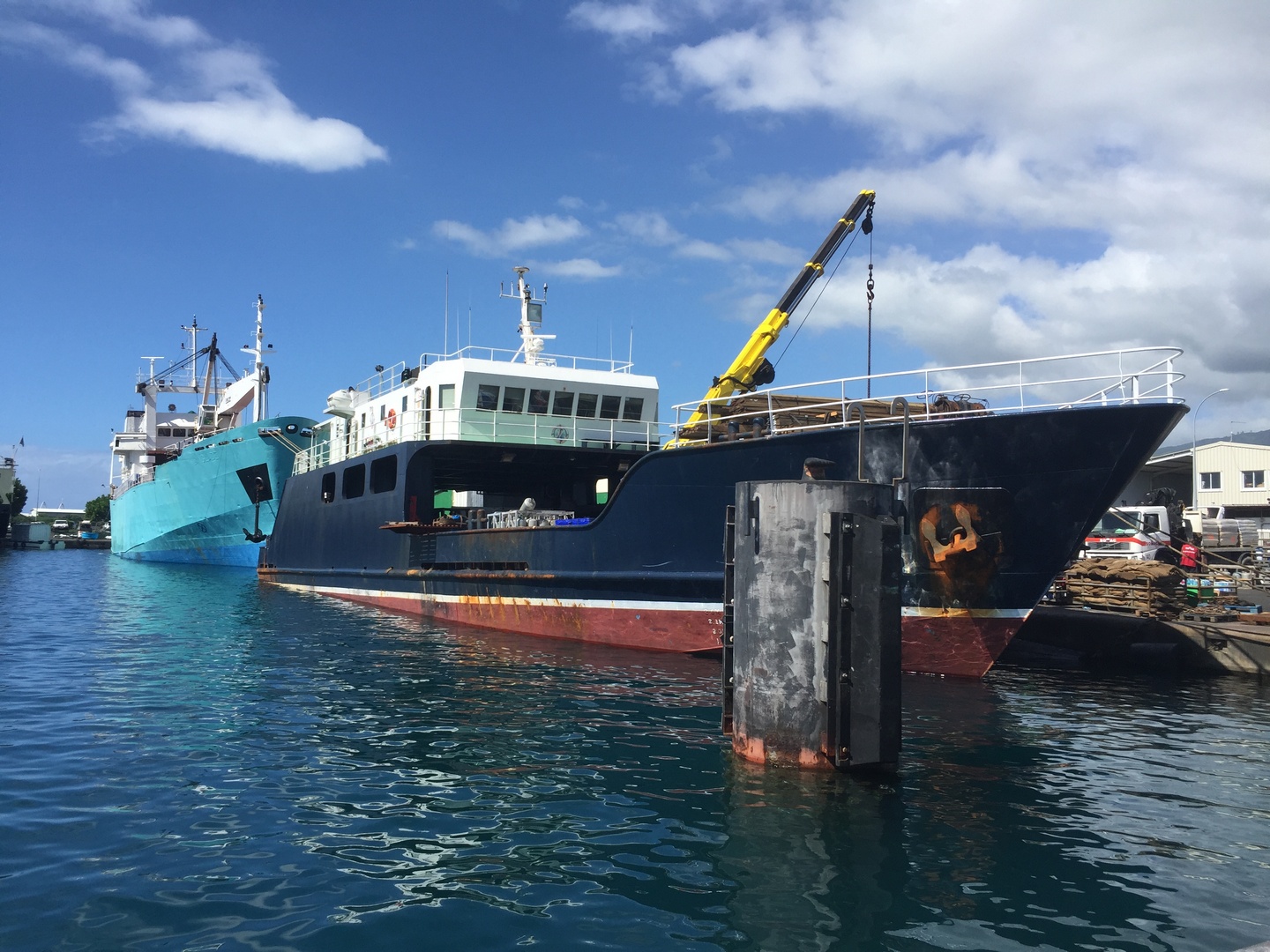
De Cobia III vaart elke week langs een 5-tal atols

Maar om 02:00 uur kwamen we aan in de haven van Apataki dorp, en daar stonden enkele van de eigenaars van Apataki Carenage, de familie Lau, ons op te wachten. Samen met onze 150kg bagage zijn we naar het verblijf van de Lau’s in Apataki dorp getrokken, en de volgende dag met de boot naar de Apataki Carenage zelf, waar Sanuk op het droge ligt.

Een korte rit van twee uur, maar we kwamen wel doornat aan vanwege de wind die op de kop stond. Gelukkig zat onze bagage onder een zeil en was alles droog gebleven.
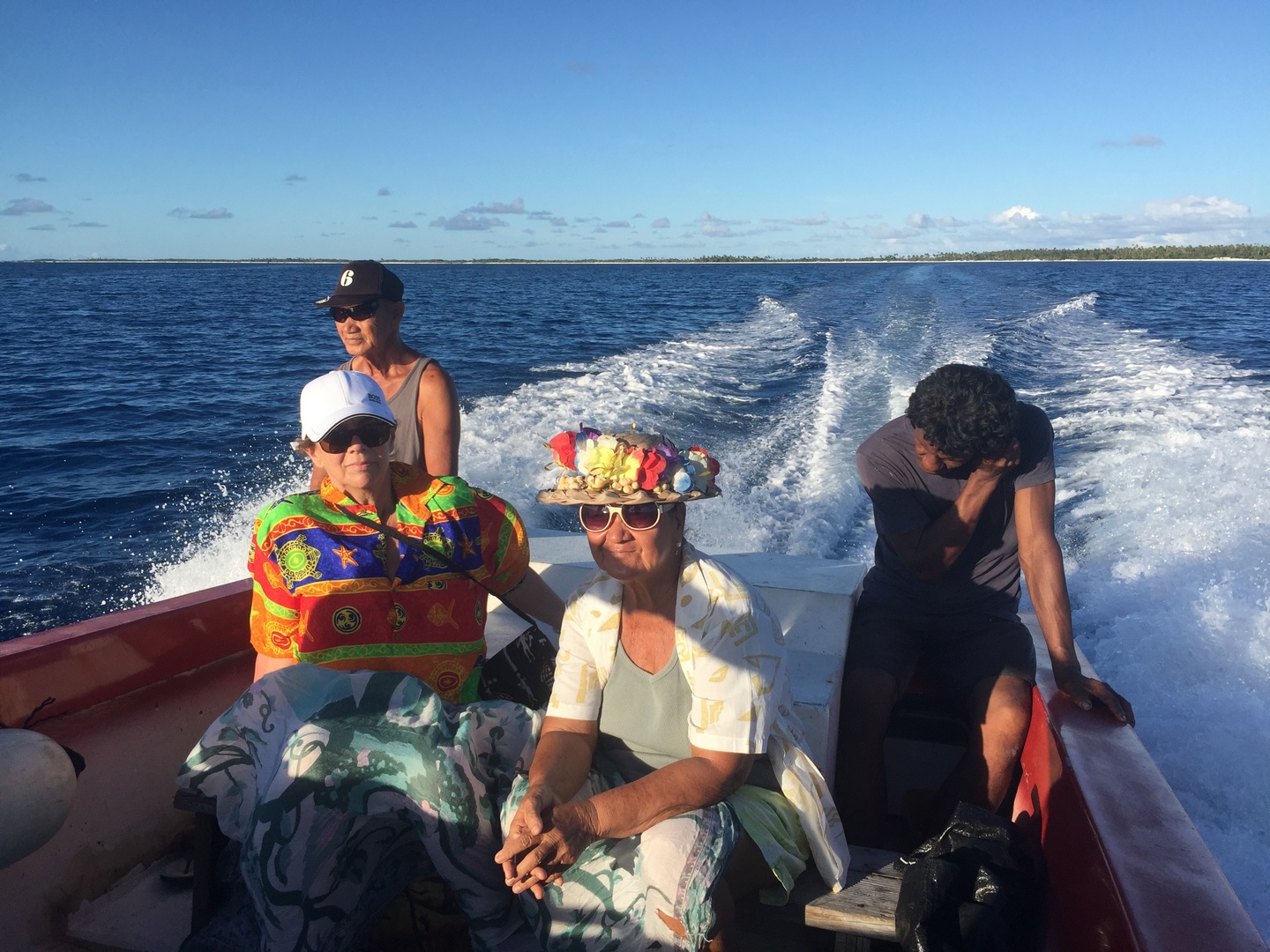
Van en naar het dorp vanuit de Carenage. Aan boord mamie, papie (rechtsachter), Dominque van Cap A Cap en rechts de helper Manou

We waren blij terug op onze Sanuk te zitten, ook al was het dan op het land en niet in de zee.
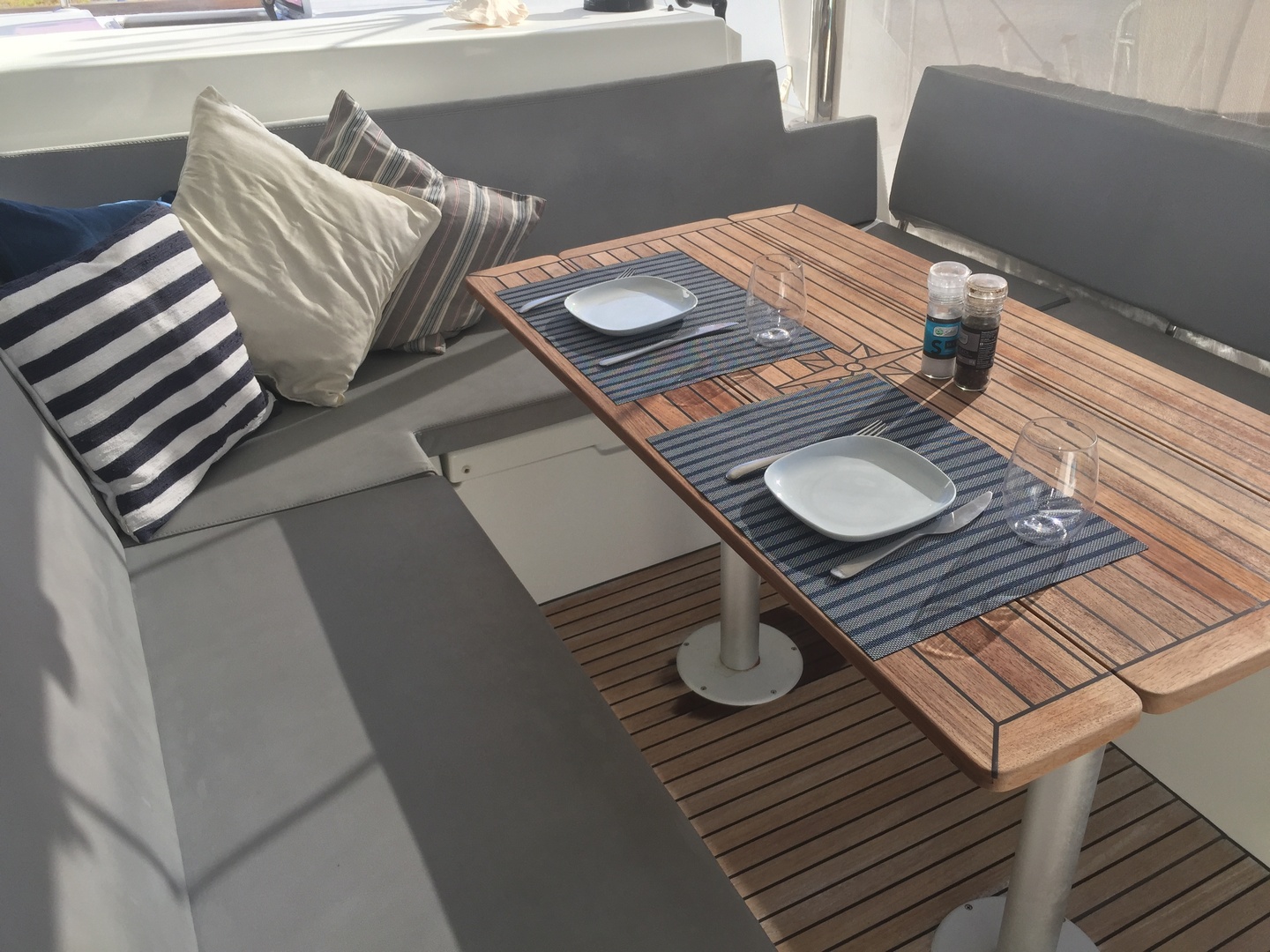
Happy to be back

Alles zag er op het eerste gezicht goed uit, niet te veel zwarte schimmel. We hebben een dag genomen om al het gerief weg te steken, en dan zijn we aan ons takenlijstje van 3 bladzijden begonnen.
De saildrives kregen nieuwe seals, de versnellingskoppelingen kregen terug een ruw oppervlak (lapping the cone drives noemt dit in het engels). Nieuwe olie en filters in de drie motoren, de nieuwe trampoline werd gemonteerd, het nieuwe code 0 zeil werd opgehangen.
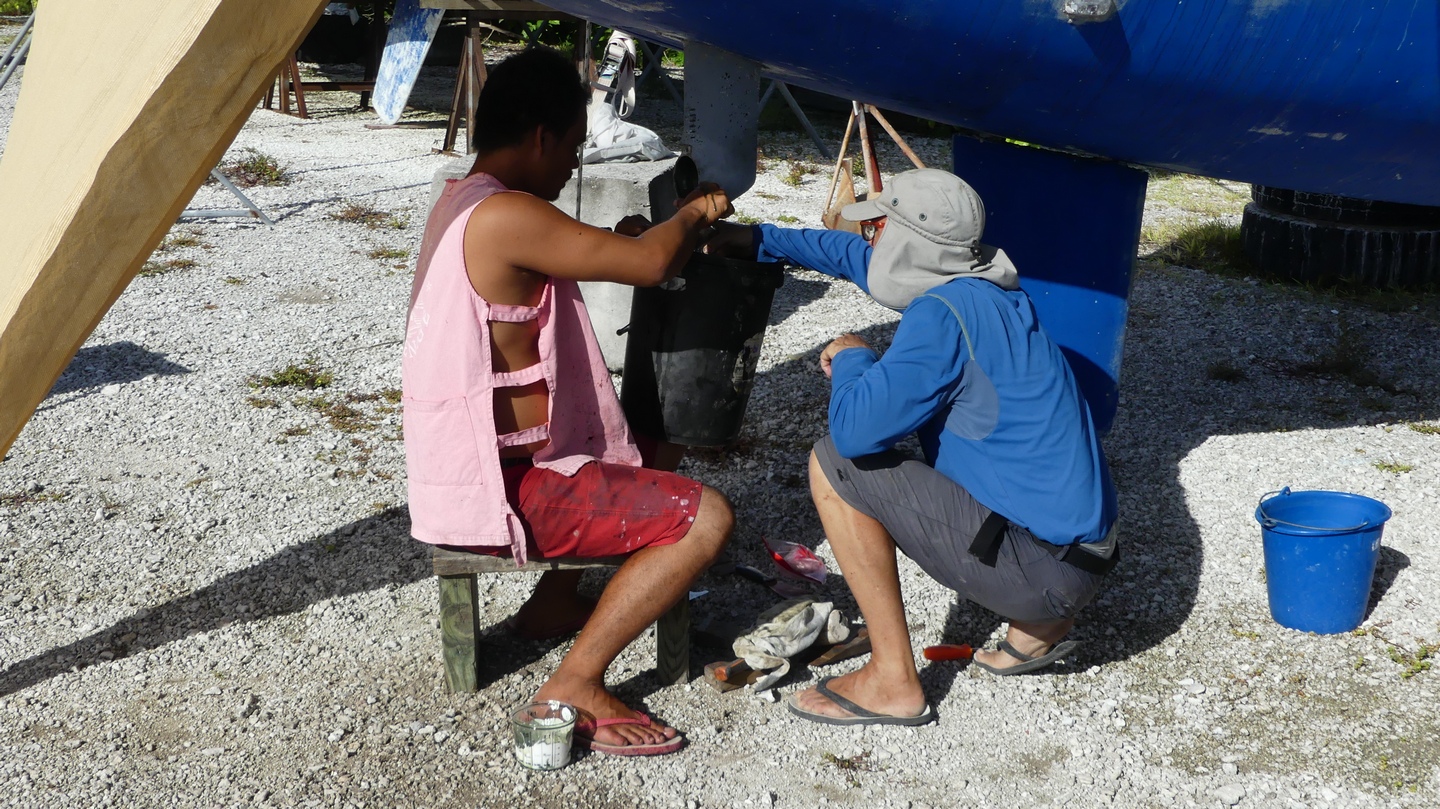
Tony toont mij hoe het moet
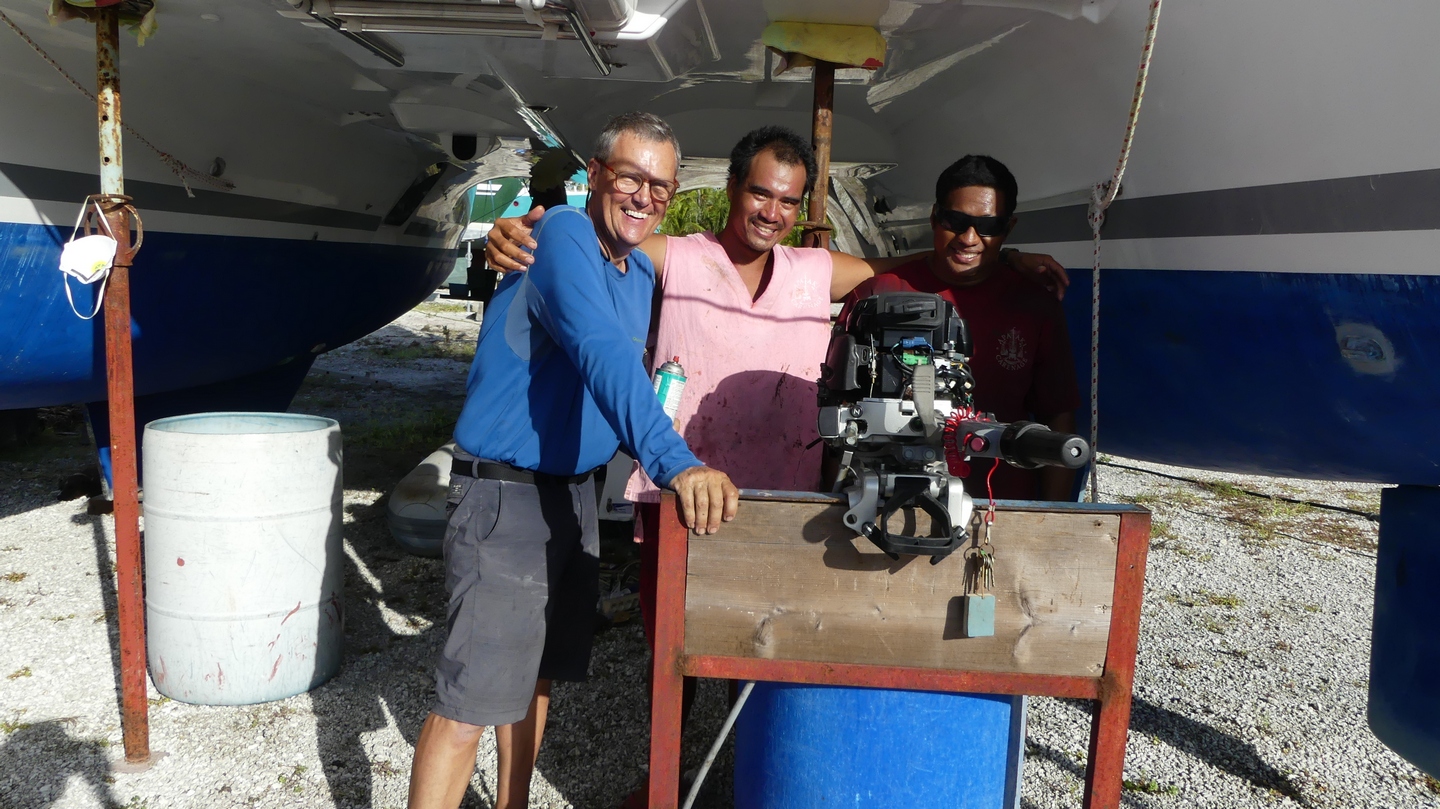
De Honda van flipper is gefikst. Rechts William, midden Tony

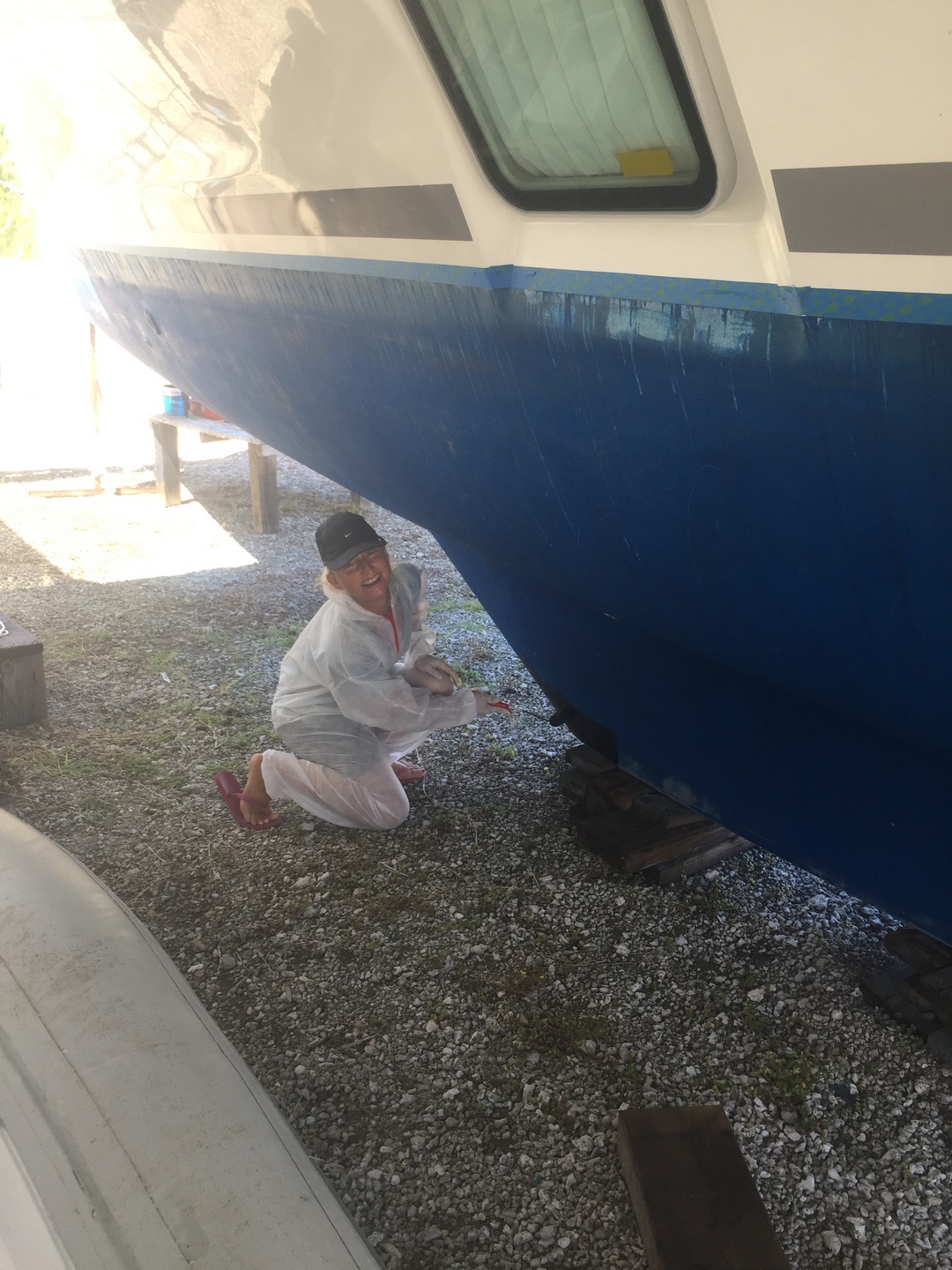
Ilse hield zich bezig met de buik van Sanuk een nieuwe anti-aanslag luier aan te doen. Zestien liter Micron 66 anti algenverf, en
hij zag er weer blauw uit, onze Sanuk. De onderste laag is zwart, en daarboven blauw, zodat we kunnen zien wanneer we door de eerste laag zitten.

Er was echter een serieus probleem met de stuurinrichting: de roeren zaten muurvast. Het bleek dat langs het afsluitdeksel van de nood-roeren er regenwater naar binnen kwam, en dit viel op de
connectie van de verbindingsstang tussen beide roeren. Ik ben erin geslaagd om de geroeste kop van zijn pin af te trekken, en los te vijzen van de verbindingsstang.
Met geduld en vooral fosphor zuur kwam er elke dag wat meer beweging in, en op het einde was de verbinding van de kop in zijn houder terug soepel. Dan nog laten trekken in een oliebad, terug monteren en het stuur was beter dan ooit. In retrospect was dit probleem al een jaartje aan de gang, maar ik dacht dat het aan de stroefheid van de roerstang in zijn houder lag, maar dat bleek dus mis. Ik ben heel gelukkig
dat ik dit gevonden heb en met de hulp van Tony Lau heb kunnen oplossen.
De dagen zijn bloedheet in de Carenage, het is 32 graden en de zon schijnt ongenadig van 8:00 tot 16:00. Enkel in het uurtje ervoor en erna is het nog licht en is de temperatuur flink lager.
Dus om 6 uur s’avonds is het donker. Dan nemen we een heerlijk doucheke, en koken een warme maaltijd. Daarna lopen we nog even langs bij de familie Lau, of komen we samen met andere
zeilers die ook aan hun boot aan het werken zijn in de Carenage.
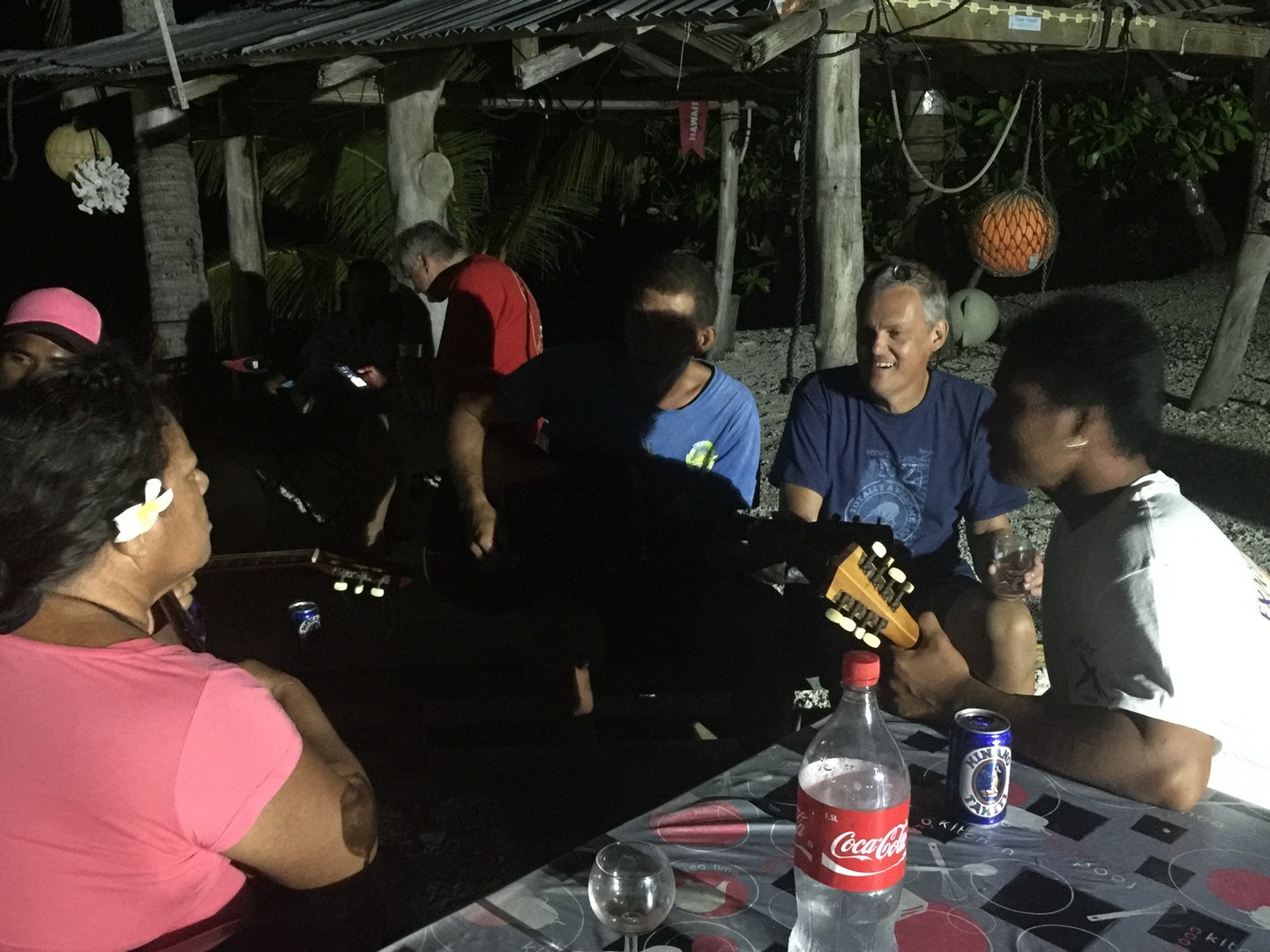
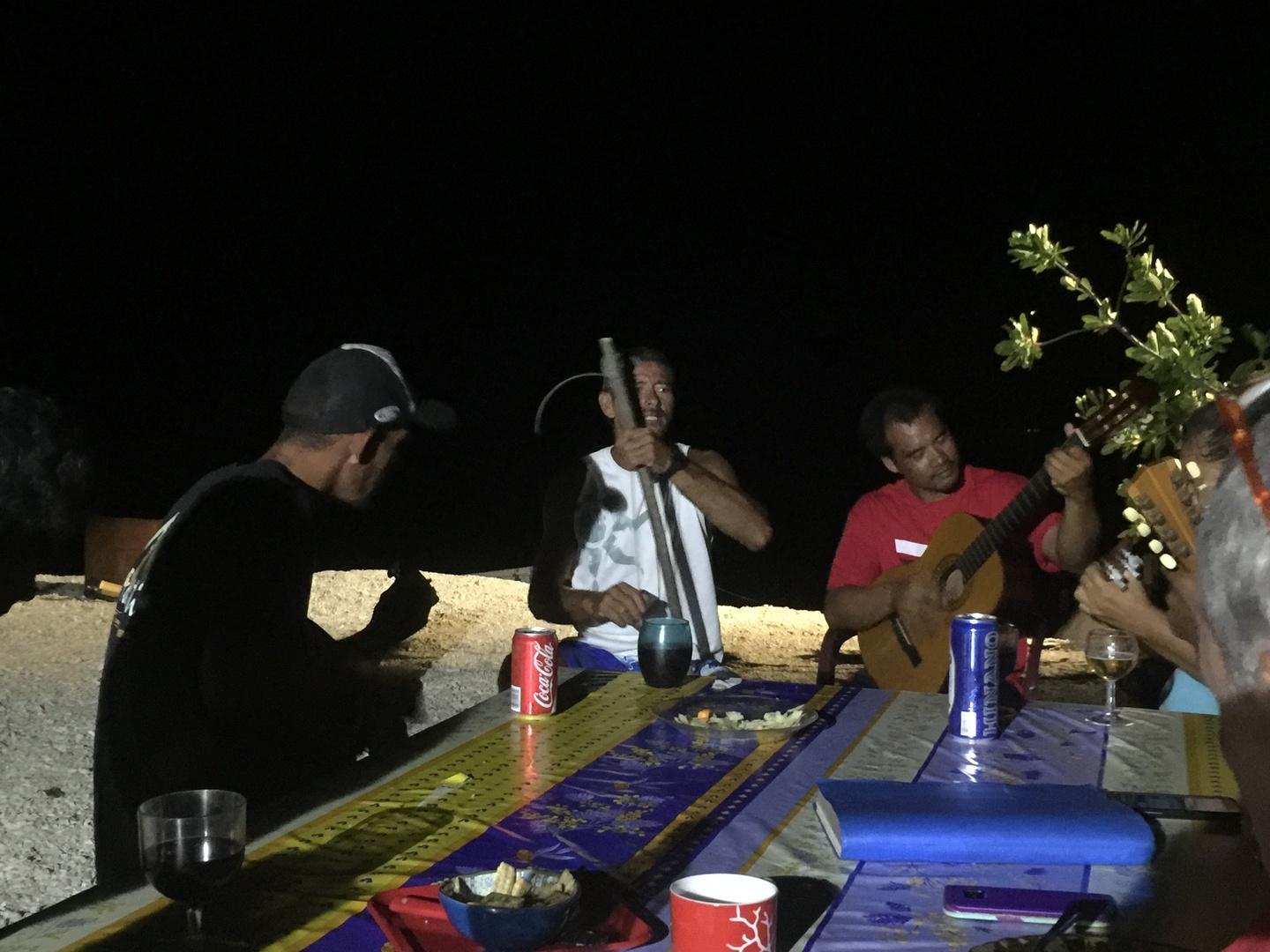
Heel veel Touamotanen kunnen een ukele bespelen, want tv is er niet
Ik hield het bij wat neurien, of met lepels proberen de maat te volgen…

Er liggen eind april nog een 20-tal boten, waarvan er drie a vier bewoond zijn. Iedereen werkt om zo snel mogelijk van de muggen, de hitte en windstilte af te zijn er terug op het water te liggen. Voor ons was dat twee weken, en hoewel dit lang is hebben we toch geen dag stil gezeten. Er is hier trouwens toch niets anders te doen behalve werken, veel drinken, wat eten en veel slapen. Meestal lagen we om 21:00 uur al in onze nest van een zalige slaap te genieten. Ik sta ‘s morgens op rond 6:00 uur, maar Ilse blijft graag even liggen tot 8:00 uur. Ik geniet dan van wat personal time: wat naar podcasts luisteren (er is daar internet, maar wel traag – grootte orde van 20Kb/download snelheid), wat luisteren naar audioboeken of wat lezen.
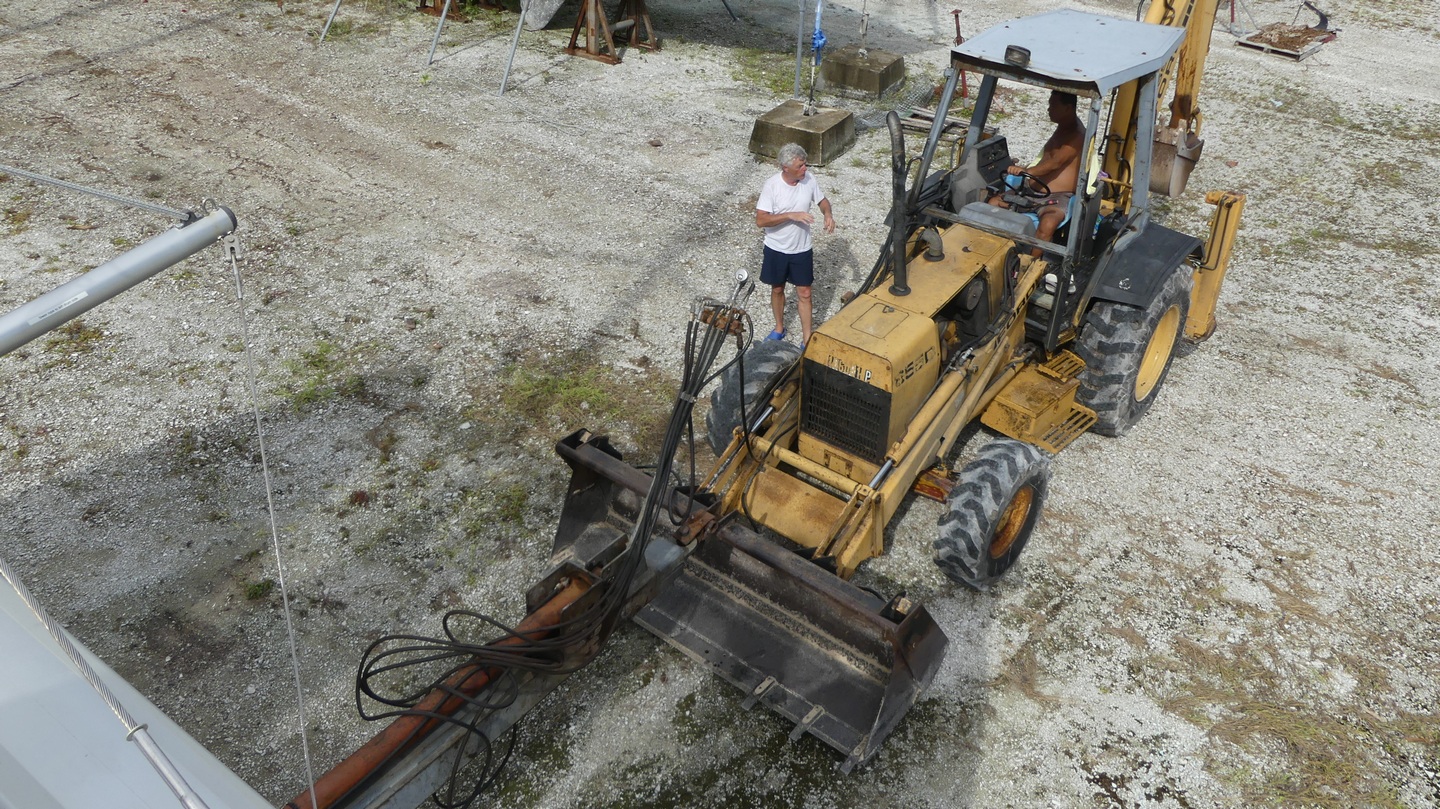
Alfred Lau rijdt de draagwagen onder de boot.

Enfin, de dag kwam dat Sanuk te water werd gelaten, en dat we klaar waren om te vertrekken. De meeste werkjes waren bijna af, maar aangezien het moeilijk is om gerief in Tahiti te bestellen en naar Apataki te laten leveren, besloten we om zelf nog met de boot naar Tahiti te varen om alles af te werken.
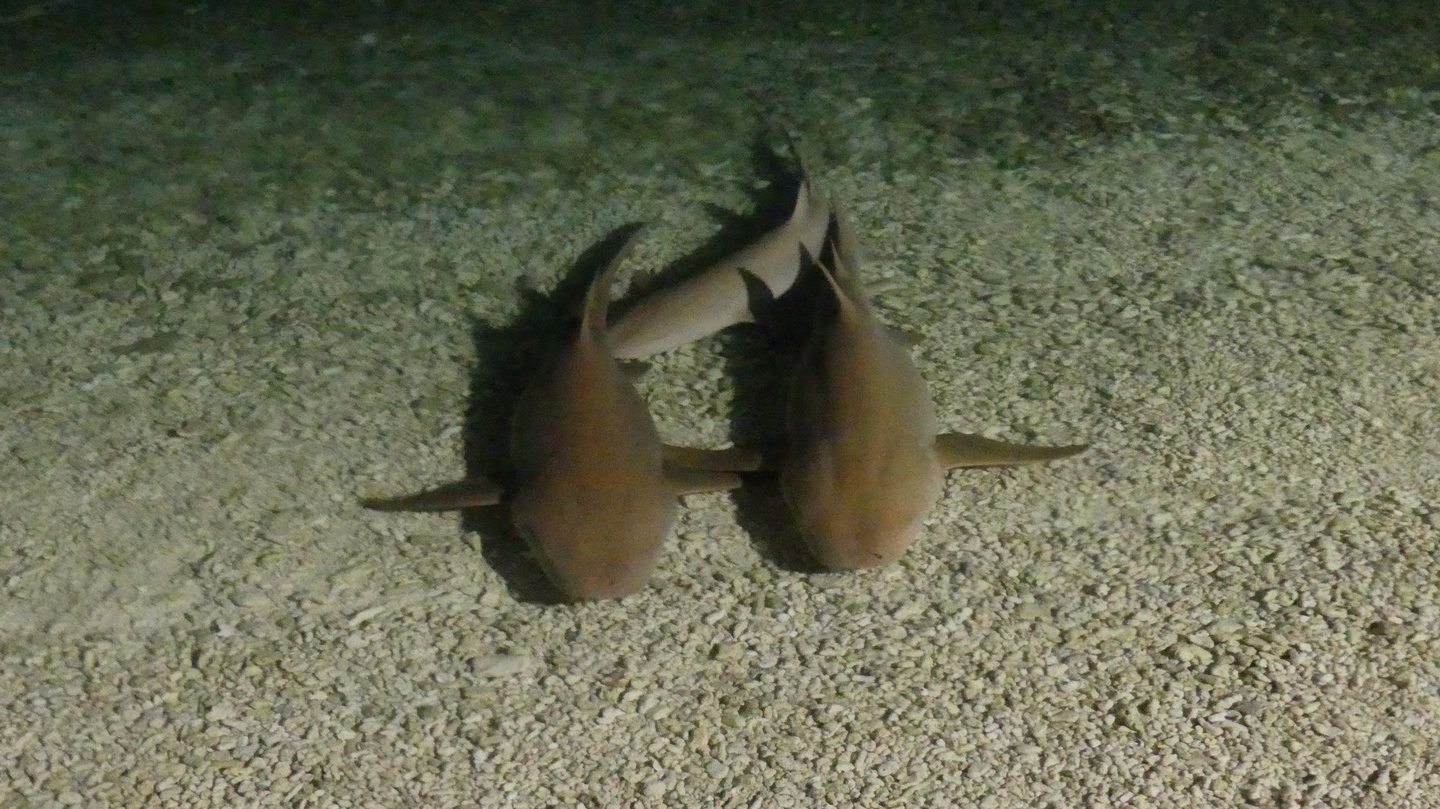
2 van de 5 nursesharks, trouwe klanten van de Carenage

Maar eerst zijn we dus langs Rangiroa atol gepasseerd, waar we met een andere Apataki boot – You Neva Know – nog een weekje bleven. Ilse en ik hebben er duikles genomen, zodat we beide nu
niveau A bereikt hebben van het franse / Internationale systeem. Dit betekent dat we mogen duiken met begeleiding tot 29 meter diepte. (Normaal is het 20 meter, maar vanwege de temperatuur van het water en de goede zichtbaarheid is dit in Frans Polynesie 29 meter) Na vier duiksessies werden we goed bevonden om ons brevet te halen. De eerste drie lessen waren in ‘het aquarium’, een ondiepe plek
(9 meter) waar we oefeningen deden, maar de laatste twee lessen waren in de pas. Met een bootje gingen we buiten op zee, daalden af tot zo een twintig meter en kwamen dan met het hoogtij terug in
de pas gedreven. Als hoogtepunt was er een dolfijn die ons nieuwsgierig kwam bekijken en die we konden strelen, en een schildpad die zich met de heen en weer golf-stroming over de bodem liet
drijven en ondertussen van het koraal at.
Maar natuurlijk waren er ook ontelbare vissen en redelijk wat (ongevaarlijke) haaien. We zijn in elk geval blij dat we nu op de volgende eilanden zullen kunnen duiken.
Op het einde van de week was onze kookgas echter ver op. Ik maakte een misrekening ivm aantal volle flessen, en dus waren we aangewezen op wat er restte van de barbeque gasfles. Daarom zeilden we door
naar Tahiti, waar we na een tweetal dagen aankwamen in de ons bekende marina, het was immers onze derde keer.
Een beetje ongelukkige timing want het was net lang weekend van OLHV, maar de maandag kon ik toch in aktie schieten om de overgebleven of nieuwe taken aan te pakken.
Een boot is gemaakt om te varen, en de 6 maanden op het droge deden hem/haar geen deugd: de watermaker klaagde van een te hoge druk en de startbatterijen van de motoren die niet mee worden opgeladen
door de zonnepanelen bleken ook de geest gegeven te hebben. Enfin, een kredietkaart lost de meeste van deze problemen op, en voila, hier zijn we nu op zee naar ons volgend eiland aan het varen:
Raiatea, waar we reeds twee maal waren met respectievelijk Emma/Seba en Katie/Karel, maar waar nu een electronica specialist ons opwacht om samen eens door het systeem te lopen.
Het is sinds Colombia van kwaad naar erger gegaan met onze electronica: eerst liet de radar het afweten, dan twee van de 4 GPSsen, dan de AIS, en nu heeft de dieptemeter kuren: we denken dat hij
nog de juiste diepte aangeeft, maar hij pinkt steeds. Ik denk dat het een zaak is van corrosie: ergens is het netwerk slachtoffer van roest. We zullen het maandag waarschijnlijk weten. [Update na bezoek van de ‘expert’: het is waarschijnlijk geen corrosie maar de dieptemeter is end-of-life. We gaan moeten zien of we een nieuwe hier kunnen vinden (weinig waarschijnlijk), of we een nieuwe bestellen in de VS (10 dagen wachten) of we zo doorgaan met een manke meter. ]

Dus de sfeer aan boord is opperbest, we zijn beide blij dat we veel werk verzet hebben, en dat we weer reizen.
We hebben leuke mensen leren kennen in Apataki/Rangiroa/Papeete (Cheeky Monkey, Cap a Cap, YouNevaKnow, El Nido), we zijn enkele keren op restaurant geweest, en we hebben een mooi aandenken
aan de Polynesische eilanden gekocht, het staat Ilse bijzonder mooi…
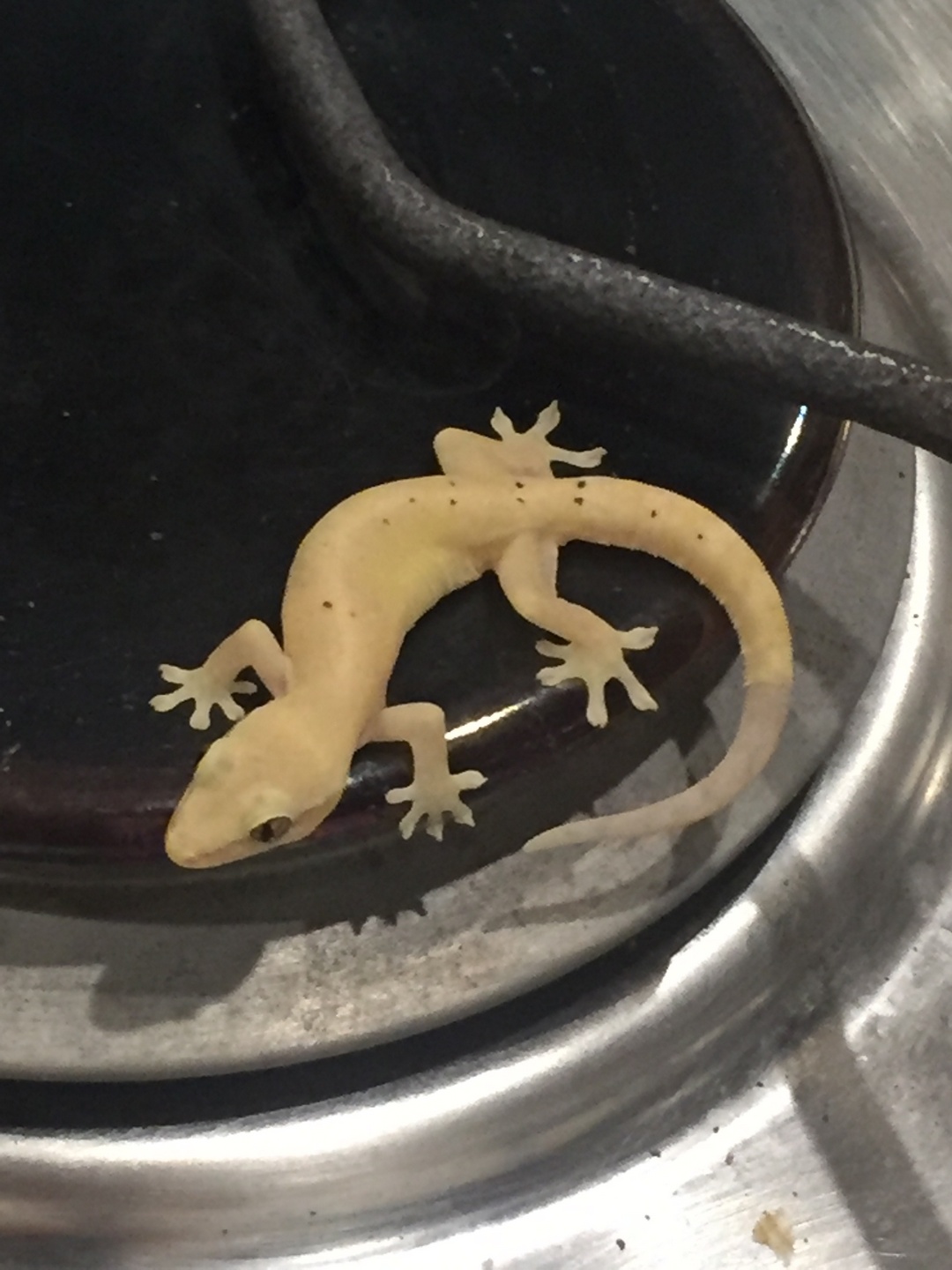
De gekko aan boord is goed voor het opeten van insecten. (Lengte 4 cm)
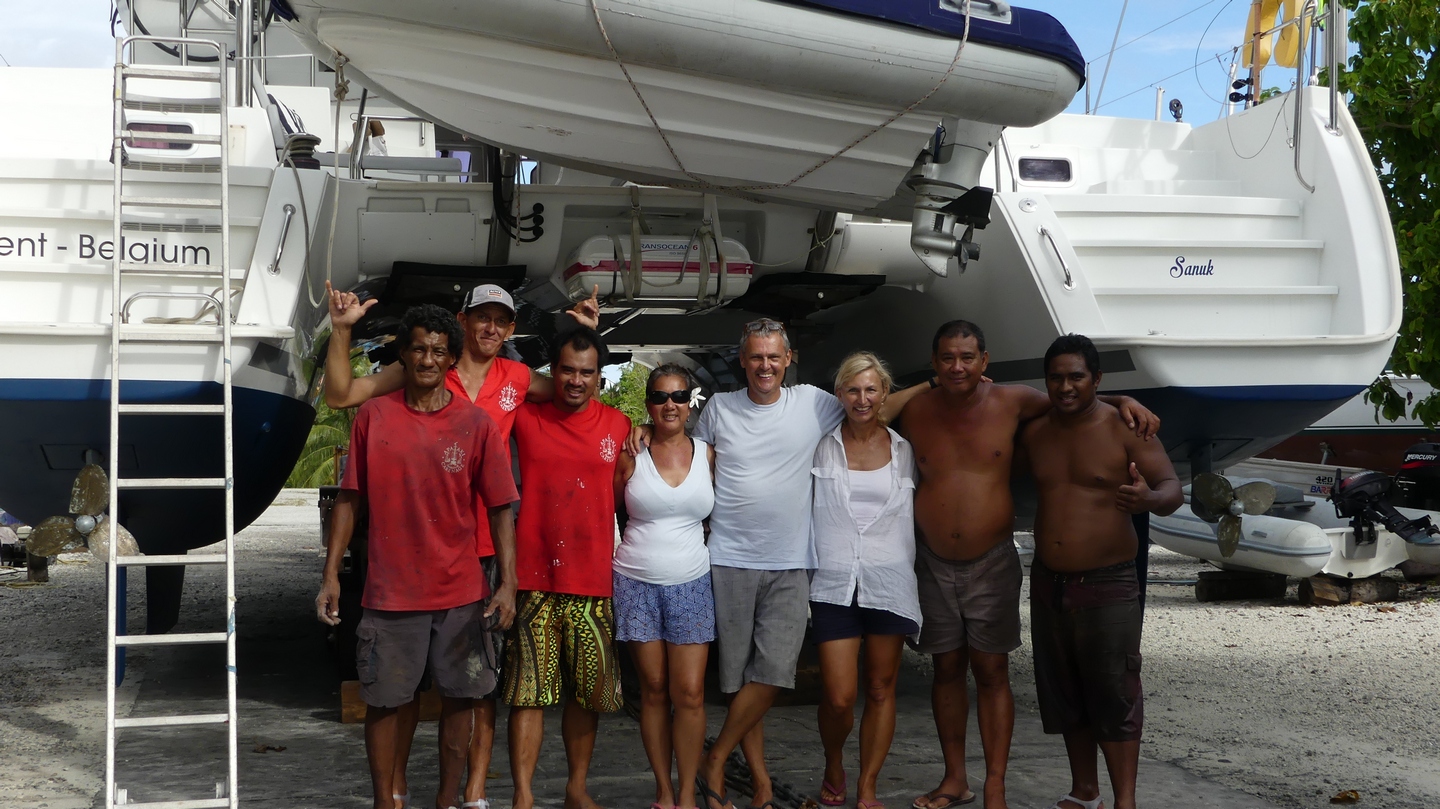
Het familiebedrijf Lau
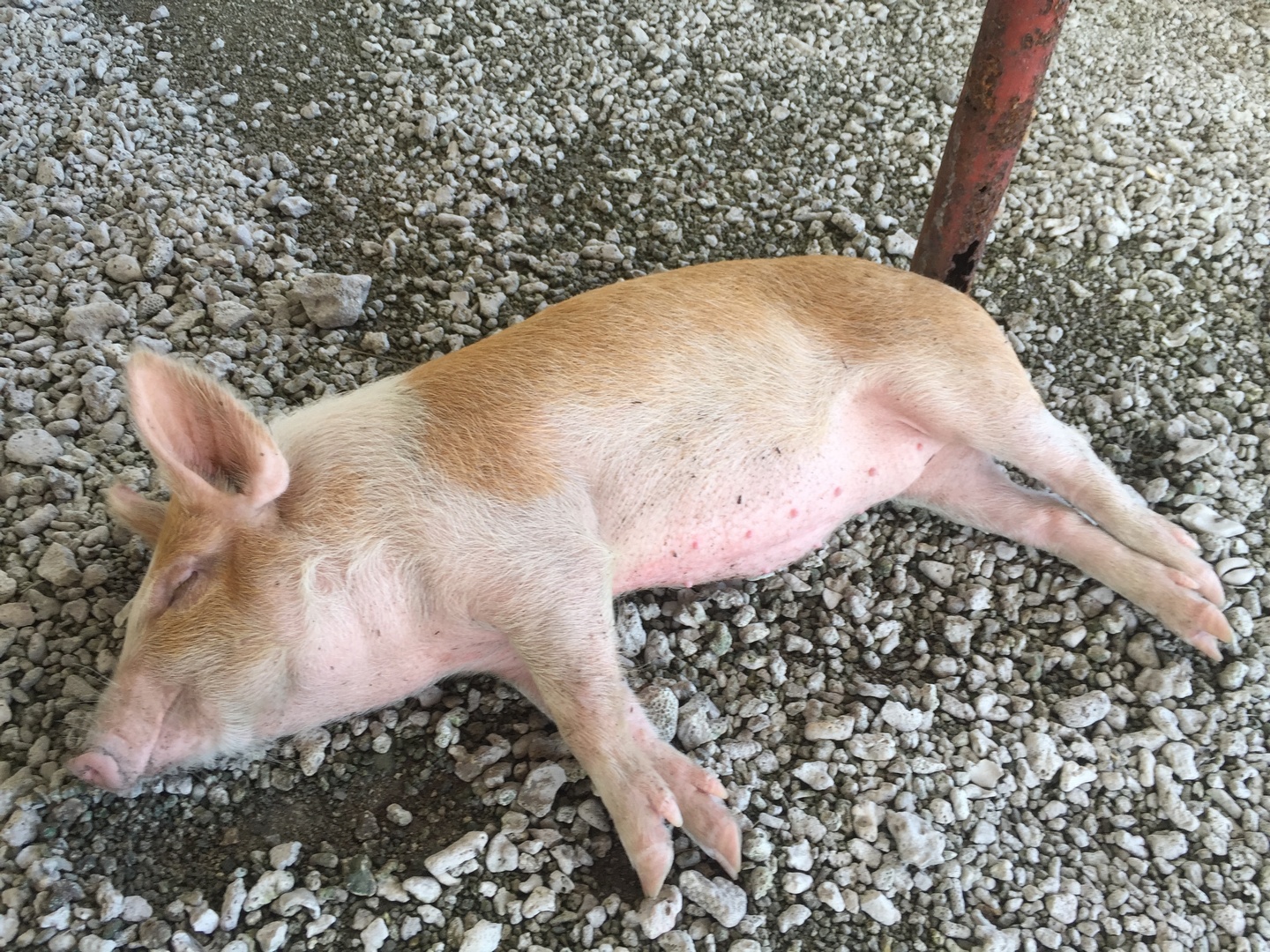
De nieuwste maskotte van de Carenage: Poua het varken.

Travelling the East Coast of the South Island, on our way back to Auckland.

April 17th, Papeete, Tahiti, it feels good to be back in 28degrees temperatures and closer to the boat! Our shopping possibilities were limited because all stores were closed because of Easter monday, except the Carrefour supermarket and a chinese supermarket where we could find the foodsupplies to take to Apataki tomorrow on the Cobia 3 !

Flashback to March 26th,2017: We did not stay very long in Dunedin since time was running out and we still wanted to see more of the East Coast.
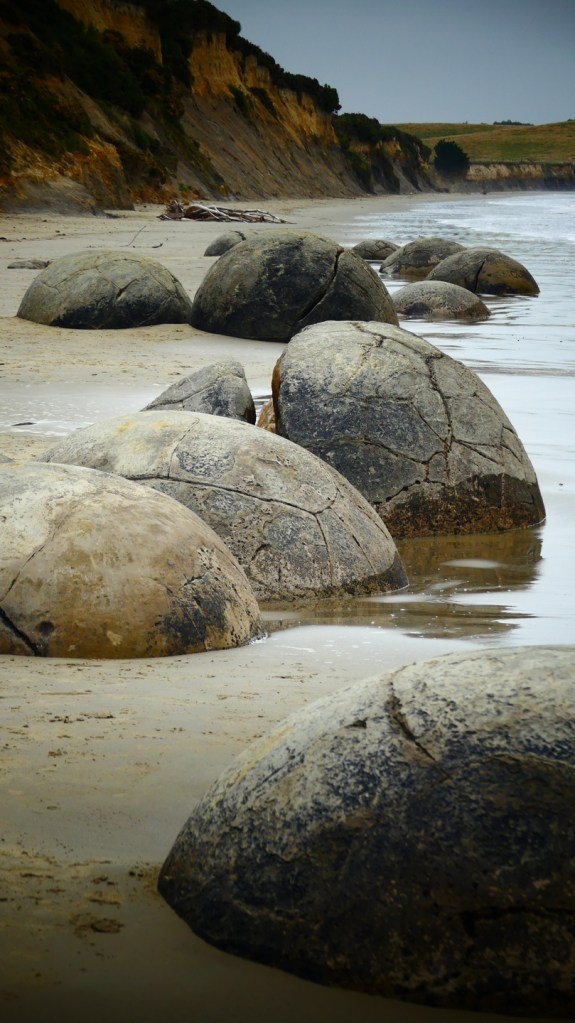
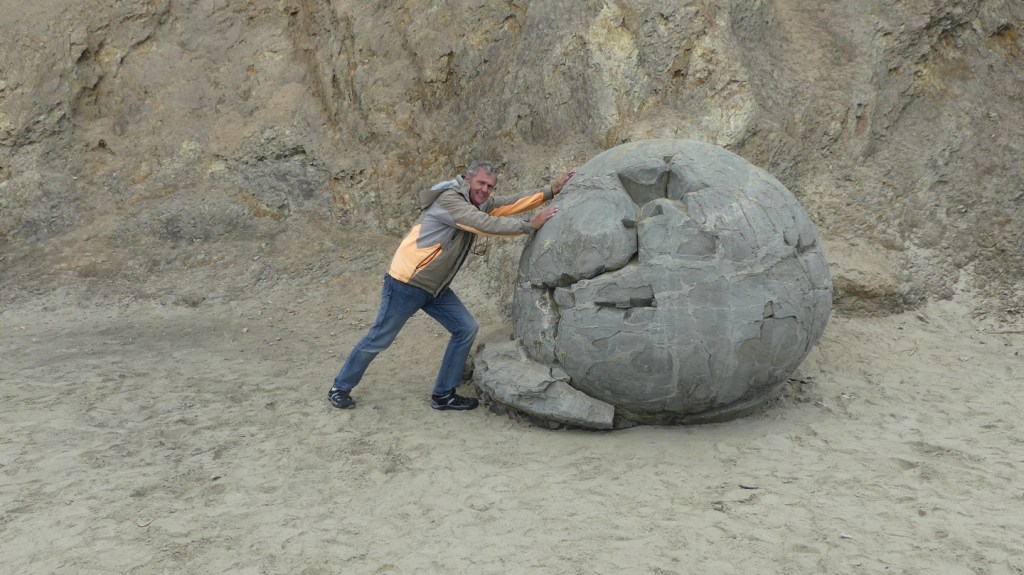
We made a quick stop to see the Moeraki Boulders and met a Belgian working at the cafetaria there. The Moeraki boulders are large, spherical boulders on Koekohe beach. They are made out of mud, silt and clay cemented by calcite.
The large boulders, 2m in diameter,are estimated to have taken 4 to 5 million years to grow !

We continue driving to Mount Cook village in the rain and low clouds 😦 and spent a day at the Sir Edmund Hillary Alpine Center watching a 3D movie on Mount Cook,  a documentary on the local mountain rescue team and the digital dome planetarium.
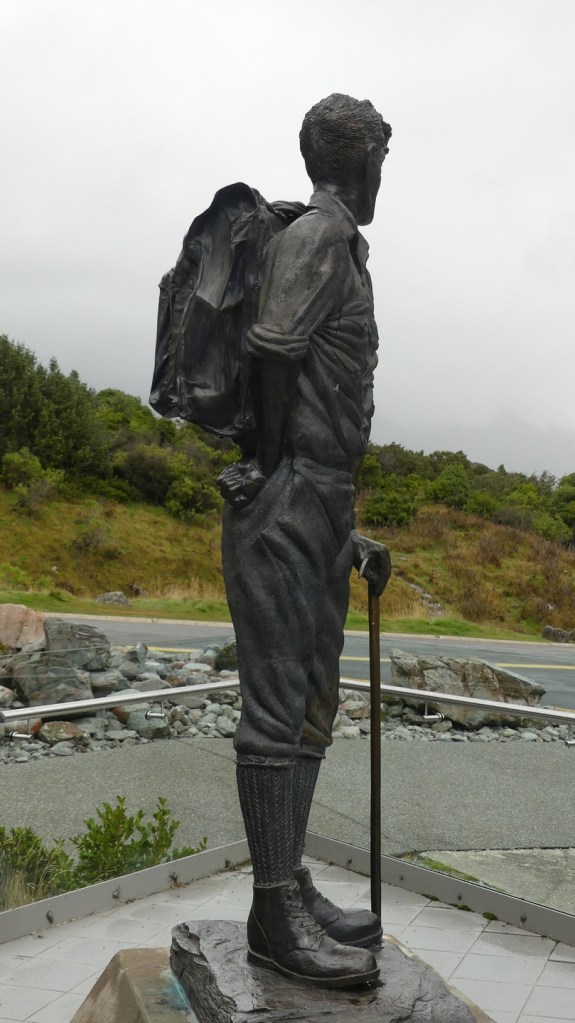
A bronze statue of Sir Edmund Hillary looking at Mount Cook! The day we arrived it was sooo cloudy and rainy that you could not see any mountains in Mount Cook national park! Sir Edmund Hillary is a famous and admired New Zealander not only because of his achievement, his ascent of the Mt.Everest in 1953 but also because of his humanitarian work in the villages of Nepal.

The next morning it was not raining but there were still a lot of low hanging clouds over our campsite. We were not sure what walk to do and decide to go to the outlook and take a decision on the way. Rainjackets, pants and backpack with some water we go on our way. When we come to a marker with the several walks we decide to take “Sealy Tarns”, only 5.2KM(one way), 3-4HR return walk, we think that is not too bad… Later we read the description of the walk,”The Sealy Tarns Track begins gently until you reach the foot of the Mueller Range. The track zigzags steeply up to Sealy Tarns.” The track consists mainly of 2200steps which have to be climbed! This was definitely one of the most challenging walks we did and we were not prepared! But the reward was incredible…
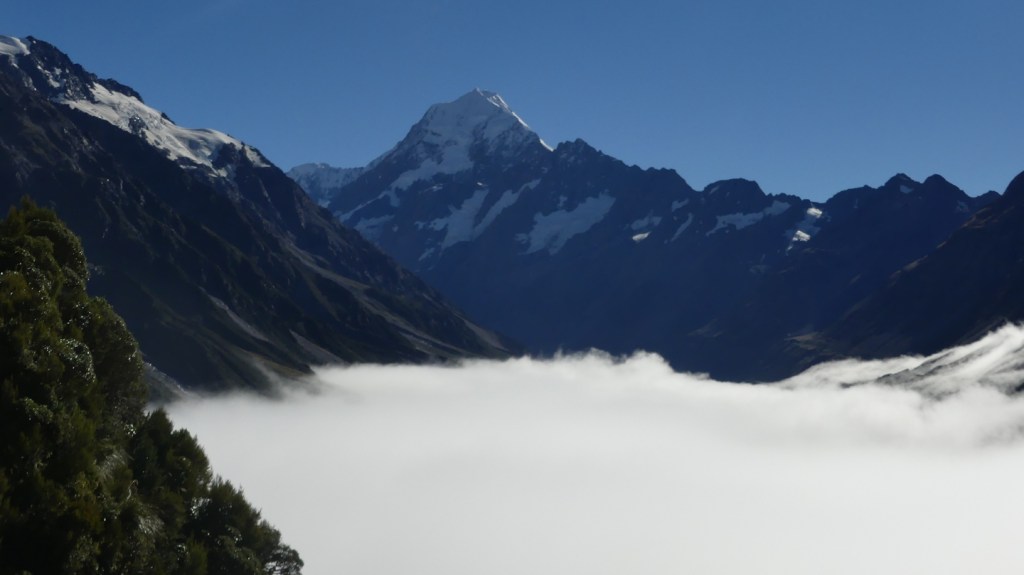
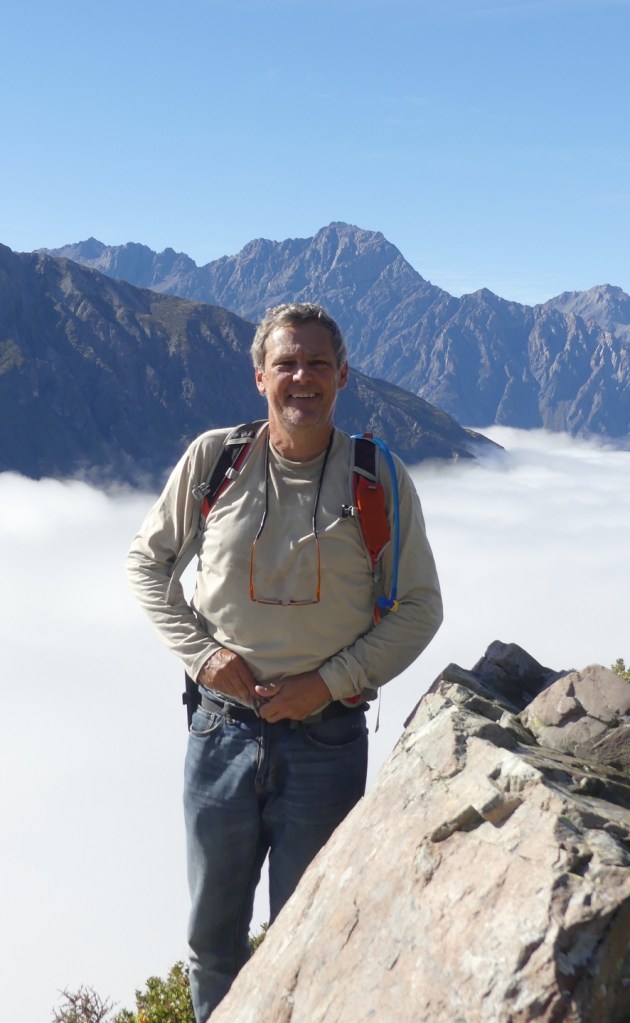
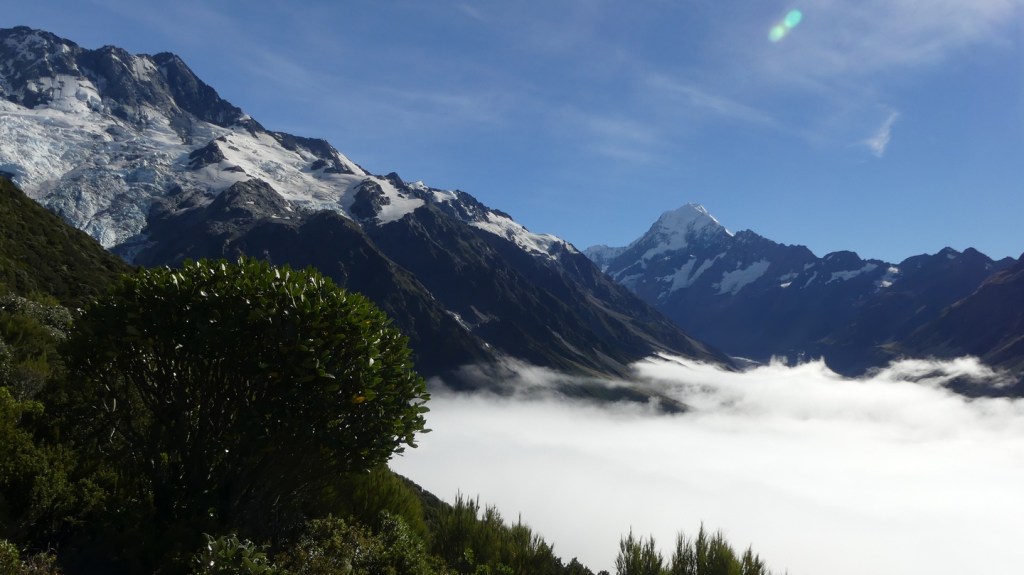
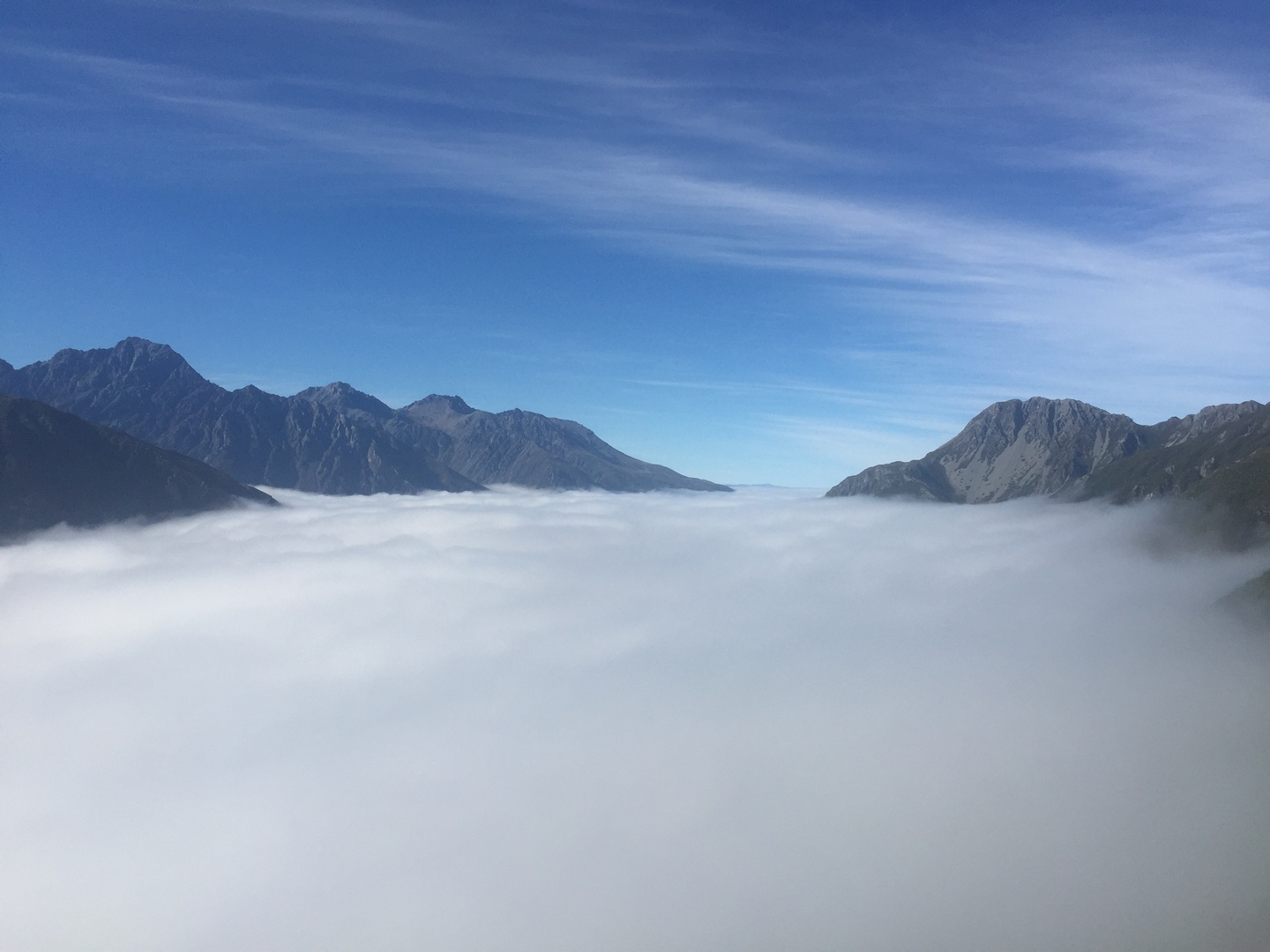
After 45min of walking, climbing and huffing and puffing we get this view! Above the clouds…it is really magical.You can see Mt.Cook all the way in the back.
Taking a rest and enjoying the view.
The Maoiri name for Mt.Cook is Aoraki, meaning “cloud piercer”, could not find a better one.
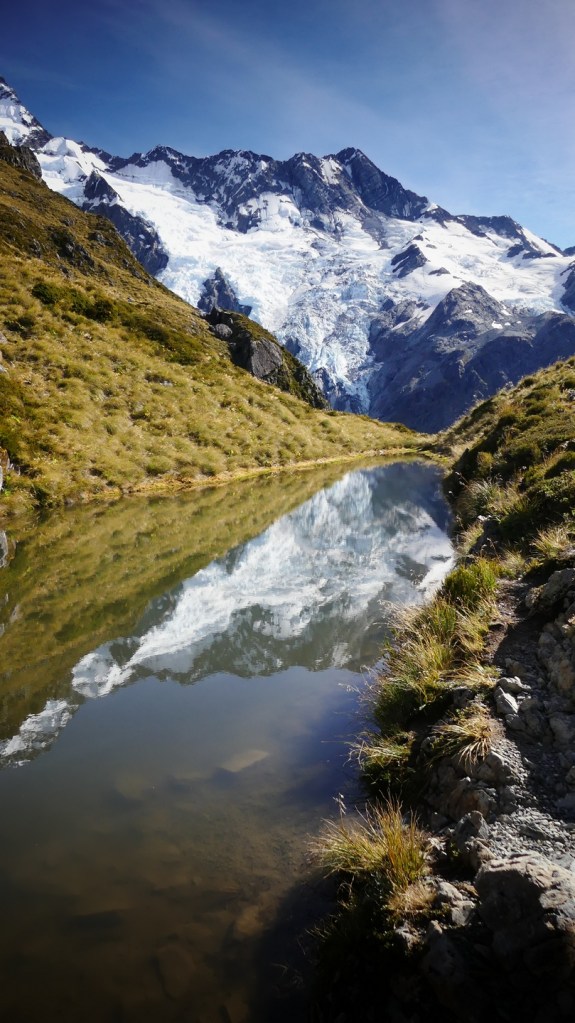
Reaching the Sealy Tarns. A tarn is small mountain lake or pond.
While we were eating our granola bar, we did not bring anything else, we watched the clouds disappear and a beautifull view unfold. Mt.Cook is showing all its beauty.
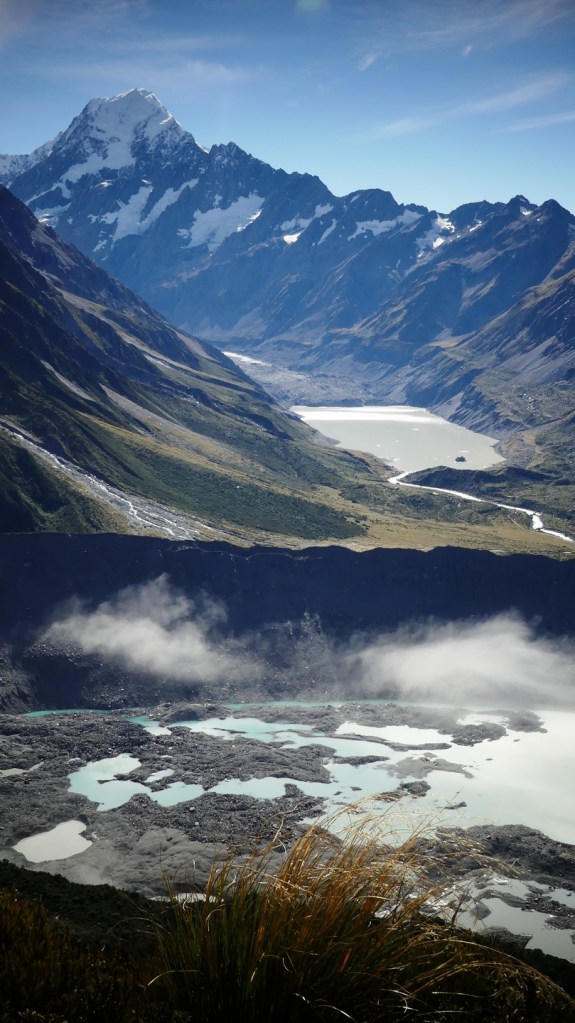
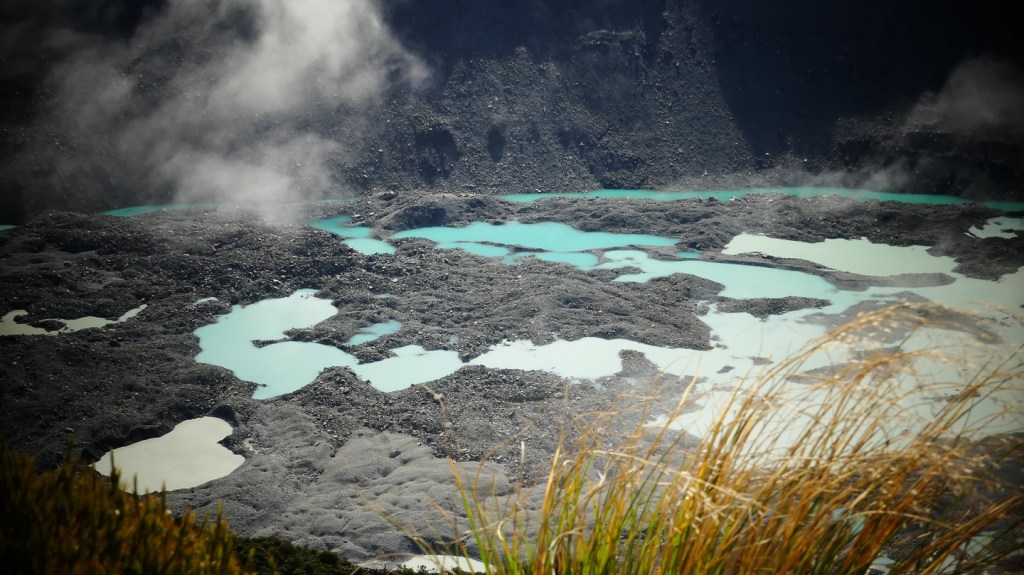
The glacial lakes at the bottom with the last clouds evaporating by the sun.

The return walk was not easy as well since it was so steep our legs were shaky. But we enjoyed the scenery so much that we did not care and arrived all happy under blue skies at the campsite. We drank and ate something. Felt stupid not to have prepared this walk better, we had no suncscreen nor a hat with us …we should know better, in the mountains the weather can change rapidly! This walk was definitely one of the highlights of our trip to NZ! We continued our route out of Mt.Cook National Park (also UNESCO world heritage) and went to Tasman glacier view and Tasman Lake…
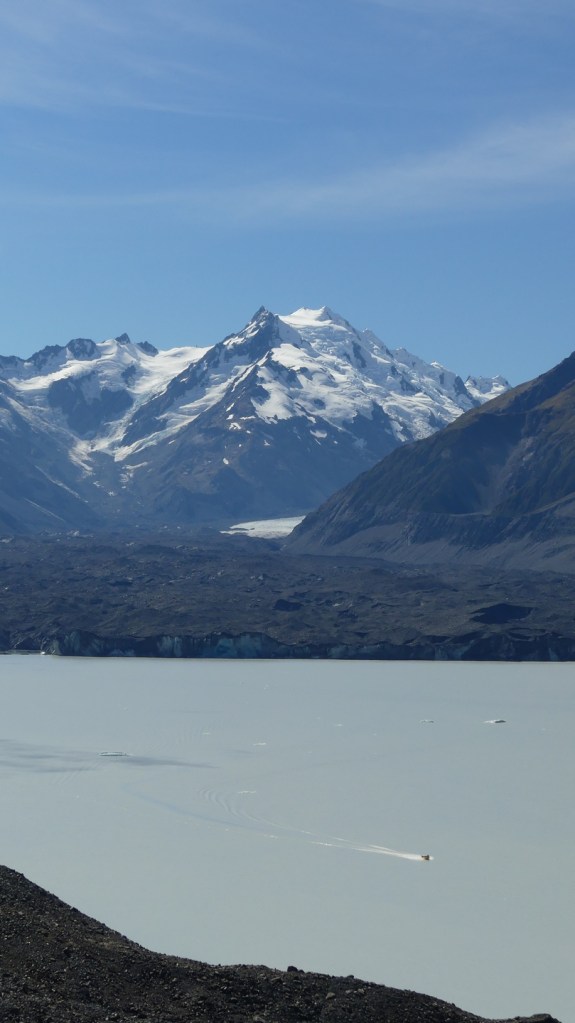
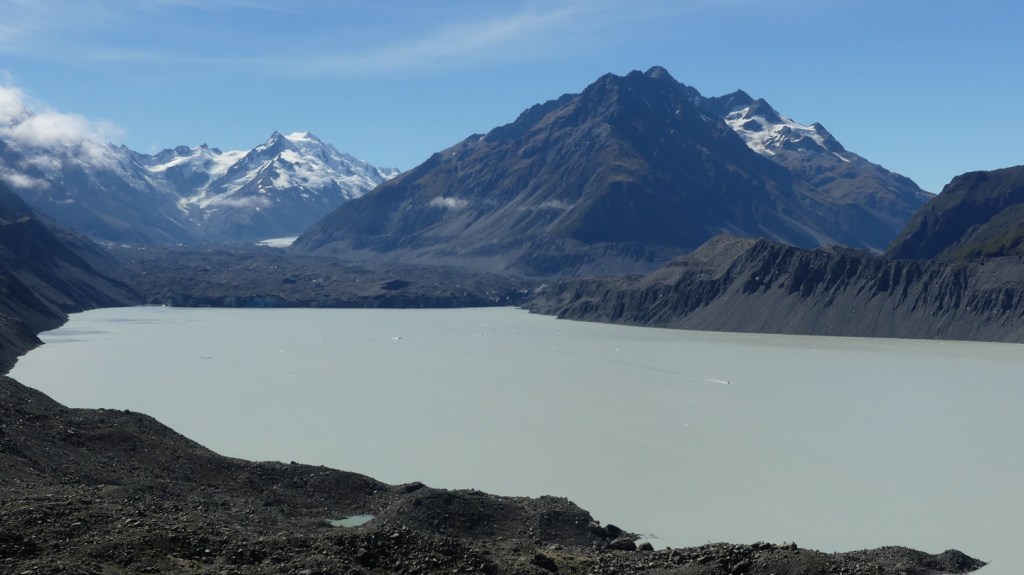
Tasman glacier with Tasman Lake.You can take a boat ride in Tasman Lake and see the icebergs in the water up close.
In the early 1970’s there were several small meltwater ponds on the Tasman glacier but by 1990 these had merged into Tasman Lake. Tasman Lake has quickened the retreat of Tasman glacier.

The scenery along the drive from Mt.Cook village to Lake Pukaki and Lake Tekapo is really incredible.
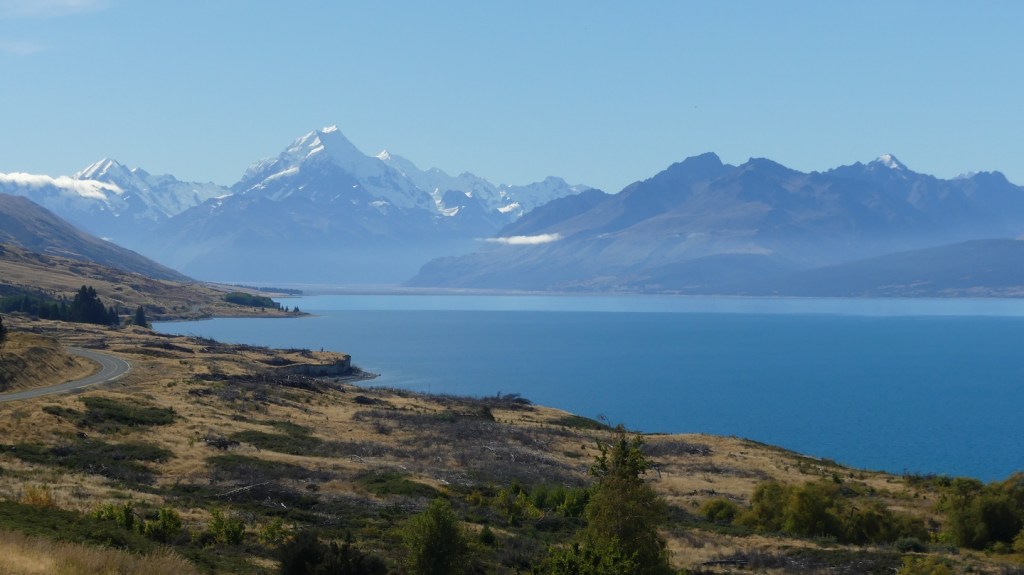
Lake Pukaki (glacial lake)and Mt.Cook in the back.
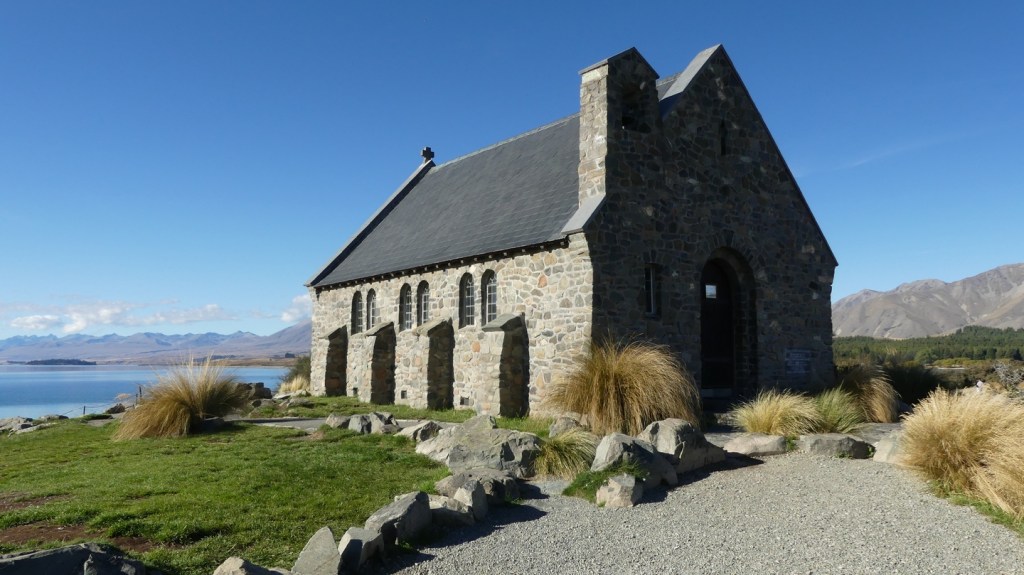
Church of the Good Shepherd and lake Tekapo in the back. It was the first church built in the McKenzie region in 1935.

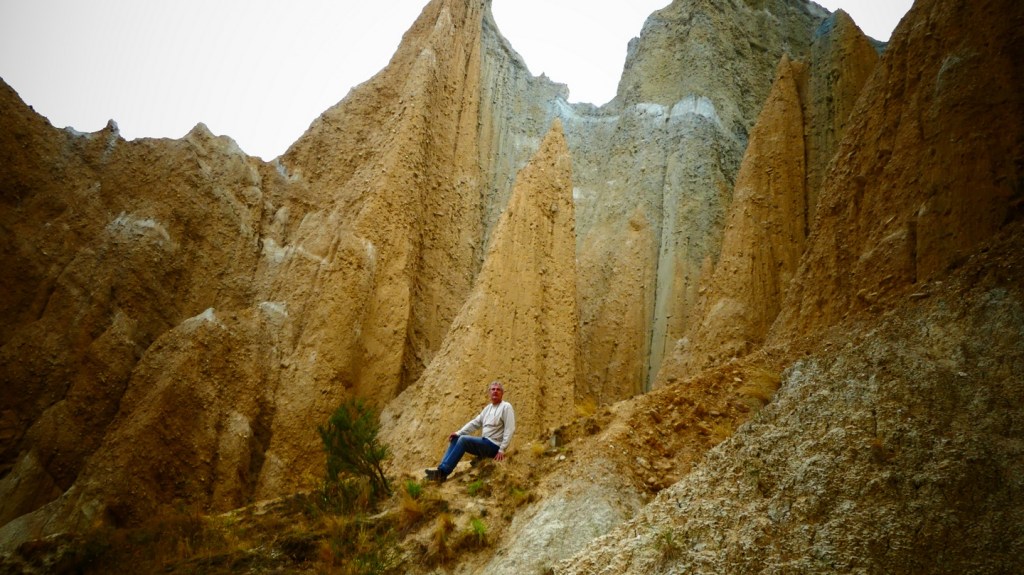
In the visitor centre of Omarama they told us to go see the Clay Cliffs and the pictures convinced us to go. This is definitely a hidden gem in NZ! We did not have the blue skies which would have made it even more beautifull but they were incredible. We had to drive 12km on unsealed road and pay 5NZD a the gate because they are on private property, but it was worth it!
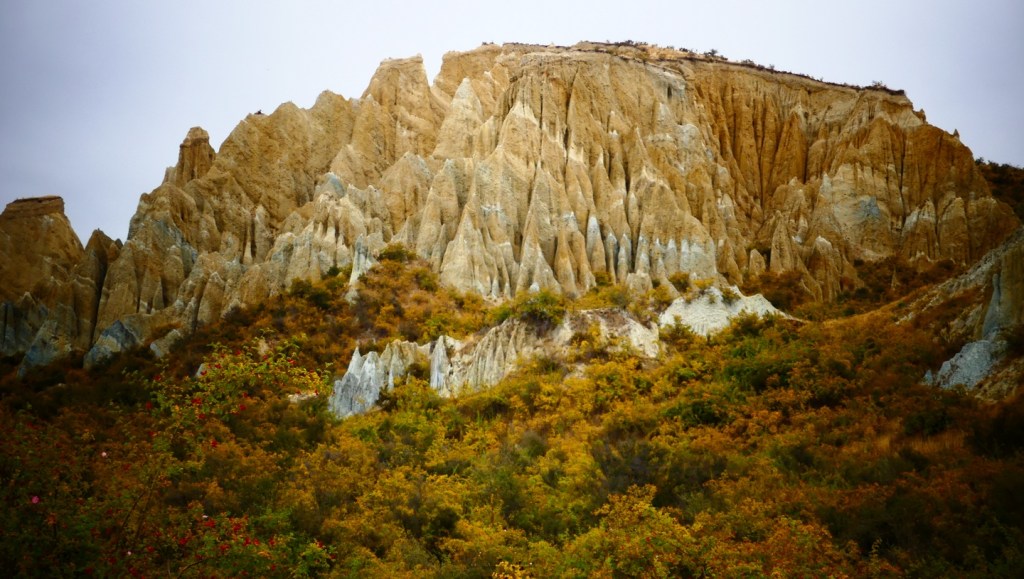
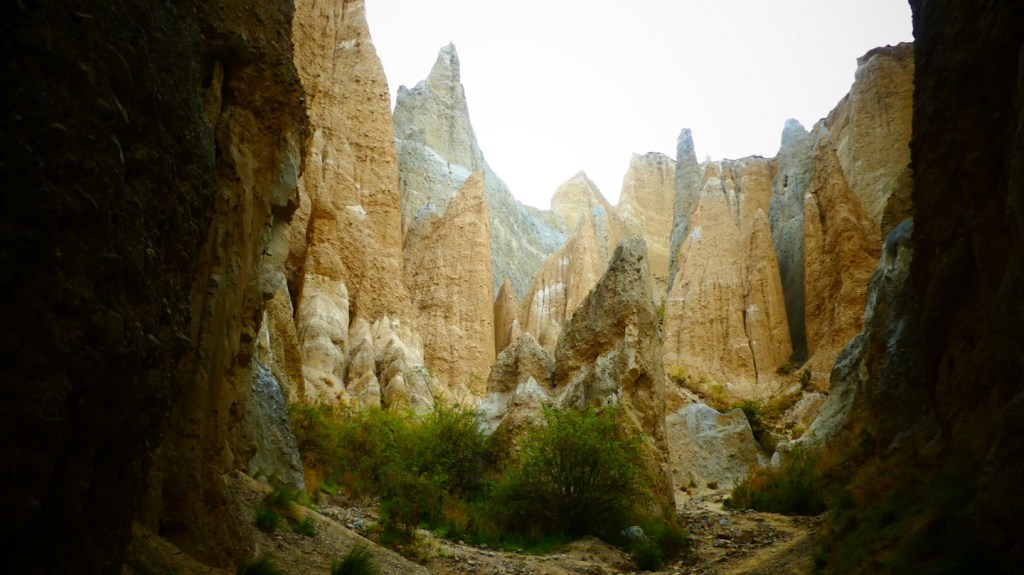
The cliffs were formed 2 million years ago.
We were there all alone which made it even more special.

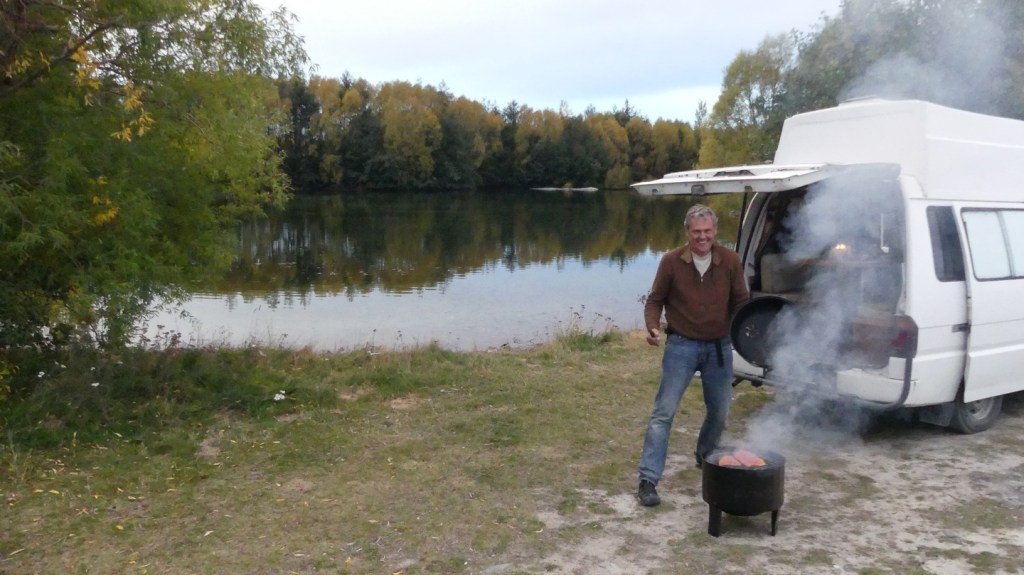
We leave the cliffs just in time to stop by a salmon farm and buy smoked salmon for aperitive and fresh salmon filet for the barbecue!

The next day we start out with rainy weather but as we continue our drive the clouds give way to sun and by the time we arrive at Rakaia Gorge it was perferct! We see a perfect camping spot but decide to do the Rakaia Gorge walkway first since the weather was so nice.
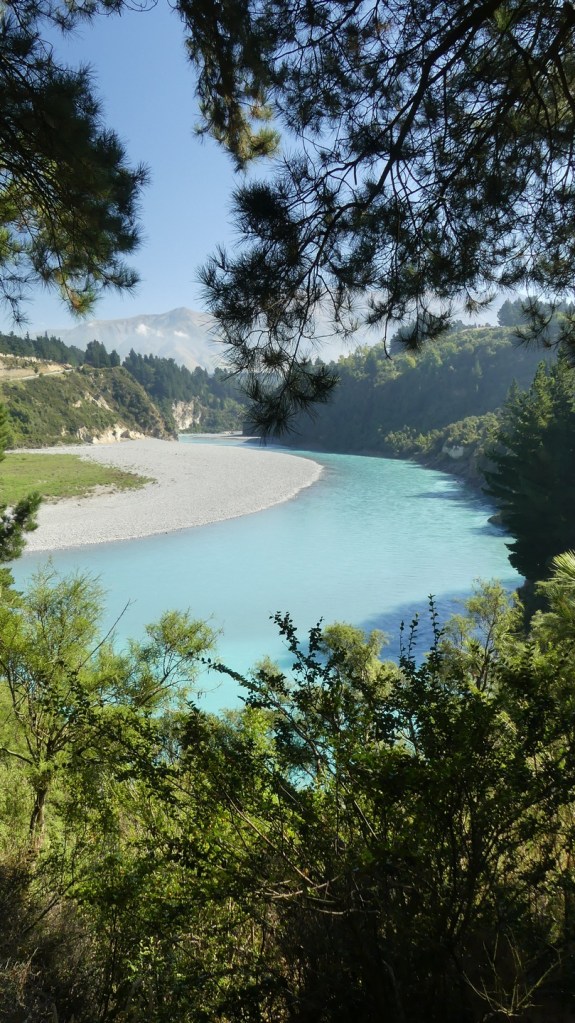
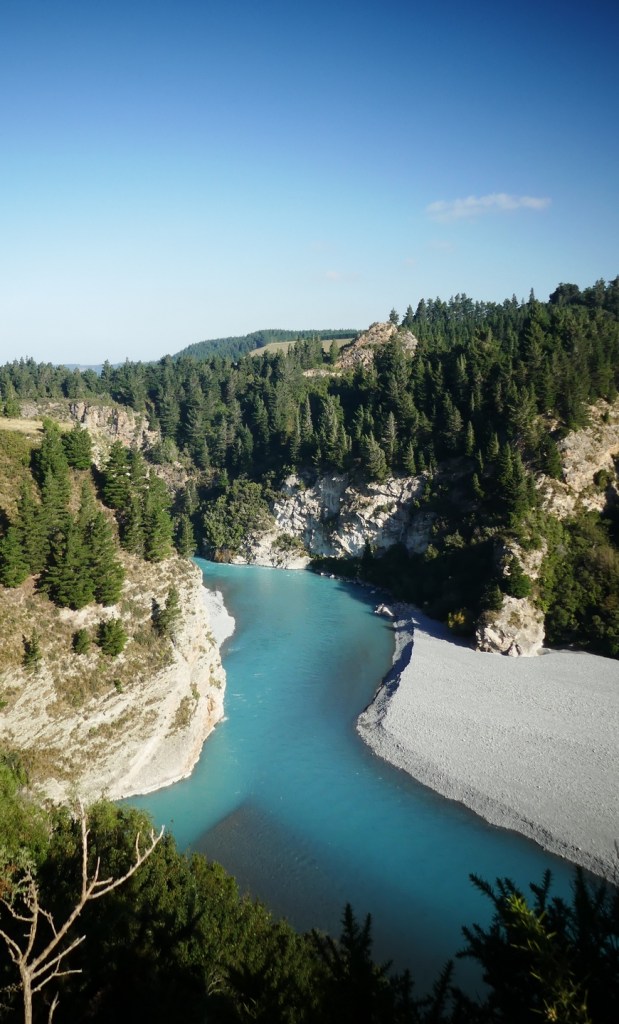
It is a 10,2km walk (return) along the top of the Rakaia Gorge and the views are spectacular.
The Rakaia river making its way through the gorge.

We lost our good camping spot but were happy we did the walk under blue skies as the next day it was drizling again…

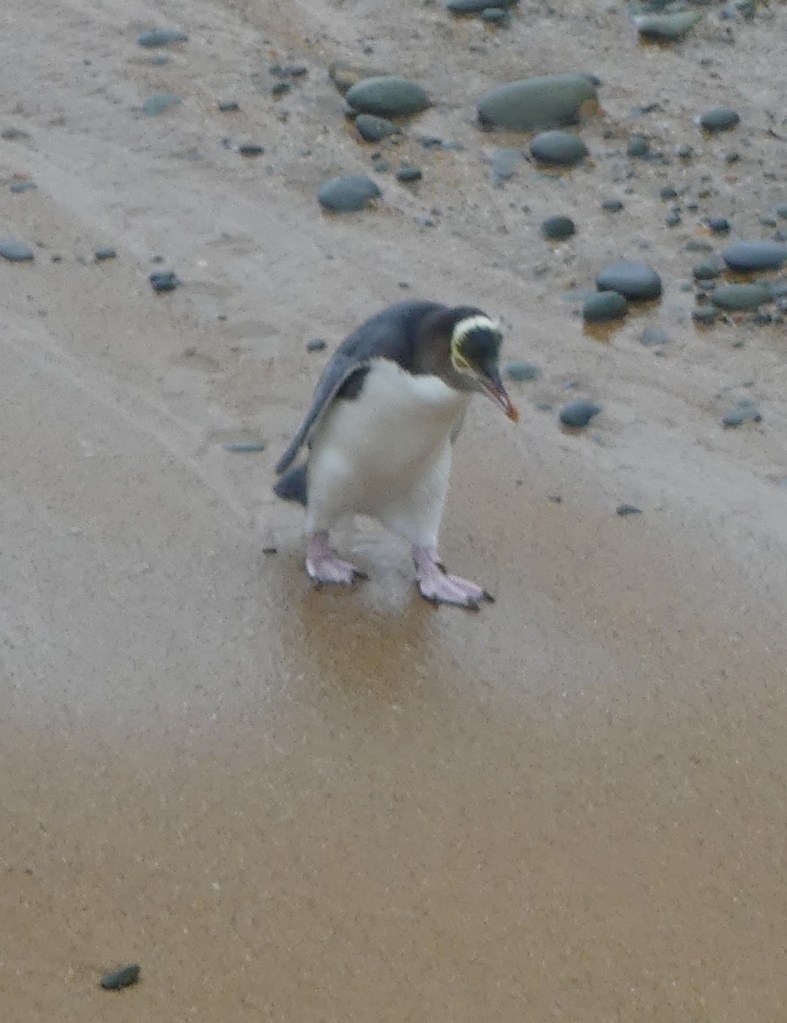
Because we did not see any penguins nor an albatross in the Otago Peninsula (Dunedin) we decided to drive along the coast to Oamaru because the Rough Guide said this is a unique place to see the Yellow Eyed Penguin and the blue penguin since there is a colony within walking distance from the town centre!
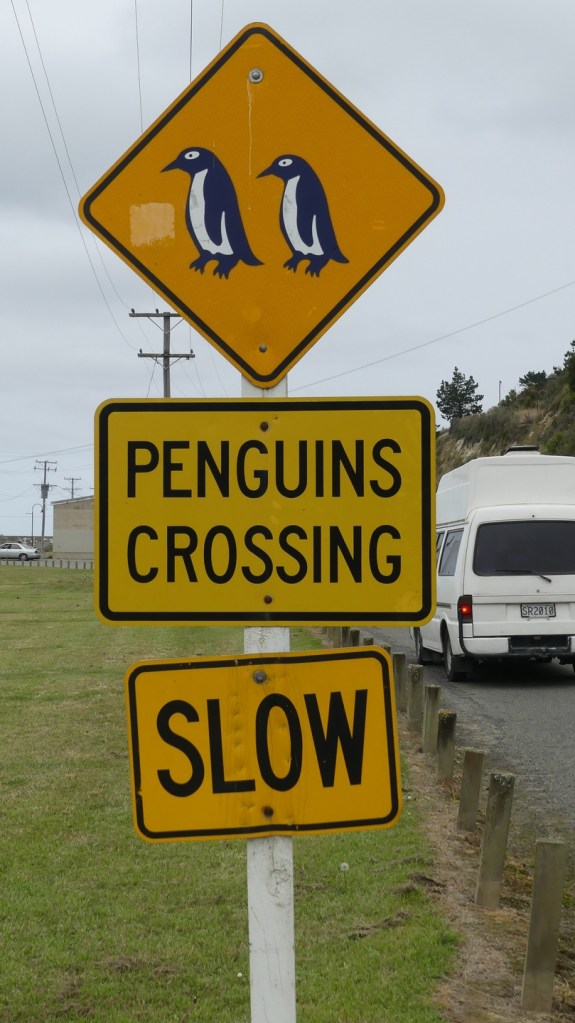
Would they really cross the street…
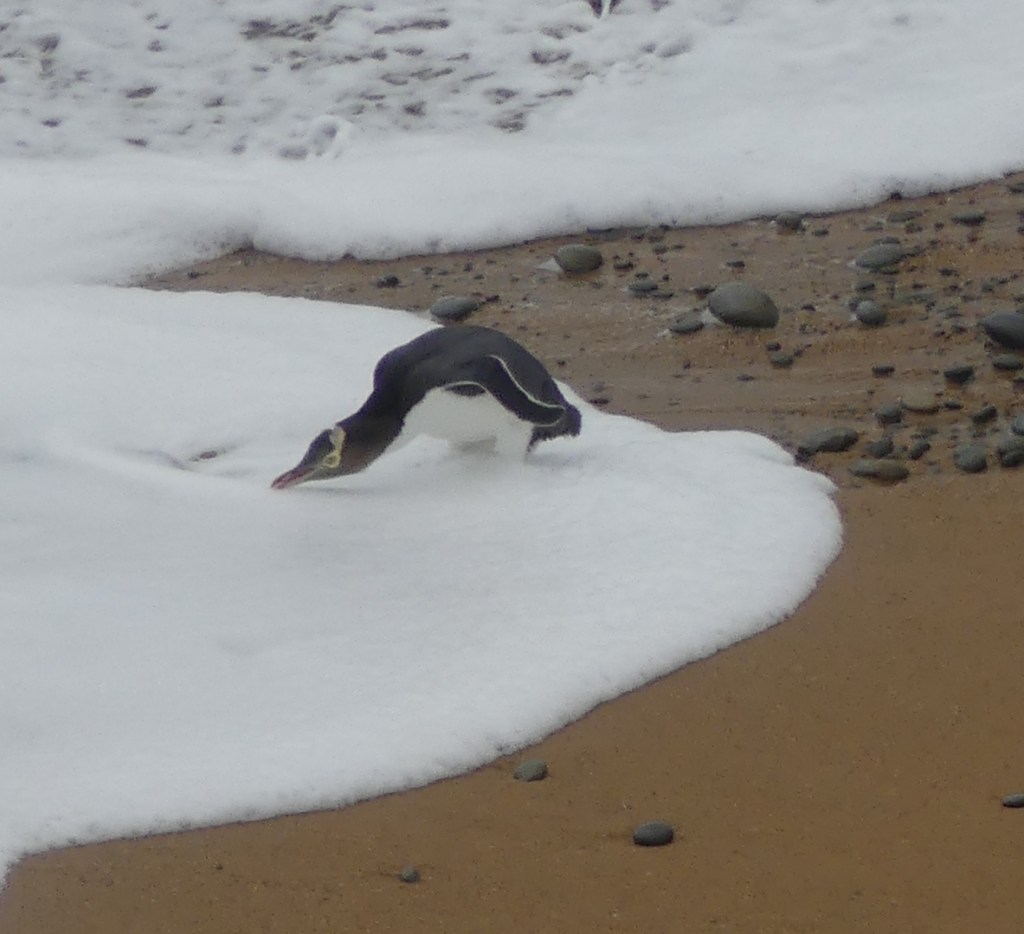
The yellow-eyed penguin or hoiho (Maori) is native to NZ.They are endangered and considered one of the world rarest penguin species.Their estimated population is only 4000.
You can only spot them early in the morning when they leave their burrow to go fishing (not a good time for us 🙂 ) or in the late afternoon, in this case 5.30PM when they return from a day fishing. NZ is very protective of the penguin and you cannot go on the beach or near at certain hours of the day so they do not get frightened and return back to sea.

We then decided to go see the blue penguin but we were informed that they only show up around 7PM, almost dark…We were at the rendez-vous a little after 7PM together with a lot of other penguin enthousiastics. We waited and waited, Stefan got a blanket, it was cold and windy, started to drizzle but we persevered and around 8PM a whole bunch came tumbling with a wave on the beach 🙂 Really funny how they then walk up the hill to their burrows. Unfortunately because it was already dark and you can not use a flash and they are far away I did not get any good enough picture…The blue penguin (Korora) is the smallest of the penguins. Cold and wet we returned back to Burnie, happy we did at least see the penguins!!

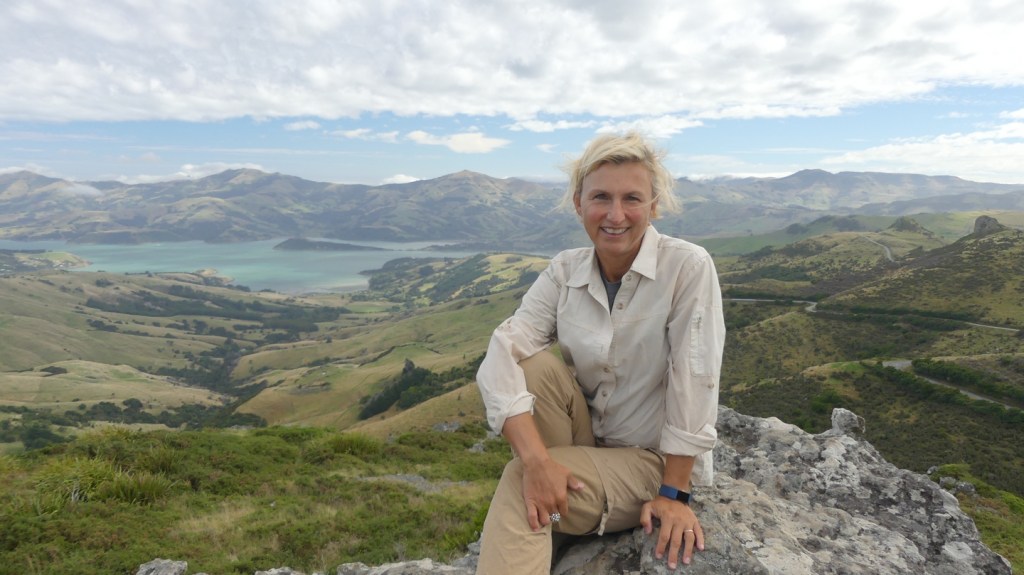
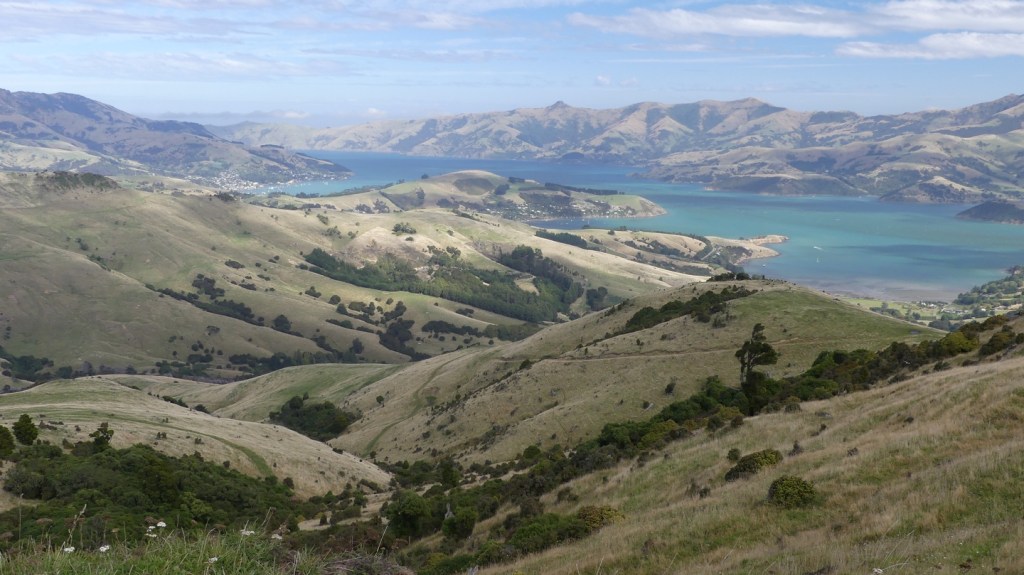
Our drive to Chrischurch was with continuous beautiful scenery and very variabel weather. Summer was over, leaves were turning to yellow and orangy colours and a lot already falling. We camp at Lyttleton harbour and the next day we decide to drive to Akaroa along a scenic route, Summit Road which traces the 600m high Akaroa crater rim. We stopped many times to take pictures and walked 30min to a viewpoint, all just in time to see the clouds roll in.
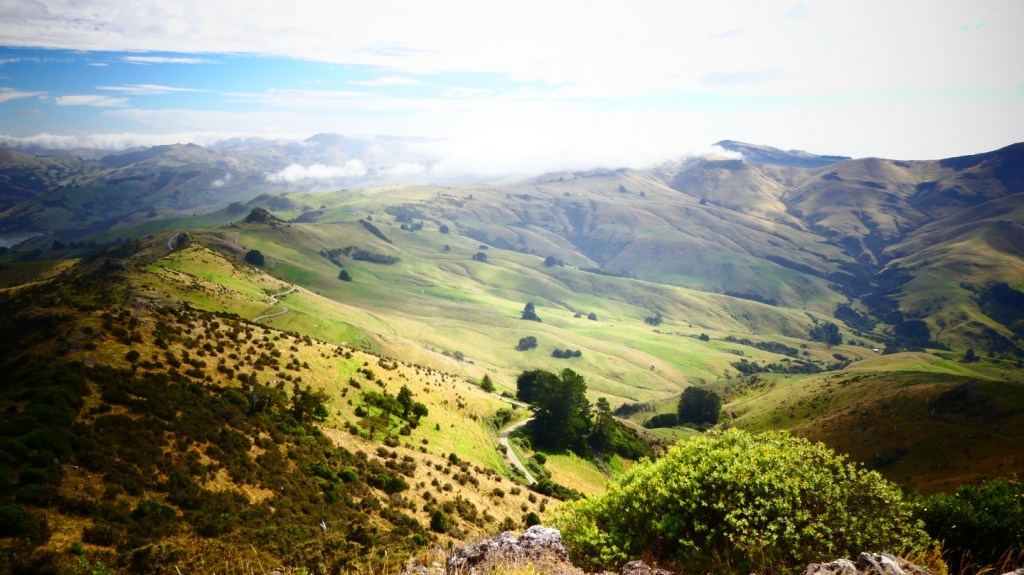
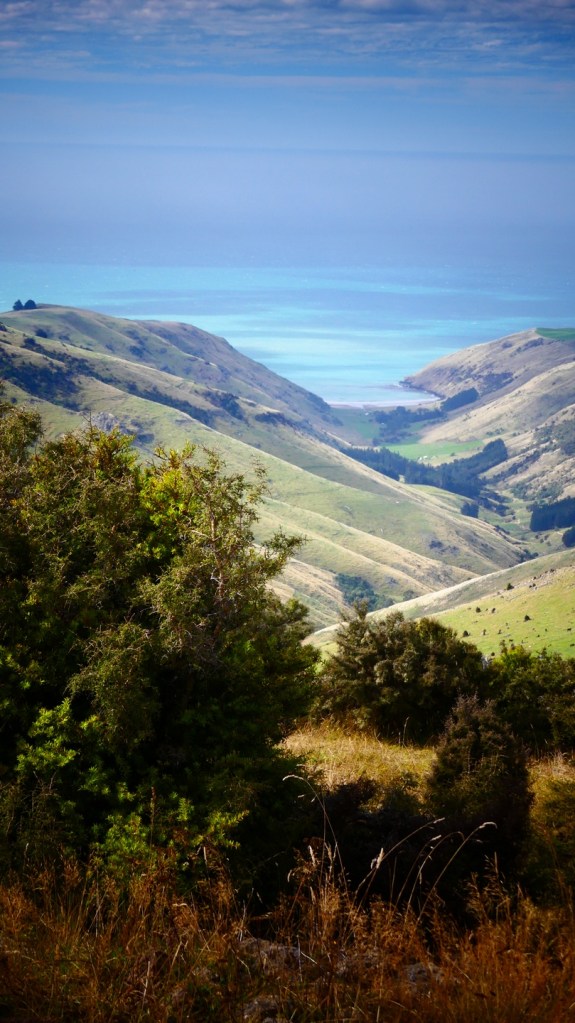
Akaroa is a little town with french roots. The first settlers came from France and a lot of the street names are still in french. It is a popular KIWI holiday destination.
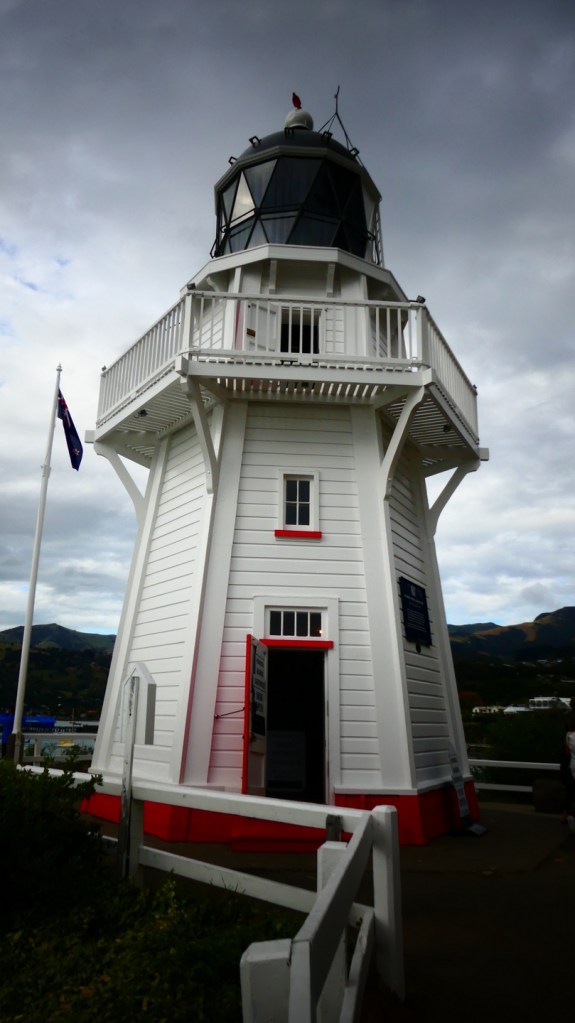
The Akaroa Lighthouse Preservation Society moved the lighthouse from the Akaroa heads close to the town centre in 1980. It was built in 1879 and one of the few wooden lighthouses remaining.We made it back to the town centre before the downpour.

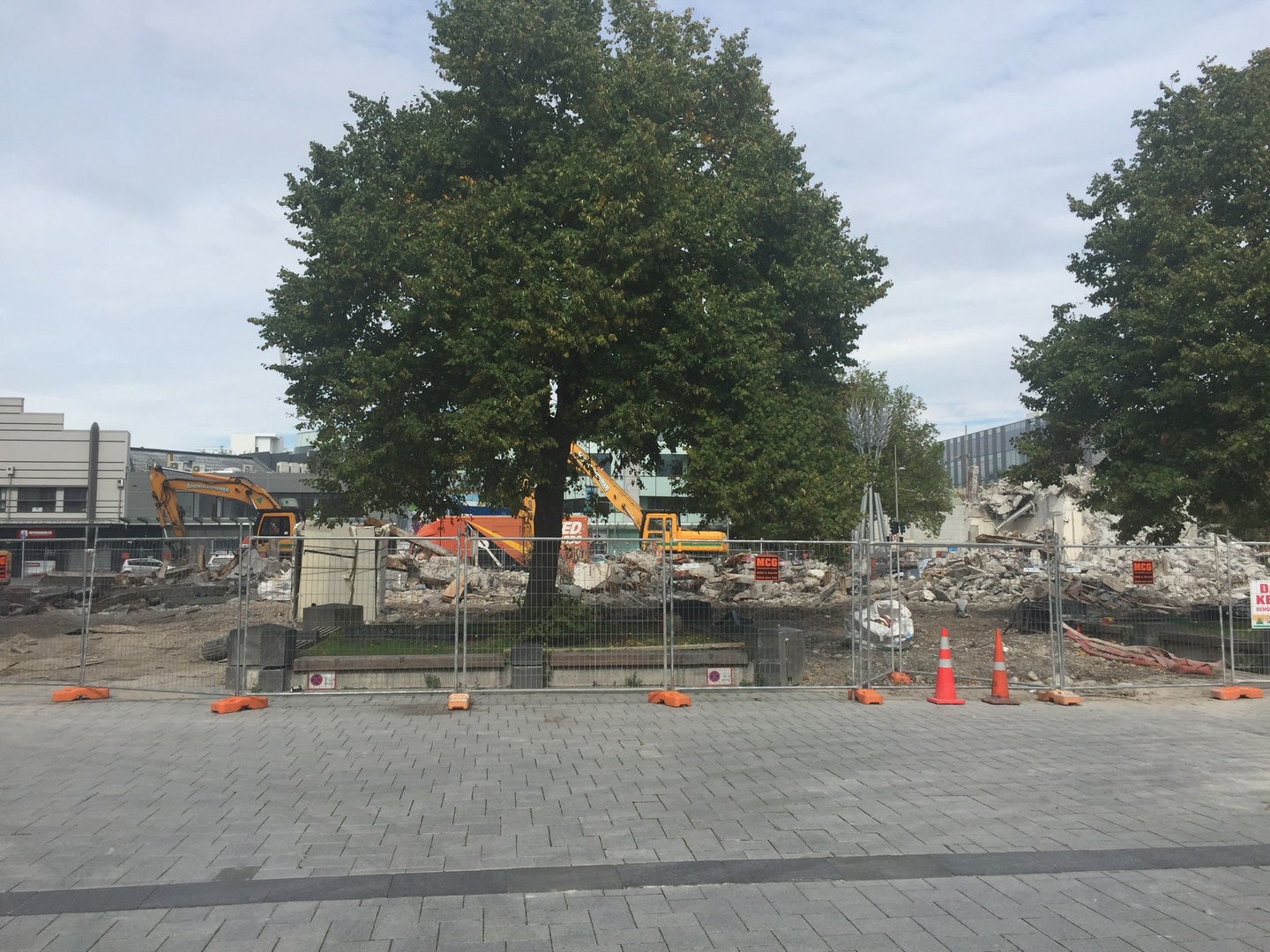
Arriving in Christchurch was a surprise. We could not believe the destruction still visible from the earthquake that hit the city in February 2011! 6 years later and still so many buildings waiting to be torn down, rubble and cranes everywhere. Stefan felt sad seeing the city like this while I could sense a dynamism in the newly created parts of the city. We did not stay very long because it was already April 3rd and we had to be in Auckland by April 8th to show Burnie to a potential buyer.

Earthquakes occur very frequently in NZ because it is situated in the collision zone of two plates, the Indo-Australian and the Pacific tectonic plates. About 14000 earthquakes occur in and around the country each year and about 150 to 200 are big enough to be felt. We did not feel once the earth rumble.
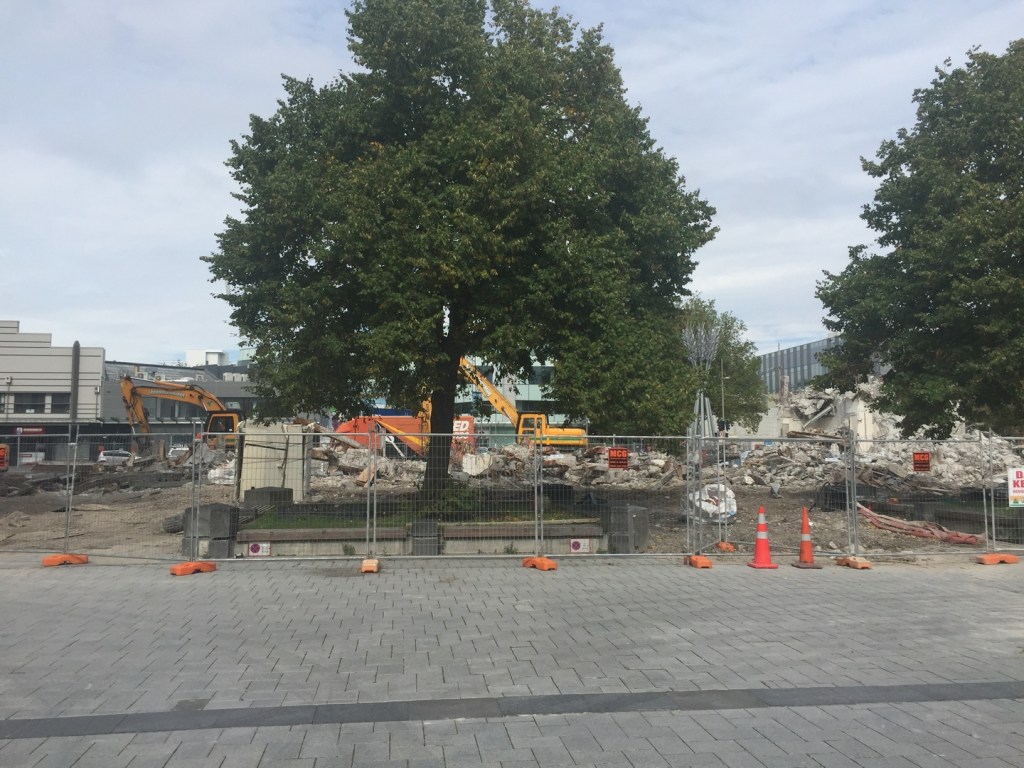
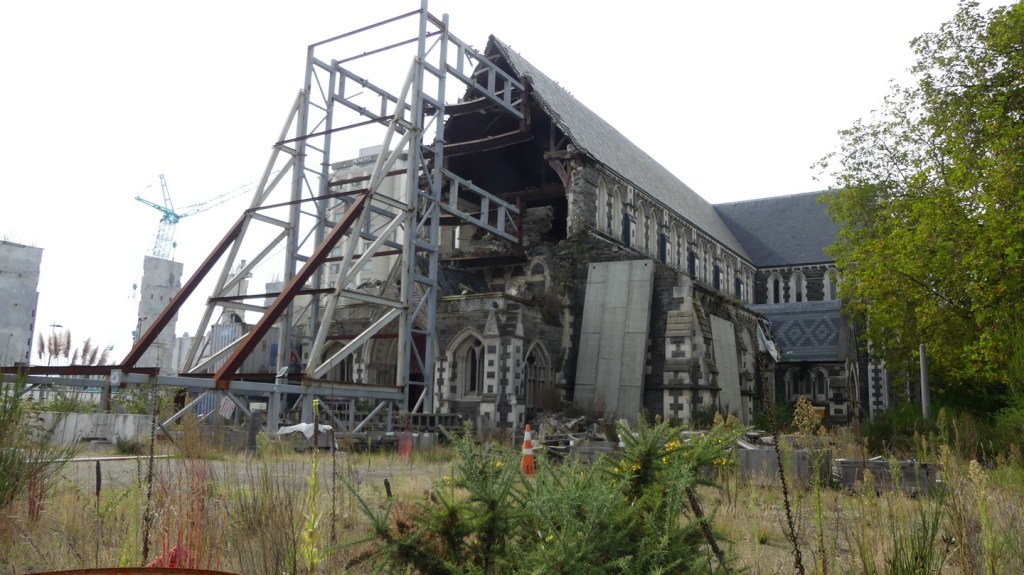
The 2011 Christchurch earthquake registered 6.3 on the Richter scale and was centered 10KM of the centre of Christchurch. 70% of the CBD (Central Business District) buildings have to come down.
The Christchurch cathedral was severely damaged and the Anglican church decided to demolish the building and build a new one but this led to many protests and legal action from various groups. This litigation is still going on and so the church still stands…the tower was destructed in 2012.
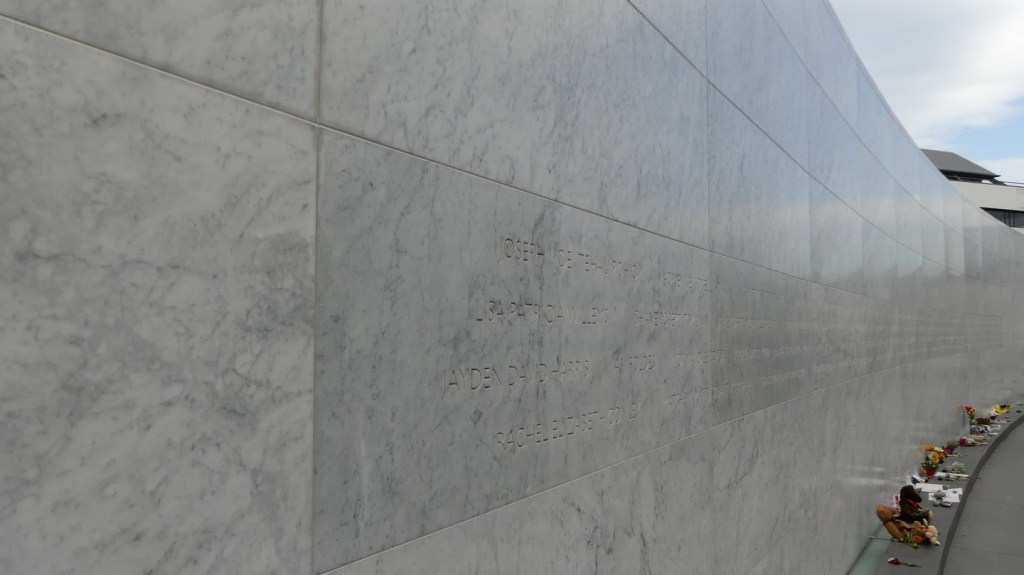
The Canterbury Earthquake natiional memorial was unveiled on February 22, 2017, just before we visited. 6 years after the destruction…185 people of more than 20 countries died.
The new Christchurch, which is being marketed as “greener, more compact, more accessible and safer”, will cost in the region of NZ$40bn – almost 20% of New Zealand’s annual GDP.
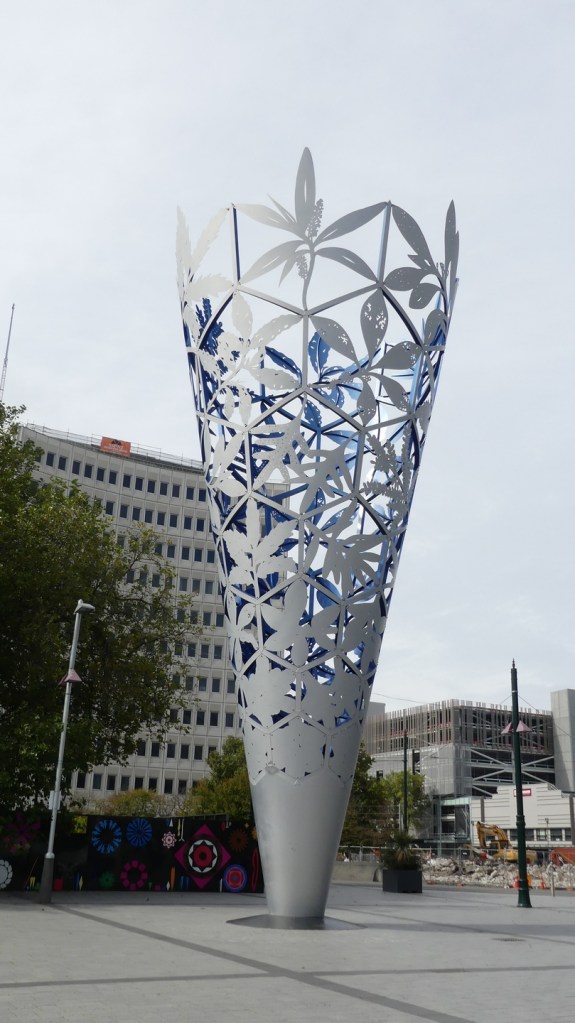
The Chalice still stands! It was built in 2000 and survived the 2011 earthquake.It is designed by New Zealand artist Neil Dawson, and is made up of forty-two leaf patterns featuring different native plants.
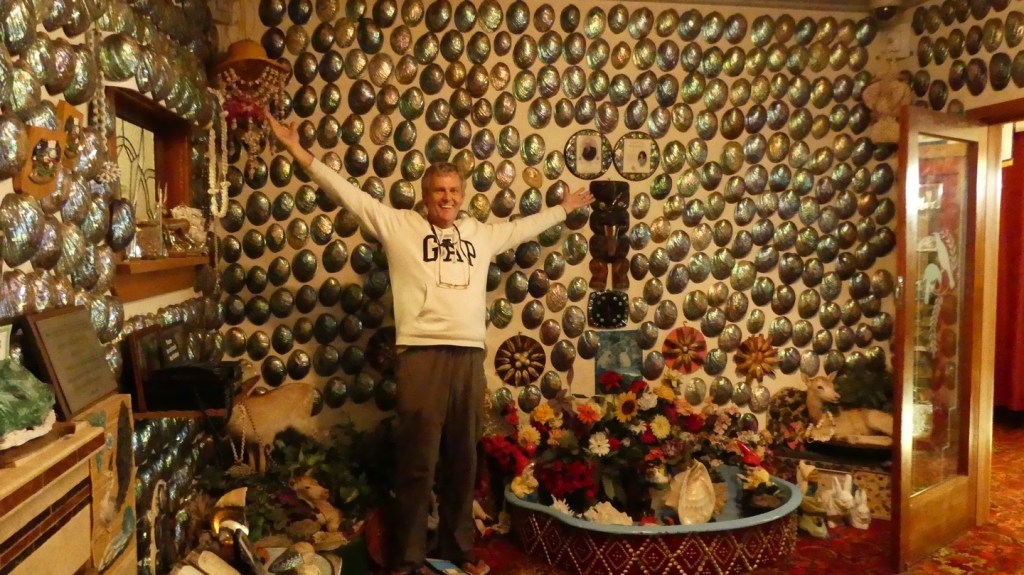
The Paua House was a tourist attraction in the southern New Zealand town of Bluff, but now on display at the Canterbury Museum in Christchurch. The house was owned by elderly couple Fred and Myrtle Flutey, who built up a massive collection of ornaments made from the iridescent shells of the paua. They continued to do this for 40years and welcomed visitors from all over the world. When they died their grandson gave their collection on loan to the Canterbury Museum who made a replica of the house. NZ kitsch at the extreme but such a nice story!

We hurried back to Auckland passing by Wellington in the pouring rain from the storm Debbie and managed to sell Burnie to a french couple travelling for 2months in NZ. We rented a little camper and drove north of Auckland to Whangarei. Visited Aislado (NZ) in Marsdens Cove Marina, An and Ivan on Vaguebond in Town Basin at Whangarei. Drove to Russel ,where we had an excellent meal at the Duke of Marlborough, and stopped in Waipoua Kaori Forest to see the largest living Kaori tree from NZ. Cyclone Cook passed by…but we arrived safely and saturated with lots of nature scenery in our heads at our friend’s house late April 14! So nice to finally have the luxury of staying in a nice house, sleeping in a bedroom, toilet and bathroom next door 🙂 !
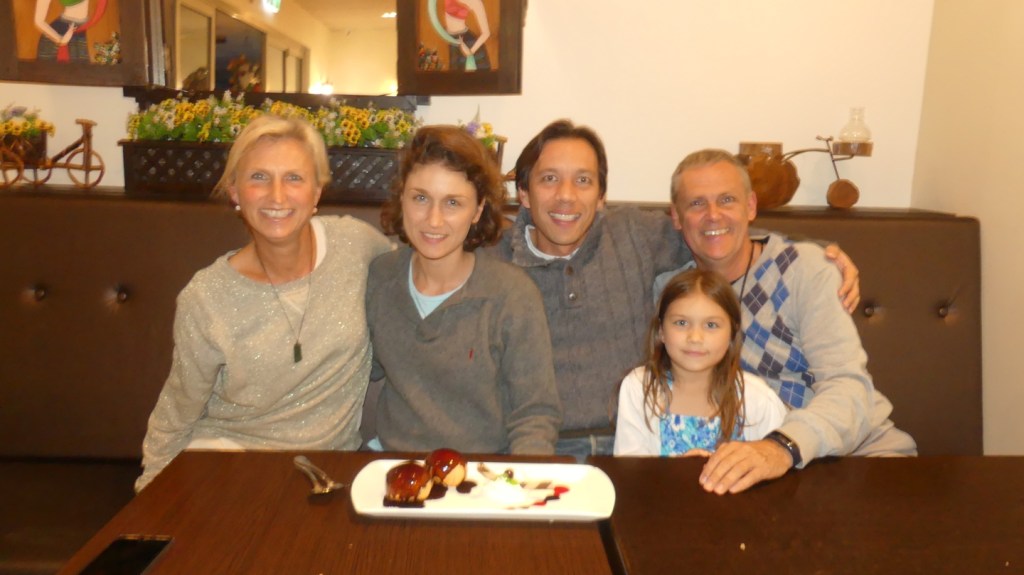
Together with Sylvia, Vaughn and Zara at a Thai restaurant on our last night of our trip in NZ.

Thank you so much Sylvia, Vaughn and Zara for your hospitality, help and friendship!  We hope someday to welcome you all in Ghent !!! 🙂

Riding Dreams

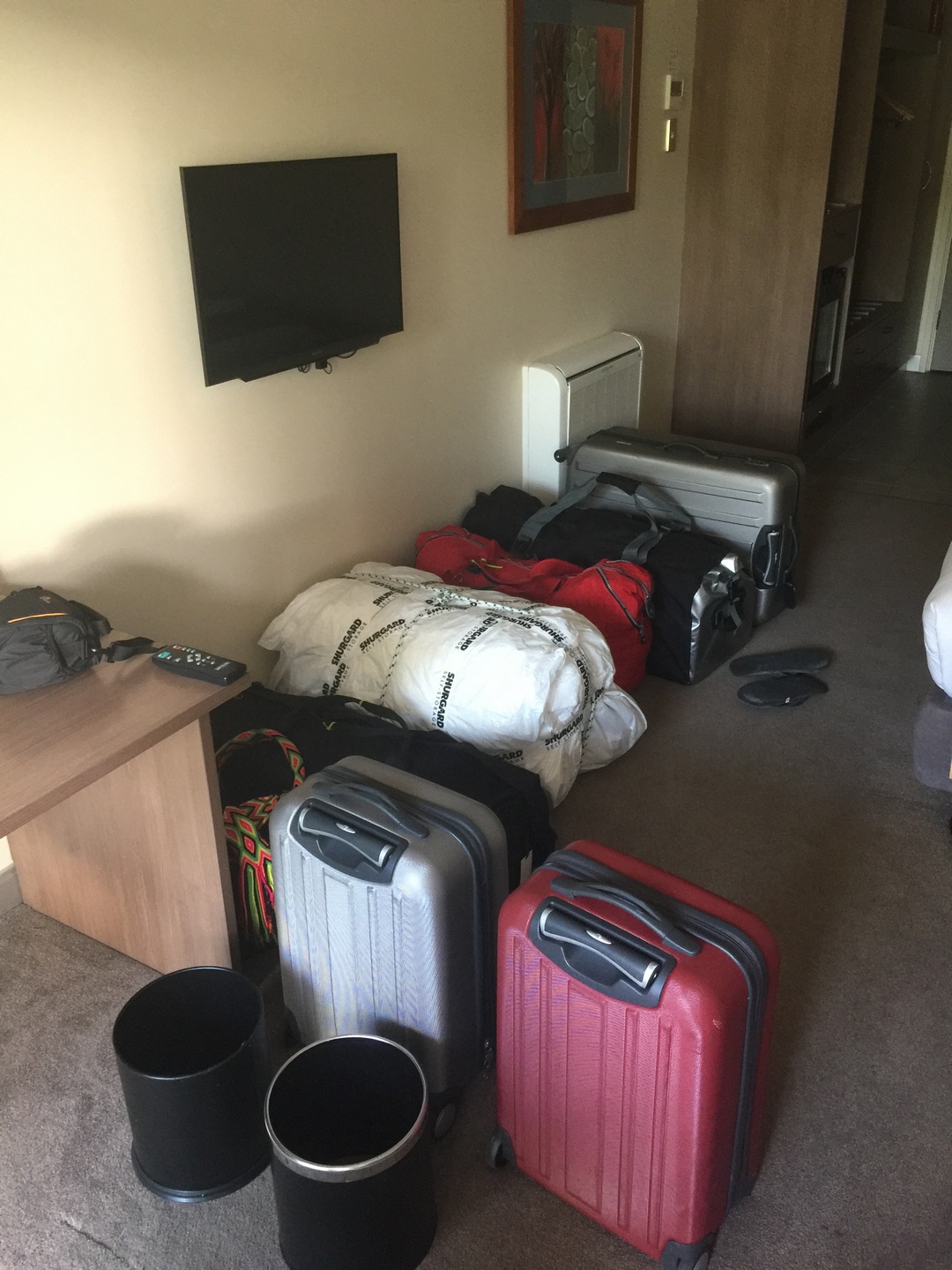
April 16th, we are in the Holiday Inn near Auckland airport since we have to be there at 7 AM the next morning for our flight to Papeete ! We have 5 bags and 2 check-in pieces ! Hopefully it will go smoothly 🙂

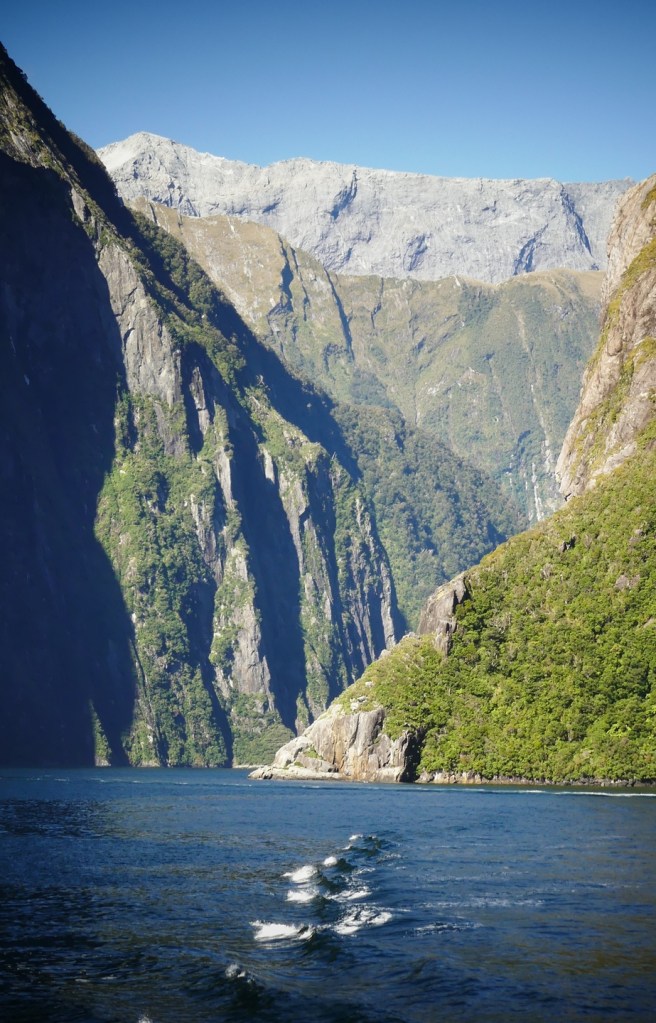
Flashback to March 19th 2017: The next day was just perfect blue skies and we could admire Milford Sound (Piopiotahi) in all its beauty.We could not have planned any better.
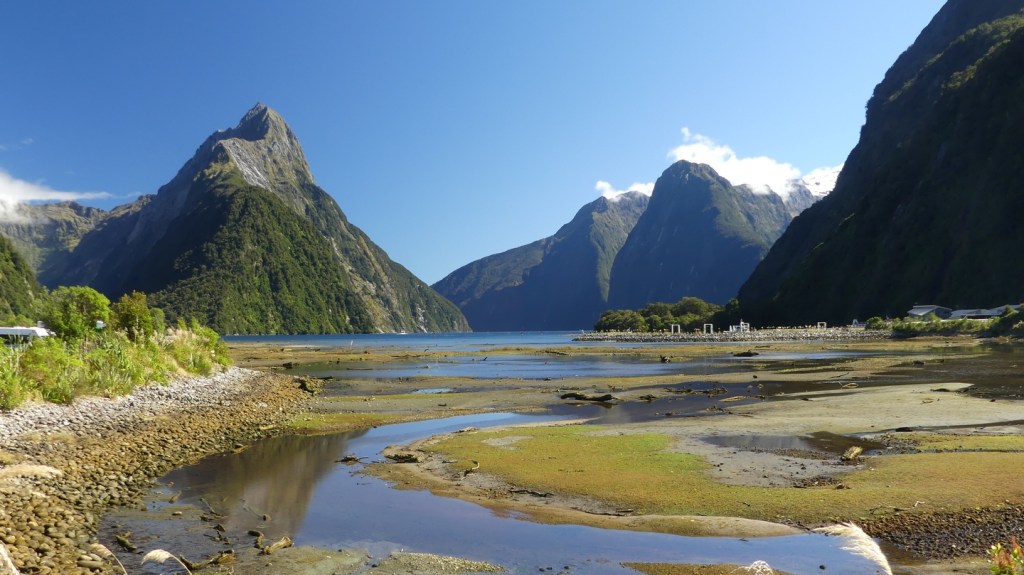
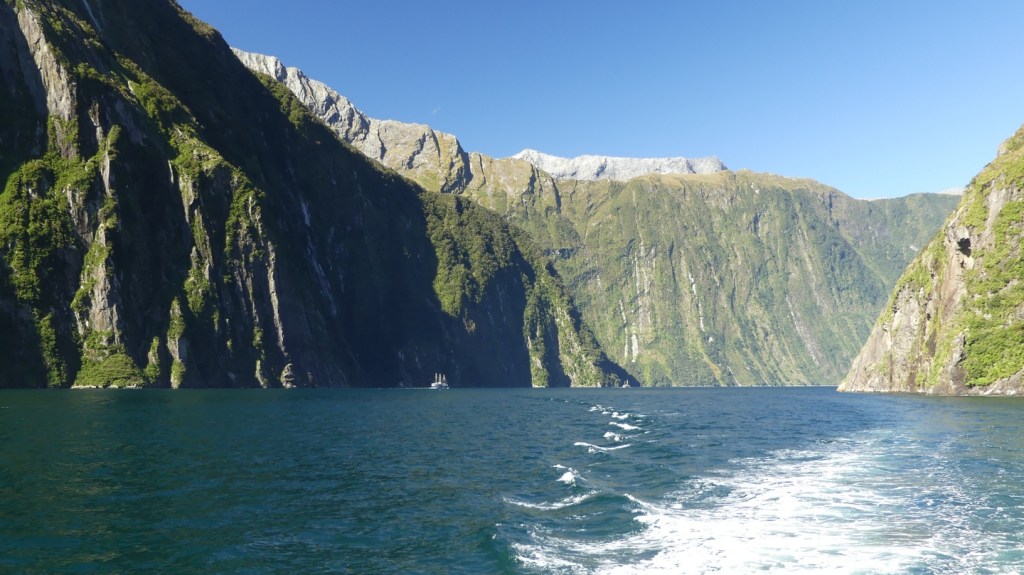
Milford Sound is part of Fiordland National Park, the largest national park from NZ. Actually Milford Sound is a glacialy formed fiord and not a sound. It is 16km long and mostly less than 1km wide. The most prominent mountain is Mitre Peak (1692m) named for its resemblance to a bishop’s mitre.
We took a 2hr boat trip into the sound and although we were somewhat disappointed (we are spoiled) it was still beautiful.
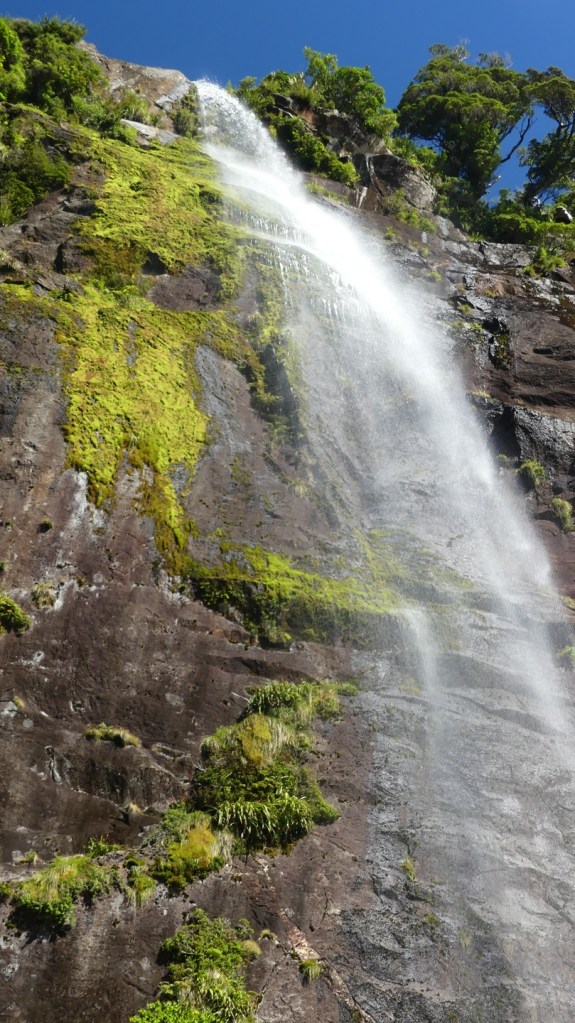
Stirling Falls thundering down.
A sealer John Grono discovered Milford Sound in 1823 and named it after his home port in South Wales, Milford Haven.
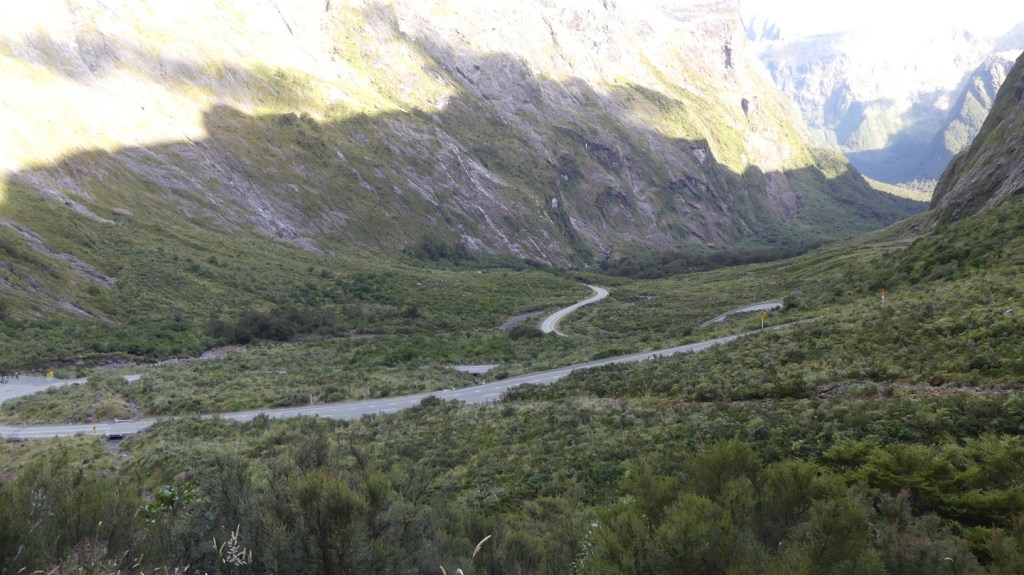
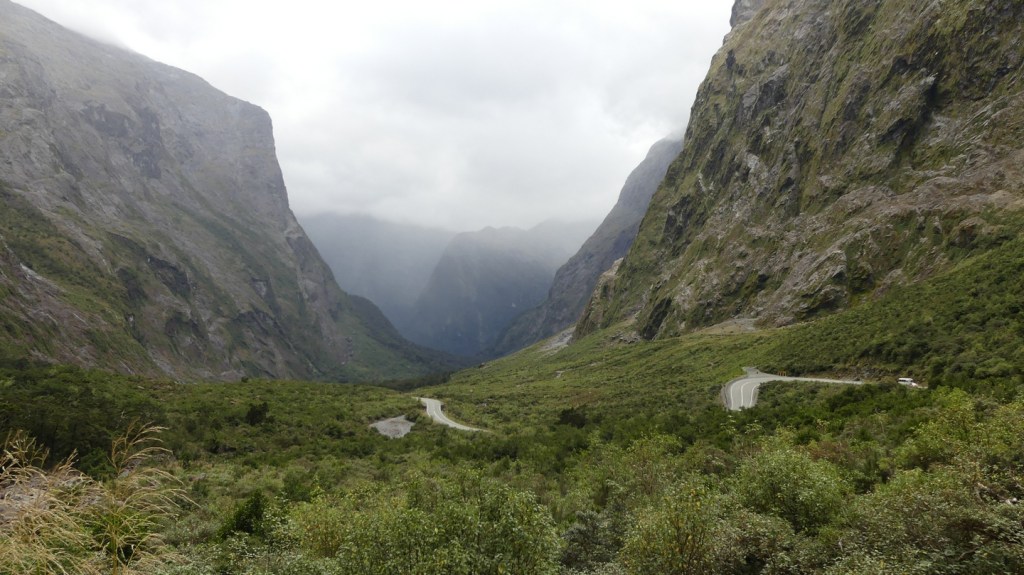
Standing at the Homer Tunnel taking pictures of the road below. Really an impressive sight!
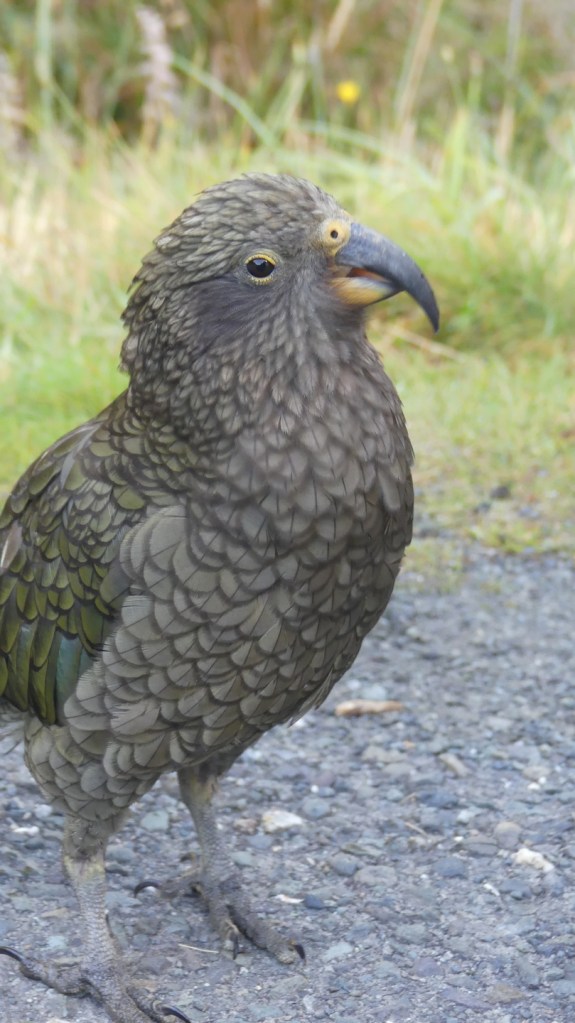
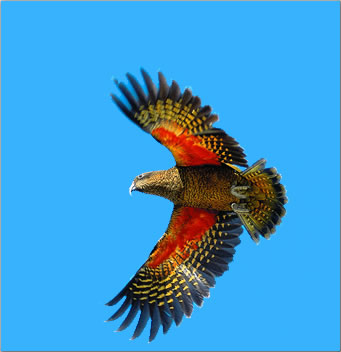
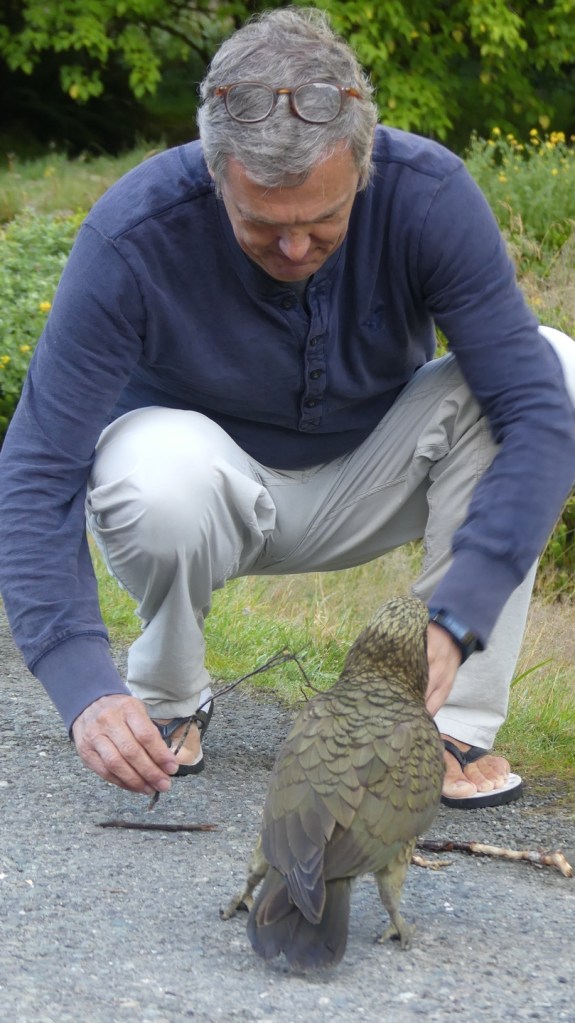
And finally we meet the Kea bird on our way back from Milford Sound ! It is the only alpine parrot and endemic to NZ. It is olive green on the outside but when he opens his wings…
I unfortunately could not take this picture but this is what the Kea looks like in flight. He is hiding all his colours under his wings.
They are not tame birds but they are very playful and inquisitive and love the interaction with tourists. Stefan finally found a good playmate 🙂
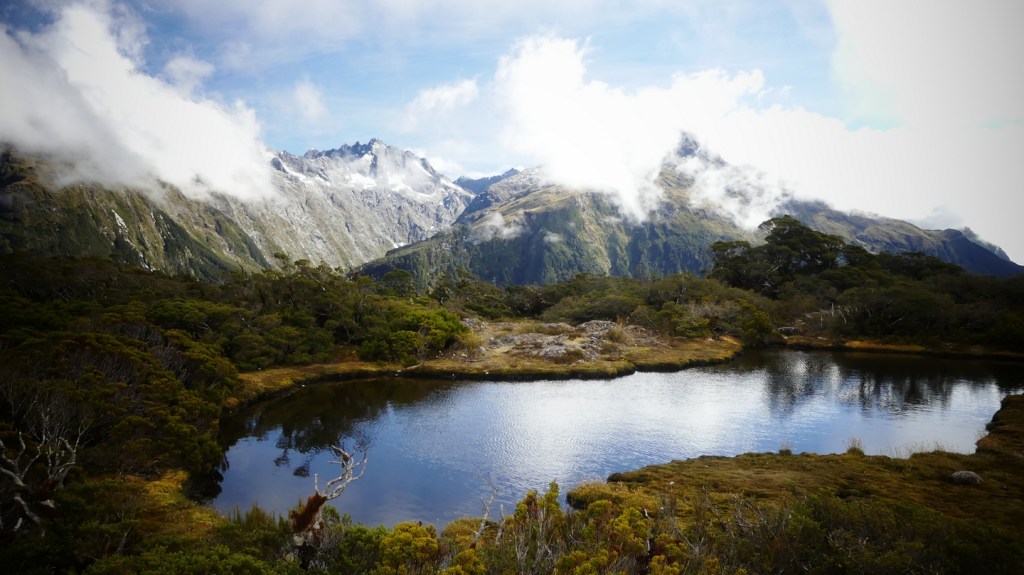
Along our way back we stopped to walk the last section of the Routeburn track. The Divide to Key Summit.
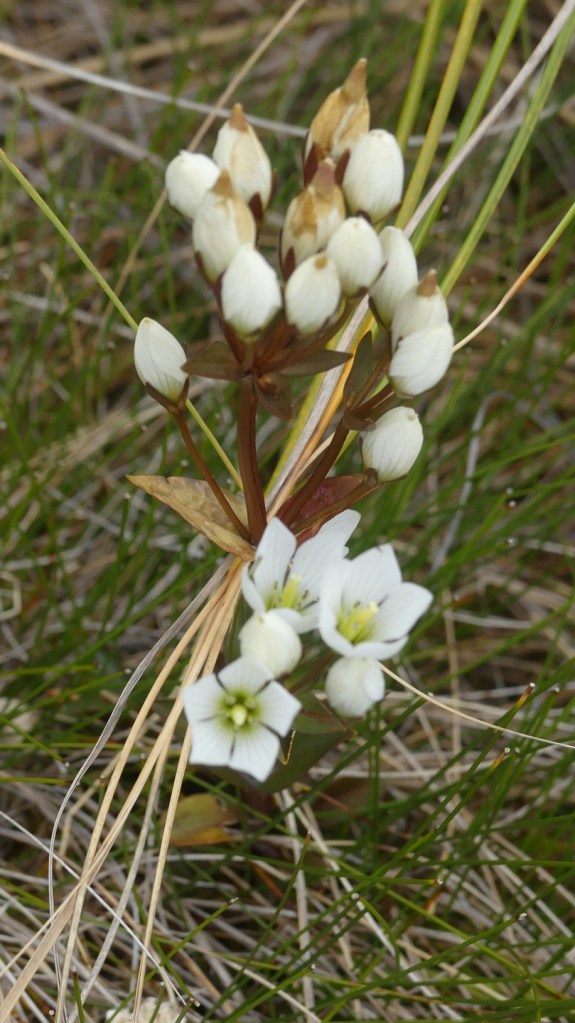
Gentiana Frigida, I thought they were always blue but apparently in NZ the white variation is common.
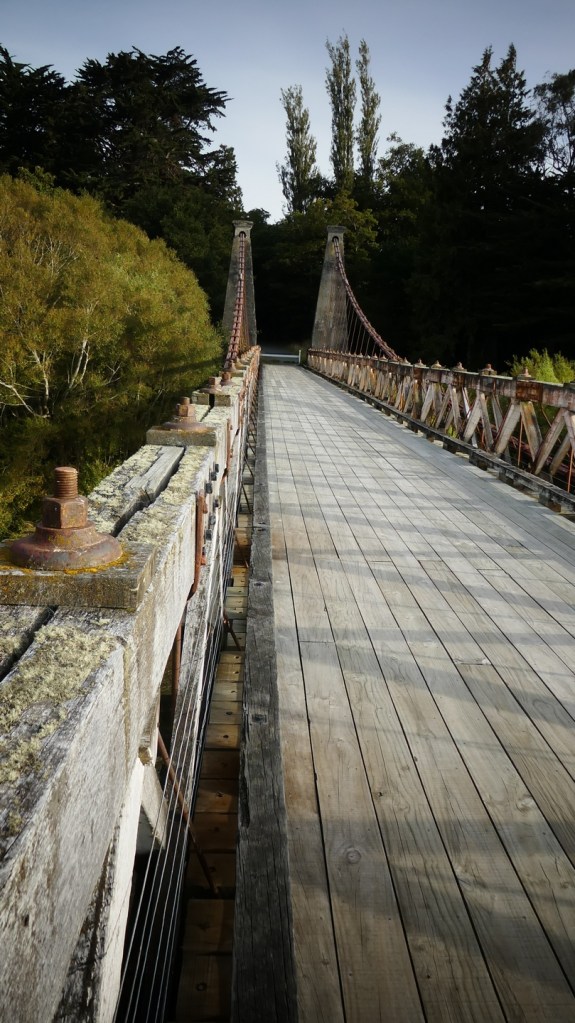
On our way to the southern tip of the South Island we made a stop at the historic Clifden suspension bridge, one of the longest in the South Island. It was built in 1899 but no longer in use.
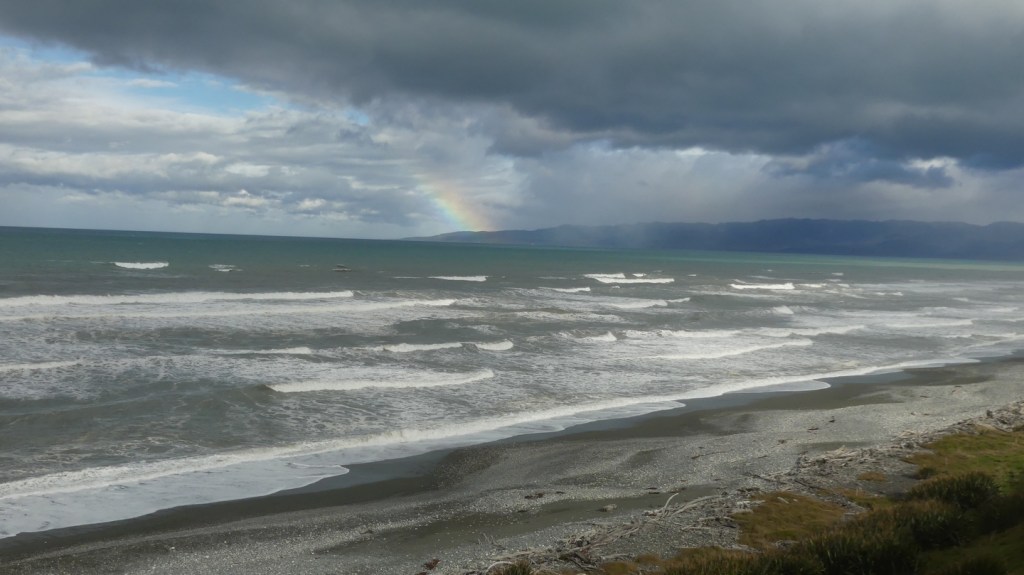
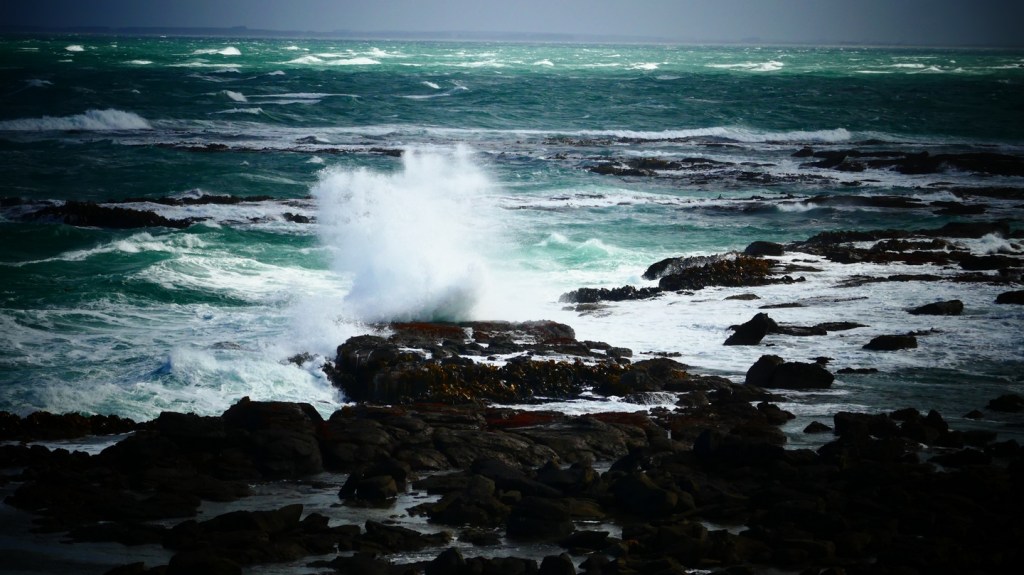
The coast is wild and beautiful. Even with the clouds and rainy weather we enjoyed getting out and watching the waves.
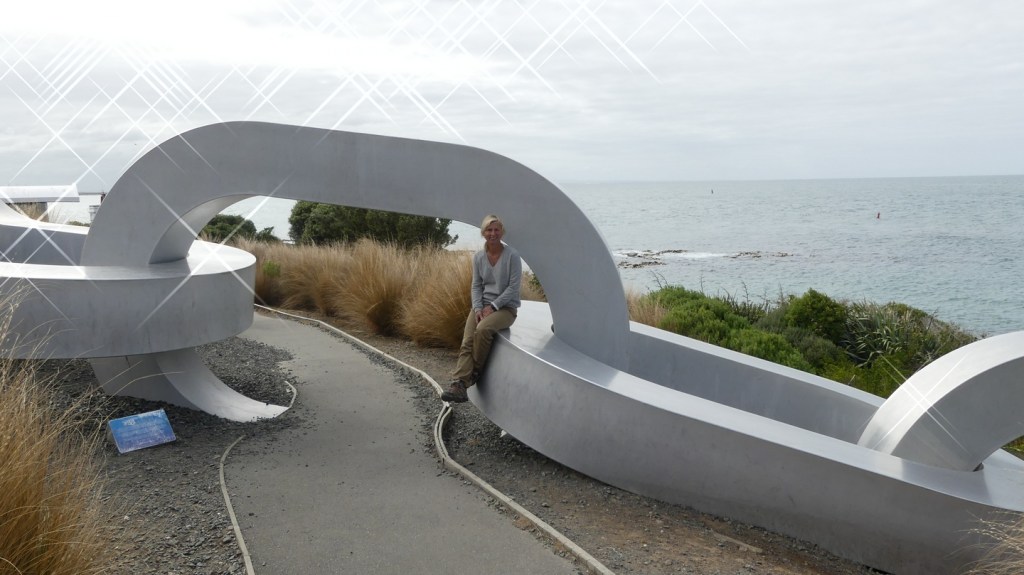
Stirling Point at Bluff, almost the most southern tip of NZ. The anchor chain sculpture disappears in the sea to symbolically connect with a near identical sculpture in Lee Bay on Stewart Island. The sculpture is from Russell Beck.
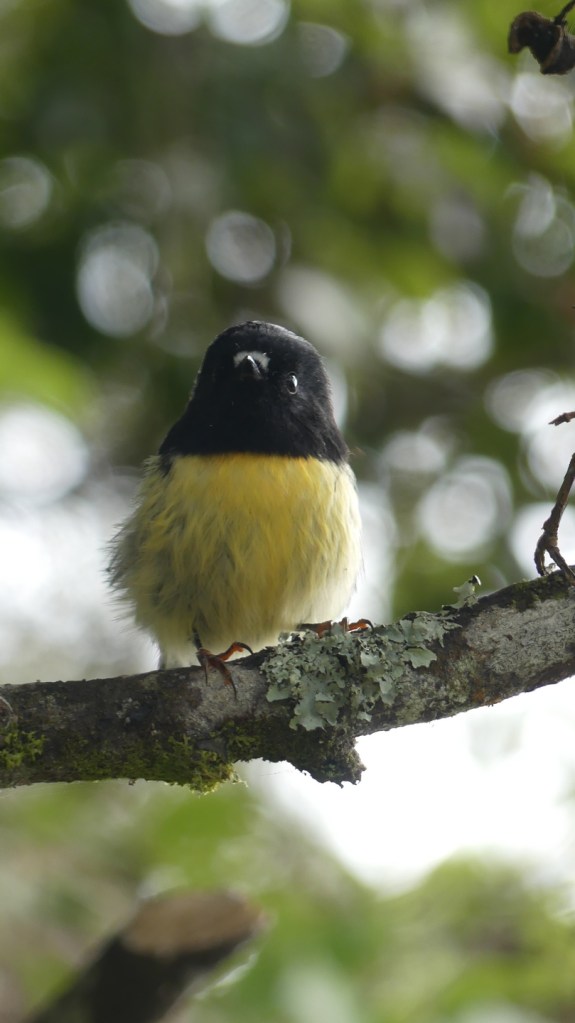
We made 2 short walks at Bluff and finally I managed to take a nice picture from the TomTit! This bird is also endemic to the islands of NZ.
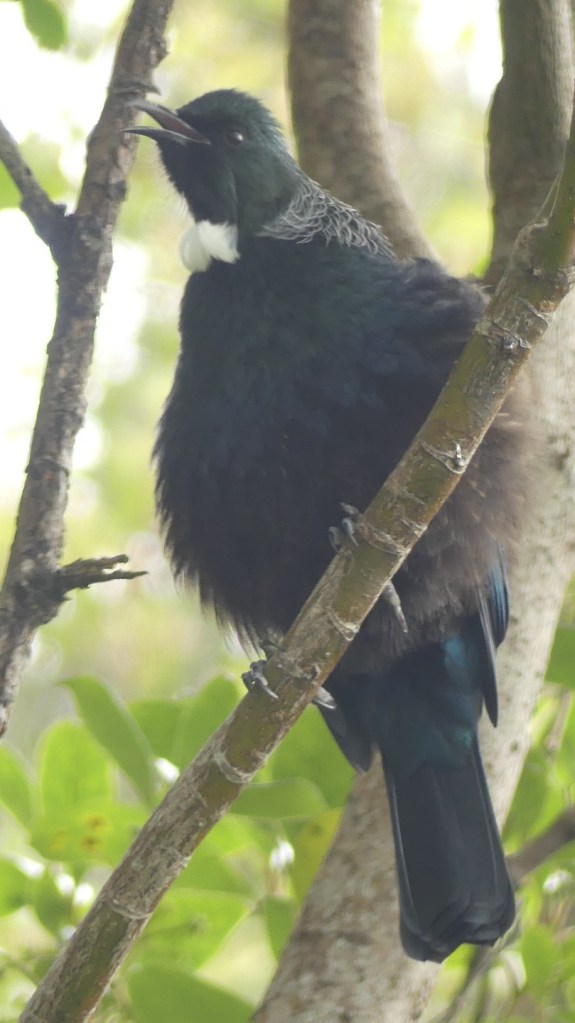
The Tui bird singing away, you hear them everywhere but they are not easy to spot. They are easy to recognise by the 2 white feathers in the front.
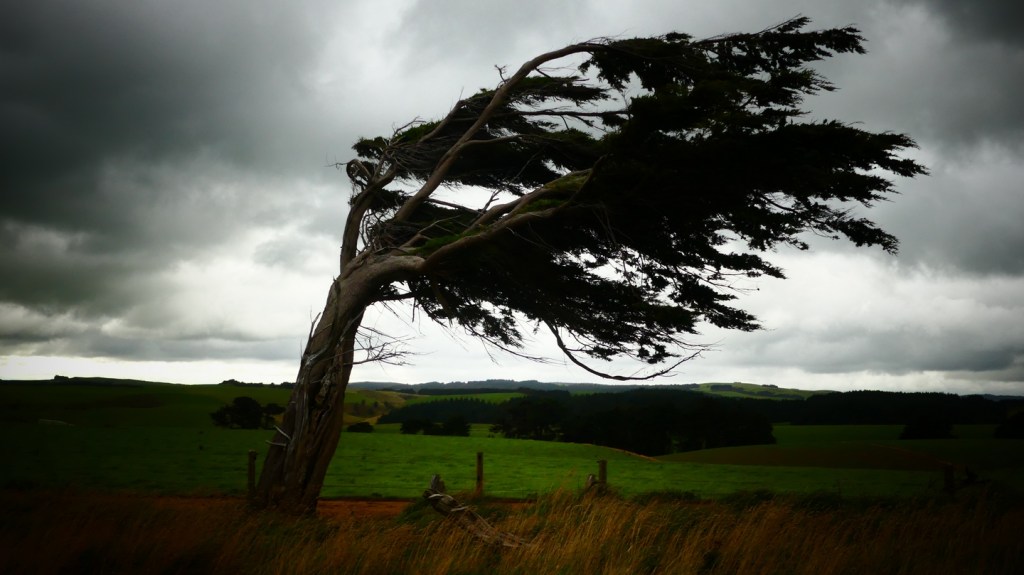
Windswept trees so typical for the Catlins Coast.
Curio Bay at the Catlins. The Catlins Coast is one of the least populated areas in NZ.
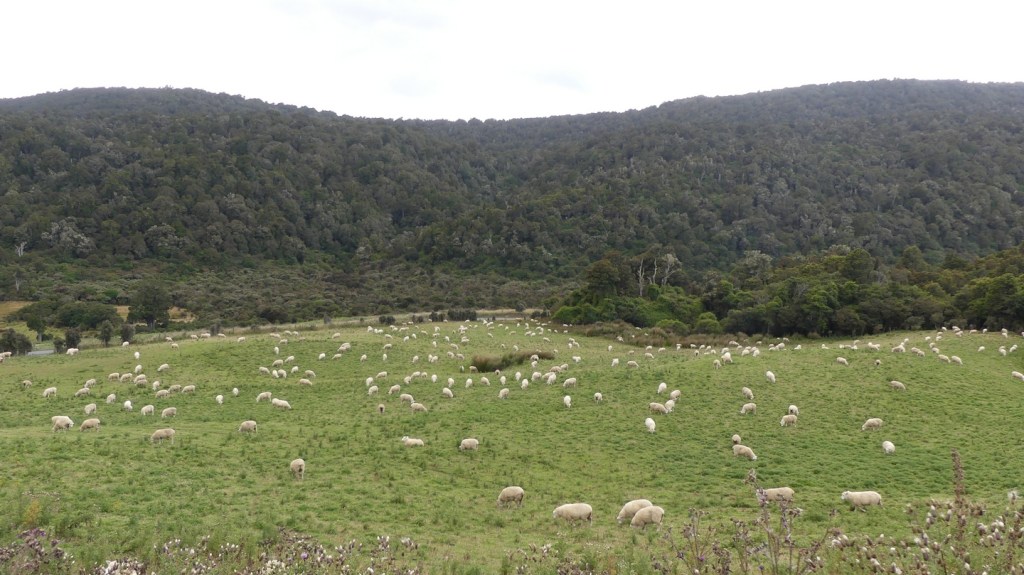
Not a lot of people but a lot of sheep. Although more farmers are now switching from sheep to cows because dairy is more profitable. In 1982 there were still 20 sheep to one NZ’er now it is only 6 sheep. We talked to one farmer who had 30.000 sheep and 1500 cows!
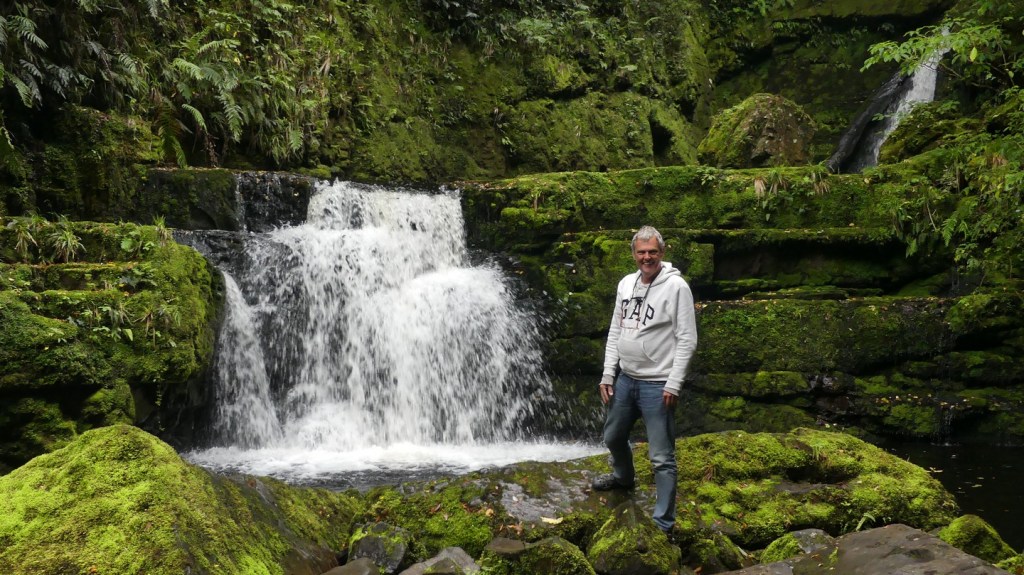
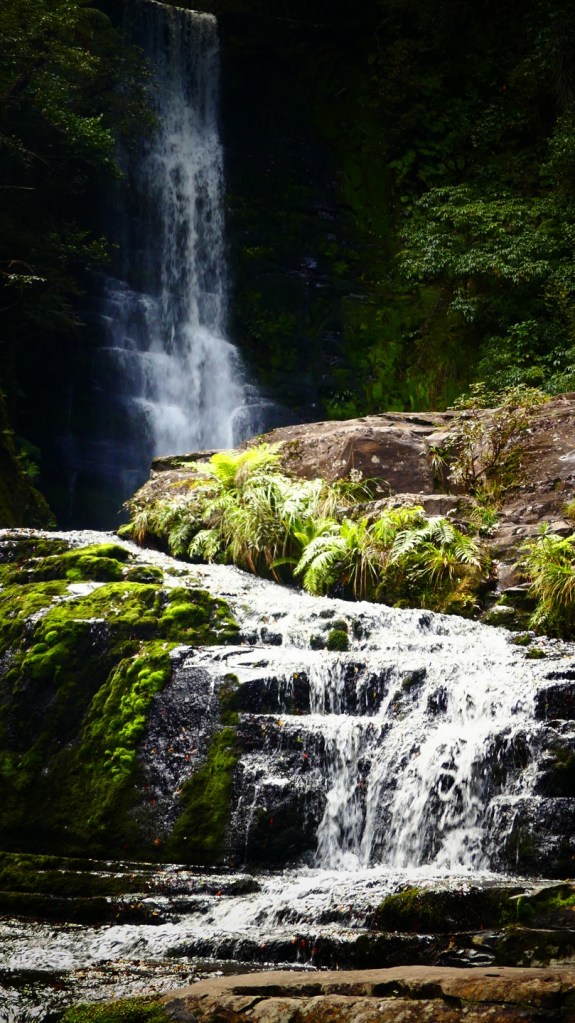
Stefan at the bottom of the McLean Falls.
The McLean Falls, 22m high. It was great to just sit back and admire…
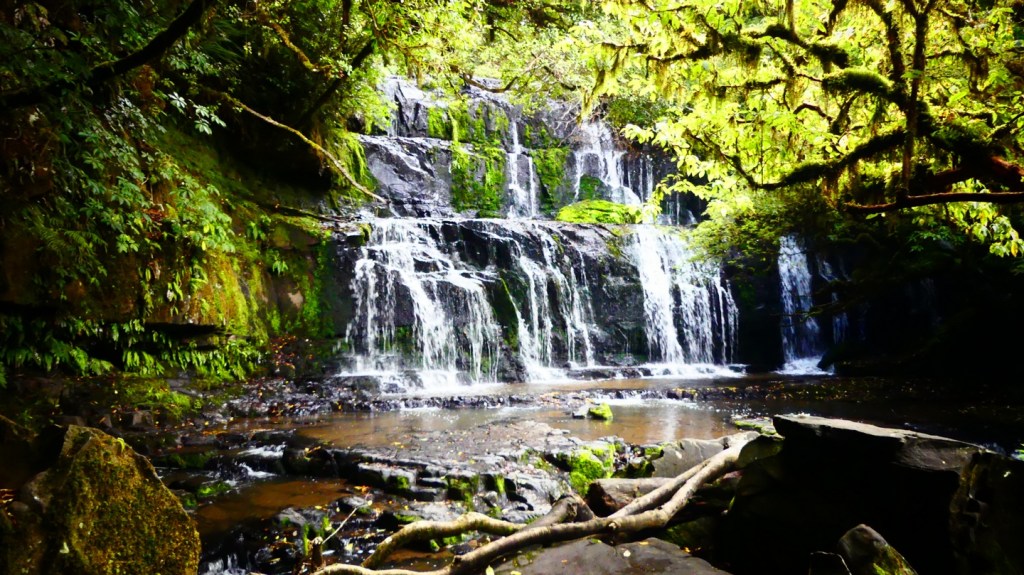
A little further down the road were the Purakaunui Falls…
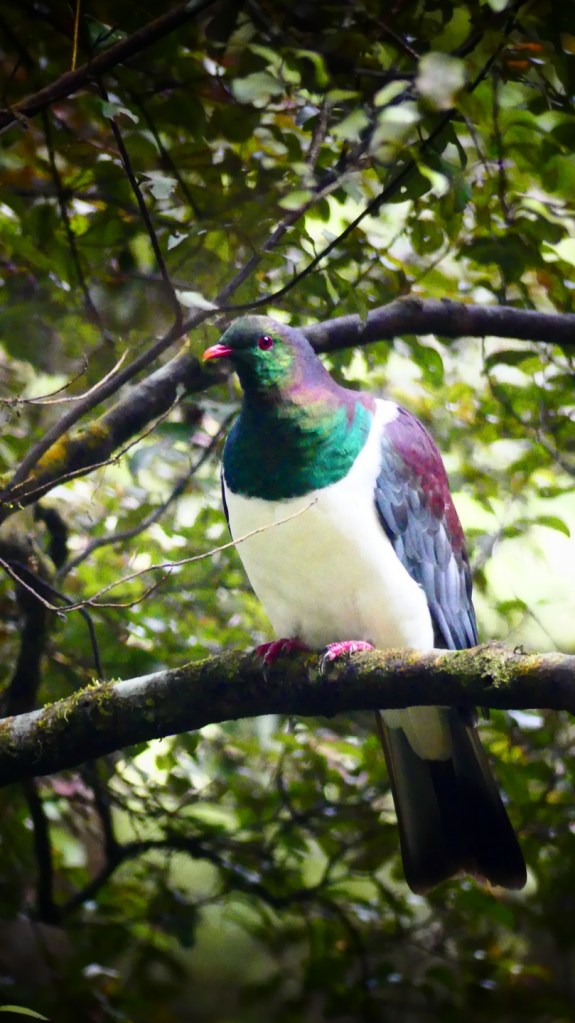
Right near the falls was this NZ woodpigeon or Kereru. Happy to have his picture taken. He chose a good spot right in the sunlight.
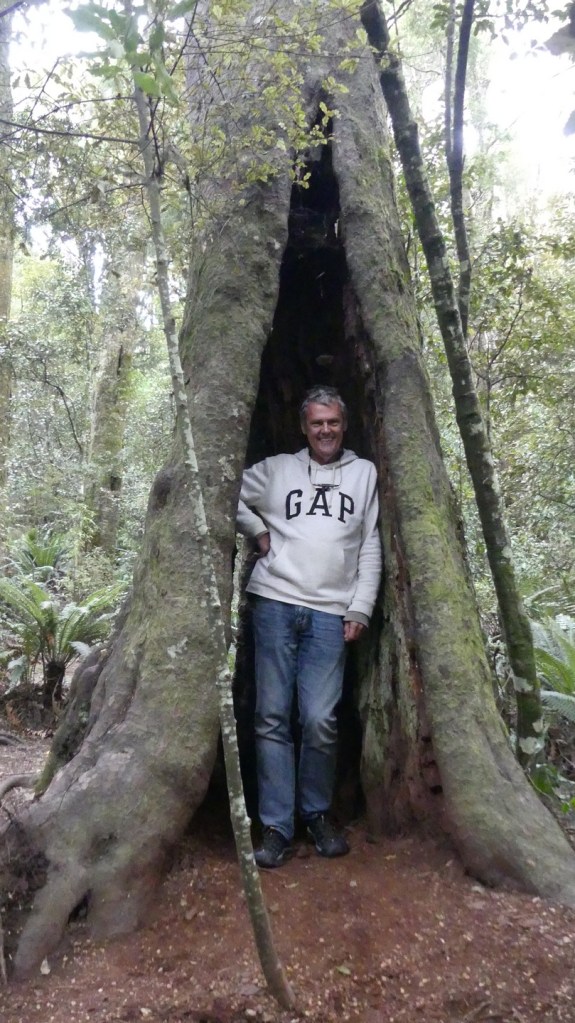
Stefan found his treehouse 🙂
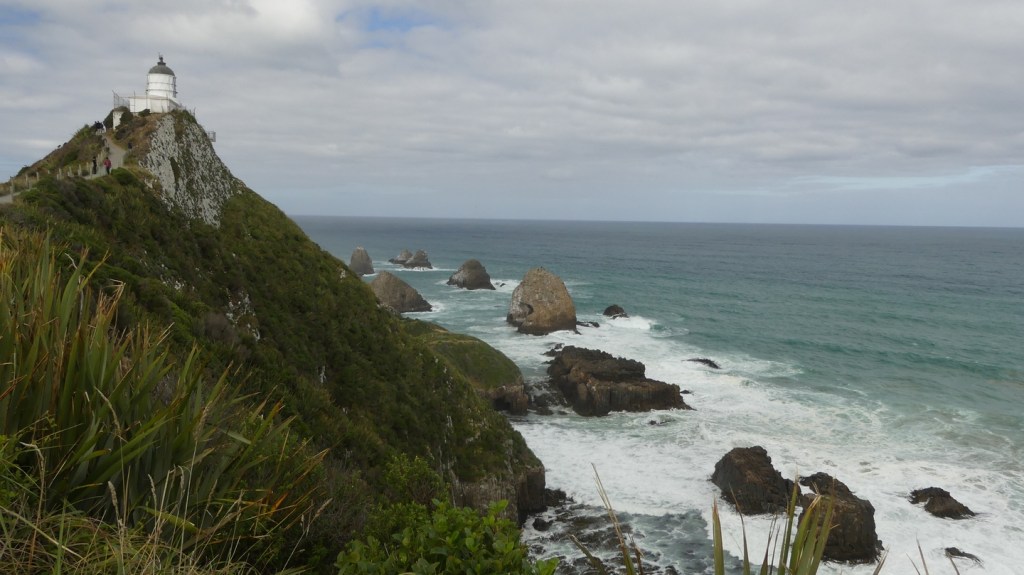
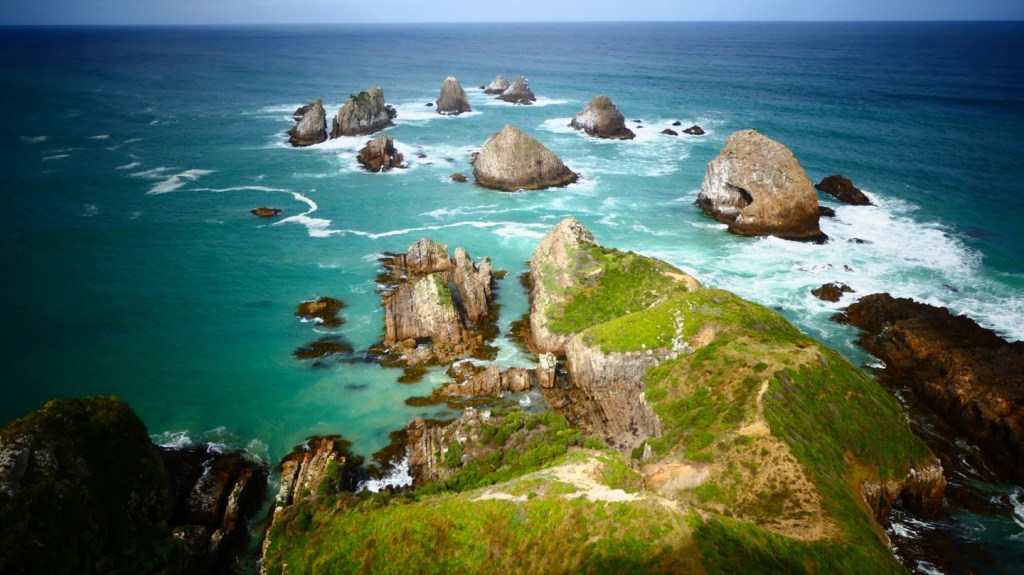
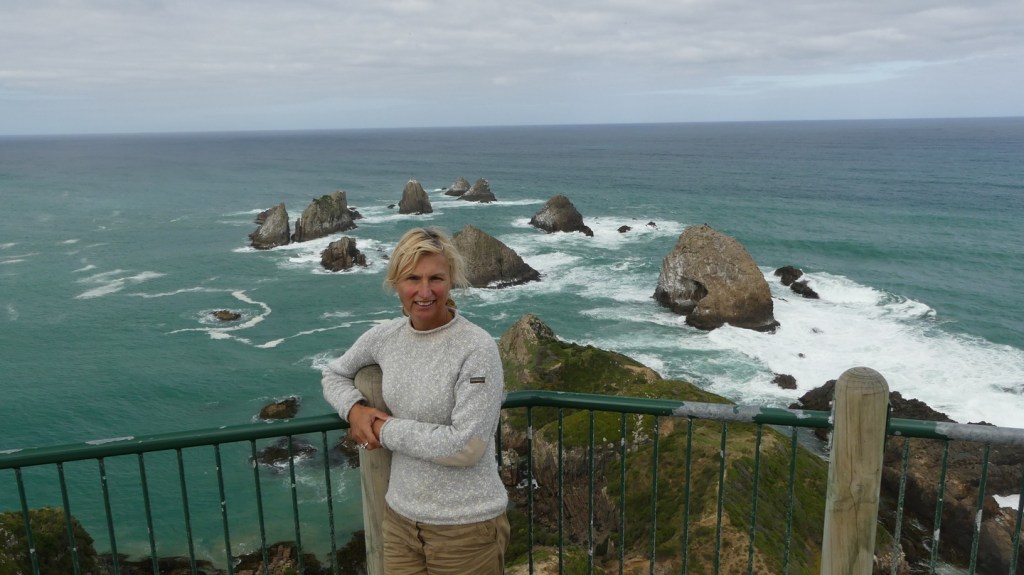
Nugget point with its lighthouse from 1870 still working.
Nugget point at the Catlins.
Happy it was not raining and we could enjoy the scenery without rainjackets or umbrellas.

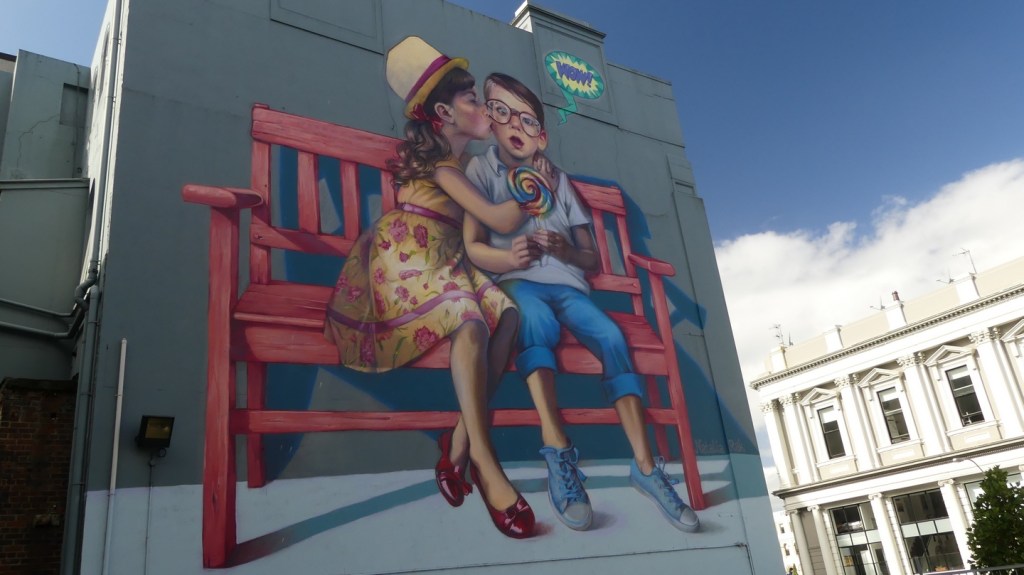
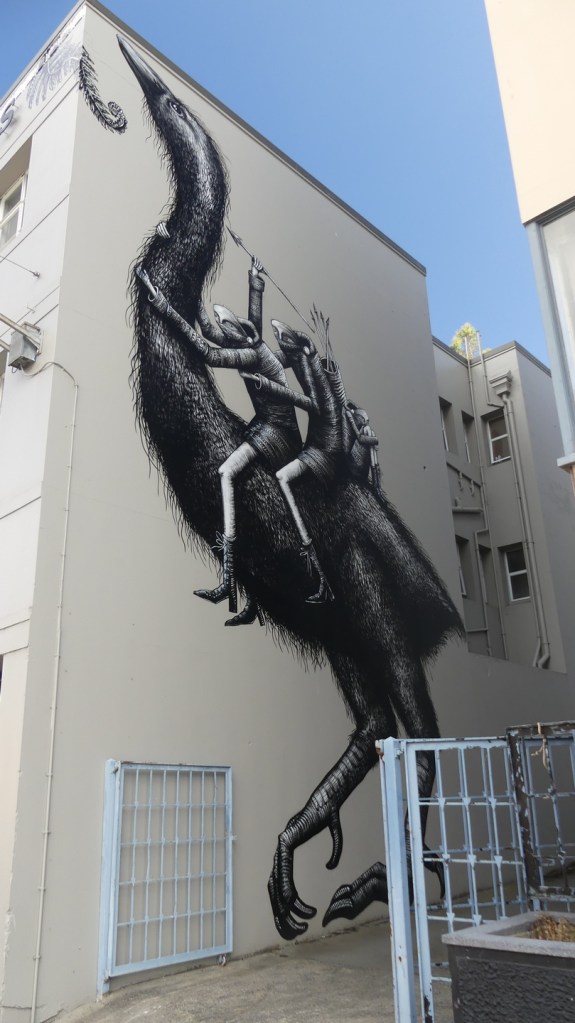
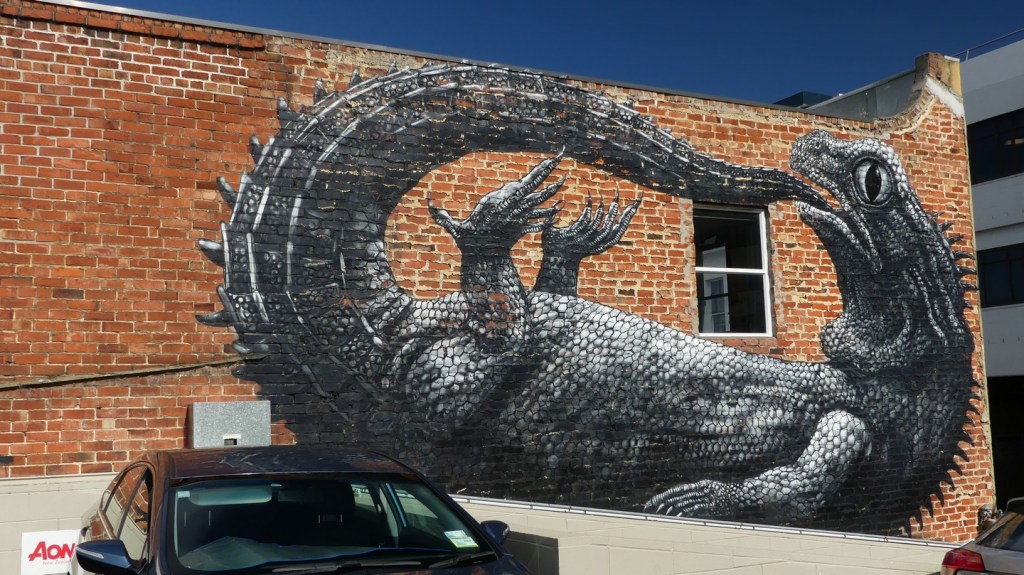
While we were in Dunedin we did the self guided street art tour and it was really a lot of fun with great artworks ! Maybe a good idea to have a similar project in Ghent!
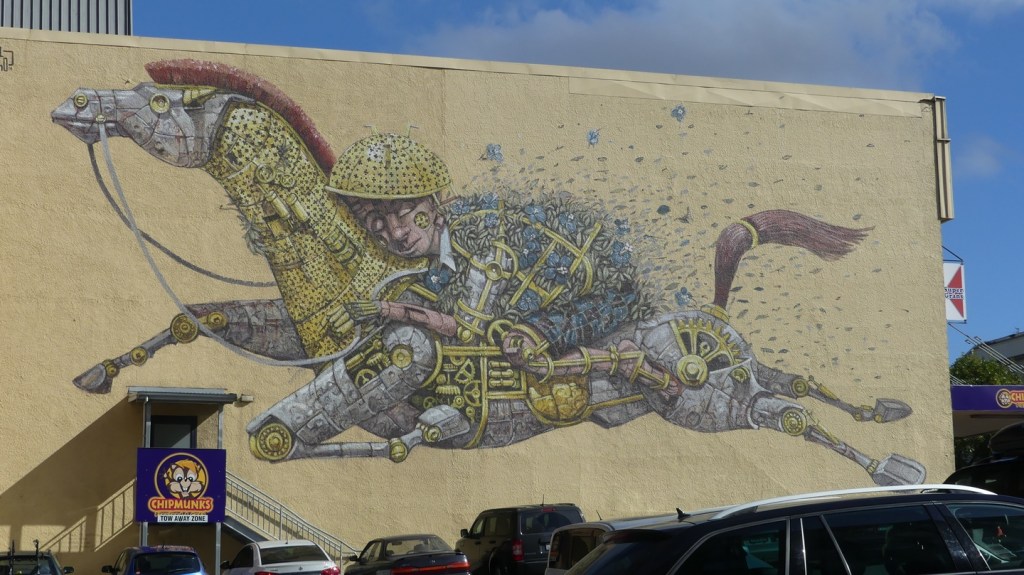
Riding Dreams from Pixel Pancho (Italy)
Tuatara from ROA (Belgium).
Love is in the air from Natalia Rak (Poland)
This work is from Phlegm (UK) but I do not remember the title.
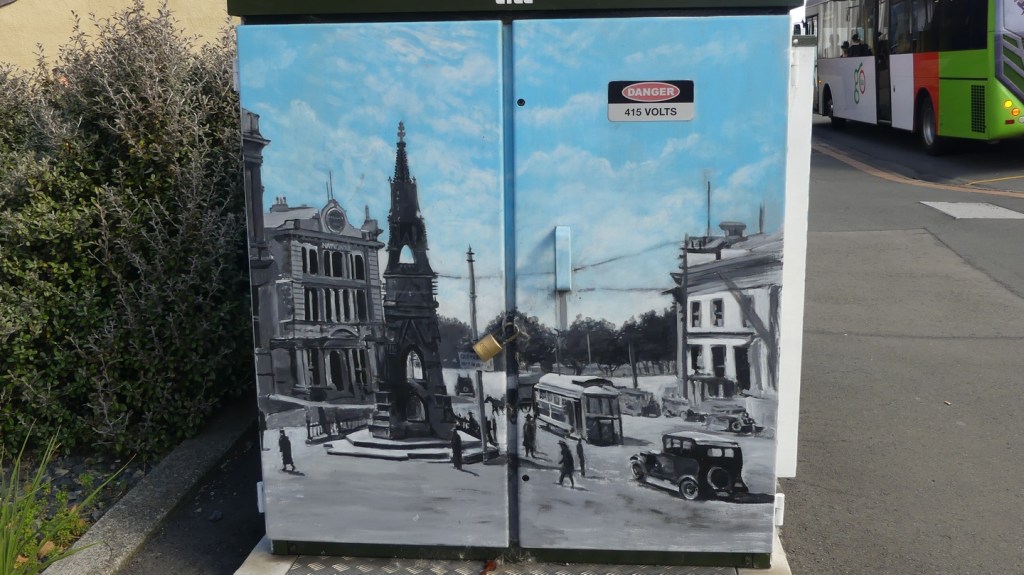
Even the electric distribution box was painted…

Next blog on our way to Christchurch and back to Auckland.

Nog wat videookes van NZ

In Oamaru, someone has triggered the steampunk locomotive animation


ChristChurch

I just love what this artist does: Phil Price

Wat kan er nu zo grappig zijn aan dahlia’s?


Update zondag 16 april: we zijn goed en wel in Tahiti geraakt met onze 7 valiezen.

Enkel Air New Zealand deed moeilijk bij check-in omdat we geen vertrek ticket uit tahiti hadden, maar een supervisor kwam dan met de verlossende mededeling: just check them in. Ook was onze handbaggage 12 en 13,5 kg ipv 7kg, maar dat zagen ze door de vingers!

Het is wel raar dat we twee keer paaszondag meemaken: een keer in Auckland, en dan vijf uur later doen we het nog een keer over omdat we over de dateline gevlogen hebben. 22 uur terug in de tijd.

Dinsdag gaan we met de Cobia III varen naar Apataki.

Bye Bye New Zealand: afsluitende mijmeringen

Over de natuur en de natuurparken:

Typisch NZ: geen kosten worden gespaard om een natuurgebied tot zijn recht te laten komen voor de toerist. En allemaal gratis: geen enkel natuurpark is betalend!
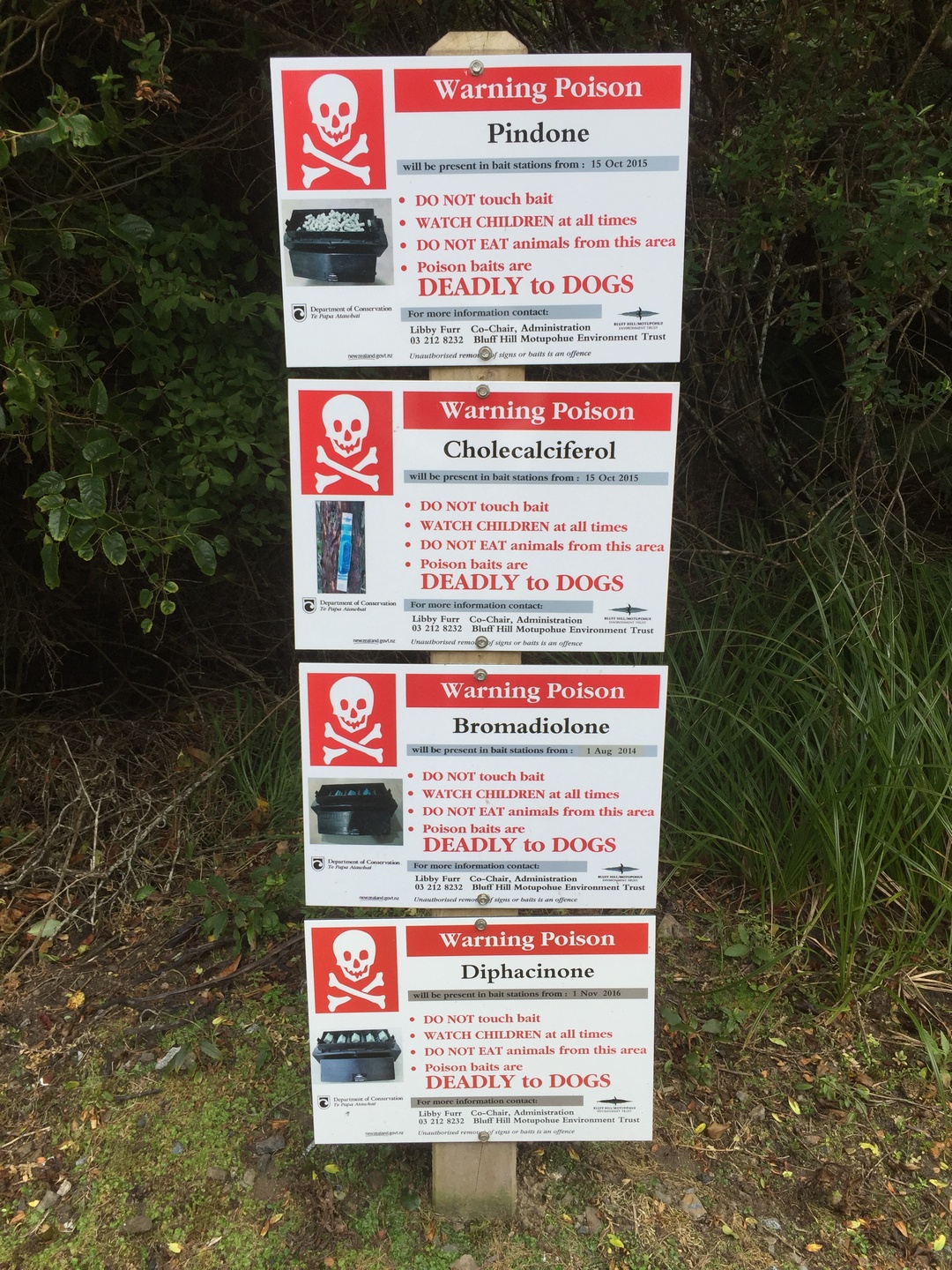
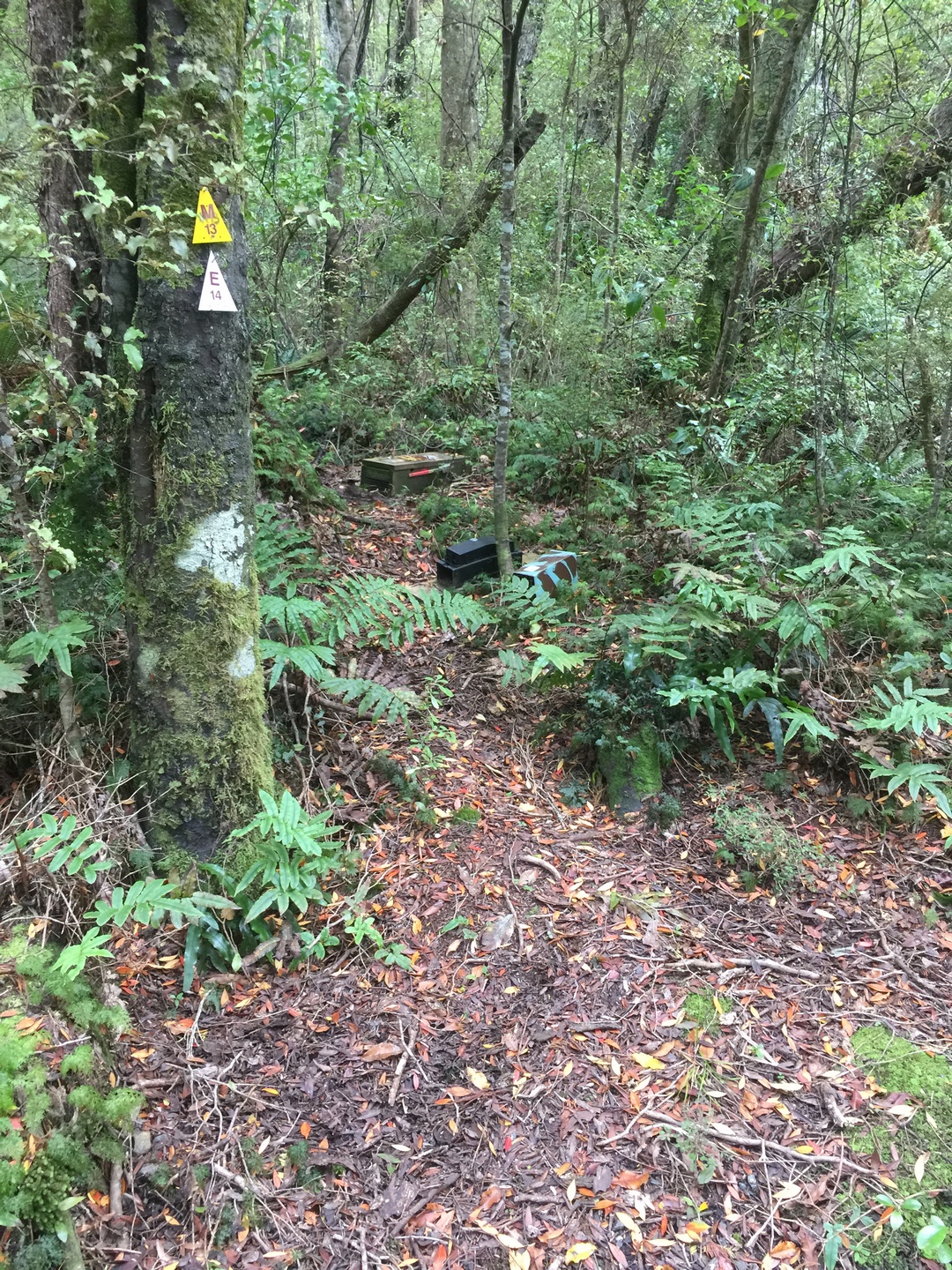
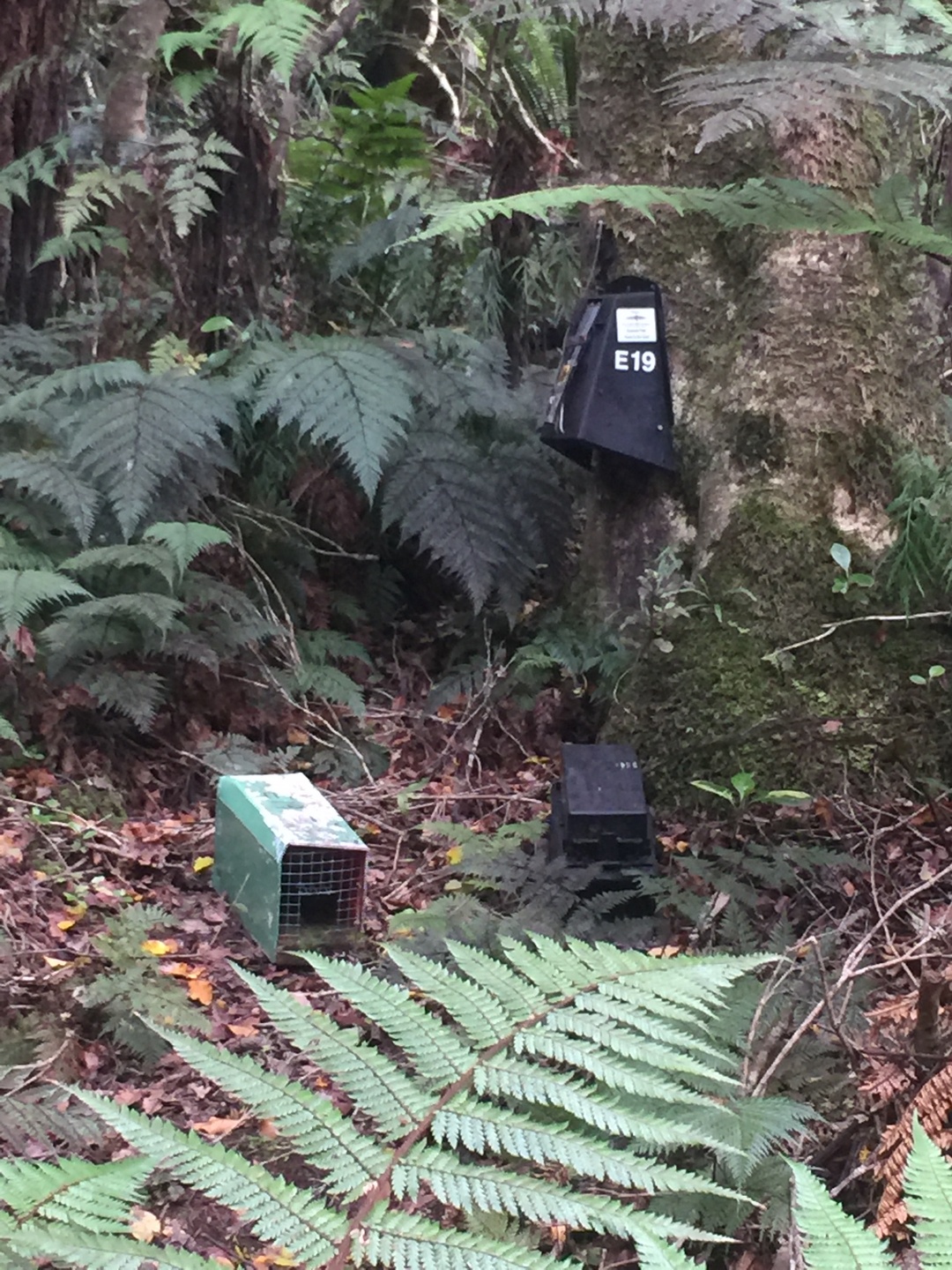
Je kan maar beter geen (allochtoon) ongedierte zijn in NZ. De jacht is open op opossums, wezels, ratten, wespen. Ook als hond moet je op je tellen letten…
Overal langs de wandelpaden kom je de driehoekjes tegen die de vallen locaties aangeven.


Over de wegen en verkeerssituatie:
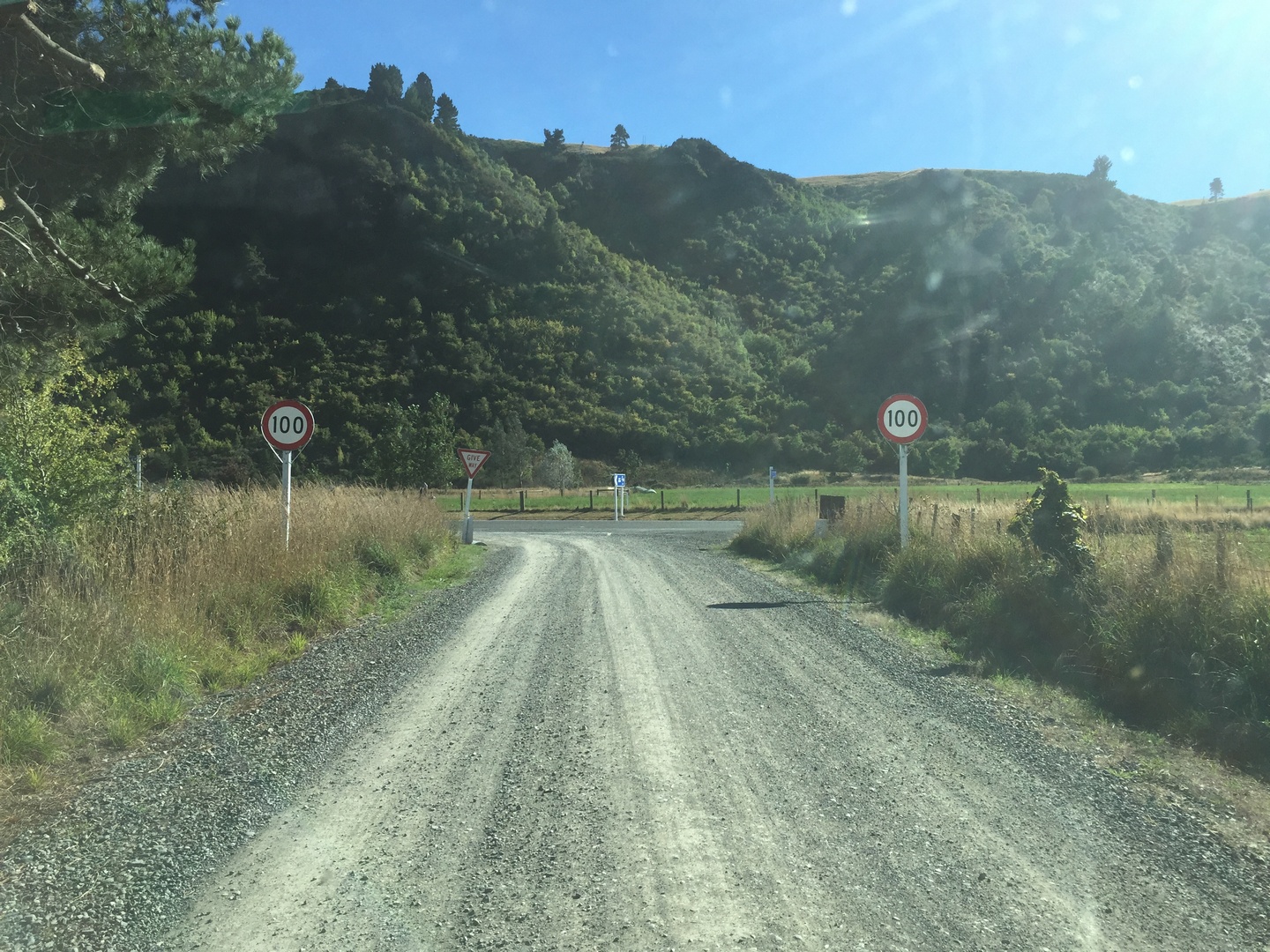
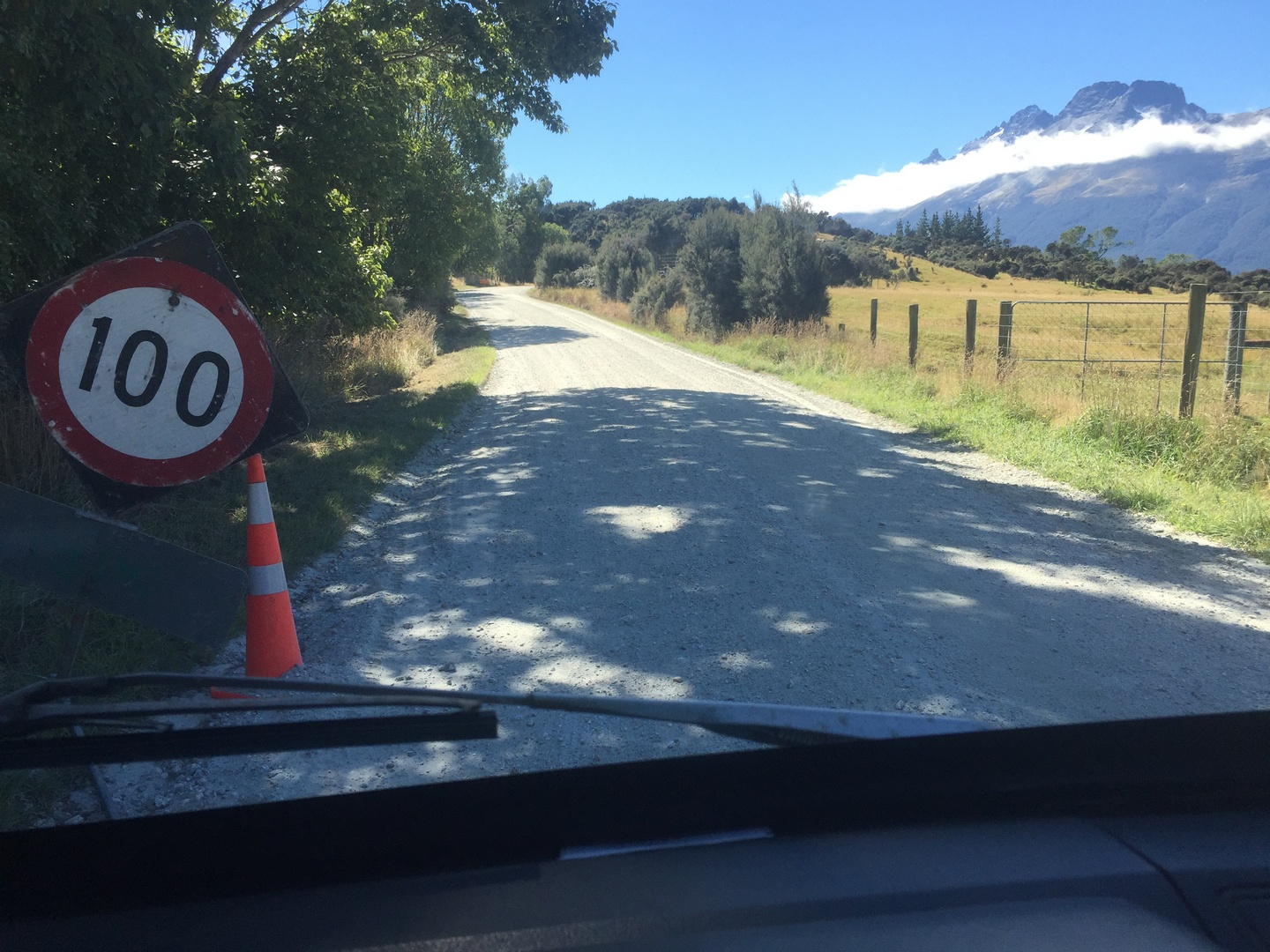
Voor je op de hoofdweg komt geven ze de snelheid van deze laatste aan. Dit is een onverharde weg of ‘metal road’, en zo zijn er nogal wat in de dunbevolkte streken.
Ietwat optimistisch? Er gebeuren nogal wat ongevallen op de onverharde wegen vanwege het verlies van controle over het stuur.


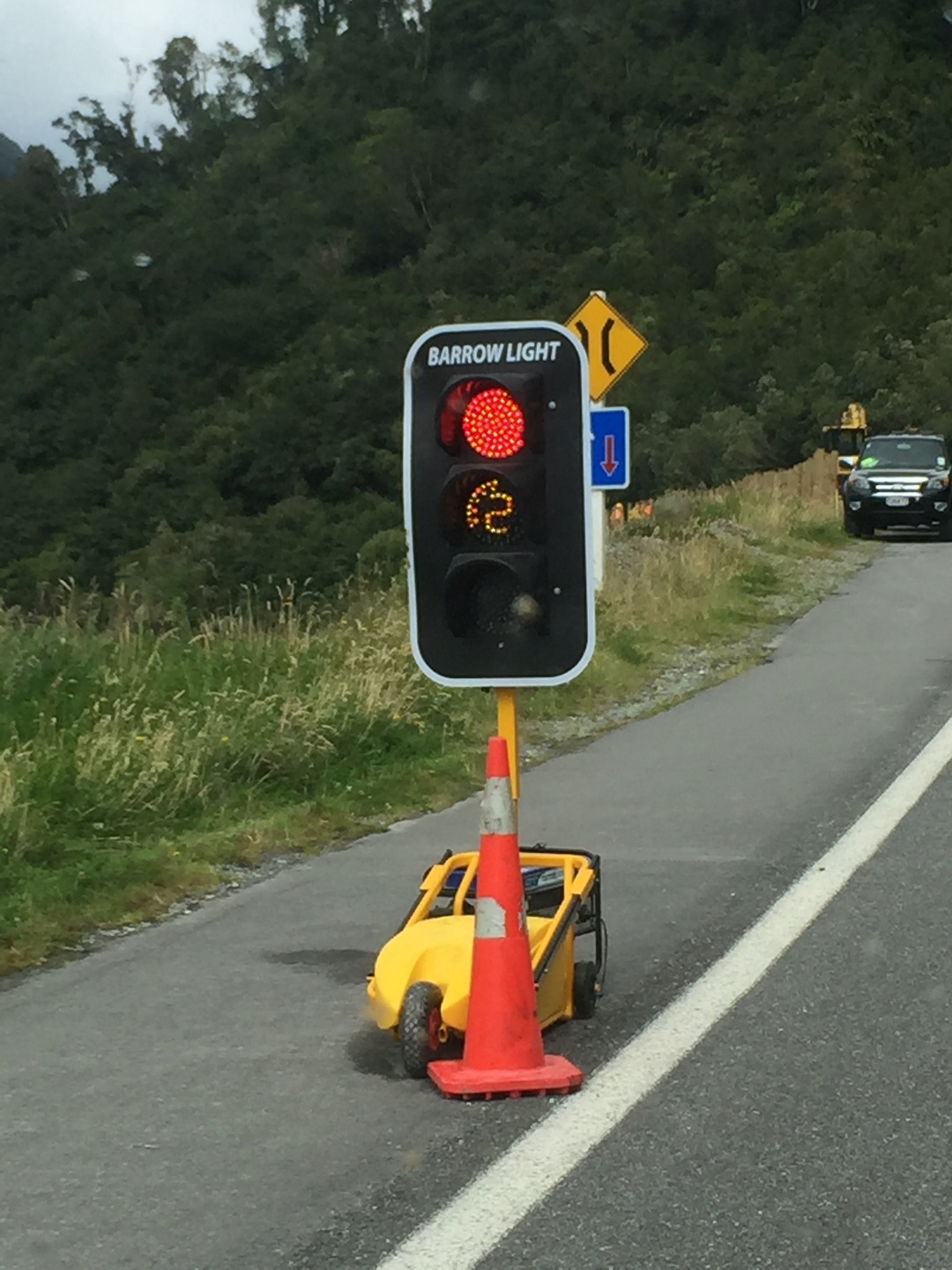
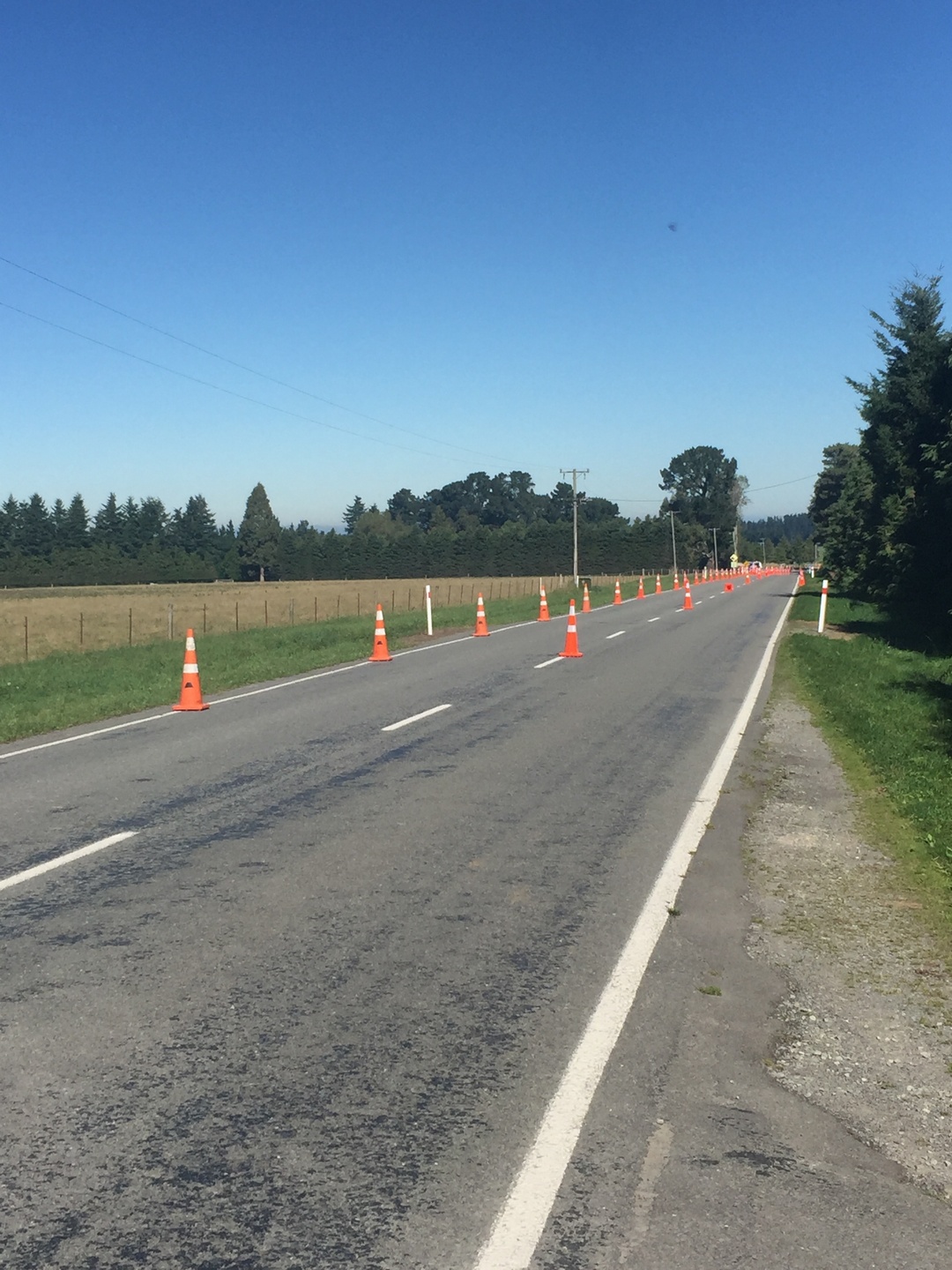
Een leuk idee: zo heb je een gedacht van hoe lang je nog moet wachten tot het licht groen wordt. Overigens is dit de uitzondering, meestal is het een persoon met een tweezijdig bordje STOP/GO. Vanwege de herstellingen aan de wegen na de aardbeving van November hebben we er zo wel veel gezien.
Nieuw Zeeland, land van de miljoenen verkeerskegels…
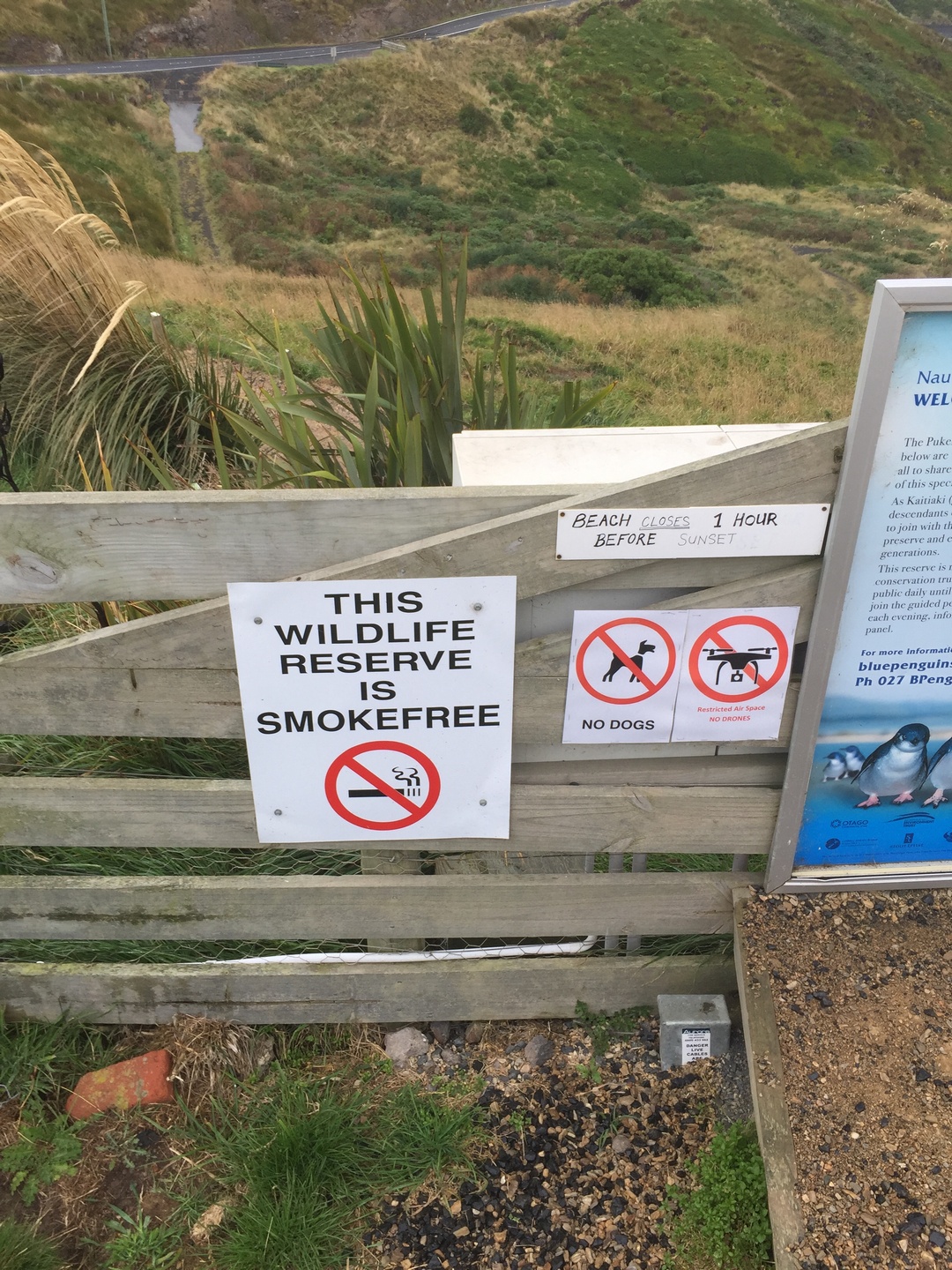
Roken wordt hier wel zeer beperkt!

Waarom er op Ilse haar blog postings zoveel mooie foto’s staan:

geduld van de fotograaf voor het juiste shot
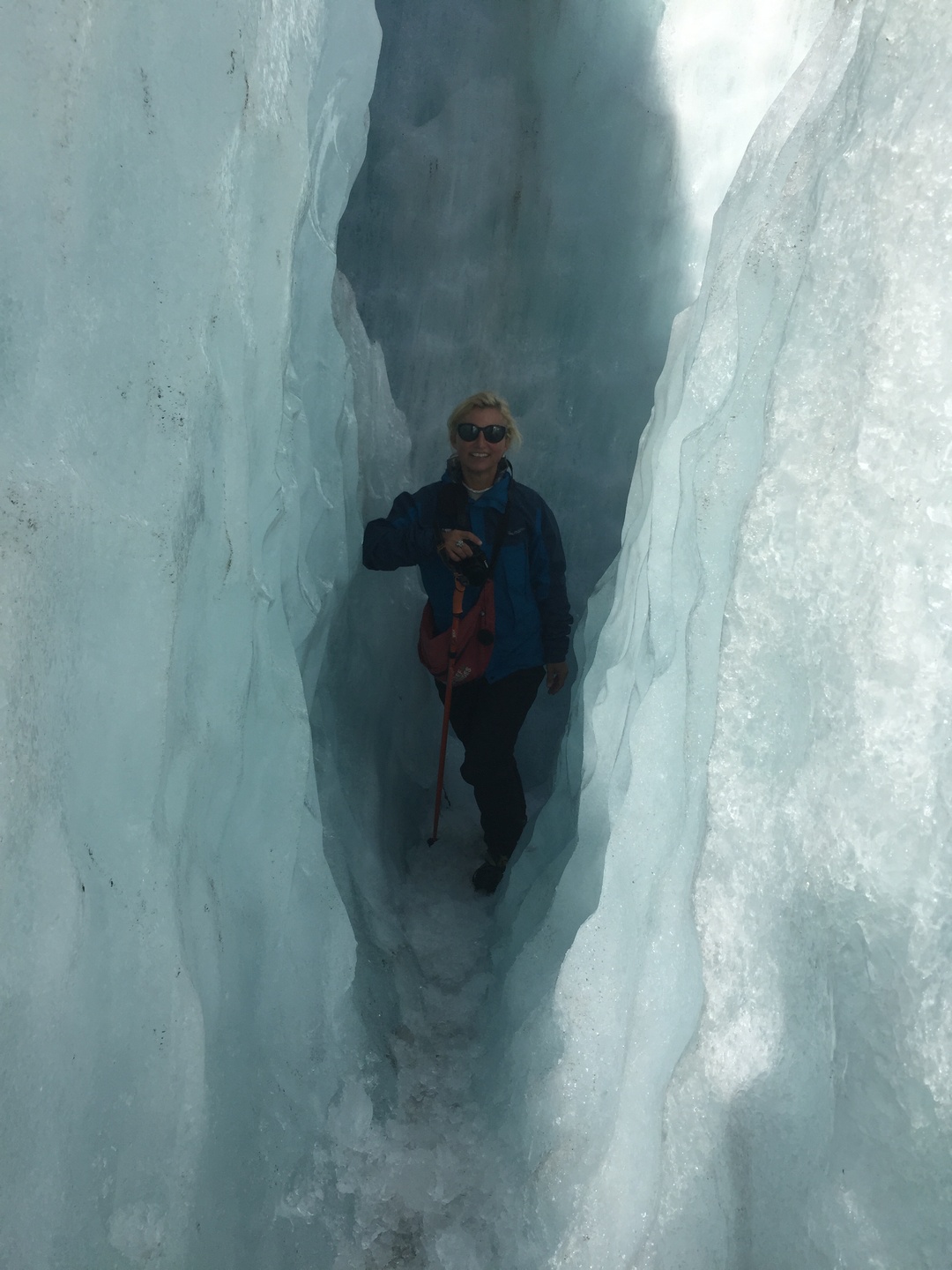
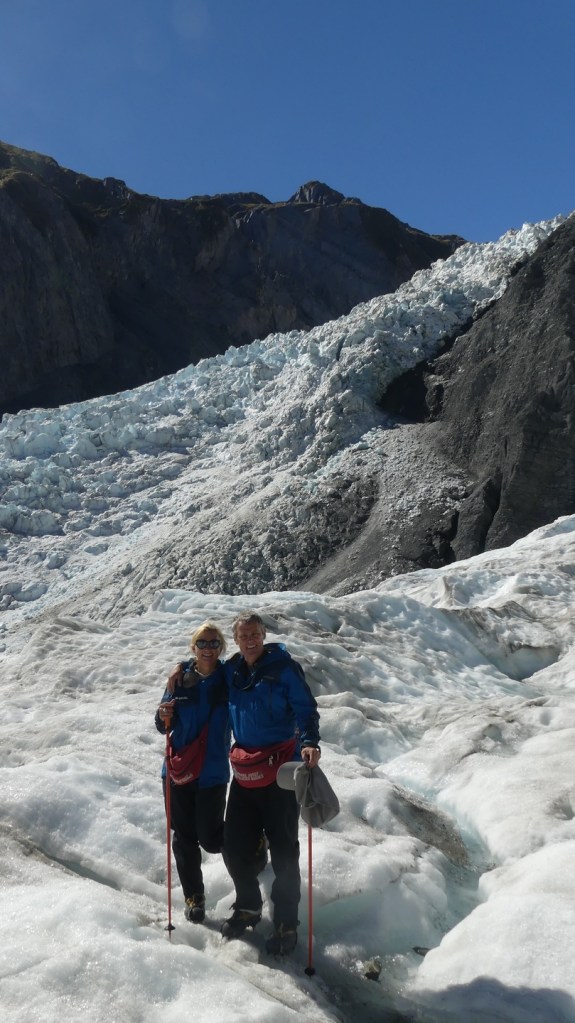
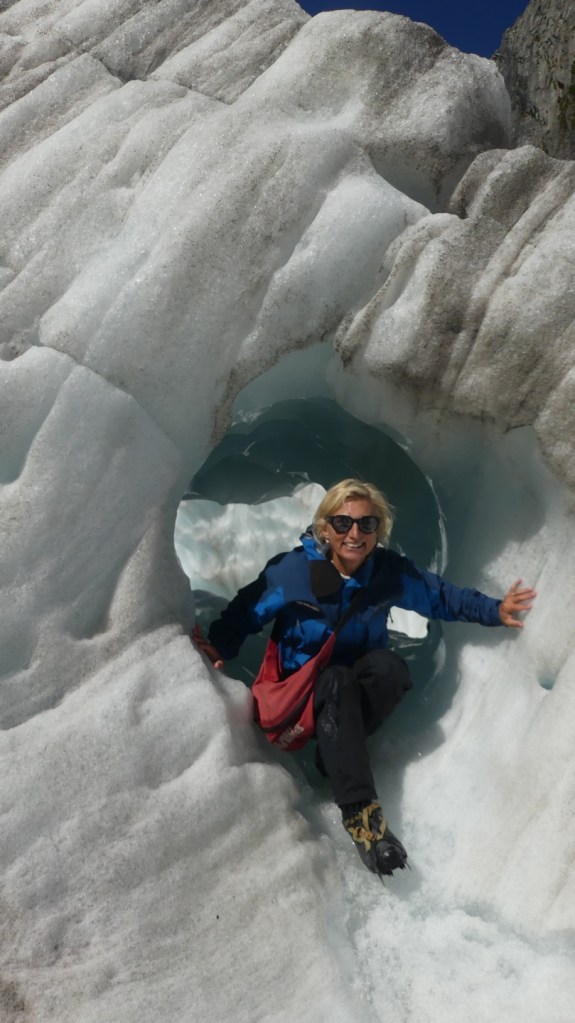
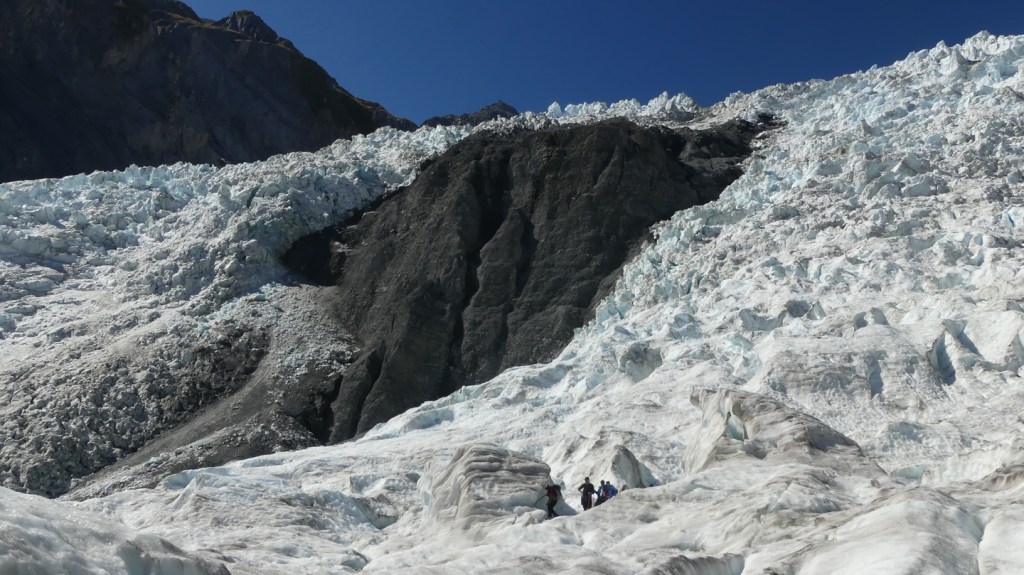
Op een gletsjer wandelen was toch wel een heel speciale ervaring
Zo moet de vallei er in de ijstijd hebben uitgezien…
.. en hetzelfde zicht maar dan zonder ijs/wolken


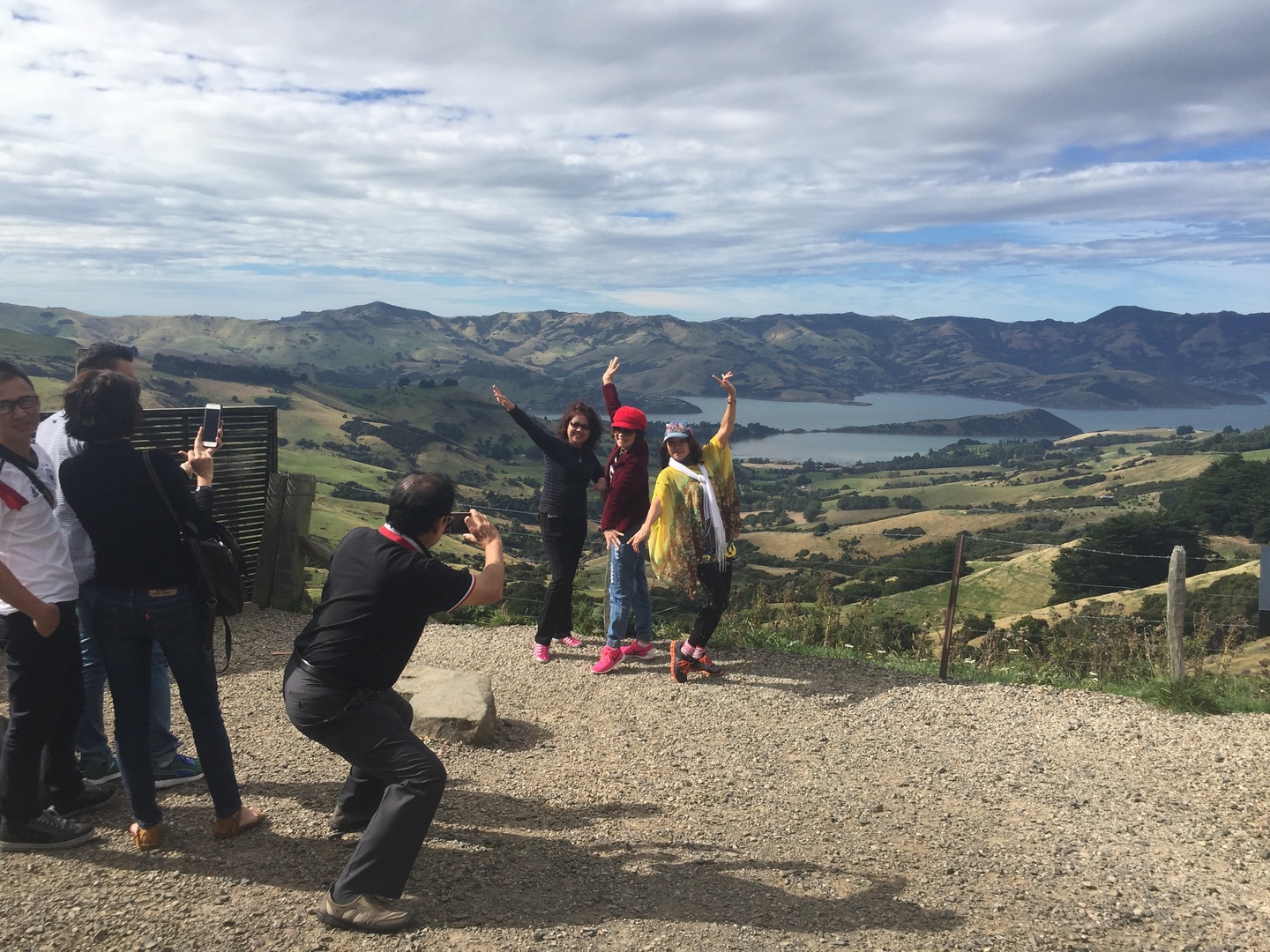
Ik geloof niet dat ik een aziaat een foto heb zien maken waarop ze zelf niet stonden afgebeeld. We hebben zelfs iemand gezien die een heuse garderobe meehad en van kleren wisselde tussen de shots!

Over de menselijke invloed op de natuurgezichten:
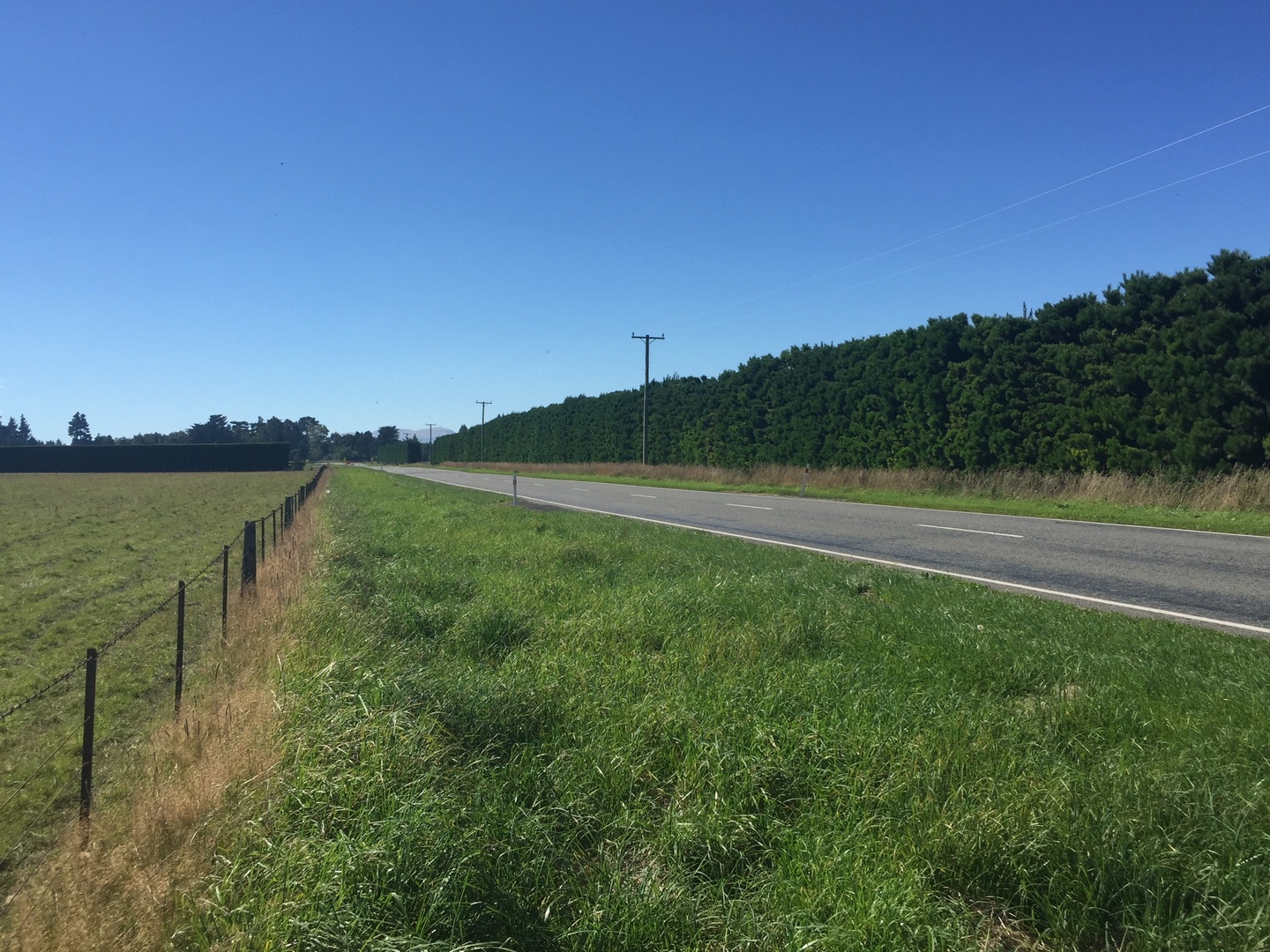
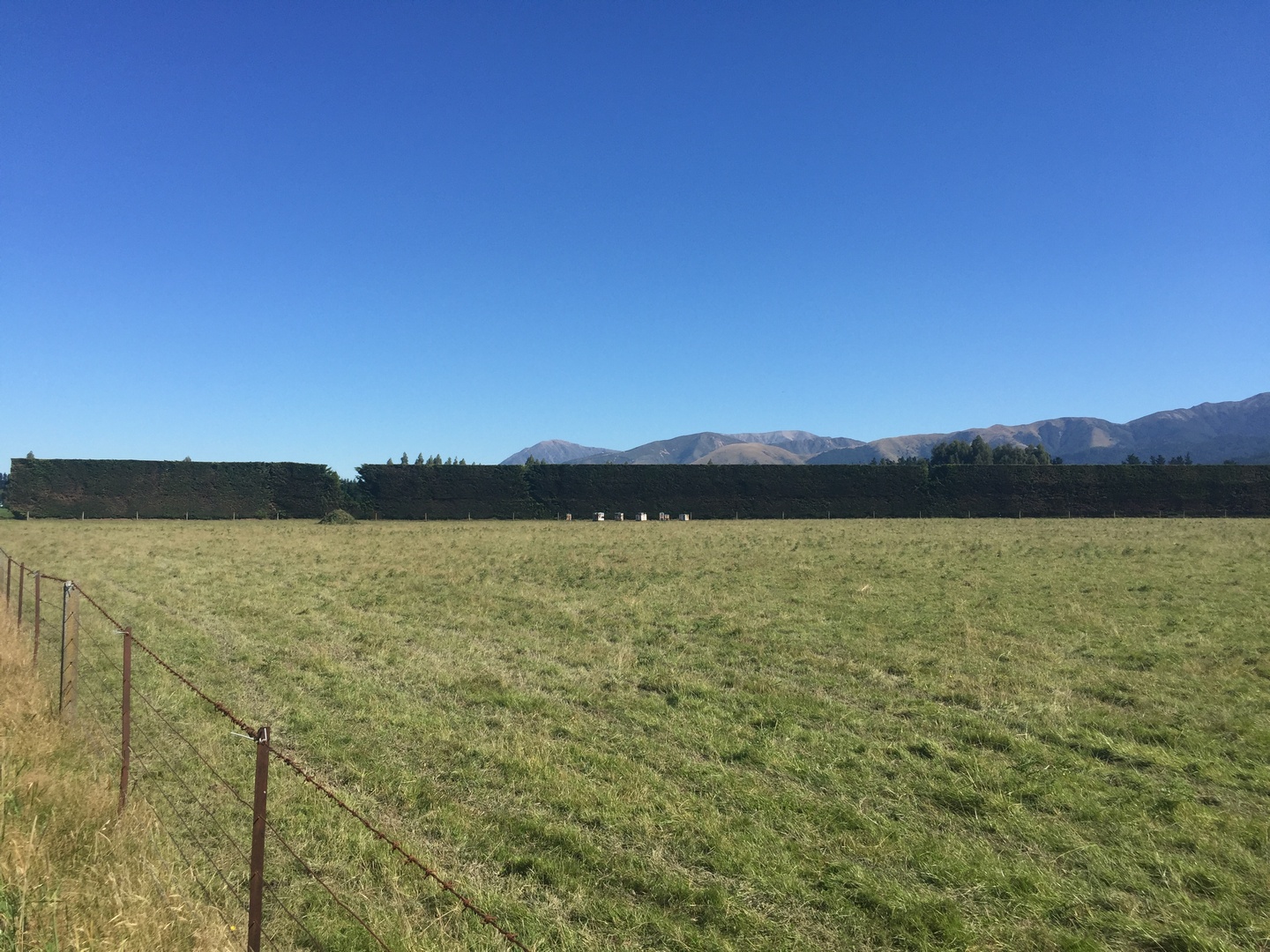
Ze kijken niet op een kilometer haag meer of minder in het zuidelijke eiland. En allemaal geschoren. Ik zweette alleen al bij de gedachte aan het scheren van mijn klimophaag.
Nog een haagje. Vooral bedoeld om de wind te breken, niet zozeer tegen de inkijk…
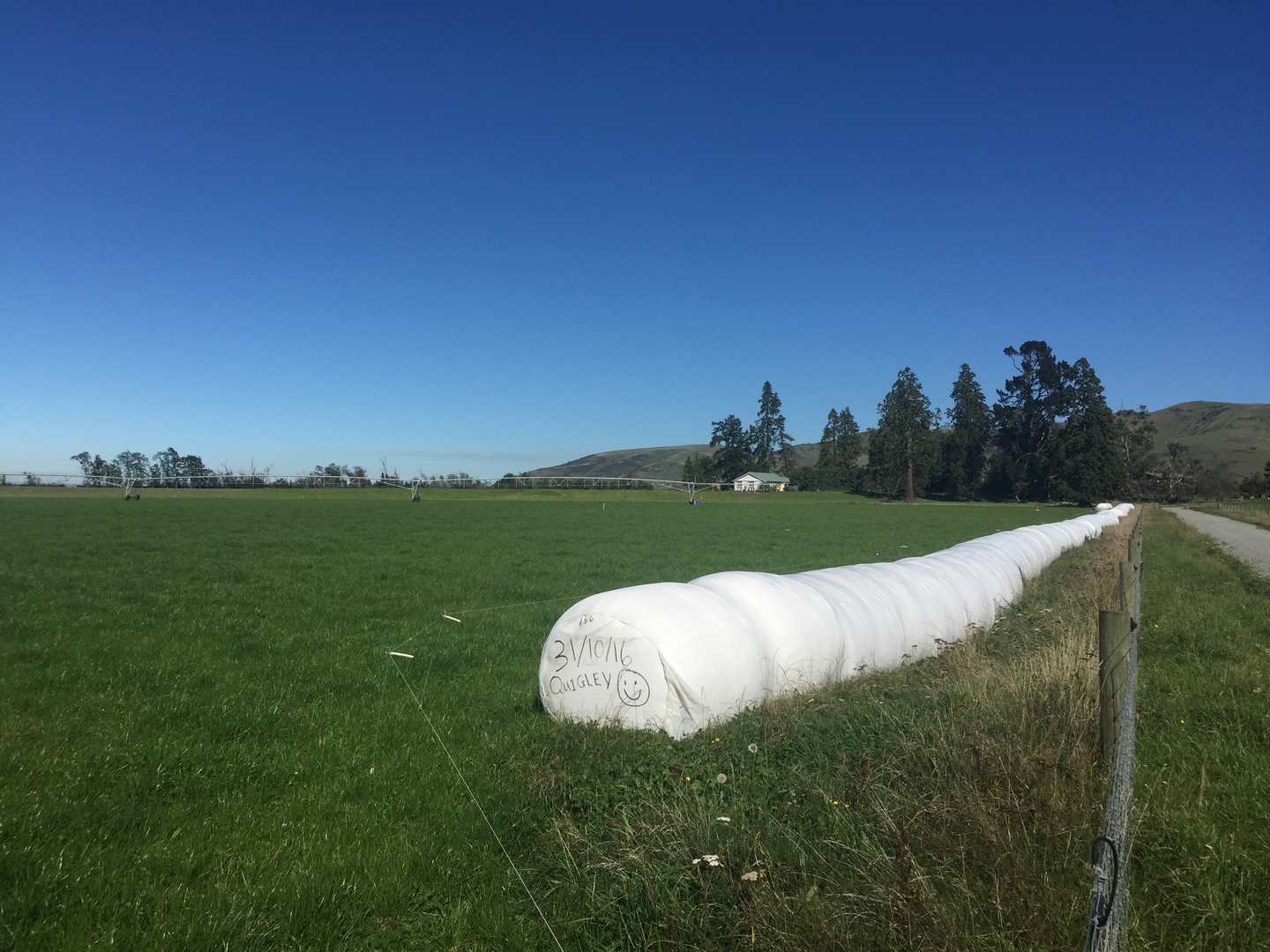
Naast de individuele verpakking van strobalen was ook deze worst varieteit heel populair. We hebben alle kleuren van verpakkingsplastiek gezien: roze, lichtblauw, wit, felgroen, maar geeneen in kaki kleuren. Een gat in de markt?


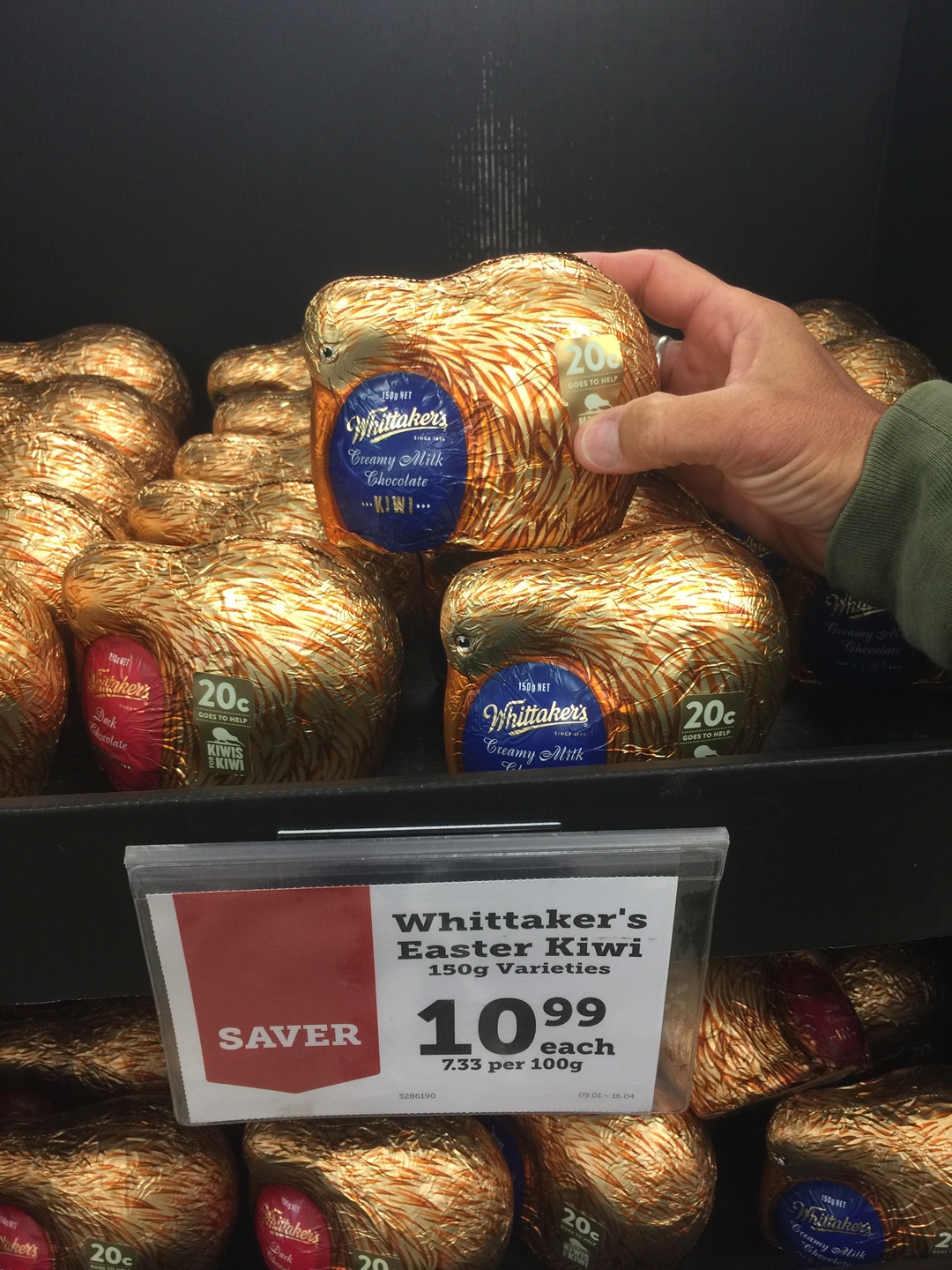
Pasen in Nieuw Zeeland.

De klokken van Rome geraken niet zover dus moet de kiwi het doen.


Over vertrekken:

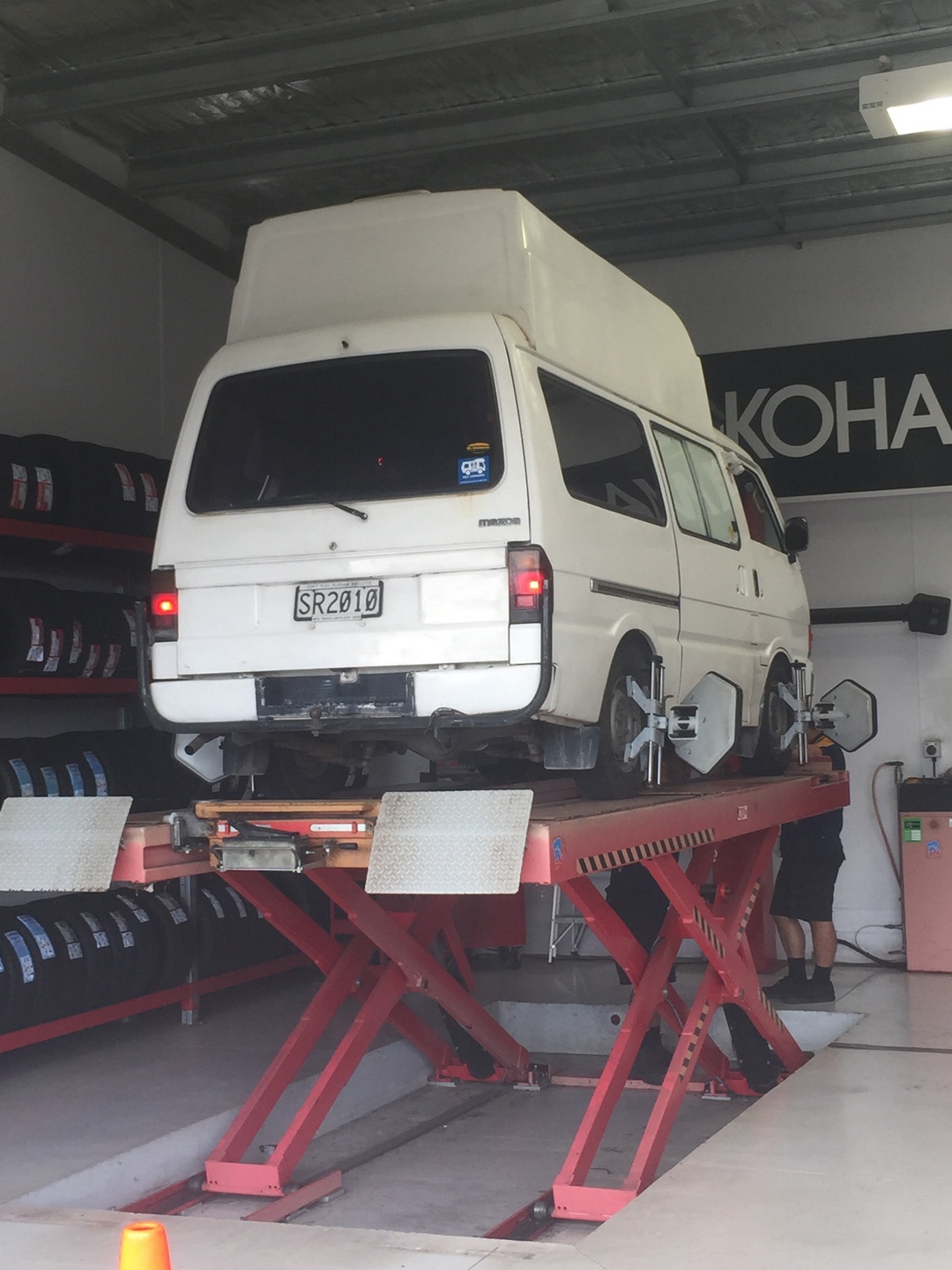
Afscheid van Burnie, we sturen hem de baan op met twee nieuwe banden en een uitlijning. Hopelijk hebben de nieuwe eigenaars er evenveel genot van als wij.


Over Christchurch of ChCh

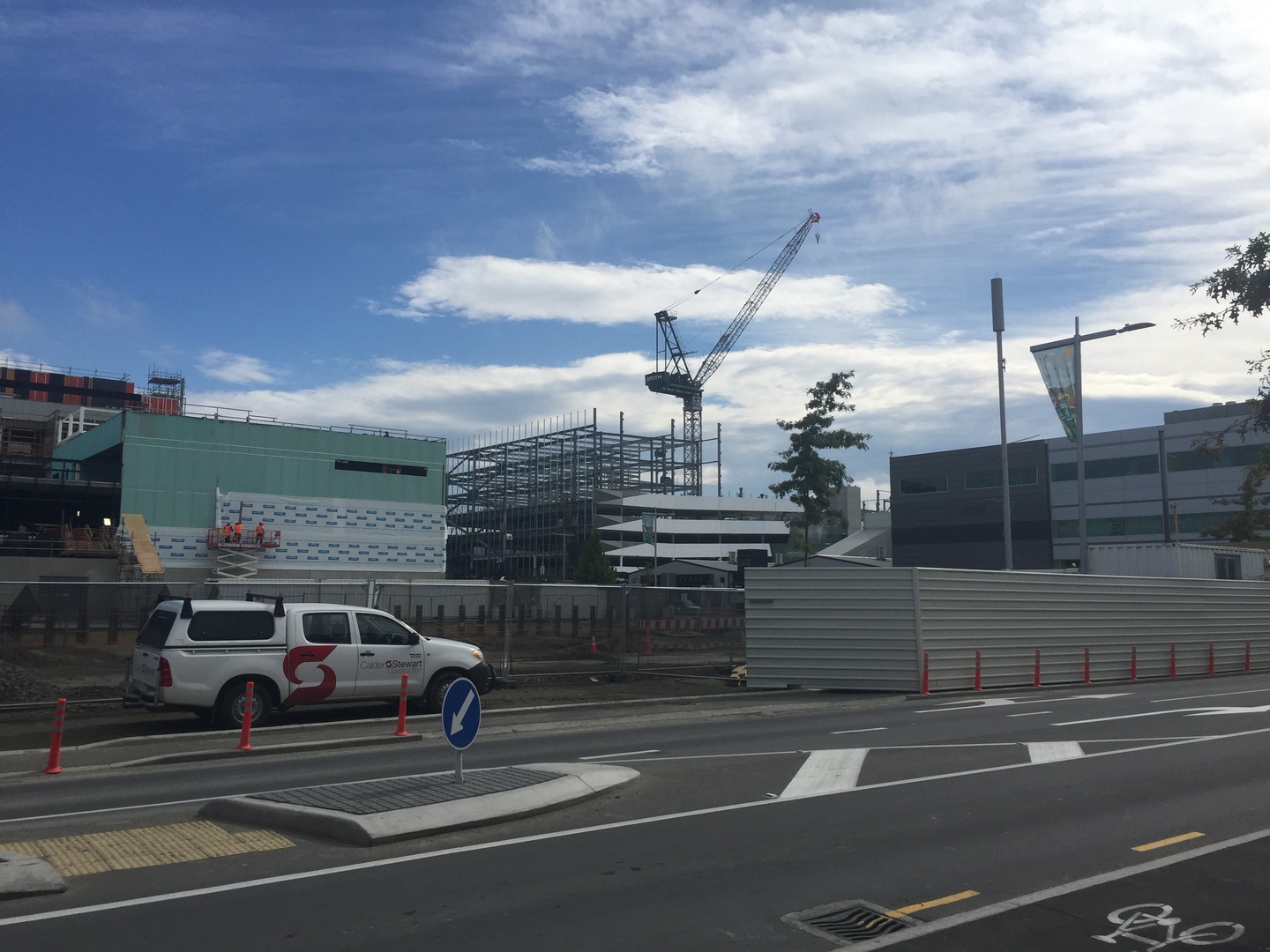
Na de aardbeving van 2011 wordt er nog steeds duchtig gebouwd…
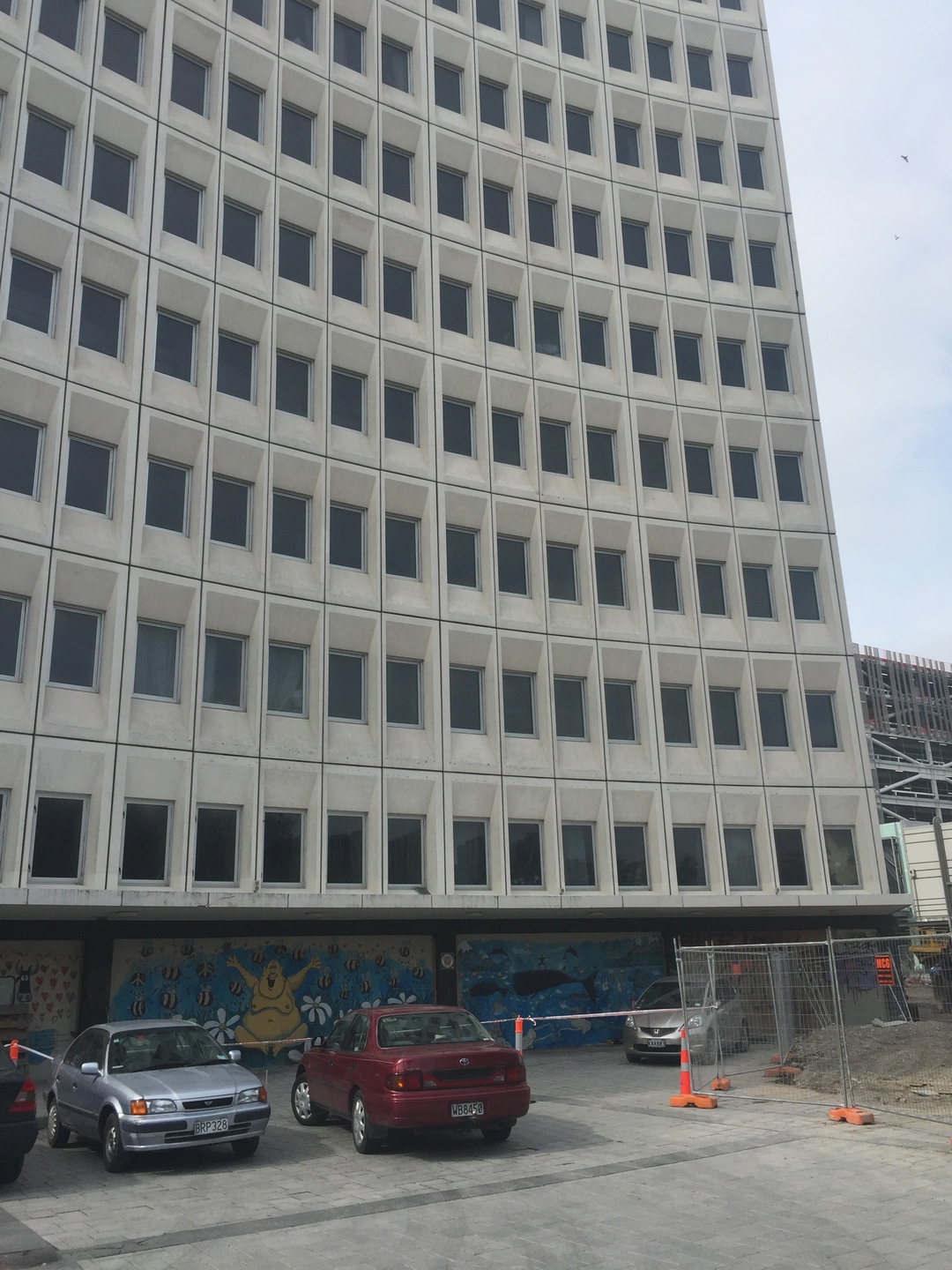
…. maar het is verassend te zien dat er nog zoveel gebouwen moeten afgebroken worden.
Overal zie je bulldozers en kranen die puin weghalen. Ongeveer 70% van de binnenstad is ofwel parking of wacht op sloop. Toch verrijst er ook veel nieuwbouw.


Uitsmijter:

Morgen op het vliegtuig naar Tahiti, terug naar Sanuk. De valiezen zijn gepakt…

April 2017 Tips for traveling in New Zealand with a campervan

Here are some tips that I have found that will be useful for anyone traveling in New Zealand for longer than 2 weeks

  • trademe.co.nz is the site to sell/buy almost anything, including campervans. Just remember that you need a new zealand address to sell anything, and a new zealand address to reply to any listed add. (Any address will do, like a AirBnB or a backpackers hotel). Therefore it pays to put your email and phone number in the ad text itself when you are selling something.
  • If you travel a longer period, say over a month, it pays to buy a vehicle and then sell it again at the end of the stay instead of renting one. If you are going to be staying long, and you are say over 30, you will appreciate the possibility of standing upright in the van, or of cooking inside. The trick is to buy low and sell high 😉 As the camping seasons progress towards April, it becomes harder to sell the vehicle because there is less demand. The season starts around december.
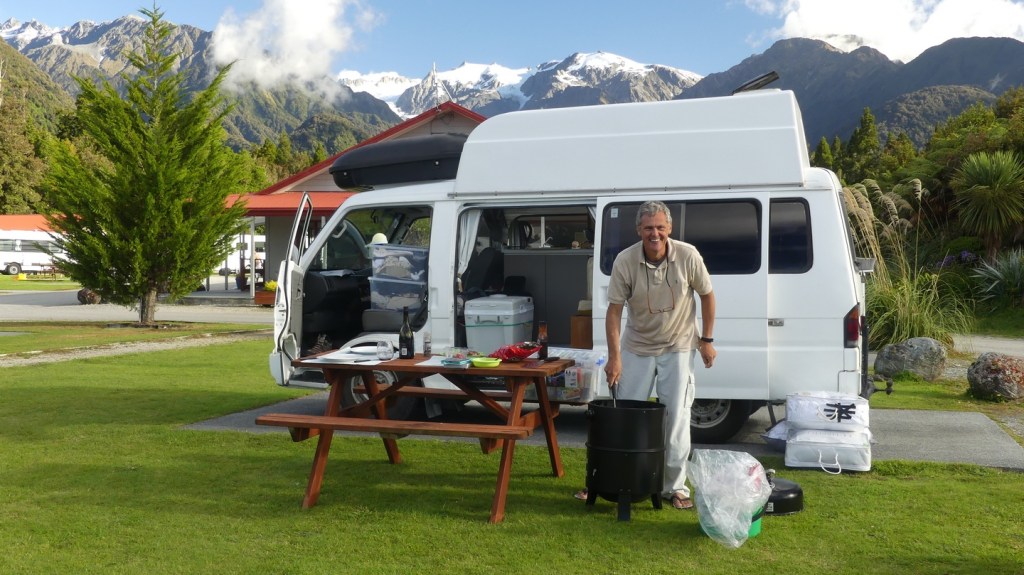
  • If possible, get a self contained vehicle. This allows you to freedom camp, and check in to a holiday camp when you deem it necessary (showers!). We found that almost nobody with a small campervan uses the portable toilets such as these:Image result for self contained toilets
  • but instead finds a free campsite with a toilet.  These sites are almost always for self contained vehicles only.
  • When you buy a used vehicle, the buyer can buy it on condition of an inspection. This is a very good idea, even if it costs 159NZD at AA, because it will be a very strong bargaining tool. I compare it with going with an 80 year old to the doctor for a complete evaluation: Hm, the knees are weak and near the end of their functional lifetime, the hip needs replacement, the eyesight is only  50%, …. The final sale price will reflect some of these problems, or have them repaired by the seller. Or you may not buy the car at all. (Did I report that we did not do an inspection when we bought Burnie, but had one done when we sold him?)
  • The north island is warmer than the south island. So depending on the time of year, you may explore first the North or the south island. If you only have a limited time, then I prefer the scenery of the south island. Queenstown is an ideal basis for exploring the majority of sights to see in the south island, but of course it is better to just drive around and do all the sights…
  • Get the free campermate app Image result for campermate app available for iphone and android. It lists all the campsites, point of interest and much much more. Read the comments left by the users, it clarifies a lot and gives up- to-date info. I have been told that there is a similar app from the nzmca.  The disadvantage is that everyone with the app will tend to visit the same places, but that does not weigh against the wealth of information that is inside the app, and all of it offline accessible.
  • Get a good prepaid phone data plan. These tend to fluctuate in value, we had one from The warehouse Mobile that got us up to 3 Gigabyte per month for 12 NZD, but that was no longer available towards the end of our stay. In general, Spark and The Warehouse Mobile have good deals. Spark has wifi booths in many places (they are indicated in the CamperMate app) where you can download 1Gb/day for free.
  • Use the libraries as a wifi and recharging station. They are open for extended periods, are free and the people are very helpful.
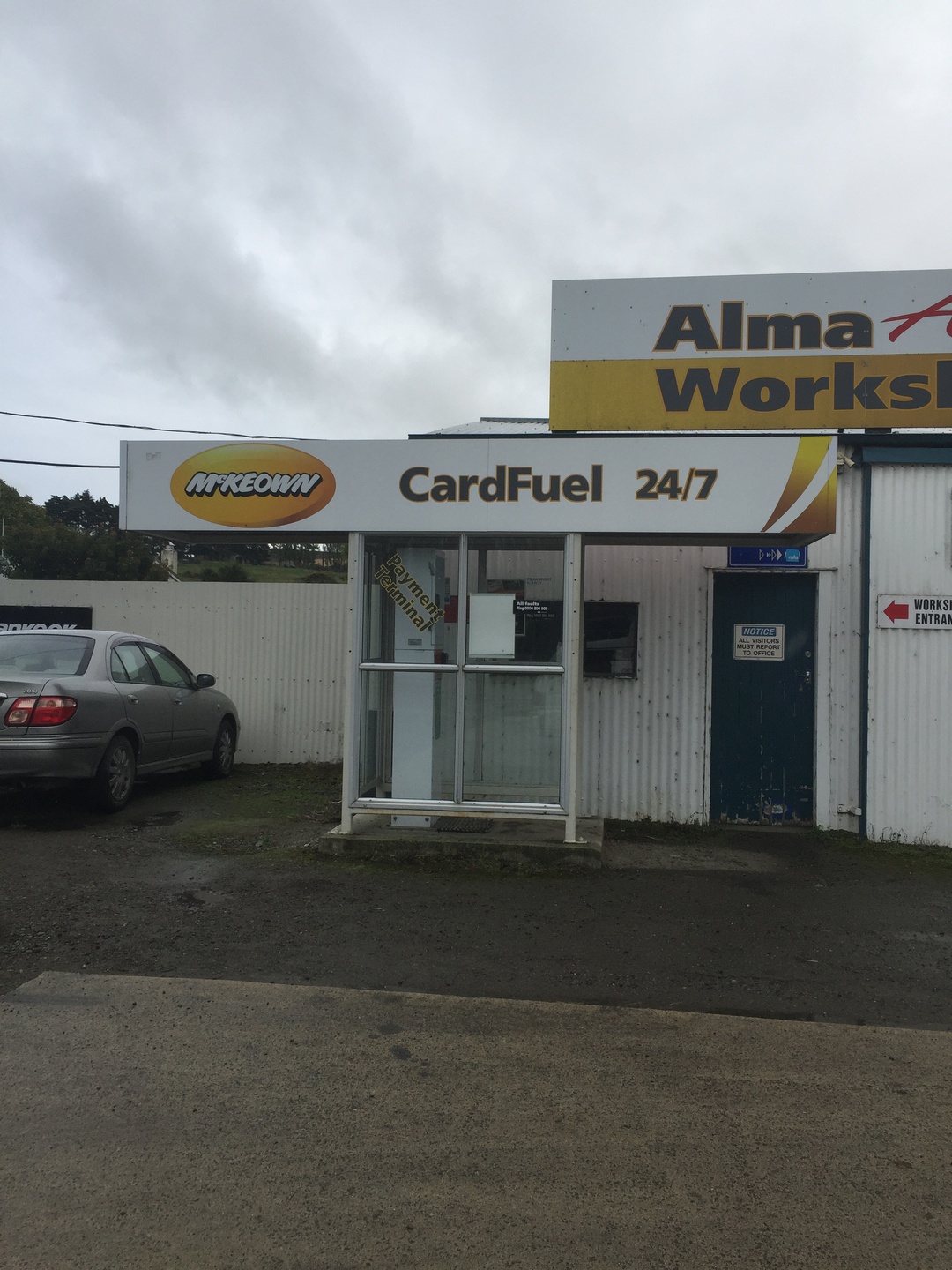
  • In the south island, here  is the best kept secret for saving money: get petrol or diesel at the McKeown stations. They are unmanned credit card stations, but their diesel was 1.009 dollar, when the caltex next door was 1,309 NZD! Many kiwi’s do not know about this, don’t ask me why. They have an app also that works offline. They are affiliated with Caltex, but forget those, they are the same price as everybody else, and play the “today 6 cents off” if you have a AA card (see my previous blog rant about this) . The app is only available in the Apple NZ store  but since it does not cost anything, there is a way to become a member of the NZ store without a NZ credit card, here is how. There are enough McKeown gasstations in the south island that you can usually find one near to where you are. There are some non covered areas, and for that you will need to look at the next tip.
  • Now that you are a member of the NZ app store, you need to download another necessary item: Gaspy (Gas-Spy). It allows you to search for the cheapest gas station in a radius around you. It is necessary in the North island where there are no McKeowns. This app does not work offline, so you need mobile data.
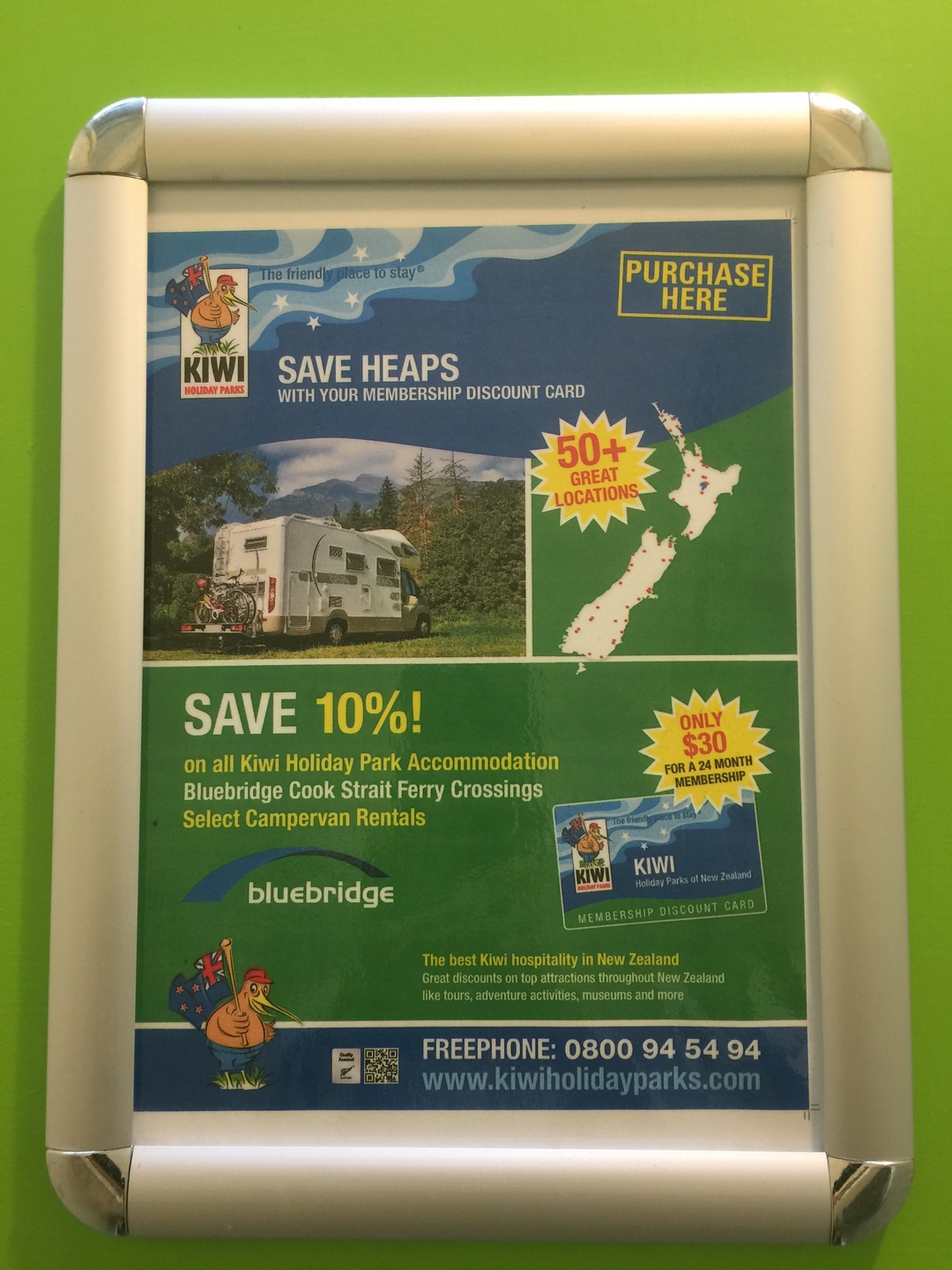
  • If you cross the channel between the North and South island with your van, it may pay to get a card from one of the two camper places: Top 10 Holiday Parks, or Kiwi Holiday parks. They each are good for 10% off on the ferry. For Top 10 parks, you get 10% off your stay at the park, extra wifi and price reductions at local businesses. It costs 49 NZD. The Kiwi holiday park card is 30NZD and gives similar discounts. If you stay every 3 to 4 days in a holiday park like we did, either card pays for itself. Also both cards are valid for two years and are also accepted in Australia by associated members. More here and  here  
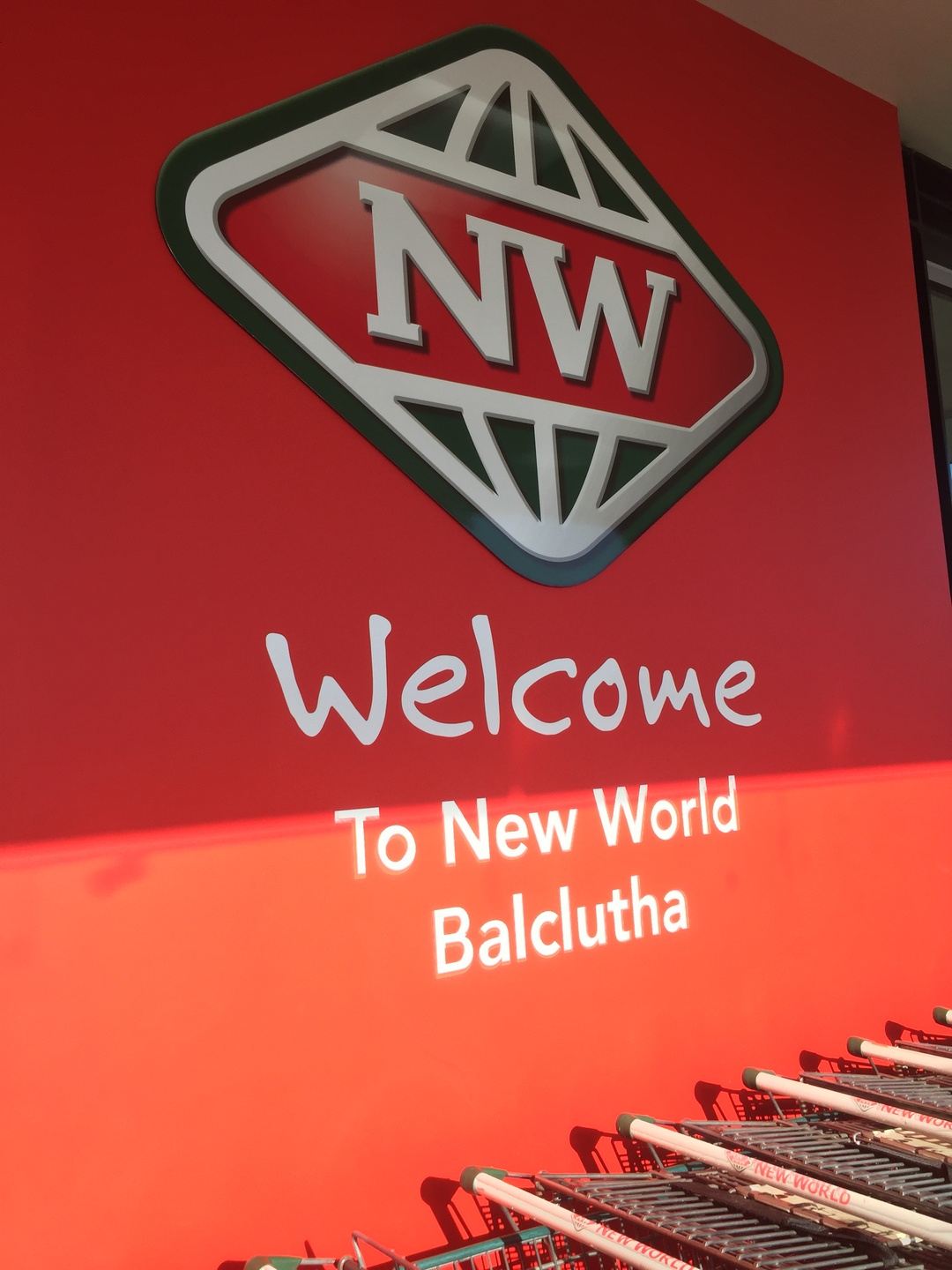
  • Get the customer cards to save on buying food in the foodstores. The big ones are Countdown, New World, Pak ‘n Save (no card) and then the smaller Four Square (no card).  They have all incredible opening hours, usually till 9pm or later, every day! They all still throw plastic bags at you like the is not enough plastic in the world already, except Pak ‘n Save.

    Yes, there is such a place as Balclutha
  • A tip about avoiding driving on the wrong side of the road, the reason for up to 30% of accidents in NZ: The driver always sits closest to the middle of the road. I found that once you are on your way (on the correct side of the road), there are few opportunities to make mistakes. There are plenty of signs that help you conquer difficult situations such as roundabouts. The problem is starting off correct after a stop.
  • Learn to understand how Kiwi’s drive. They drive quite different from European drivers. For example, they do not want to overtake you unless they have a clear line of sight of about a kilometer. Even if you slow down to like 40, with nobody coming from the opposite direction, some will still stay behind you. Luckily there are many passing lanes where the road goes from 2 to 3 lanes for a kilometer or so. In contrast, the trucks always drive at their limit which is 90km/hour no matter what the conditions are. They are not hesitant to overtake.
  • Be carefull with single lane bridges, they occur frequently even on relatively busy highways:
  • (Ilse is filming, but at the end is so occupied with the encounter that we do not get the subject on video. I think he was European because he insisted that we parked on the right hand side of the road to let him pass….)

“C’est un bijou”

April 15th, Auckland, Burnie is sold to a young french couple who are travelling for 2 months in NZ as part of their 1 year sabbatical. We hope they have as much fun as we did. We rented a little van for the remaining 6 days we are here to travel a bit on the north island.

After the glaciers (Franz Josef and Fox) we drove Burnie to Wanaka over the pass
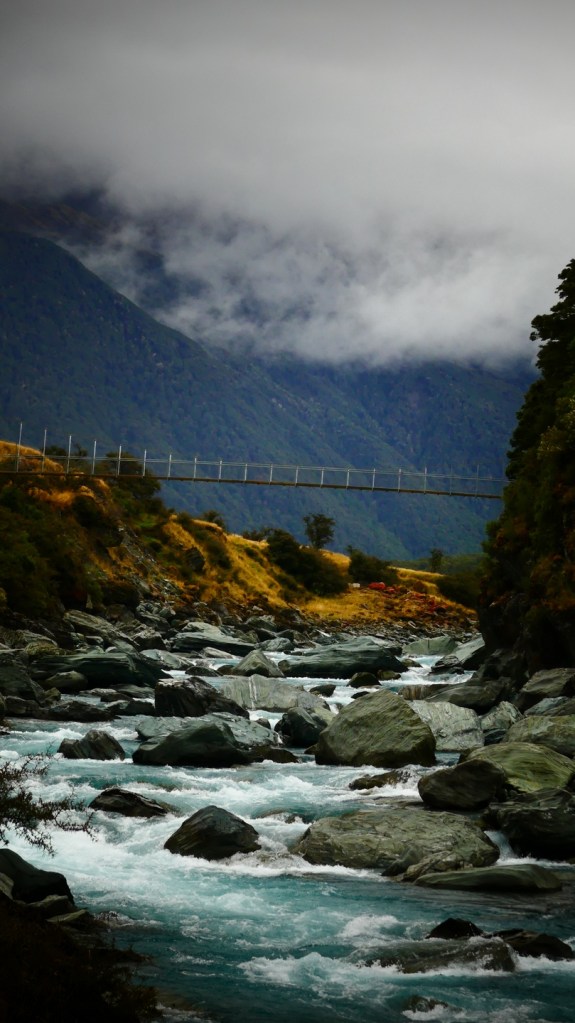
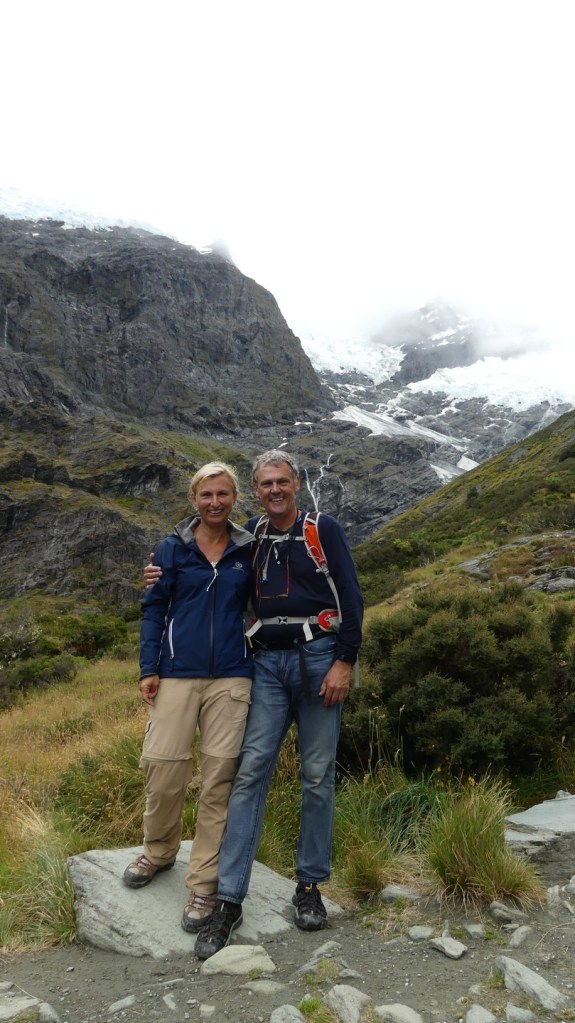
The start of our Rob Roy Valley walk, not so good weather but at least no rain. Mount Aspiring National Park is also part of the UNESCO heritage.
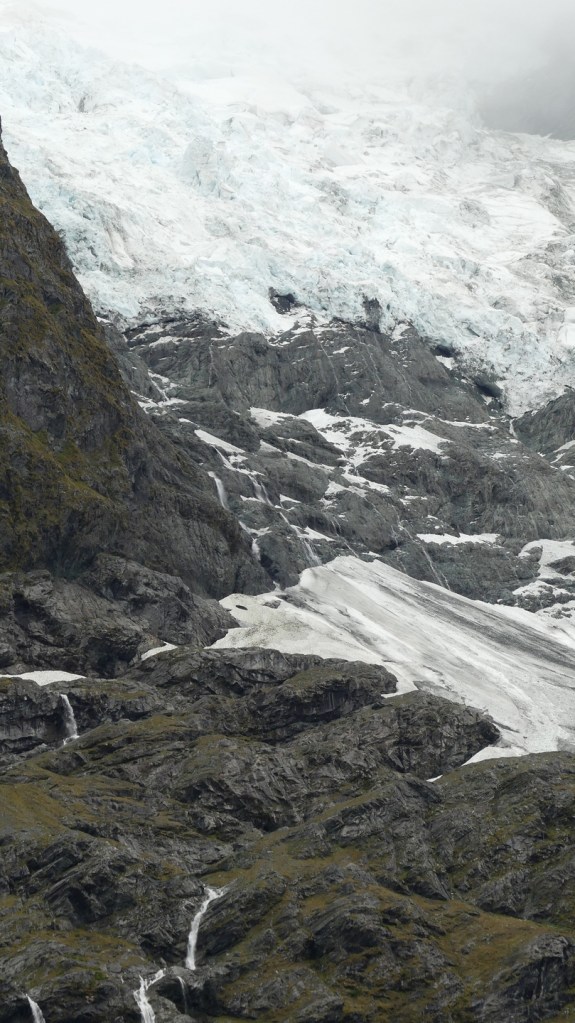
Rob Roy Glacier with lots of clouds.
We reached the lookout point after a 2,5 hour climb.
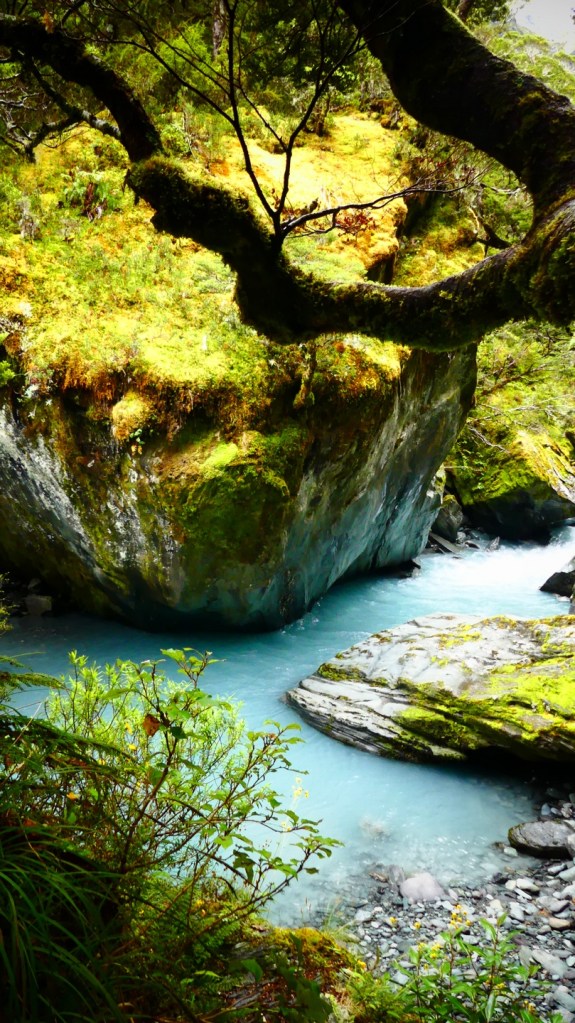
More blue from glacial water.
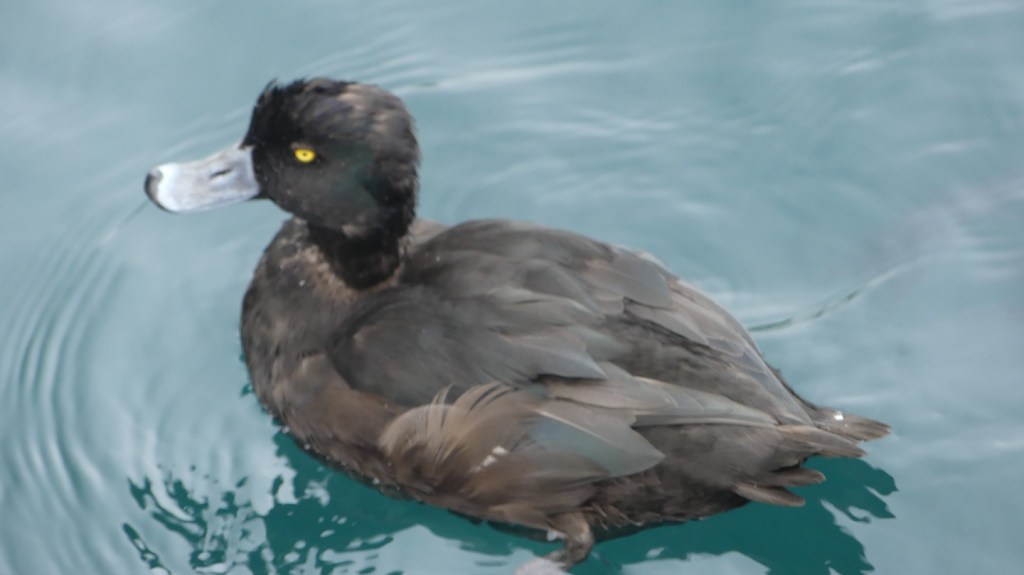
The NZ scaup or black teal. They are endemic to NZ. The maori name is papango
On our way to Glenorchy we met some young french people and they were also impressed by the nature, “c’est un bijou”, she said. We could not agree more.
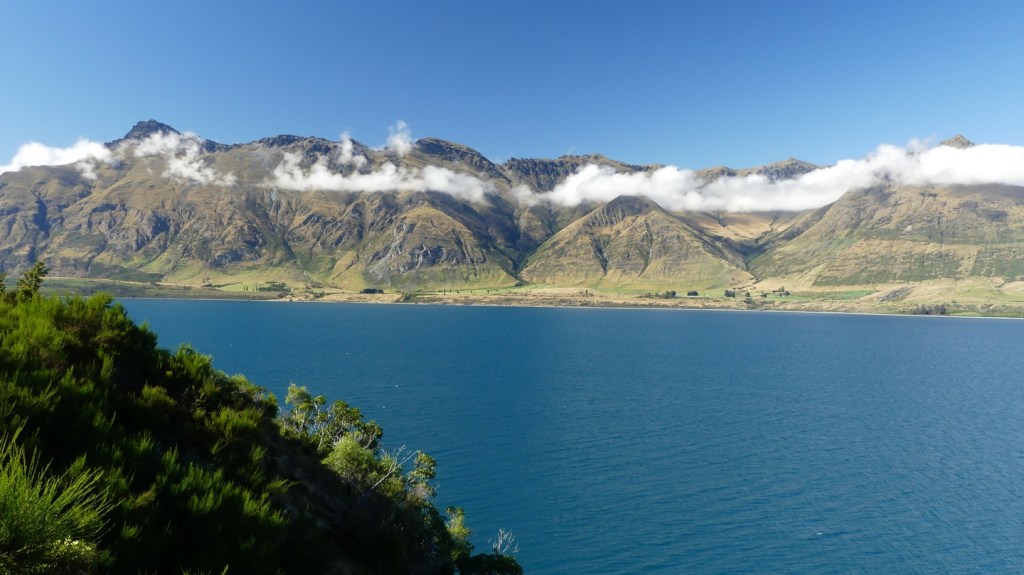
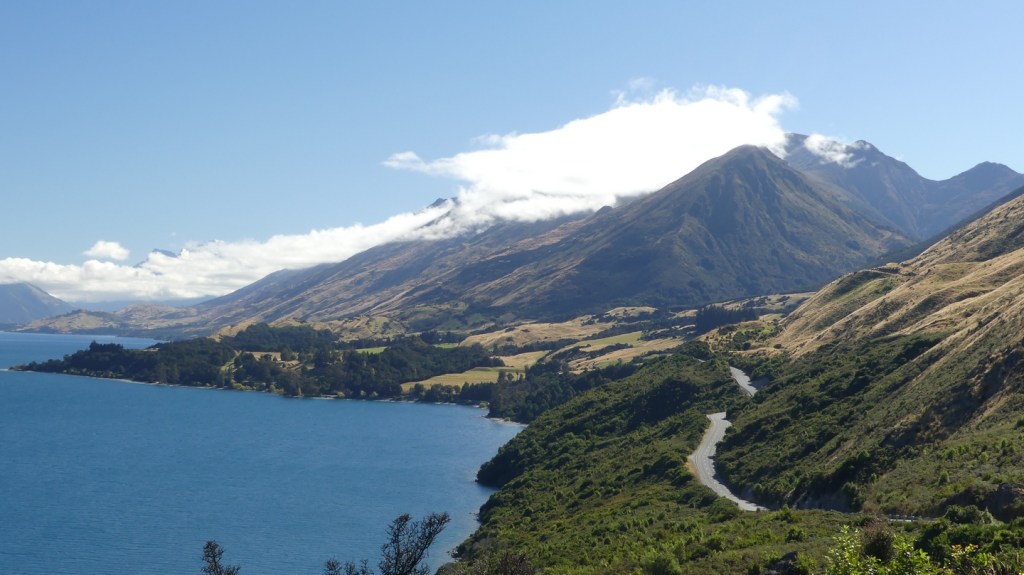
The scenic road to Glenorchy next to Lake Wakatipu.
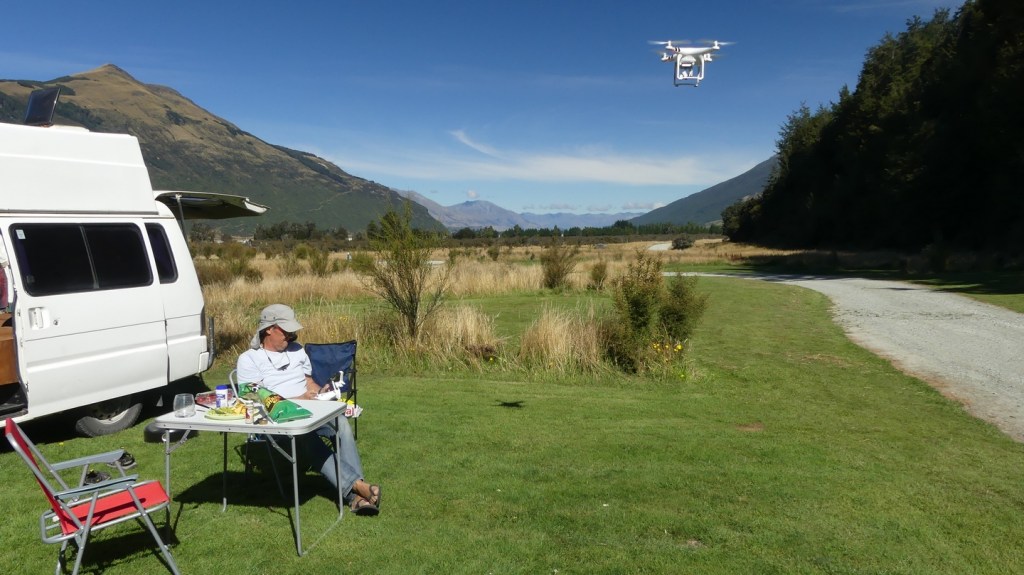
Relaxing and playing with the drone at a DOC campsite before walking part of the Routeburn track (one of the Great Walks) the day after.
Diamond lake, a 30min walk from the campsite.
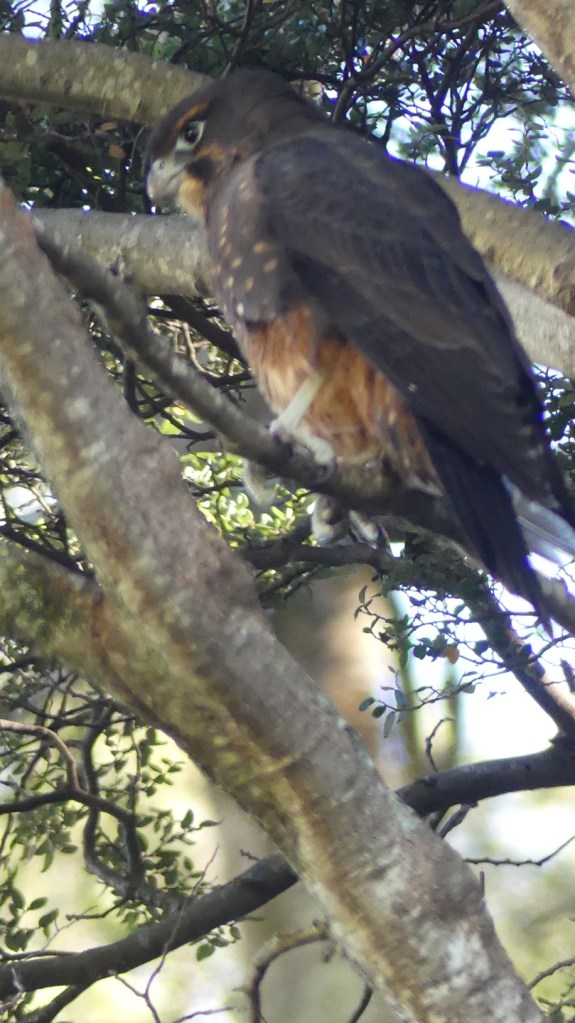
NZ falcon is endemic to NZ, can fly at speeds over 100km/h and catch a prey larger than itself. They are protected. This one was hiding in the trees next to our campsite.
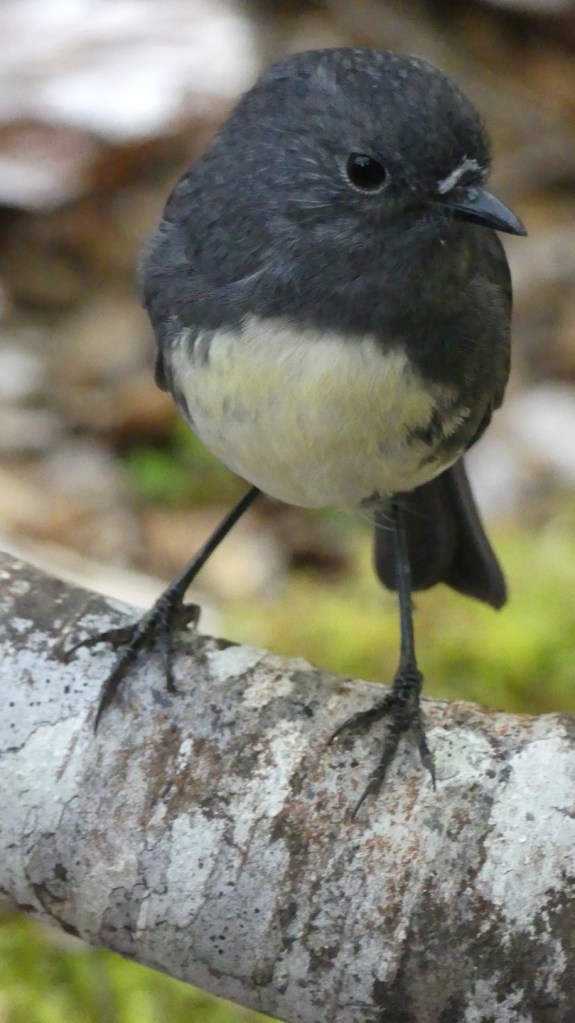
The NZ robin, Stefan’s favourite bird.
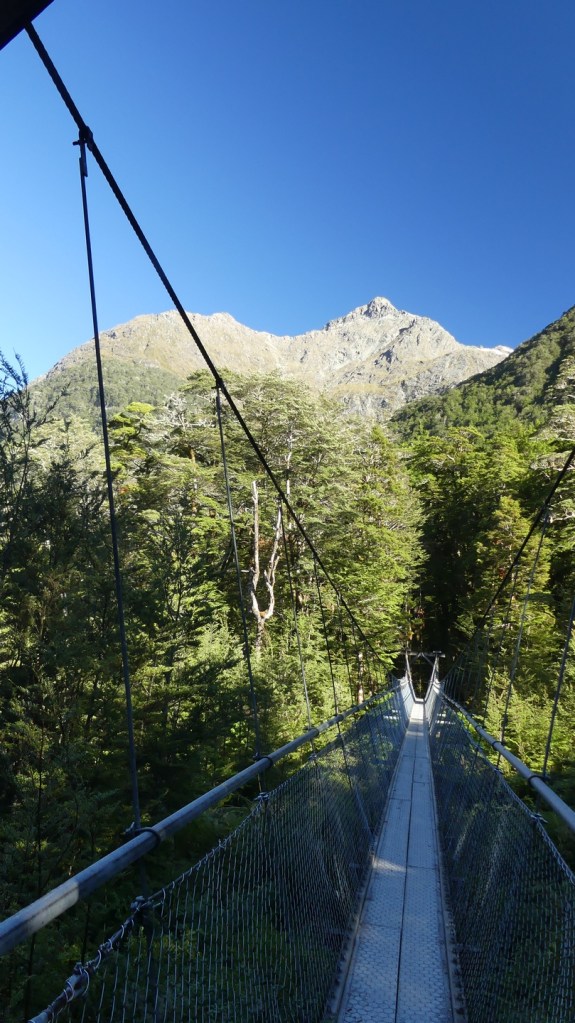
Another suspension bridge to start out the Routeburn track over the Routeburn river. The track is 32KM long and there are 4 huts along the way. You can do the whole track in 2-4 days. We walked till the second hut, Routeburn Falls Hut, and then returned. It was a 6 hour beautiful walk but we were both happy when we reached the parking lot with Burnie.
The whole track overlaps two national parks : Mount Aspiring National Park and Fiordland.
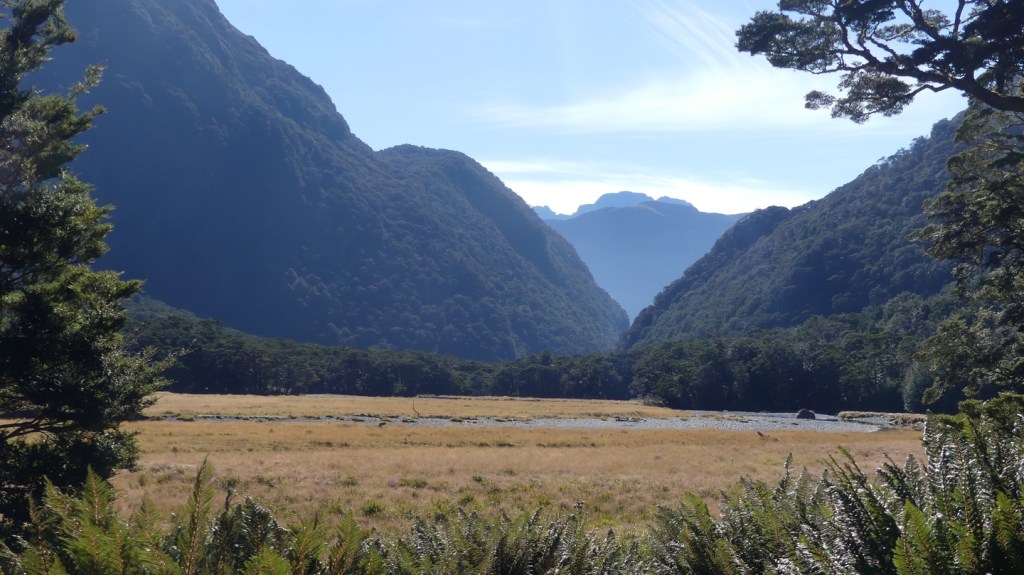
View of the Routeburn river and the mountains Mt.Somnus (2293m)and Mt.Momus (2148m). I could not stop looking at this unbelievable scenery. Nature can really make me feel so happy!
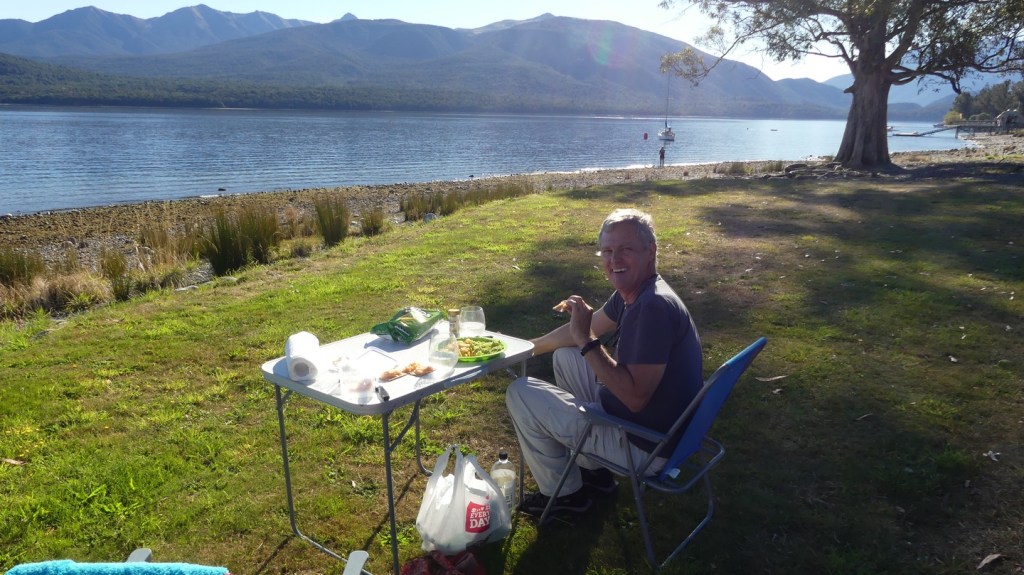
After all that walking it was time for a relaxing day near Lake Te Anau, the largest glacial lake of the South Island and on our way to Fiordland. A picknick with apple cider, crackers and smoked NZ salmon, fresh homemade guacamole and corn chips. Life is wonderful!
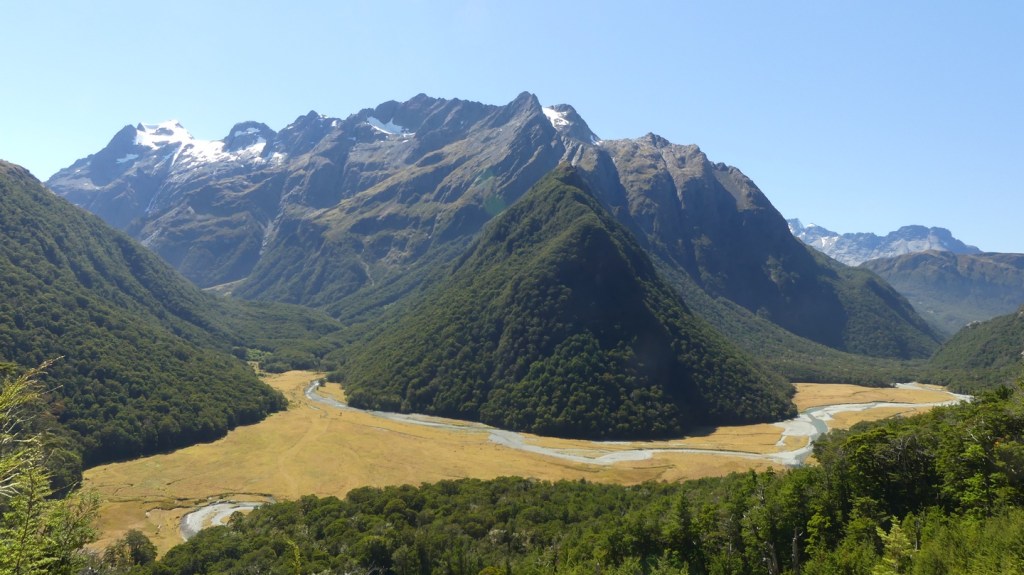
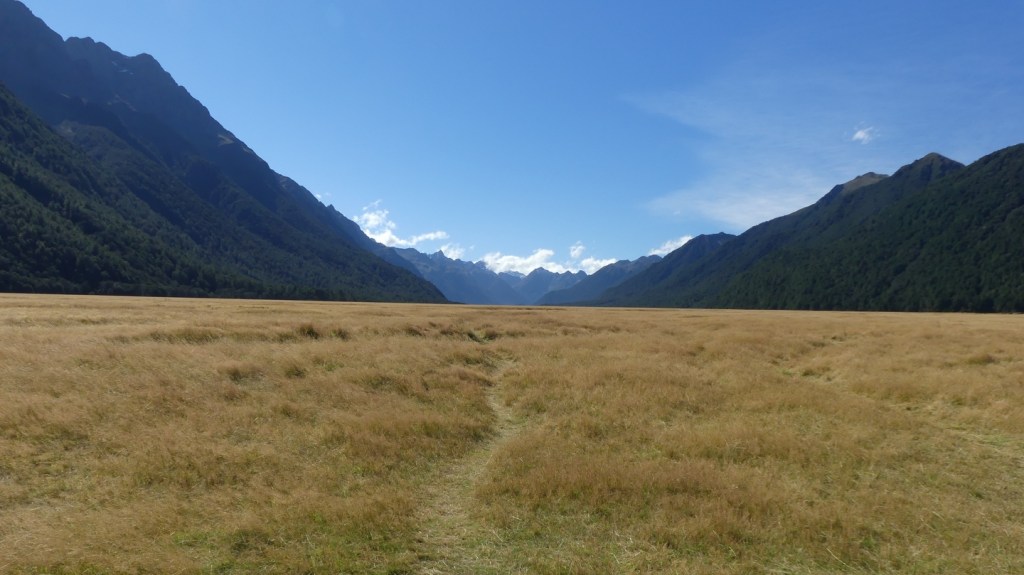
It s a 2hr drive from Te Anau to Milford Sound along a scenic route. Eglinton Valley is the first stop.
The clouds were setting in slowly….
Hollyford valley. In the distance the road we had to conquer with Burnie :-).

Luckily we have made reservations at the Milford Sound Lodge since it was fully booked when we got there and it is the only campsite at Milford Sound.

In the next blog Milford Sound and our travels beyond.


Te Wahipounamu, the South West NZ World heritage area.

Monday April 10th, we are back in Auckland ! What a wonderful journey (almost 7000KM) it has been through a beautiful country with lots of happy and relaxed people. I will try to give you some idea of this beauty although I can only say that many times reality is better than the pictures ! We are happy we could take our time and thus do a part of the many great walks as tramping is definitely the best way to see this country.
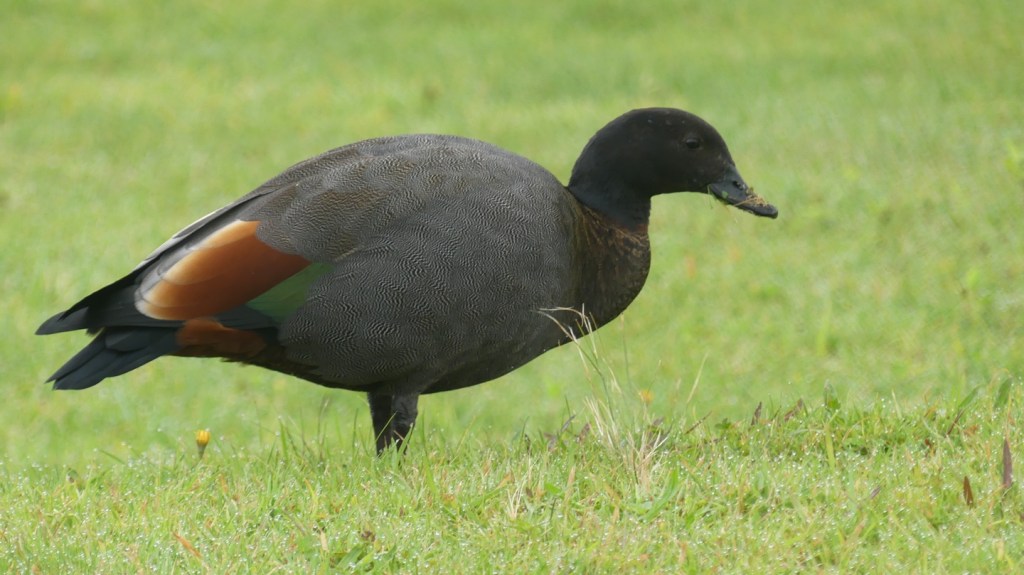
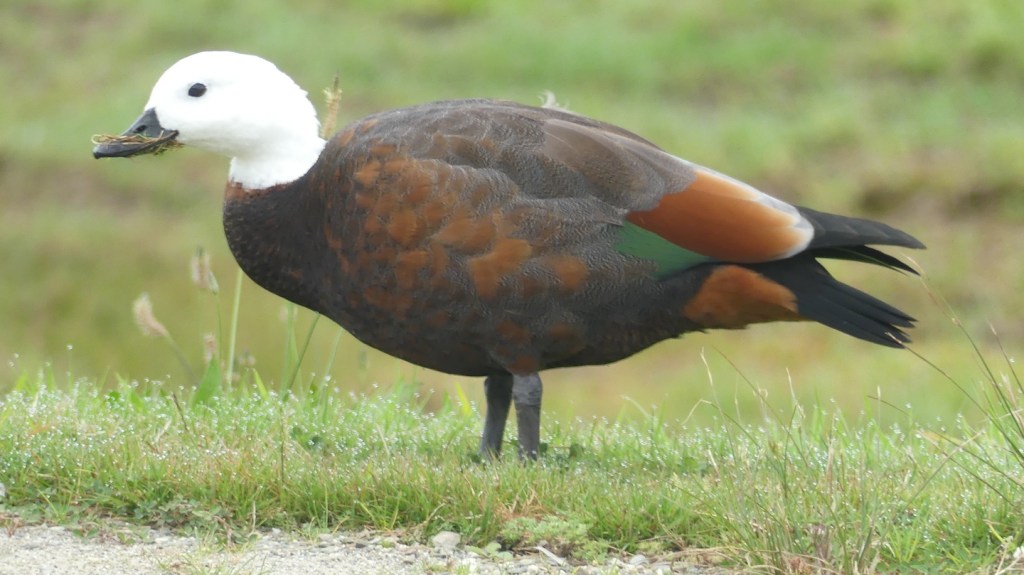
Just before leaving Lake Kaniere in Hokitika we saw this beautiful couple of paradise shellduck, this is the male.
This is the female.They are endemic to New-Zealand and form long-term pair bonds.

Te Wahipounamu was added to the list of World Heritage UNESCO sites in 1990. It covers 10% of NZ’s landmass. The glaciers (Franz Josef and Fox) form the connection between the coast and the highest peaks of the Southern Alps, MT.Cook (3724m).The area contains many of the natural features which contribute to New Zealand’s international reputation for superlative landscapes: its highest mountains, longest glaciers, tallest forests, wildest rivers and gorges, most rugged coastlines and deepest fiords and lakes.
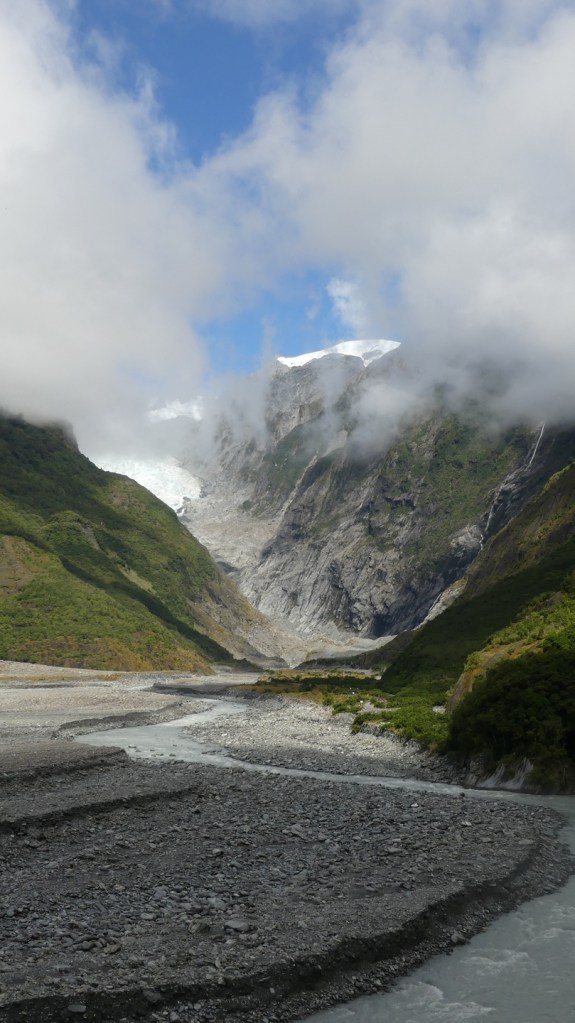
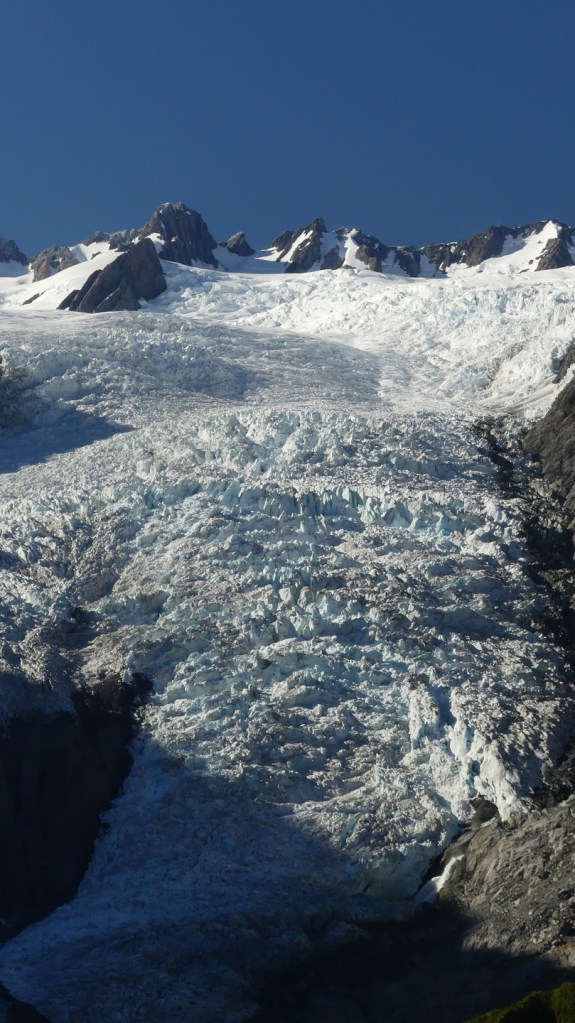
Franz Josef Glacier in the back. It was named after the Austro-Hungarian emperor in 1865.

The Maori legend tells of the beautiful Hinehukatere who loved the mountains so much that she encouraged her lover Tawe to climb with her. He fell to his death and Hinehukatere was heart-broken.Her many, many tears flowed down the mountain and froze to form the glacier. Franz Josef glacier is known to Maori as “The Tears of Hinehukatere”. Since April 2012 all glacier walks require a helicopter flight past the unstable terminal face. This is exactly what we did !
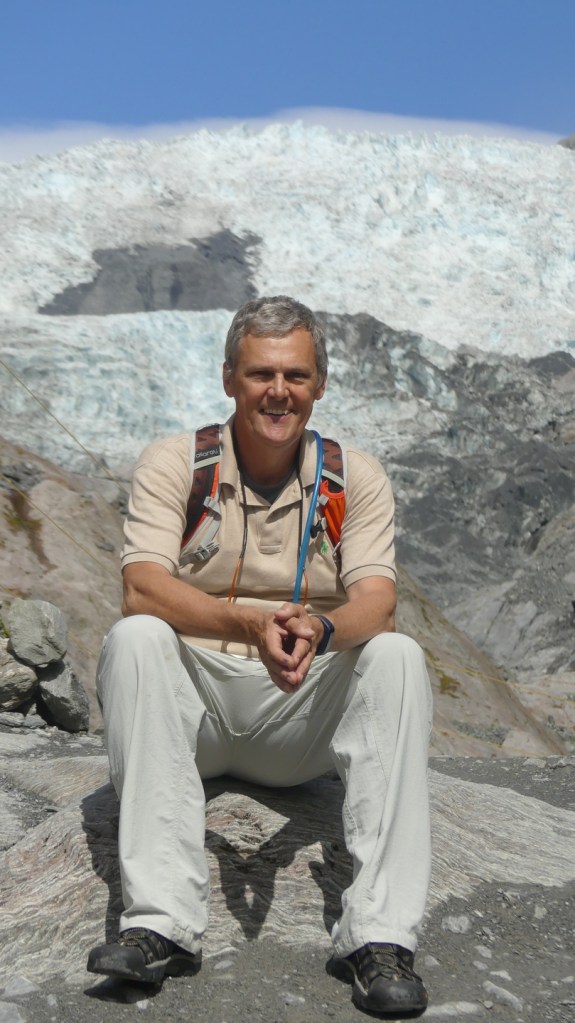
Stefan with Franz Josef Glacier in the back. The glacier is now 12km long but is rapidly shrinking since 2008.
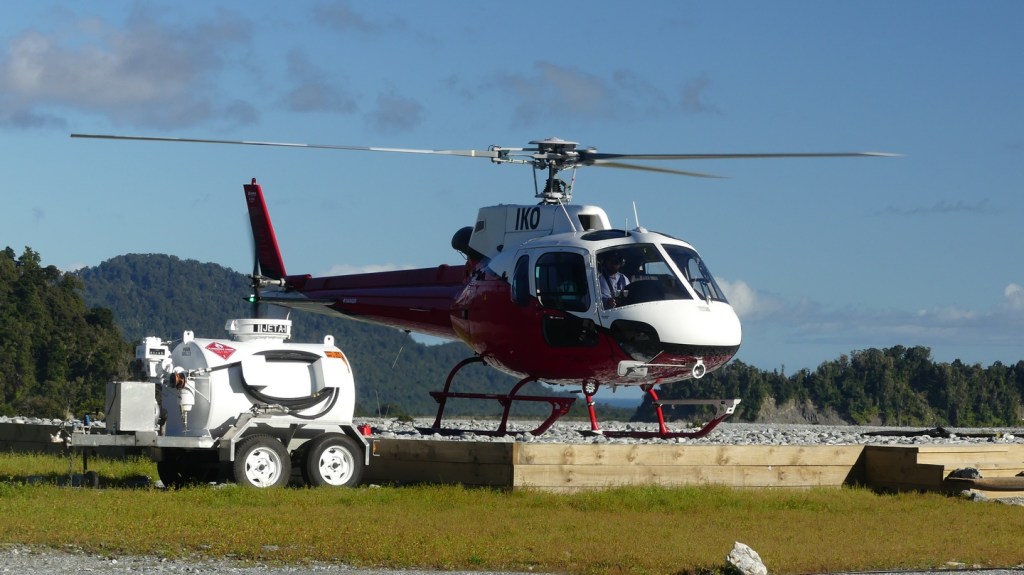
The helicopter taking us to the glacier. My first helicopter flight and I was so lucky I got to sit next to the pilot!
The blue skies made it even more magical!
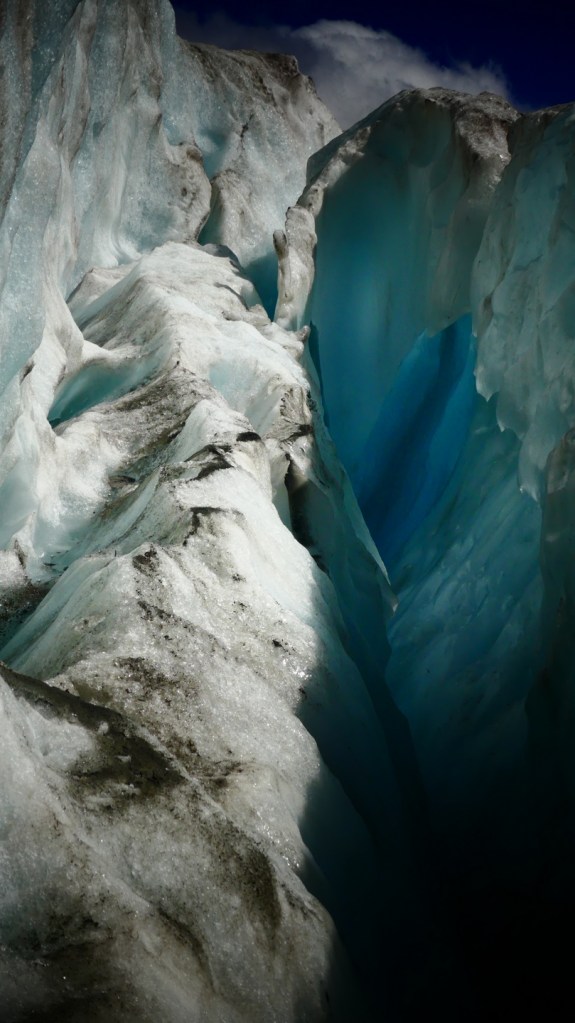
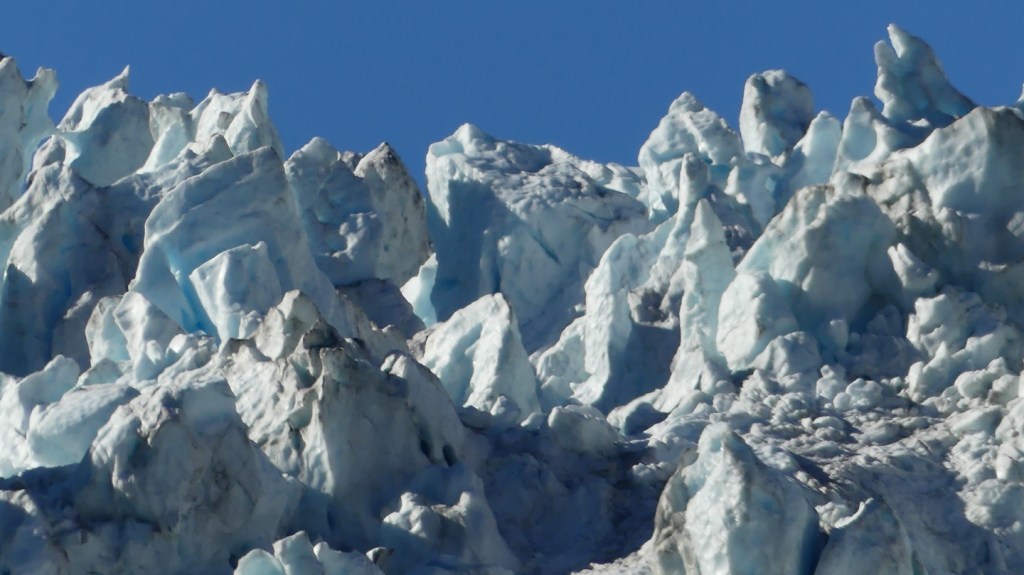
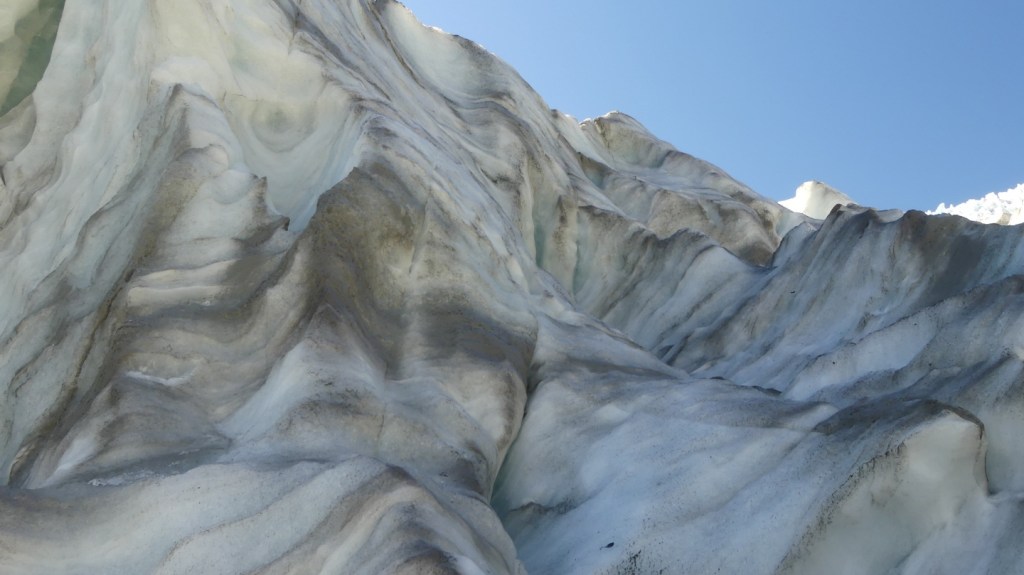
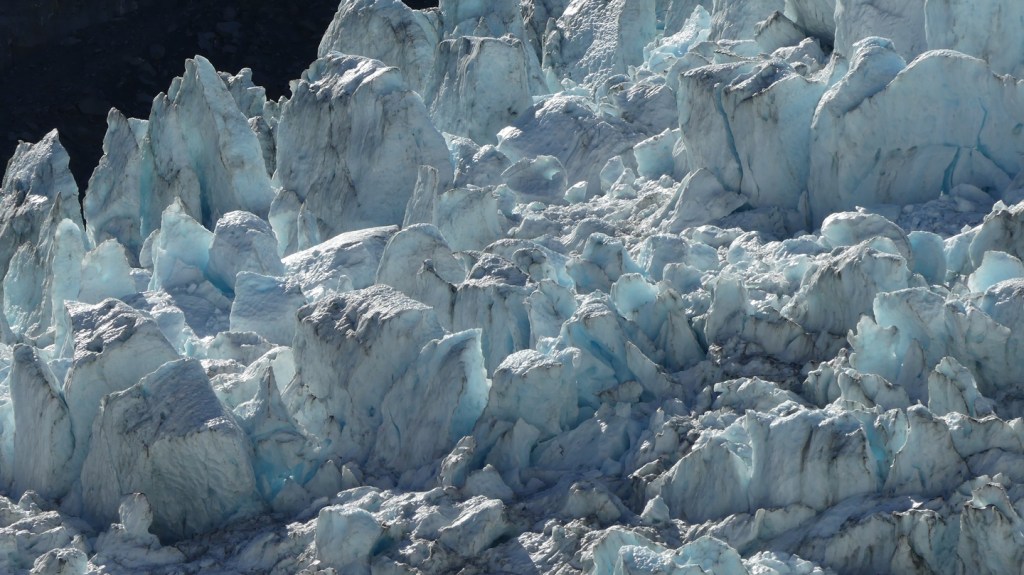
Blue ice occurs when snow falls on a glacier is compressed, and becomes part of the glacier. Air bubbles are squeezed out and ice crystals enlarge, making the ice appear blue.
Small amounts of regular ice appear to be white because of air bubbles inside them and also because small quantities of water appear to be colourless. In glaciers, the pressure causes the air bubbles to be squeezed out increasing the density of the created ice.
The tour company gave us jackets,pants and the necessary gear, crampons and boots to enjoy our walk.
Rock debris mixed with snow.
The perfect spot to take a picture! The walks change almost daily because the glacier moves constantly.
It was difficult to make a selection of all the pictures taken that day…
NZ has many glaciers but most of them on the South Island. Franz Josef and Fox glacier are definitely the most popular ones.
After we soaked in the hot pools we were ready for a great barbecued salmon and some wine. A perfect way to end a great day to remember !

The next day we drove to Fox glacier, only 24KM further. We did not go on to the glacier but made several small walks in the area.
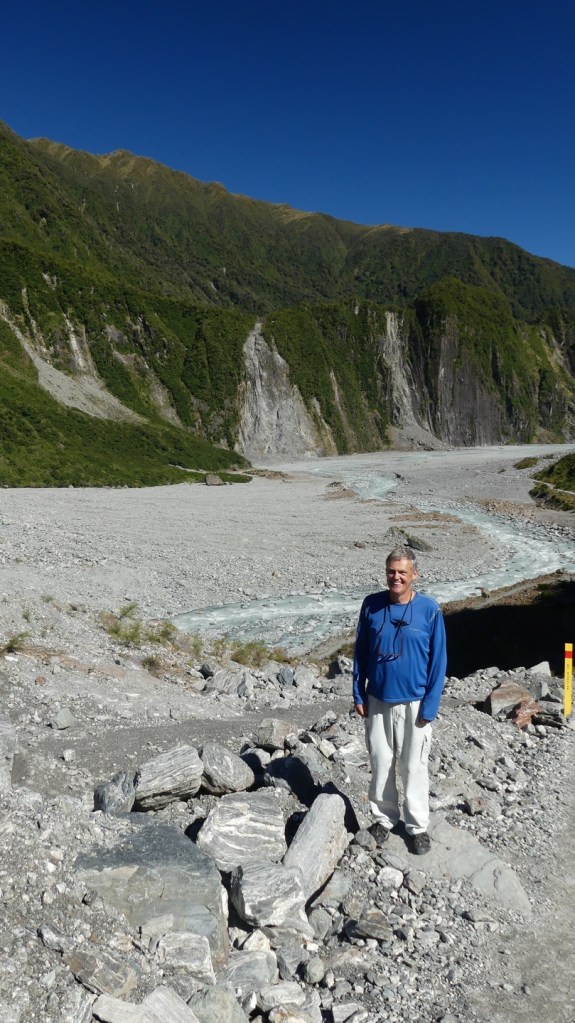
Fox Glacier is also receding – all of the glaciers here in New Zealand are. Some of it is natural  depending on the weather conditions of each year. But the acceleration of the decline in size is increasing and scientists don’t think it has ever been as fast as it has been in recently. They’re convinced that climate change is the major cause. Since 1977, the Southern Alps of New Zealand have lost 34 per cent of their ice and snow cover. The smallest glaciers have lost about 12 metres of thickness in that time. Do not wait too long to go see them!
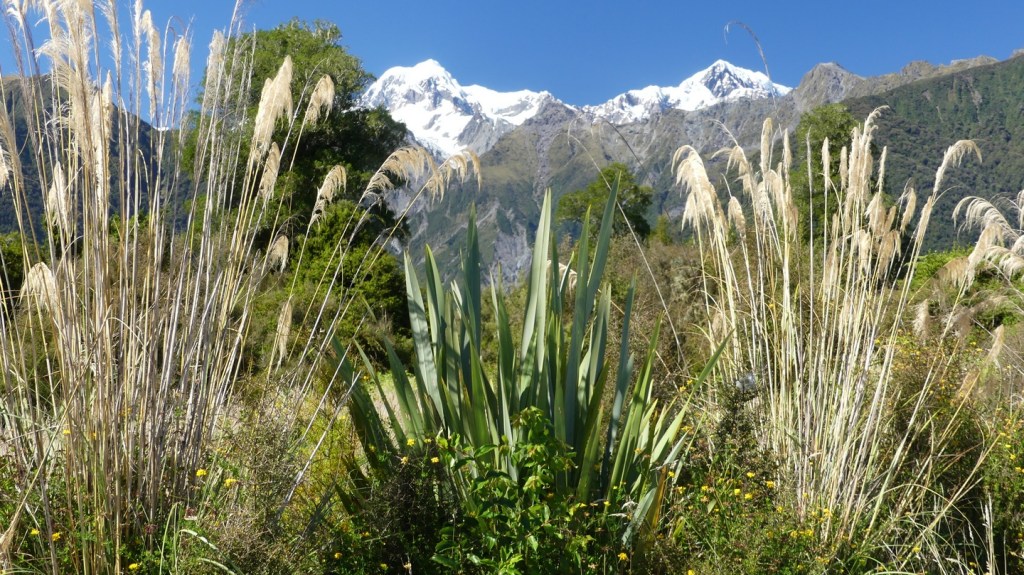
The so typical native Toe Toe grass (Austroderia) for NZ and in the background the mountains Cook and Tasman.
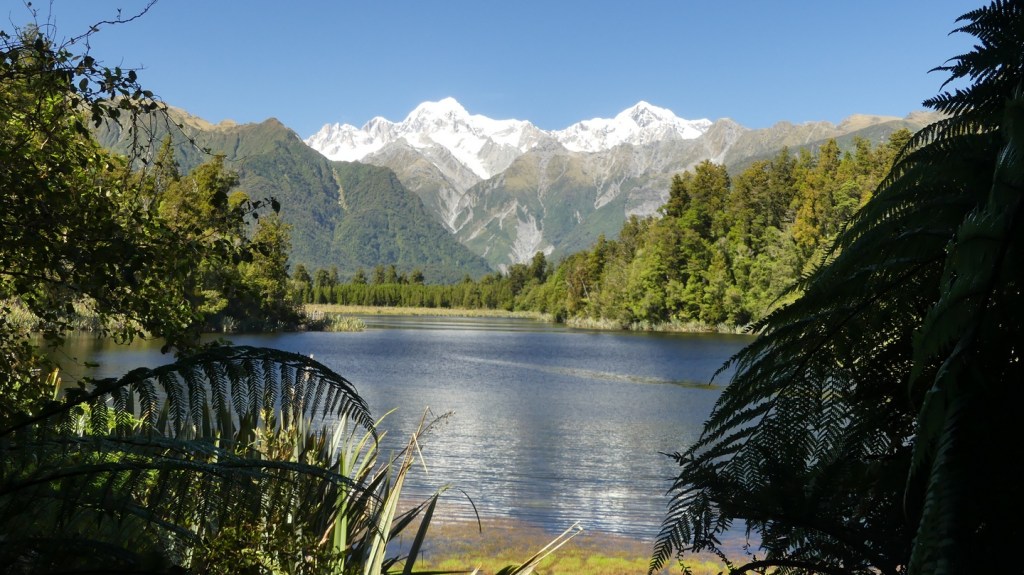
A walk around lake Matheson. The lake was formed by an iceberg when Fox Glacier retreated 14000 years ago.
A picture of Matheson lake with Mt.Cook (3724m) and Mt.Tasman (3497m) in the back.

We continued our journey to Haast and Jackson Bay all the while stopping for little walks and enjoying the landscape.
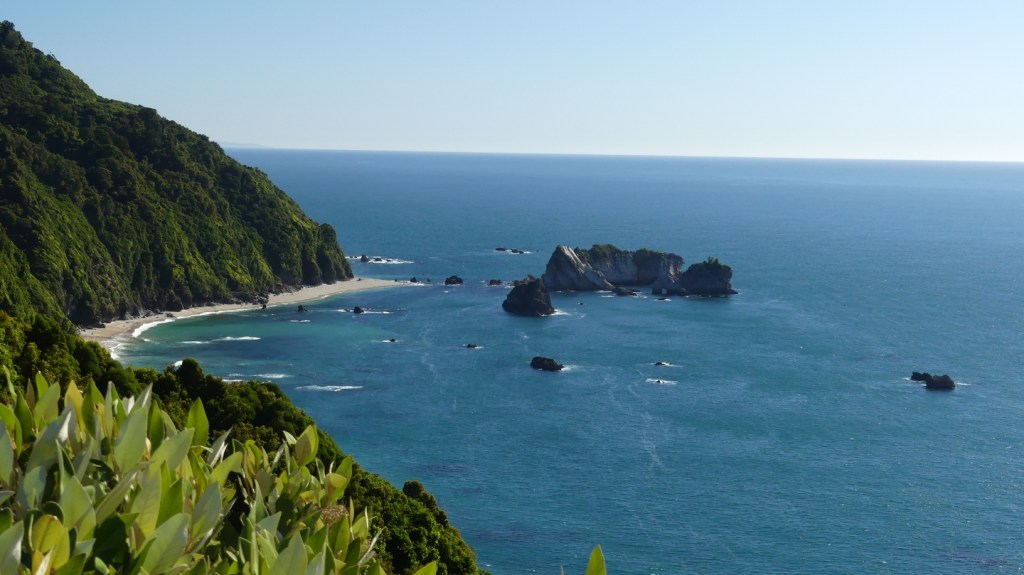
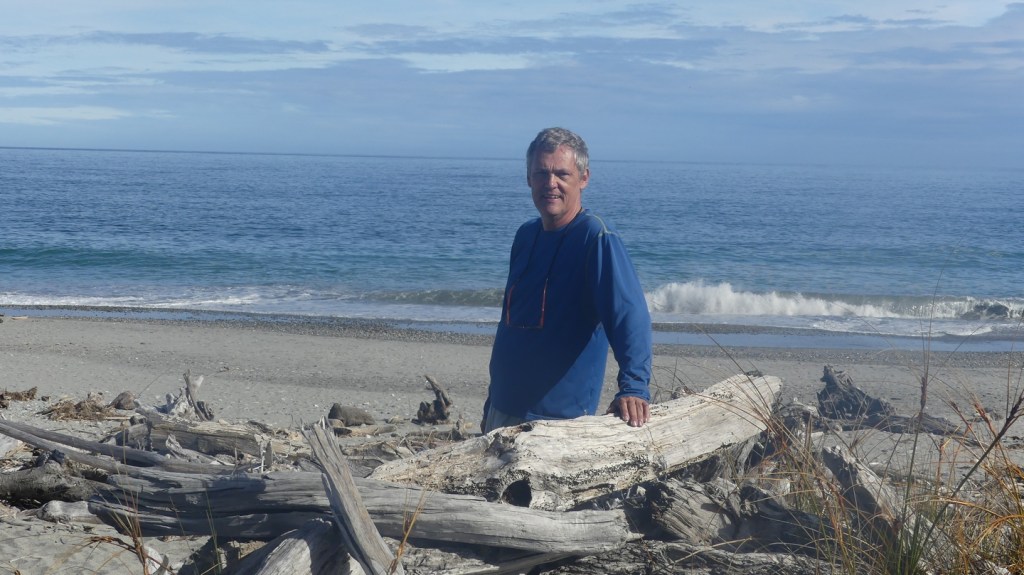
View into the Tasman Sea from Monro Beach.
Monro Beach on our way to Haast. No picknicking on the beach because of the ferocious sandflies.
Ship Creek.
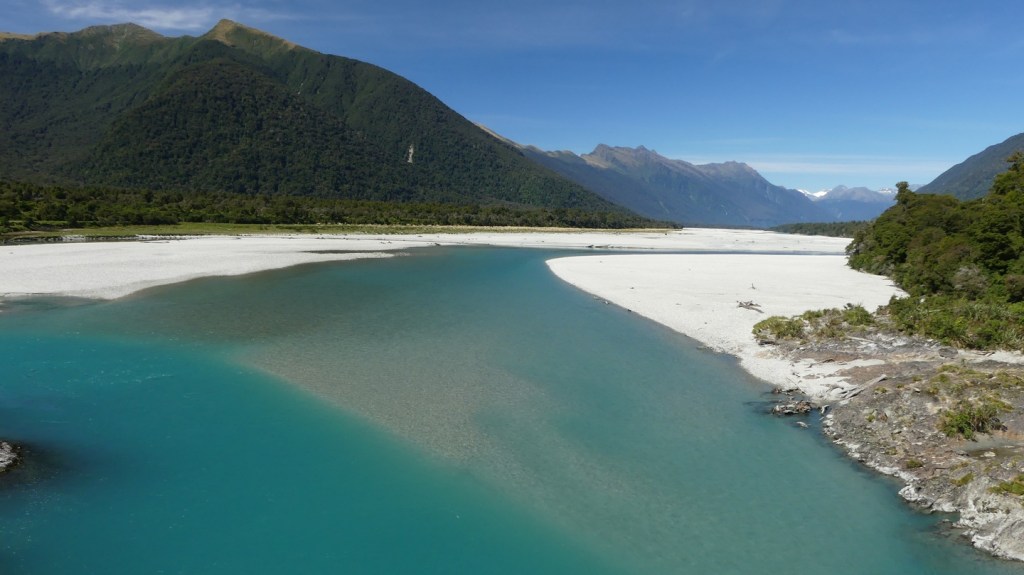
Glacial water, Arawata river, on our way to Jackson Bay.
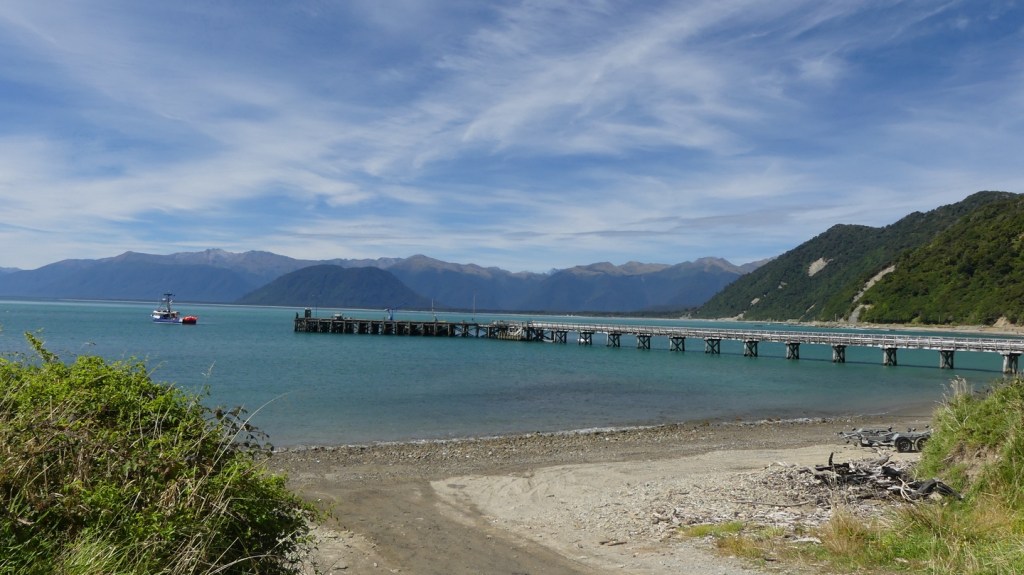
Jackson Bay is 50KM south of Haast and the land stops there. It used to be a sealing station. In 1875 immigrants tried to set up a town here but constant rain and rotted crops forced most of them leave.
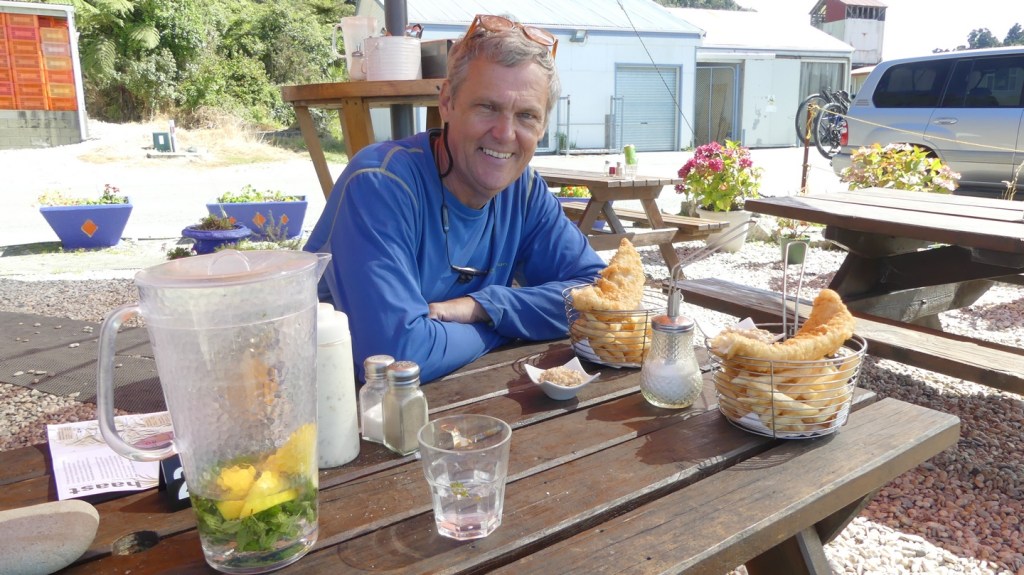
Jackson Bay is now a fishing village, so time for a good fish and chips at the Craypot.

After a night of “free camping” in Haast, nice location but infested with sandflies 😦 we drove direction Wanaka with more gorgeous views.


21 maart 2017 Nog enkele Nieuw Zeelandse indrukken

Nu we van het noorden tot aan het zuiden van NZ gereisd hebben, geef ik nog enkele indrukken.

  • Er wordt hier gul met gif omgegaan. In elk park vind je talloze vallen en vergif dozen om de allochtone dieren naar het eeuwige land te sturen. De ratten, de oppusums en de wezels zullen maar beter niet aan het snoep zitten dat hier overal in het woud ligt, en zoals vroeger de eieren of de jongeren van de autochtone beestjes eten. En de campagne heeft success: sinds de invoering ervan in 1957 is het aantal bedreigde diersoorten aan een flinke opmars bezig. Vooral de niet vliegende vogelsoorten zoals de Takahe, de Kiwi, de Kaka herpakken zich. Tegen 2050 zou Nieuw Zeeland zelfs door een ambitieus overheids programma volledig verlost moeten zijn van elk niet inheems-ongedierte. Je kan maar beter een Nieuw Zeelandse zandvlieg zijn dan een buitenlandse wesp.


Overal langs wandelwegen zie je vallen staan voor ratten of opossums
Voor elk wat wils
  • Ik versta niets van de marketing van de benzinestations hier: bijna in elk station kan je 6 cents / liter korting krijgen. Ofwel met je (gratis) kaart van het grootwarenhuis Countdown bij 2 grote merken, ofwel met een coupon voor andere merken die je krijgt bij het winkelen in de andere grootwarenhuizen. Je moet wel minimum 40 liter tanken om de korting te krijgen, en ze ronden af per 10 liter: 59 liter geeft je 50 x 6 c korting, dus 3 NZD (2 euro). Maar je kan ook je korting opsparen, dan krijg je 12 of 18 cents als je telkens  minimum 40 liter tankt. Of als je voor 200NZD koopt krijg je 10 cents korting.  Ook de stationsbedienden kunnen het niet echt goed uitleggen… Enfin, ik snap niet waarom er geen enkel tankstation is dat gewoon 6 cents korting geeft, zonder dat een kaart of coupon nodig is. Terloops gezegd: we tankten voor 1,03NZD/liter diesel in Auckland, maar hier in Invercargill is het goedkoopste tankstation 1,33 NZD/liter. Ik denk dat er nog wat speling op zit …

  • We hebben met Burnie al ongeveer 100 km gedaan op metal roads, dat zijn niet verharde wegen. In de verlaten gebieden loont het  niet om overal asfalt te leggen, en dan schakelt de weg over op zand. Op onze laatste trip moesten we 30 km over wasbord weg, waar het wegdek als een golfplaten dak is, maar met golfjes van zo een 5 cm diep. Na wat geexperimenteer blijkt dat je er best over rijdt ofwel aan 30km/uur, ofwel aan 60km/uur (als er geen grote putten zijn!). Het maakt niet veel verschil: onze Burnie rammelt dan aan alle kanten, en zelfs de sleutelbos valt dan uit het stuurcontact! Maar dat houdt onzen Burnie niet tegen, hij heeft dat niet vandoen eens hij gestart is. Ik vraag me zelf af of we wel een sleutel nodig hebben, deze is zodanig verweerd dat ik denk dat een schroevendraaier hem ook wel zou starten. Niet dat ik dat ga proberen hoor. Hier leggen ze uit hoe zo een wasbord weg onstaat.
Op weg naar een wandeling (Rob Roy walk) via een metal road, kwamen we 9 forden tegen…
…Een ford is een kruising van een beekje met de weg, zonder brug. Naargelang de recente neerslag kan dit zeer gemakkelijk zijn (zoals hier), ofwel voor een onoverbrugbaar obstakel zorgen. Terugkeren is dan de enige uitweg.
Zeer bizar: zeer weinig kippen hier al gezien. Deze twee bij onze slaapplaats aan de suspension bridge van Clifden vormden de uitzondering.
Is dit de voor of achterkant van een auto?
‘s nachts kan het al koud zijn. Soms slaap ik zelfs met mijn kousen aan, en ‘s morgens schiet ik dan vlug in mijn sletsen om naar de douches te gaan. De sandalen zijn voor het betere stapwerk.
Zie je hem?
Invercargill Southland museum and Art Gallery wc’s: hopelijk is het bezoek aan de WC’s voor een kleine boodschap


En tenslotte: