On Tuesday June 13, we decided to leave Bora Bora and make our way to Maupiti as a possible stop on our way to Aitutaki. Only when we got there around 4PM the swell from the south was about 2M and breaking waves across the pass made it, in our opinion, too dangerous to enter. Once entered we also were not sure how easy it would be to leave Maupiti again and we wanted to get to the Cooks. So we continued sailing… The sea became very rollly during the night and with waves of about 3M, winds of 15KTS I was getting sea sick. My body was not used to this anymore. I had not taken anything because I was sure I would be able to do without. I guess not. After being really sick I decided to take one of the pills just before going for my 3HR sleep and sure enough I woke up feeling much better. I continued to take them every 12hours till we got to Aitutaki and felt fine. Hopefully I can get to Palmerston without one.
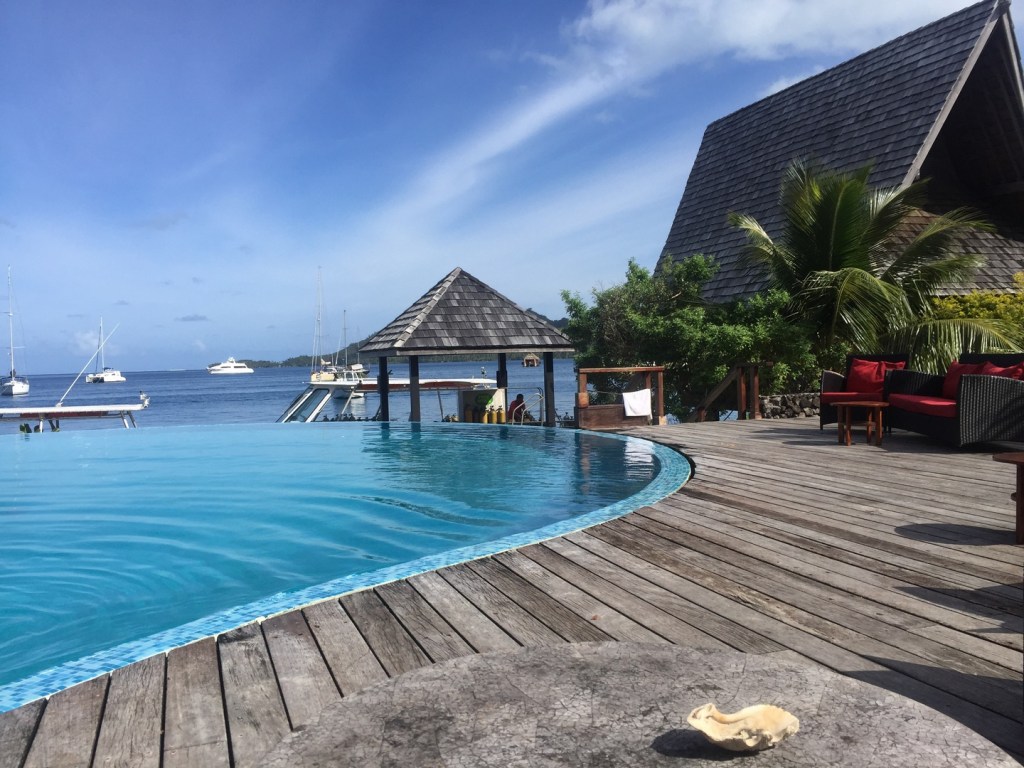
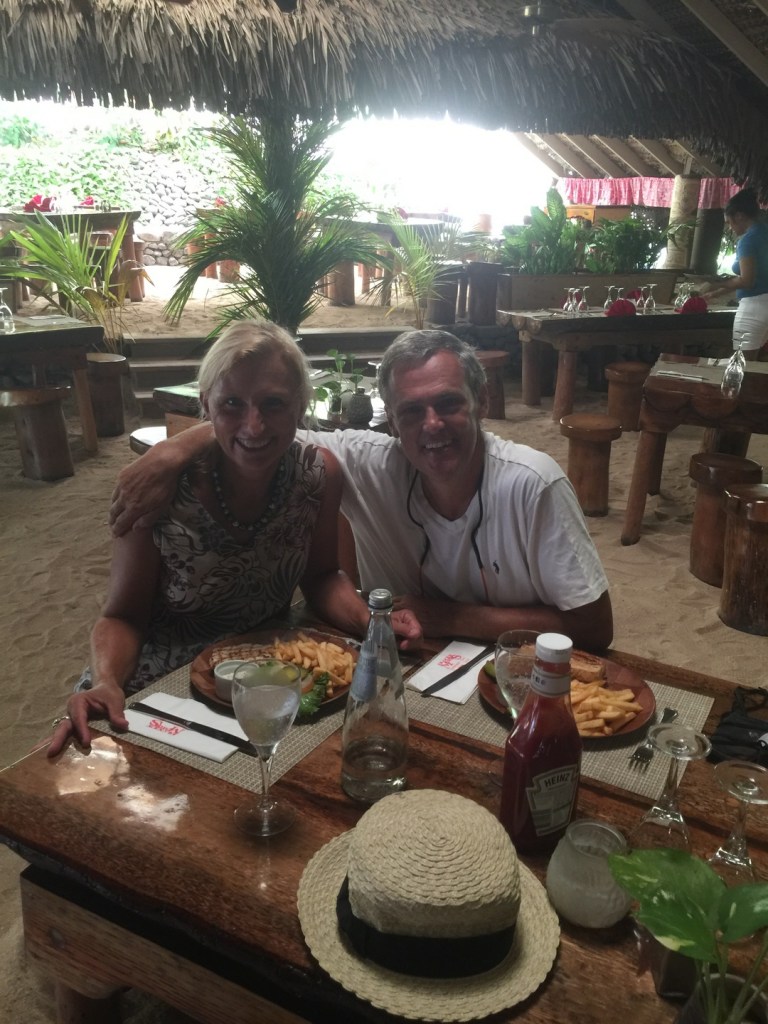
“waiting” for the wind to pick up in Bora Bora Kai Mai Marina with free wifi…Enjoying the “waiting” in Bora with Happy HourLunch at Bloody Mary in Bora. Another celebrity name they can add to their list!The captain getting diesel, 310L at .78cents (tax free). Still 240EUR though.
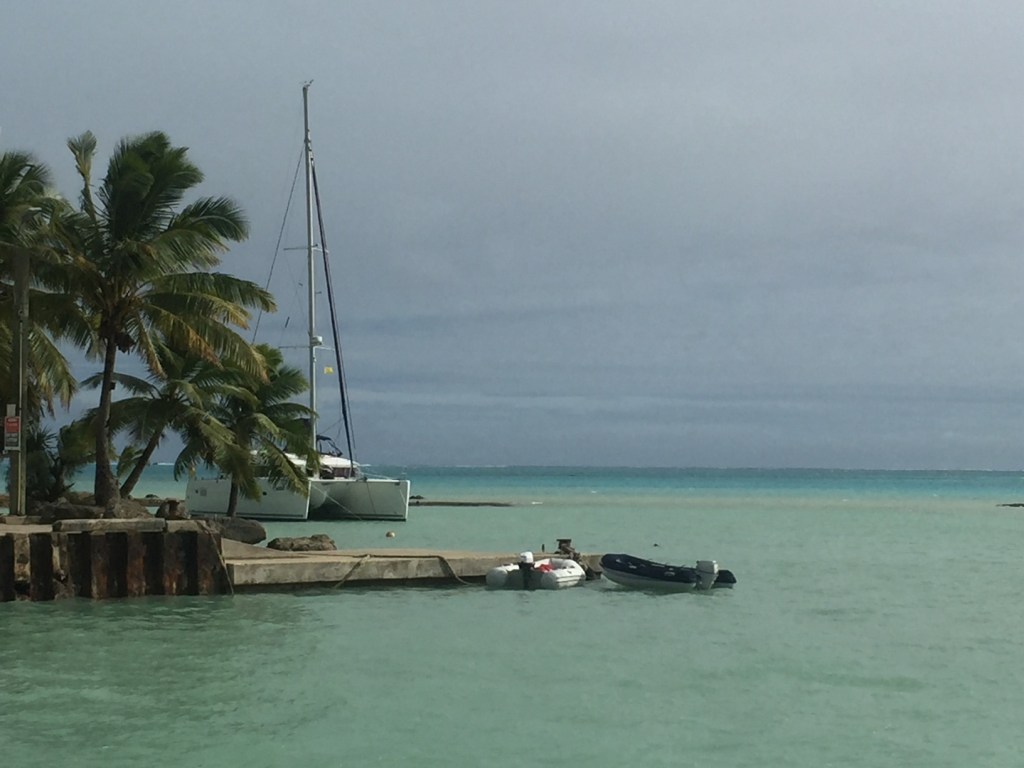
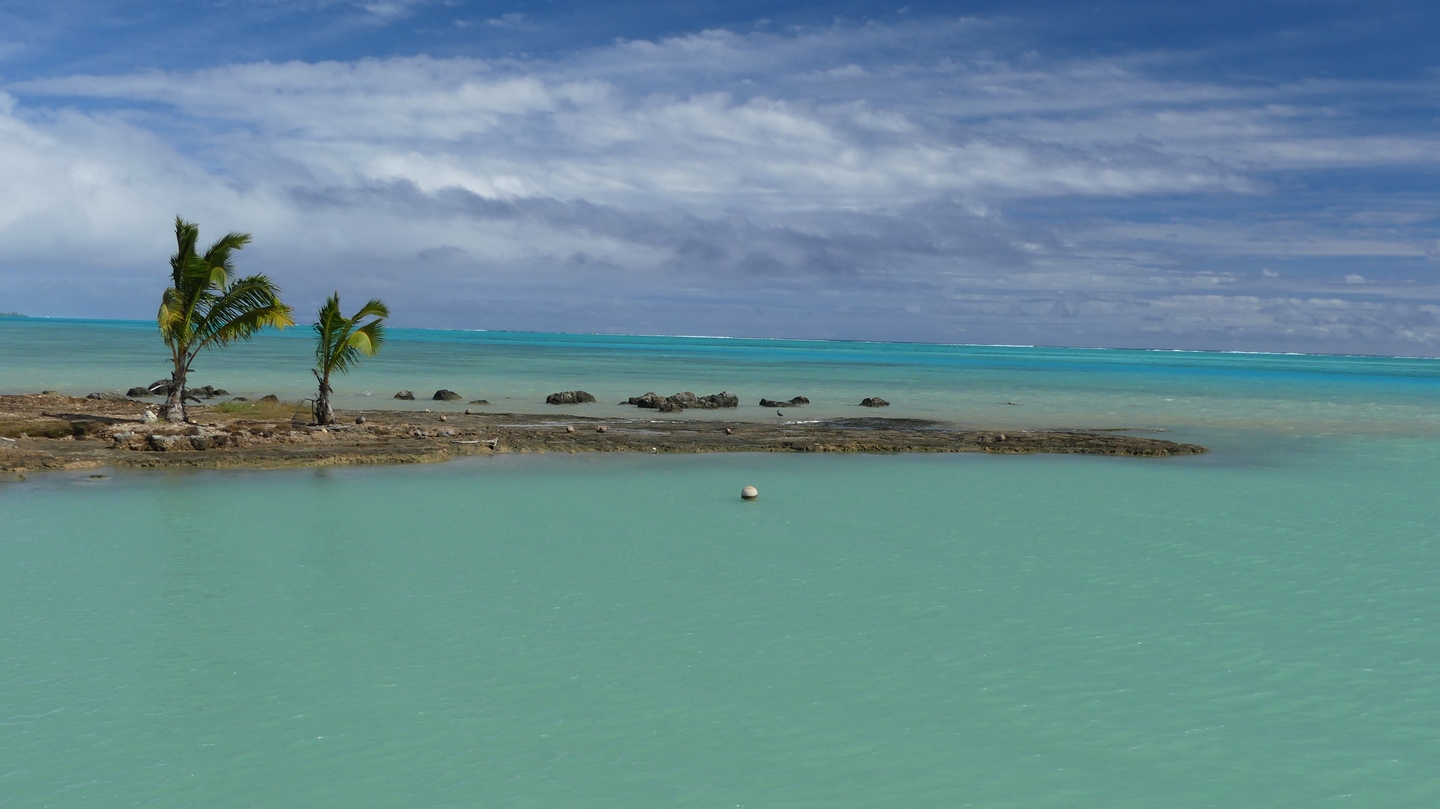
We arrived after 4 days of sailing on Saturday morning around 8AM but had to “heave to” twice during our trip so we would not arrive in the dark at the pass. We were not sure if we should enter right away since we knew it was low tide and the water was leaving the lagoon at a rapid pace. The Captain did not want to wait another couple hours so I went upfront ready to drop the anchor in case it was needed and we pushed Sanuk against the current of 5KTS into the lagoon. Our depth meter said “0”, a good thing Stefan did not mention this while going in or I would have flipped! We are now anchored in the little harbour of Arutanga in a depth of 2M and tied to 2 palm trees. We have been here a week and no other yacht has arrived here. This is definitely not an easy pass to navigate through.
Sanuk anchored in 2M deep water in the little harbour of Arutanga, the main village on Aitutaki. About 2000 people live on the island.
Aitutaki is an “exclusive” tourist spot mainly for Australians and New Zealanders looking for a winter break. In June 2010 the island was nominated “the world’s most beautiful island” by the founder of the Lonely Planet Guides. Unfortunately this week the weather has been grey and rainy till thursday. Not fun when you are only here for the week in an expensive hotel.
Most of the Cook Islands (15) were discovered by Captain Cook, hence the name but the first European to set foot in Aitutaki was Captain Bligh in 1789 with the Bounty, just a couple weeks before the mutiny. The Cook Islanders are polynesian and the main language is Cook Island Maori but they all speak english with a heavy NZ accent. The Cooks islands are independent since 1965 but affiliated with New Zealand for defense, foreign affairs and finances. Cook Islanders are NZ citizens.
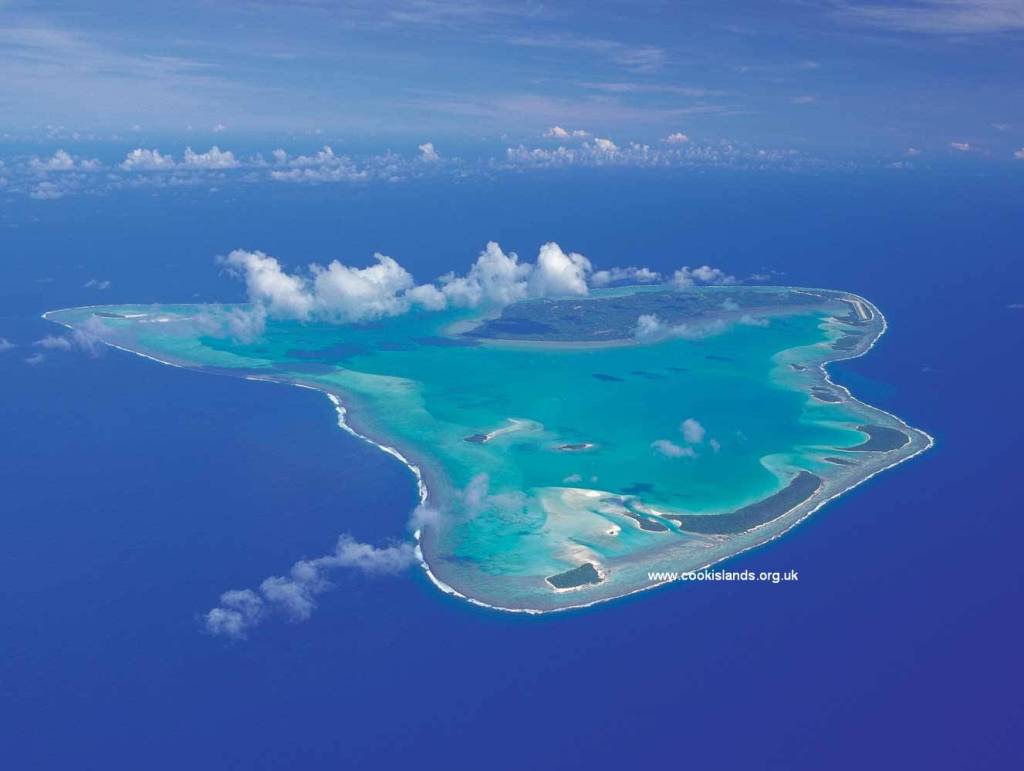
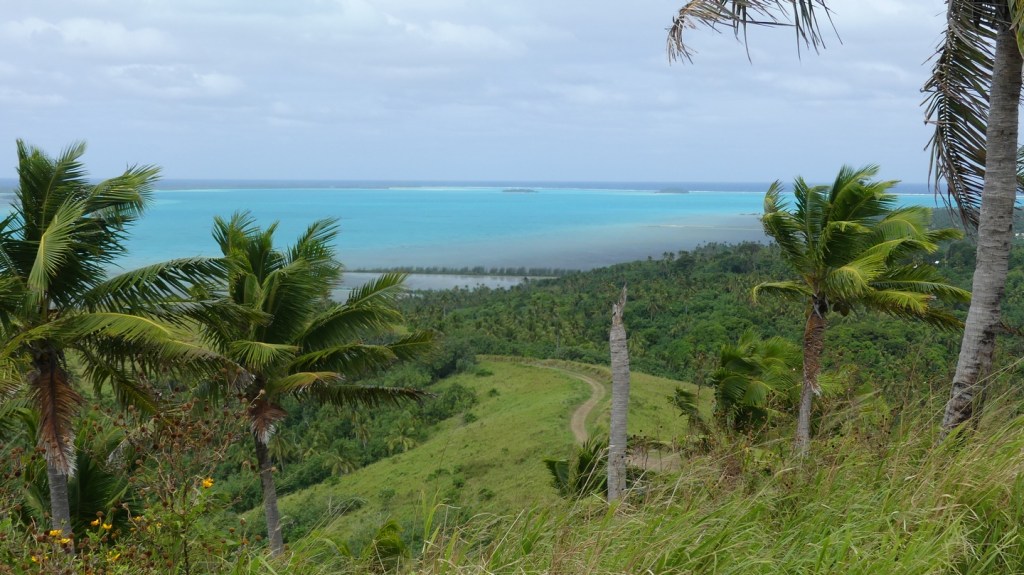
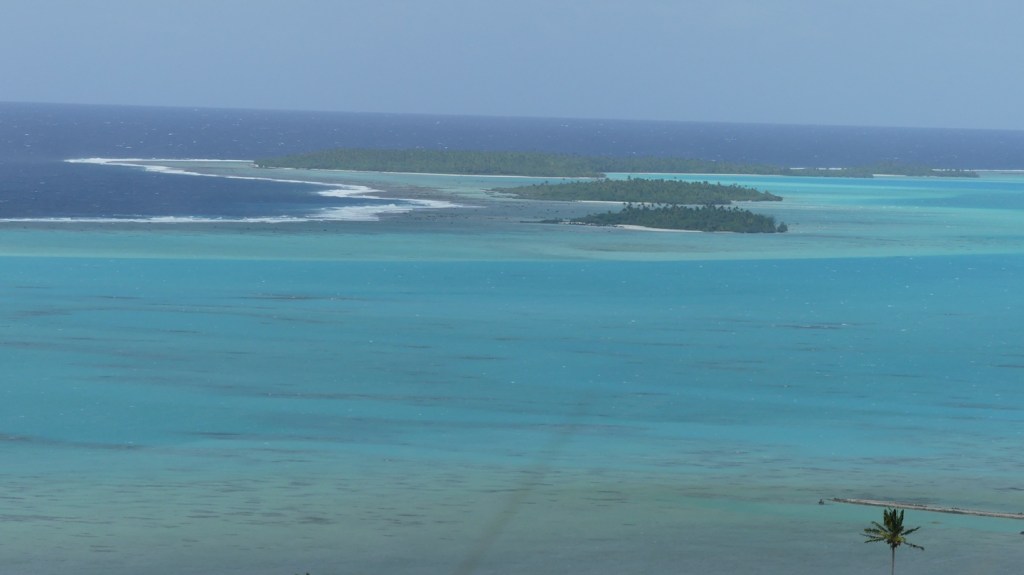
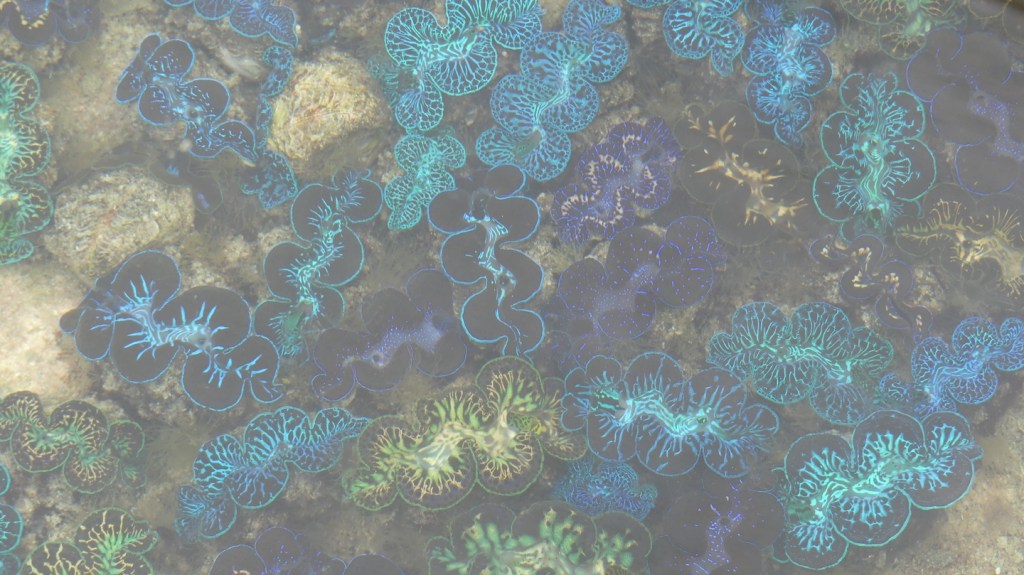
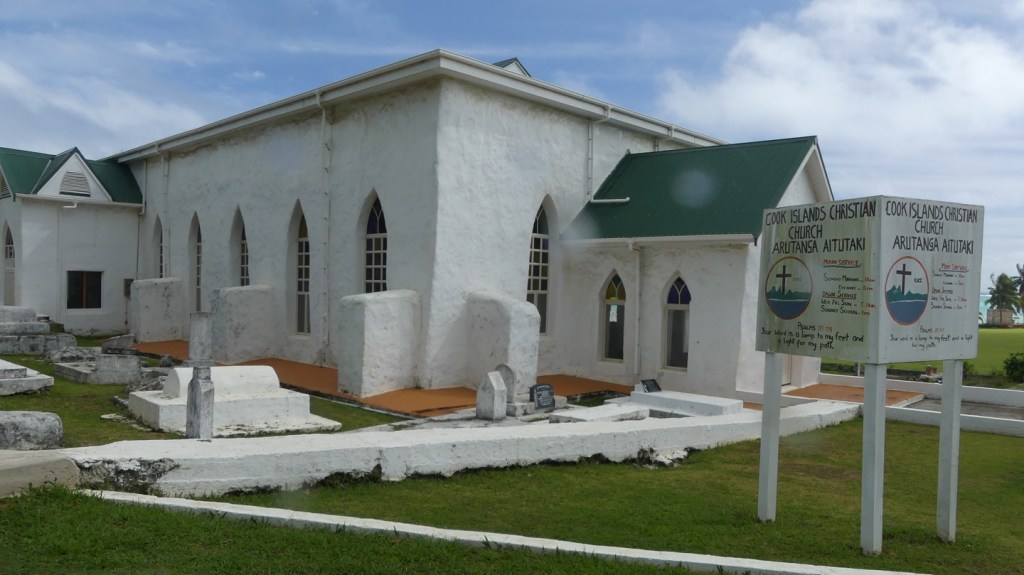
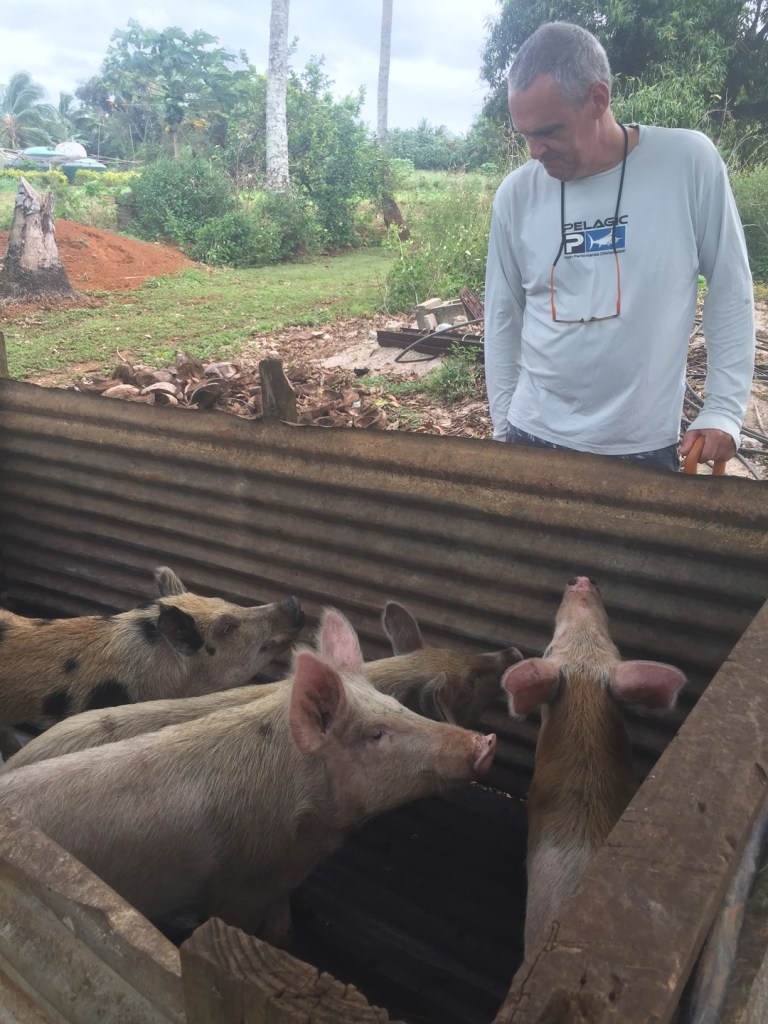
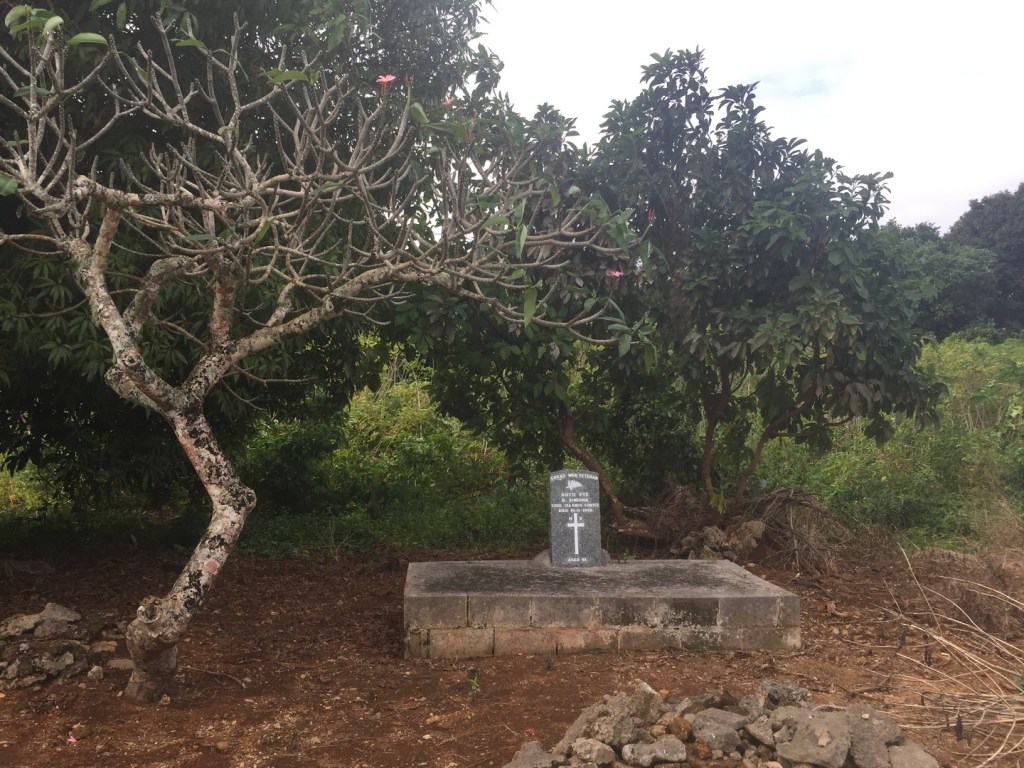
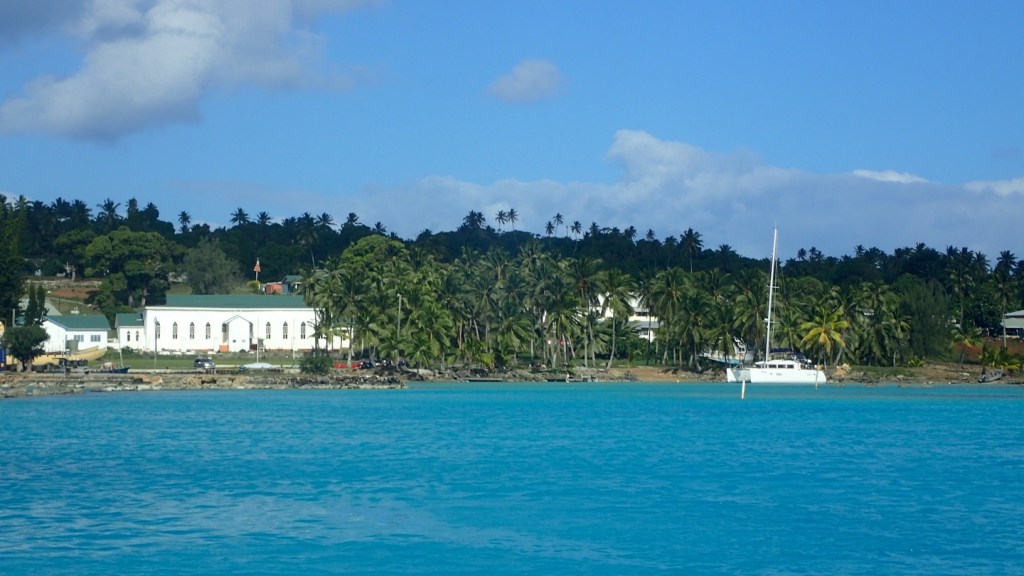
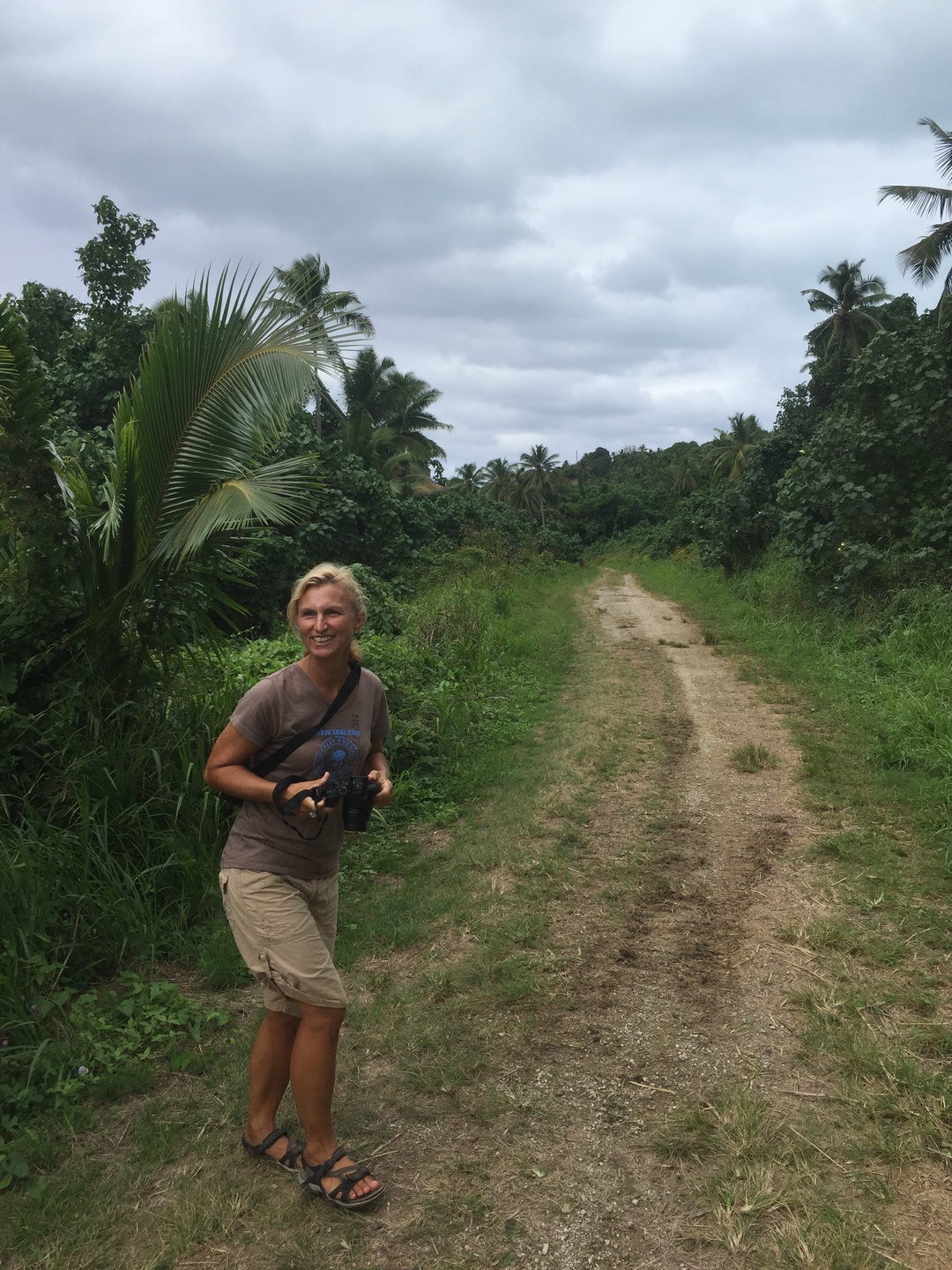
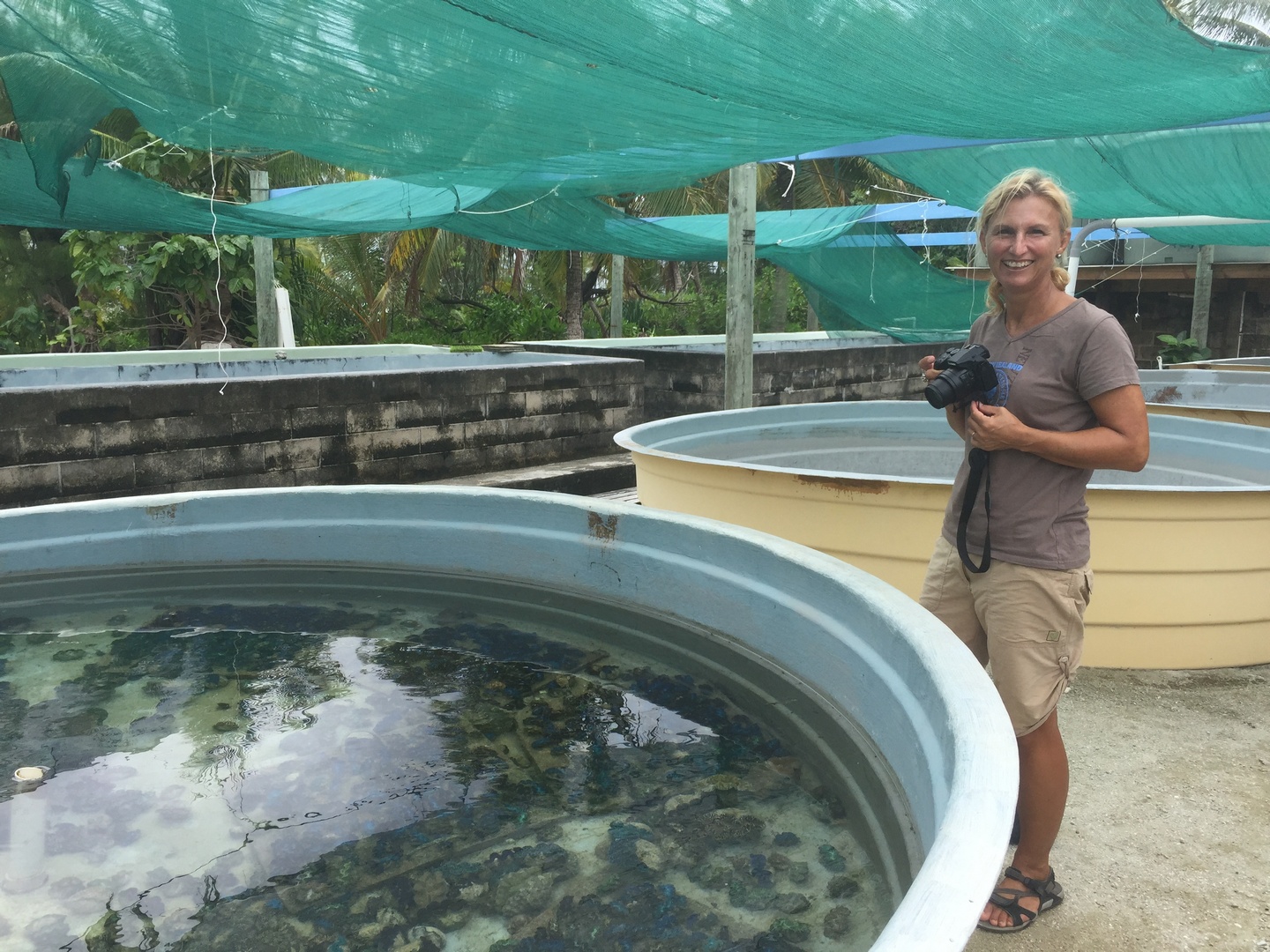
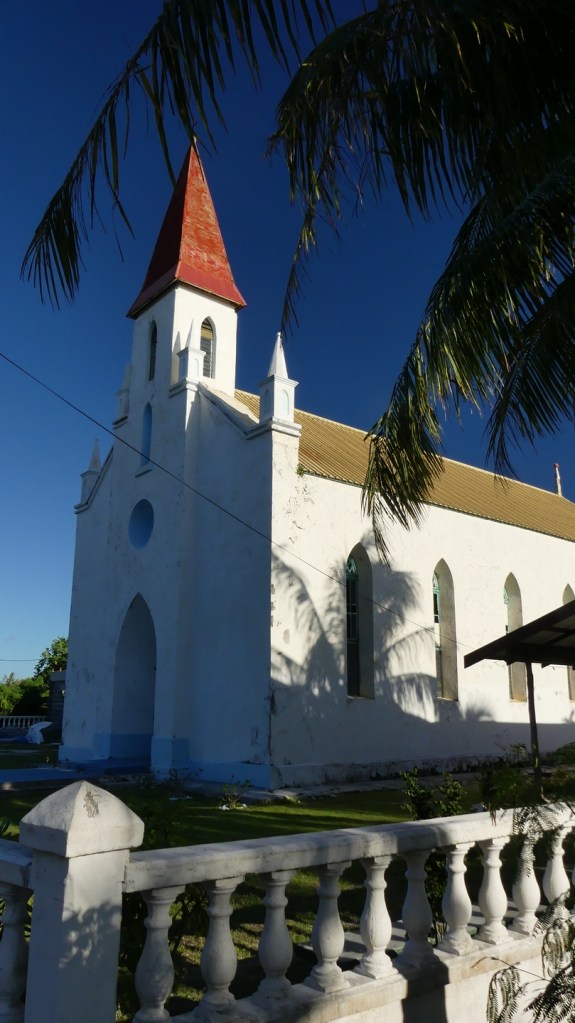
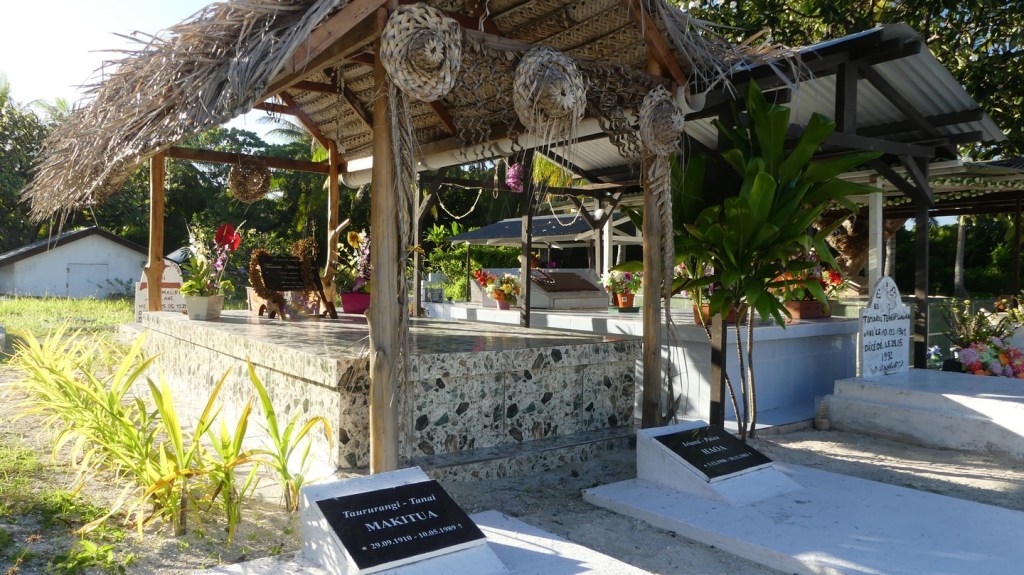
Aerial view of Aitutaki. Picture from internet. We are on the far side in the middleWe hiked to the highest point on the island, 124M, Maunga Pu, to enjoy the beautiful view on the lagoon.There are about 15motus in the lagoon. Kite surfing is very popular on the island.We visited the Aitutaki Marine research centre, they protect the colourful clams from the lagoon.They are eaten by humans, some fish and turtles.The Cook islands Christian church is the oldest one in the Cook Islands and was built in 1828.No dogs allowed on the islands but pigs everywhere.No cemetary on the island but graves along the road and in the gardens.Enjoying a very good evening dinner at Cafe Tipuna with our feet in the sand. We got there by bicycle after being lost for 15min in the complete dark. No streetlights or moon…View from the pass with Sanuk on the right and the first Cook islands Christian Church on the left.
While the weather was not so great we enjoyed walking and bicycling around the island. We even had to wear a sweater during the evenings. Yesterday we took out Fiipper to tour the lagoon but the wind and cold water (only 22 degrees) made us turn around. Tomorrow we have booked a lagoon cruise with a barbecue on “One Foot Island”. It looks like it will be a sunny day.
We have checked out today (Friday) since there are no custom officials working during the WE. We paid 220NZD (about 140USD) departure tax and anchorage fee of 5NZD per day included. In French Polynesia, part of the EU, we did not pay anything…
We vertrokken vanuit Bora Bora na een viertal dagen wachten op goed weer (lees: genoeg wind) om te vertrekken naar de Cooks Eilanden. Ilse had Aitutaki en Palmerston uitgekozen als twee aanlegplaatsen.
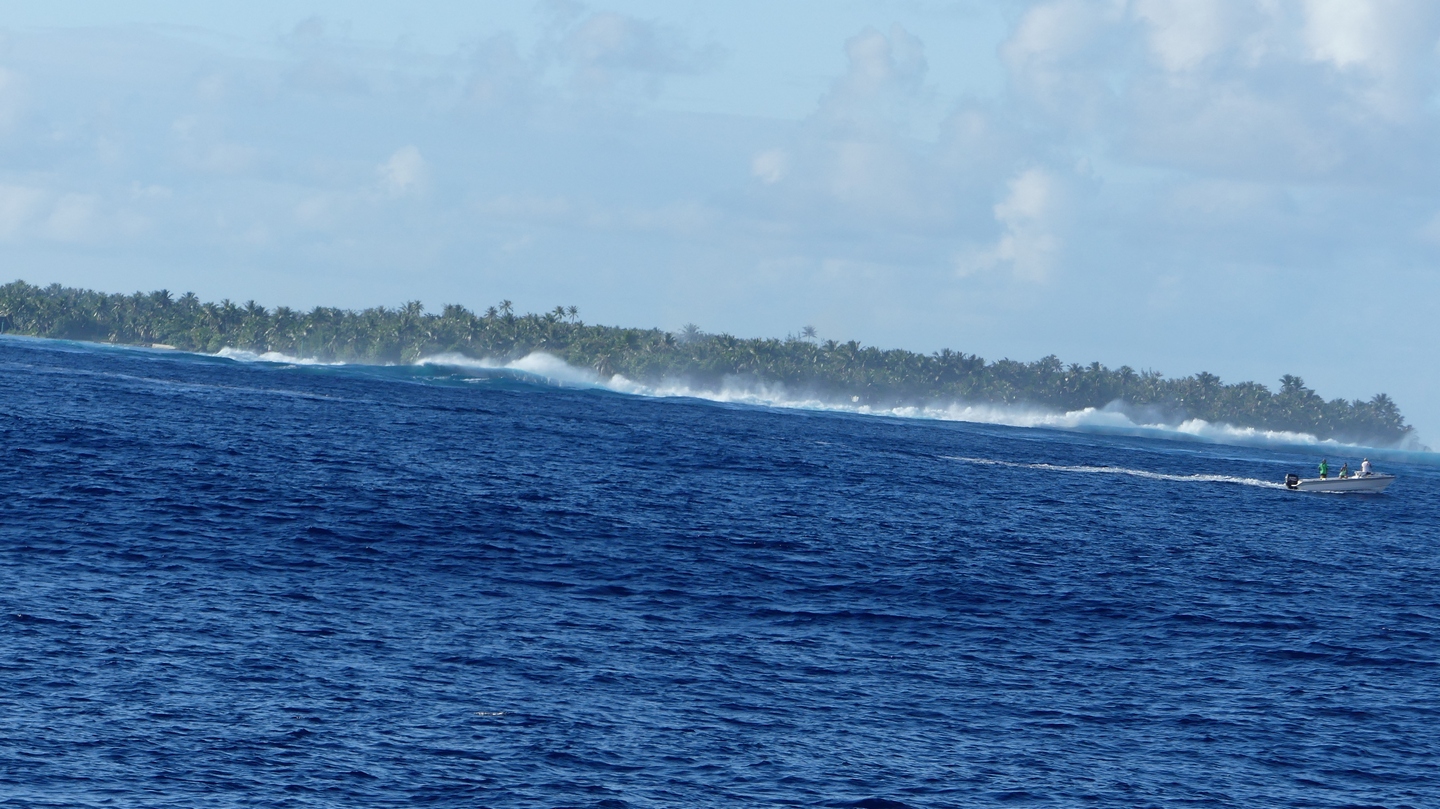
We vertrokken rond de middag, in de hoop om tegen de avond – voor zonsondergang – in Maupiti te zijn, waar we konden overnachten. Onze timing was goed, maar helaas maakten de golven het onmogelijk om in de pas van Maupiti binnen te lopen: de golven braken over de hele breedte van de pas. Op zee hadden we niet zoveel last van de golven, ze waren welliswaar 3 meter hoog, maar met een zeer lange golflengte, zodat je ze eigenlijk niet goed gewaar werd. Maar waar ze land ontmoetten wordt pas duidelijk hoeveel energie er in schuilt.
Ingang tot de pas in Moupiti, gezien vanop zee. Normaal is er een plaats waar de golven niet breken
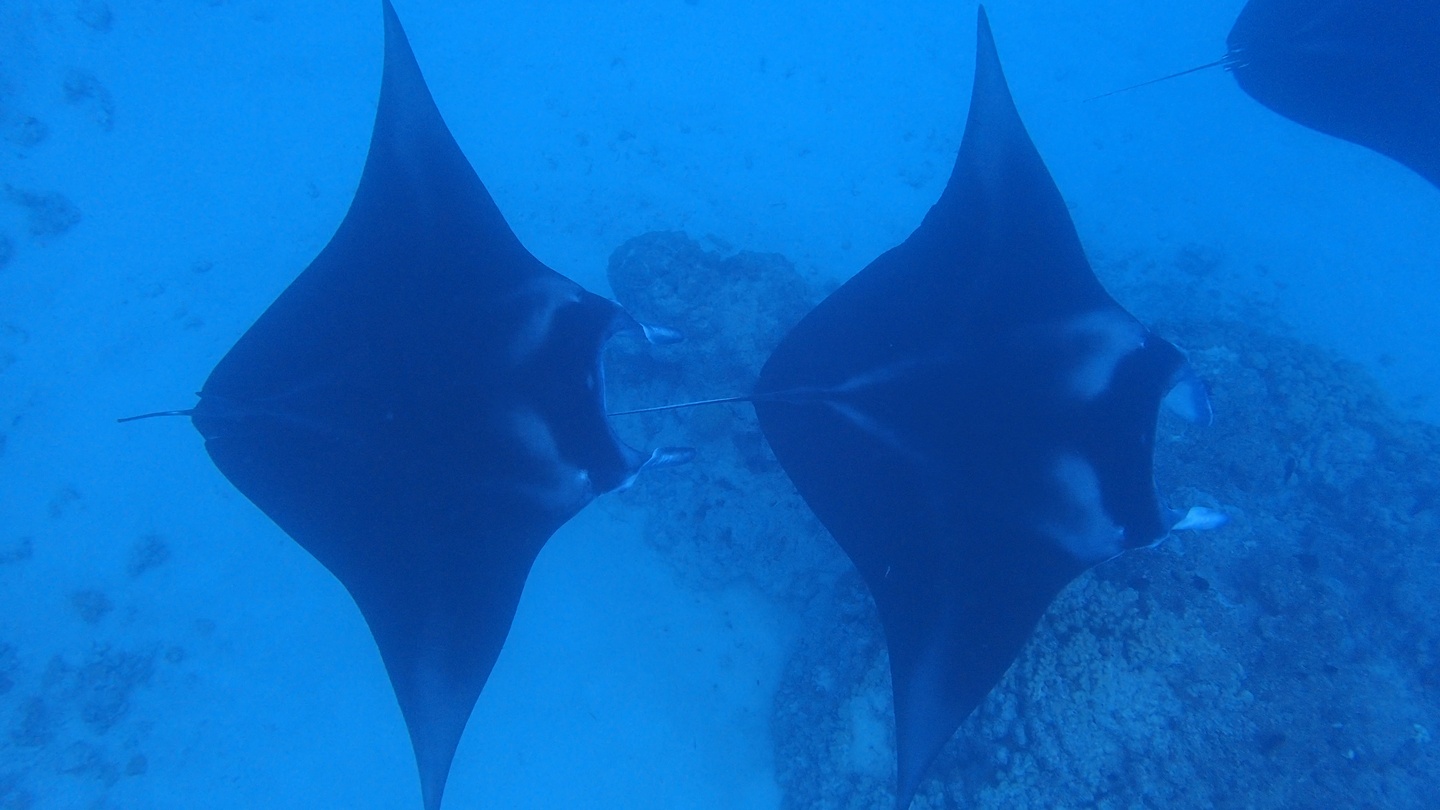
Dan maar doorgevaren, we hadden immers reeds Maupiti bezocht met Katie en Karel in het najaar van 2016. Vooral ons snorkelen met de mantaroggen was toen een hoogtepunt. Ik had gehoopt dit nu te kunnen herhalen, of zelfs te kunnen duiken met de roggen, maar het zat er niet in.
Vorig jaar in Maupiti: 6 reuze roggen die aan het ‘cleaning station’ kwamen aanschuiven om hun kieuwen te laten kuisen door de kleine visjes
We hebben vier dagen erover gedaan om de 600 mijl van Bora Bora naar Aitutaki af te leggen. Het weer was niet echt goed: continue bewolkt, redelijk veel regen maar gelukkig geen onweersvlagen. De combinatie van golven en bootbeweging zorgden ervoor dat zowel Ilse als ik last hadden van zeeziekte. We hebben ons dan ook een aantal uur geparkeerd op zee en samen een dutje gedaan, na eerst het licht van het voordek aangestoken te hebben zodat ons zeil van ver te zien was in de donkere nacht. Na dit en ook na het nemen van een anti zeeziekte pilletje gemaakt door Johan, voelden we ons allebei beter. De rest van de reis verliep voorspoedig en tegen 5 uur kwamen we aan bij Aitutaki.
Zicht vanop de boot naar het rif in de ankerplaats te Maupiti. 2 meter diep water, melkachtig maar vol met vis.
Deze pas is berucht in de stille oceaan: hij is heel smal, ondiep en lang. Enkel schepen met een diepgang tot maximum 2 meter (bij hoogtij) kunnen binnenvaren. Het getijverschil is hier tussen de 30 en 60 cm, naargelang de app die je raadpleegt. Sanuk ligt 1m20 diep, dus dat moest lukken. Het was echter laagij, het moment waarop de hele lagoon leegloopt langs de pas, en dus voor flink wat stroming zorgt. We hebben eens dicht voorbij de ingang van de pas gevaren om er zeker van te zijn dat er geen brekende golven waren, en zagen dat het er relatief rustig uitzag. Rond 8:00 zijn we dan binnen gevaren. Er stond ongeveer 5 knopen tegenstroom, dus we konden ons niet permiteren dat in de smalle pas (17 meter voor een boot van 7 meter breed) een van de twee motoren zou uitvallen wegens oververhitting. Ilse stond op de boeg om de donkerste en dus diepste plaatsen aan te duiden, haar hand op de bediening van de ankerlier om bij een kalamiteit snel het anker te laten vallen. Dat bleek echter niet nodig want we geraakten zonder kleerscheuren tot in de zwaaikom naast de haven. We smeten ons anker in 2 m diep water en spanden een touw van onze achtersteven naar een kokospalm, zodat we niet zouden ronddraaien want daarvoor was er geen plaats. Er hebben blijkbaar al ooit eens 3 boten tegelijk gelegen, maar ik vond het al best krap met alleen Sanuk.
Niet dat we ons hebben moeten zorgen maken: de 10 dagen dat we in Aitutaki waren zijn er geen nieuwe boten toegekomen. Buiten de pas, op zee lag het franse jacht Inspiration met Guillaume aan boord (zij hebben 2 m diepgang en moeten dus op zee blijven), en in de laguna naast de haven lag Cactus Island van een Australisch koppel (diepgang 45cm!) maar daar hebben we niet echt contact mee gehad.
Aitutaki dat is:
– 2000 polynesiers op een groen eiland van ongeveer 20km^2. Hoogste punt is 124 meter.
– geen enkele hond (bij wet), wat katten, varkens en geiten, en ontelbare kippen
– 10 kerken, maar geen kerkhof. De graven staan bij de mensen in de tuin of langs de kant van de weg.
– honderden fundamenten van wat eens een huis was, maar weggeblazen door de orkaan van 2010
– links rijden want hoewel onafhankelijk toch gealigneerd met Nieuw-Zeeland sinds 1965.
– wat BoraBora is voor de Europeanen, is Aitutaki voor de Nieuw-Zeelanders en Australiers: exotische resorts, prachtige natuur en heel exclusief $$$$
We kwamen de zaterdag toe, maar konden pas de maandag inchecken. In theorie moet je de hele tijd op de boot blijven en wachten tot ze tot bij ons komen, maar omdat we wisten dat het er hier nogal relax aan toeging hebben we de zondag toch een klein wandelingetje gemaakt. De maandag kwam de hygiene agent aan boord, we vulden wat papieren in, hij spoot verdelger in elke cabine en na het betalen van 16 euro konden we de gele vlag laten vieren en de Cooks eilanden vlag hijsen. Daarna bezochten we immigratie en douane. Pas bij het vertekken zal het hier duur worden: zo een 133 EUR als vertrekpremie (2 personen, 10 dagen).
Ondertussen zijn we donderdag en hebben we het hele eiland reeds afgestapt of gefietst. Het is een heel mooi eiland: nog heel veel ongerept groen, verzorgde wegen en de bewoonde delen hebben allemaal keurig onderhouden grasperken. De huizen zelf mogen er nogal rommelig uitzien, of enkel een restand van wat ooit een huis was, het gras is pico bello afgereden. Toch geeft het geheel een verzorgde indruk.
Leuke wandelpaden op het eilandBezoek aan een clam kwekerij: deze zeer kleurige beestjes worden sneller door de bevolking opgegeten dan dat ze kunnen gekweekt worden
Enkele dingen die ik opmerkte:
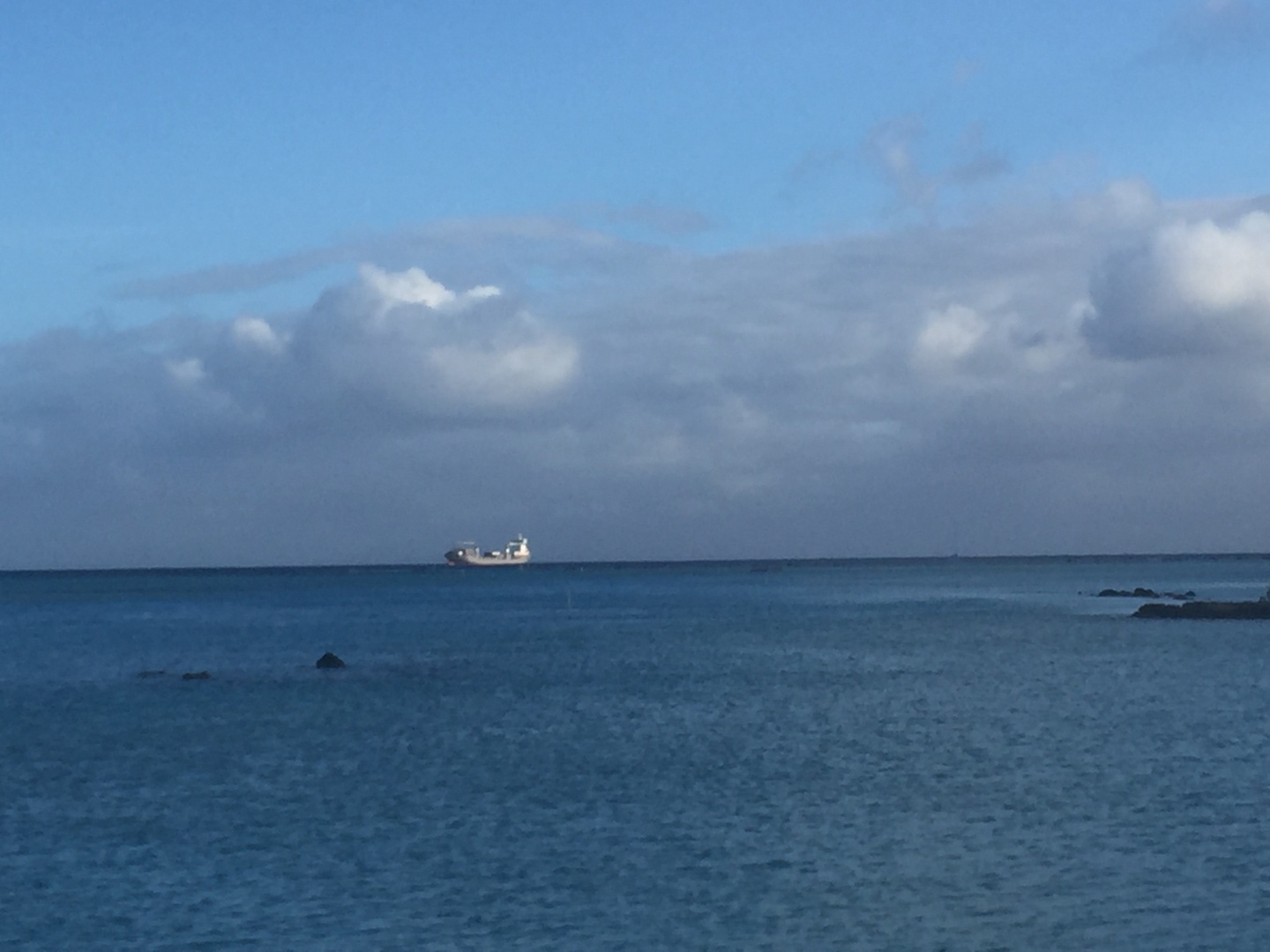
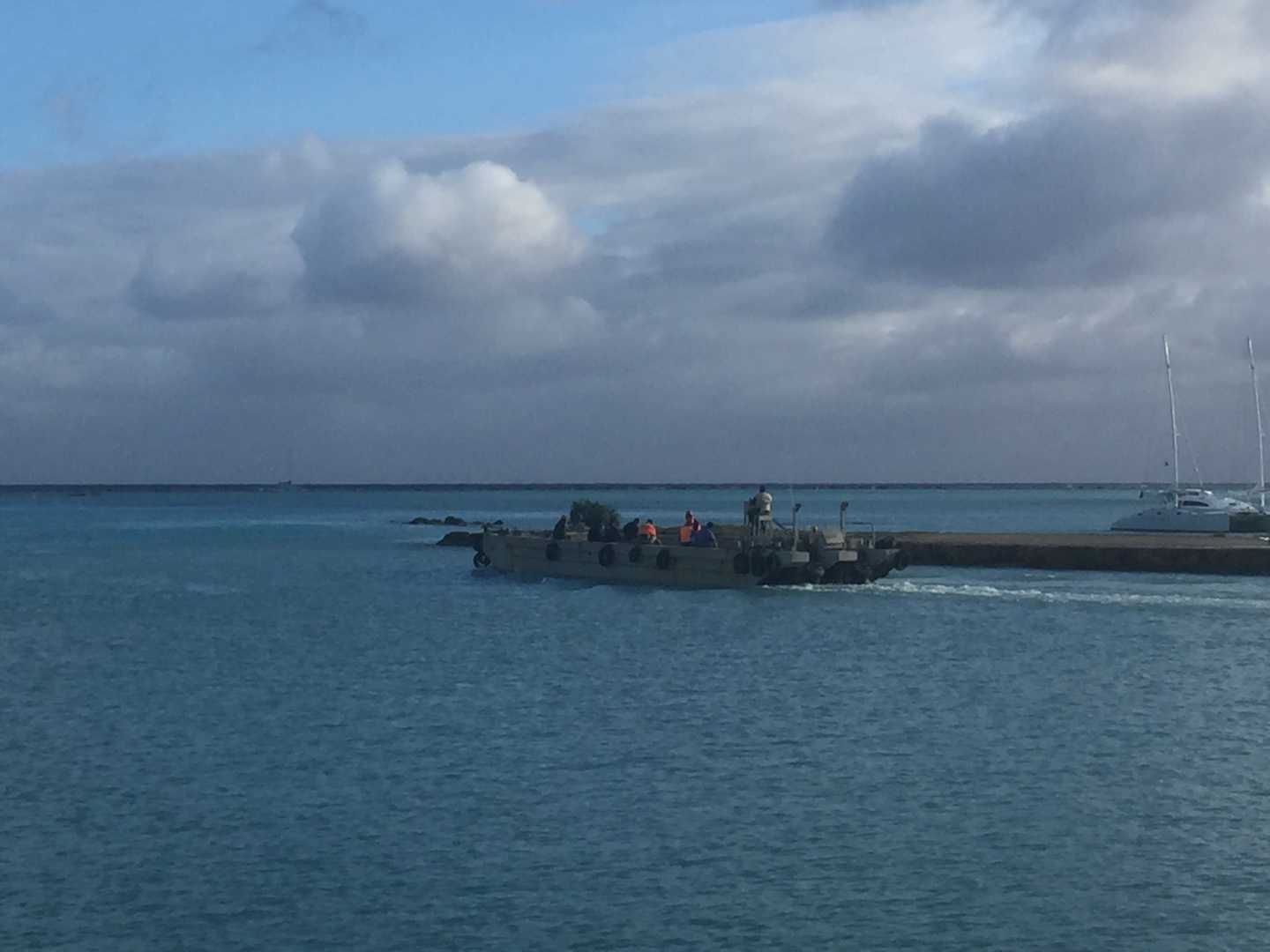
De maandag kwam er een vrachtschip aan met containers. Omdat het echter niet in de pas kan, en ook niet kan ankeren want te diep, blijft het dag en nacht traag rondvaren voor de pas. Ondertussen is er een platbodem schuit die heen en weer pendelt tussen de haven en de vrachtboot. Ze hebben er twee dagen over gedaan om zo een stuk of 40 containers te lossen…
Het vrachtschip ligt buiten de pas rondjes te draaien. Te diep om te ankeren
Het kost blijkbaar meer om een lege container terug mee te geven dan hem te houden: elk huis heeft minstens 1 container in de tuin staan, en er zijn huizen die gemaakt zijn van lege containers…
De platbodem navette van en naar het schip, 2 containers per keer
Het aanbod in de winkels is beperkt, en duur. Van europese goederen is geen sprake meer, en we herkennen de merken van Nieuw-Zeeland terug. De geldbriefjes zijn de NZ dollar, maar het kleingeld is eigen aan de Cooks Eilanden. Ze hebben hier een driehoekige munt van 2 NZD, maar er is dan ook geen enkele automaat op het eiland)
De mensen zijn heel vriendelijk, maar toch ook wat afstandelijk. Ik schat dat er zo een 1000 tal toeristen rondlopen op het eiland, blijkbaar zitten alle hotels hier goed vol.
Het is koud naar onze normen: het kwik daalt naar 23 a 28 graden, en het water is maar 22 graden niet meer! Soms lopen we rond op de boot met een lange broek aan, dat is al lang geleden. Ik heb al heimwee naar de 30 (lucht) en 26 graden (zee) van FP!
Het wordt nu een uur later donker (19:00) en klaar (7:00). We zitten nog in dezelfde uurzone, maar zijn alweer 10 graden opgeschoven naar het westen. We zitten nu op 19 graden zuid, 160 graden west.
Vanwege het wat tegenvallende weer, namelijk bewolkt en regenachtig, hebben we al wat tv-reeksen gekeken. Het vierde seizoen van ‘The Americans’ ging erdoor, en nu zien we begonnen aan The expanse. Gelukkig is het weer vandaag gekeerd. Het was zonnig en we hebben een tochtje gemaakt met Flipper op de lagoon, maar de zichtbaarheid in het water is heel slecht in de lagoon, zo een meter maar. Waarschijnlijk door de slijkerige bodem. Buiten aan de pas is het blijkbaar 100 meter, maar we gaan wachten tot in Niue om te gaan duiken.
En dat doet me meteen terugdenken aan ons vertek uit Raiatea naar BoraBora in FP: na 3 dagen gedraaid te hebben rond ons anker, had ik de avond voor ons vertrek al het vermoeden dat onze ketting wel heel kort geworden was. Waarschijnlijk rond een koraalhoofd gedraaid en dus ingekort. Inderdaad, de volgende morgen kreeg Ilse de ketting geen drie meter omhoog: muurvast. Het donkere water gaf ons geen kans om iets te weten te komen. Ik probeerde langs links te varen, langs rechts te varen, maar geen verschil, het losse eind ketting werd niet langer. Het moment om ons duikcertficaat en de duikuitrusting aan boord te laten renderen. Gelukkig had ik de duikfles in Tahiti nog laten vullen. Met enige terughoudendheid paste ik de niet gebruikte maar van excellente kwaliteit duikuitrusting aan: neopreen broekpak, veel te grote vest met BCD, duikbril, zwemvliezen, 3 kg lood. Na 10 keer controleren van de fles, het mondstuk en de vest liet ik me in het water vallen. Al drijvend tot vooraan bij de ketting, en dan langzaam langs de ketting naar beneden. Bij een diepte indicatie van 12 meter zag ik plots de bodem, en het probleem: er stond zo een blok koraal van 2 meter hoog en 1 meter diameter los op de bodem, met onze ketting eronder. Ik had genoeg gezien. Langzaam terug naar boven, tot aan het oppervlak en tot aan Ilse die gespannen stond te wachten. Een half uur later terug aan het roer en deze keer met een simpel plan: hard achteruit. Het bleek een goede strategie want de ketting kwam van onder de blok en onze problemen waren opgelost. Tien minuten later waren we op weg naar Bora Bora. Toch leuk als je een boot koopt met alles erop en eraan.
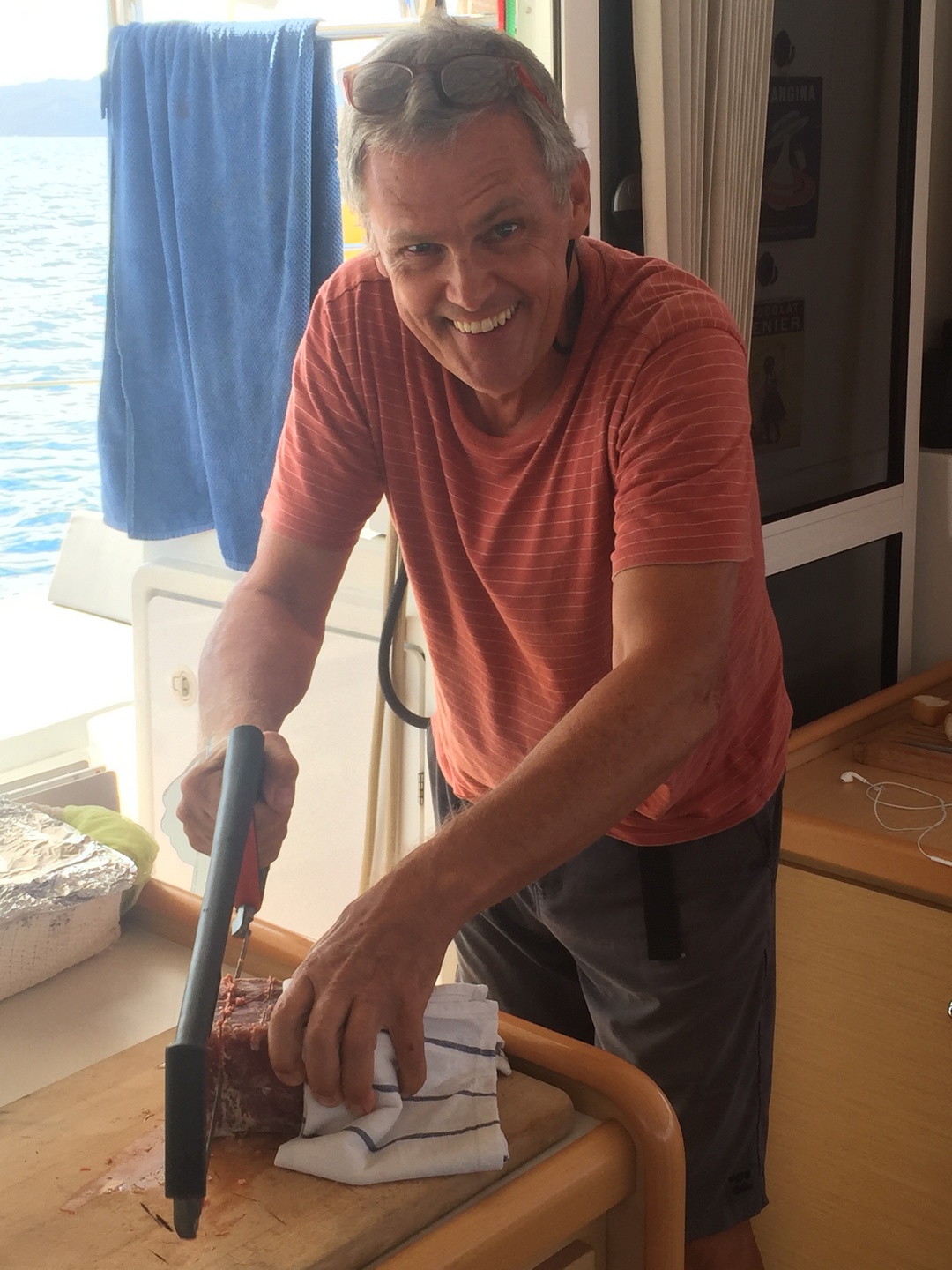
Twee biefstukes van 150 gram, mevrouw? Komt eraan. Mag het wat meer zijn?
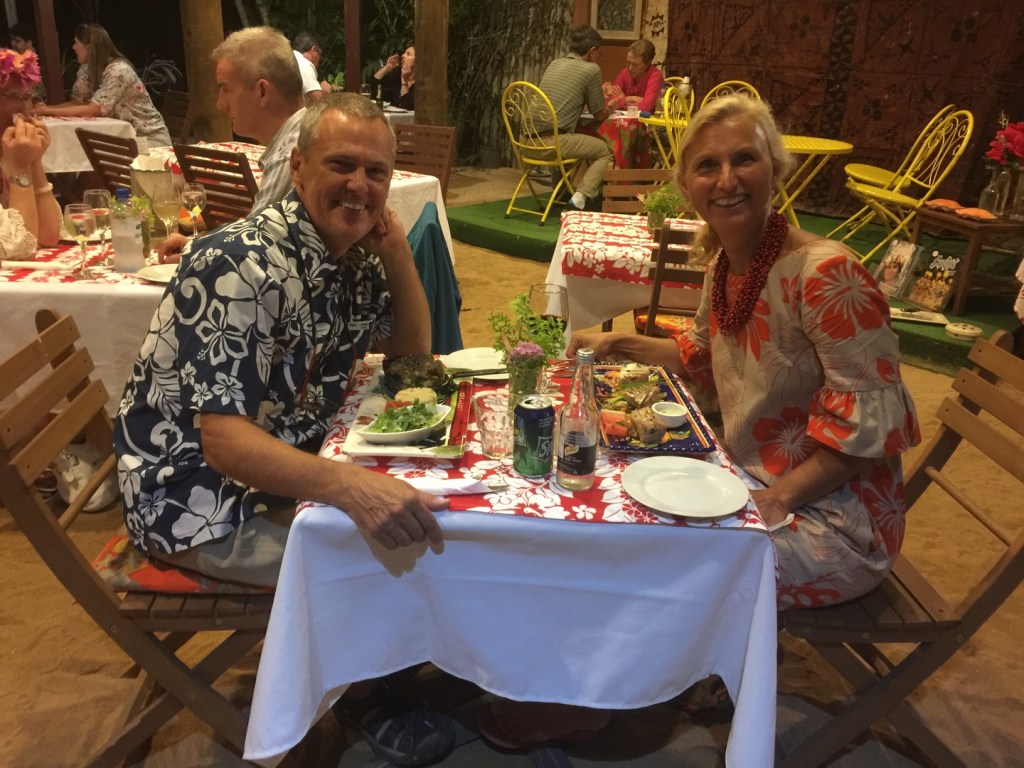
We zijn gisterenavond hiet in Aitutaki naar een dans voorstelling geweest, iets wat we ook op Tahiti hebben gedaan met Emma en Seba, en in Moorea met Katie en Karel. Een hotel geeft een buffet met lokale gerechten en daarna wordt er door de lokale dansgroep een voorstelling gegeven. Het was een groot half uurtje wandelen en het was reeds pikkedonker toen we daar om 19:00 uur toekwamen. Langs de asfaltweg hebben we nog een graf gezien waarop kerstlichtjes een altijd veranderende lichtschow gaven (maar geen muziek). De prijs viel reuze mee: 40 EUR per persoon, wat een fraktie was van de FP prijzen. Maar het buffet was dan ook niet zo imposant: het varkentje werd niet uit een kookput in de grond opgegraven, maar in een kookpot opgediend. Het was er niet minder lekker om. Ik onthou de lokale versie van zurkel (taro), de rauwe vis (poisson cru), het krokante varkensvel, de kokosijscreme en de bananencake. En de Nieuw-zeelandse cider, dat was ook alweer eventjes geleden. Na het eten begon het optreden, met voor mij het immer impressionante tamtam geroffel en opzwepende gezang. Op een zengend ritme oscilleerden de heupen van de meisjes (het bovenlichaan doodstil), stampten de benen van de jongens in het rond, en waren de gezangen niet uit de lucht. We kregen ook een vuurballet te zien: onstellend snel vlogen de vuurballen door de lucht, kundig net het lichaam missend. Zoiets moet kapitein Bligh (die van de Bounty) ook voorgeschoteld gekregen hebben toen hij het eiland in 1782 ontdekte. En ik denk dat menige matroos hetzelfde als ik zal gedacht hebben: hoe kom ik heelhuids voorbij die krijgers tot bij die meisjes…
Enfin, het is ondertussen terug ochtend, de passie heeft plaatsgemaakt voor ons dagelijks ochtendtafereel: aan de kant, 10 meter van onze ontbijttafel, zijn gewoontegetrouw de witte en de zwarte reiger op zoek naar een hapje om de eerste honger te stillen.
June 6th, Raiatea in French Polynesia. We are at anchor just before the little town of Uturoa and are taking advantage of the reasonable internet to order parts for the boat and to update the blog.
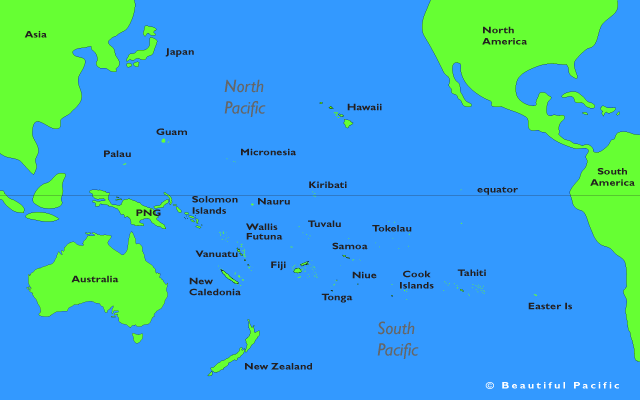
If all goes well we will sail from Bora Bora to the Cook islands, then Niue,Tonga, Fiji, New Caledonia to arrive in Australia early november.
We will sail tomorrow to Bora Bora to check-out of French Polynesia and to wait for a good weather window, looks like the 11th will be a good day to leave.
We arrived in French Polynesia a year ago on june 8th, after a 22 day crossing from the Galapagos. We enjoyed the culture, the people and the way of life in French Polynesia. Their smiles, although life is not always easy here, the flowers in their hair, the music everywhere, we will surely miss it. But we feel it is time to go and discover other beautiful countries and islands. Mauruuru French Polynesia, I feel so fortunate to have been here with Sanuk.
Partir, c’est mourir un peu,
C’est mourir à ce qu’on aime :
On laisse un peu de soi-même
En toute heure et dans tout lieu. (Edmond Haraucourt)
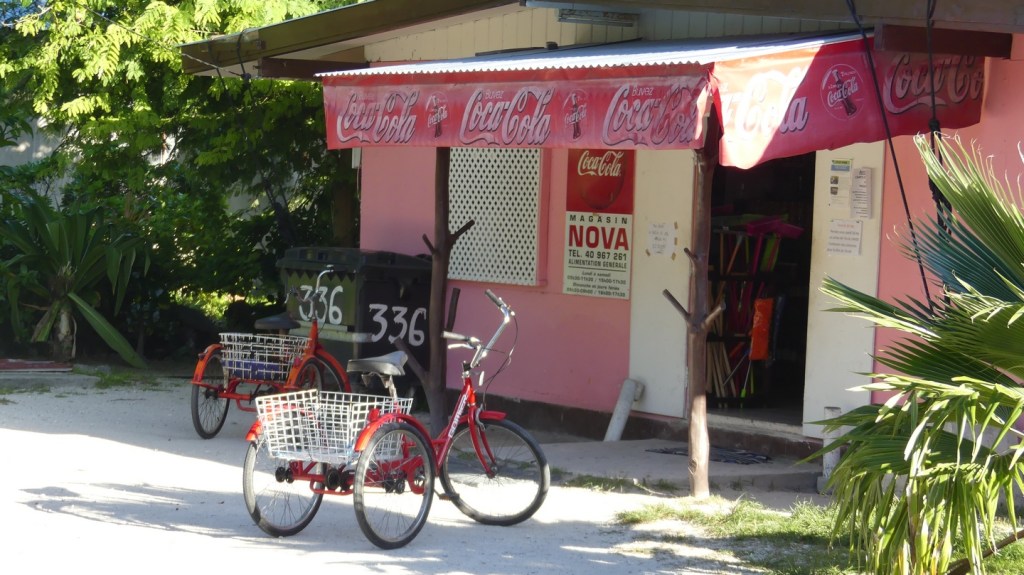
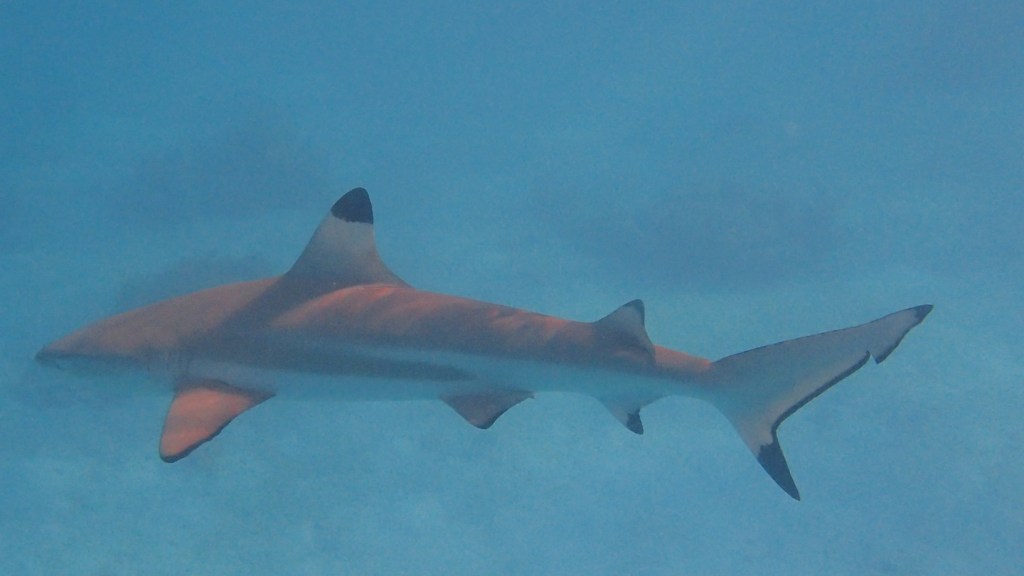
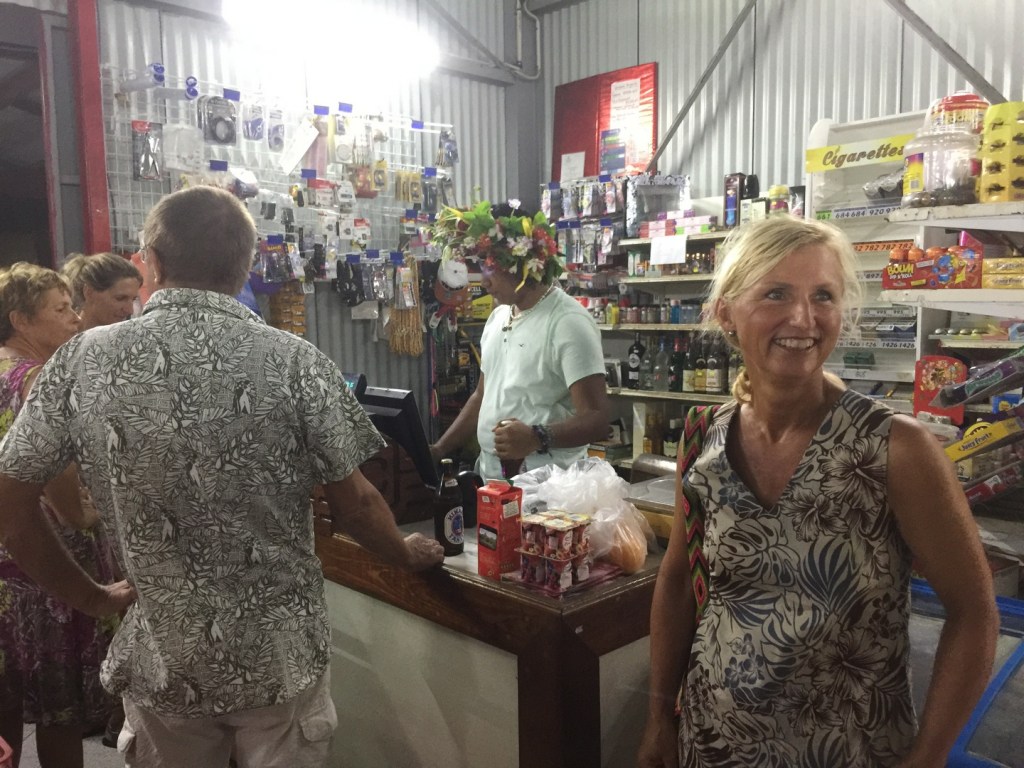
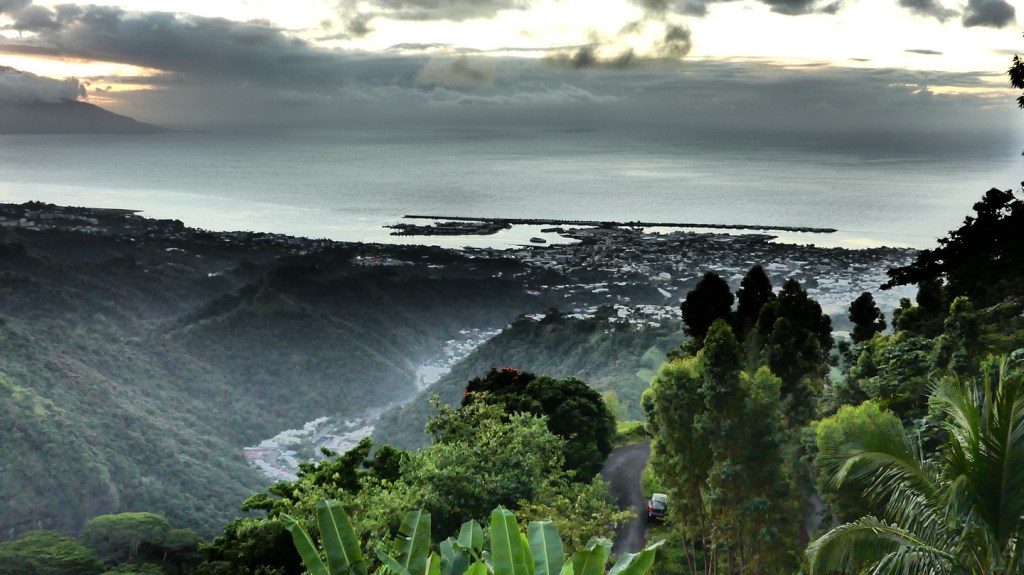
Before going to Tahiti we made a stop at Rangiroa, the biggest atoll of the Tuamotus. Supermarket in Rangiroa with the tricycles. They are frequently used on all the atolls in the Tuamotus.So happy we finally got our diving permit. We should have done it much sooner but now we will be able to dive in all the wonderful islands to come.Church in Tiputa village on Rangiroa.The cemetary in Tiputa with lots of flowers and frangipani trees. The Frangipani tree is said to be immortal, because flowers and leaves still grow even after being uprooted. That is why it is planted on all the cemeteries in French Polynesia.The blue lagoon in Rangiroa. We stayed at anchor for one night but it was very rolly.When we wanted to go snorkeling at the Blue Lagoon we were greeted by at least tens of black tip sharks. I did jump in the water but did not feel very comfortable with all those sharks around waiting to be fed.The interior of the supermarket in Rangiroa. At the cash register a man with a crown of flowers. Mahu (men-women) are part of life in French Polynesia where, at one time, families with all boys would raise the 2nd boy as a girl.Papeete Harbour seen from the Belvedere restaurant just after a rainy sunset.
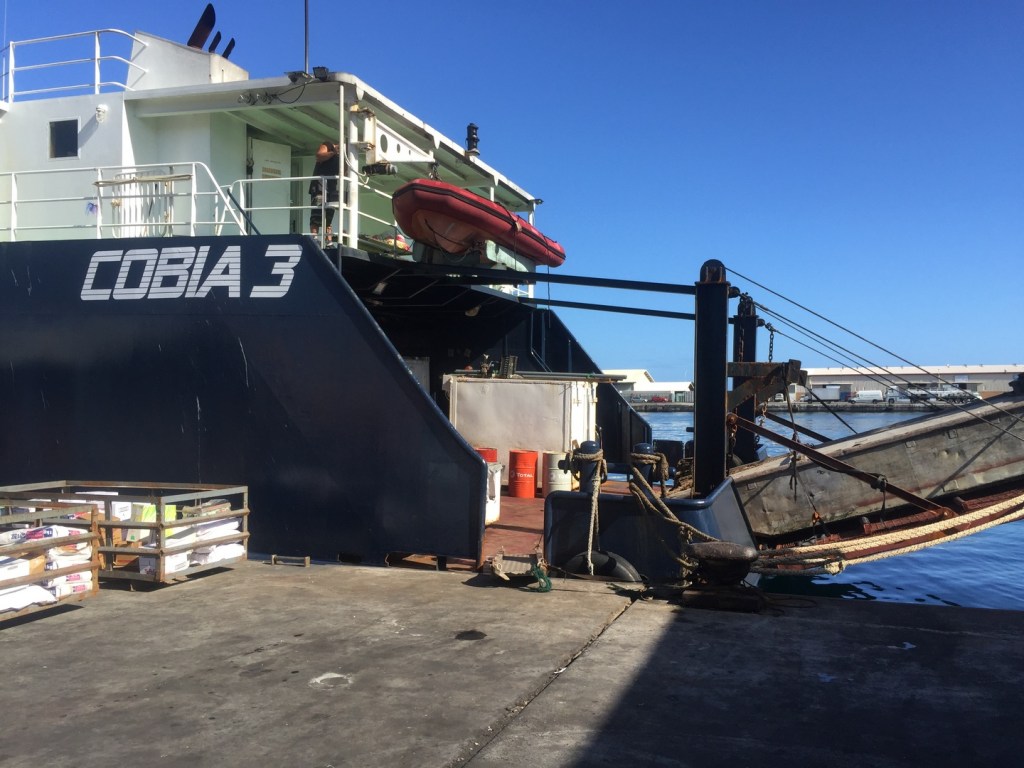
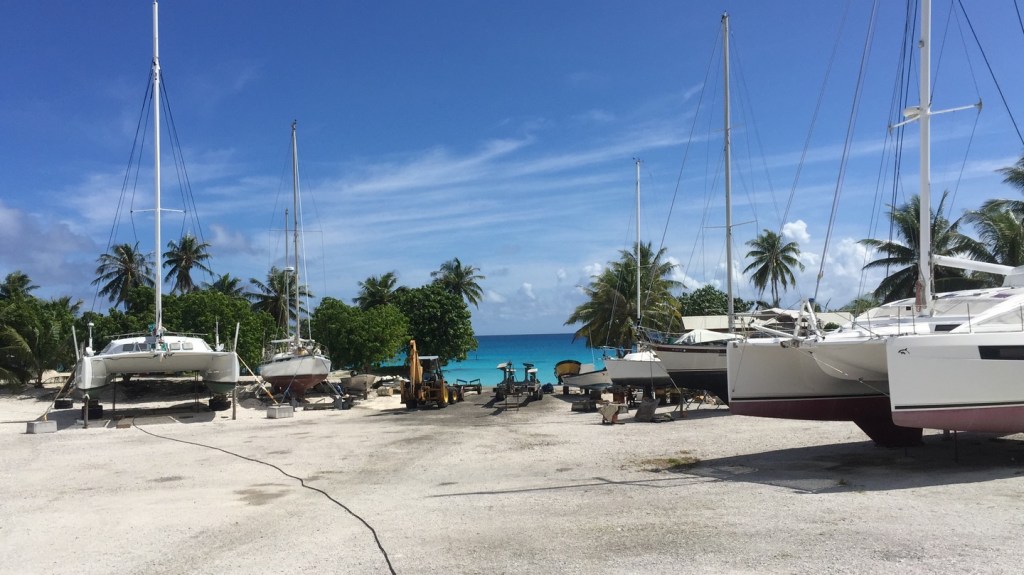
Wednesday May 3th in Apataki. It has been almost 2 weeks since we arrived with the Cobia 3 in Apataki and slowly but surely we are getting Sanuk ready for the water.
We left Auckland on Monday morning April 17th to arrive in Papeete on Sunday afternoon the 16th since we crossed the international dateline (IDL). The IDL is an imaginary line from the North Pole to the South Pole and demarcates the change of one calendar day to the next. NZ is West of the IDL while French Polynesia is East of the IDL. It was like going back in time and so we got to experience Easter sunday twice! When we will sail to Fiji we will again cross the IDL but then we will loose one day.
Stefan had arranged a pick-up at the airport from the hotel and indeed we saw our name on one of the many cardboards at the exit of the airport. What a nice feeling it was, back in 28degrees celsius, humid but I did not mind and lots of friendly faces with flowers in their hair. They were surprised when they saw our amount of luggage! No, we are not a normal tourist in Polynesia! We had 5 bags of each 23KG and 2 smaller bags of each 12KG…but the van was big and we got everything loaded. Papeete was like a ghost town since it was Easter but at least the “Roulottes” (foodtrucks) were open and we were happy to have dinner there. We decided on “Galettes et Crepes Bretonnes” :-)! The wait was soooo long (almost 3hours when we had eaten) but we enjoyed being in the atmosphere, watching the tourists and Tahitians enjoying their Easter with family.
The next day we decided to rent a car to get all the shopping done (only boat stuff and food 🙂 ) to take with us on the Cobia 3. Unfortunately all the stores were closed except for Supermarket Hamuta, they were open till noon, we got there at 11.30AM but they let us shop till 12:30 and they delivered everything to the Cobia 3 the next day . Luckily we also found the Carrefour open and got another 3 boxes filled with food… For dinner we met with our friends from Jambote, Simon-Pierre and Marine, who had just arrived in Marina Taina. It was so good to see them back and tell our stories ! Life is wonderful!
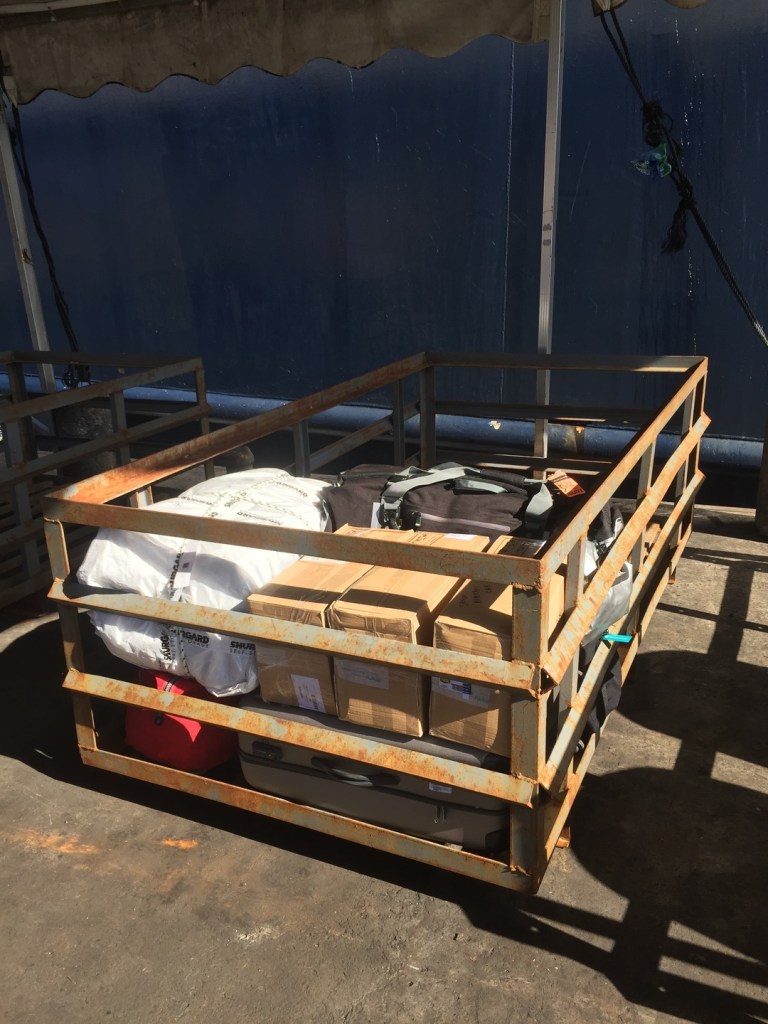
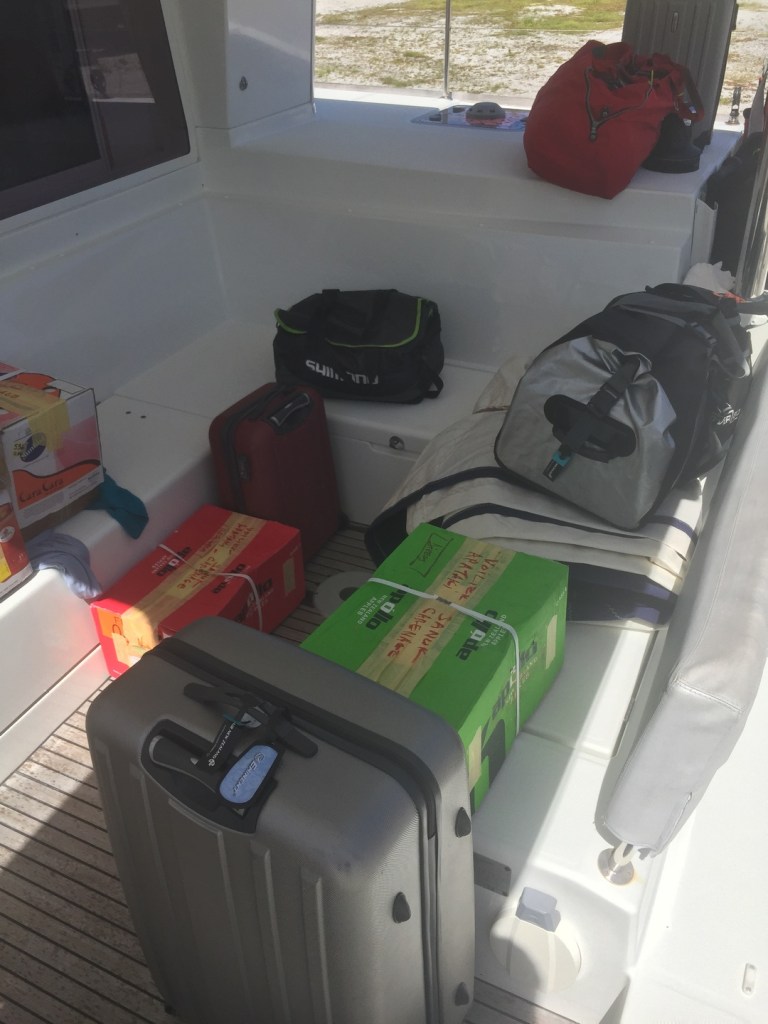
Important cargo for Apataki. All our luggage and boxes went into this crate for Apataki.
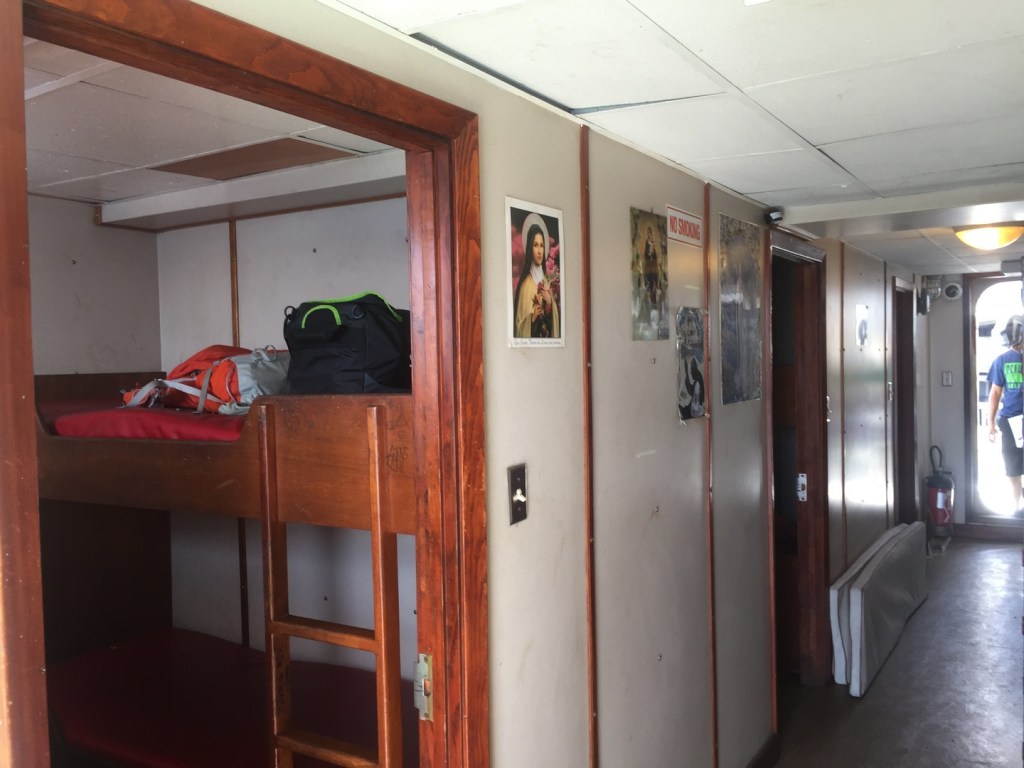
Not a luxury cruise but at least we have a bed. And Jesus!
We had made reservations for the Cobia months ago but were kind of nervous since we had not paid anything and did not know what time the Cobia would leave. Stefan left at 7AM to go check it out and sure enough at 7.30AM the office was open and our names were on the list!! We paid 7000XPF per person (about 70EUR) and were told to bring our luggage by 11AM. Stefan knew where to get all the things he needed so in an hour he had all the boat stuff and we could leave the hotel by 10AM with all our bags and boxes. We paid another 7000XPF for all our luggage. (more than 150KG!!). We put it in the crate for Apataki and left to return the car just in time! We had a couple hours left to spend in Papeete and by 2.30PM we had to be back at the Cobia 3. I could not believe how smooth it all went! This was great! The Cobia was definitely an experience! We had a bunk bed :-), but there was no real place to sit….so we could only lay down :-(, and the journey took 34hrs. Because of the high waves (4m) I got sea sick :-(, luckily after 8hrs I felt better! There is no food on the Cobia, you have to bring your own food and water. I was too sick to eat the croissants we had. The Tahitian we shared our room with offered 2 apples (they really share soo easily) and I was happy to eat those. We arrived at 2AM in the morning at Apataki village and I cannot say how happy we were to see “Pappie” from the Carenage waiting for us!! We loaded all our stuff in the pick-up truck from Alfred and left for their house in the village where also “mamie” was waiting for us. We took a quick cold shower and went to bed for the remainder of the night. At 9AM in the morning we loaded everything in Alfred’s motorboat and made the trip to the Carenage. We arrived soaking wet (from the waves) but happy to be back “home” and see Sanuk!
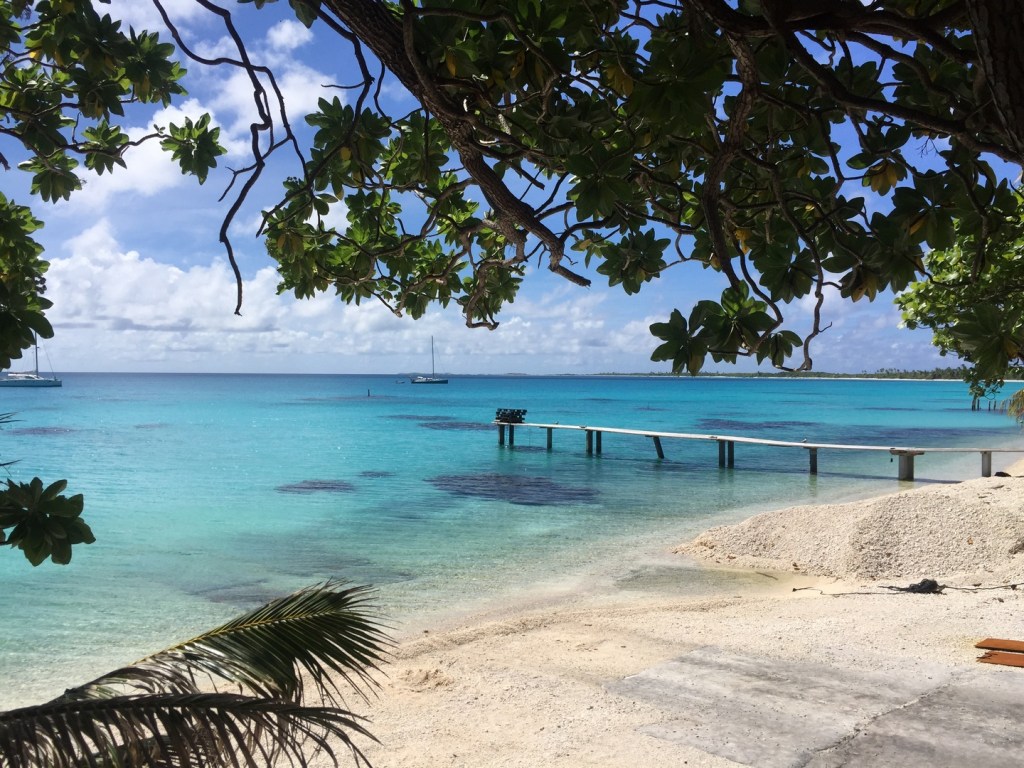
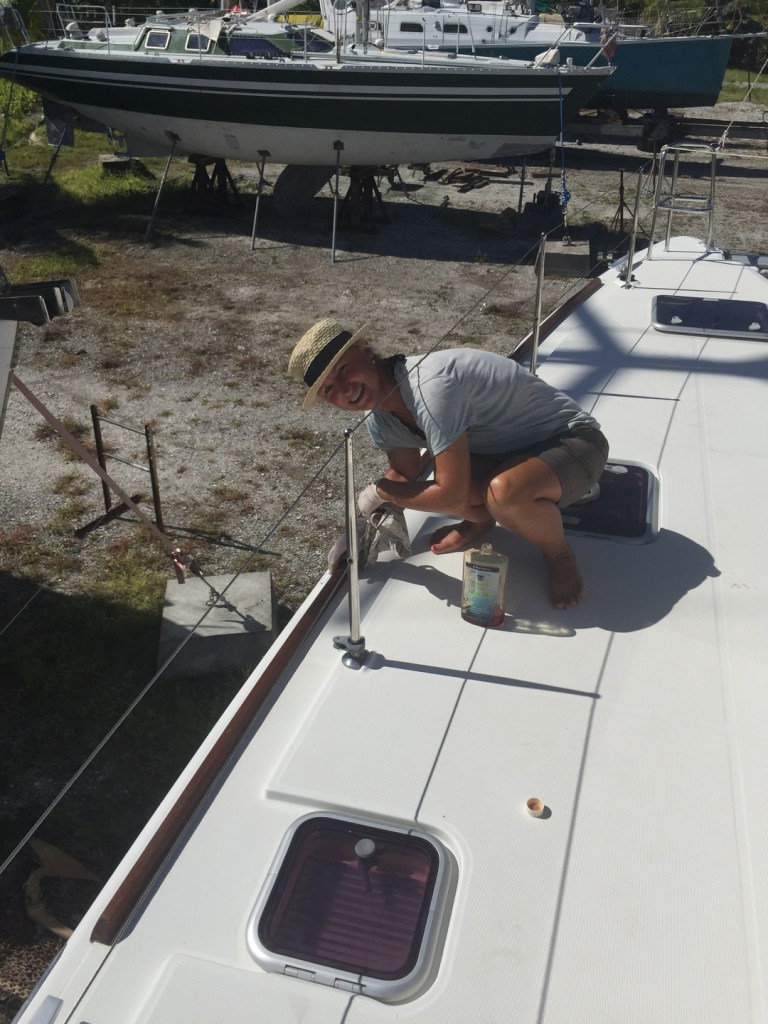
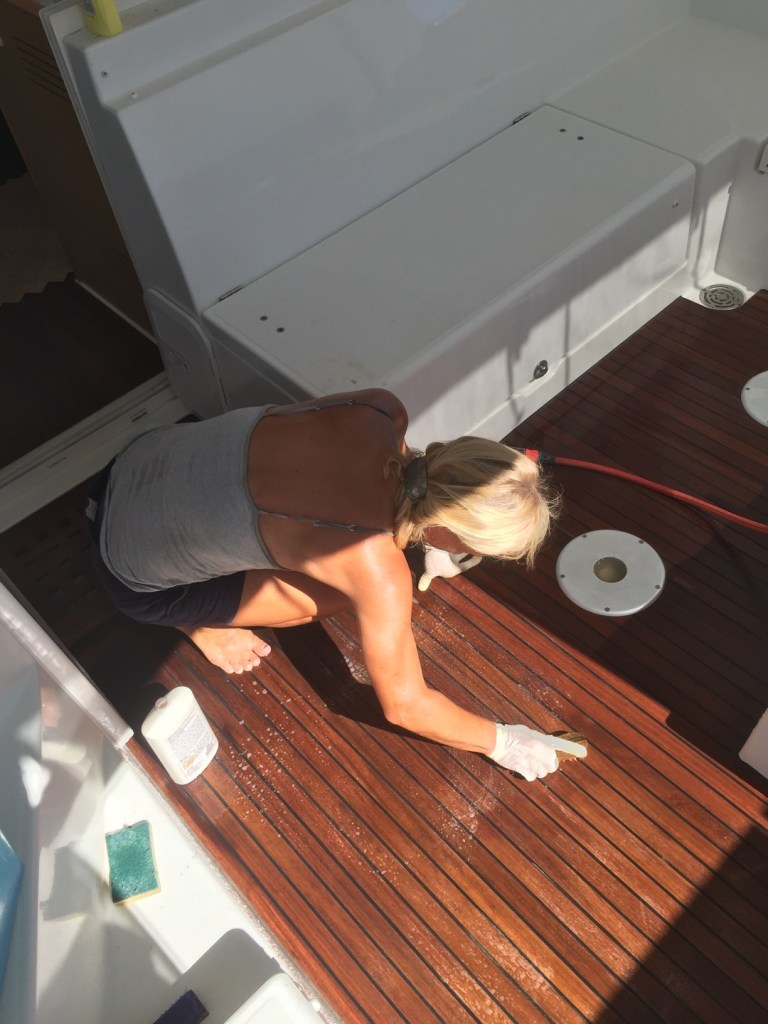
View from Sanuk on the carenage and the lagoon in the backCould not dream of a better place to have the boat out of the water.Now we only have to unpack everything ! Good to be back home.Cleaning and oiling the teak toprail.Scrubbing the teak floor.
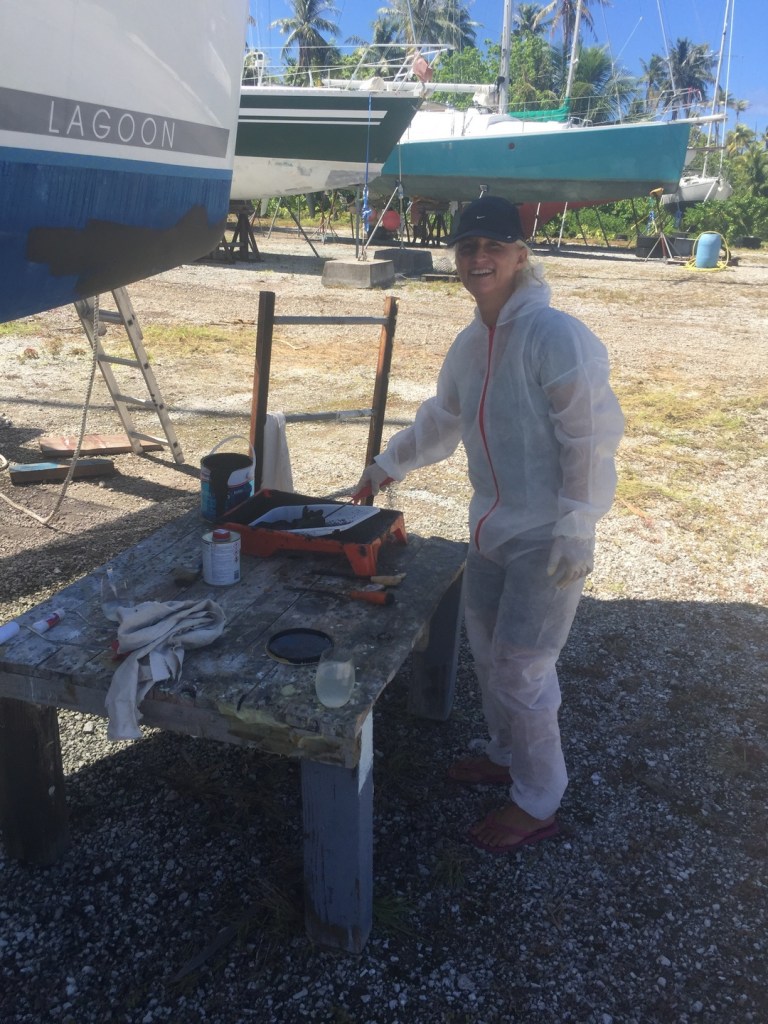
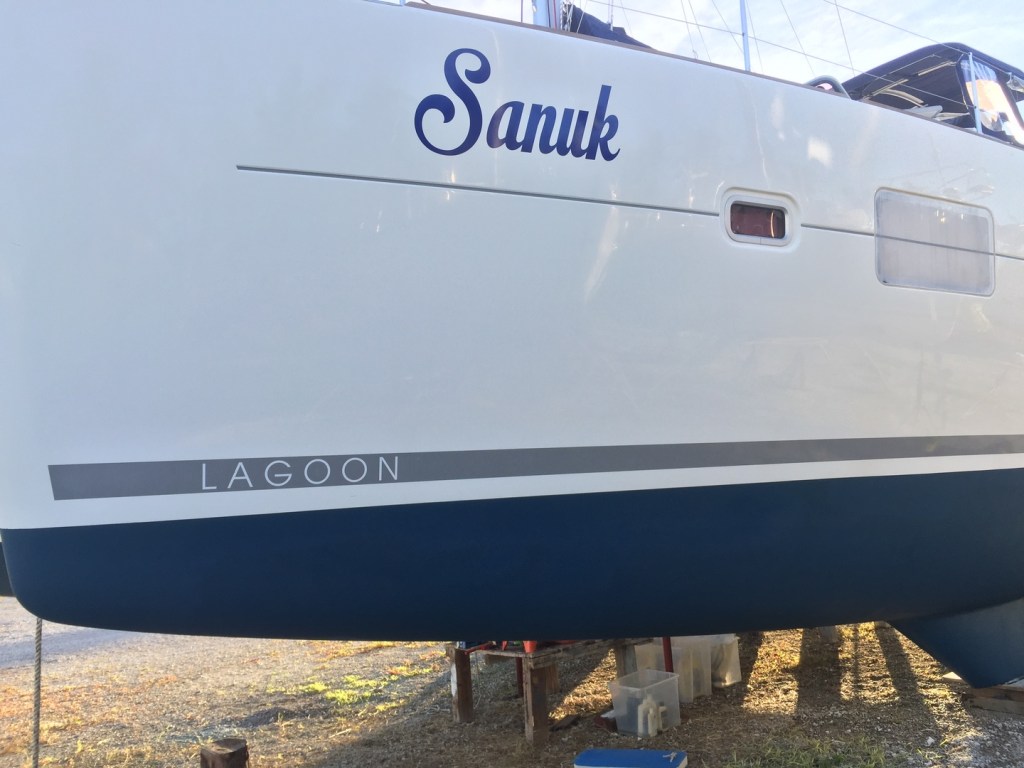
We have been busy fixing, painting, replacing, rearranging and socialising and hope now that we can get Sanuk in the water on May 8th or 9th. It is clear that a boat needs to sail and having it on the hard this long (almost 6months) is not so good. There was a corrosion on the connecting bar between the two rudders …..with patience, acid and oil they are now cleaned and like new and this solves also the steering problem we had before. The bottom is halfway painted, I am now waiting for an extra pot to arrive on the Cobia tomorrow. I should be able to finish the other half the latest by sunday. The Honda motor of Flipper had to be cleaned since we forgot to drain the gasoline when we left. It got sticky and plugged up the carburator. It sounded fixed but Stefan wants to test all the motors before going in the water. The oil from the generator is replaced, the trampoline is replaced with a new one, all the teak wood is cleaned and oiled, the chips in the gelcoat are fixed, and our fix it list is getting smaller.
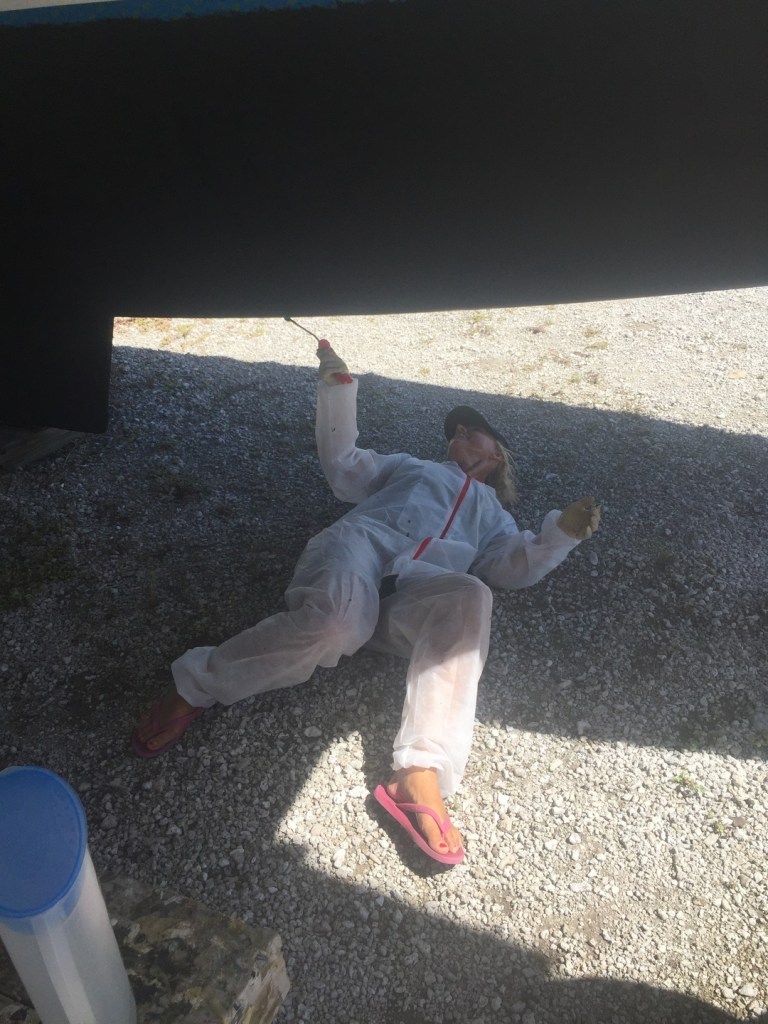
Putting on a new anti-fouling coat on Sanuk’s bottom. Anti-fouling paint is important because this prevents the growth of mussels, algae etc on the hull. These growths can affect the performance or durability of the boat.
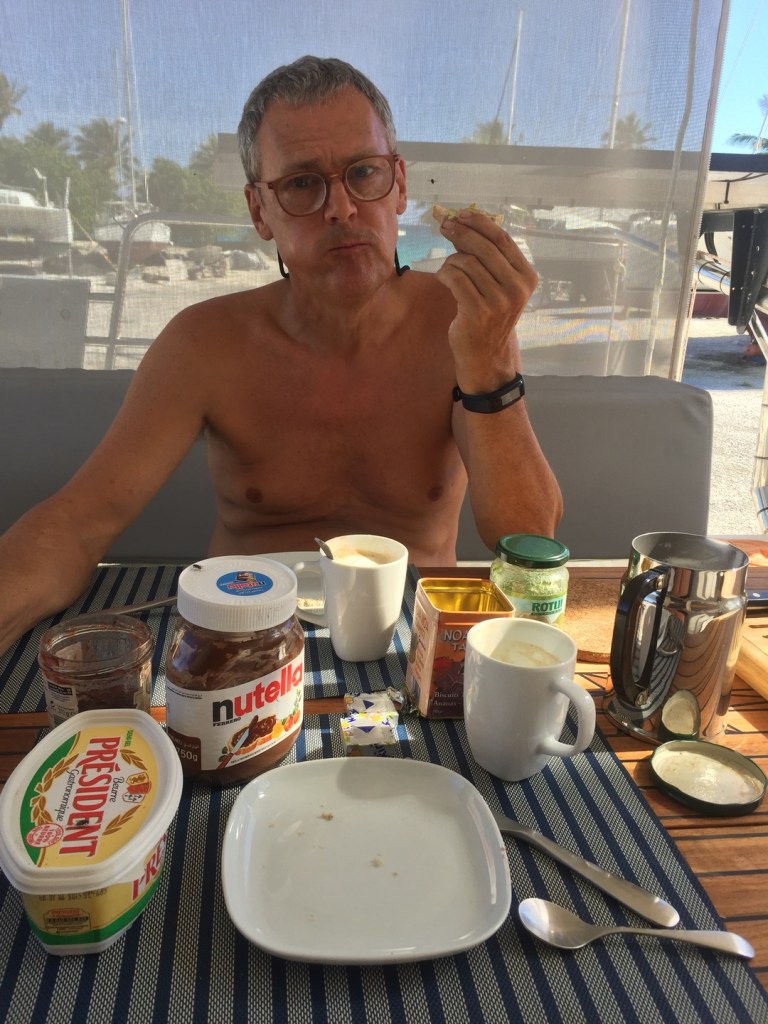
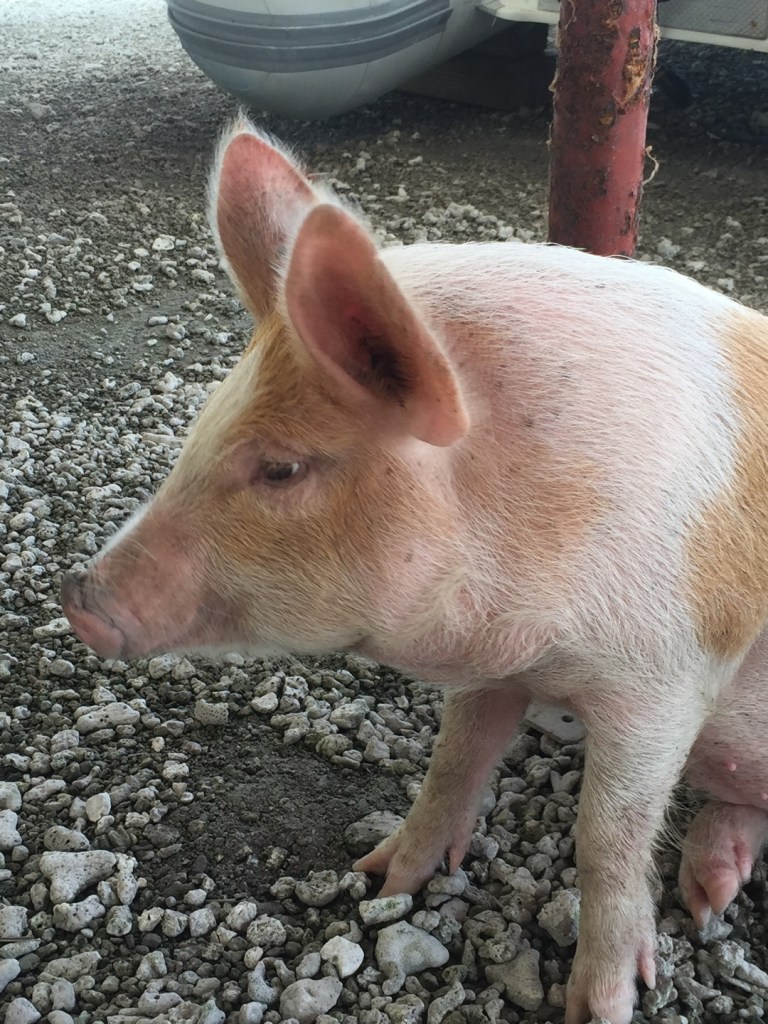
A job well done by the admiral :-).The captain at breakfast.Pua (meaning pig in tahitian) the mascot of the carenage. He behaved more like a dog than a pig. He could roam around the carenage freely until one day she ate “mamie’s” flowers…then he was to stay in his cage.
The hardest part was working in 32degrees celsius and high humidity (70%) so we had to make sure to get up as early as possible (still not my strongest point 🙂 ) and from 12 till 2PM it was siesta time. Too hot to eat but we are drinking liters of water! Luckily we have the sea close by and a shower (cold only) with unlimited water supply !
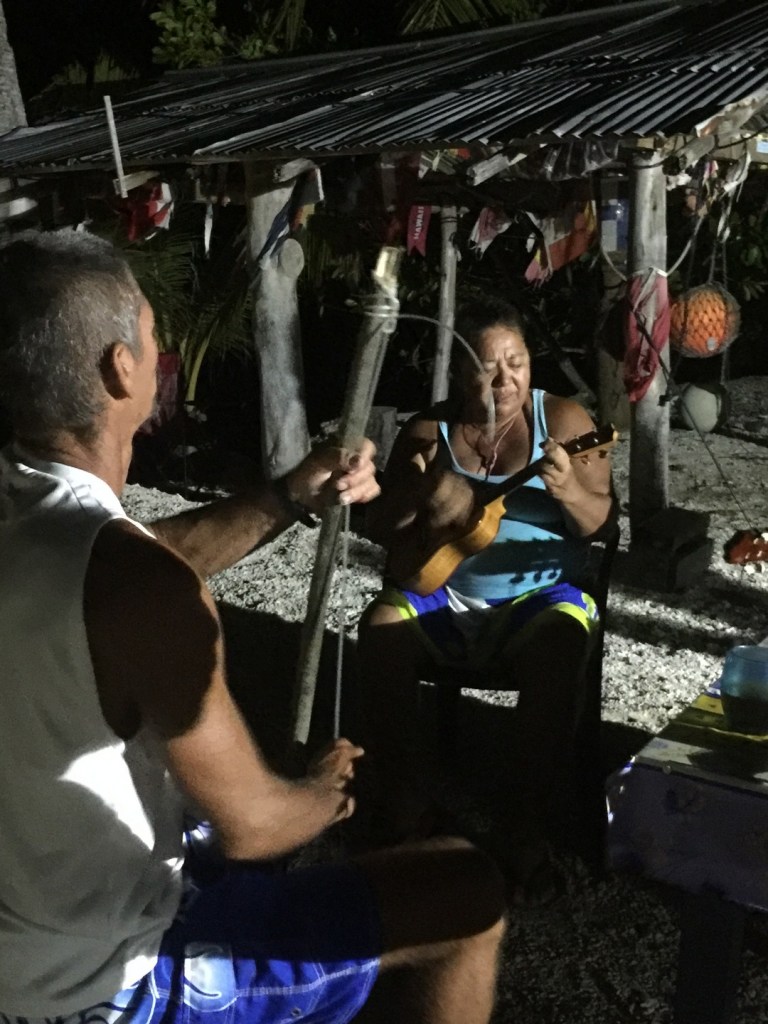
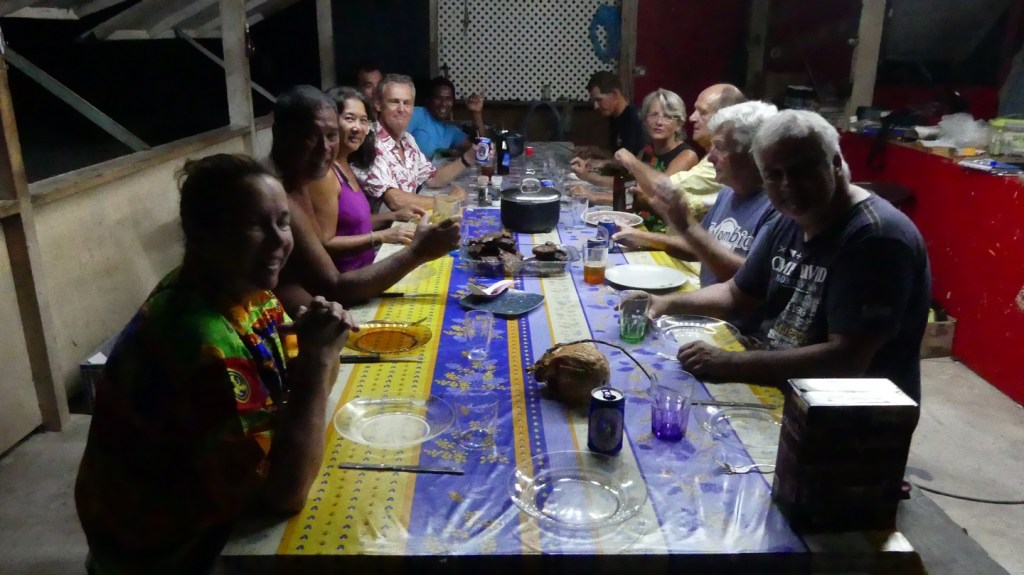
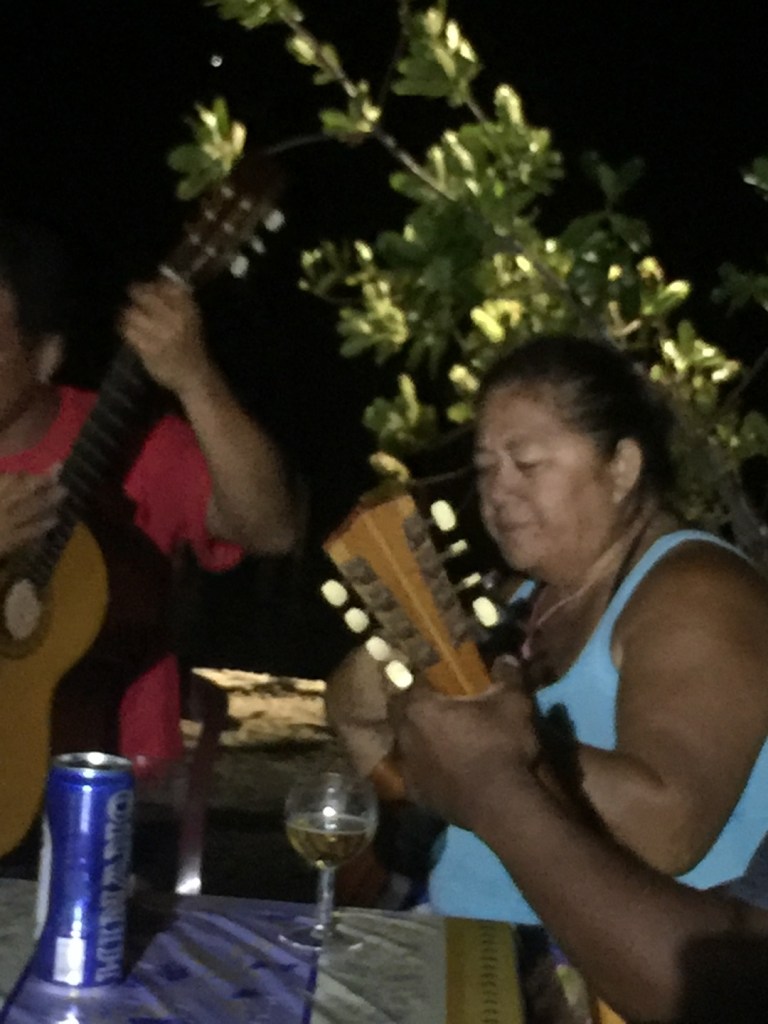
Gaston and Valentine from Anse Amyot came visit and were always ready for a party with singing and good food.Dinner with all the cruisers at the carenage. An international group from Mexico, France, Madagascar and Belgium.Valentine playing the ukulele and singing.
The people from the carenage are all very friendly and we have been invited a couple times to have fish barbecue with them. The fish is put ALIVE on the barbecue and there is rice and homemade sweet and sour sauce. Very yummy. The first time they played the ukulele and guitar and sang while we were having dinner under a starry sky! Does it get any better?
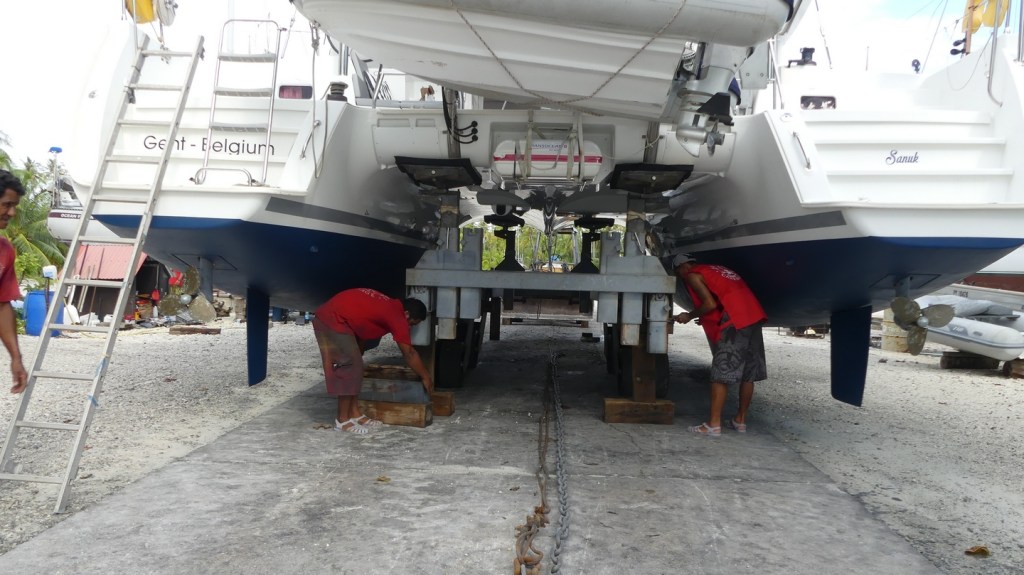
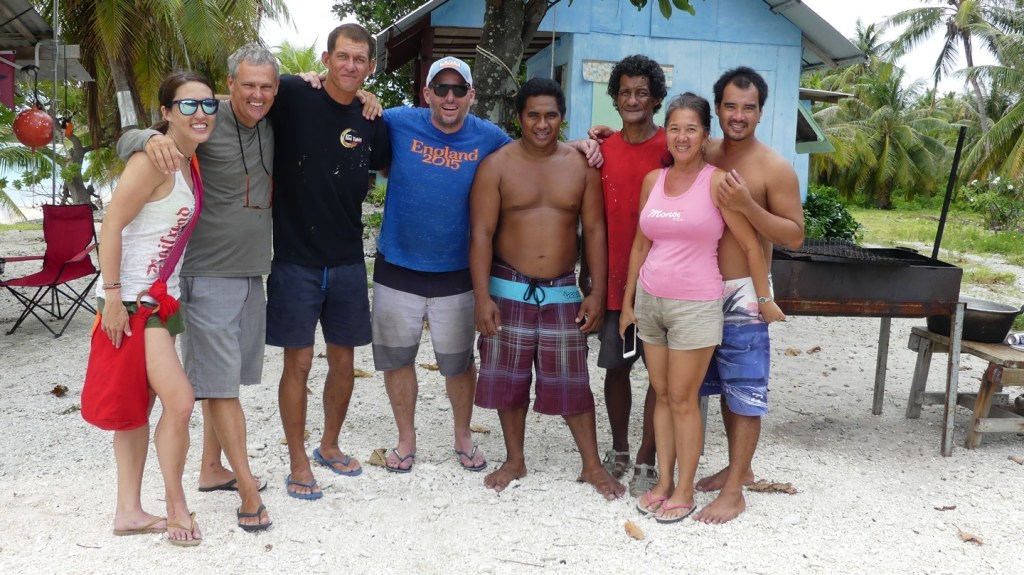
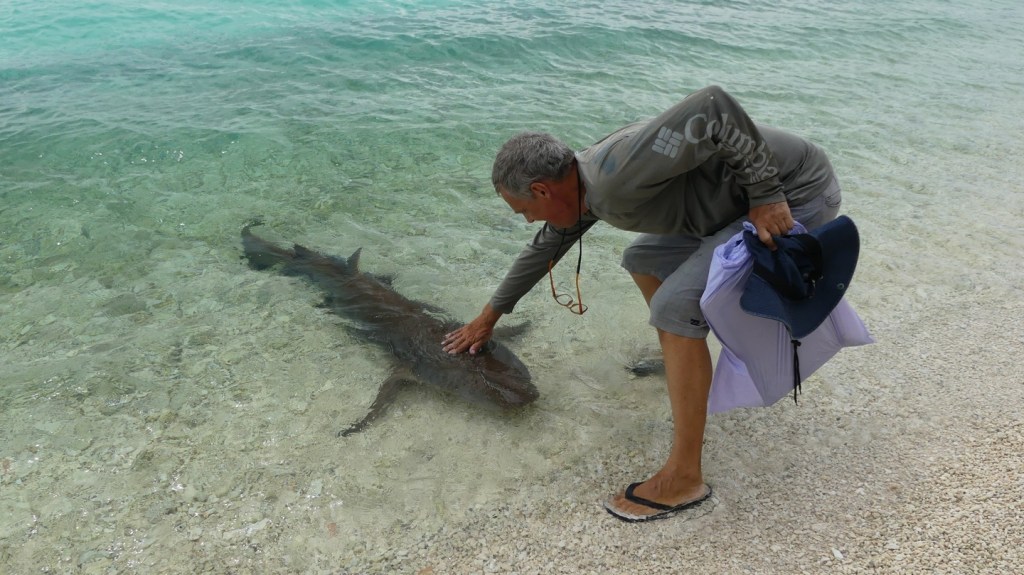
Getting Sanuk ready to be put back in the water. 15 Ton to be carried on the trailer is a delicate operation but Tony and his team know what they are doing.Also in the water there is preparation to be done.Alfred watching over Stefan while he is cleaning off the last piece of tape.Nini putting on some last minute anti-fouling under the keel.View from Sanuk, almost in the water.Saying goodbye to Ryan and Natasja from “Cheeky Monkey”. From left to right, Natasja, Stefan, Manu, Ryan, William, Nini, Tony and his mom Pauline.Stefan saying goodbye to the nurse shark. Watch those feet…
April 17th, Papeete, Tahiti, it feels good to be back in 28degrees temperatures and closer to the boat! Our shopping possibilities were limited because all stores were closed because of Easter monday, except the Carrefour supermarket and a chinese supermarket where we could find the foodsupplies to take to Apataki tomorrow on the Cobia 3 !
Flashback to March 26th,2017: We did not stay very long in Dunedin since time was running out and we still wanted to see more of the East Coast.
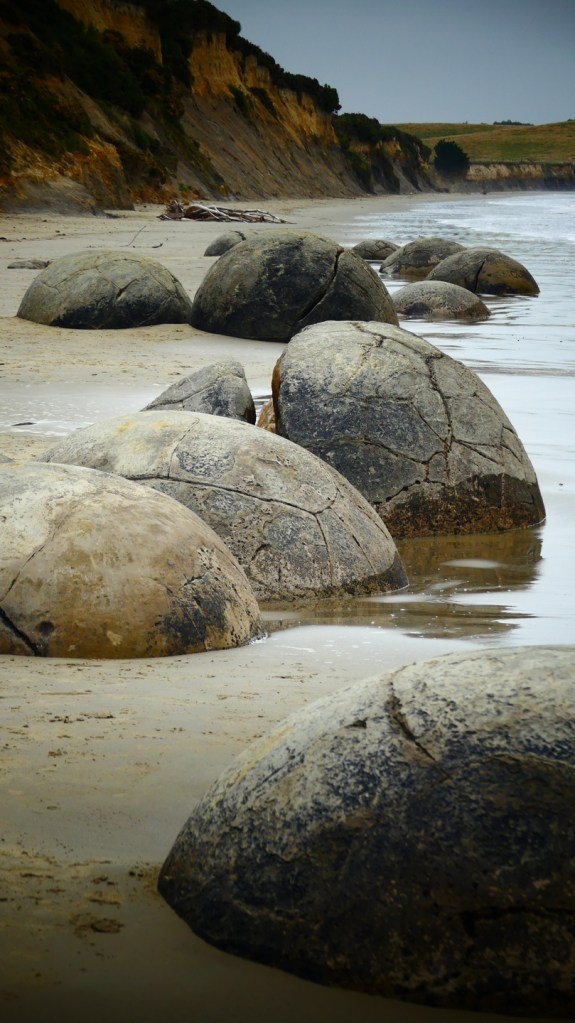
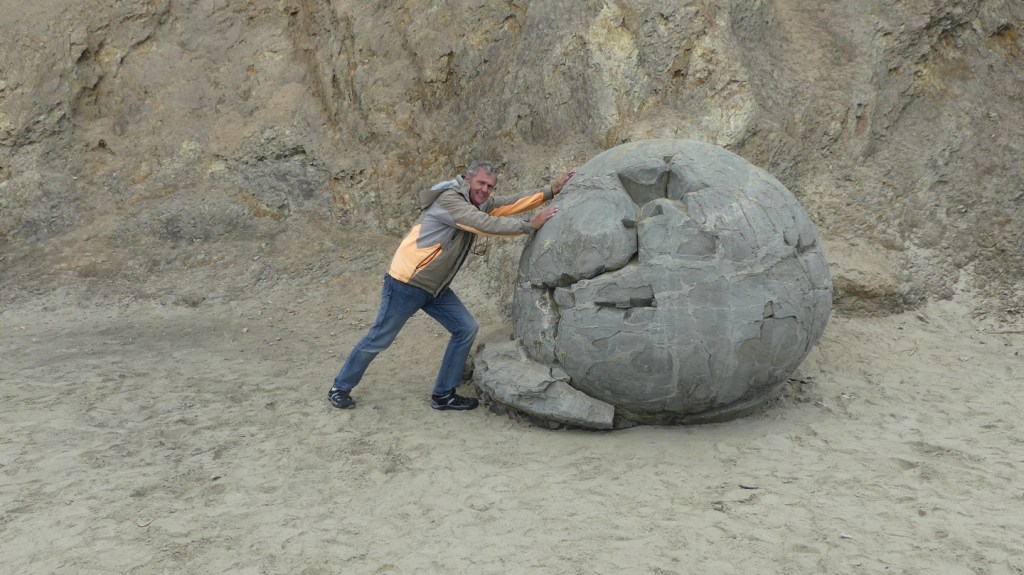
We made a quick stop to see the Moeraki Boulders and met a Belgian working at the cafetaria there. The Moeraki boulders are large, spherical boulders on Koekohe beach. They are made out of mud, silt and clay cemented by calcite.The large boulders, 2m in diameter,are estimated to have taken 4 to 5 million years to grow !
We continue driving to Mount Cook village in the rain and low clouds 😦 and spent a day at the Sir Edmund Hillary Alpine Center watching a 3D movie on Mount Cook, a documentary on the local mountain rescue team and the digital dome planetarium.
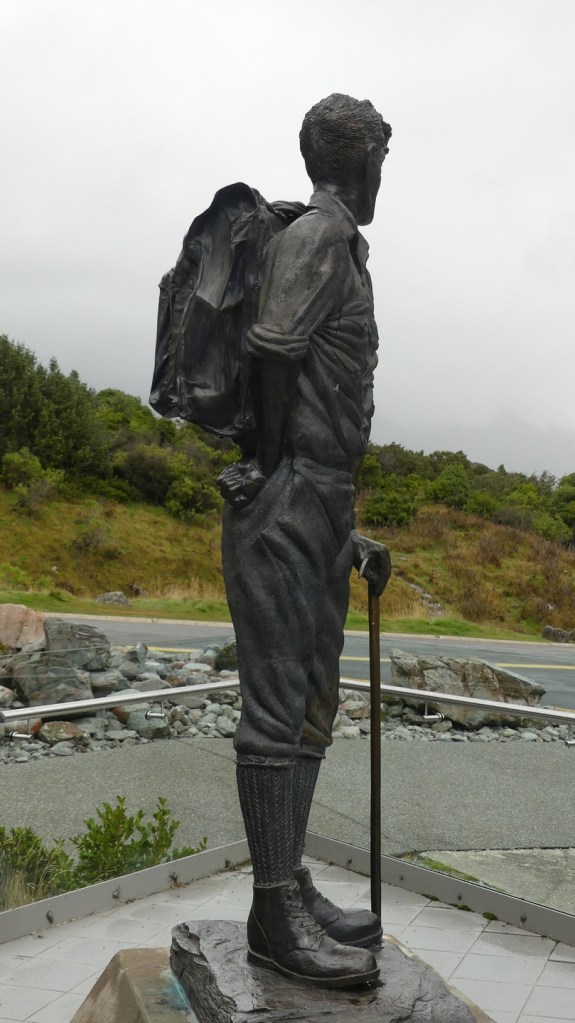
A bronze statue of Sir Edmund Hillary looking at Mount Cook! The day we arrived it was sooo cloudy and rainy that you could not see any mountains in Mount Cook national park! Sir Edmund Hillary is a famous and admired New Zealander not only because of his achievement, his ascent of the Mt.Everest in 1953 but also because of his humanitarian work in the villages of Nepal.
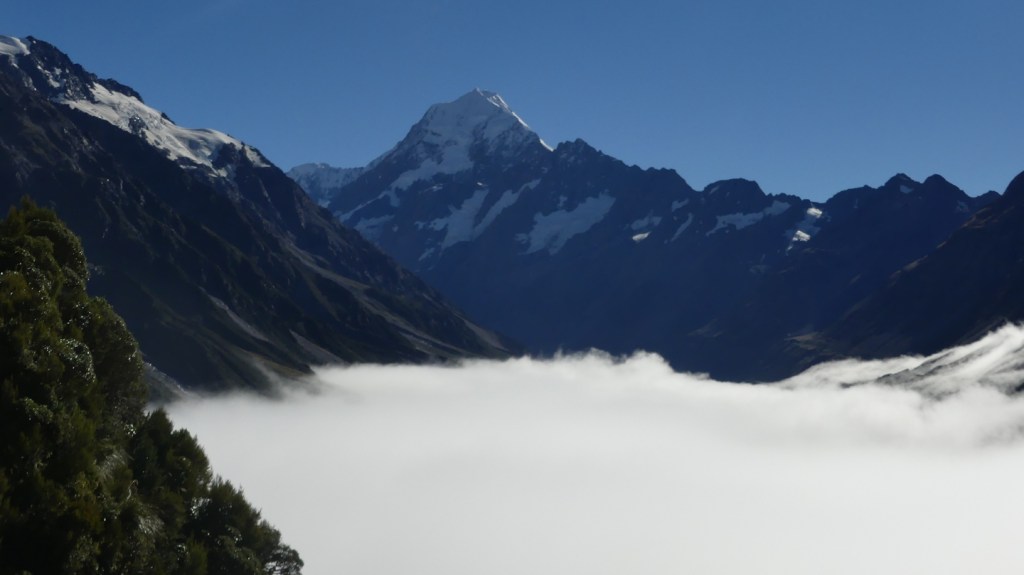
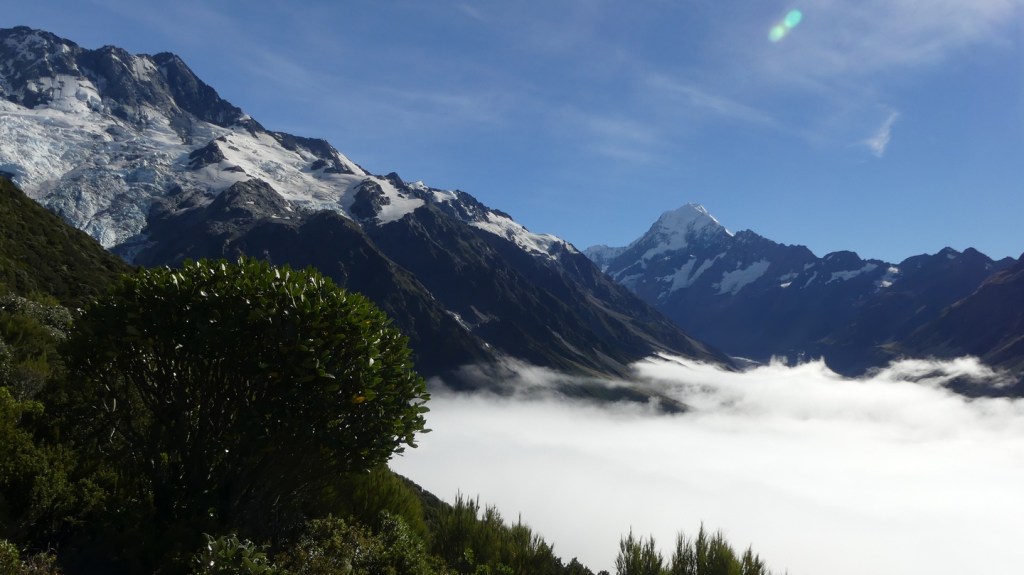
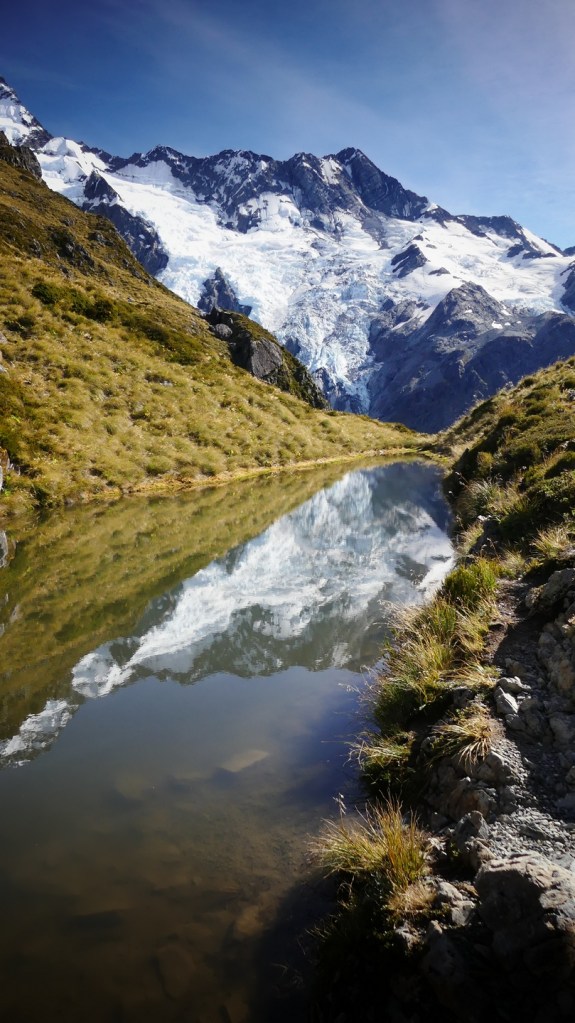
The next morning it was not raining but there were still a lot of low hanging clouds over our campsite. We were not sure what walk to do and decide to go to the outlook and take a decision on the way. Rainjackets, pants and backpack with some water we go on our way. When we come to a marker with the several walks we decide to take “Sealy Tarns”, only 5.2KM(one way), 3-4HR return walk, we think that is not too bad… Later we read the description of the walk,”The Sealy Tarns Track begins gently until you reach the foot of the Mueller Range. The track zigzags steeply up to Sealy Tarns.” The track consists mainly of 2200steps which have to be climbed! This was definitely one of the most challenging walks we did and we were not prepared! But the reward was incredible…
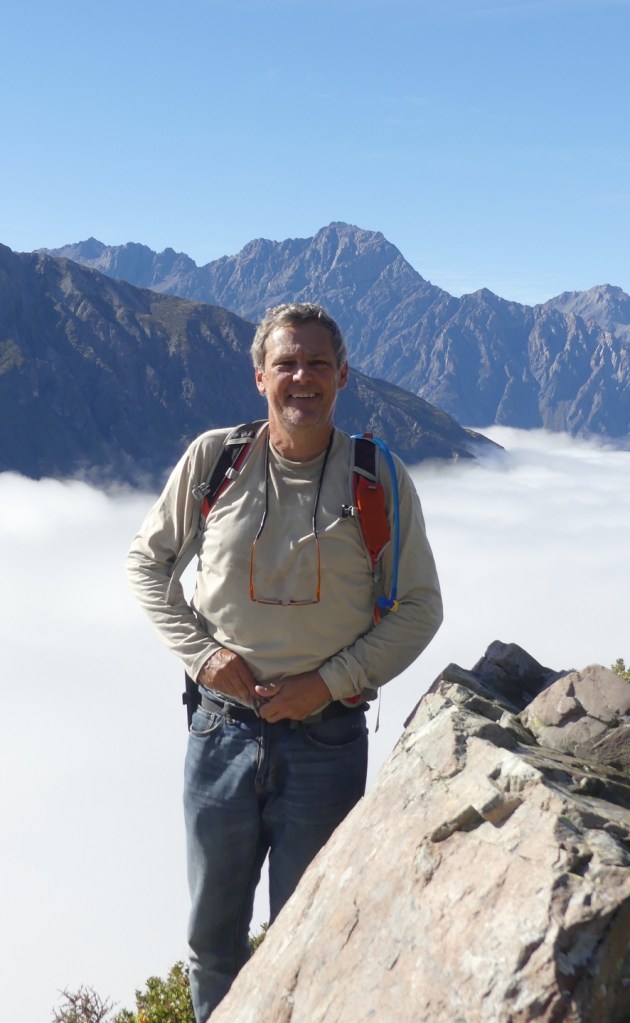
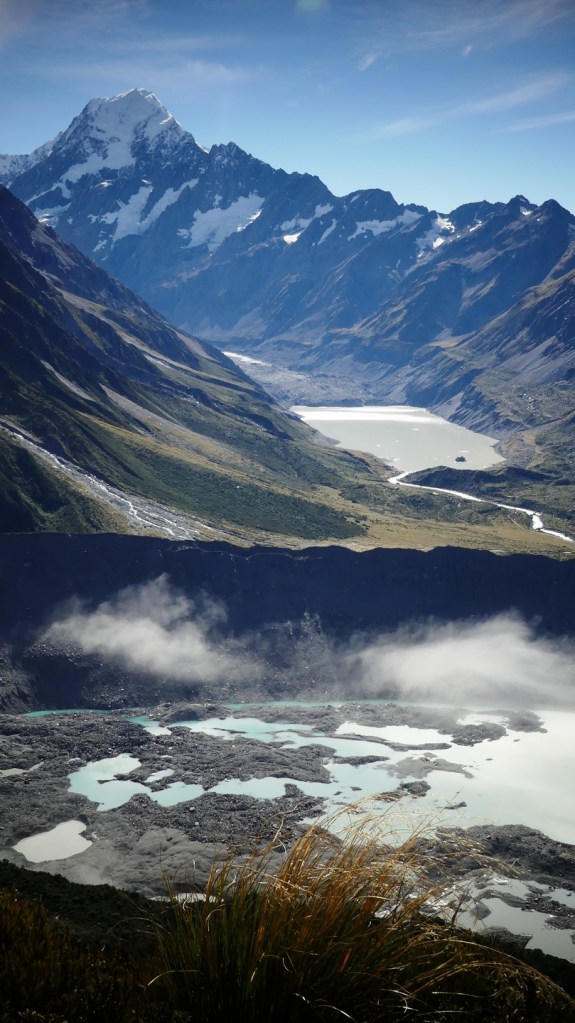
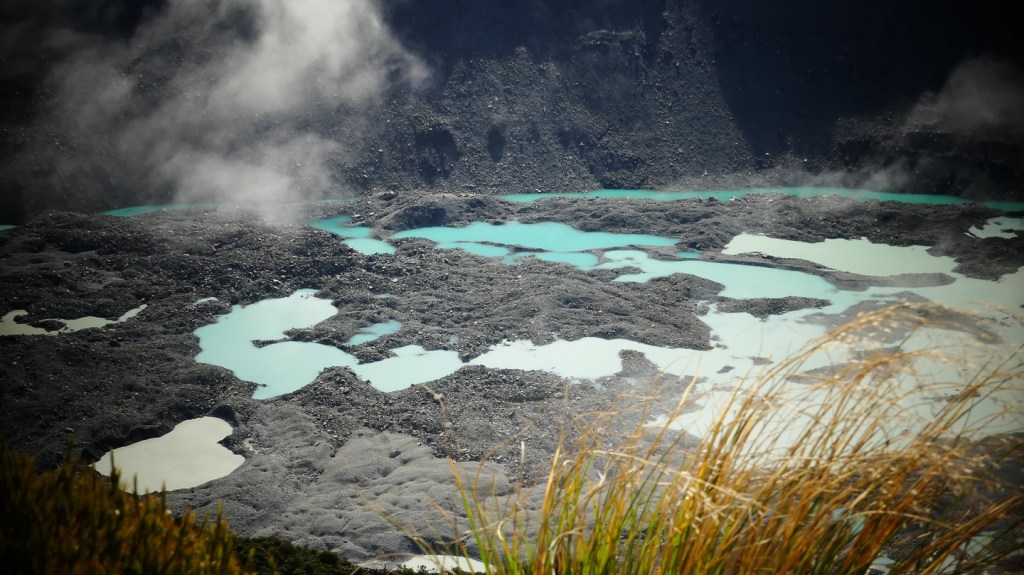
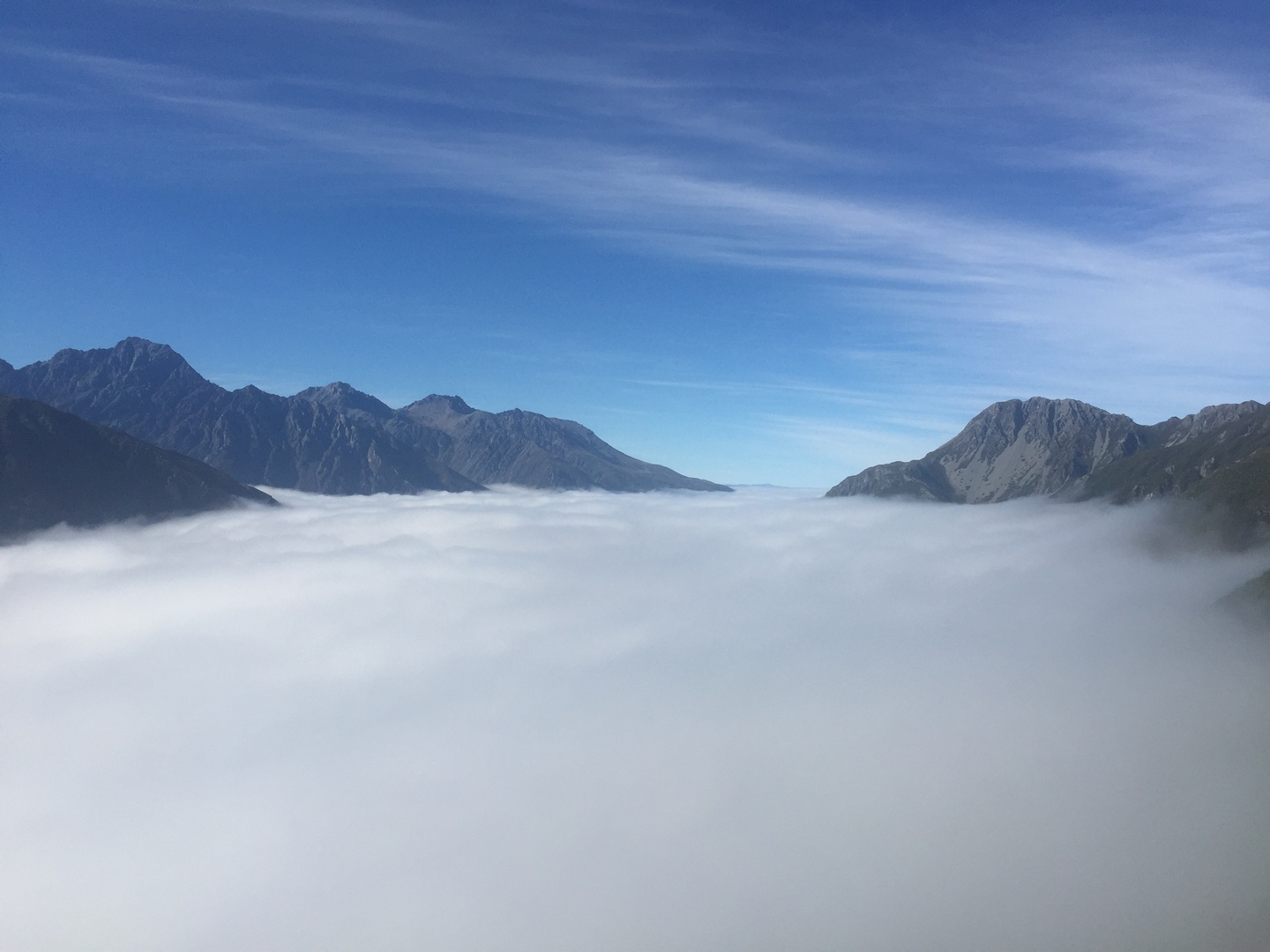
After 45min of walking, climbing and huffing and puffing we get this view! Above the clouds…it is really magical.You can see Mt.Cook all the way in the back.Taking a rest and enjoying the view.The Maoiri name for Mt.Cook is Aoraki, meaning “cloud piercer”, could not find a better one.Reaching the Sealy Tarns. A tarn is small mountain lake or pond.While we were eating our granola bar, we did not bring anything else, we watched the clouds disappear and a beautifull view unfold. Mt.Cook is showing all its beauty.The glacial lakes at the bottom with the last clouds evaporating by the sun.
The return walk was not easy as well since it was so steep our legs were shaky. But we enjoyed the scenery so much that we did not care and arrived all happy under blue skies at the campsite. We drank and ate something. Felt stupid not to have prepared this walk better, we had no suncscreen nor a hat with us …we should know better, in the mountains the weather can change rapidly! This walk was definitely one of the highlights of our trip to NZ! We continued our route out of Mt.Cook National Park (also UNESCO world heritage) and went to Tasman glacier view and Tasman Lake…
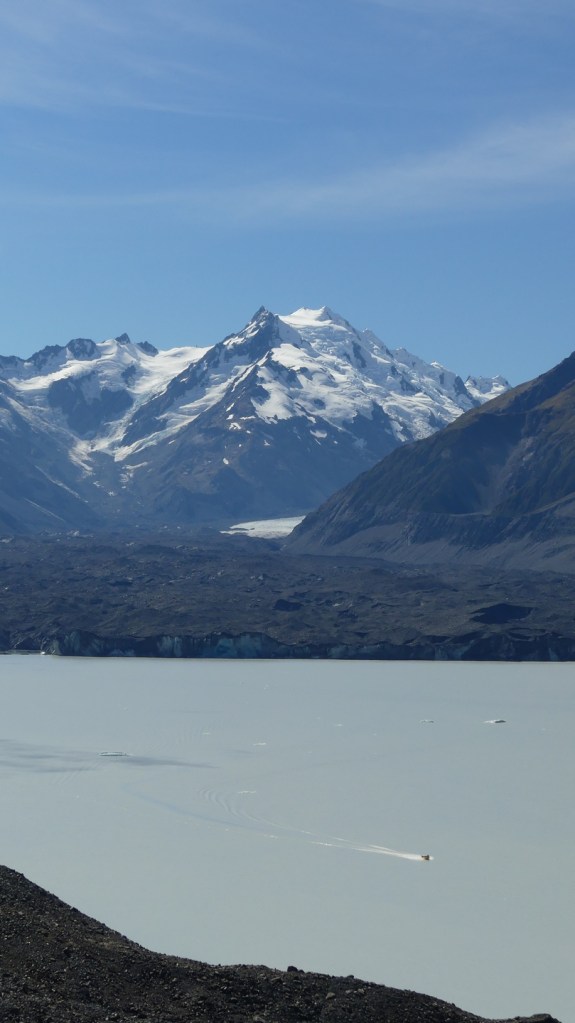
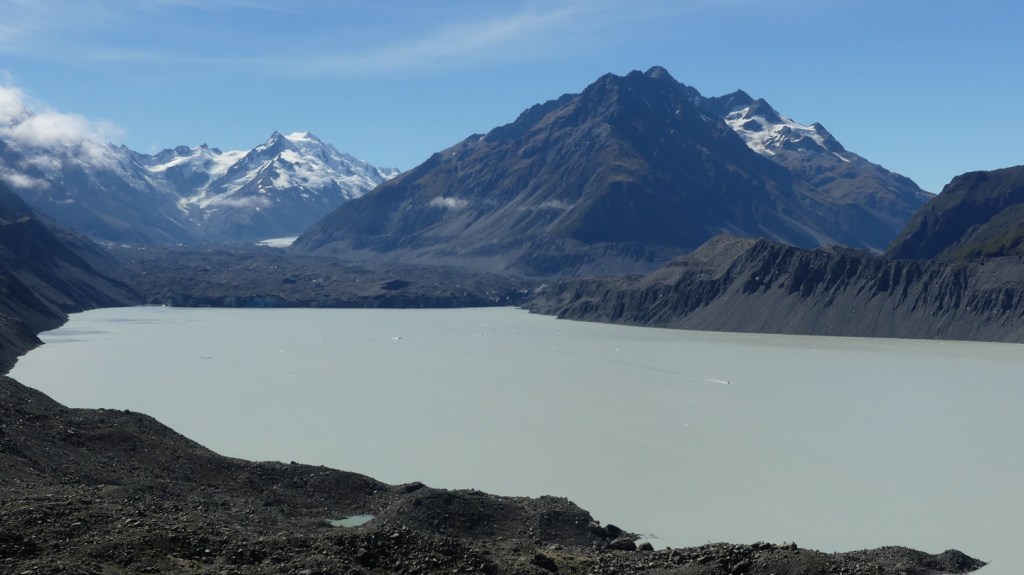
Tasman glacier with Tasman Lake.You can take a boat ride in Tasman Lake and see the icebergs in the water up close.In the early 1970’s there were several small meltwater ponds on the Tasman glacier but by 1990 these had merged into Tasman Lake. Tasman Lake has quickened the retreat of Tasman glacier.
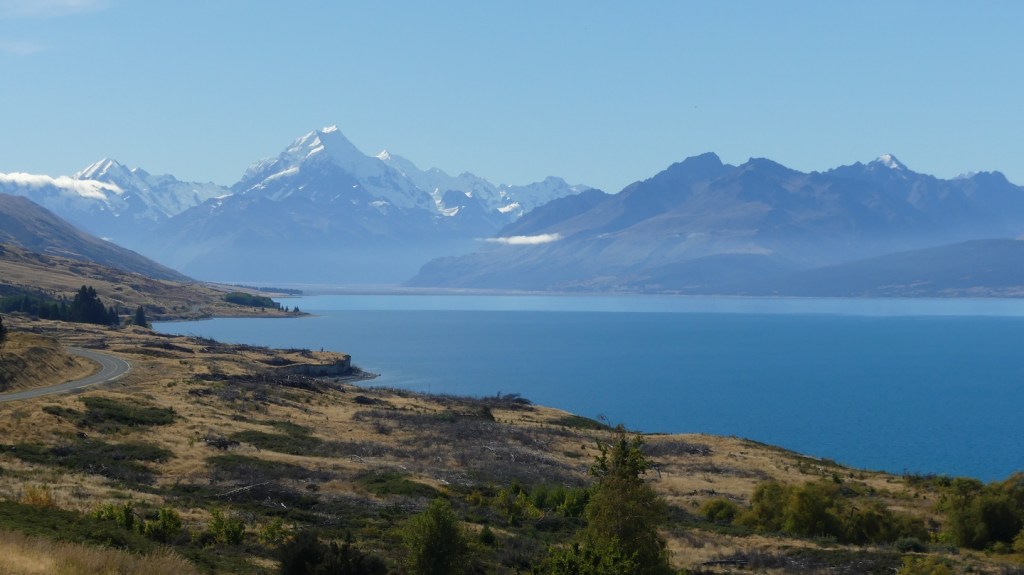
The scenery along the drive from Mt.Cook village to Lake Pukaki and Lake Tekapo is really incredible.
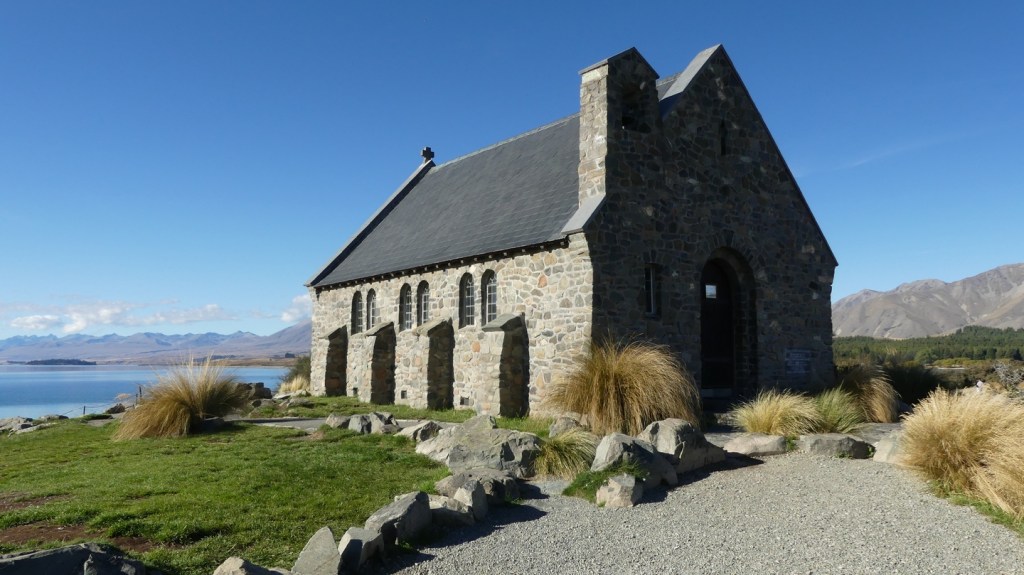
Lake Pukaki (glacial lake)and Mt.Cook in the back.Church of the Good Shepherd and lake Tekapo in the back. It was the first church built in the McKenzie region in 1935.
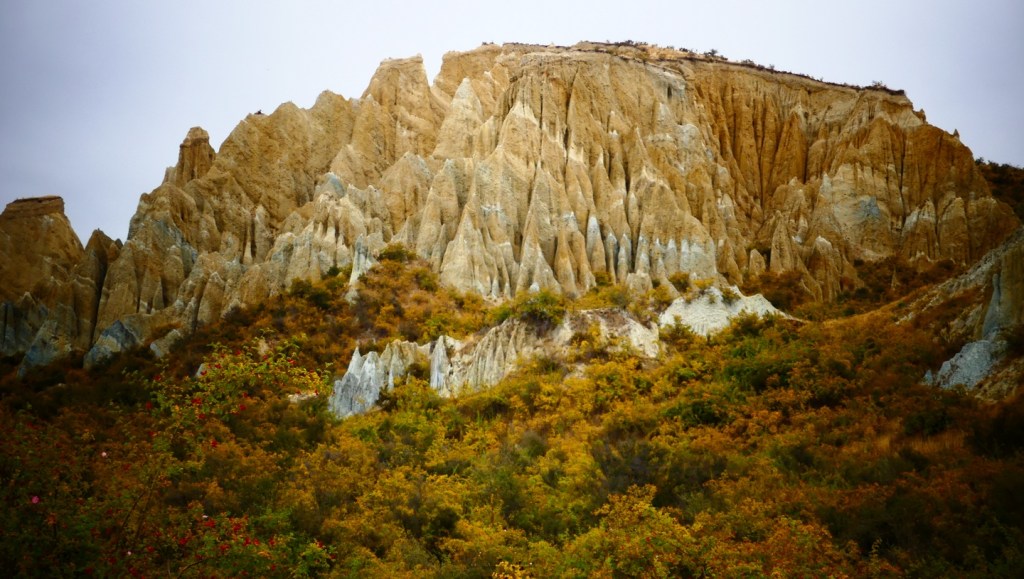
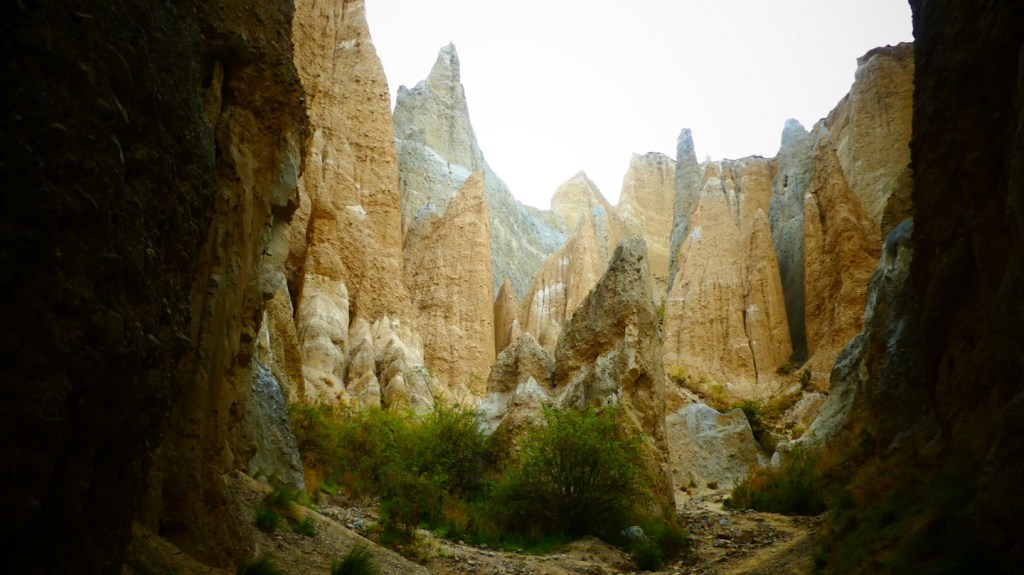
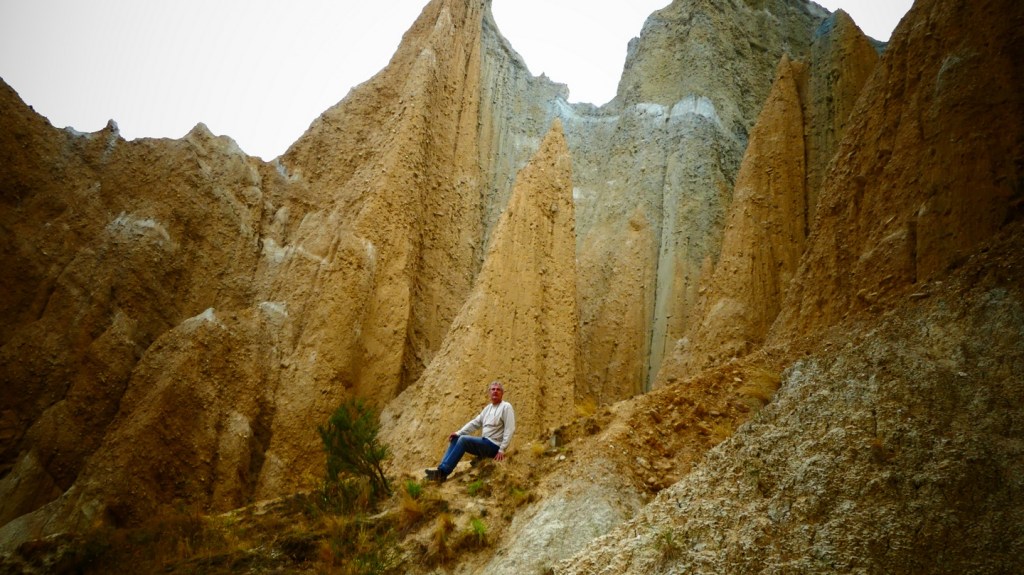
In the visitor centre of Omarama they told us to go see the Clay Cliffs and the pictures convinced us to go. This is definitely a hidden gem in NZ! We did not have the blue skies which would have made it even more beautifull but they were incredible. We had to drive 12km on unsealed road and pay 5NZD a the gate because they are on private property, but it was worth it!
The cliffs were formed 2 million years ago.We were there all alone which made it even more special.
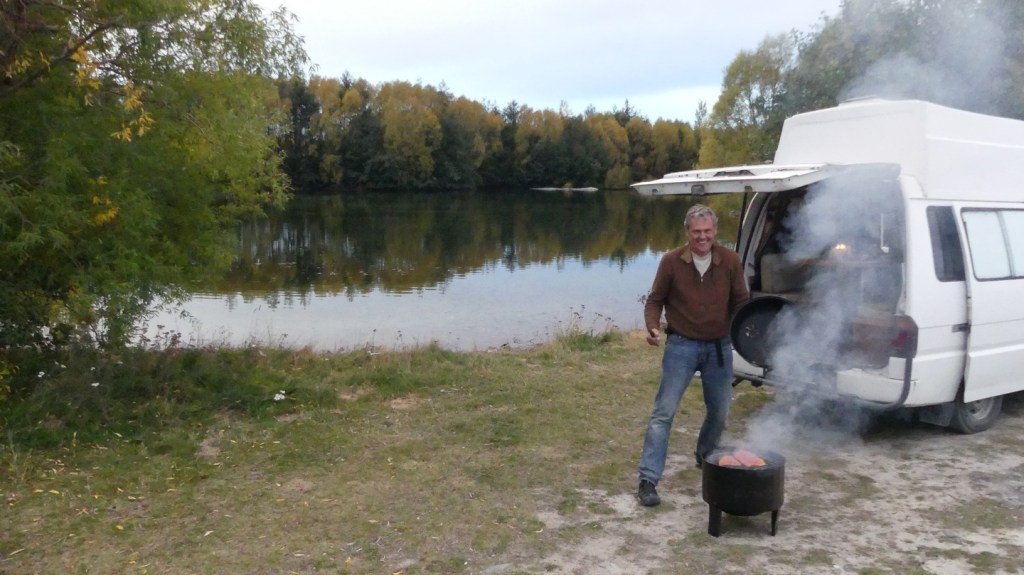
We leave the cliffs just in time to stop by a salmon farm and buy smoked salmon for aperitive and fresh salmon filet for the barbecue!
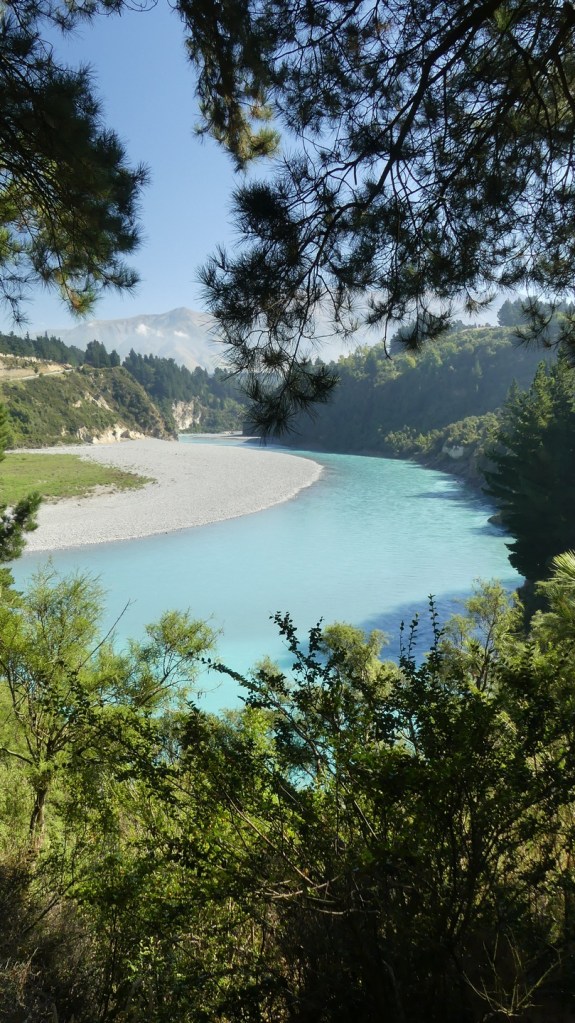
The next day we start out with rainy weather but as we continue our drive the clouds give way to sun and by the time we arrive at Rakaia Gorge it was perferct! We see a perfect camping spot but decide to do the Rakaia Gorge walkway first since the weather was so nice.
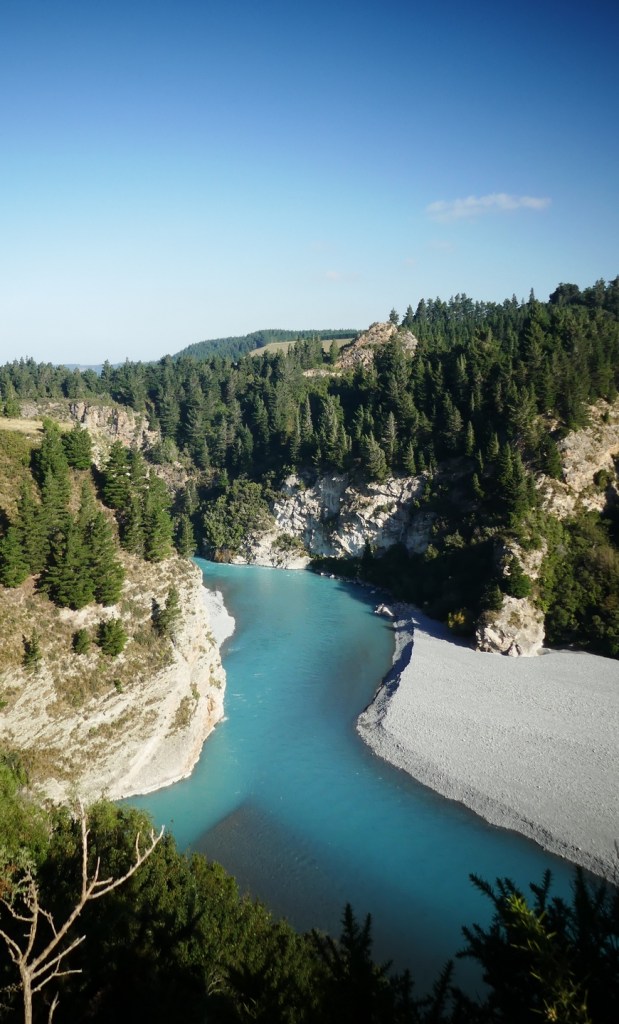
It is a 10,2km walk (return) along the top of the Rakaia Gorge and the views are spectacular.The Rakaia river making its way through the gorge.
We lost our good camping spot but were happy we did the walk under blue skies as the next day it was drizling again…
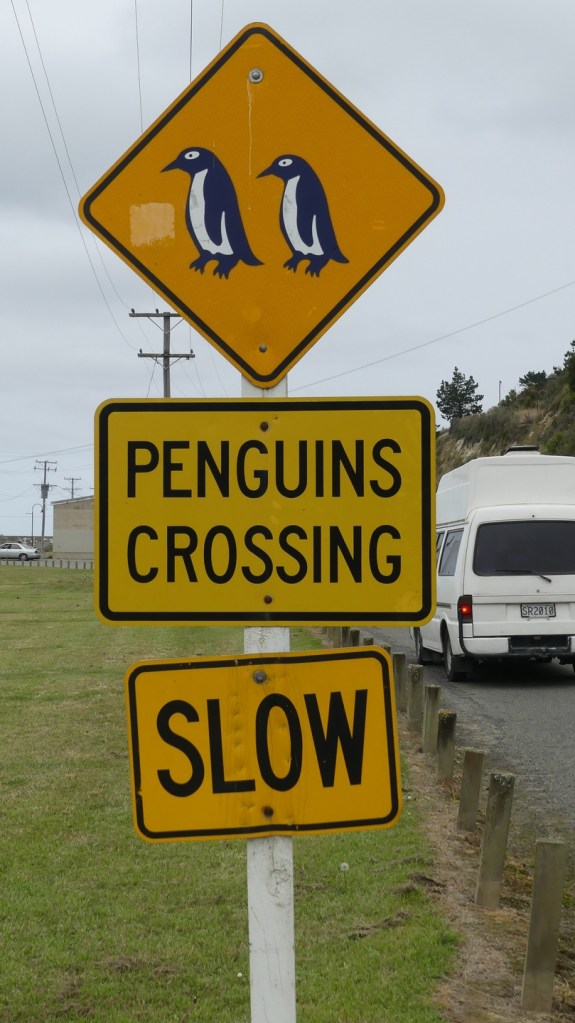
Because we did not see any penguins nor an albatross in the Otago Peninsula (Dunedin) we decided to drive along the coast to Oamaru because the Rough Guide said this is a unique place to see the Yellow Eyed Penguin and the blue penguin since there is a colony within walking distance from the town centre!
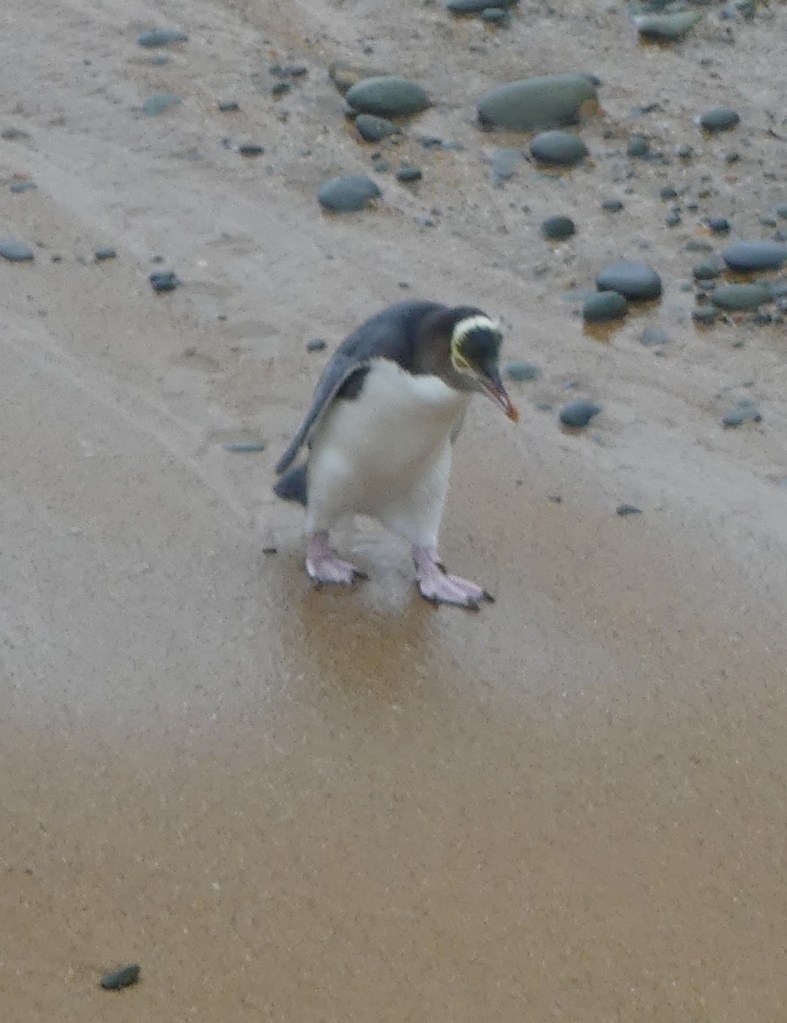
Would they really cross the street…The yellow-eyed penguin or hoiho (Maori) is native to NZ.They are endangered and considered one of the world rarest penguin species.Their estimated population is only 4000.You can only spot them early in the morning when they leave their burrow to go fishing (not a good time for us 🙂 ) or in the late afternoon, in this case 5.30PM when they return from a day fishing. NZ is very protective of the penguin and you cannot go on the beach or near at certain hours of the day so they do not get frightened and return back to sea.
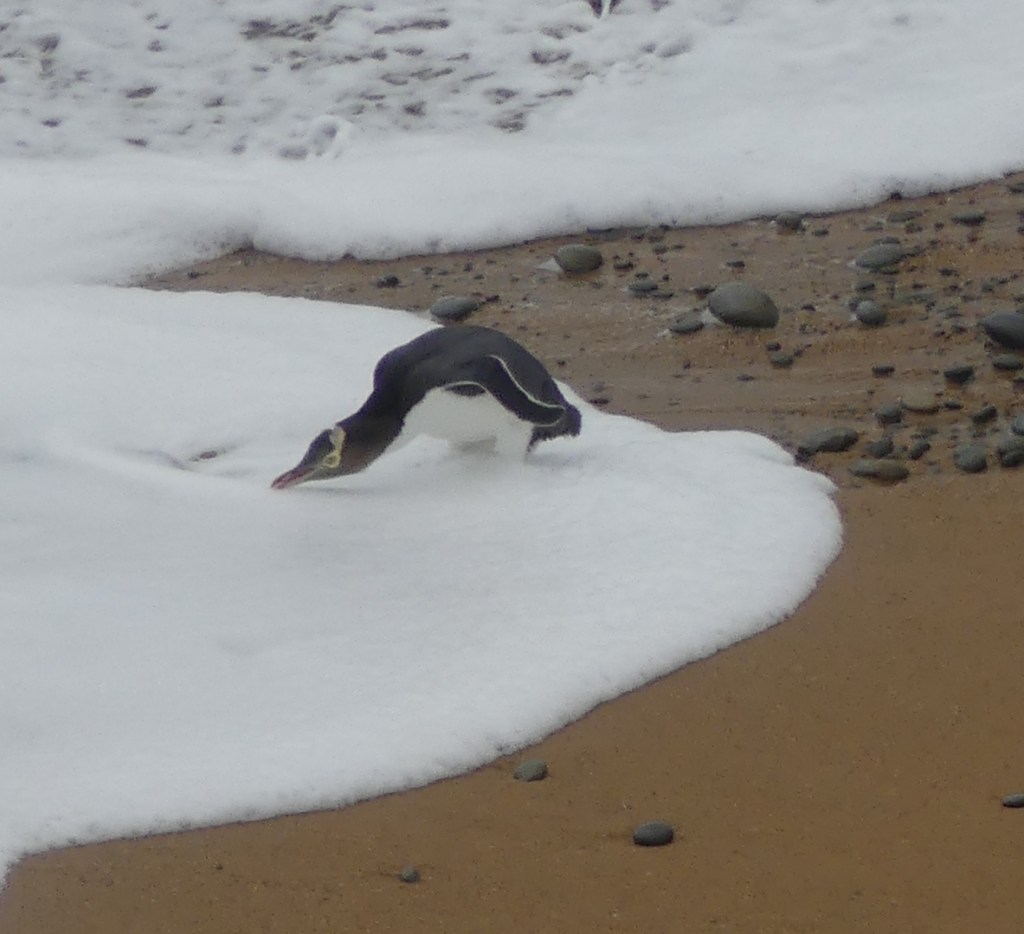
We then decided to go see the blue penguin but we were informed that they only show up around 7PM, almost dark…We were at the rendez-vous a little after 7PM together with a lot of other penguin enthousiastics. We waited and waited, Stefan got a blanket, it was cold and windy, started to drizzle but we persevered and around 8PM a whole bunch came tumbling with a wave on the beach 🙂 Really funny how they then walk up the hill to their burrows. Unfortunately because it was already dark and you can not use a flash and they are far away I did not get any good enough picture…The blue penguin (Korora) is the smallest of the penguins. Cold and wet we returned back to Burnie, happy we did at least see the penguins!!
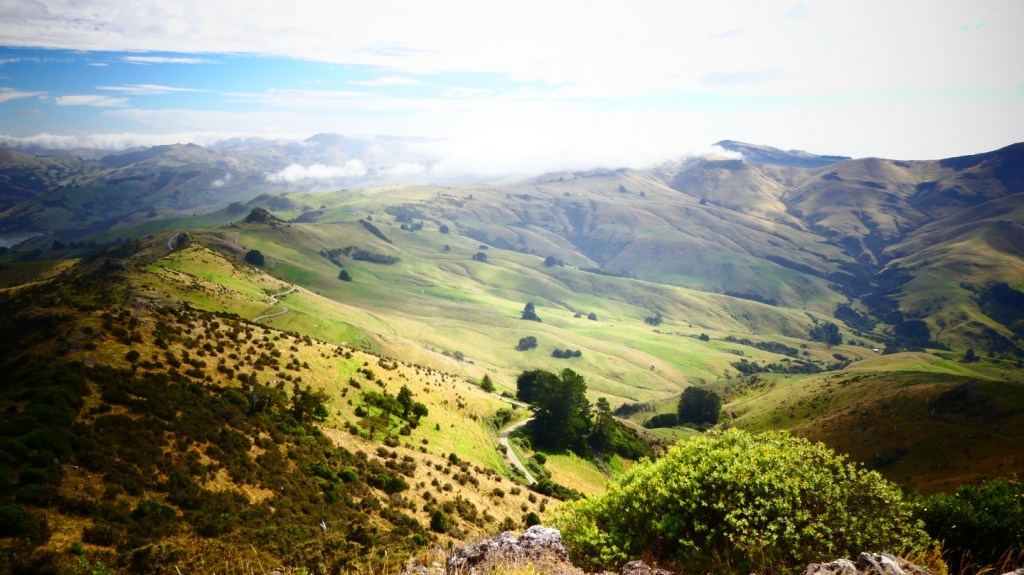
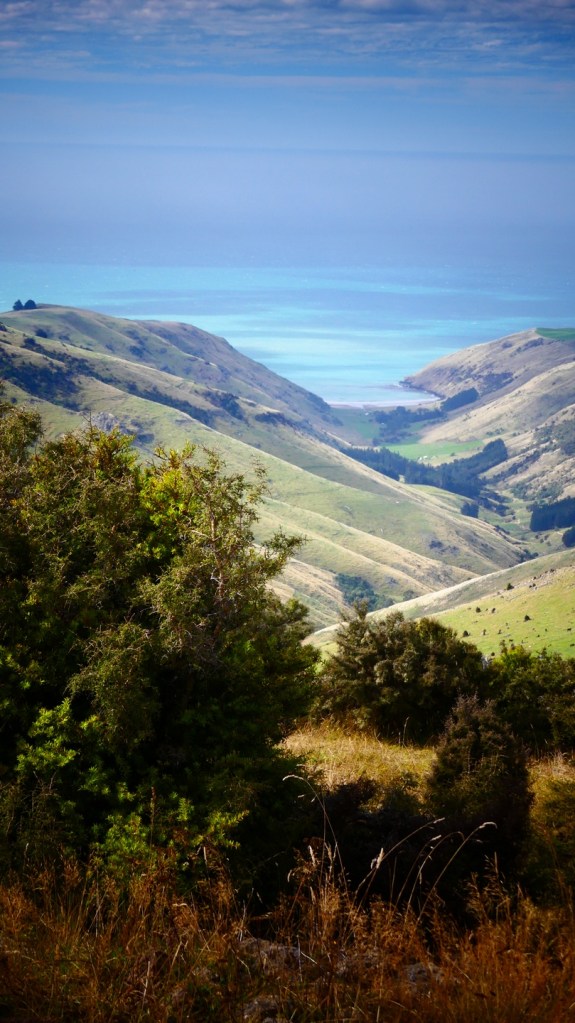
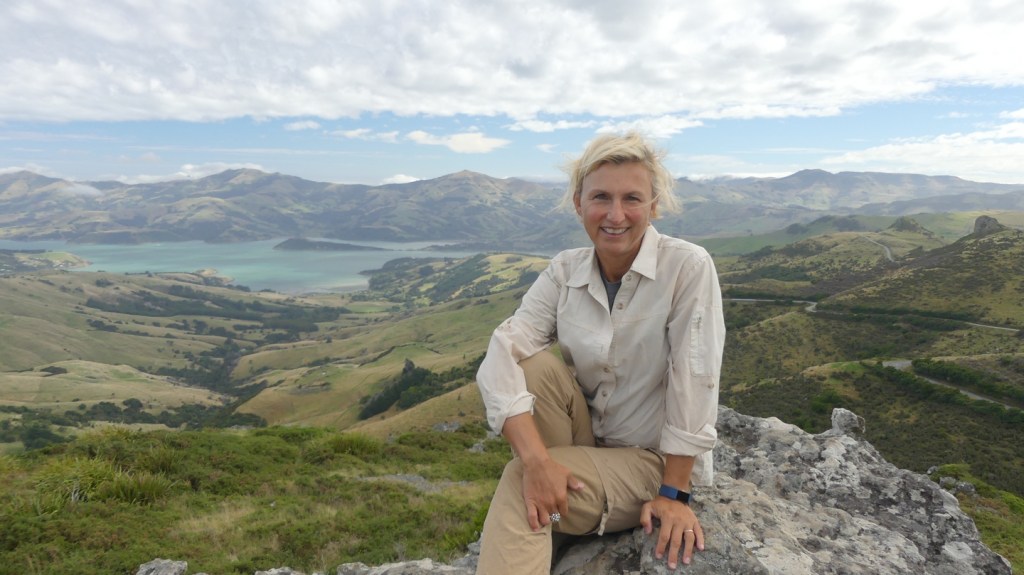
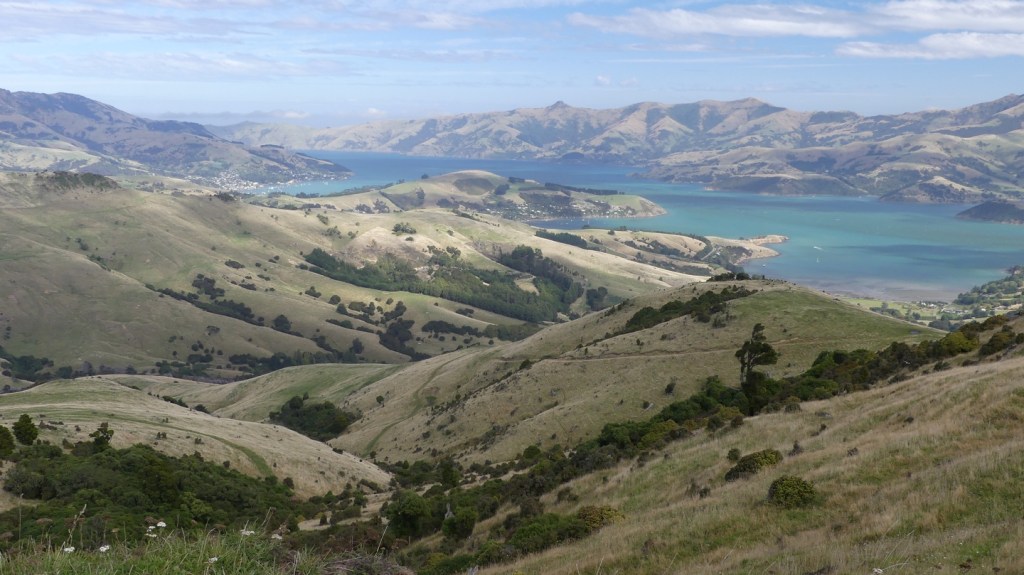
Our drive to Chrischurch was with continuous beautiful scenery and very variabel weather. Summer was over, leaves were turning to yellow and orangy colours and a lot already falling. We camp at Lyttleton harbour and the next day we decide to drive to Akaroa along a scenic route, Summit Road which traces the 600m high Akaroa crater rim. We stopped many times to take pictures and walked 30min to a viewpoint, all just in time to see the clouds roll in.
Akaroa is a little town with french roots. The first settlers came from France and a lot of the street names are still in french. It is a popular KIWI holiday destination.
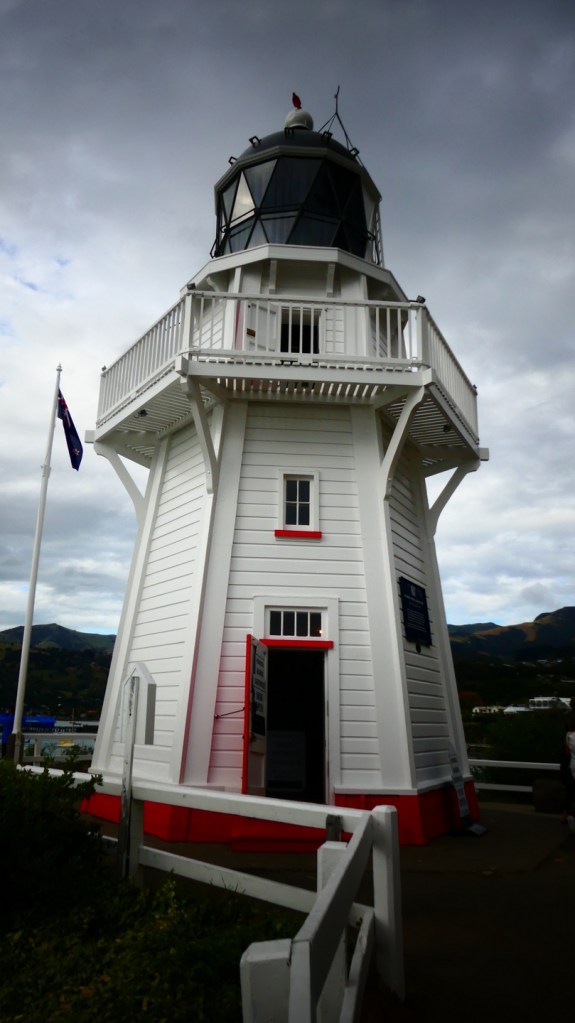
The Akaroa Lighthouse Preservation Society moved the lighthouse from the Akaroa heads close to the town centre in 1980. It was built in 1879 and one of the few wooden lighthouses remaining.We made it back to the town centre before the downpour.
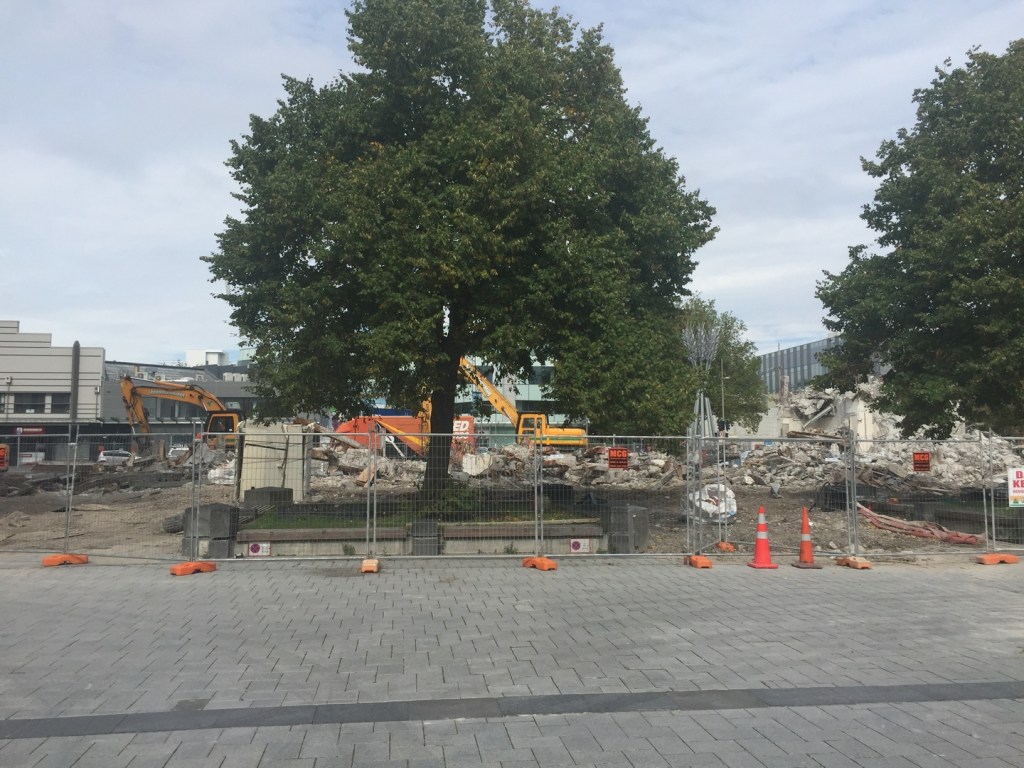
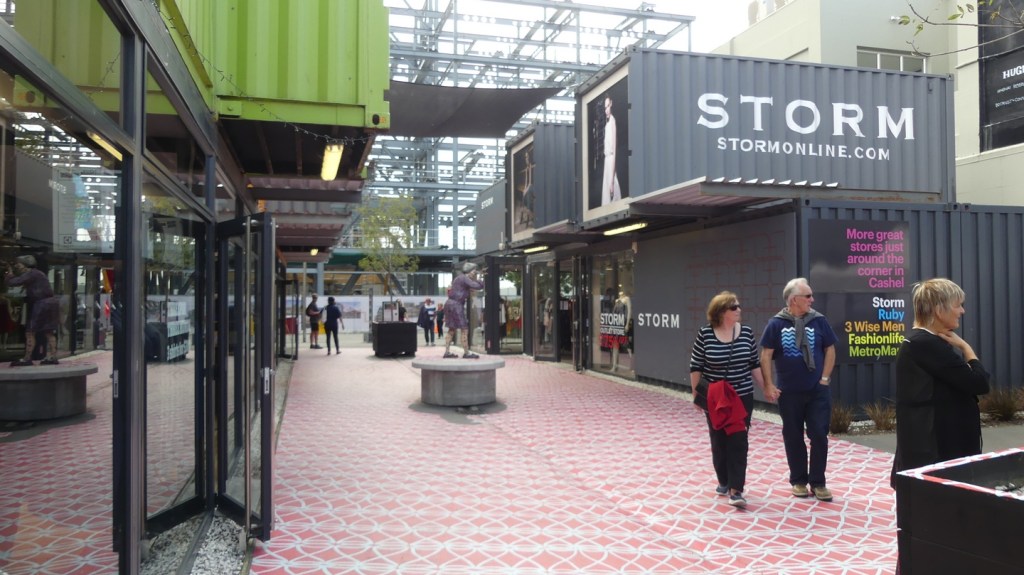
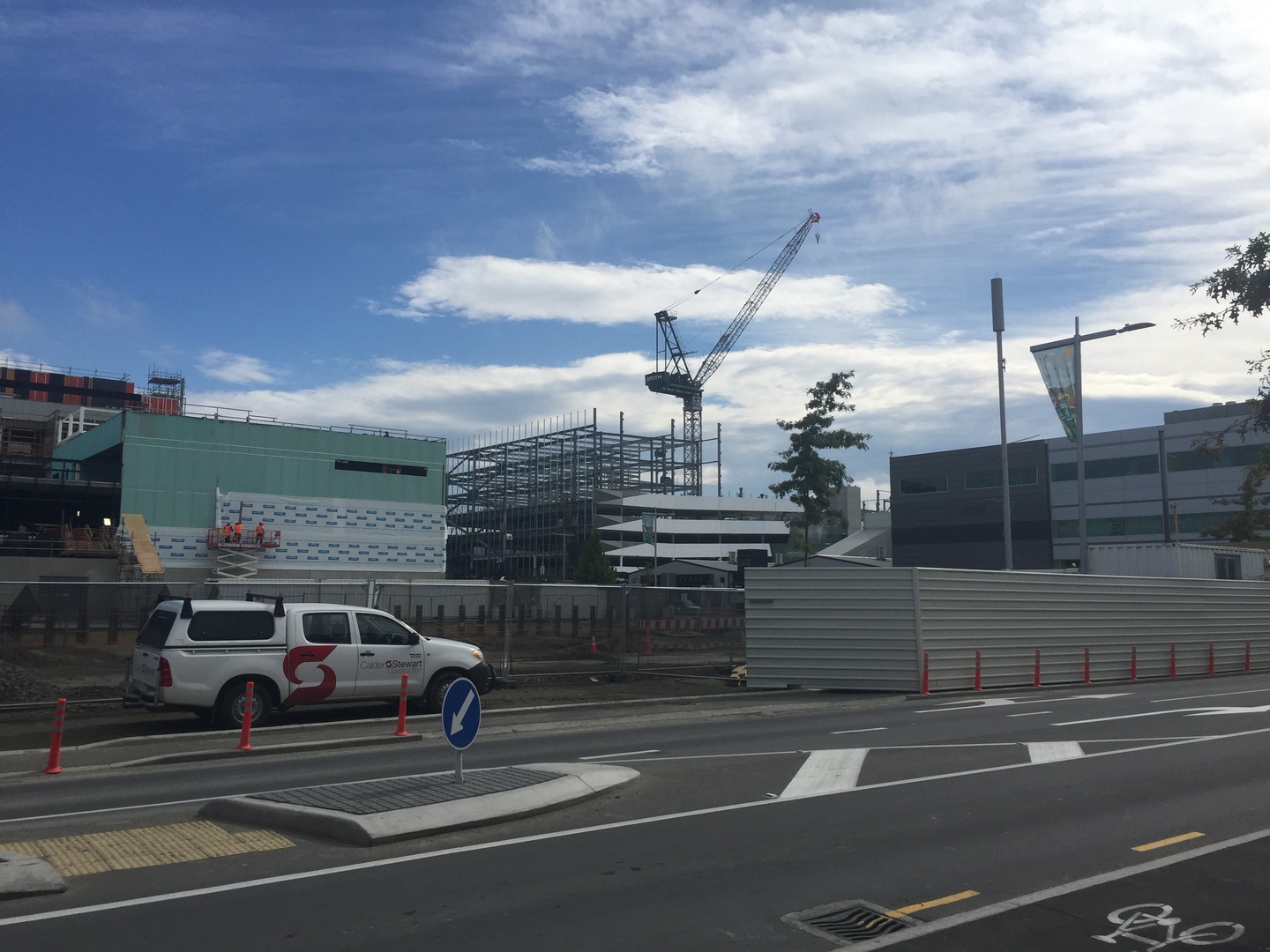
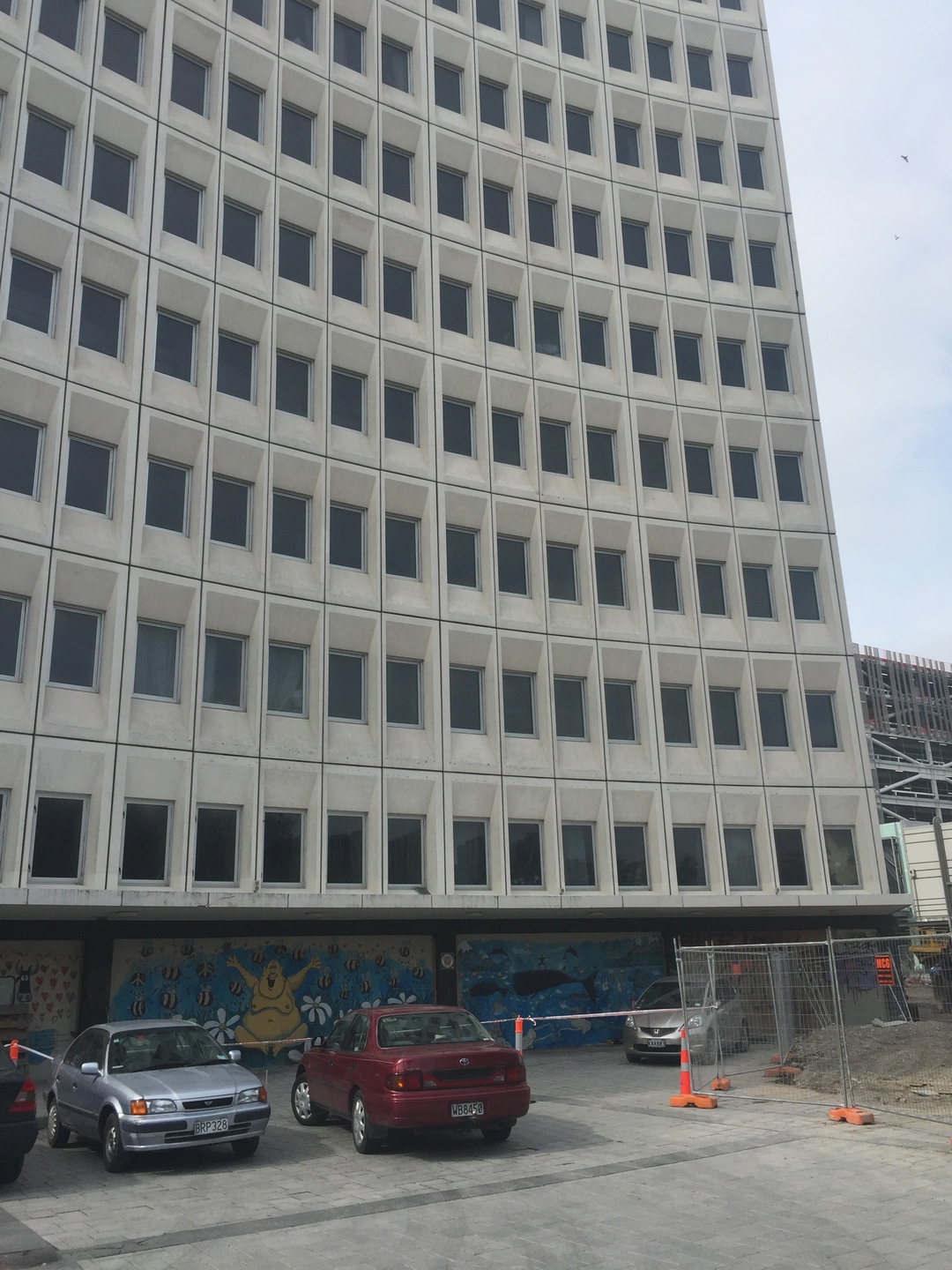
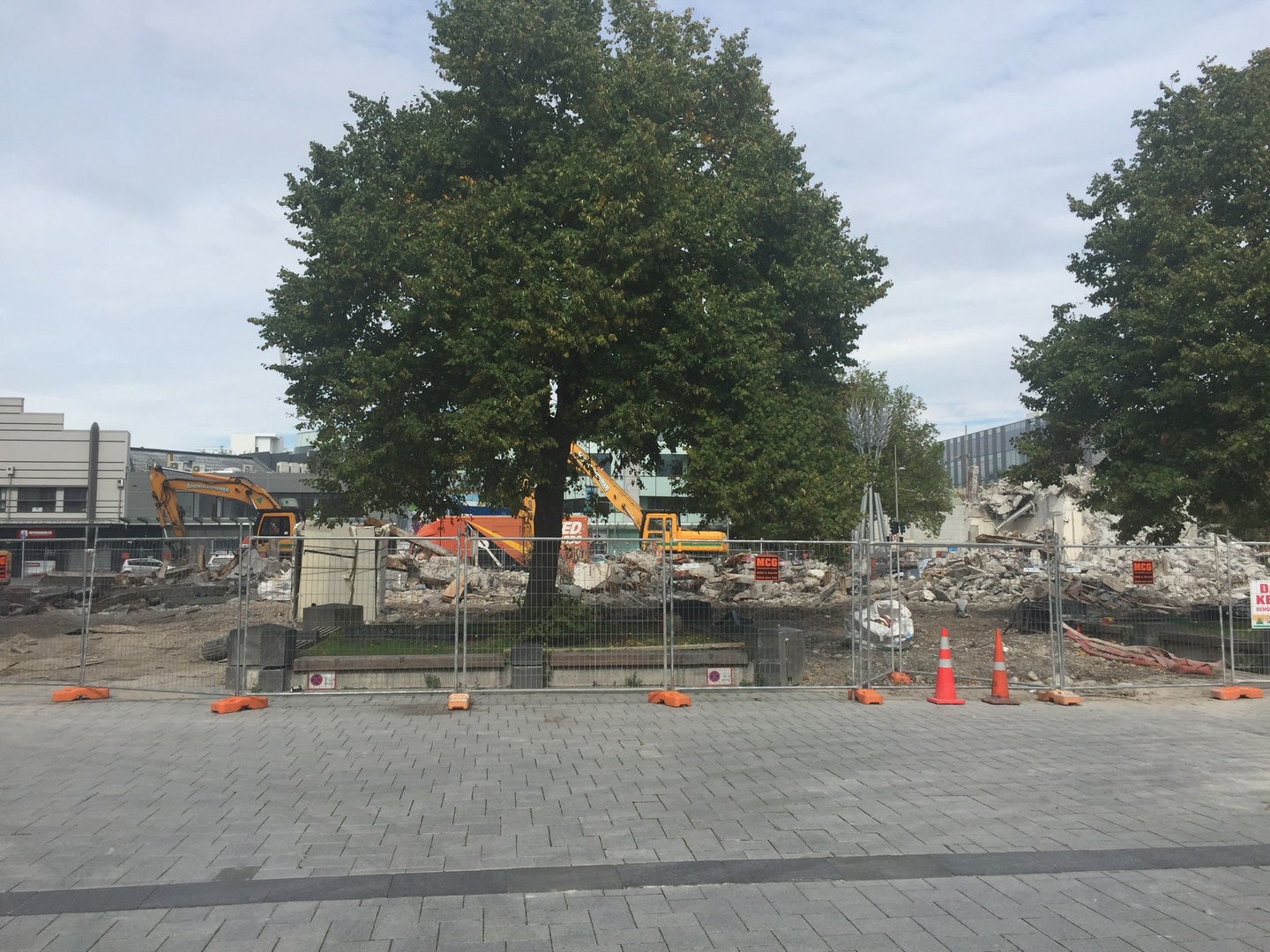
Arriving in Christchurch was a surprise. We could not believe the destruction still visible from the earthquake that hit the city in February 2011! 6 years later and still so many buildings waiting to be torn down, rubble and cranes everywhere. Stefan felt sad seeing the city like this while I could sense a dynamism in the newly created parts of the city. We did not stay very long because it was already April 3rd and we had to be in Auckland by April 8th to show Burnie to a potential buyer.
Earthquakes occur very frequently in NZ because it is situated in the collision zone of two plates, the Indo-Australian and the Pacific tectonic plates. About 14000 earthquakes occur in and around the country each year and about 150 to 200 are big enough to be felt. We did not feel once the earth rumble.
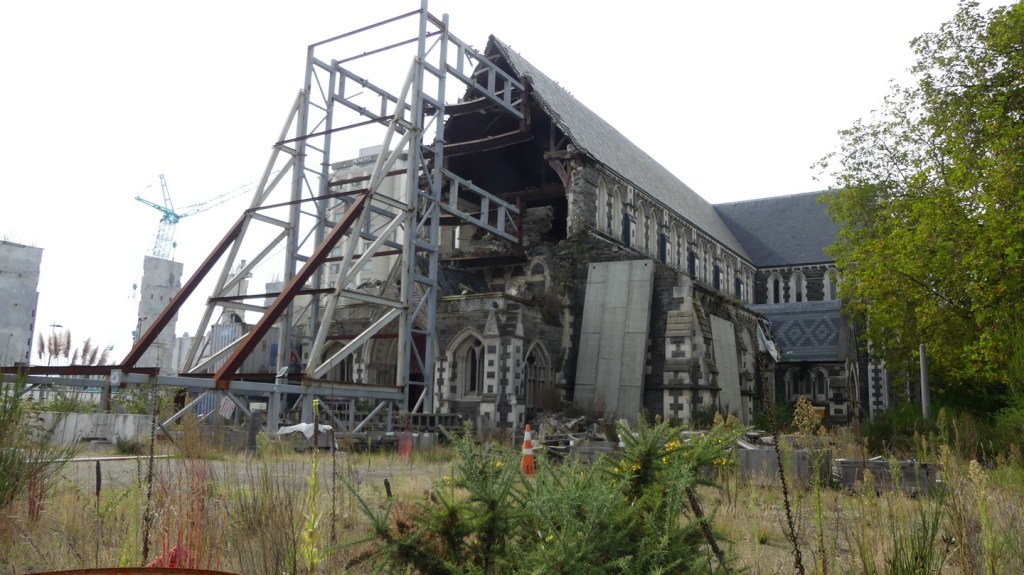
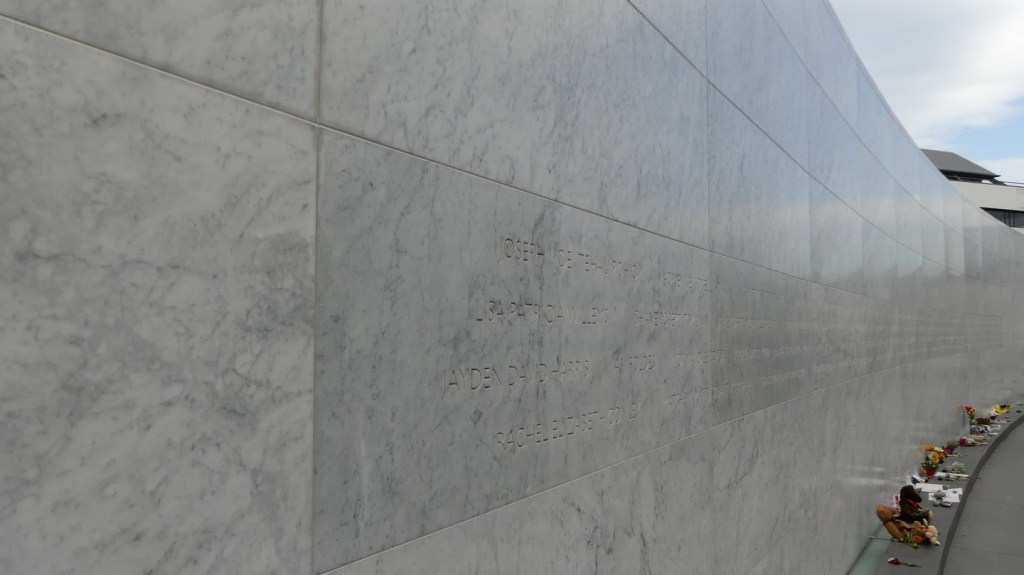
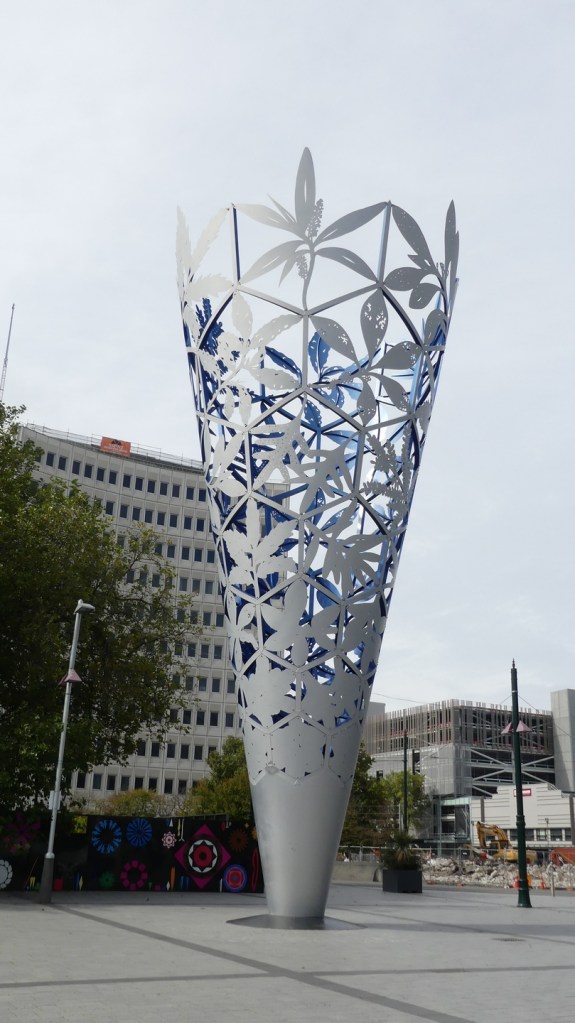
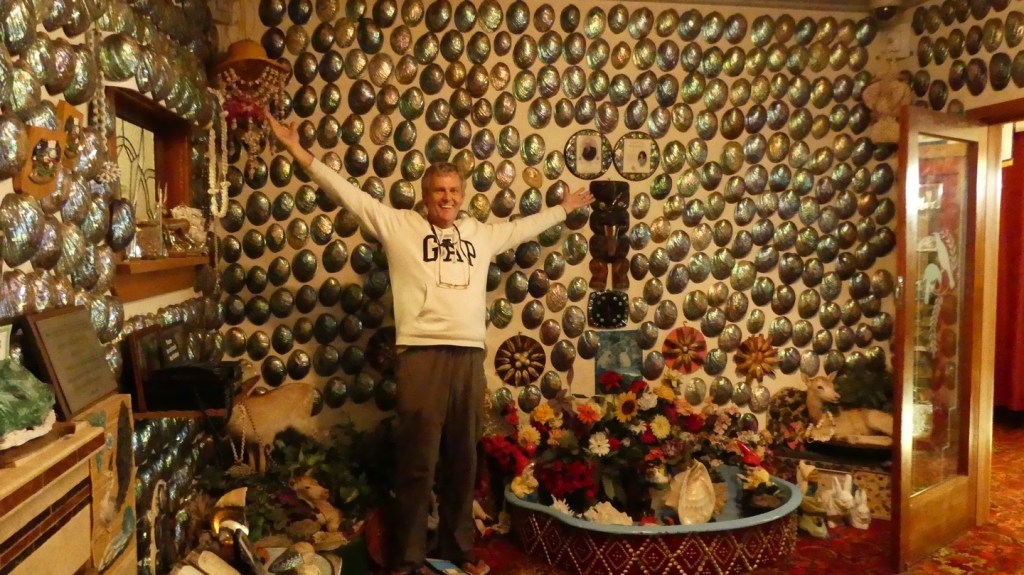
The 2011 Christchurch earthquake registered 6.3 on the Richter scale and was centered 10KM of the centre of Christchurch. 70% of the CBD (Central Business District) buildings have to come down.The Christchurch cathedral was severely damaged and the Anglican church decided to demolish the building and build a new one but this led to many protests and legal action from various groups. This litigation is still going on and so the church still stands…the tower was destructed in 2012.The Canterbury Earthquake natiional memorial was unveiled on February 22, 2017, just before we visited. 6 years after the destruction…185 people of more than 20 countries died.The new Christchurch, which is being marketed as “greener, more compact, more accessible and safer”, will cost in the region of NZ$40bn – almost 20% of New Zealand’s annual GDP.The Chalice still stands! It was built in 2000 and survived the 2011 earthquake.It is designed by New Zealand artist Neil Dawson, and is made up of forty-two leaf patterns featuring different native plants.The Paua House was a tourist attraction in the southern New Zealand town of Bluff, but now on display at the Canterbury Museum in Christchurch. The house was owned by elderly couple Fred and Myrtle Flutey, who built up a massive collection of ornaments made from the iridescent shells of the paua. They continued to do this for 40years and welcomed visitors from all over the world. When they died their grandson gave their collection on loan to the Canterbury Museum who made a replica of the house. NZ kitsch at the extreme but such a nice story!
We hurried back to Auckland passing by Wellington in the pouring rain from the storm Debbie and managed to sell Burnie to a french couple travelling for 2months in NZ. We rented a little camper and drove north of Auckland to Whangarei. Visited Aislado (NZ) in Marsdens Cove Marina, An and Ivan on Vaguebond in Town Basin at Whangarei. Drove to Russel ,where we had an excellent meal at the Duke of Marlborough, and stopped in Waipoua Kaori Forest to see the largest living Kaori tree from NZ. Cyclone Cook passed by…but we arrived safely and saturated with lots of nature scenery in our heads at our friend’s house late April 14! So nice to finally have the luxury of staying in a nice house, sleeping in a bedroom, toilet and bathroom next door 🙂 !
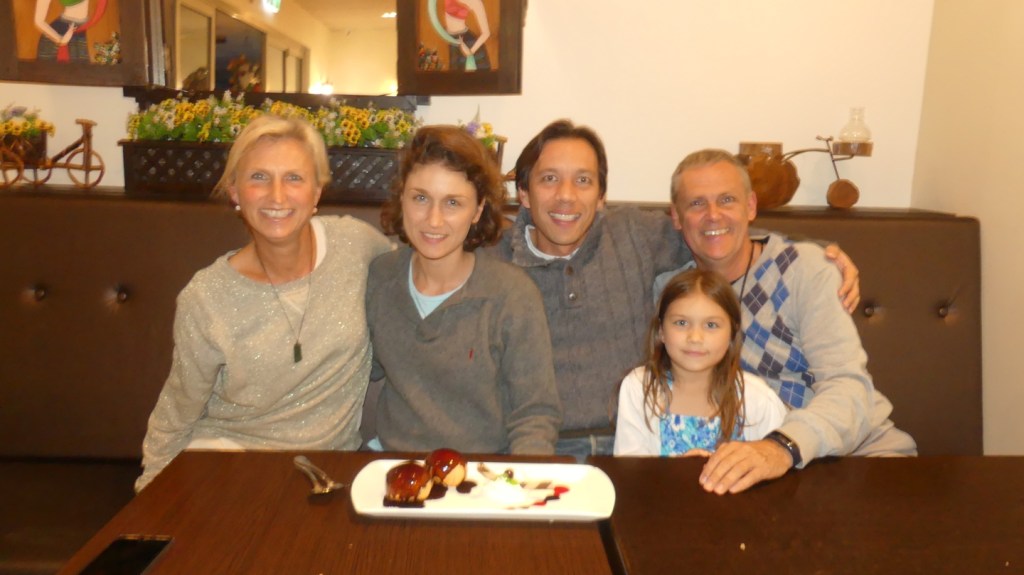
Together with Sylvia, Vaughn and Zara at a Thai restaurant on our last night of our trip in NZ.
Thank you so much Sylvia, Vaughn and Zara for your hospitality, help and friendship! We hope someday to welcome you all in Ghent !!! 🙂
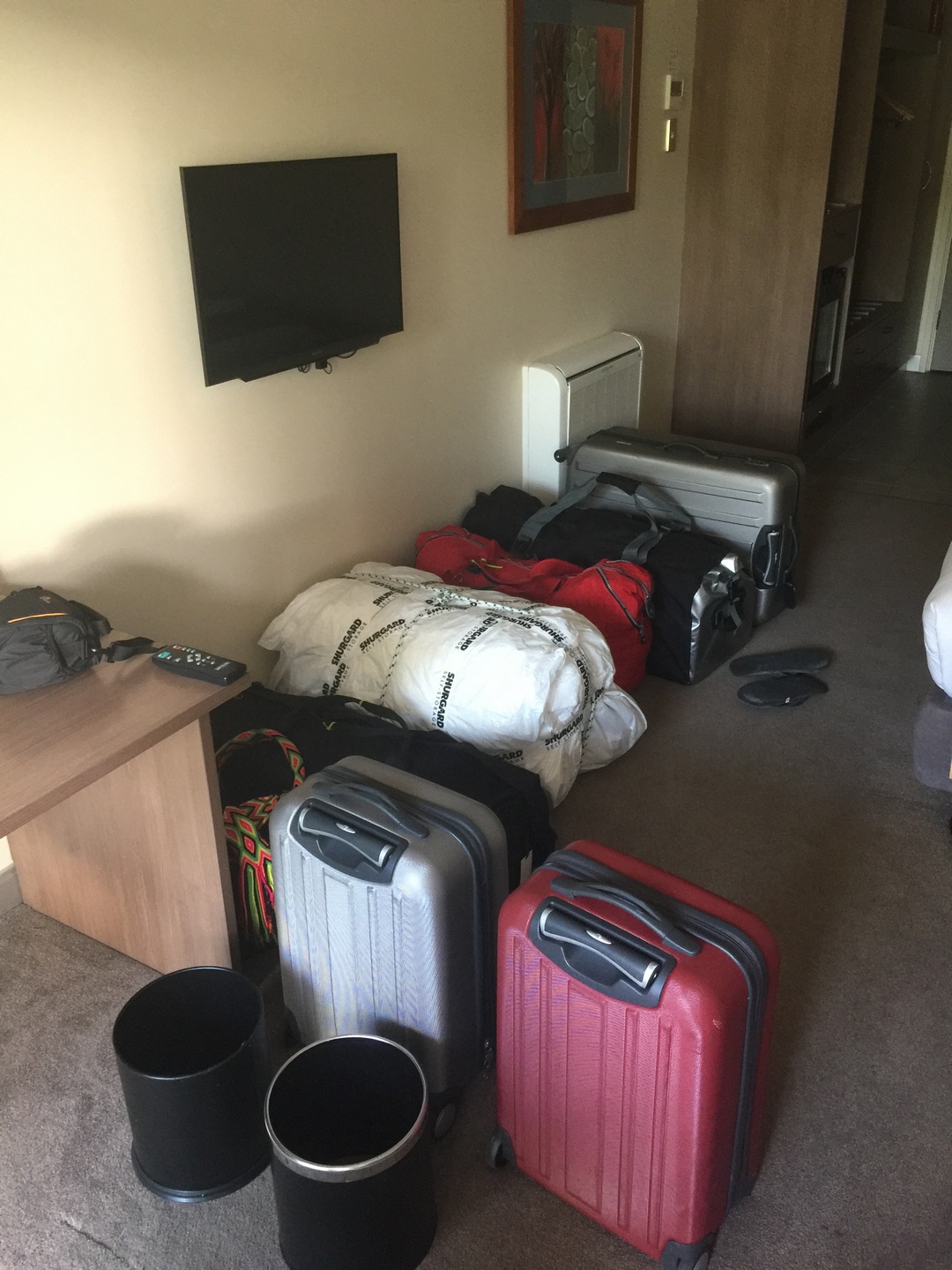
April 16th, we are in the Holiday Inn near Auckland airport since we have to be there at 7 AM the next morning for our flight to Papeete ! We have 5 bags and 2 check-in pieces ! Hopefully it will go smoothly 🙂
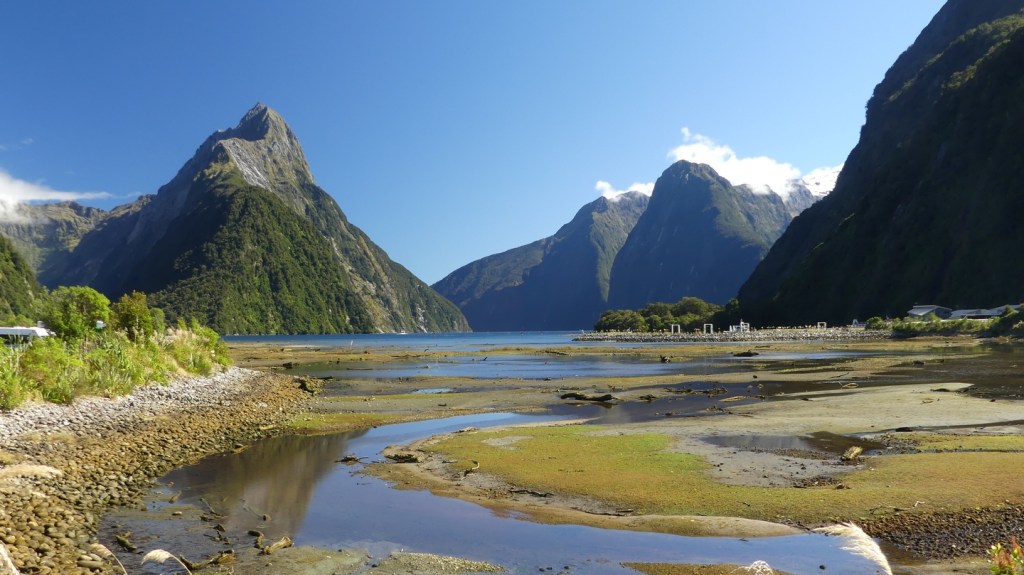
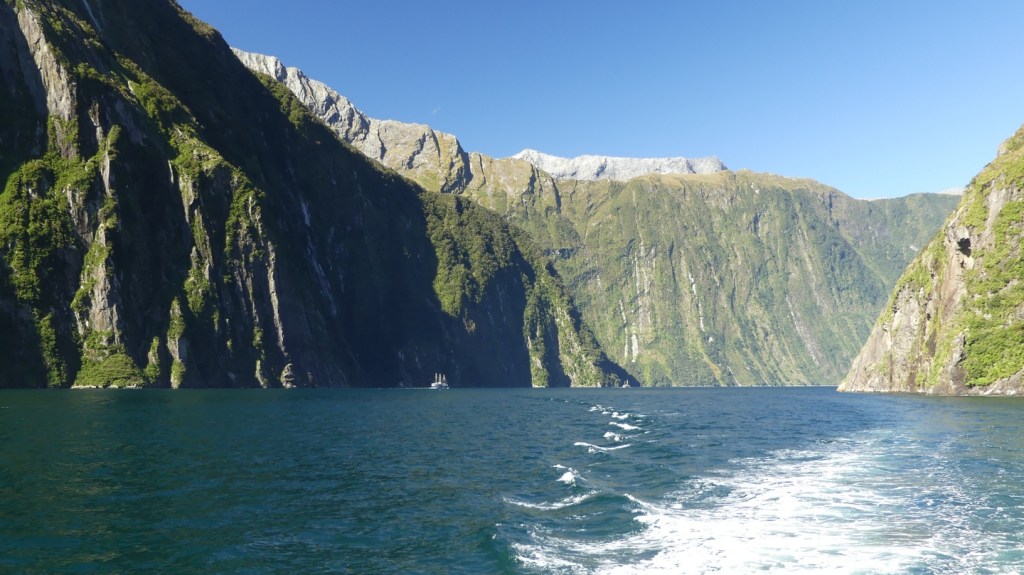
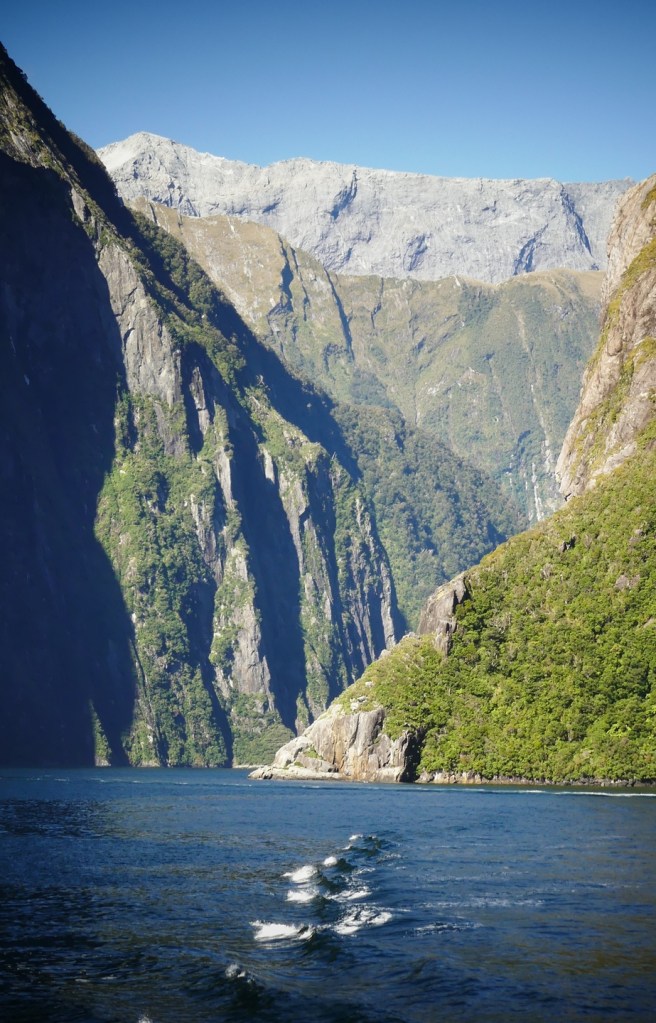
Flashback to March 19th 2017: The next day was just perfect blue skies and we could admire Milford Sound (Piopiotahi) in all its beauty.We could not have planned any better.
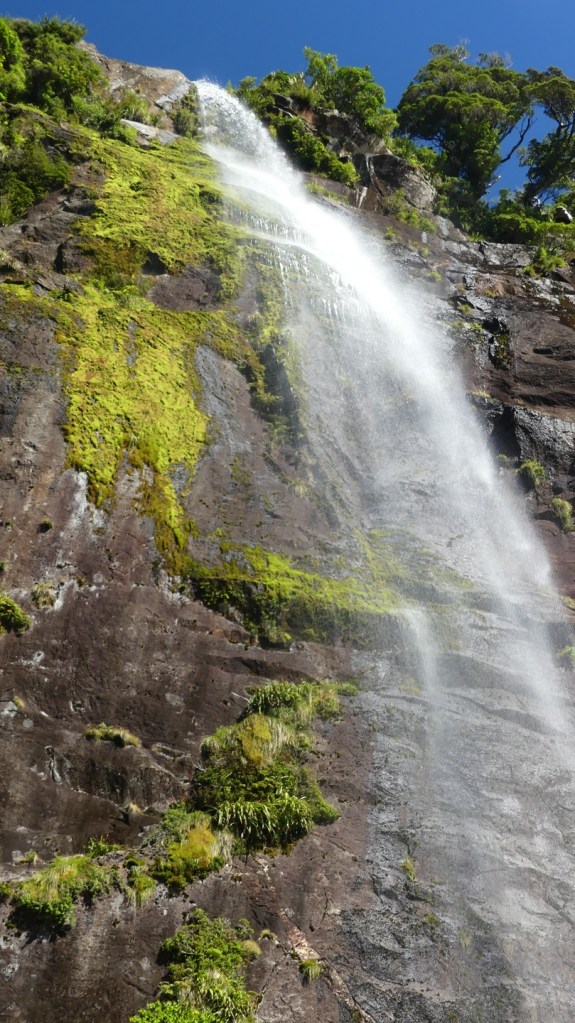
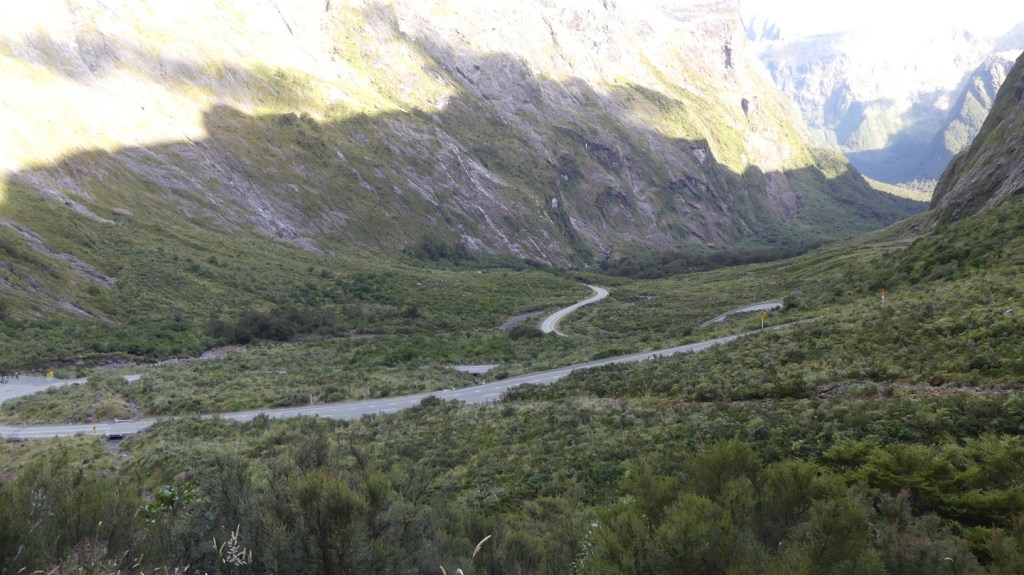
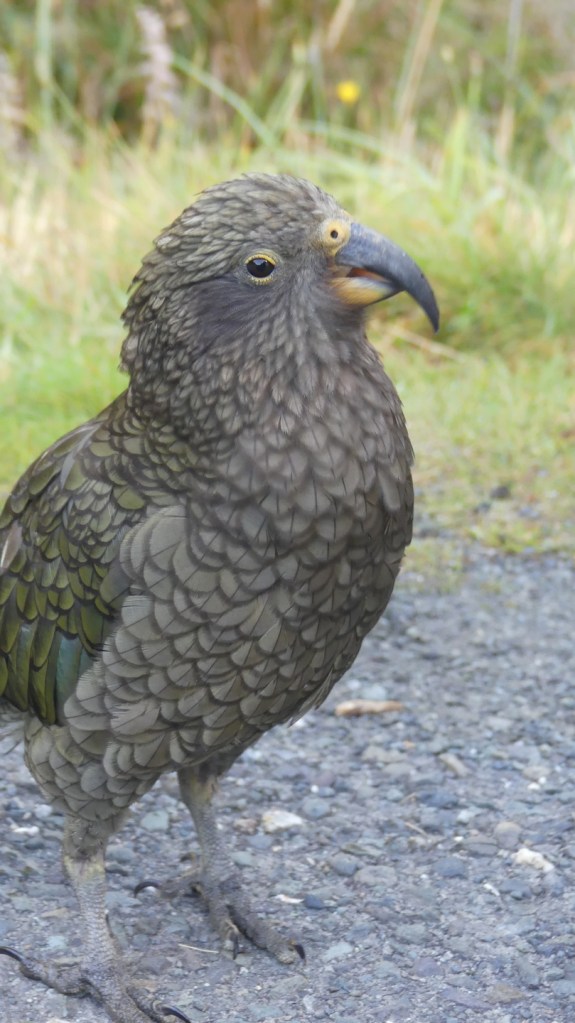
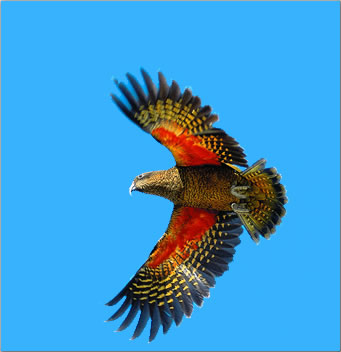
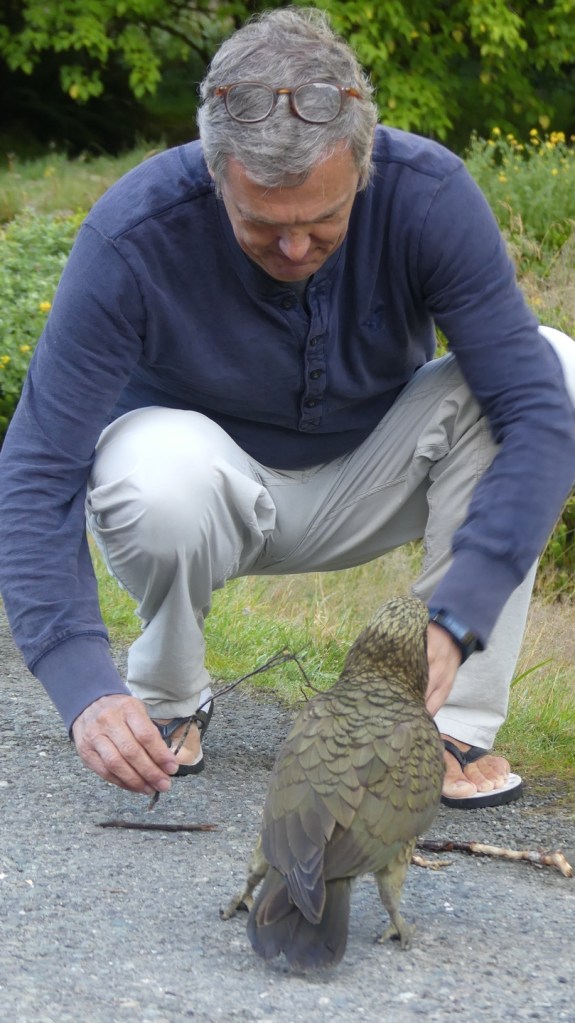
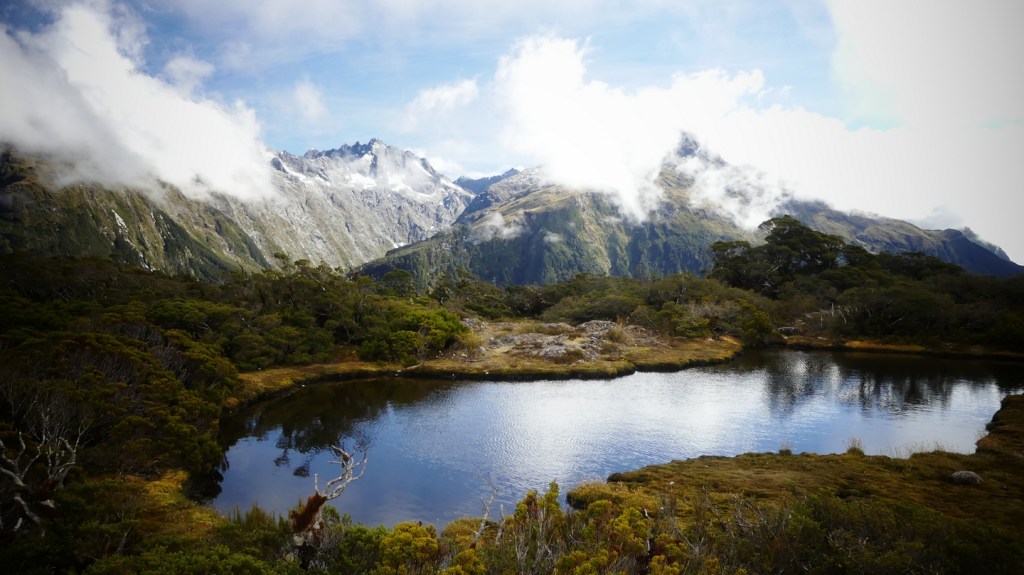
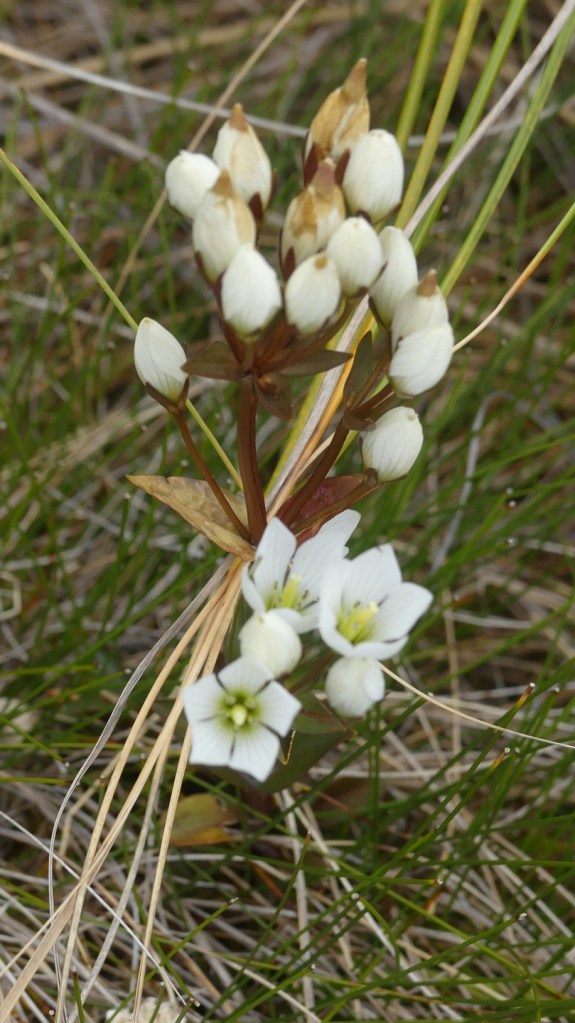
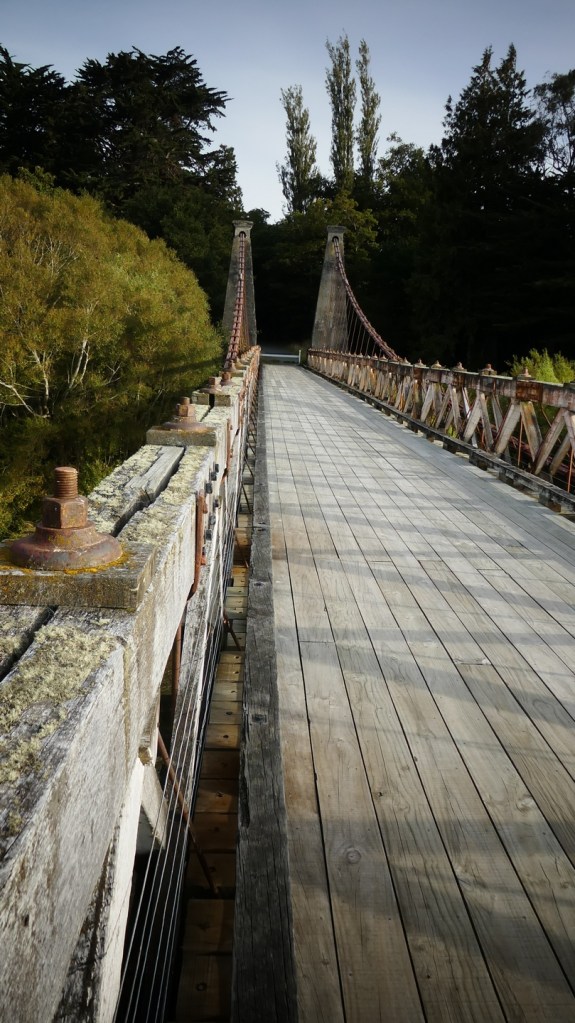
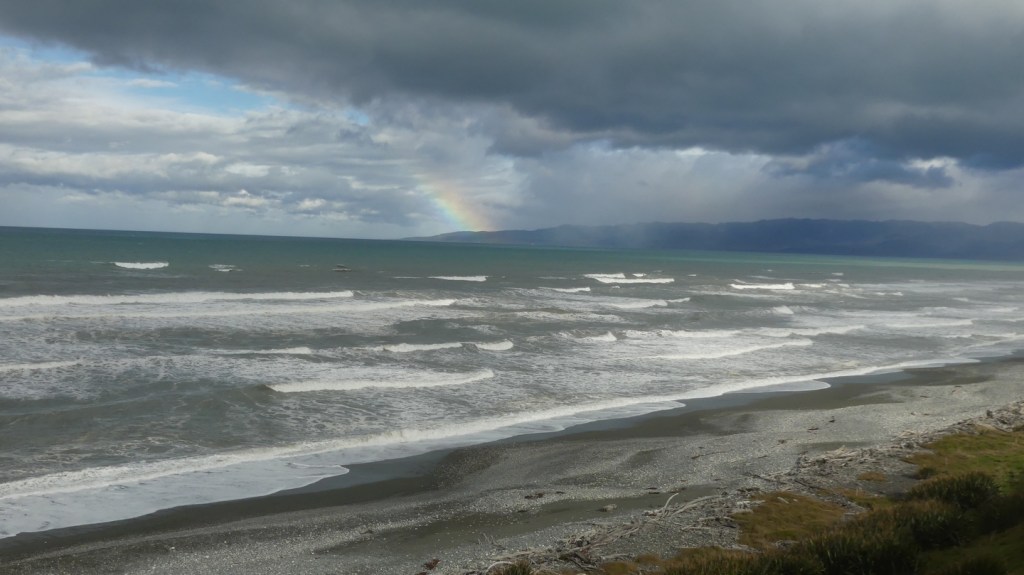
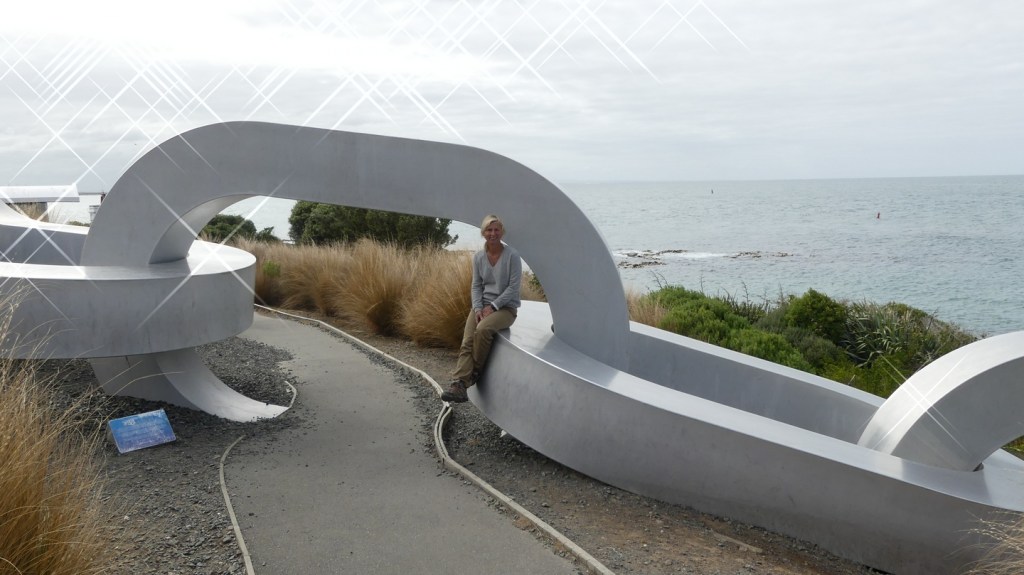
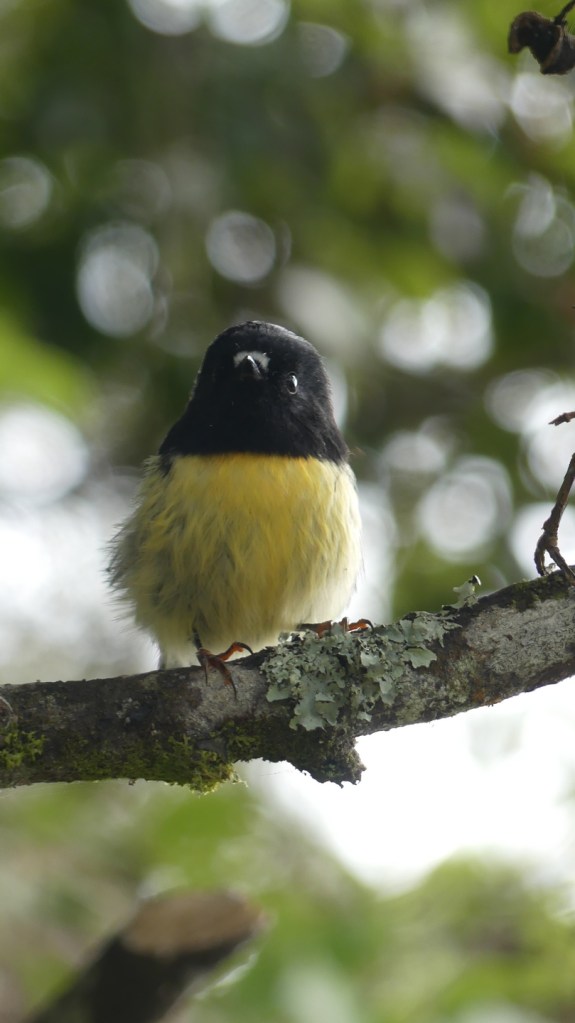
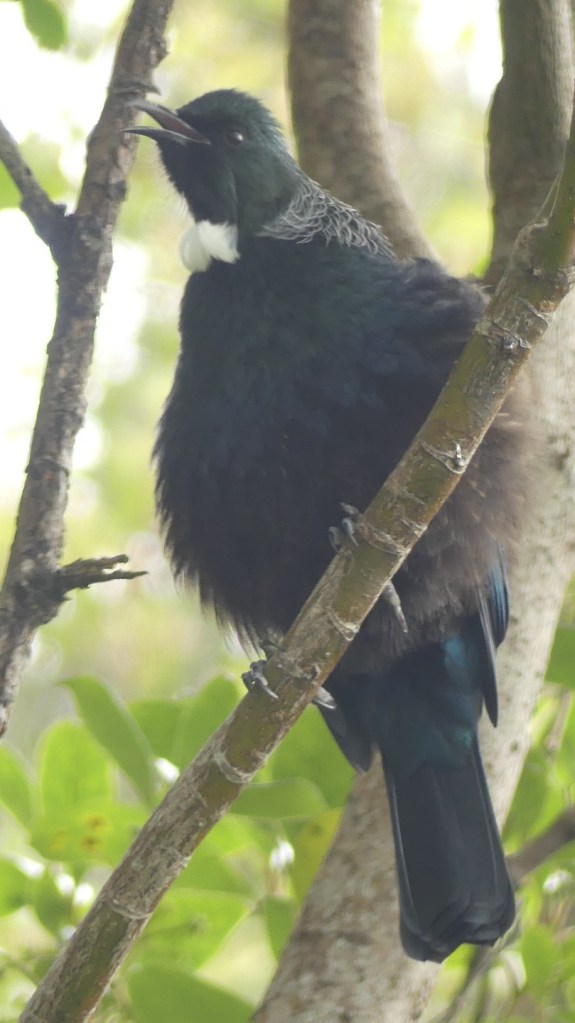
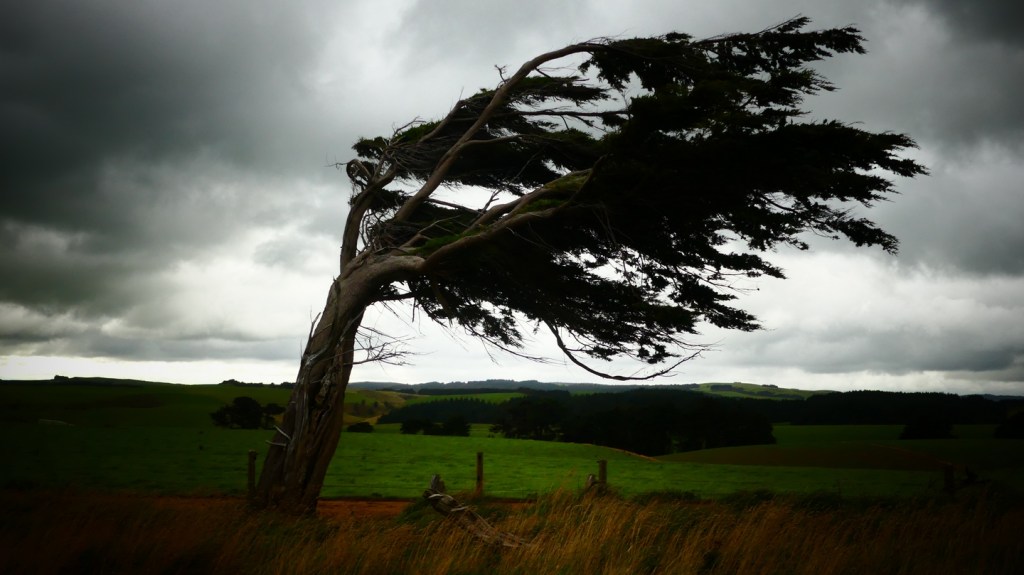
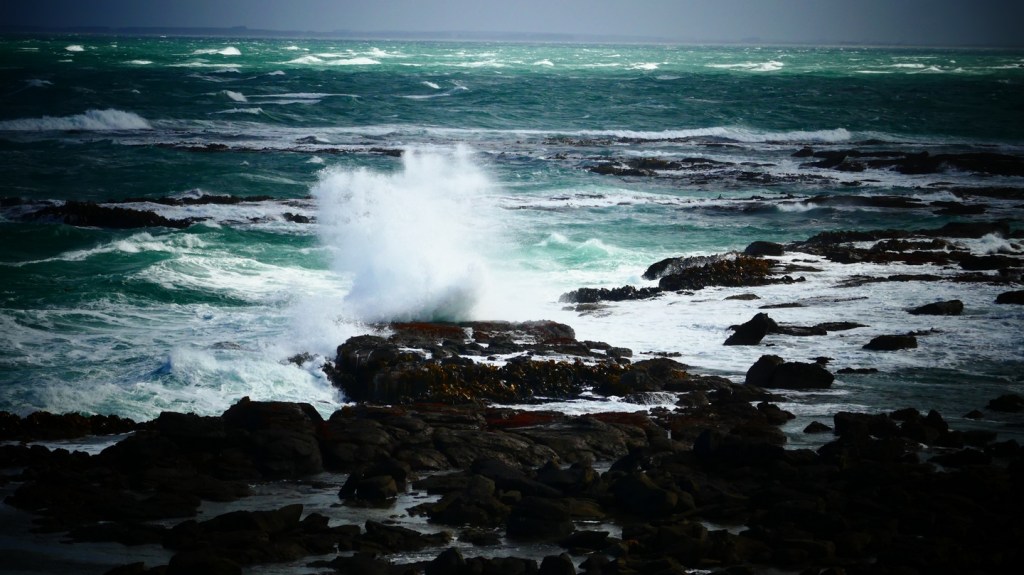
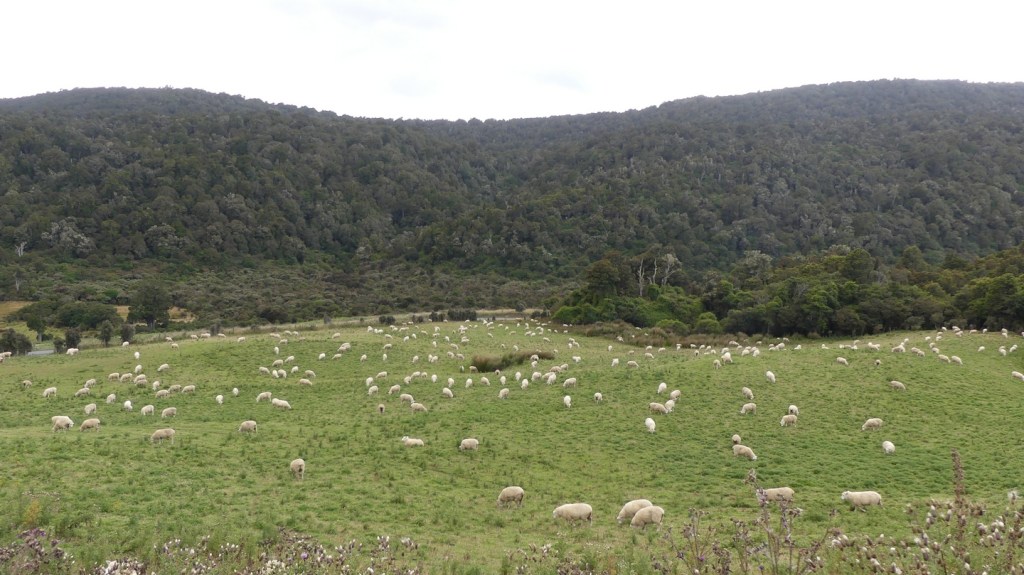
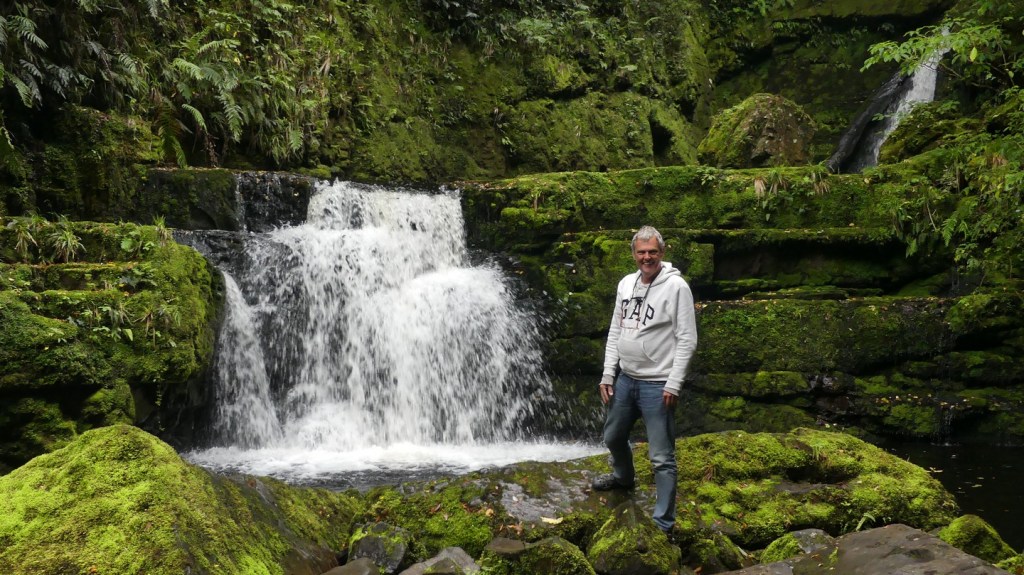
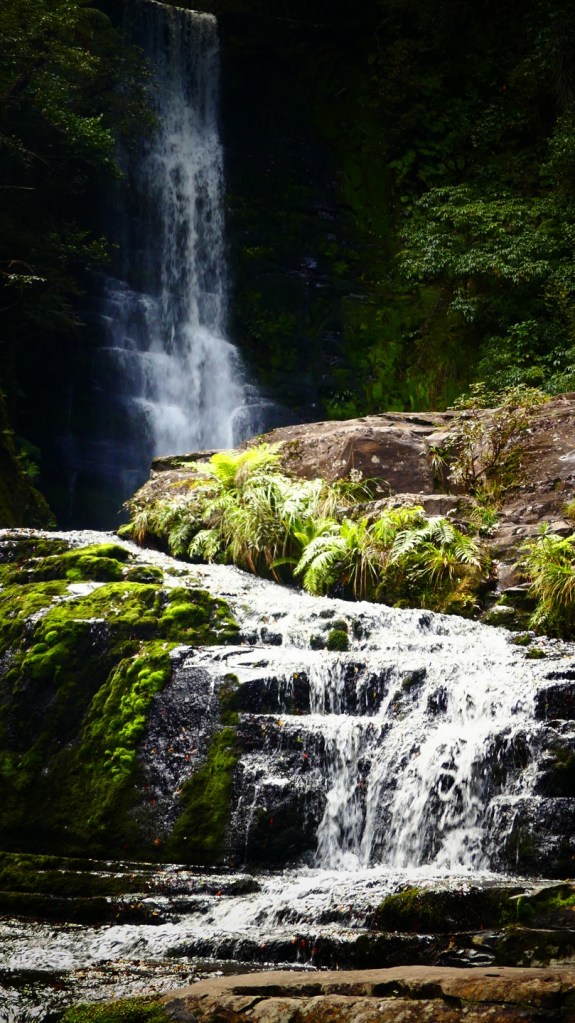
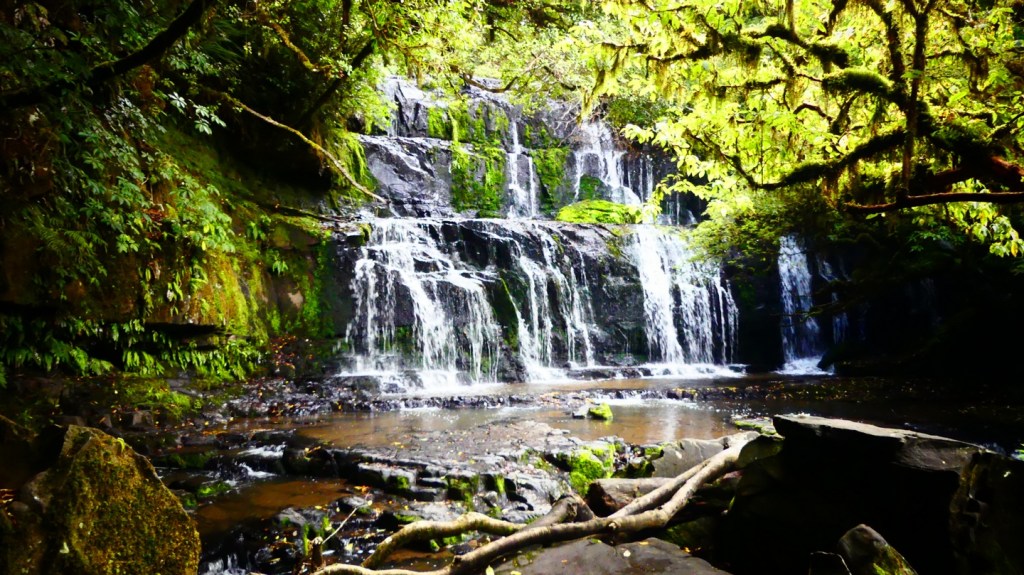
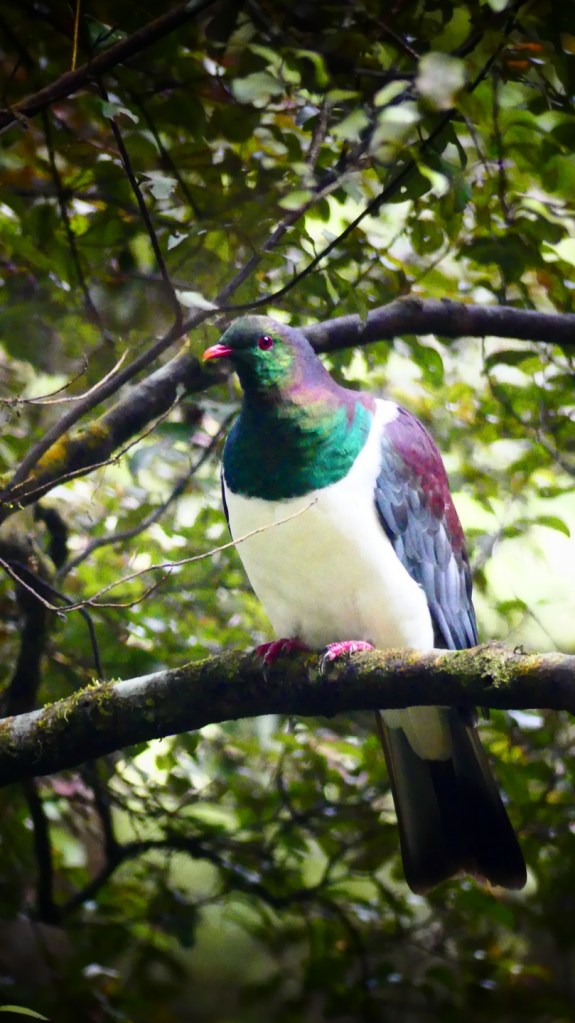
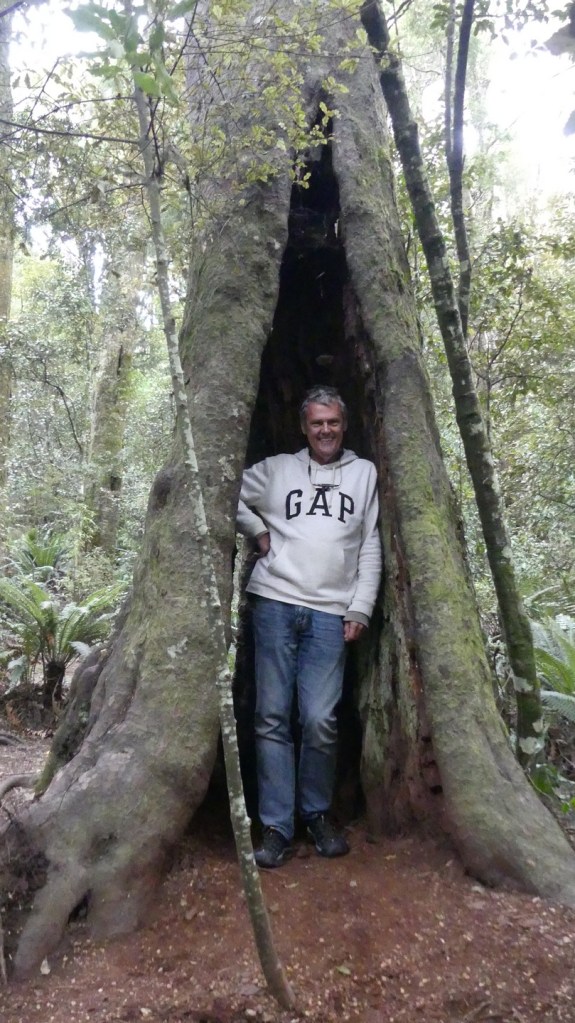
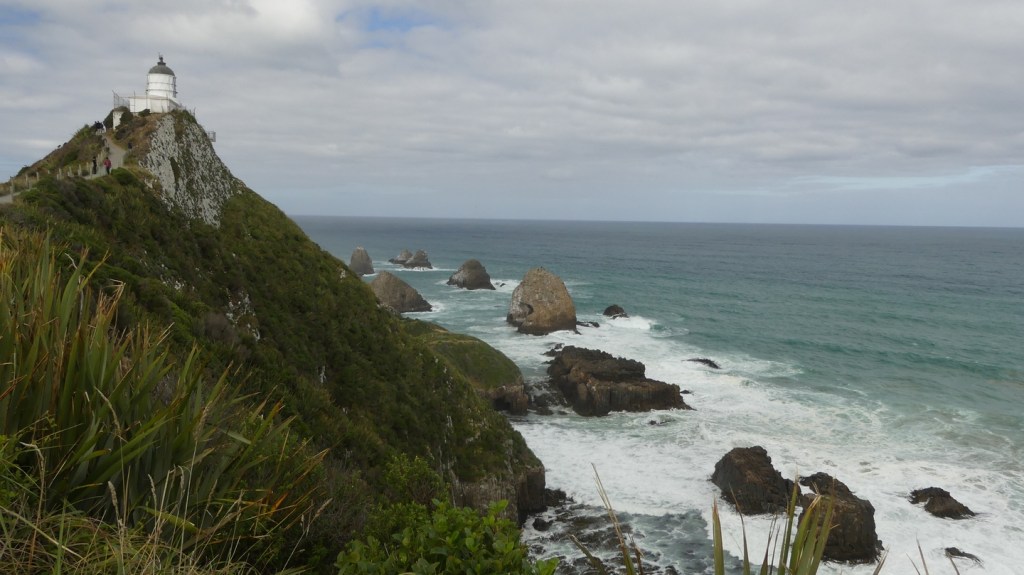
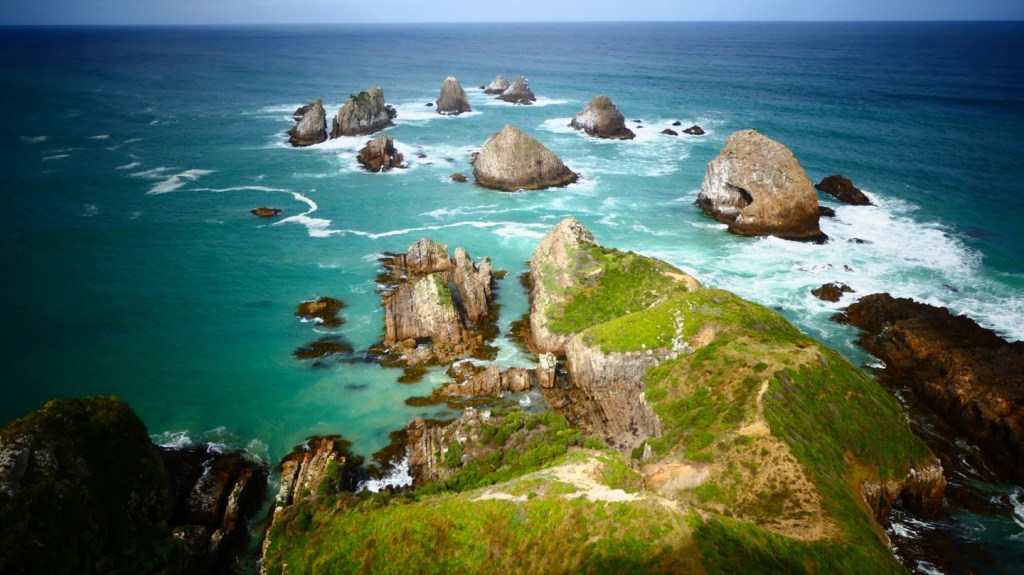
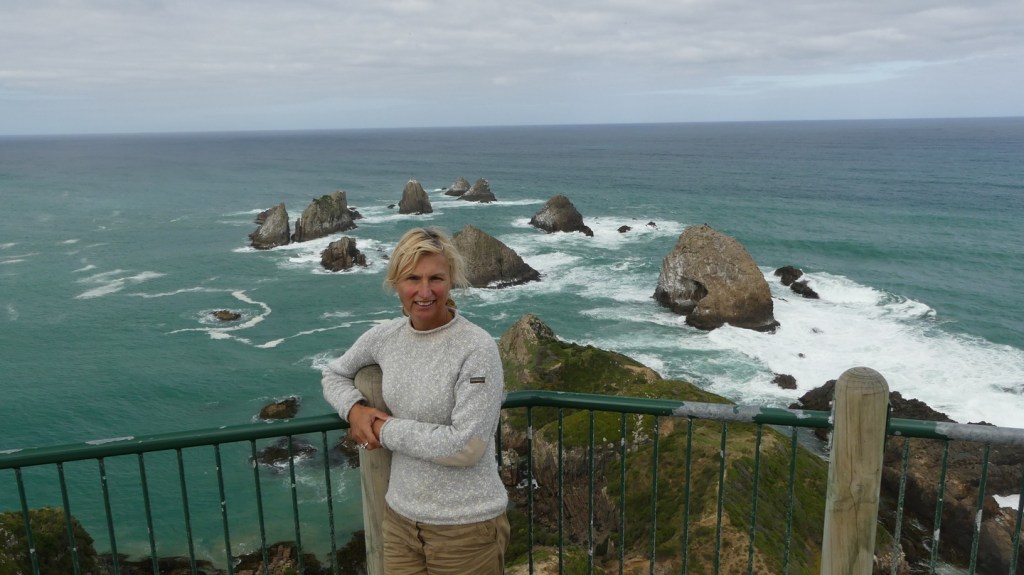
Milford Sound is part of Fiordland National Park, the largest national park from NZ. Actually Milford Sound is a glacialy formed fiord and not a sound. It is 16km long and mostly less than 1km wide. The most prominent mountain is Mitre Peak (1692m) named for its resemblance to a bishop’s mitre.We took a 2hr boat trip into the sound and although we were somewhat disappointed (we are spoiled) it was still beautiful.Stirling Falls thundering down.A sealer John Grono discovered Milford Sound in 1823 and named it after his home port in South Wales, Milford Haven.Standing at the Homer Tunnel taking pictures of the road below. Really an impressive sight!And finally we meet the Kea bird on our way back from Milford Sound ! It is the only alpine parrot and endemic to NZ. It is olive green on the outside but when he opens his wings…I unfortunately could not take this picture but this is what the Kea looks like in flight. He is hiding all his colours under his wings.They are not tame birds but they are very playful and inquisitive and love the interaction with tourists. Stefan finally found a good playmate 🙂Along our way back we stopped to walk the last section of the Routeburn track. The Divide to Key Summit.Gentiana Frigida, I thought they were always blue but apparently in NZ the white variation is common.On our way to the southern tip of the South Island we made a stop at the historic Clifden suspension bridge, one of the longest in the South Island. It was built in 1899 but no longer in use.The coast is wild and beautiful. Even with the clouds and rainy weather we enjoyed getting out and watching the waves.Stirling Point at Bluff, almost the most southern tip of NZ. The anchor chain sculpture disappears in the sea to symbolically connect with a near identical sculpture in Lee Bay on Stewart Island. The sculpture is from Russell Beck.We made 2 short walks at Bluff and finally I managed to take a nice picture from the TomTit! This bird is also endemic to the islands of NZ.The Tui bird singing away, you hear them everywhere but they are not easy to spot. They are easy to recognise by the 2 white feathers in the front.Windswept trees so typical for the Catlins Coast.Curio Bay at the Catlins. The Catlins Coast is one of the least populated areas in NZ.Not a lot of people but a lot of sheep. Although more farmers are now switching from sheep to cows because dairy is more profitable. In 1982 there were still 20 sheep to one NZ’er now it is only 6 sheep. We talked to one farmer who had 30.000 sheep and 1500 cows!Stefan at the bottom of the McLean Falls.The McLean Falls, 22m high. It was great to just sit back and admire…A little further down the road were the Purakaunui Falls…Right near the falls was this NZ woodpigeon or Kereru. Happy to have his picture taken. He chose a good spot right in the sunlight.Stefan found his treehouse 🙂Nugget point with its lighthouse from 1870 still working.Nugget point at the Catlins.Happy it was not raining and we could enjoy the scenery without rainjackets or umbrellas.
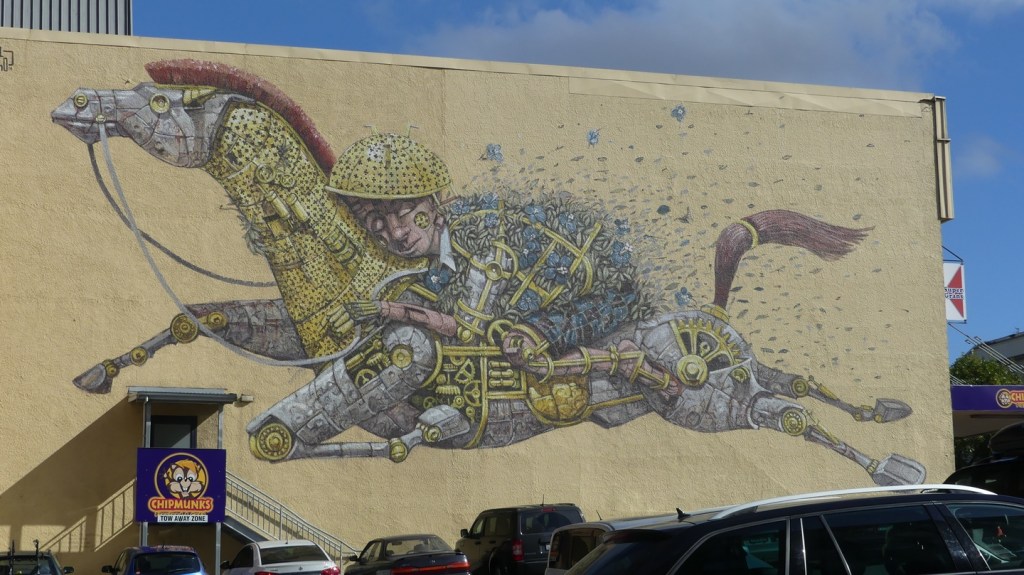
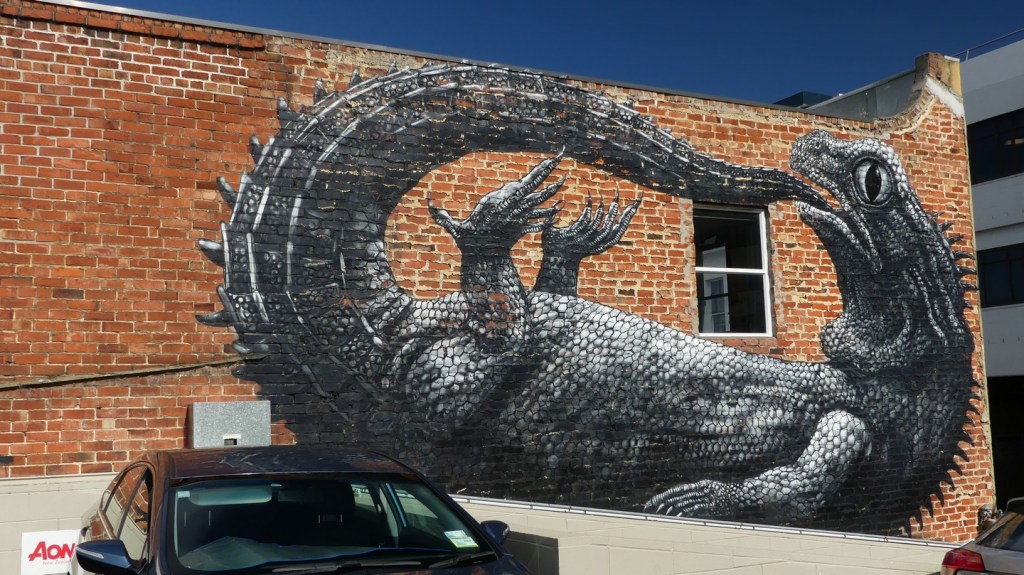
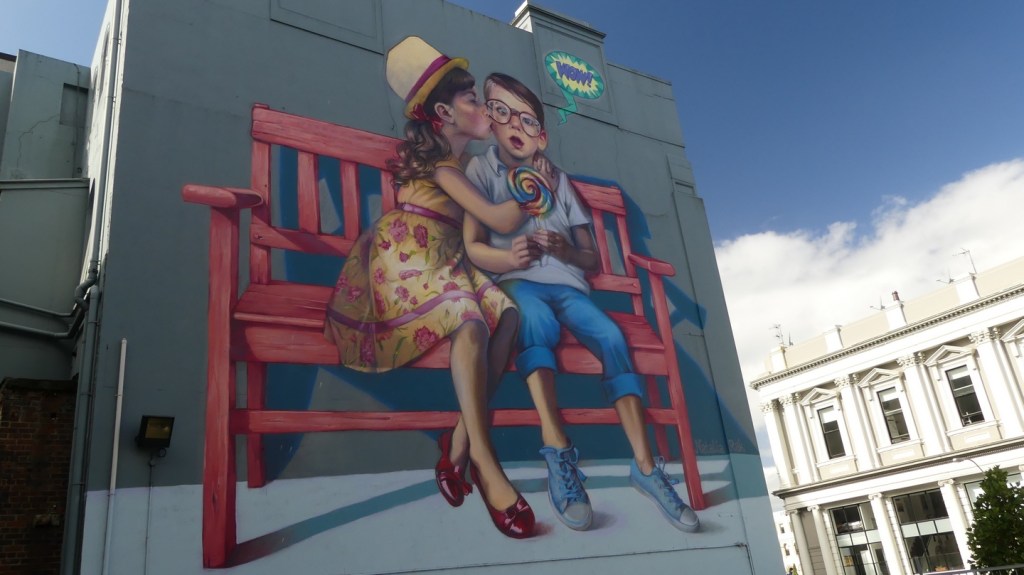
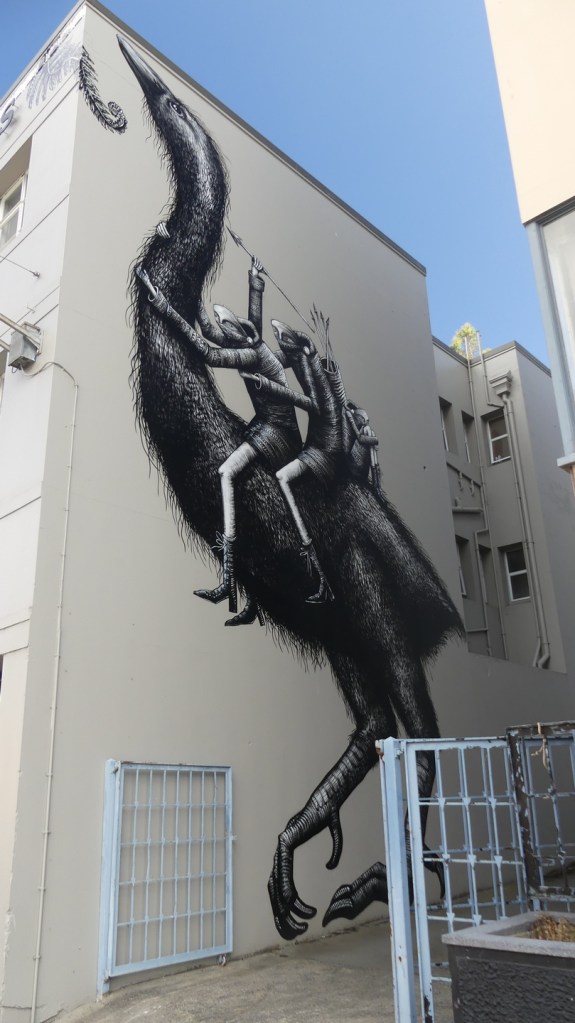
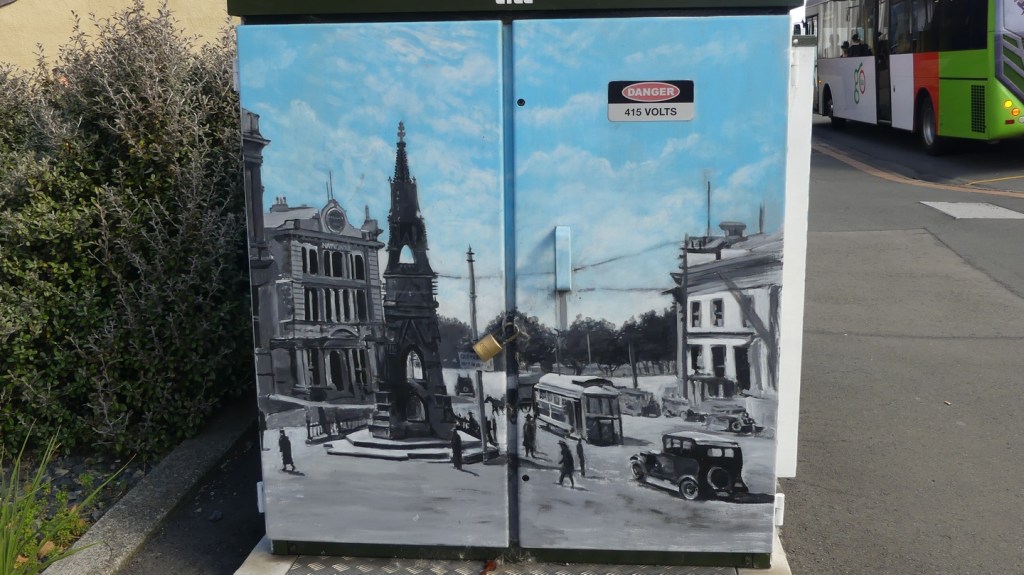
While we were in Dunedin we did the self guided street art tour and it was really a lot of fun with great artworks ! Maybe a good idea to have a similar project in Ghent!
Riding Dreams from Pixel Pancho (Italy)Tuatara from ROA (Belgium).Love is in the air from Natalia Rak (Poland)This work is from Phlegm (UK) but I do not remember the title.Even the electric distribution box was painted…
Next blog on our way to Christchurch and back to Auckland.
Update zondag 16 april: we zijn goed en wel in Tahiti geraakt met onze 7 valiezen.
Enkel Air New Zealand deed moeilijk bij check-in omdat we geen vertrek ticket uit tahiti hadden, maar een supervisor kwam dan met de verlossende mededeling: just check them in. Ook was onze handbaggage 12 en 13,5 kg ipv 7kg, maar dat zagen ze door de vingers!
Het is wel raar dat we twee keer paaszondag meemaken: een keer in Auckland, en dan vijf uur later doen we het nog een keer over omdat we over de dateline gevlogen hebben. 22 uur terug in de tijd.
Dinsdag gaan we met de Cobia III varen naar Apataki.
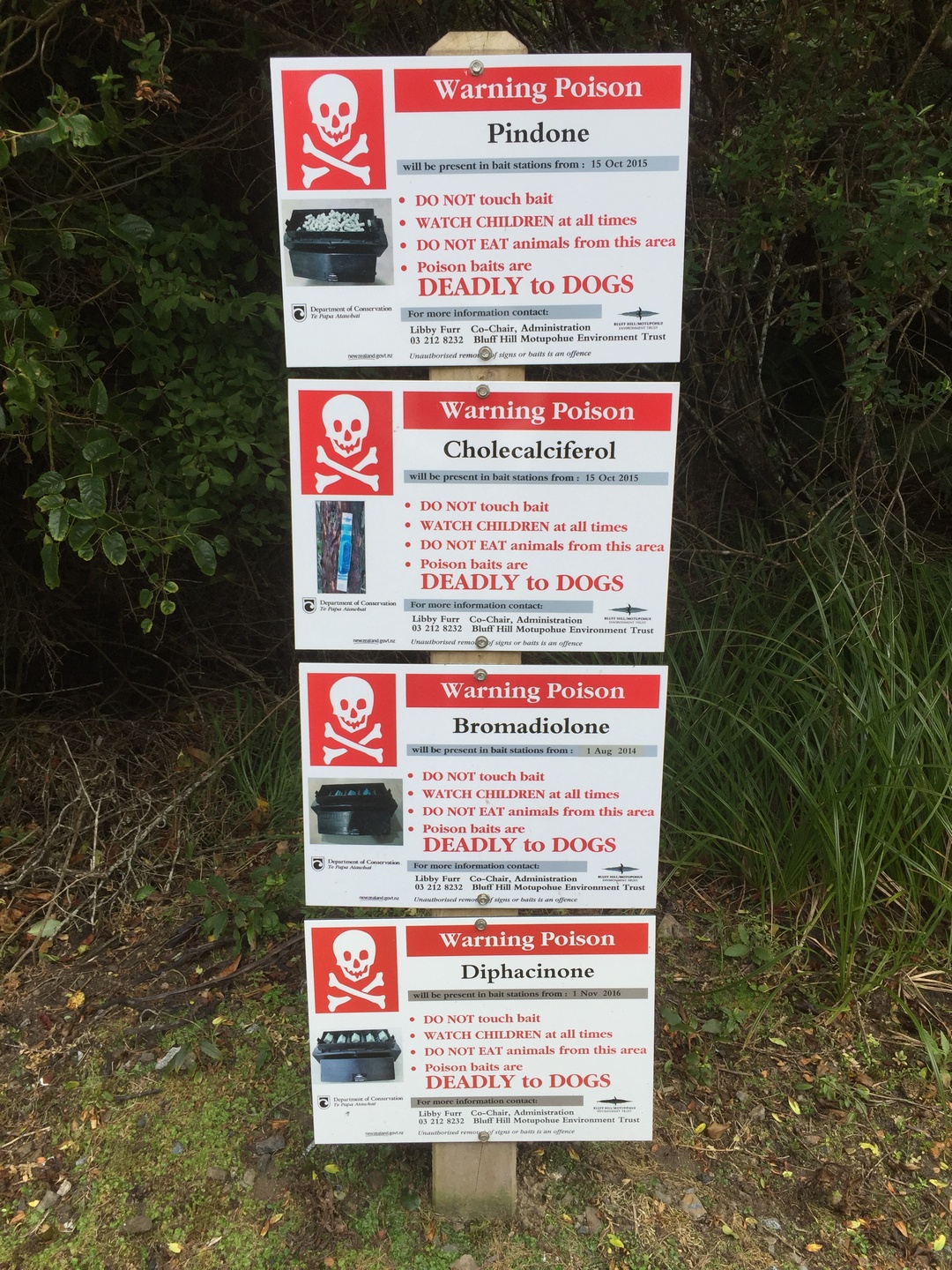
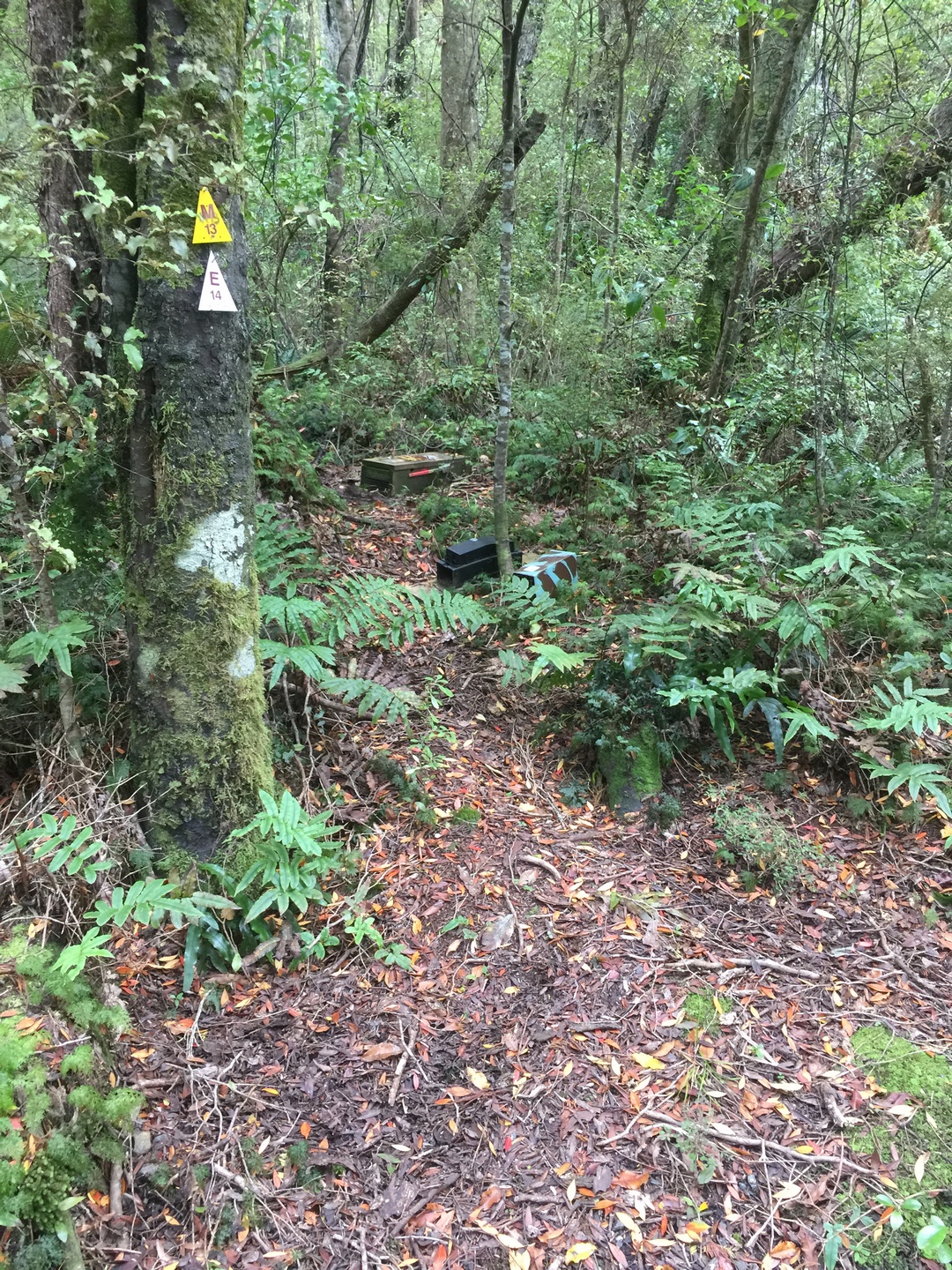
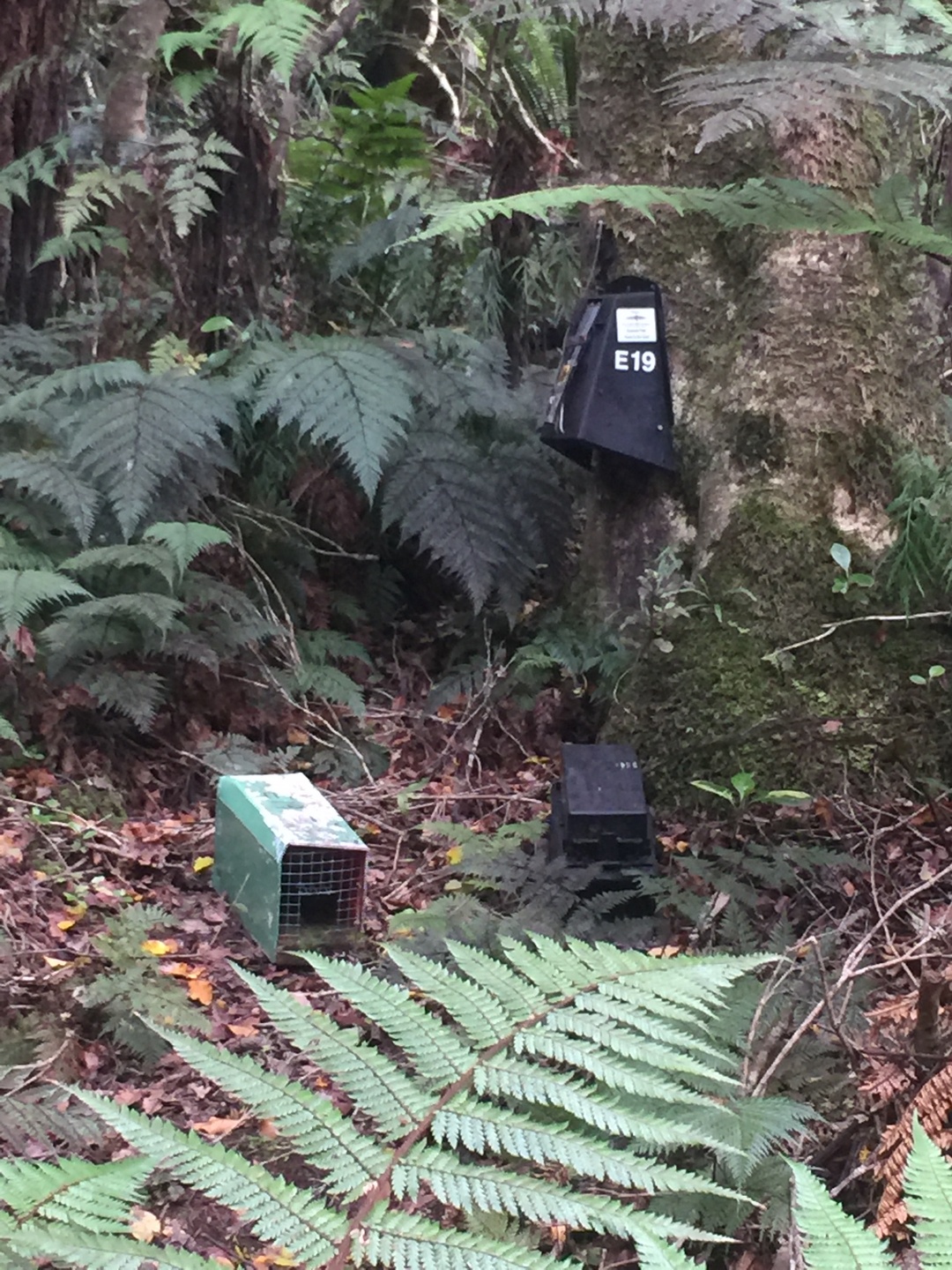
Typisch NZ: geen kosten worden gespaard om een natuurgebied tot zijn recht te laten komen voor de toerist. En allemaal gratis: geen enkel natuurpark is betalend!Je kan maar beter geen (allochtoon) ongedierte zijn in NZ. De jacht is open op opossums, wezels, ratten, wespen. Ook als hond moet je op je tellen letten…Overal langs de wandelpaden kom je de driehoekjes tegen die de vallen locaties aangeven.
Over de wegen en verkeerssituatie:
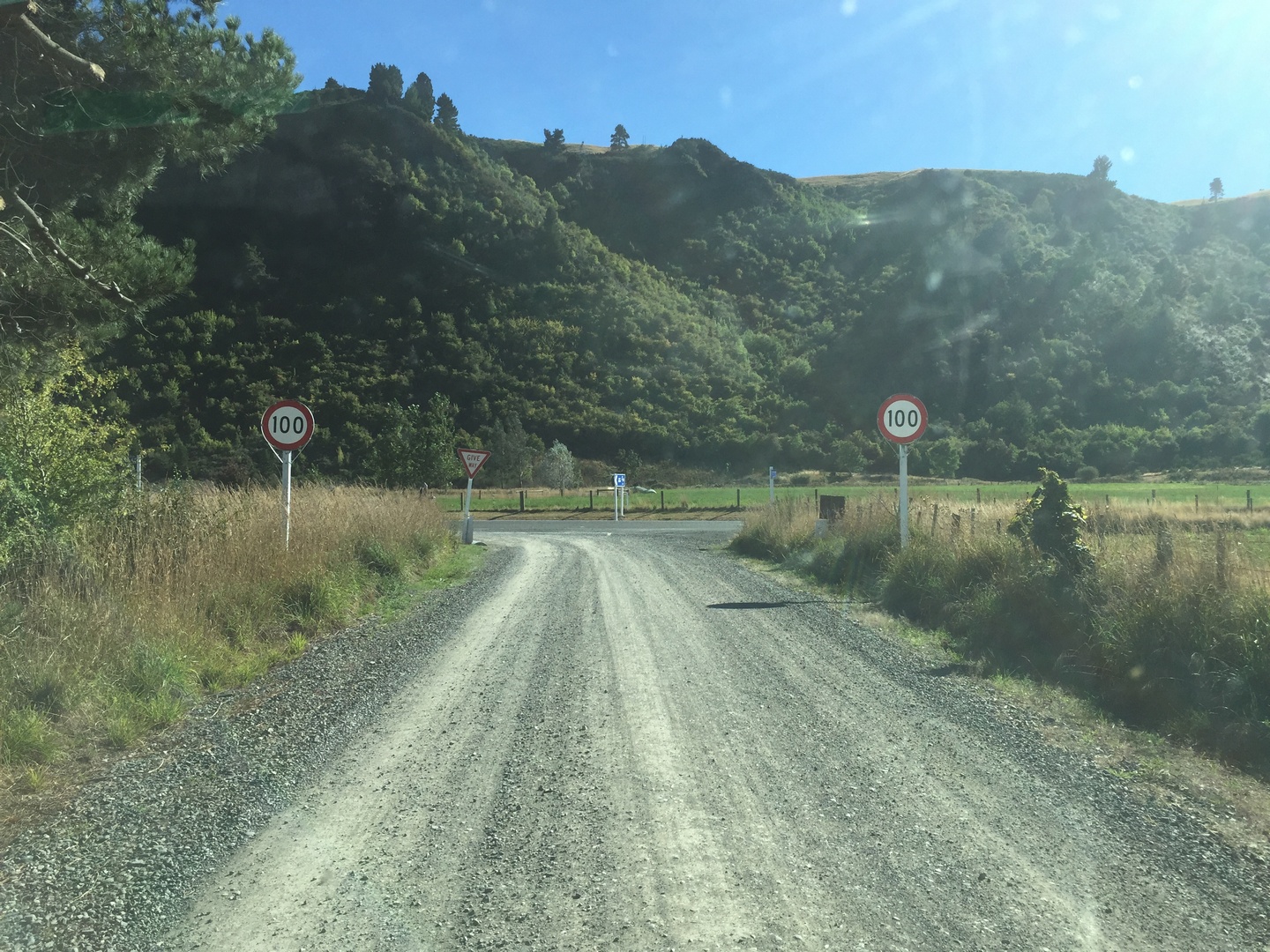
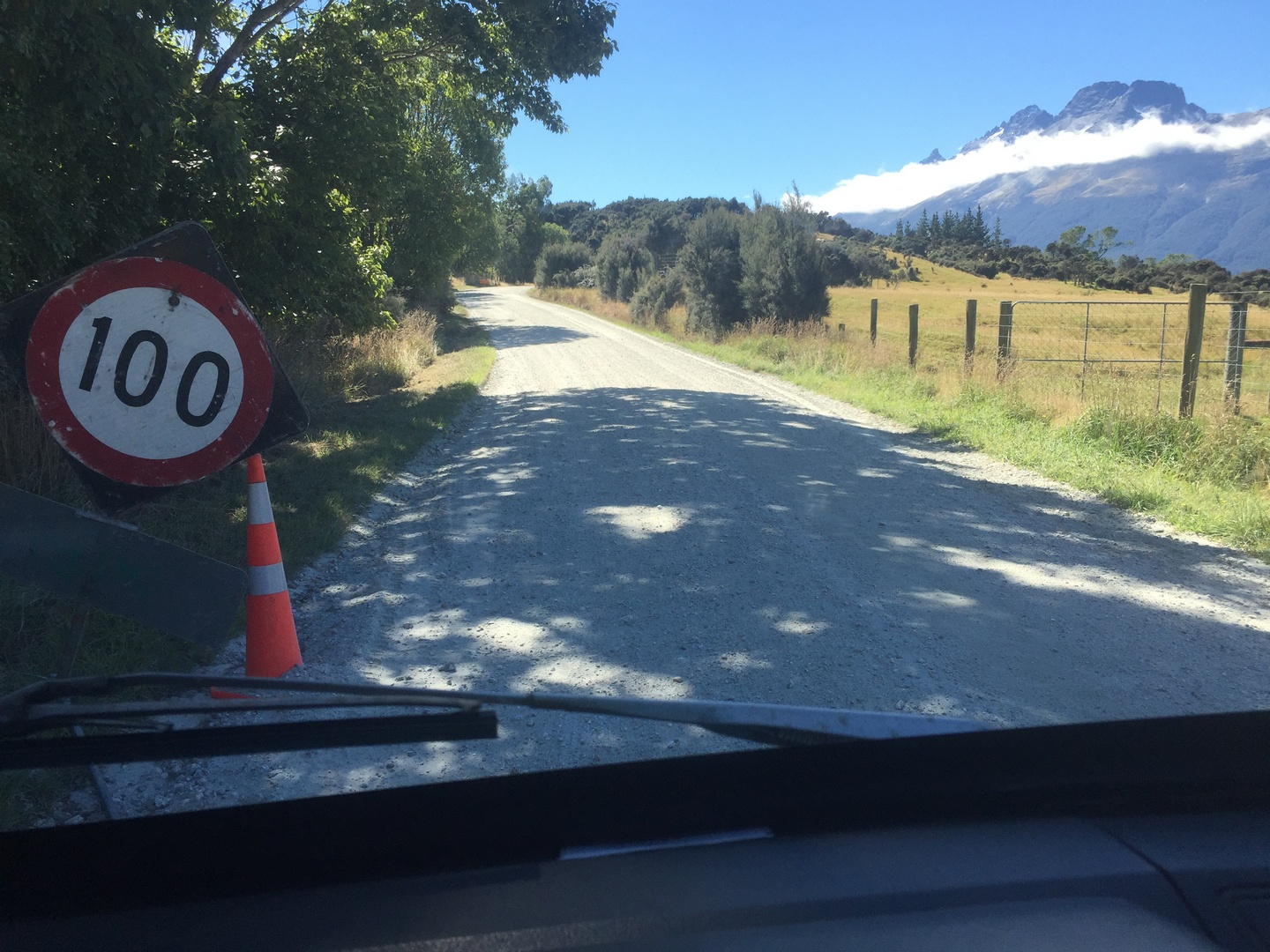
Voor je op de hoofdweg komt geven ze de snelheid van deze laatste aan. Dit is een onverharde weg of ‘metal road’, en zo zijn er nogal wat in de dunbevolkte streken.Ietwat optimistisch? Er gebeuren nogal wat ongevallen op de onverharde wegen vanwege het verlies van controle over het stuur.
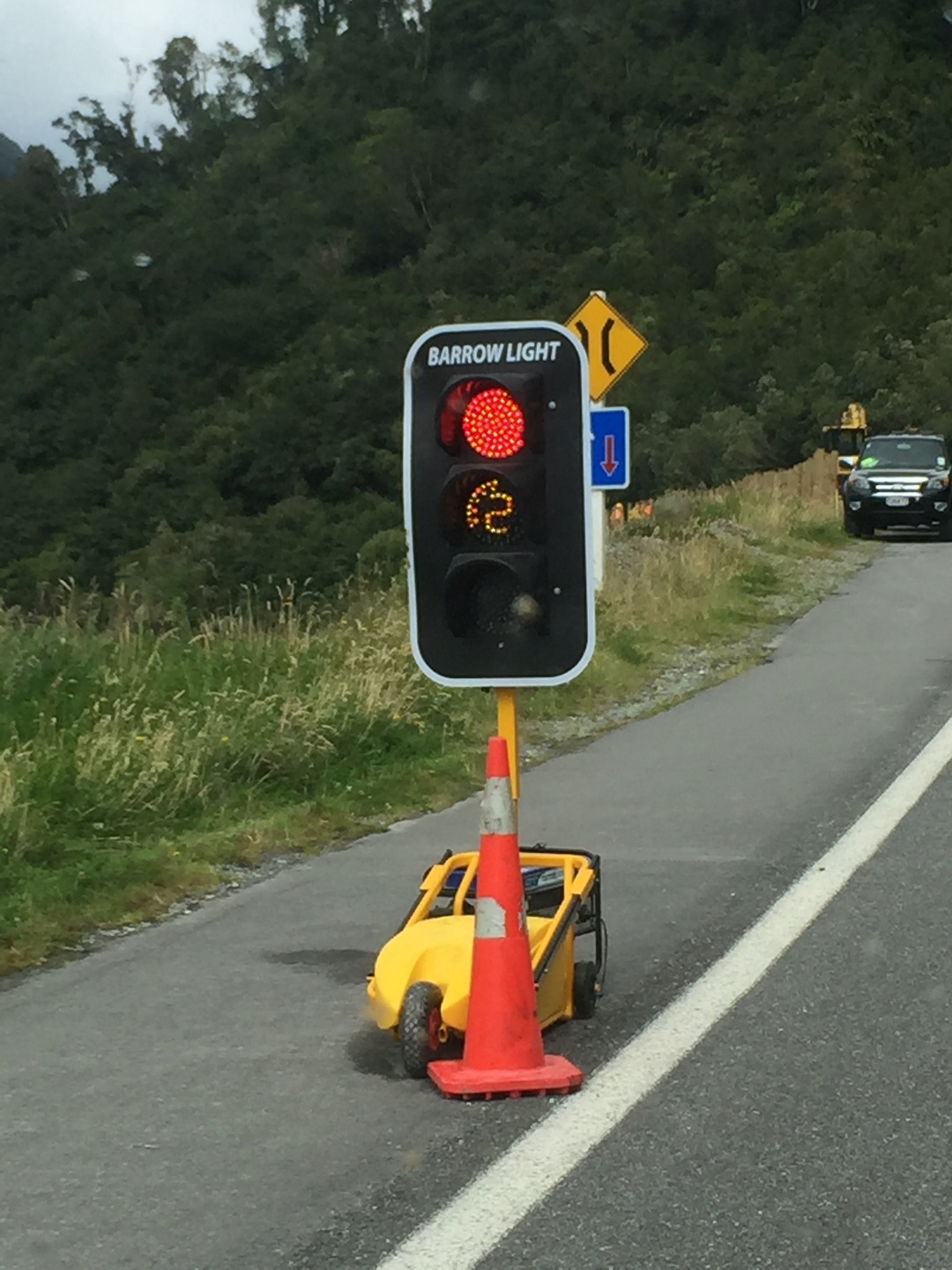
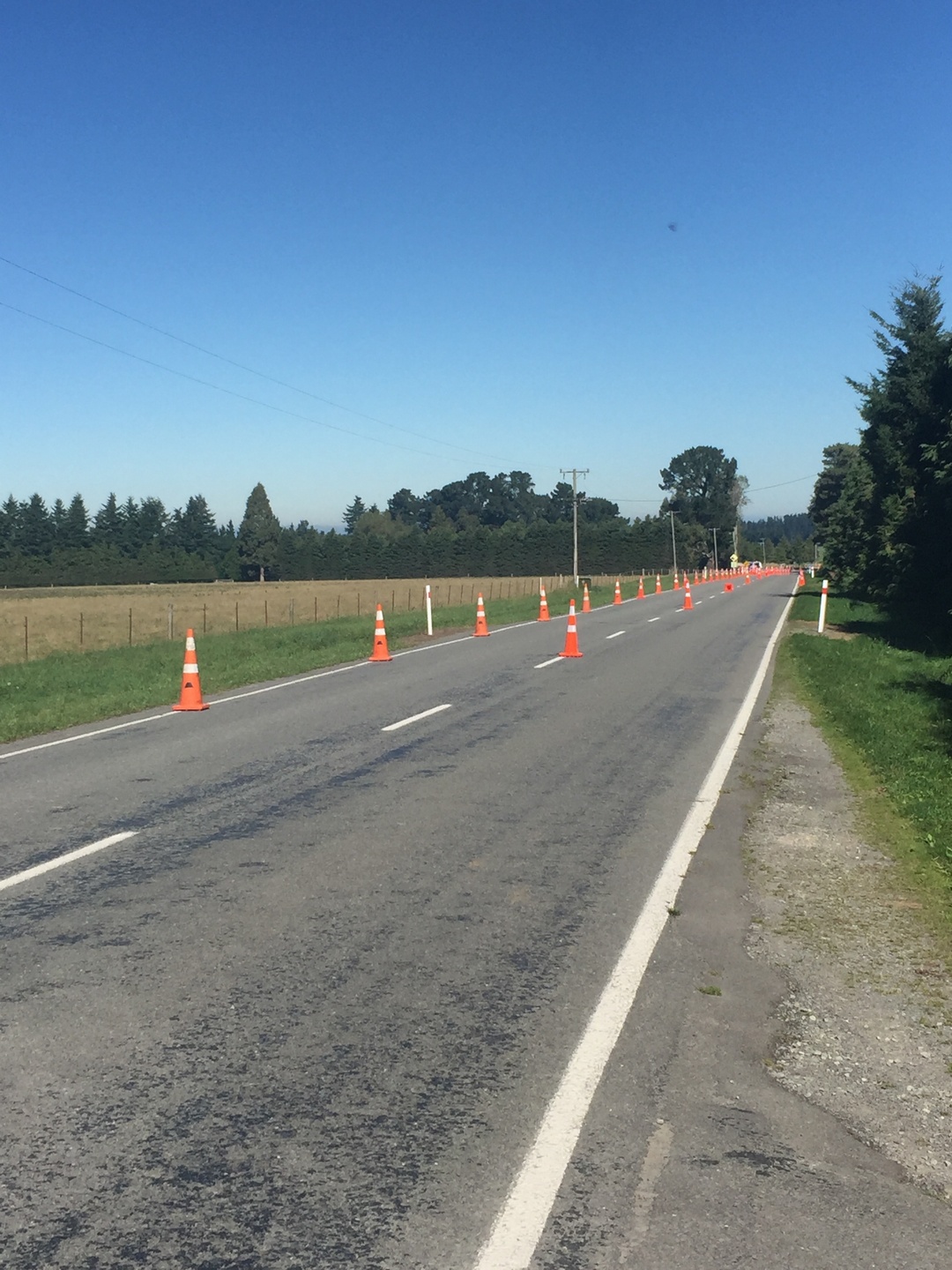
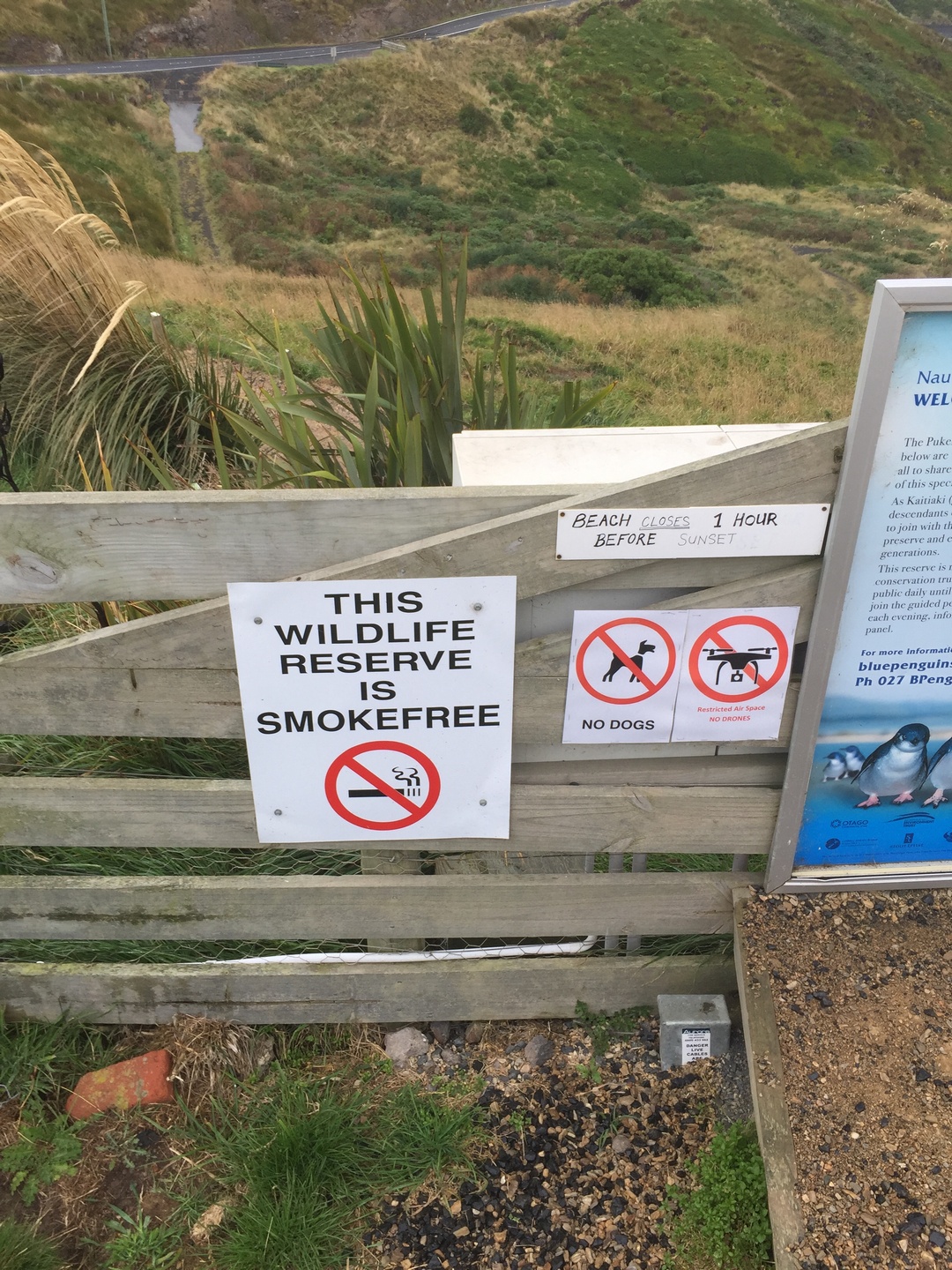
Een leuk idee: zo heb je een gedacht van hoe lang je nog moet wachten tot het licht groen wordt. Overigens is dit de uitzondering, meestal is het een persoon met een tweezijdig bordje STOP/GO. Vanwege de herstellingen aan de wegen na de aardbeving van November hebben we er zo wel veel gezien.Nieuw Zeeland, land van de miljoenen verkeerskegels…Roken wordt hier wel zeer beperkt!
Waarom er op Ilse haar blog postings zoveel mooie foto’s staan:
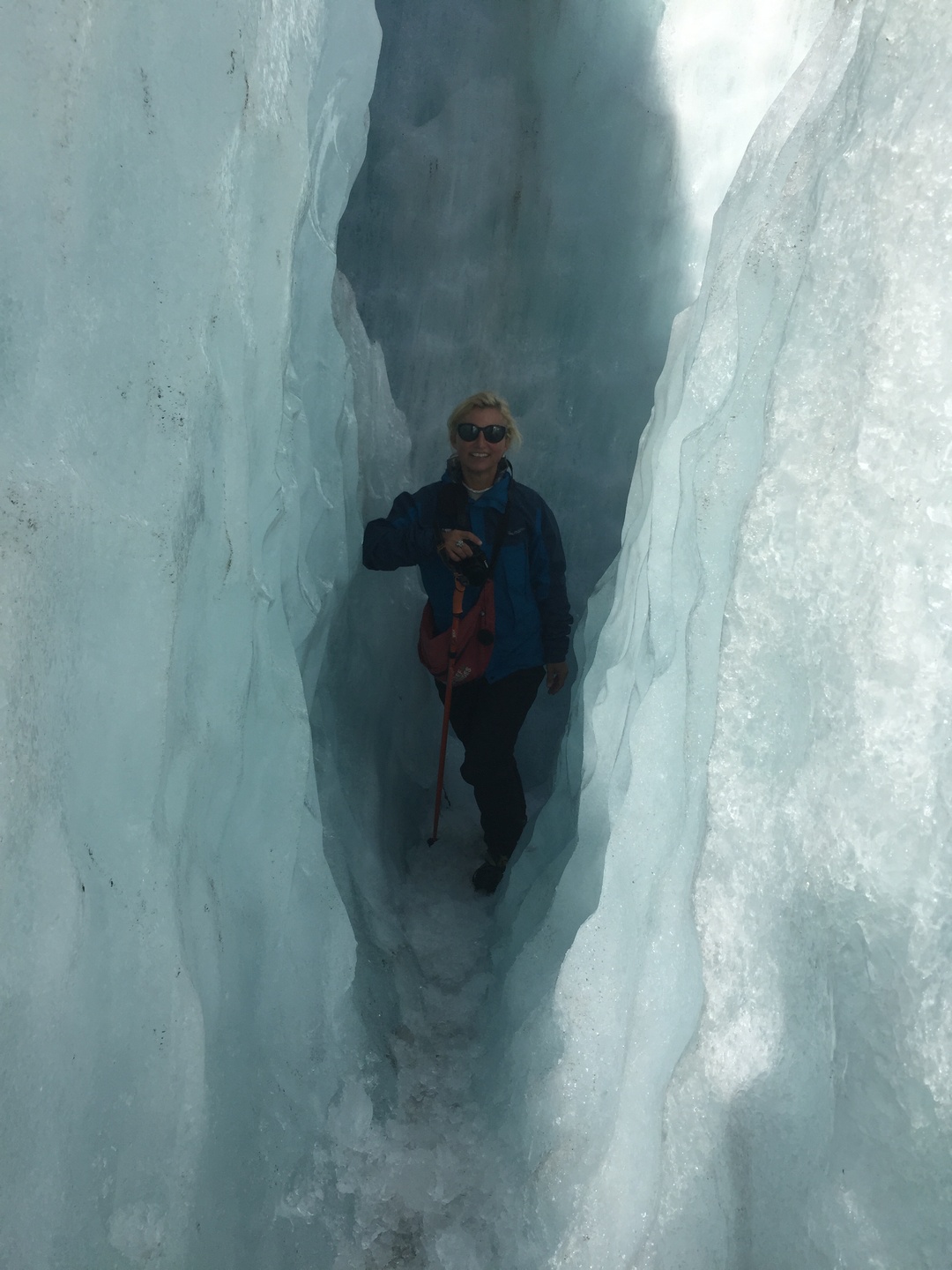
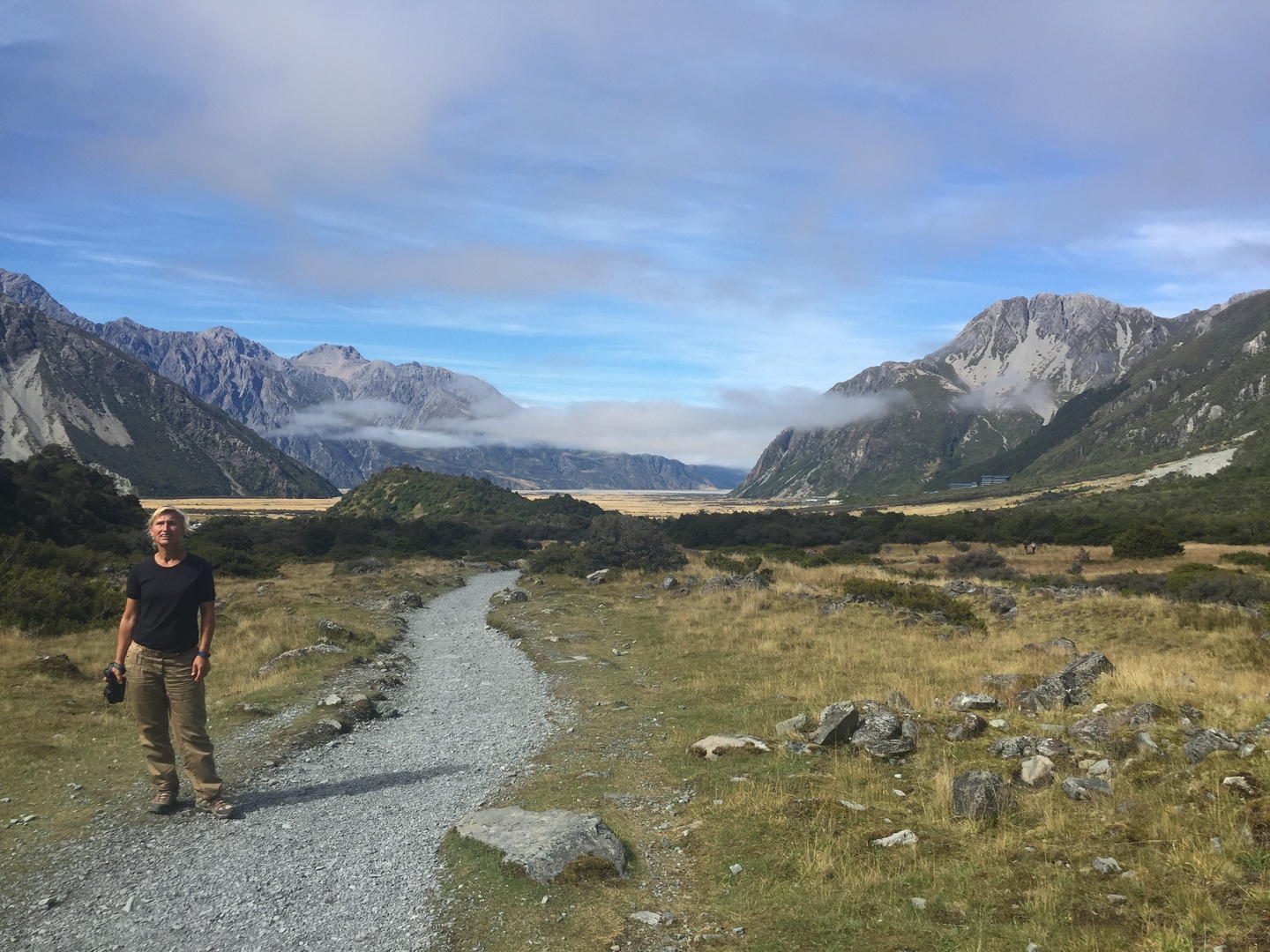
geduld van de fotograaf voor het juiste shotOp een gletsjer wandelen was toch wel een heel speciale ervaringZo moet de vallei er in de ijstijd hebben uitgezien….. en hetzelfde zicht maar dan zonder ijs/wolken
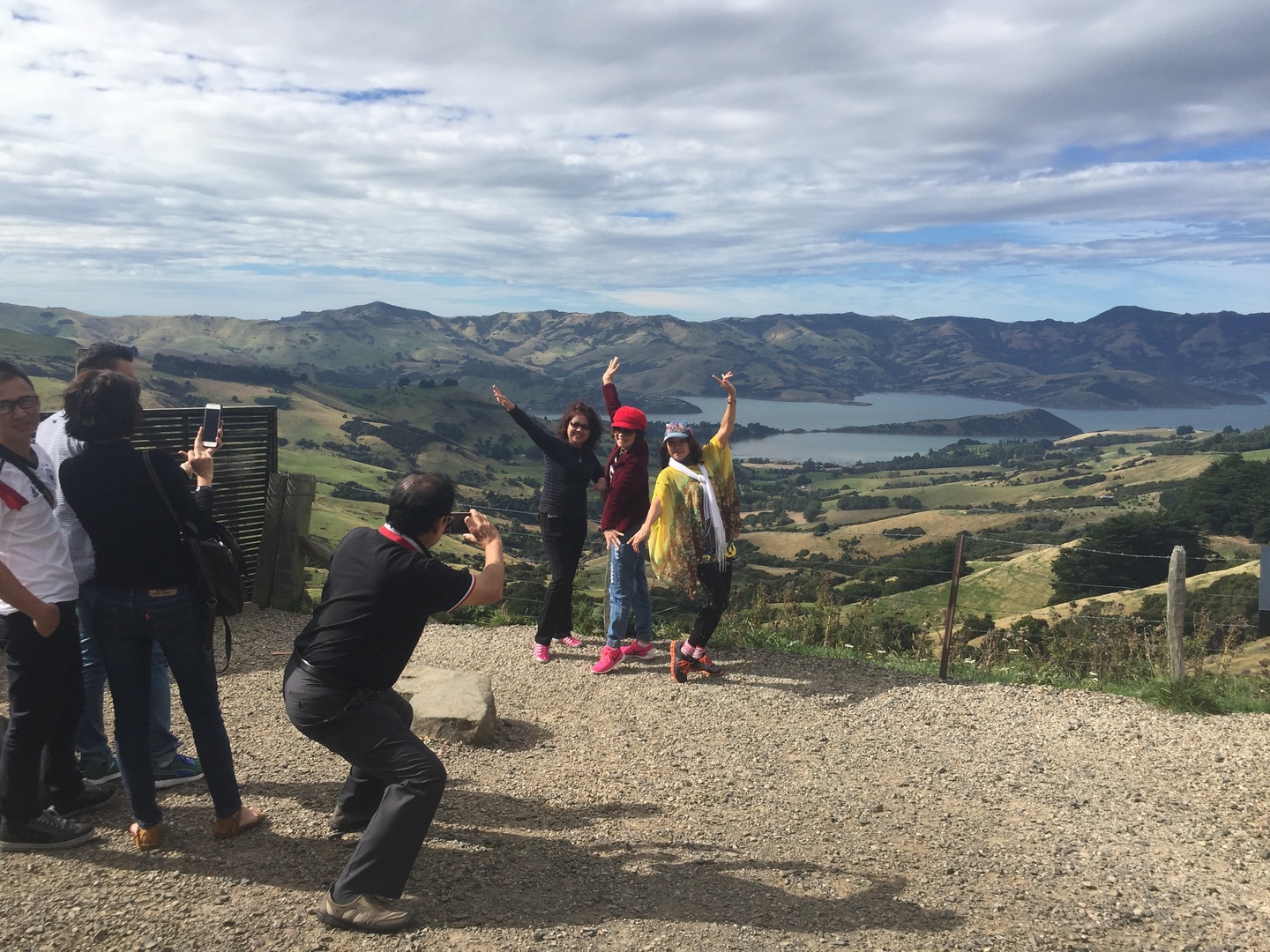
Ik geloof niet dat ik een aziaat een foto heb zien maken waarop ze zelf niet stonden afgebeeld. We hebben zelfs iemand gezien die een heuse garderobe meehad en van kleren wisselde tussen de shots!
Over de menselijke invloed op de natuurgezichten:
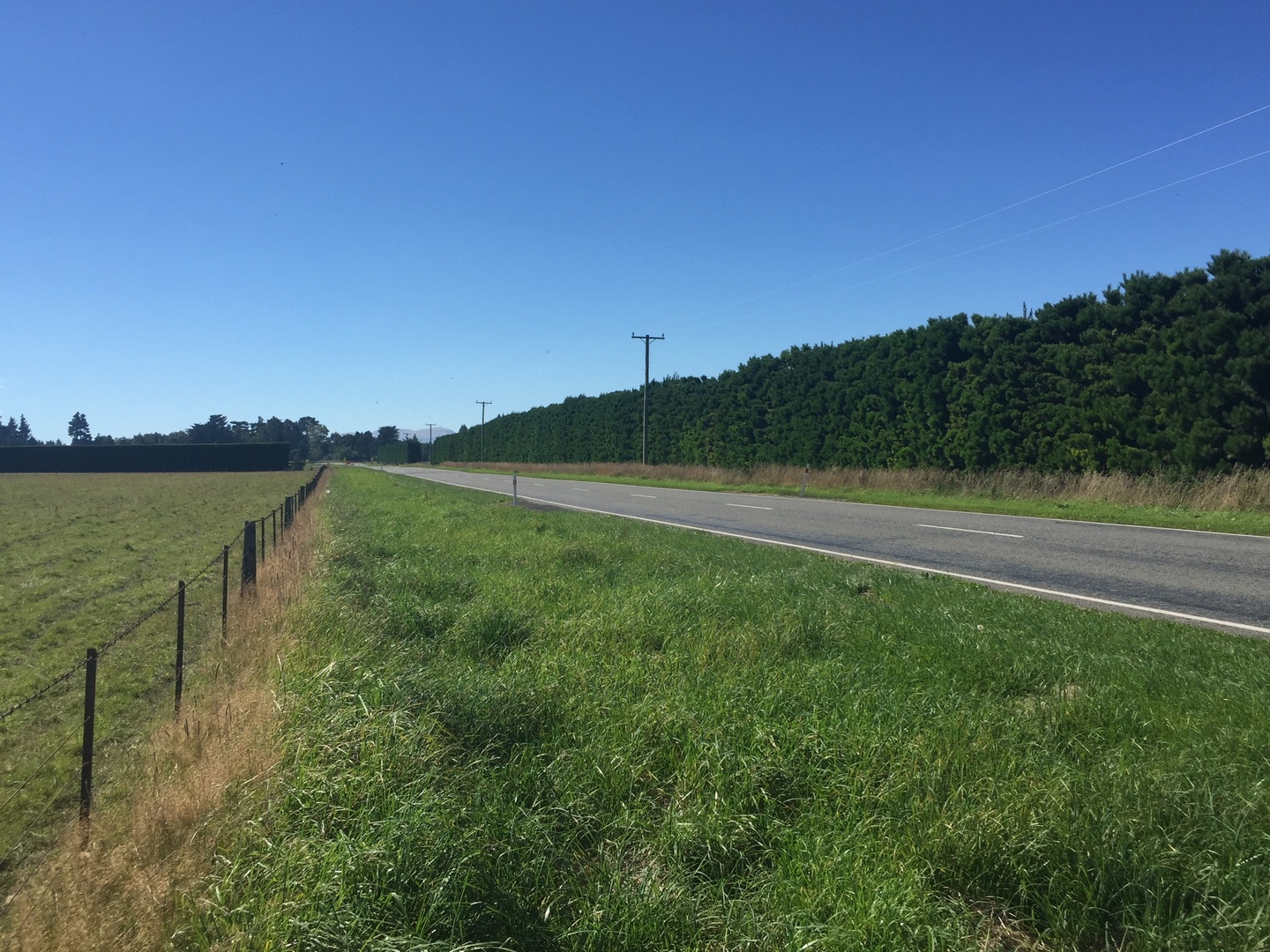
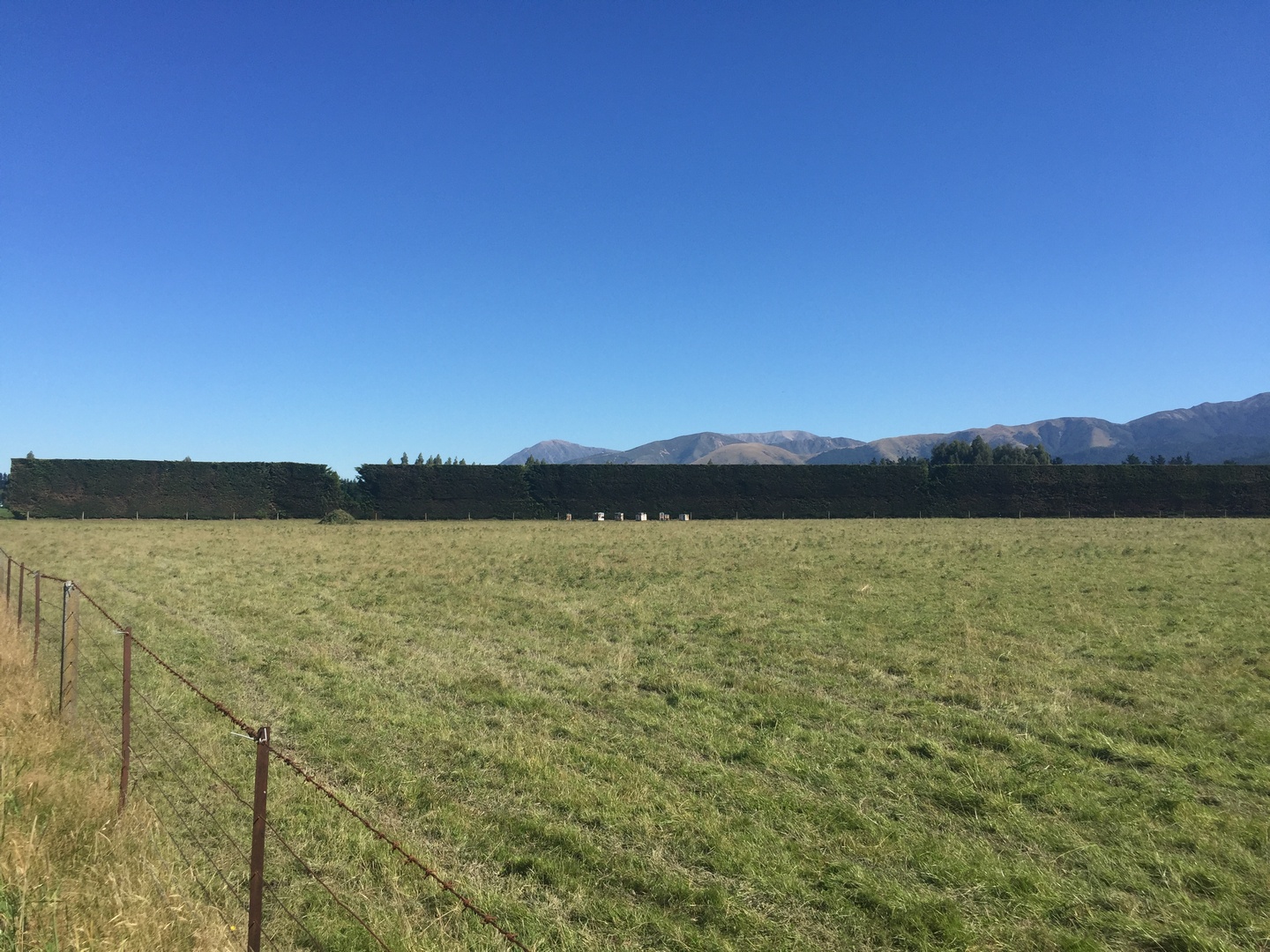
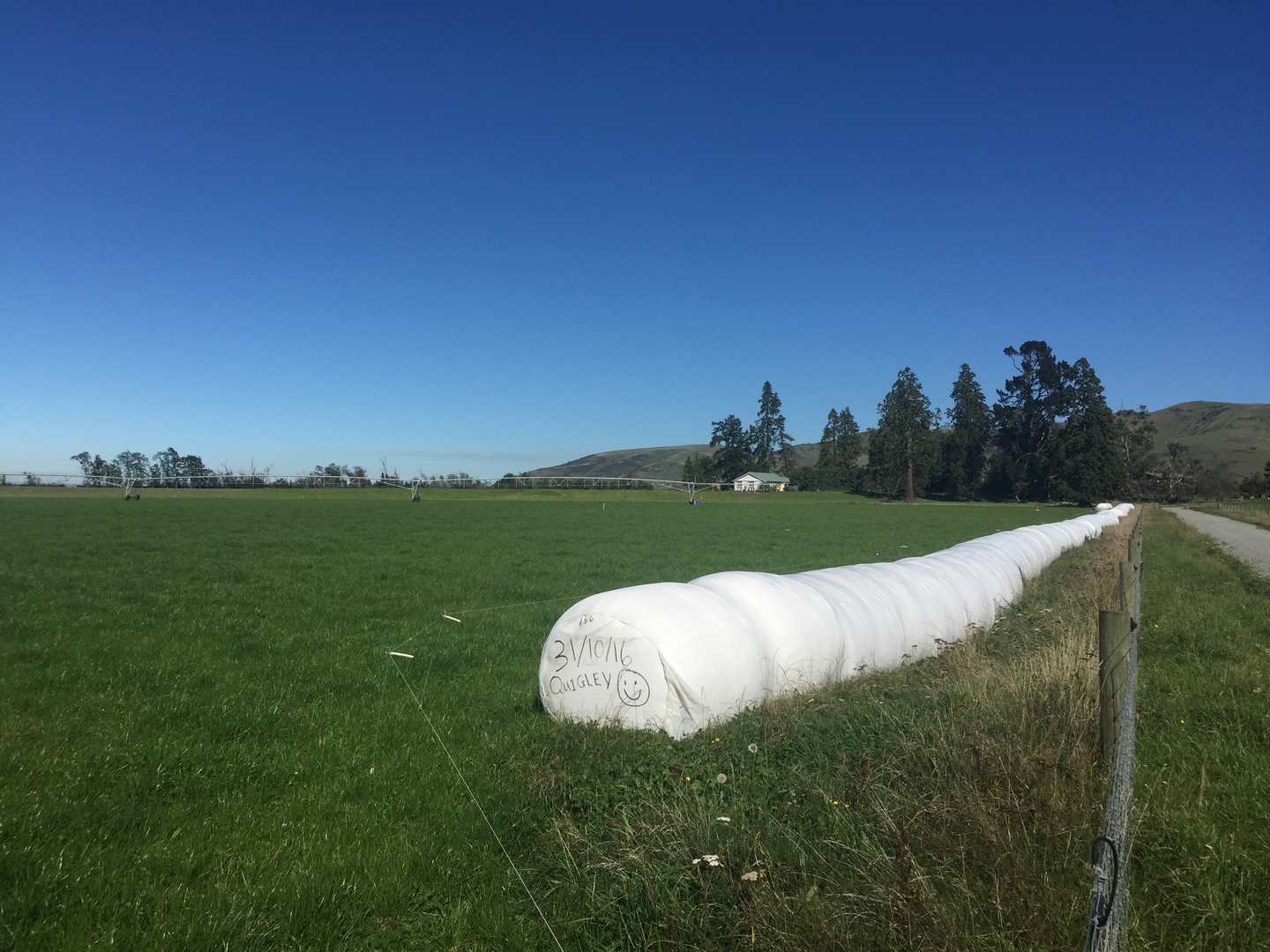
Ze kijken niet op een kilometer haag meer of minder in het zuidelijke eiland. En allemaal geschoren. Ik zweette alleen al bij de gedachte aan het scheren van mijn klimophaag.Nog een haagje. Vooral bedoeld om de wind te breken, niet zozeer tegen de inkijk…Naast de individuele verpakking van strobalen was ook deze worst varieteit heel populair. We hebben alle kleuren van verpakkingsplastiek gezien: roze, lichtblauw, wit, felgroen, maar geeneen in kaki kleuren. Een gat in de markt?
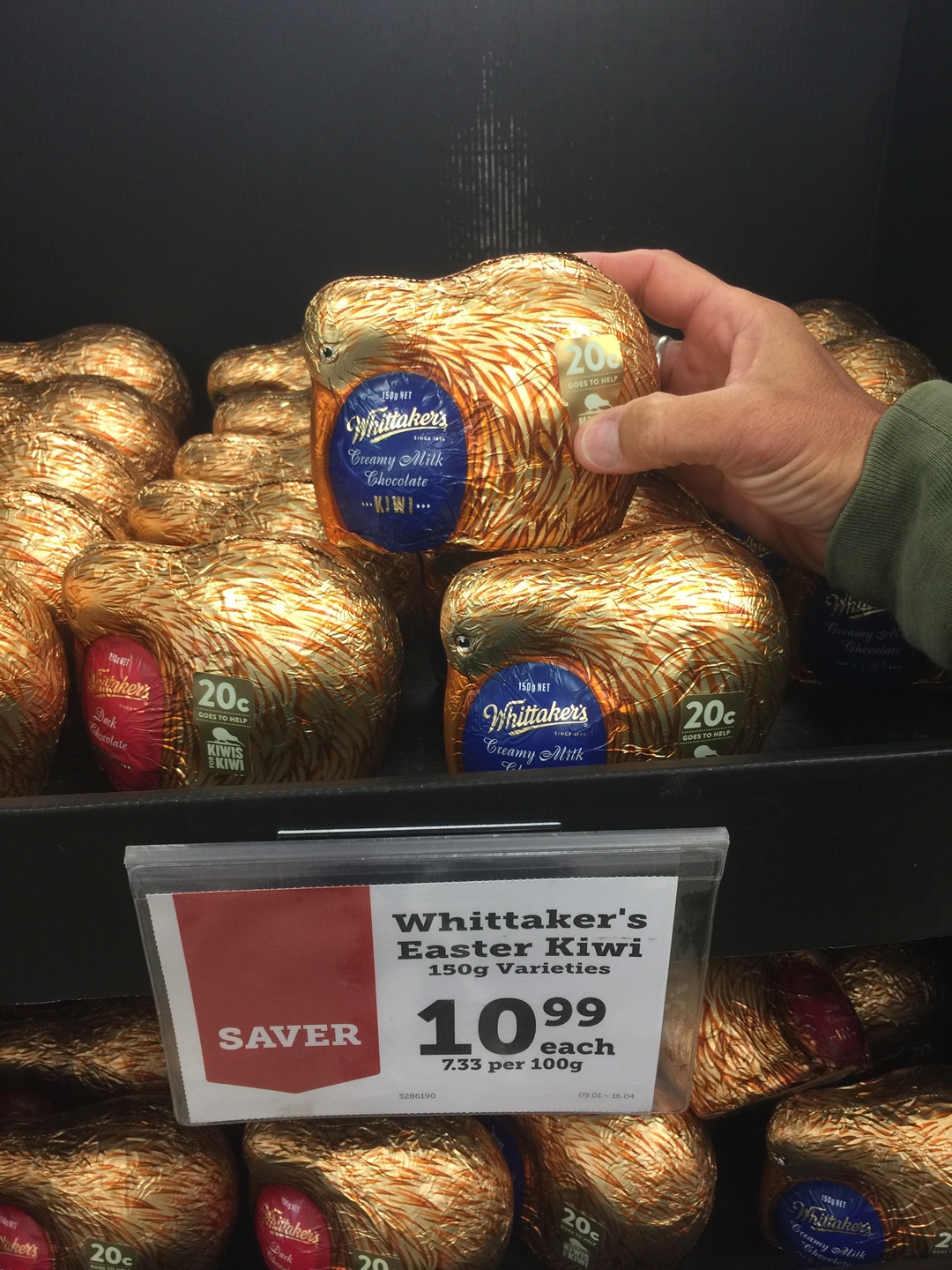
Pasen in Nieuw Zeeland.
De klokken van Rome geraken niet zover dus moet de kiwi het doen.
Over vertrekken:
Afscheid van Burnie, we sturen hem de baan op met twee nieuwe banden en een uitlijning. Hopelijk hebben de nieuwe eigenaars er evenveel genot van als wij.
Over Christchurch of ChCh
Na de aardbeving van 2011 wordt er nog steeds duchtig gebouwd……. maar het is verassend te zien dat er nog zoveel gebouwen moeten afgebroken worden.Overal zie je bulldozers en kranen die puin weghalen. Ongeveer 70% van de binnenstad is ofwel parking of wacht op sloop. Toch verrijst er ook veel nieuwbouw.
Uitsmijter:
Morgen op het vliegtuig naar Tahiti, terug naar Sanuk. De valiezen zijn gepakt…
Here are some tips that I have found that will be useful for anyone traveling in New Zealand for longer than 2 weeks
trademe.co.nz is the site to sell/buy almost anything, including campervans. Just remember that you need a new zealand address to sell anything, and a new zealand address to reply to any listed add. (Any address will do, like a AirBnB or a backpackers hotel). Therefore it pays to put your email and phone number in the ad text itself when you are selling something.
If you travel a longer period, say over a month, it pays to buy a vehicle and then sell it again at the end of the stay instead of renting one. If you are going to be staying long, and you are say over 30, you will appreciate the possibility of standing upright in the van, or of cooking inside. The trick is to buy low and sell high 😉 As the camping seasons progress towards April, it becomes harder to sell the vehicle because there is less demand. The season starts around december.
If possible, get a self contained vehicle. This allows you to freedom camp, and check in to a holiday camp when you deem it necessary (showers!). We found that almost nobody with a small campervan uses the portable toilets such as these:
but instead finds a free campsite with a toilet. These sites are almost always for self contained vehicles only.
When you buy a used vehicle, the buyer can buy it on condition of an inspection. This is a very good idea, even if it costs 159NZD at AA, because it will be a very strong bargaining tool. I compare it with going with an 80 year old to the doctor for a complete evaluation: Hm, the knees are weak and near the end of their functional lifetime, the hip needs replacement, the eyesight is only 50%, …. The final sale price will reflect some of these problems, or have them repaired by the seller. Or you may not buy the car at all. (Did I report that we did not do an inspection when we bought Burnie, but had one done when we sold him?)
The north island is warmer than the south island. So depending on the time of year, you may explore first the North or the south island. If you only have a limited time, then I prefer the scenery of the south island. Queenstown is an ideal basis for exploring the majority of sights to see in the south island, but of course it is better to just drive around and do all the sights…
Get the free campermate app available for iphone and android. It lists all the campsites, point of interest and much much more. Read the comments left by the users, it clarifies a lot and gives up- to-date info. I have been told that there is a similar app from the nzmca. The disadvantage is that everyone with the app will tend to visit the same places, but that does not weigh against the wealth of information that is inside the app, and all of it offline accessible.
Get a good prepaid phone data plan. These tend to fluctuate in value, we had one from The warehouse Mobile that got us up to 3 Gigabyte per month for 12 NZD, but that was no longer available towards the end of our stay. In general, Spark and The Warehouse Mobile have good deals. Spark has wifi booths in many places (they are indicated in the CamperMate app) where you can download 1Gb/day for free.
Use the libraries as a wifi and recharging station. They are open for extended periods, are free and the people are very helpful.
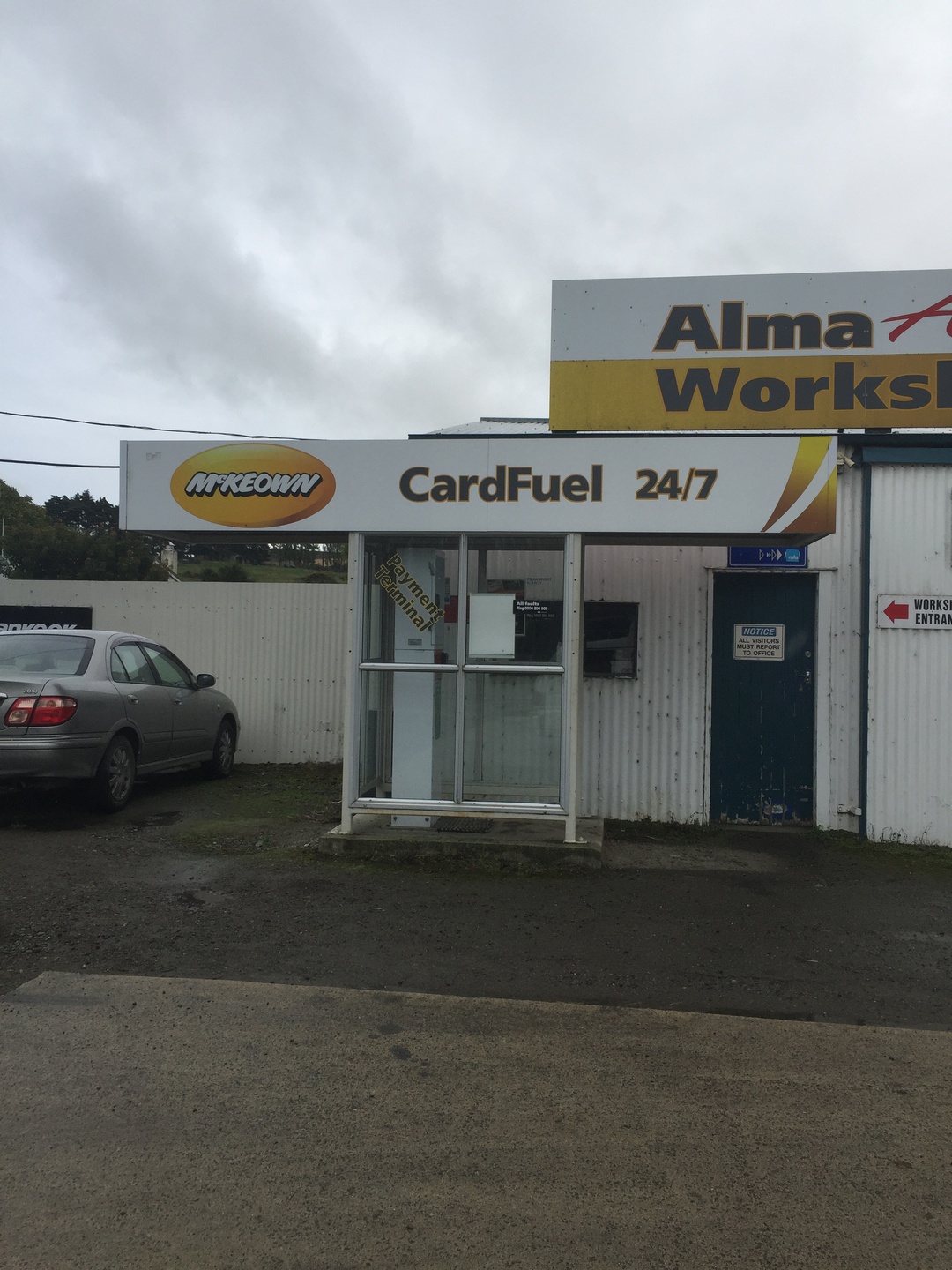
In the south island, here is the best kept secret for saving money: get petrol or diesel at the McKeown stations. They are unmanned credit card stations, but their diesel was 1.009 dollar, when the caltex next door was 1,309 NZD! Many kiwi’s do not know about this, don’t ask me why. They have an app also that works offline. They are affiliated with Caltex, but forget those, they are the same price as everybody else, and play the “today 6 cents off” if you have a AA card (see my previous blog rant about this) . The app is only available in the Apple NZ store but since it does not cost anything, there is a way to become a member of the NZ store without a NZ credit card, here is how. There are enough McKeown gasstations in the south island that you can usually find one near to where you are. There are some non covered areas, and for that you will need to look at the next tip.
Now that you are a member of the NZ app store, you need to download another necessary item: Gaspy (Gas-Spy). It allows you to search for the cheapest gas station in a radius around you. It is necessary in the North island where there are no McKeowns. This app does not work offline, so you need mobile data.
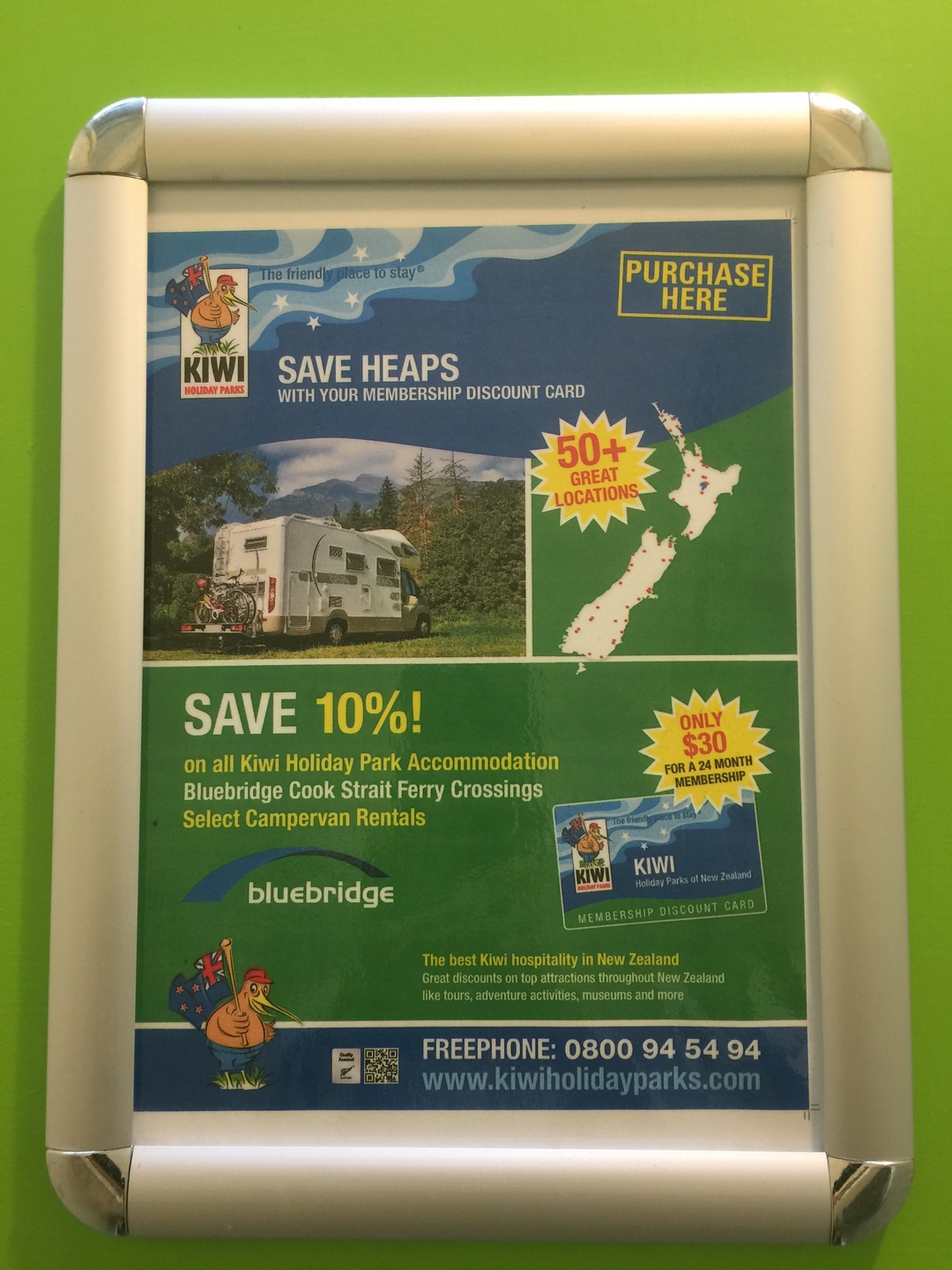
If you cross the channel between the North and South island with your van, it may pay to get a card from one of the two camper places: Top 10 Holiday Parks, or Kiwi Holiday parks. They each are good for 10% off on the ferry. For Top 10 parks, you get 10% off your stay at the park, extra wifi and price reductions at local businesses. It costs 49 NZD. The Kiwi holiday park card is 30NZD and gives similar discounts. If you stay every 3 to 4 days in a holiday park like we did, either card pays for itself. Also both cards are valid for two years and are also accepted in Australia by associated members. More here and here
Get the customer cards to save on buying food in the foodstores. The big ones are Countdown, New World, Pak ‘n Save (no card) and then the smaller Four Square (no card). They have all incredible opening hours, usually till 9pm or later, every day! They all still throw plastic bags at you like the is not enough plastic in the world already, except Pak ‘n Save.
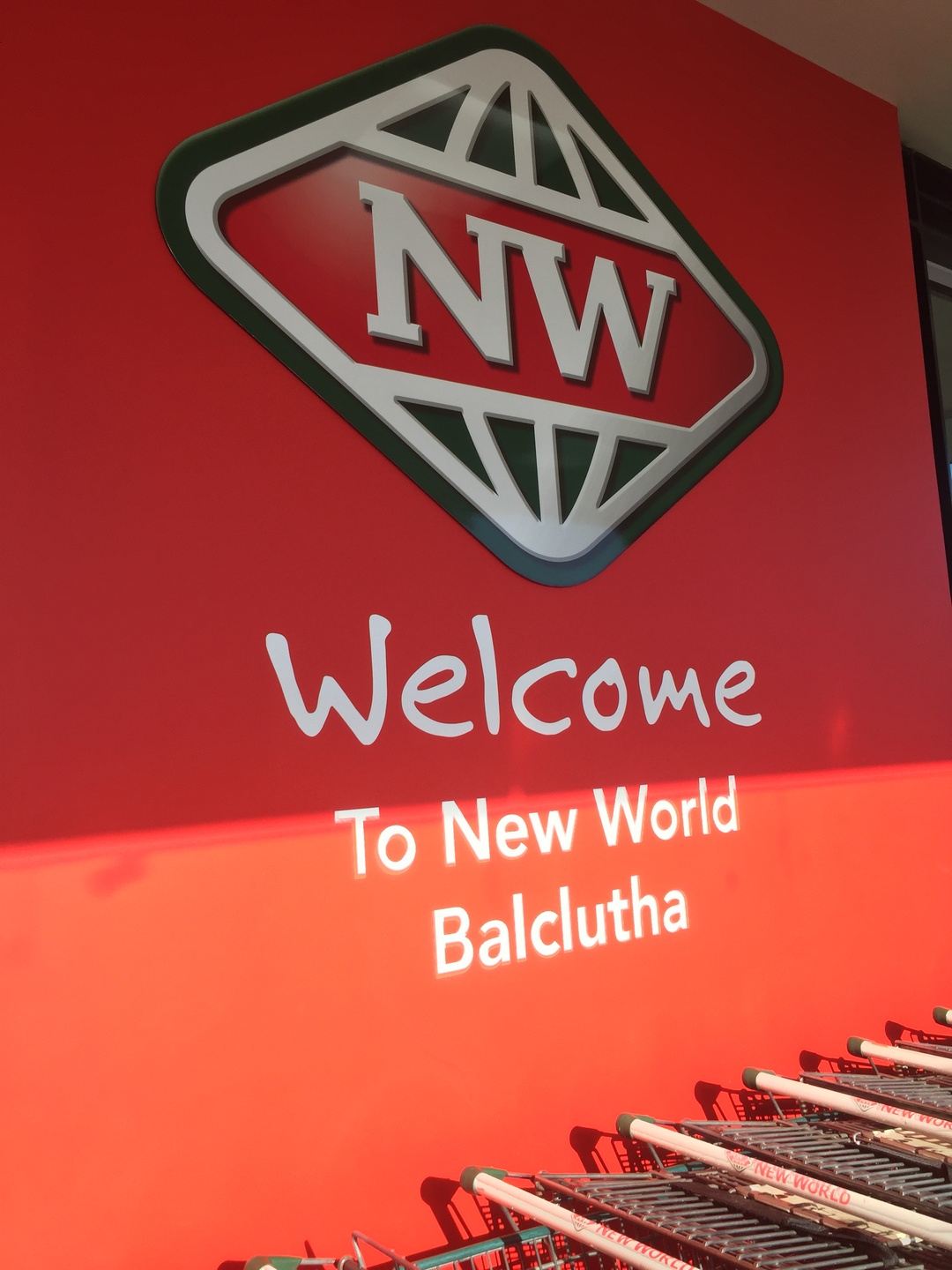
Yes, there is such a place as Balclutha
A tip about avoiding driving on the wrong side of the road, the reason for up to 30% of accidents in NZ: The driver always sits closest to the middle of the road. I found that once you are on your way (on the correct side of the road), there are few opportunities to make mistakes. There are plenty of signs that help you conquer difficult situations such as roundabouts. The problem is starting off correct after a stop.
Learn to understand how Kiwi’s drive. They drive quite different from European drivers. For example, they do not want to overtake you unless they have a clear line of sight of about a kilometer. Even if you slow down to like 40, with nobody coming from the opposite direction, some will still stay behind you. Luckily there are many passing lanes where the road goes from 2 to 3 lanes for a kilometer or so. In contrast, the trucks always drive at their limit which is 90km/hour no matter what the conditions are. They are not hesitant to overtake.
Be carefull with single lane bridges, they occur frequently even on relatively busy highways:
(Ilse is filming, but at the end is so occupied with the encounter that we do not get the subject on video. I think he was European because he insisted that we parked on the right hand side of the road to let him pass….)



 Sanuk 2014-2018 travel stories