
In maart 2016 zijn we door het Panama kanaal gevaren, en onze vrienden Anet en Jaques die mee waren als lijn handlers, hebben er een video van gemaakt
Hartelijk bedankt Annet en Jacques voor deze mooie herinnering!
Category: Panama
The Las Perlas Archipelago in Panama
Today, March 29th, we are safely on a mooring in Bahia de Caraquez in Ecuador. We arrived here after 5 and a half days of sailing from Las Perlas in Panama. More about the sail in my next blog. I still have not mentioned anything about the three islands we visited in Las Perlas.
On March 16th, Wednesday, we left Isla Taboga at 9 AM to sail to the first island in Las Perlas being Isla Contadora. We got there just in time before the sunset at 6 PM. It was a great day sailing. We did not have a lot of wind all the time and so motor sailed for about one hour when the wind dropped to less than 3 KTS. At times it felt like we were sailing on a lake ! The sea was so calm. Contadora was the island where the Spanish counted the pearls that were harvested from the other islands in the archipelago. The islands produced pearls of many colors and sizes, and during the many years when pearls were harvested from the waters around the islands, the natives would converge to Contadora to count their pearls and sell them to the Spaniards. Early last century there was an underwater epidemic which killed most of the pearl oysters. I was hoping to be able to buy some pearls but no shops to be found on the island. We did make a tour after a rough landing with flipper through the surf and I was thrown out into the water (luckily no harm done only wet shorts and t-shirt and a bruise on my behind). There are lots of beautiful vacation homes from rich panamians spending their WE and holidays on the island. While we were there, there was not a lot of action. The hotel right on the beach had good internet and so we decided to have a drink there to get the password. A small pineapple juice cost us 4.5 USD but at least we could use their internet from the boat :-). The only problem now was getting back to the boat with Flipper through the surf… we managed fairly well, waiting until the waves were not too high…patience is very important when travelling with a boat :-).


March 19th, Saturday, we decided to leave before all the vacationing Panamanians would arrive. At noon we decided to sail to Isla Pedro Gonzalez. We had heard that we would be able to “beach” the boat there since there was a nice stretch of sand without rocks. Since we are in the Pacific the tide difference is not the 30 cm we were used to but now it is about 2-3 meters ! So it is very important you know if you are anchoring at high tide or low tide ! We arrived at 5.30 PM but noticed that on the place where we should have been able to beach the boat they had now build a new marina ! The docks were empty except for one large motor yacht but were almost ready to be used. On the other side they were constructing a dock for fueling (we later found out) and so we turned and anchored on the other side of the village. Clearly lots of development is going on in the islands.


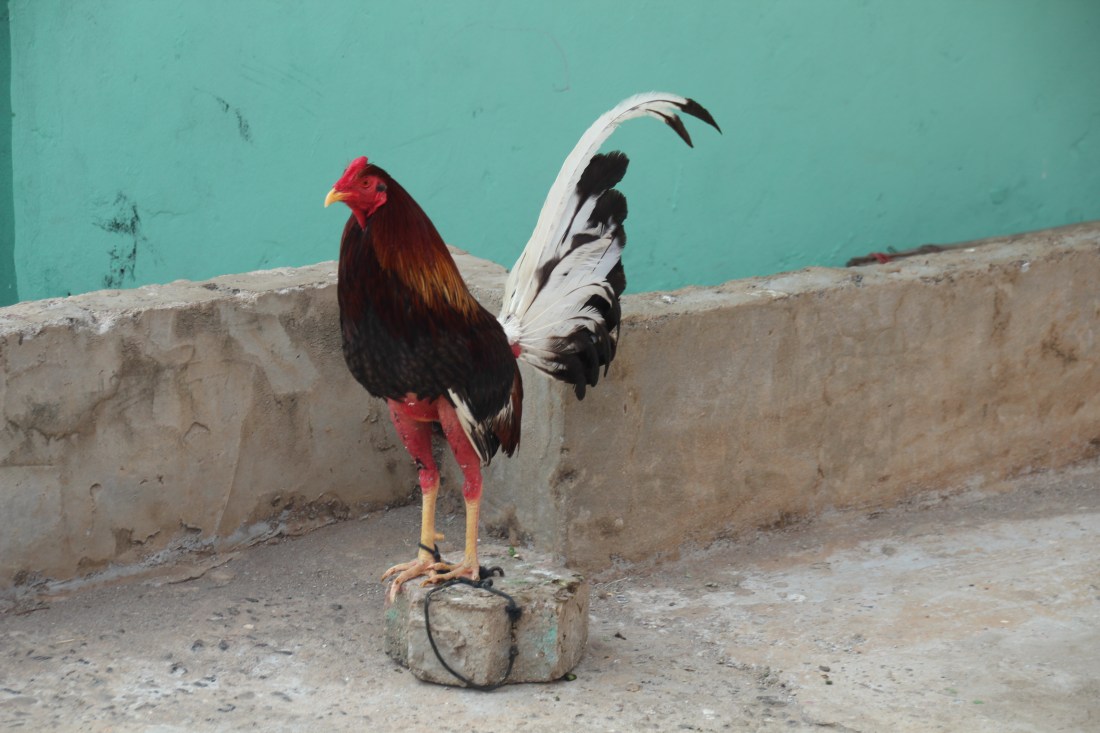
The roosters made me think of the book I read from Gabriel Garcia Marquez, No one writes to the colonel, 
It is the story of a poor, veteran colonel and his wife living in Colombia during the years of La Violencia (1948-1958) . The colonel desperately tries to sell the rooster, their inheritance from their only son who is now dead. He is caught between either feeding the rooster and traning for a cockfight or selling the rooster to have money to eat for themselves. I really enjoyed reading the book.
We walked through the town wanting to go to the other side of the island but were stopped at a construction site. The men did not want to let us walk any furhter as this was now private property. The development was called “Pearl Island”, the construction workers had t-shirts and caps with the logo and name, and they were serious we were not to pass. I looked it up on the internet and sure enough a huge luxurious development with a Ritz Carlton is being built in the future. Times are changing…
We left Isla Pedro Gonzalez on March 20th, sunday at noon not sure where we would get before sunset. We just made it to Punta Coco Beach, the southern tip of Isla Del Rey. I was happy we could just anchor with the last bit of light. We noticed a boat from the police or naval authorities but did not think much of it. But 10 minutes later they were at our boat asking us to leave immediately as there was a prison and obviously they did not want us anchored there. In the mean time it had turned dark! We pleaded with them if we could not stay just one night and then leave early in the morning but they were firm, we had to go to the next village and anchor there. So back to the anchor routine, I was getting bitten by no-see-ums and thus was kind of happy we left. Only now we had to find an anchor spot in the dark…20 minutes later we anchored at Rio Cacique in 6 meters and sand bottom. Another yacht was anchored further in the bay. It was 7.30 PM by the time we could start preparing dinner…Rio Cacique was a nice little bay. We went with Flipper up the river an hour before high tide and turned off the motor letting the tide do its work.


On March 22nd, we decided to “beach” Sanuk with the early high tide at 4.40 AM so we would be able to clean the bottom and Stefan could change the zinks.


We were done with all the work by noon and now had to wait till the water did its work and got the boat back out of the sand. This was not such an easy process as we first thought it would be. The tide wanted to push the boat higher on the beach while we tried to keep the boat away from the beach. On top of that the current was not working with us either. Afther some running back and forth with a second anchor and trying to keep the boat afloat away from the beach we finally made it back into the water but it was definitely not an easy exercise. We were both very happy to be back at anchor by about 3 PM. We prepared the two mackerels and put them in the freezer ready to be eaten while sailing to Ecuador.

We left Rio Cacique at 10.30 AM on Wednesday, March 23rd for about 636 NM to Bahia de Caraquez in Ecuador.
Flashback: 22 maart drooglegging op Rio Cacique Beach, Isla Rey, Las Perlas, Panama
Hoogwater is om 03:00 uur, en rond 04:30 zou het tij reeds een halve meter moeten gezakt zijn. Het getijdverschil is 3,2 meter met deze volle maan, en we zouden graag ook nog van het strand afgeraken, dus daarom vatten we wat na hoogtij ons experiment aan. Op het internet vond ik verschillende getuigenissen van gelijkaardige boten als Sanuk die dit gedaan hebben, en in Grenada stond Sanuk ook op zijn kielen op het droge.
Het was een raar gevoel om Sanuk bewust te laten stranden bij maanlicht. Er stond een lichte branding van 30 a 50 cm, en om 4:40 stond onze 10-tonner vast op het strand.
 Toch was ik er niet volledig gerust in, door het losse zand van de monding en door de kolking van de golven zakte de kiel ongeveer een halve meter in het zand, wat maakte dat de roeren die achter de kiel staan ook mee ongeveer 30 cm in het zand zakten. Met het anker legde ik Sanuk vast op het strand, maar het was toch geen prettig gevoel om soms een hoge golf (die niet doorhad dat het eb was) te zien aankomen en het achterschip nog eens opheffen, ook al lag de boot vast in het zand. Van terug naar bed gaan tot het licht werd was geen sprake, en rond 06:00 was het zover en konden we de toestand onder ogenschouw nemen. Buiten het feit dat de boot nogal naar achteren overhelde zag het er eigenlijk allemaal goed uit. Wel zag ik dat de roeren ook redelijk diep en vast in het soort van drijfzand stonden. (Dit deed me direct terugdenken aan mijn jeugd, waar bij de aanleg van de R4 het opgespoten zand ook zo een soort van half-vloeibare en half-vaste consistentie had. Door erop te dansen werd het een soort van trampoline, levensgevaarlijk apropos)

Het doel van deze operatie was om de zinken van de boot te vervangen. Zinken zijn van zink gemaakte stukken die aan de schroef, de as, de saildrive en de boot worden vastgemaakt. Doordat zink bij electrolyse in zeewater zich sneller opoffert dan ander metalen wordt het metaal van de boot door deze onbaatzuchtige martelaren beschermd tegen corrosie. Maar deze moeten dus regelmatig worden vervangen, en dit was op Sanuk nog niet gebeurd sinds we ermee vaarden.

Ik was bij aanvang nogal zenuwachtig, want ik had maar tot 8 uur om de klus te klaren, inclusief mogelijke tegenvallers. Het viel echter allemaal prima mee, ik kwam geen verassingen tegen en alle oude zinken werden vlot vervangen door de reserve stukken die ik had aangekocht in december in Miami. Helaas ontbrak ik deze van de as (stond niet in de handleiding), maar gelukkig waren de gemonteerde nog in redelijke staat. Ik kan dit klusje vanaf nu ook in het water uitvoeren, nu ik de handelingen eens heb gedaan.
Ilse heeft ondertussen het onderwater gedeelte van de rompen onderhanden genomen en alle kleine schelpjes verwijderd, en ook de lichte groene aanslag die op sommige plaatsen begon. Dat was een serieus werk, maar nodig vermits de Galapagos zo streng zijn op de netheid van de onderwater romp.

Ik heb de gehele romp nog eens minitieus geinspecteerd, maar zag gelukkig geen dingen die moesten opgelapt worden.
Vermits we nog een uurtje of twee hadden voor we ons terug zouden lanceren, hebben we op onze stacaravan gegeten.

Daarna werd het terug spannend. Eerst kwam de zee eraan, tot onder de boot en geleidelijk voelden we meer en meer dat er beweging inzat. De truc was om de boot stil te houden tot hij volledig dreef, en daarna terug naar dieper water te gaan. Gemakkelijker gezegd dan gedaan, want de monding van de rivier die door het hoogwater werd volgestouwd zorgde voor een zijdelingse stroming die ons tegenwerkte. Ondanks de hulp van het tweede anker dat we zo diep mogelijk in zee hadden gelegd bij laag water, kwamen we wel los maar werden we naar het strand geduwd. Het heeft wat zweet, geroep, een nat pak en veel spanning gekost vooraleer onze Sanuk terug in de baai lag, maar een vlugge inspectieronde bevestigde dat alles goed verlopen was. Alleen de anti-fouling van het onderste stuk van de kiel en de roeren zijn door het wrijven met het zand verdwenen.
Toch niet een oefening die ik graag zou herhalen, er staat te veel op het spel en de gebeurtenissen zijn moeilijk in te schatten. Indien ik het zou herhalen dan zou ik proberen om een vlakkere ondergrond te vinden met minder of geen golfslag. Maar ik denk niet dat er zo veel plaatsen op de wereld zijn. Het strand van de Panne misschien?
Flashback: 20 maart Rio Cacique, Isla Rey, Las Perlas, Panama
Net op de valreep (18:30) voor het donker waren we geankerd voor Punta Coca Beach op het eiland Isla Rey, toen de Aeronaval (kustwacht) vanop de wal langskwam in een sigaarboot om te zeggen dat we daar niet mogen ankeren, vanwege een gevangenis op het land. Daar had onze gids niets over gezegd, en onze vraag voor een uitzondering voor één nacht kreeg geen gehoor. Dus dan maar het anker gelicht, en met een driekwart maan doorgevaren naar onze bestemming die we eerst in gedachten hadden, maar die ons te ver bleek: Rio Cacique op hetzelfde eiland. Dit was te doen want het was niet al te ver, de zee was rustig doordat we in een beschutte baai waren en er waren geen koralen of rotsen die het ankeren moeilijk maakten. We zagen van ver een ander ankerlicht, en nestelden ons om 19:30 in de baai, op een zeer veilige afstand van de kust.
De volgende morgen hebben we herankerd naar een plaatsje wat dichter bij het strand, en hebben we Flipper ons bootje genomen om dit eens uit te checken. Dit werd terug een oefening in landen met stevige golven, en het ging al een klein beetje beter. Toch nog een nat pak, er is dus nog ruimte voor verbetering. De reden dat we naar hier wilden komen was dat de gids dit aangaf als een ankerplaats waar je de boot op het droge kan leggen, en dat hadden we nodig (zie verslag van morgen).
Terwijl we de stand van de getijden tijdens de dag opvolgden, hebben we een bezoek gebracht aan de rivier die achter het strand ligt en uitmondt in de baai waar we liggen. We vertrokken te voet want het was wissel van laag naar hoogtij, en het brak water waarmee de rivier gevuld is staat laag zodat we overal een pad vinden in de bedding dat hooguit kniehoog waden vereist. De rivierbedding is als een breed pad in de jungle, waar er anders geen doorkomen aan is. De vogels hebben daar geen last van, en zijn dan ook overal te horen. Na een uurtje keren we terug, en nu het hoog water nog slechts een tweetal uurtjes verwijderd is, stroomt de zee volop in de bedding. Dus genieten we nogmaals van de rivier, nu met Flipper die met de stroming mee het binnenland ingaat. Dankzij onze eerdere verkenningstocht slaag ik erin om niet op een zandbank vast te lopen, en heerlijk stil worden we mee de rivier opgevoerd. We zien een prachtige grote jachtvogel, we gaan eens moeten opzoeken van welk merk, want zo één hebben we nog niet gehad. Op motor terug naar de monding, waar het zandstrand nu volledig verdwenen is. Dit ziet er inderdaad goed uit om de boot te laten stranden. We rekenen uit dat dat morgen om 4:30 gaat gebeuren, dus kruipen we vroeg in bed.


Flashback: 19 maart Isla Pedro Gonzales, Las Perlas, Panama
Vertrokken rond de middag vanuit het Saint-Tropez van de Las Perlas (Isla Contadora) met zijn wifi.
Na een 4-tal uurtjes zeilen komen we aan op onze bestemming, Isla Pedro Gonzales. Alleen blijkt dat de voorgestelde ankerplaats uit onze gids, die van 2010 dateert, nu een jachthaventje in wording is. Dus leggen we ons voor het dorp te anker. De volgende morgen brengen we een bezoekje aan het dorp, met heel vriendelijke mensen. Tot we eens op het eiland willen rondwandelen, dan blijkt dat de “Pearl Island Development Company” de eigenaar is van het hele eiland inclusief de marina, en dat er vele vrachtwagens rondrijden, ook al is het zondag. Dus worden we vriendelijk verzocht terug naar het dorp te gaan. Dat was dus een kort bezoek aan het eiland.
De volgende dag zijn we vertrokken naar onze volgende bestemming, namelijk het grootste eiland van de groep: Ilsa Rey. Onderweg zagen we nog duizenden pelikanen, zowel in groepjes op het land, als in lange rijen vliegende formaties tot individuen die als een stuca de zee induiken. Ook zagen we een grote rare zwarte vlek op zee, we dachten aan een drijvend visnet maar bij het naderkomen bleek het uit pelikanen te bestaan die cafeklatch hielden.


Isla Taboga, our first island in the Pacific.
Sunday, March 14th, we are anchored in Balboa yacht club and decide to go with the watertaxi to land with Jacques and Annet who are taking a taxi to go to Panama city. We need to find an ATM machine since we have no USD left and check the price of the diesel for the boat. We were walking in the direction of the centre of Balboa in some run down neighbourhood when a woman told us we should not walk there without security. She went to get two policemen to go with us to the nearest ATM machine. The police called a police car and after 5 minutes we were taken by the police car to the nearest ATM. 🙂


They wanted to take us back to the marina but we politely declined and walked back along the main road. We got diesel at 1.74USD for a gallon and left for Isla Taboga, which is about 2 hours of motoring, there was no wind and we were still in the canal.


Going to the Pacific Ocean
Friday March 12th, early in the morning, after not such a good night sleep we are taking care of the final preparations for the transit. Jacques and Annet will be arriving around noon as well as our professional line handler and the fenders and extra lines. We clear the bill from the marina, David brings back Flipper with a new jacket and a rain catcher. It all looks good. At 1.30PM we leave Shelter Bay Marina for the “flats” where we will have to anchor to wait till the advisor comes aboard, this should be around 5 PM. There are 5 boats from the marina transiting the canal today and tomorrow.


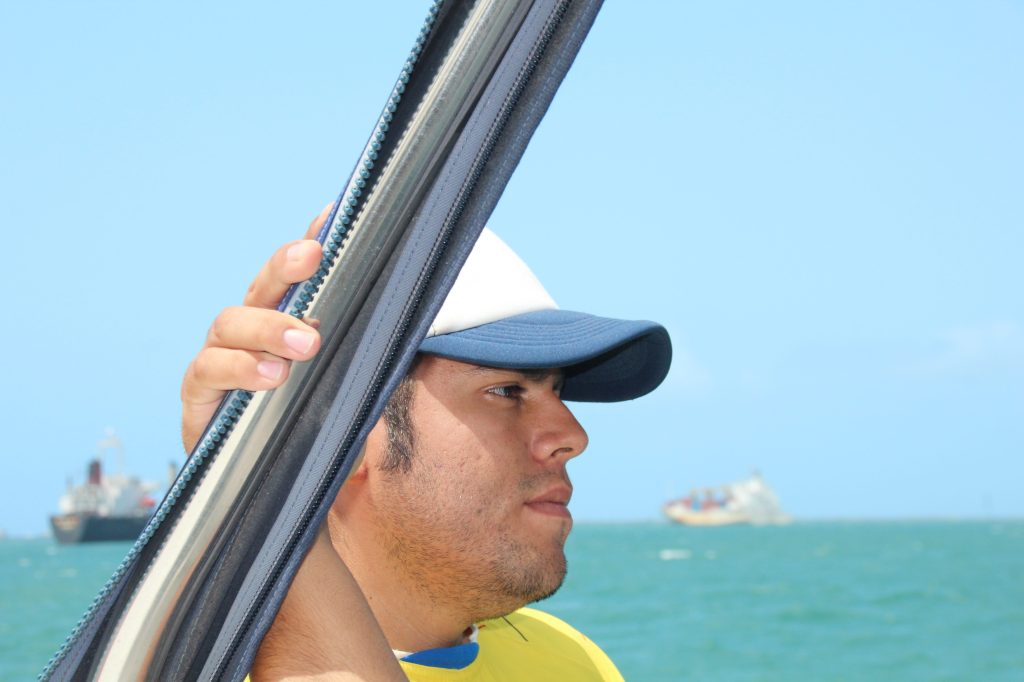
Finally we can leave for the canal at 6.15 PM, it is getting dark.


Before going into the locks we are being tied on starboard to a yacht and catamaran. The yacht was in the middle which was not a good choice ! As we had more engine power we could steer better and soon enough the advisor on board of the yacht gave Stefan the go ahead to steer for the 3 boats. This was not so easy since we were not in the middle. But Stefan did a wonderful job together with the line handlers.

We arrived in Gatun Lake at 9.30 PM where we had to anchor. Normally they go to a mooring but this is where they are now working on the new canal. The advisor had his dinner in the locks and left the boat once we were anchored. We had dinner after we were anchored, pineapple for desert and a cup of tea before going to bed. Tomorrow is another long day !
Saturday, March 13th 2016, upat 7.30 AM as the advisor could come as of 8 AM. Pancakes, bacon and orange juice for breakfast. Unfortunately the advisor did not turn up until 12 !

He was checking when we got a spot and apparently this would only be at 6 PM ! We still had to go 28 NM in the canal. He would try to get us in at 5 PM, so we were all happy. We had to motor at a speed of about 6 KTS to get in time at the locks which was a little frustrating since we had been waiting for so long. After half an hour it was clear the yacht could not keep up that speed and would never make it in time for the 5 PM passage. So back to 6 PM 😦


The passage was really impressive although it was a lot of waiting during those two days. But to think that these immense locks were built in 1914 (when the canal was opened) is incredible. The French started building the canal in 1881 but after 25.000 workers died from yellow fever, malaria and dysenterie and the French went bankrupt, the Americans took over in 1904. The canal was finished in August 1914, at a cost of 375 Mio USD. The average toll to go through the canal is 50.000USD for our boat it was 800 USD, with agent fees, paperwork etc it came to 1500USD. Happy I do not have to go back 🙂
Casco Viejo, Panama city
Tuesday, March 8th 2016 to March 10th we decided to pay a quick visit to Panama city. We really did not expect too much of it being such a big city but we were positively surprised ! We spent most of the time in Casco Viejo. They are working hard to renovate the beautiful old buildings. We think that 5 years from now this will have the same charm as Cartagena, maybe even nicer, if they take the right decisions. Our hotel was located at the Cinta Costera (coastal belt) which is a new green space where you can walk or bycicle from downtown to Casco Viejo. Panama City was founded in 1519 but the city was destroyed in 1671 by the English pirate Henry Morgan.Three years later the city was reestablished 8km southwest now known as Casco Viejo.


16, 17 maart 2016 Isla Contadora, Las Perlas, Panama
17 maart 2016
Vandaag een mooie zeildag gehad. Vertrokken om 9:00 uur, nog eens rond Taboga gezeild om de duizenden pelikanen in actie te zien, en dan vertrokken richting Las Perlas eilanden, ongeveer 25 zeemijlen ver. Helaas was er eerst weinig en dan bijna niets van wind. Geen wind, en een spiegelgladde zee, ik waande me op het meer van Heusden. Dus even gemoterd en na een half uurtje kwam de wind op, en hij bleef aanwakkeren tot we met een 20 knopen ons einddoel bereikten, ons eerste eiland in de las Perlas eilanden.
18 maart 2016
We zijn op uitstap geweest met flipper naar de kust bij hoog tij. Het werd een hachelijk avontuur, want er waren dicht bij de kust ineens grote golven. Voor we het wisten waren we op een golf naar het strand aan het surfen, en ineens zaten we op het zand. Door de schok vloog Ilse uit het bootje, en ik kon me er nog net inhouden. Nat maar ongedeerd hebben we flipper toch op het strand gekregen en vastgelegd. Weer een lesje geleerd (waterdichte zak mee met reserve kledij, alles vastbinden in het bootje, beter leren onze aankomst timen met de golven en altijd eerst een schietgebedje doen)
Ik ben het eiland eens gaan verkennen terwijl Ilse aan het opdrogen was. Maar er is niet veel te zien op dit piepklein lapje grond, want alles is privé en poepchic voor de Panamese elite die hier per vliegtuigje naar hun buitenverblijf komt. Er is slechts één hotel, en daar zijn we een duur drankje gaan drinken om achter het wifi paswoord te komen. En zo komt het dat we nu vanop de boot onze achterstand kunnen goedmaken op de blog. We blijven hier dus nog zeker een dag liggen…
Ook de terugkeer met Flipper was niet voor de poes, maar bij de tweede poging zijn we weggeraakt.
Ilse zegt dat het eiland het niet waard is voor een foto, dus werd dit een tekstbericht.
Back to civilization.
Today, March 15th, we are on the other THE OTHER side, in the Pacific Ocean ! I am so happy ! It were two long days with a lot of waiting…but more about those days in the next blog. I first have to go back to Porvenir where I left last blog.
Friday, February 26th, 2016, we left Porvenir at 7.25 AM because we had to sail about 60 NM and wanted to make sure we arrived in Portobelo in daylight. It was a cloudy morning and thus the reefs are difficult to see, Porvenir is surrounded by reefs ! Luckily we had the charts from Eric Bauhaus but still we did change our mind about going through two reefs because it looked too narrow. After about 45 minutes of motoring we finally made it to sea and could raise the sails. It was a great sailing day ! The sun came out and we were able to do about 7-8 knots with 20 knots of wind. We arrived in Portobelo bay at 3 PM. Lots of boats were already in the beautiful bay. Columbus discovered “Puerto Bello” in 1502. The city of San Felipe de Portobelo was founded in 1597. Portobello has a rich history as it was once the spot where all the gold and silver conquered by the Spanish was shipped to Sevilla Spain. Needless to say this attracted a lot of pirates and thus Portobelo was guarded by 3 forts ( UNESCO protected). Fuerte San Jeronimo, Fuerte Santiago and Fuerte San Fernando located on the other side of the bay. Although they are protected by UNESCO there is no entrance fee and it seems nothing is being done to keep these sites maintained. I am not sure what the obligations of Panama are once a site is UNESCO protected. Portobelo was first attacked in 1602, then in 1671 by Henry Morgan and in 1679 by the English and the French. The city was destroyed in 1739 by Admiral Edward Vernon and rebuilt in 1751. We learned later that much of the fortresses were dismantled to build the Panama Canal as many of the larger stones were used in the Gatun Locks. We also visited the Real Aduana de Portobelo, a two-story Royal Customs House which was built in 1630 to serve as counting house for the king’s gold. All the gold and silver was stored here until it could be placed on galleons and sailed to Spain. There is a museum in the building but we never managed to visit as it was always closed. In the Iglesias de San Felipe there is a statue of the Black Christ, lots of people over the WE stand in line to worship and see the statue. Portobelo has a lot of charm although a lot of poor people as well. It so much fun to learn about history this way, not a dull moment 🙂 We were happy to be back in civilization. We had not seen a car in 3 weeks and we had internet 🙂 ! We caught up with emails and chats and left Portobelo early monday February 29th for Shelter Bay Marina.


Monday, February 29th, 2016, did not know it was a leap year, we left Portobello at 8 AM for Shelter Bay Marina in Panama. We wanted to meet up with our Canadian friends, Bill and Cathy, before they go through the canal later that day. Another great sail and we caught our last fish of the Caribbean Sea, a little mackerel. We got in the marina by noon. It was a tight spot they gave us to dock the boat as the marina was almost full but Stefan did very well. Later during the week we had to take out the boat two times to test the motor and although I am always nervous motoring in tight quarters, Stefan is really getting good at it ! 🙂 Shelter Bay Marina is a nice marina located at the entrance of the Panama Canal and surrounded by woods. It has a small swimming pool and restaurant ( where you need a lot of patience) and so it was the perfect spot to get the boat ready for our long journey to Galapagos and Marquesas. We had internet (although very slow at times) on the boat and managed to keep up with mails and update our blogs. A lot of reading had to be done about the Las Perlas Islands (next stop) and Ecuador since we had no internet anymore after this stop. We arranged the canal transit for March 12th and were happy Jacques and Annet from SV Panache were willing and interested to do the transit with us. They will be leaving for the Netherlands from Panama City right after the crossing. We made a quick visit to Panama City for 2 days and were charmed with Casco Viejo. They were rebuilding lots of beautiful houses and we think it will become prettier than Cartagena if they make the right decisions. We never felt unsafe in the city. We got a taxi driver from Colon to come and get us back at the hotel and did all our supply shopping for the coming months in Panama. There is just more to choose from in the supermarkets in Panama. We bought for 700 USD worth of groceries….this should last till we get to the Marquesas, early June 2016.


 Sanuk 2014-2018 travel stories