Update zondag 16 april: we zijn goed en wel in Tahiti geraakt met onze 7 valiezen.
Enkel Air New Zealand deed moeilijk bij check-in omdat we geen vertrek ticket uit tahiti hadden, maar een supervisor kwam dan met de verlossende mededeling: just check them in. Ook was onze handbaggage 12 en 13,5 kg ipv 7kg, maar dat zagen ze door de vingers!
Het is wel raar dat we twee keer paaszondag meemaken: een keer in Auckland, en dan vijf uur later doen we het nog een keer over omdat we over de dateline gevlogen hebben. 22 uur terug in de tijd.
Dinsdag gaan we met de Cobia III varen naar Apataki.
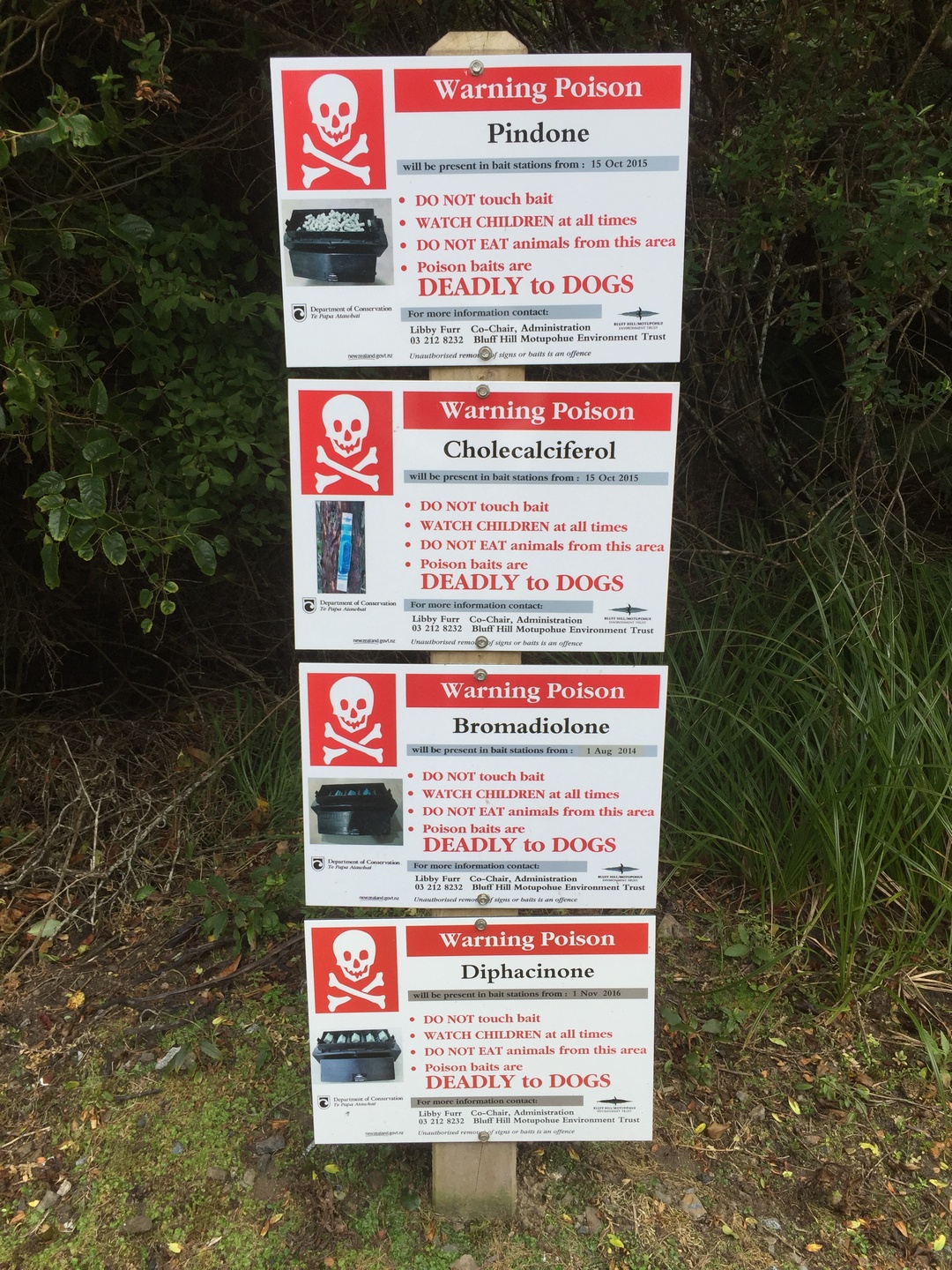
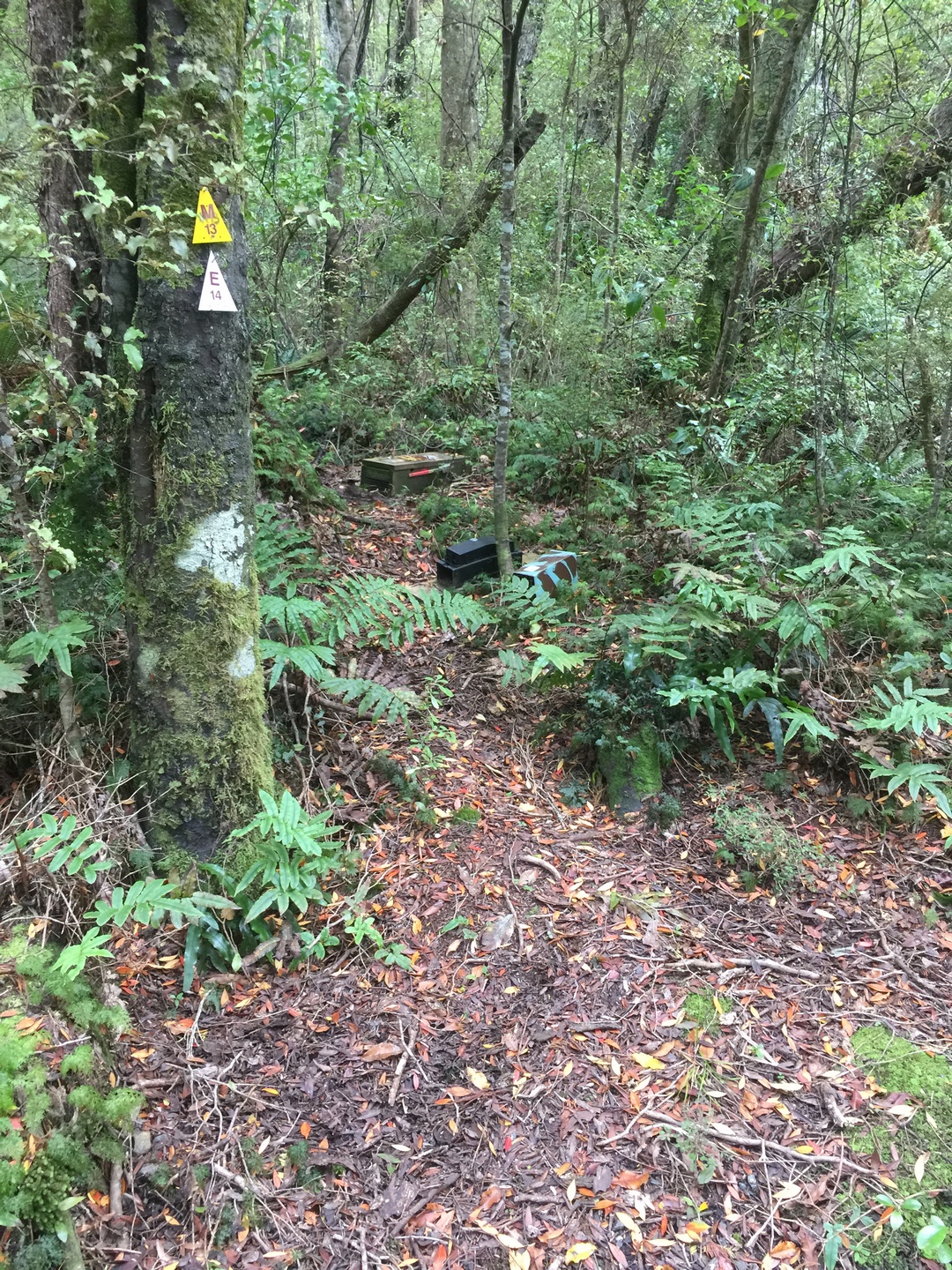
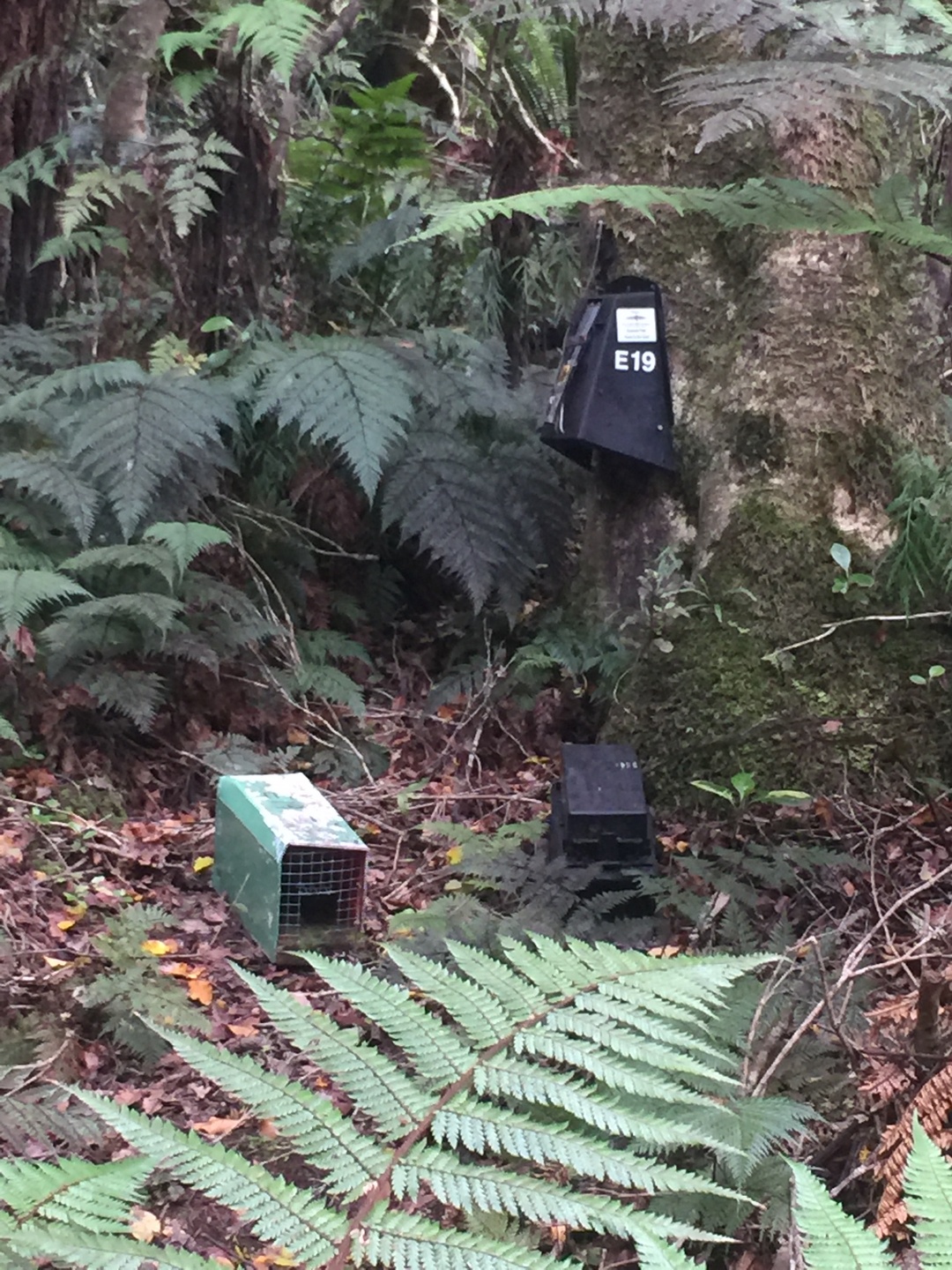
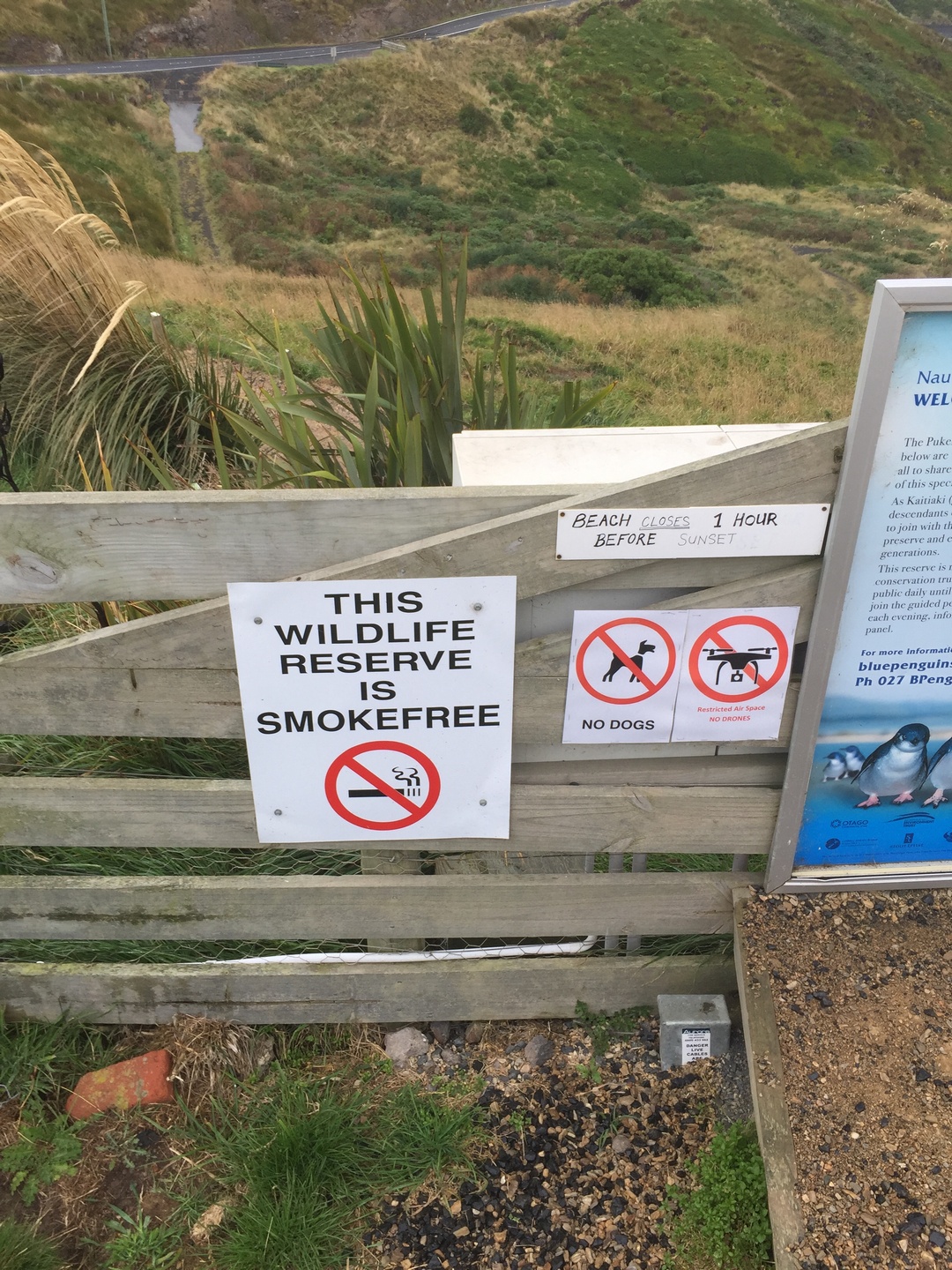
Typisch NZ: geen kosten worden gespaard om een natuurgebied tot zijn recht te laten komen voor de toerist. En allemaal gratis: geen enkel natuurpark is betalend!Je kan maar beter geen (allochtoon) ongedierte zijn in NZ. De jacht is open op opossums, wezels, ratten, wespen. Ook als hond moet je op je tellen letten…Overal langs de wandelpaden kom je de driehoekjes tegen die de vallen locaties aangeven.
Over de wegen en verkeerssituatie:
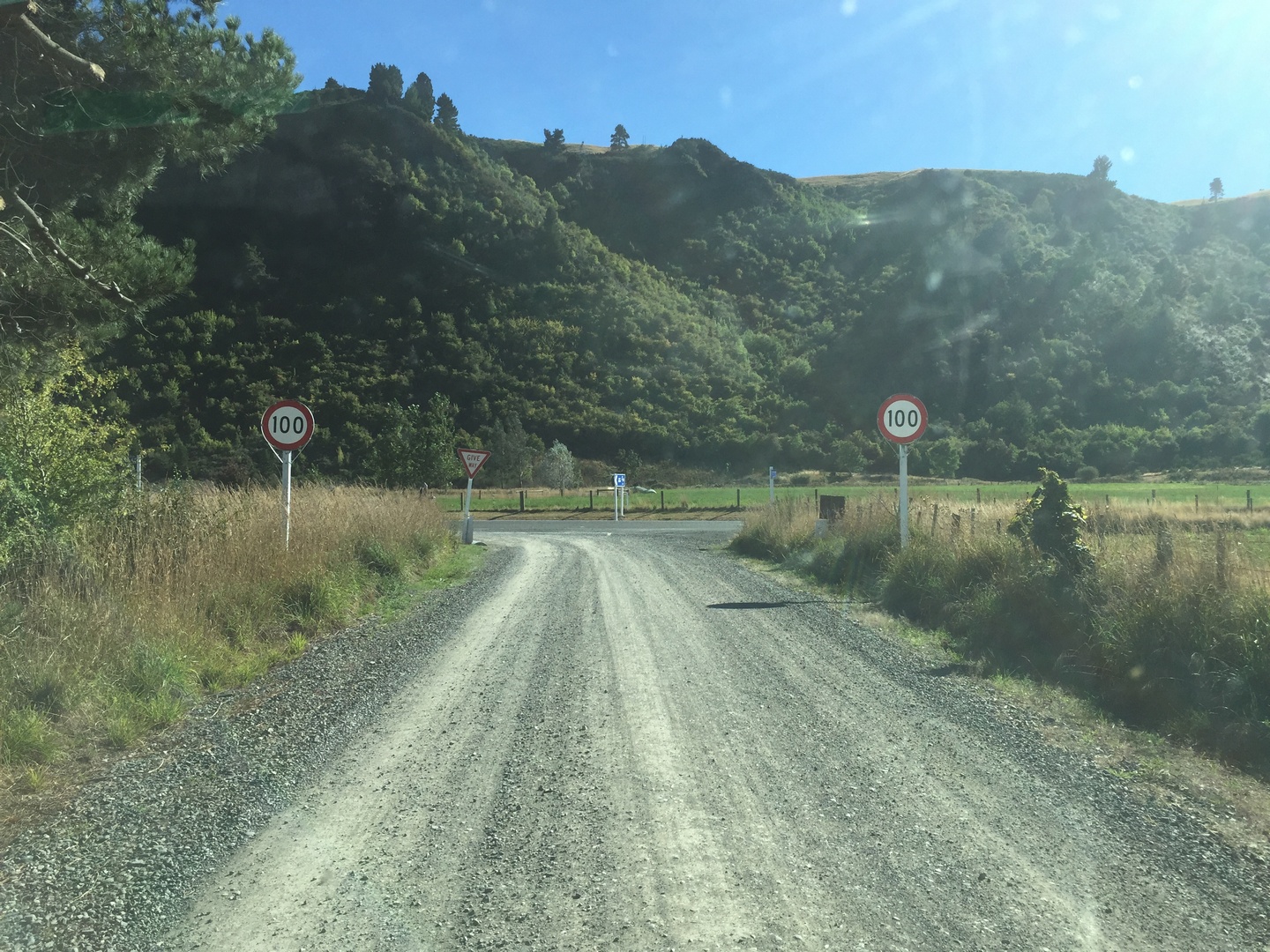
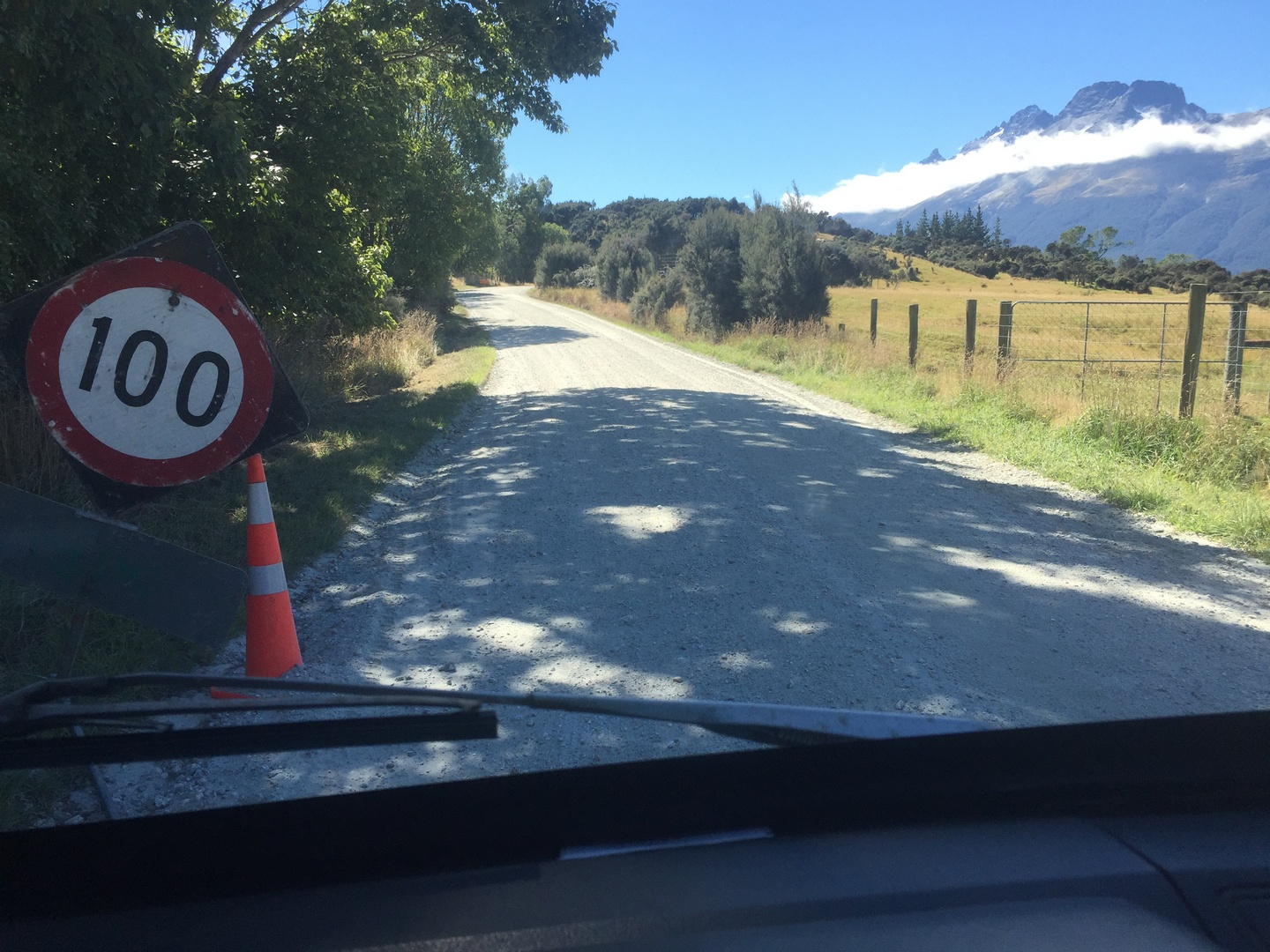
Voor je op de hoofdweg komt geven ze de snelheid van deze laatste aan. Dit is een onverharde weg of ‘metal road’, en zo zijn er nogal wat in de dunbevolkte streken.Ietwat optimistisch? Er gebeuren nogal wat ongevallen op de onverharde wegen vanwege het verlies van controle over het stuur.
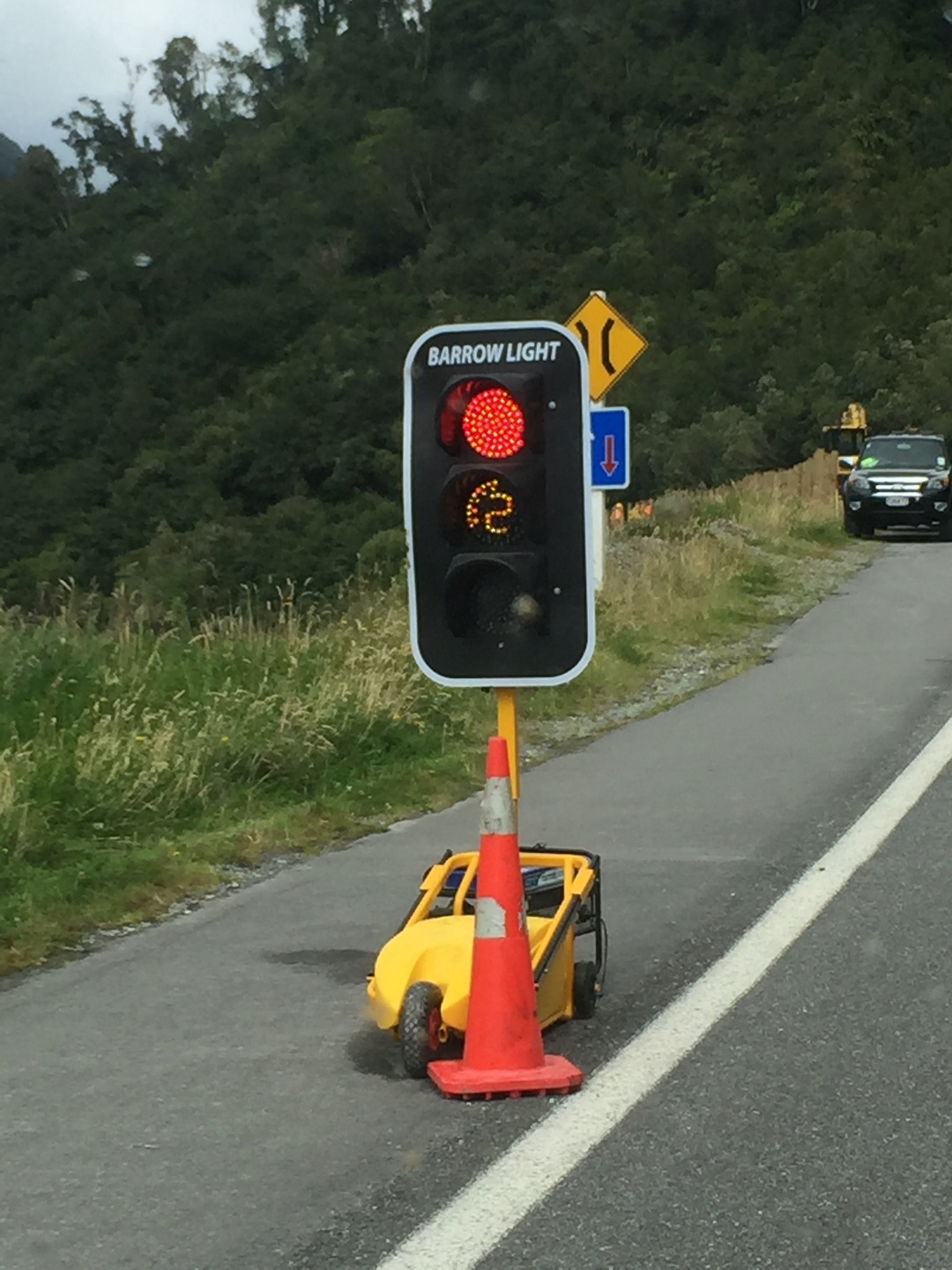
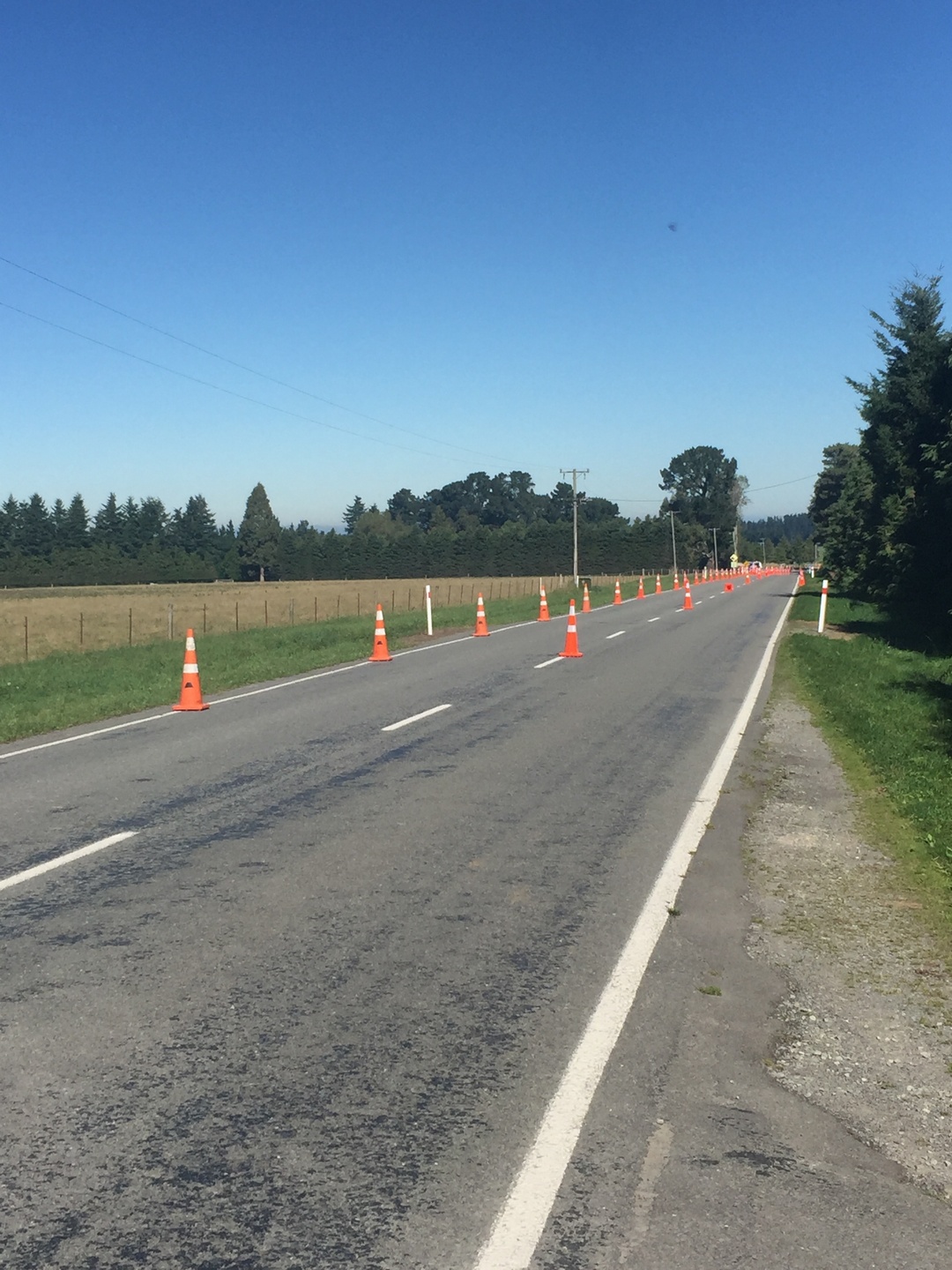
Een leuk idee: zo heb je een gedacht van hoe lang je nog moet wachten tot het licht groen wordt. Overigens is dit de uitzondering, meestal is het een persoon met een tweezijdig bordje STOP/GO. Vanwege de herstellingen aan de wegen na de aardbeving van November hebben we er zo wel veel gezien.Nieuw Zeeland, land van de miljoenen verkeerskegels…Roken wordt hier wel zeer beperkt!
Waarom er op Ilse haar blog postings zoveel mooie foto’s staan:
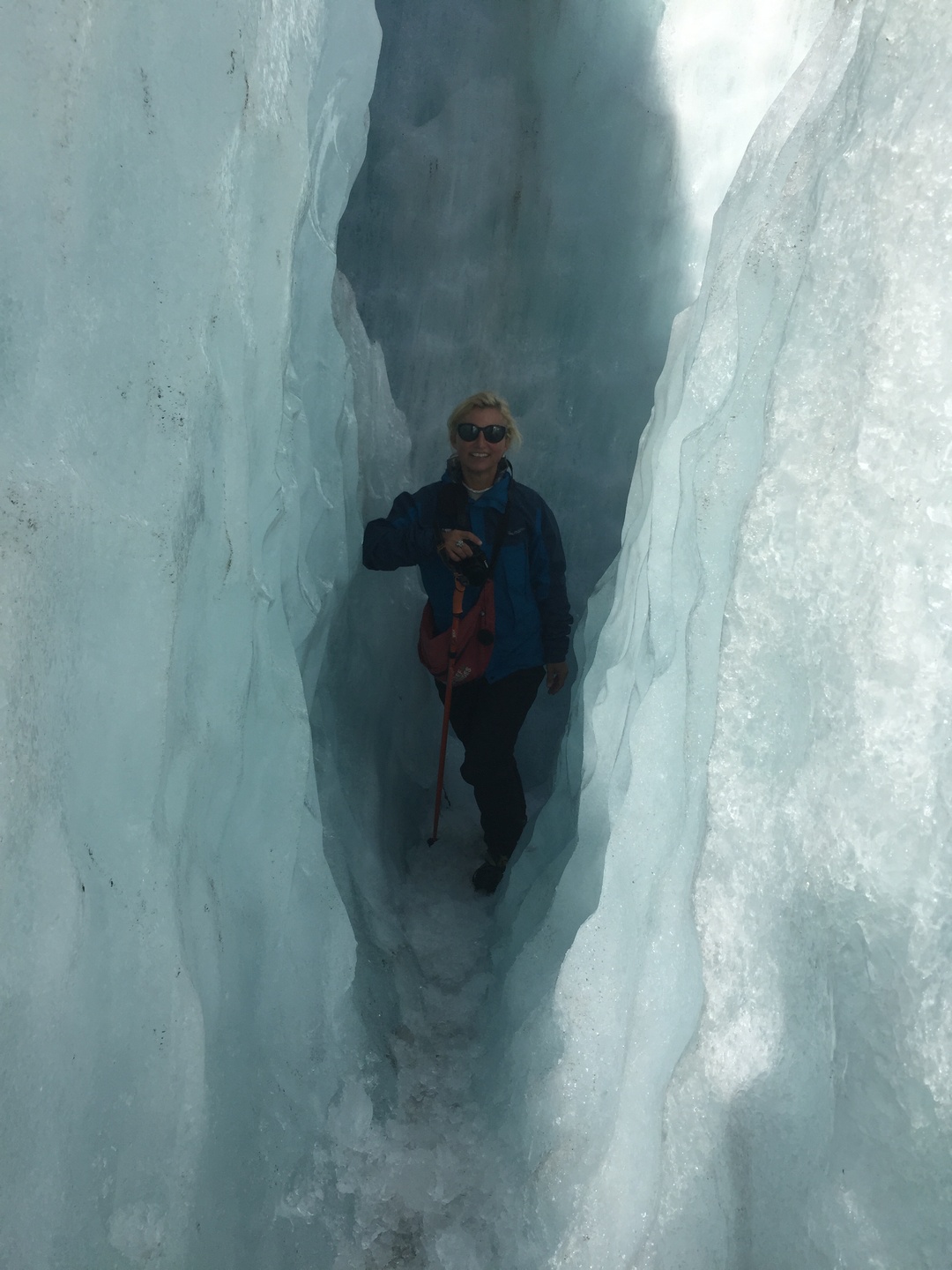
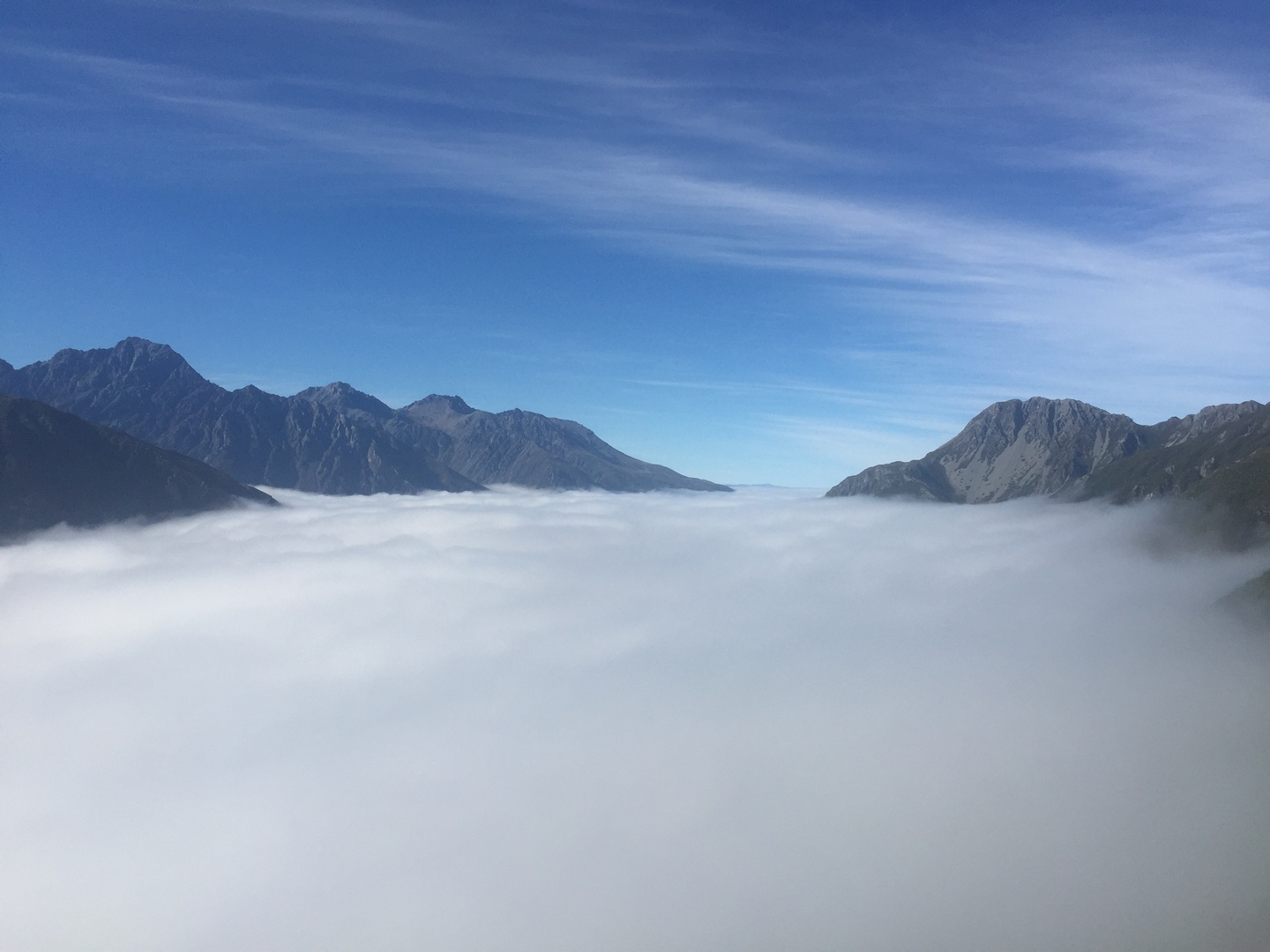
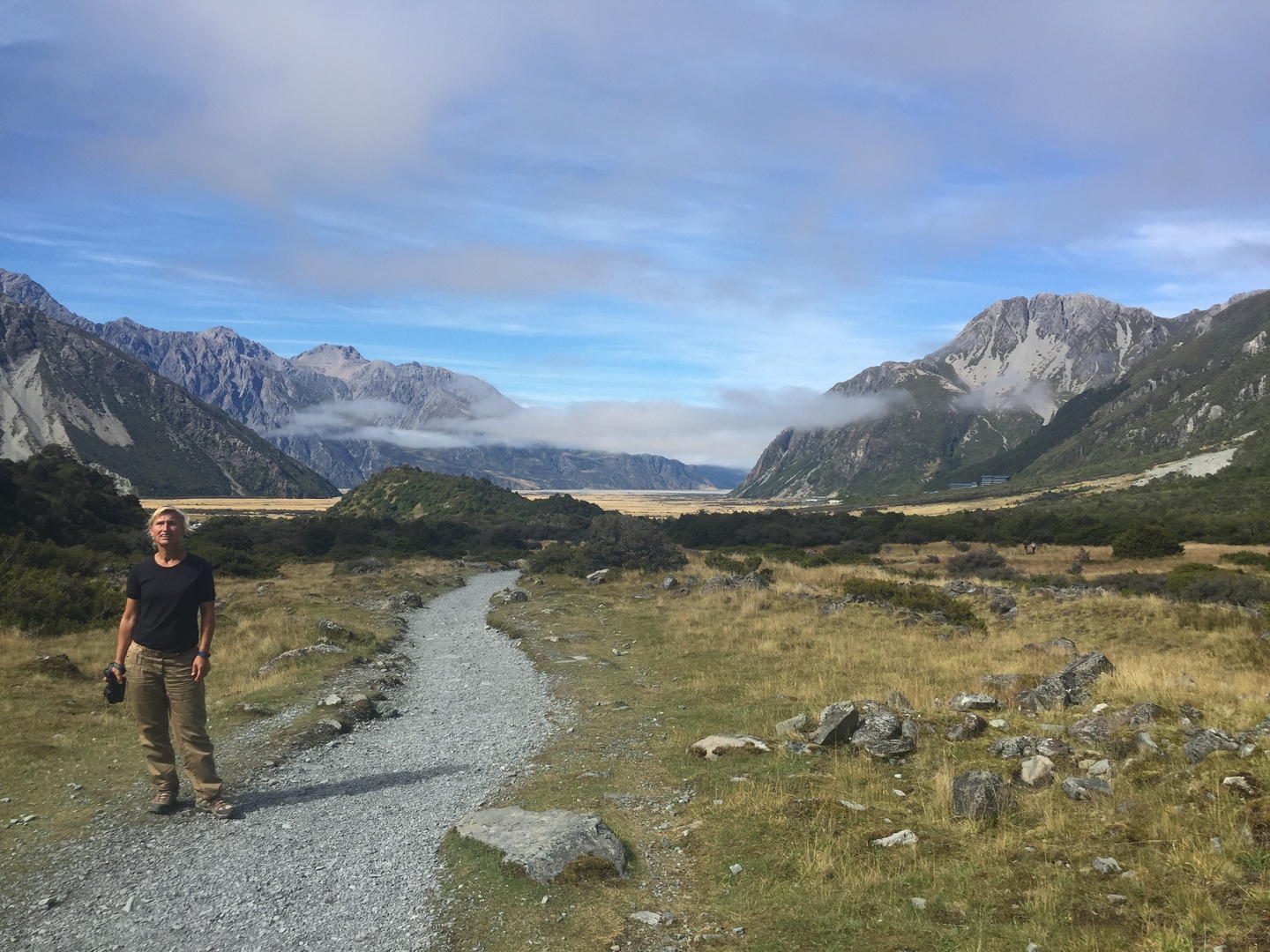
geduld van de fotograaf voor het juiste shotOp een gletsjer wandelen was toch wel een heel speciale ervaringZo moet de vallei er in de ijstijd hebben uitgezien….. en hetzelfde zicht maar dan zonder ijs/wolken
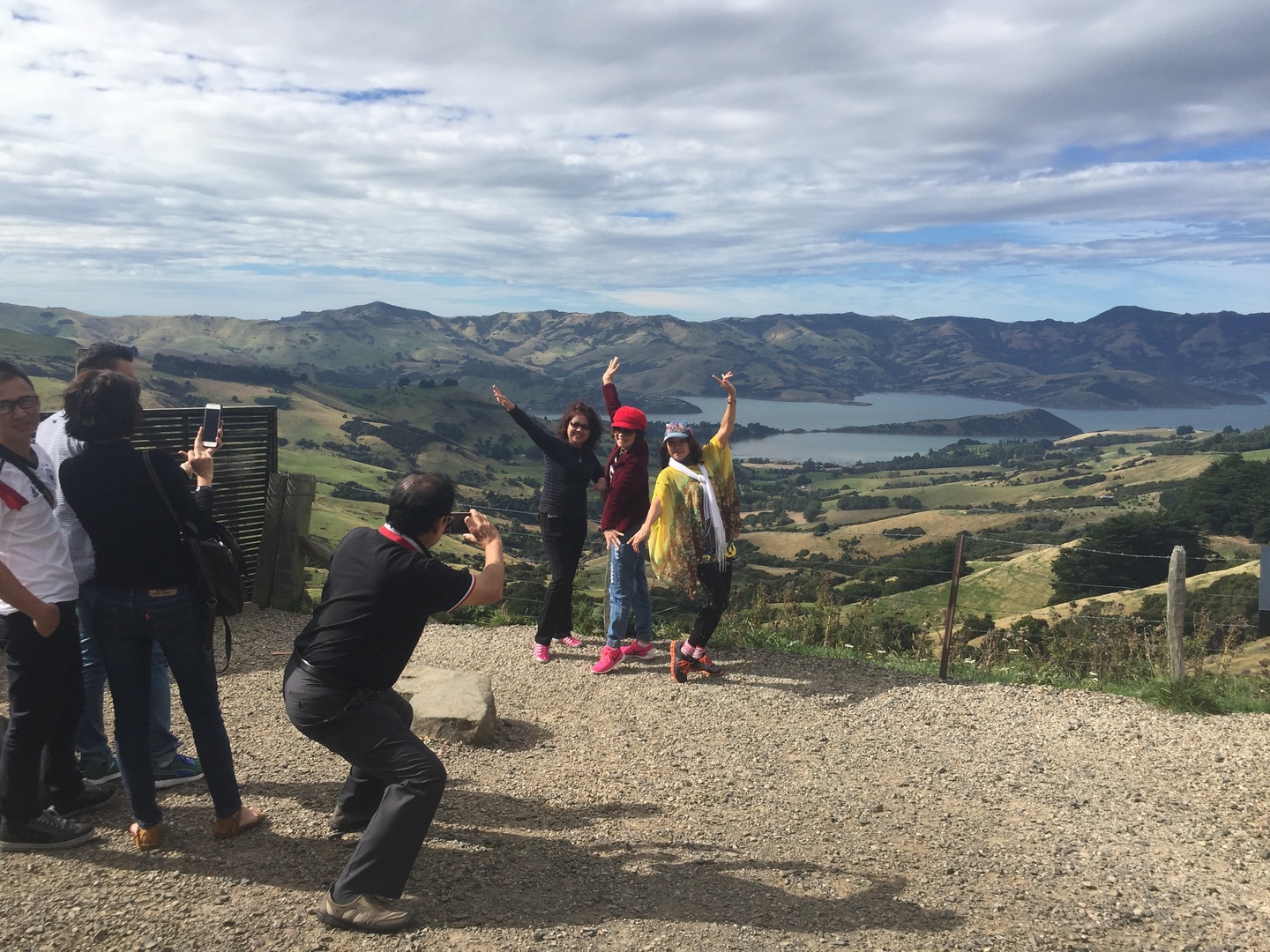
Ik geloof niet dat ik een aziaat een foto heb zien maken waarop ze zelf niet stonden afgebeeld. We hebben zelfs iemand gezien die een heuse garderobe meehad en van kleren wisselde tussen de shots!
Over de menselijke invloed op de natuurgezichten:
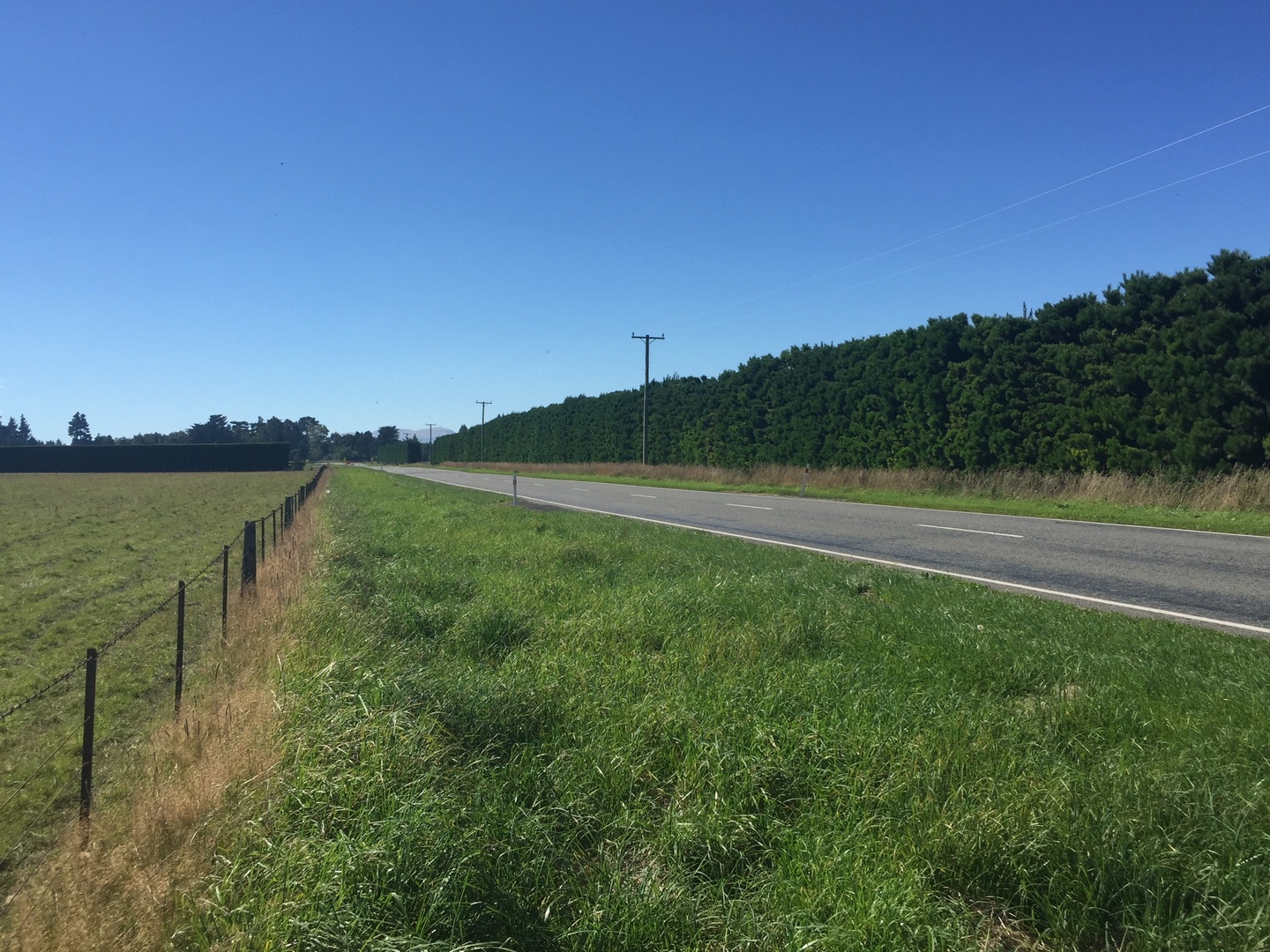
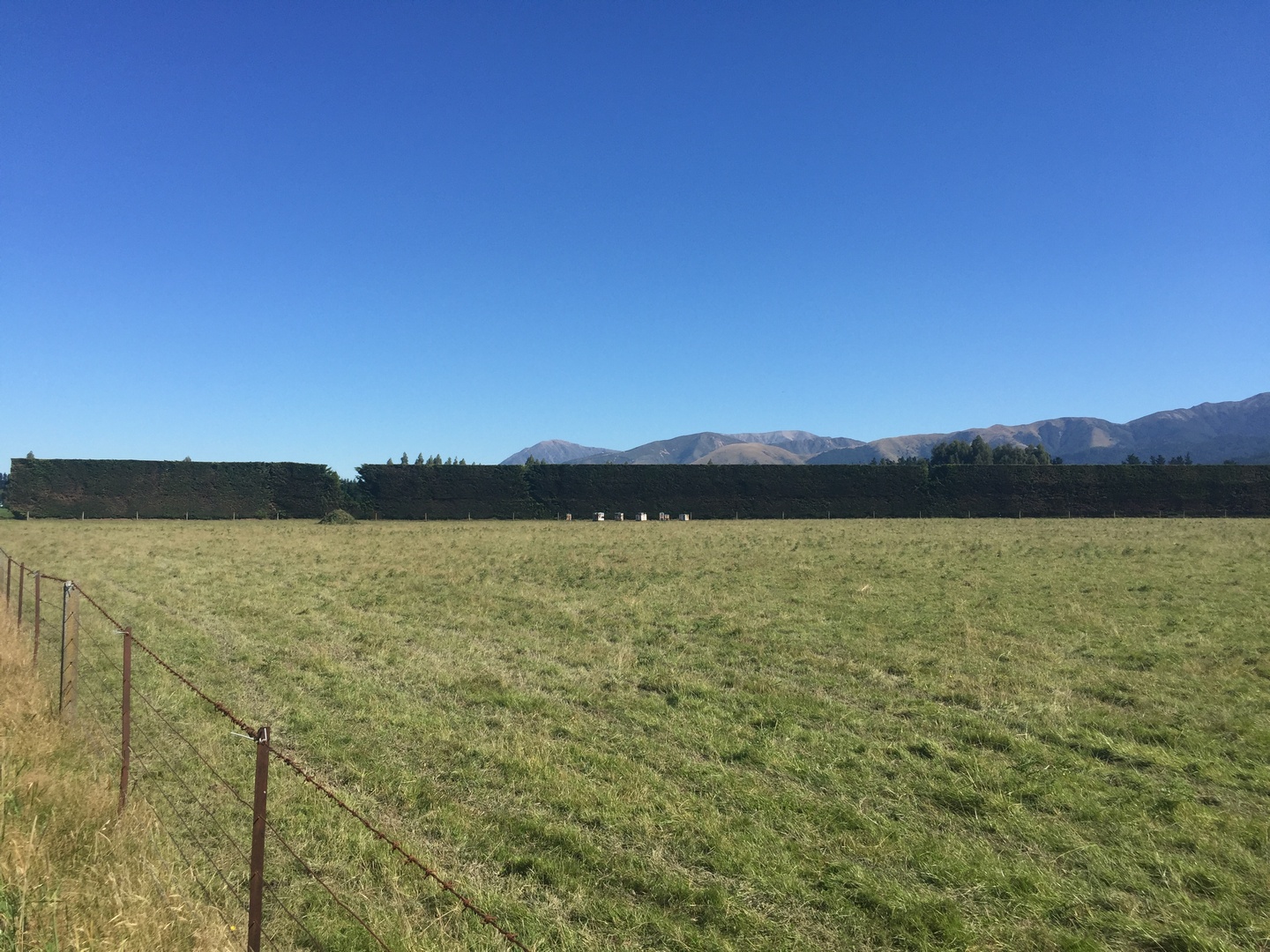
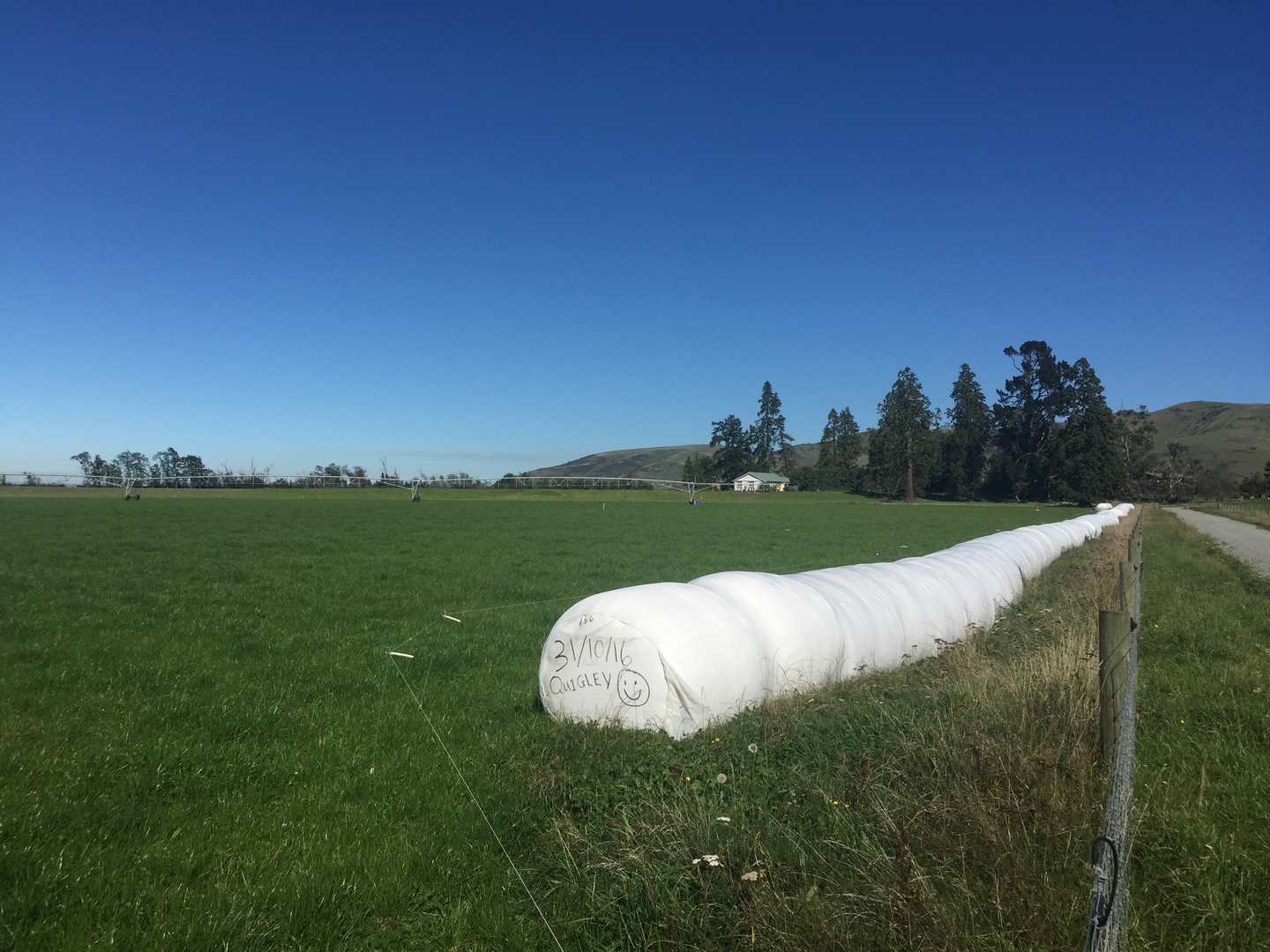
Ze kijken niet op een kilometer haag meer of minder in het zuidelijke eiland. En allemaal geschoren. Ik zweette alleen al bij de gedachte aan het scheren van mijn klimophaag.Nog een haagje. Vooral bedoeld om de wind te breken, niet zozeer tegen de inkijk…Naast de individuele verpakking van strobalen was ook deze worst varieteit heel populair. We hebben alle kleuren van verpakkingsplastiek gezien: roze, lichtblauw, wit, felgroen, maar geeneen in kaki kleuren. Een gat in de markt?
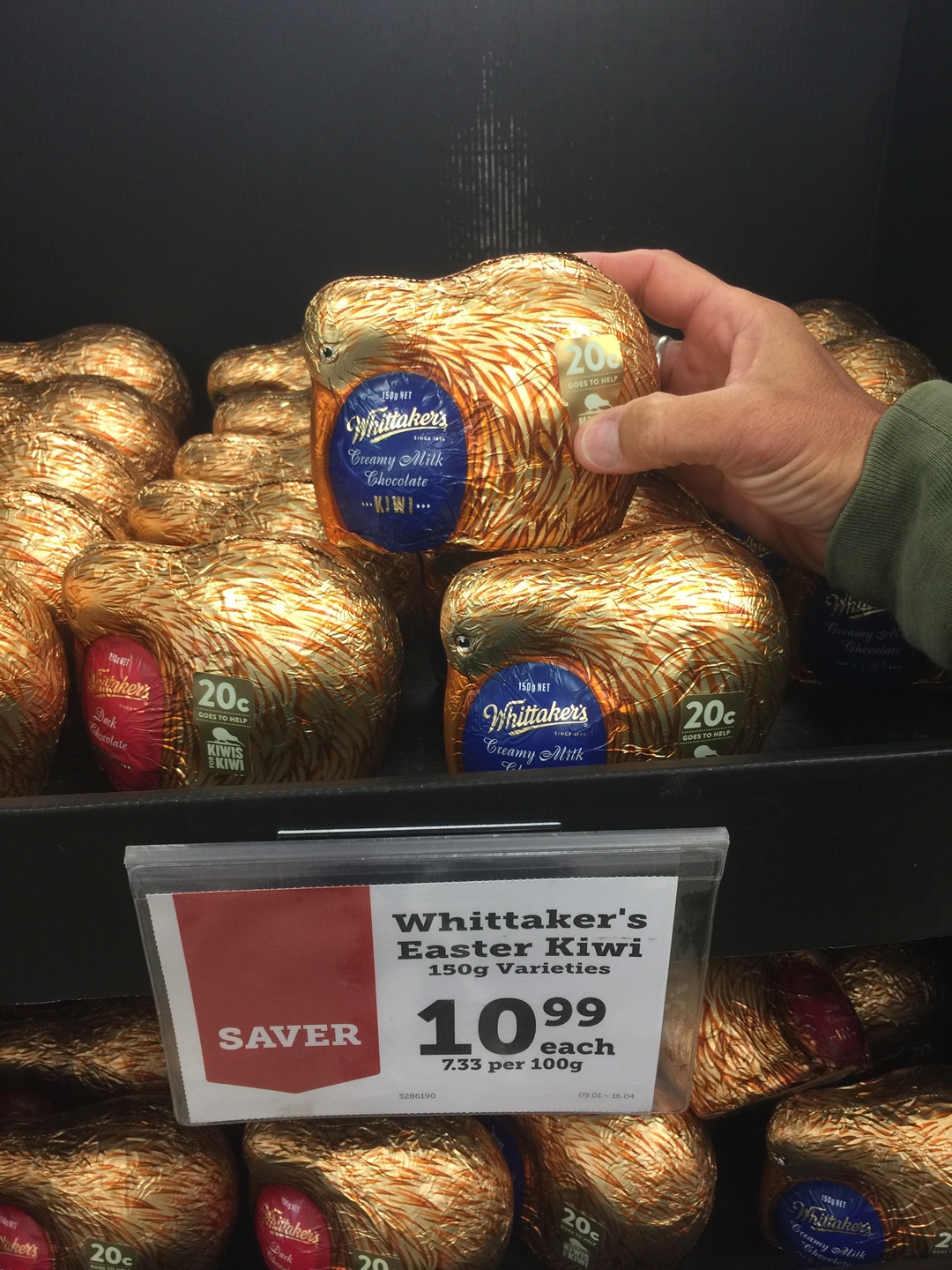
Pasen in Nieuw Zeeland.
De klokken van Rome geraken niet zover dus moet de kiwi het doen.
Over vertrekken:
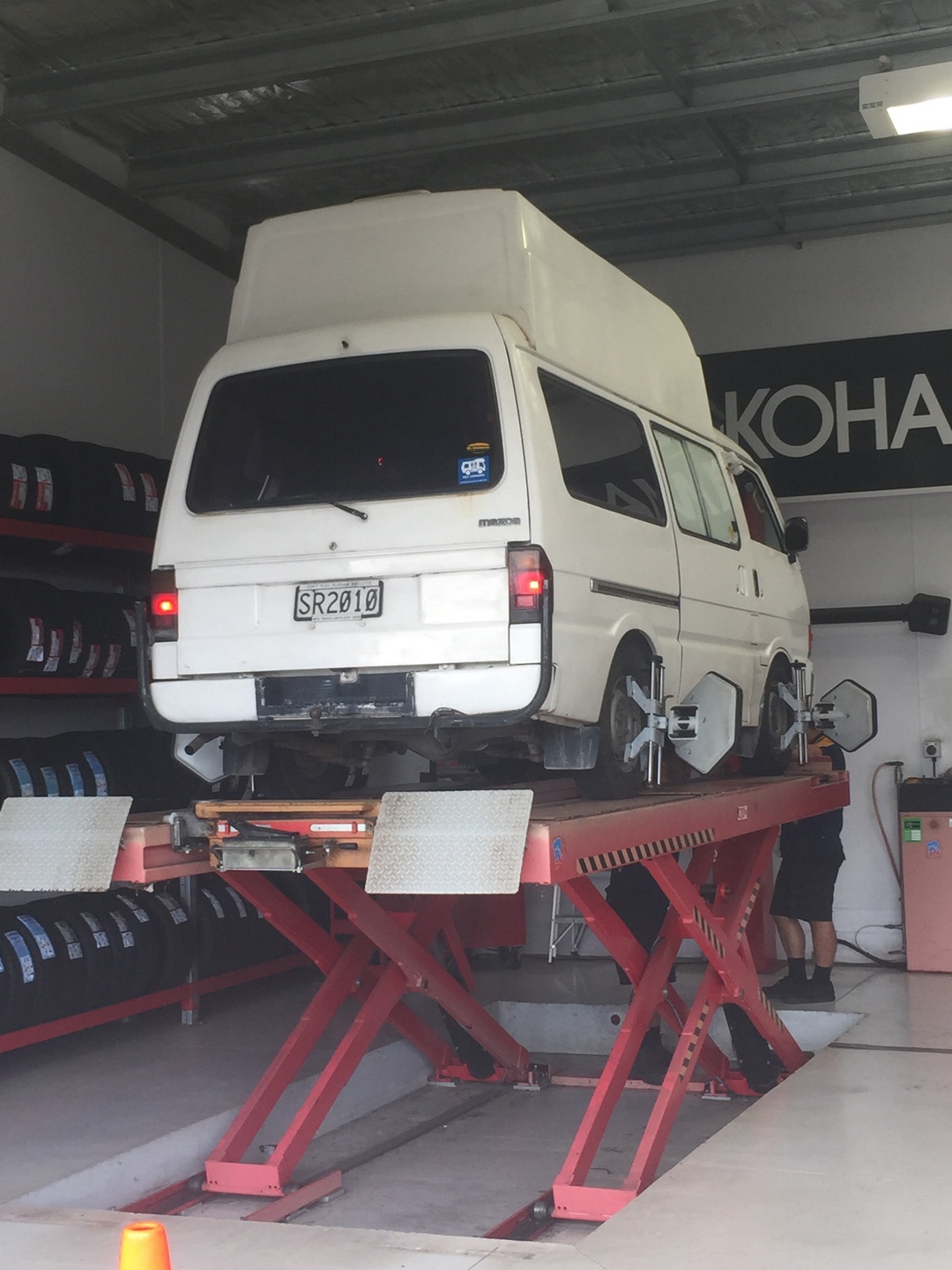
Afscheid van Burnie, we sturen hem de baan op met twee nieuwe banden en een uitlijning. Hopelijk hebben de nieuwe eigenaars er evenveel genot van als wij.
Over Christchurch of ChCh
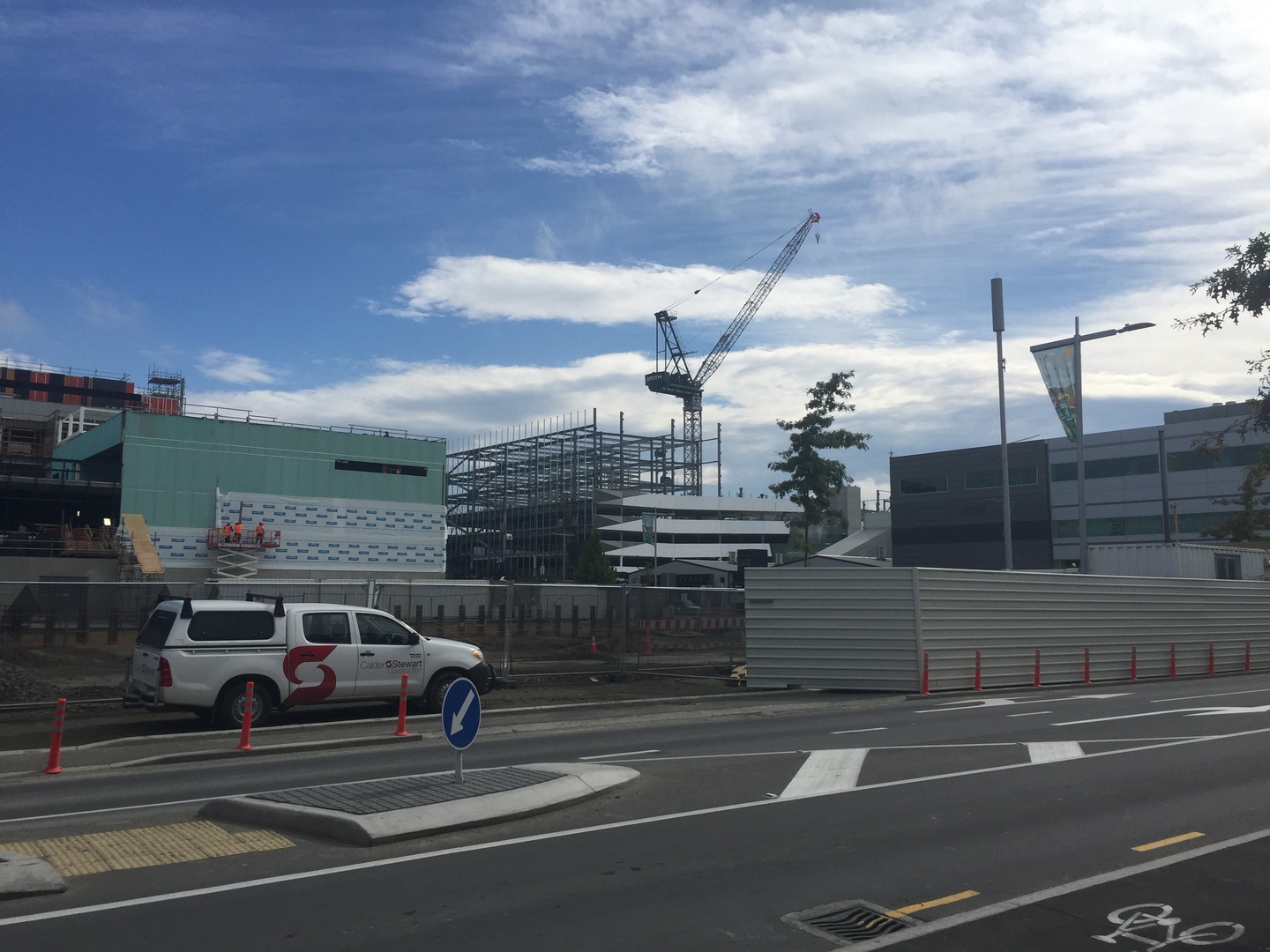
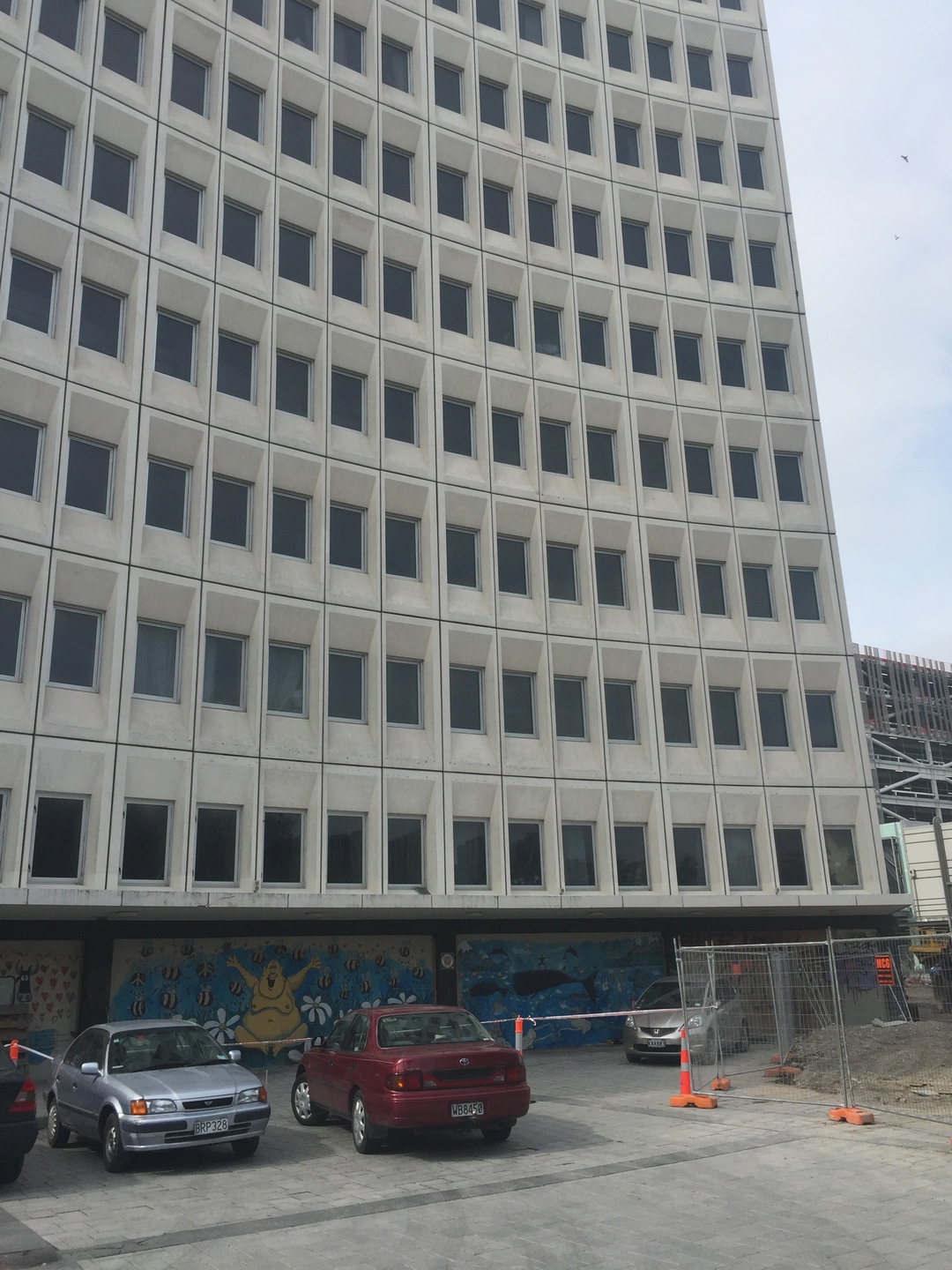
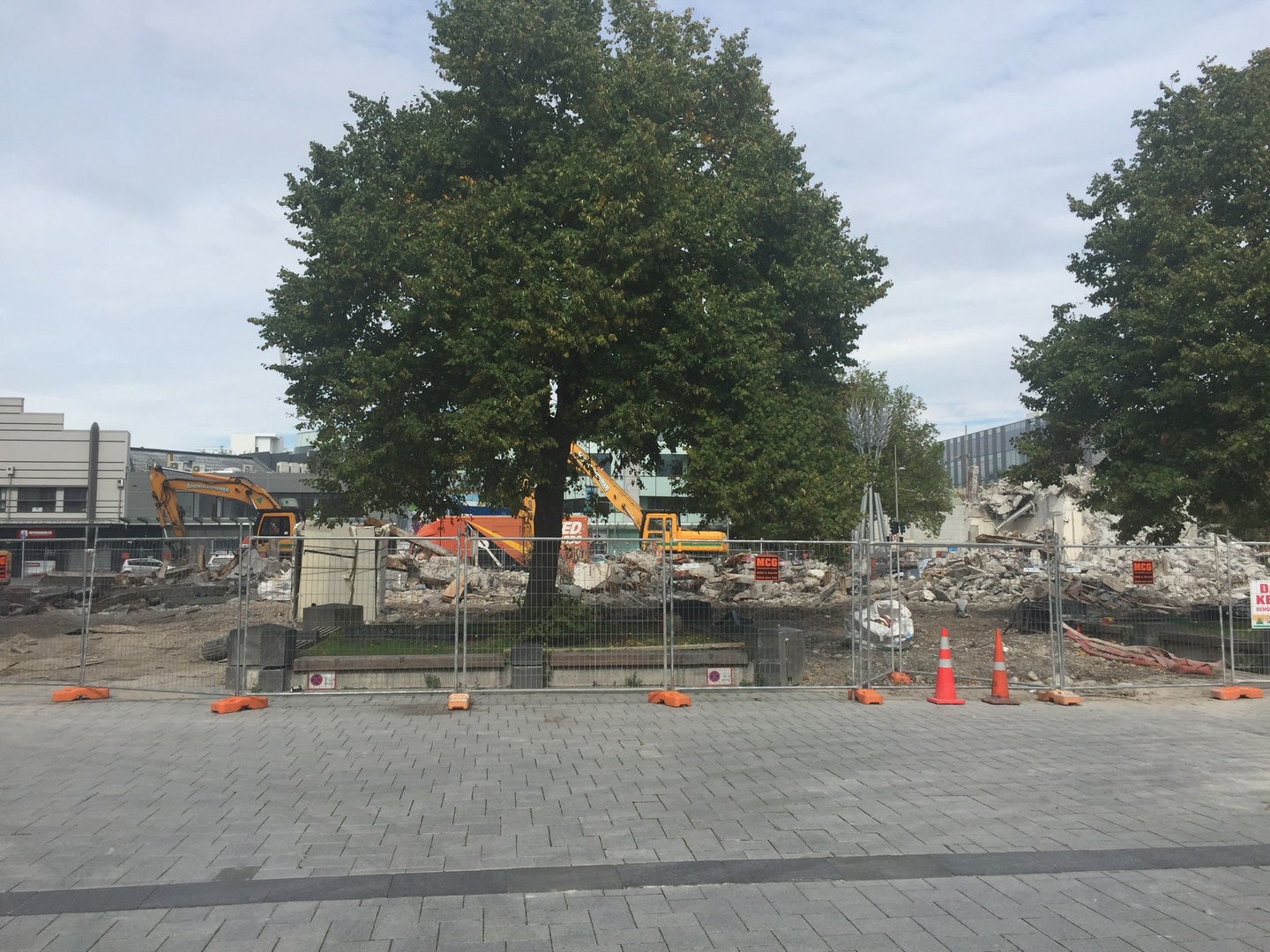
Na de aardbeving van 2011 wordt er nog steeds duchtig gebouwd……. maar het is verassend te zien dat er nog zoveel gebouwen moeten afgebroken worden.Overal zie je bulldozers en kranen die puin weghalen. Ongeveer 70% van de binnenstad is ofwel parking of wacht op sloop. Toch verrijst er ook veel nieuwbouw.
Uitsmijter:
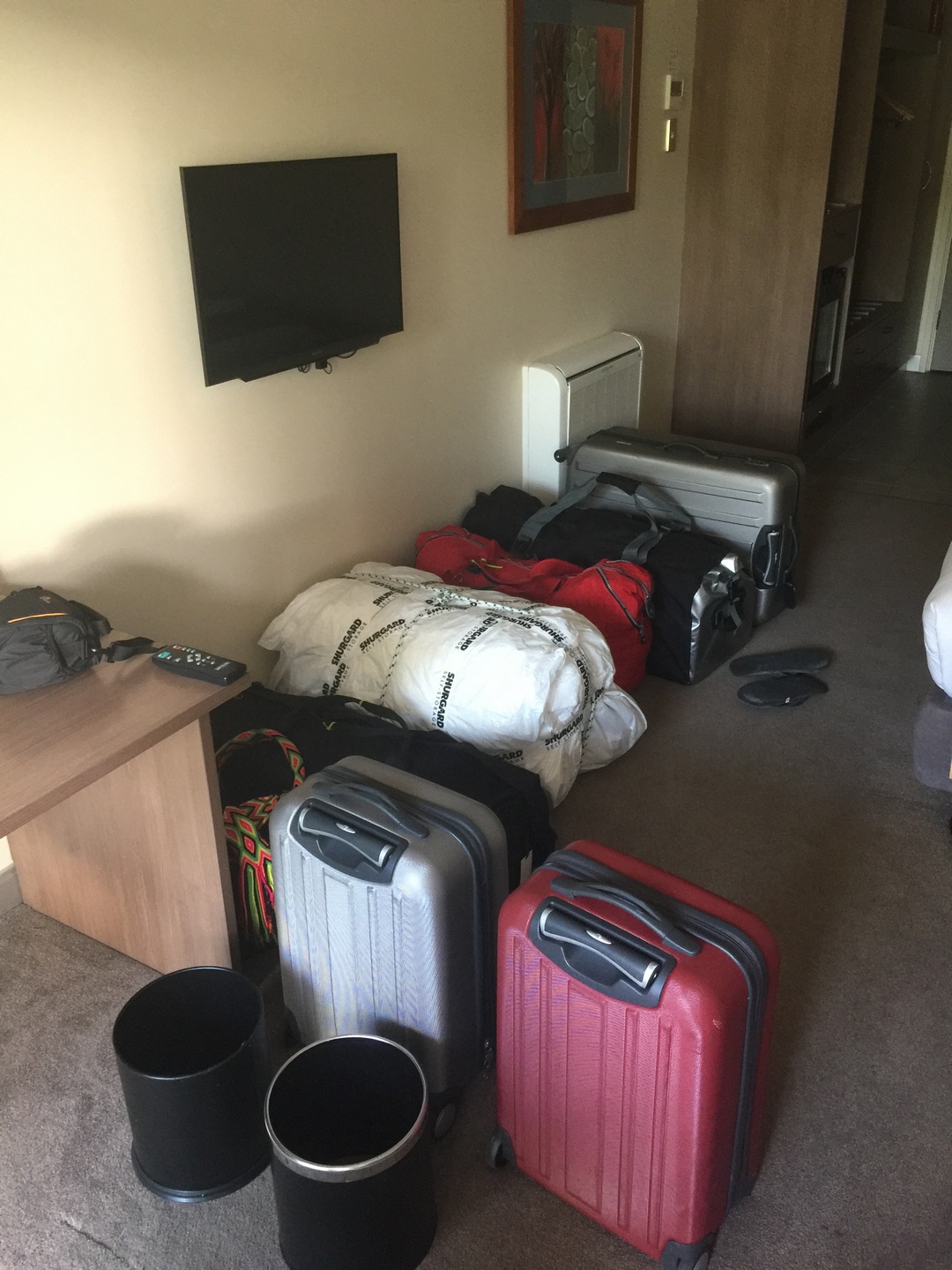
Morgen op het vliegtuig naar Tahiti, terug naar Sanuk. De valiezen zijn gepakt…
Here are some tips that I have found that will be useful for anyone traveling in New Zealand for longer than 2 weeks
trademe.co.nz is the site to sell/buy almost anything, including campervans. Just remember that you need a new zealand address to sell anything, and a new zealand address to reply to any listed add. (Any address will do, like a AirBnB or a backpackers hotel). Therefore it pays to put your email and phone number in the ad text itself when you are selling something.
If you travel a longer period, say over a month, it pays to buy a vehicle and then sell it again at the end of the stay instead of renting one. If you are going to be staying long, and you are say over 30, you will appreciate the possibility of standing upright in the van, or of cooking inside. The trick is to buy low and sell high 😉 As the camping seasons progress towards April, it becomes harder to sell the vehicle because there is less demand. The season starts around december.
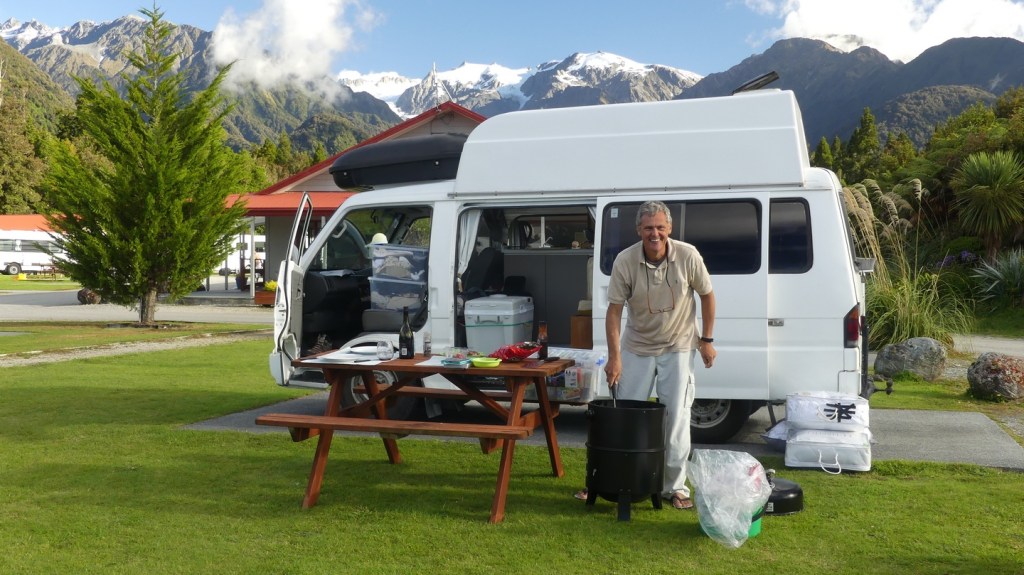
If possible, get a self contained vehicle. This allows you to freedom camp, and check in to a holiday camp when you deem it necessary (showers!). We found that almost nobody with a small campervan uses the portable toilets such as these:
but instead finds a free campsite with a toilet. These sites are almost always for self contained vehicles only.
When you buy a used vehicle, the buyer can buy it on condition of an inspection. This is a very good idea, even if it costs 159NZD at AA, because it will be a very strong bargaining tool. I compare it with going with an 80 year old to the doctor for a complete evaluation: Hm, the knees are weak and near the end of their functional lifetime, the hip needs replacement, the eyesight is only 50%, …. The final sale price will reflect some of these problems, or have them repaired by the seller. Or you may not buy the car at all. (Did I report that we did not do an inspection when we bought Burnie, but had one done when we sold him?)
The north island is warmer than the south island. So depending on the time of year, you may explore first the North or the south island. If you only have a limited time, then I prefer the scenery of the south island. Queenstown is an ideal basis for exploring the majority of sights to see in the south island, but of course it is better to just drive around and do all the sights…
Get the free campermate app available for iphone and android. It lists all the campsites, point of interest and much much more. Read the comments left by the users, it clarifies a lot and gives up- to-date info. I have been told that there is a similar app from the nzmca. The disadvantage is that everyone with the app will tend to visit the same places, but that does not weigh against the wealth of information that is inside the app, and all of it offline accessible.
Get a good prepaid phone data plan. These tend to fluctuate in value, we had one from The warehouse Mobile that got us up to 3 Gigabyte per month for 12 NZD, but that was no longer available towards the end of our stay. In general, Spark and The Warehouse Mobile have good deals. Spark has wifi booths in many places (they are indicated in the CamperMate app) where you can download 1Gb/day for free.
Use the libraries as a wifi and recharging station. They are open for extended periods, are free and the people are very helpful.
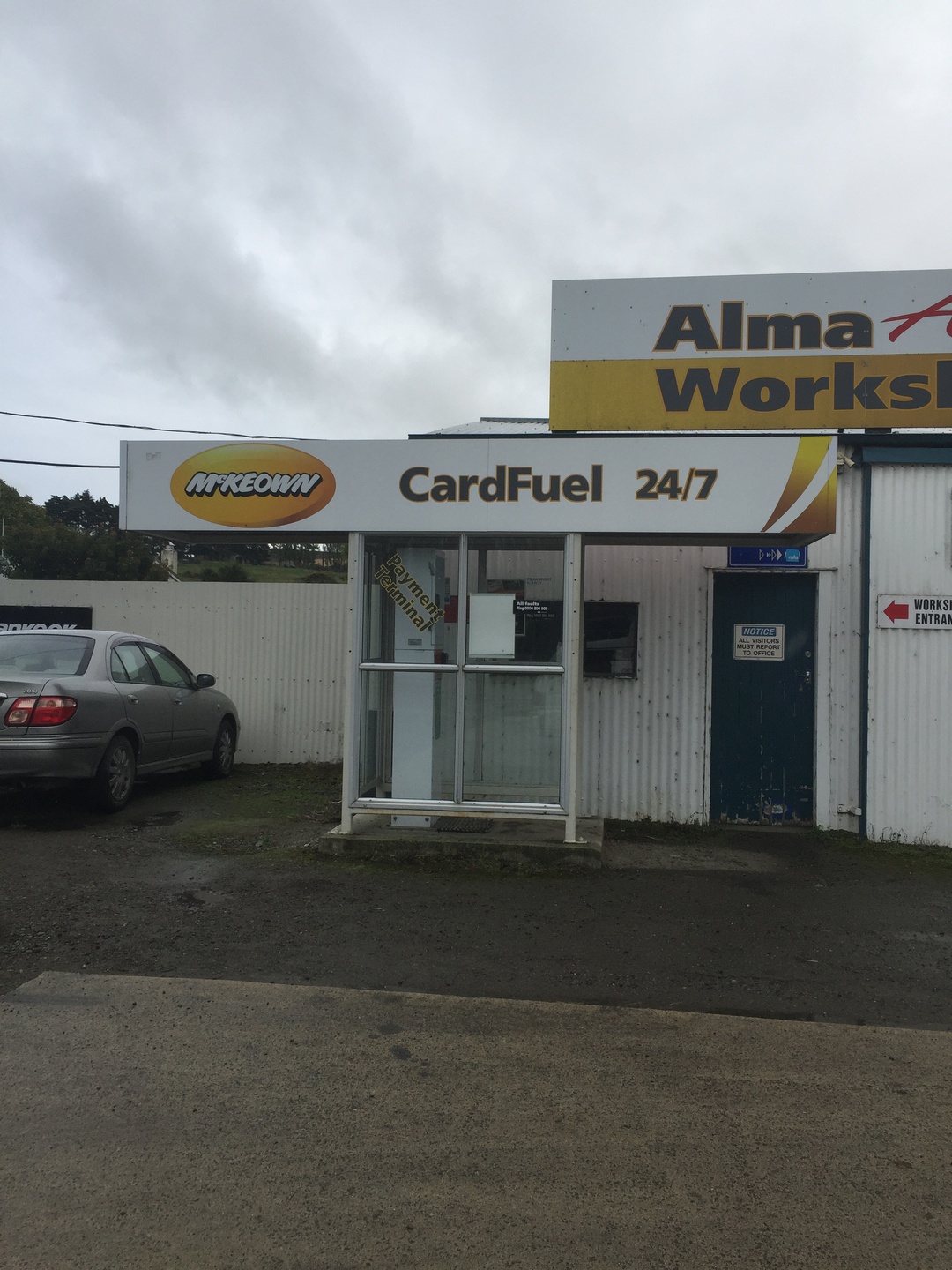
In the south island, here is the best kept secret for saving money: get petrol or diesel at the McKeown stations. They are unmanned credit card stations, but their diesel was 1.009 dollar, when the caltex next door was 1,309 NZD! Many kiwi’s do not know about this, don’t ask me why. They have an app also that works offline. They are affiliated with Caltex, but forget those, they are the same price as everybody else, and play the “today 6 cents off” if you have a AA card (see my previous blog rant about this) . The app is only available in the Apple NZ store but since it does not cost anything, there is a way to become a member of the NZ store without a NZ credit card, here is how. There are enough McKeown gasstations in the south island that you can usually find one near to where you are. There are some non covered areas, and for that you will need to look at the next tip.
Now that you are a member of the NZ app store, you need to download another necessary item: Gaspy (Gas-Spy). It allows you to search for the cheapest gas station in a radius around you. It is necessary in the North island where there are no McKeowns. This app does not work offline, so you need mobile data.
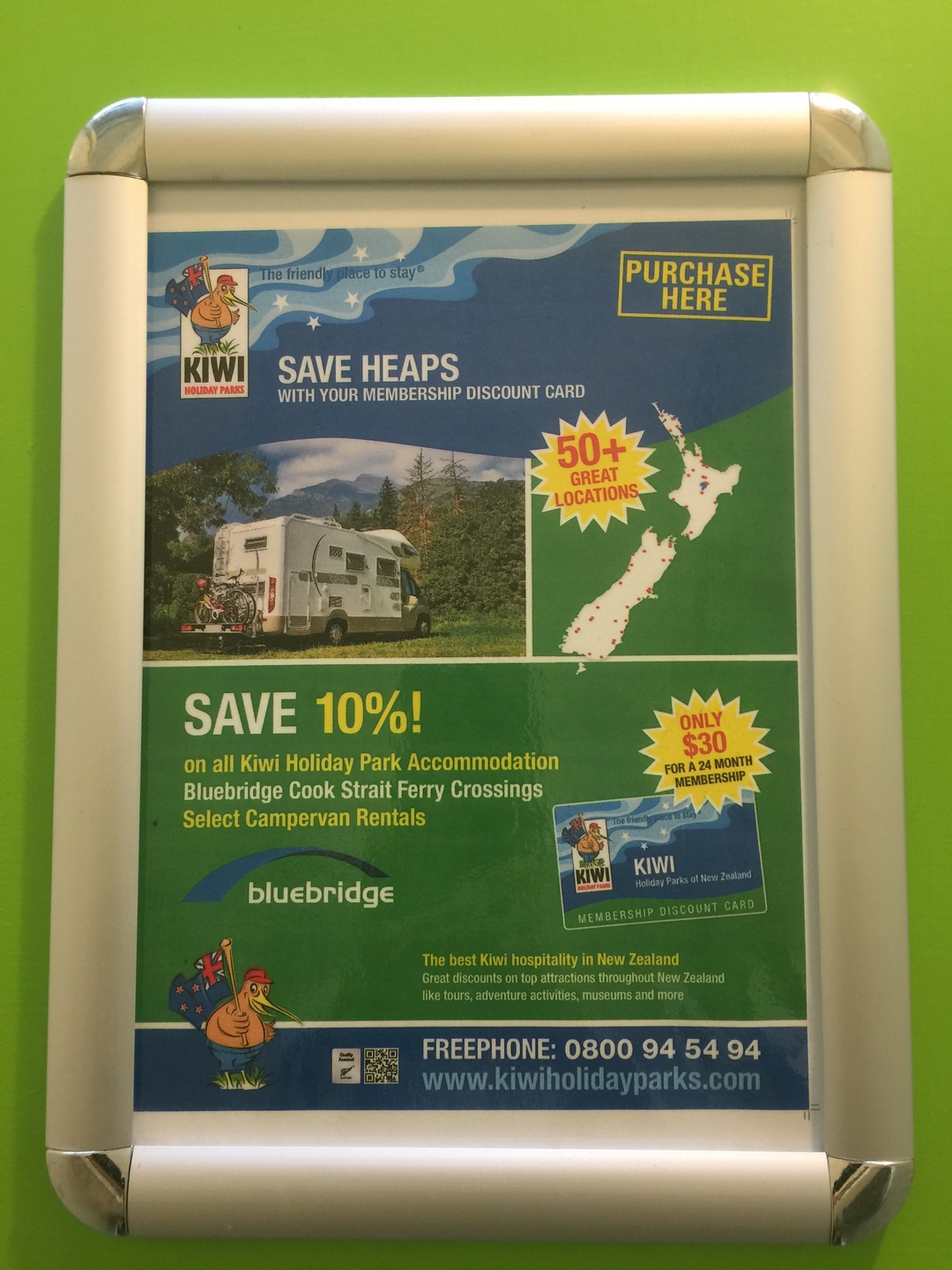
If you cross the channel between the North and South island with your van, it may pay to get a card from one of the two camper places: Top 10 Holiday Parks, or Kiwi Holiday parks. They each are good for 10% off on the ferry. For Top 10 parks, you get 10% off your stay at the park, extra wifi and price reductions at local businesses. It costs 49 NZD. The Kiwi holiday park card is 30NZD and gives similar discounts. If you stay every 3 to 4 days in a holiday park like we did, either card pays for itself. Also both cards are valid for two years and are also accepted in Australia by associated members. More here and here
Get the customer cards to save on buying food in the foodstores. The big ones are Countdown, New World, Pak ‘n Save (no card) and then the smaller Four Square (no card). They have all incredible opening hours, usually till 9pm or later, every day! They all still throw plastic bags at you like the is not enough plastic in the world already, except Pak ‘n Save.
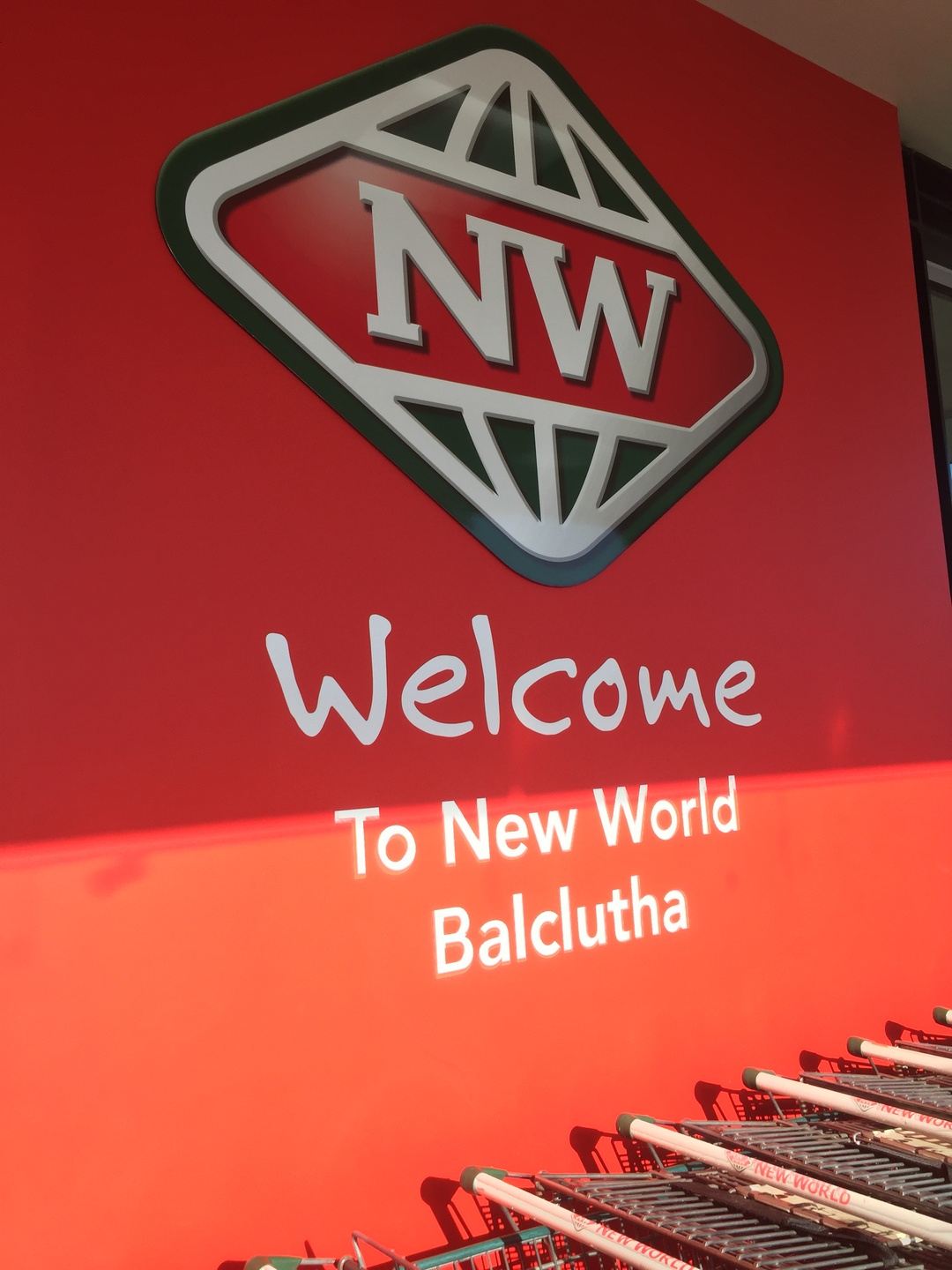
Yes, there is such a place as Balclutha
A tip about avoiding driving on the wrong side of the road, the reason for up to 30% of accidents in NZ: The driver always sits closest to the middle of the road. I found that once you are on your way (on the correct side of the road), there are few opportunities to make mistakes. There are plenty of signs that help you conquer difficult situations such as roundabouts. The problem is starting off correct after a stop.
Learn to understand how Kiwi’s drive. They drive quite different from European drivers. For example, they do not want to overtake you unless they have a clear line of sight of about a kilometer. Even if you slow down to like 40, with nobody coming from the opposite direction, some will still stay behind you. Luckily there are many passing lanes where the road goes from 2 to 3 lanes for a kilometer or so. In contrast, the trucks always drive at their limit which is 90km/hour no matter what the conditions are. They are not hesitant to overtake.
Be carefull with single lane bridges, they occur frequently even on relatively busy highways:
(Ilse is filming, but at the end is so occupied with the encounter that we do not get the subject on video. I think he was European because he insisted that we parked on the right hand side of the road to let him pass….)
April 15th, Auckland, Burnie is sold to a young french couple who are travelling for 2 months in NZ as part of their 1 year sabbatical. We hope they have as much fun as we did. We rented a little van for the remaining 6 days we are here to travel a bit on the north island.
After the glaciers (Franz Josef and Fox) we drove Burnie to Wanaka over the pass
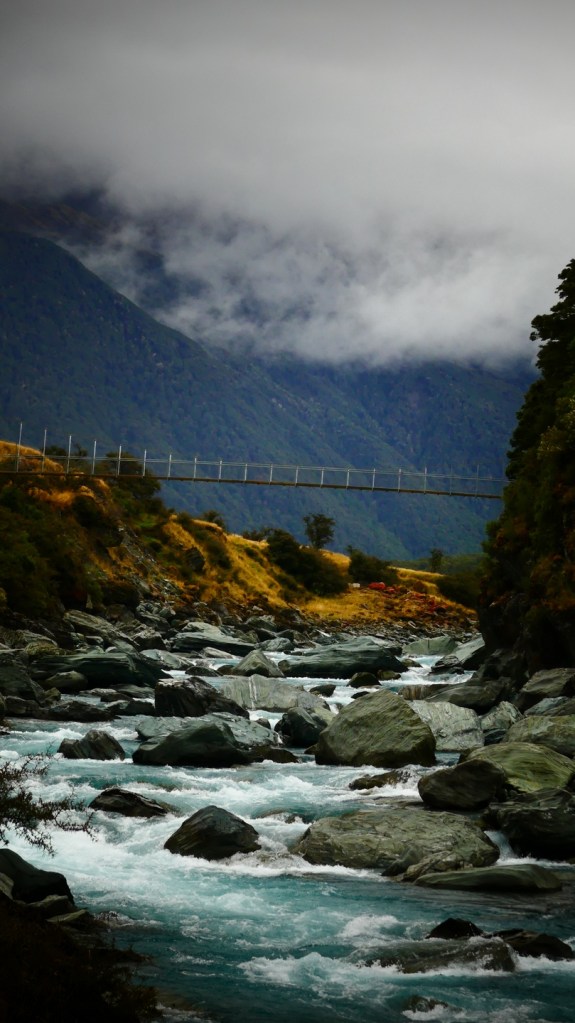
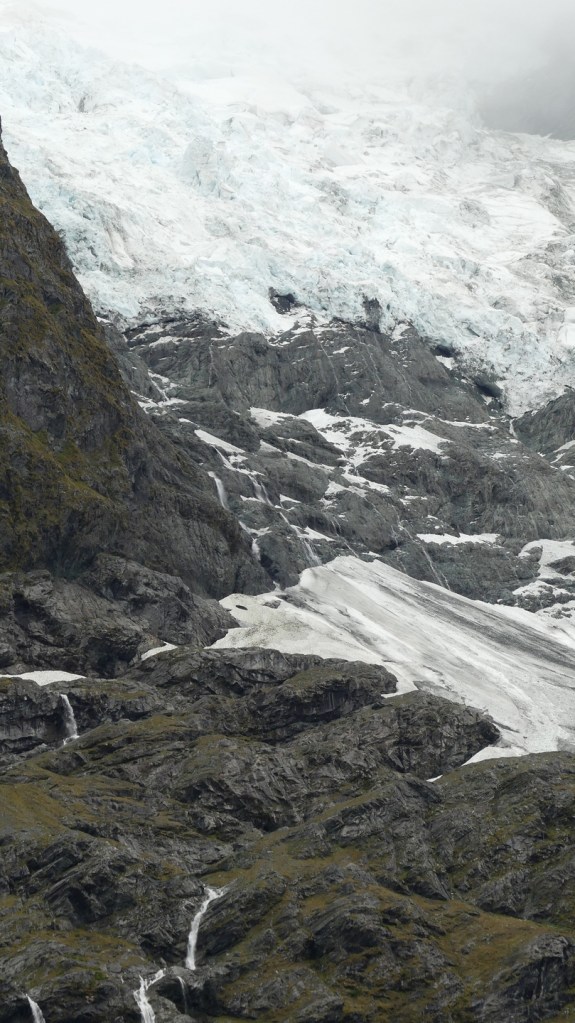
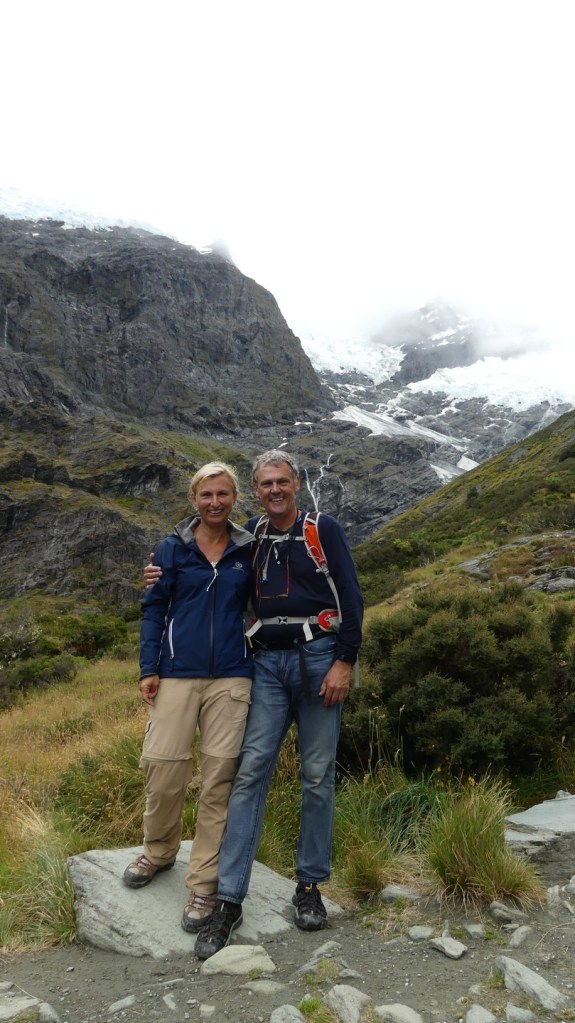
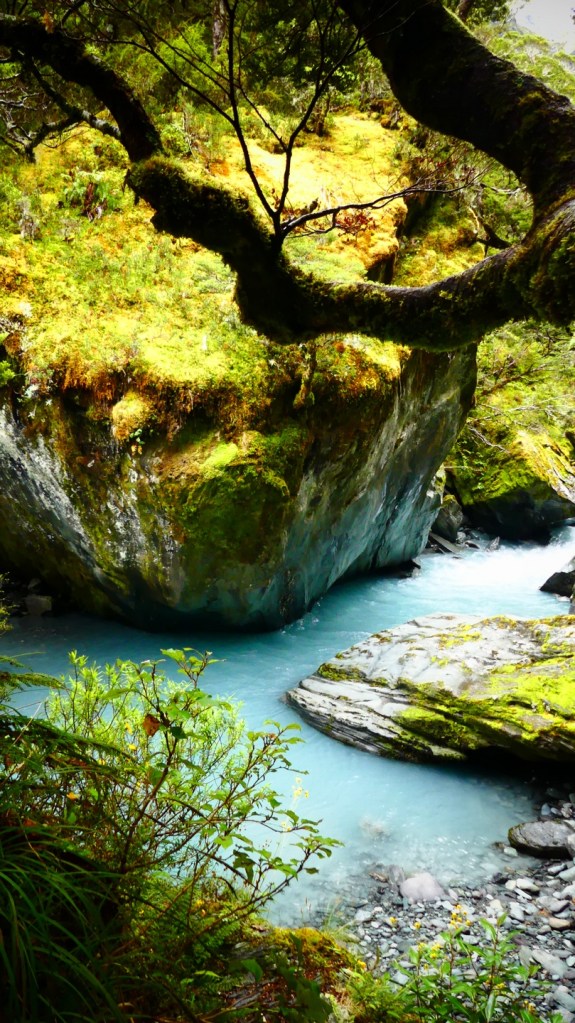
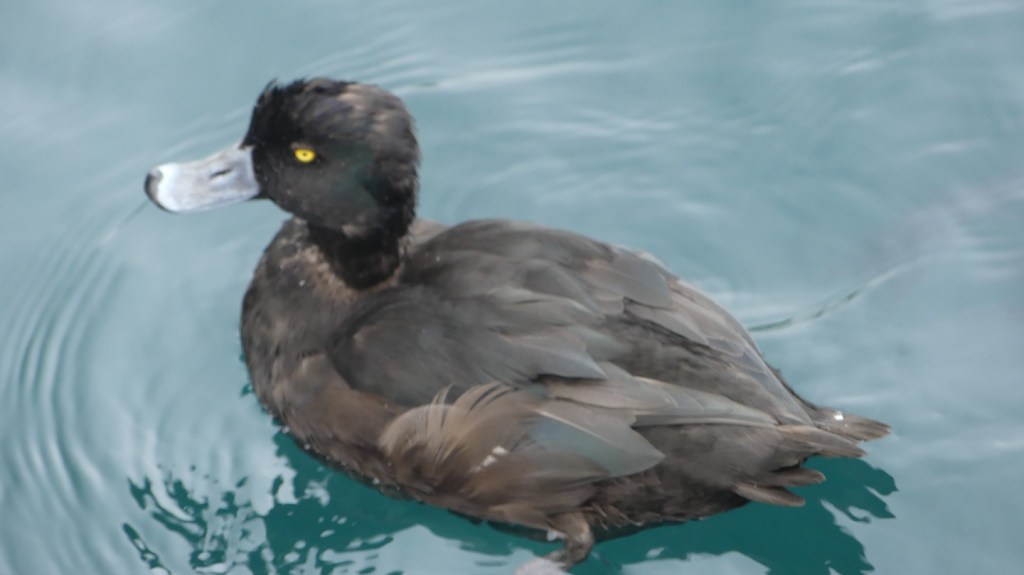
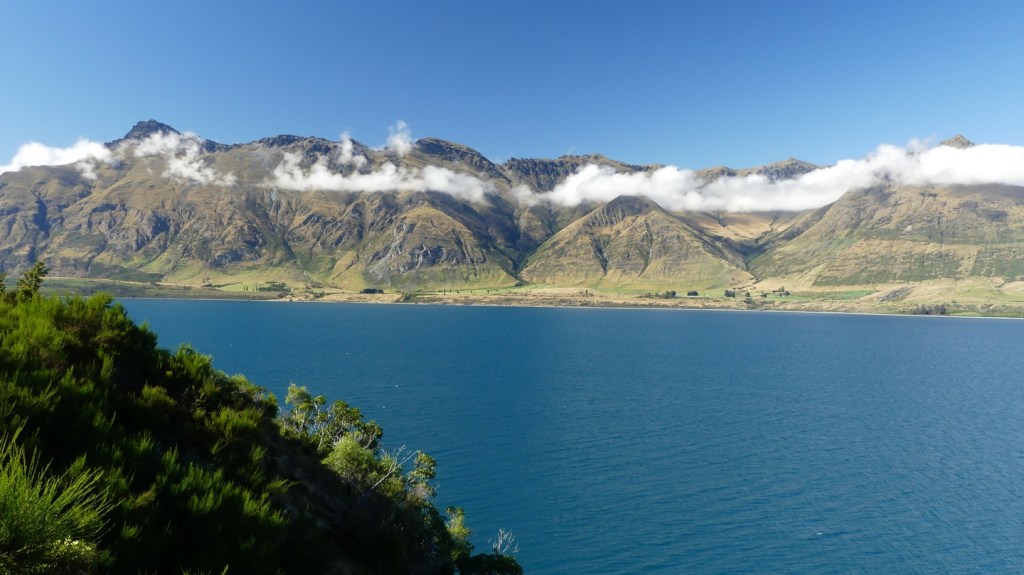
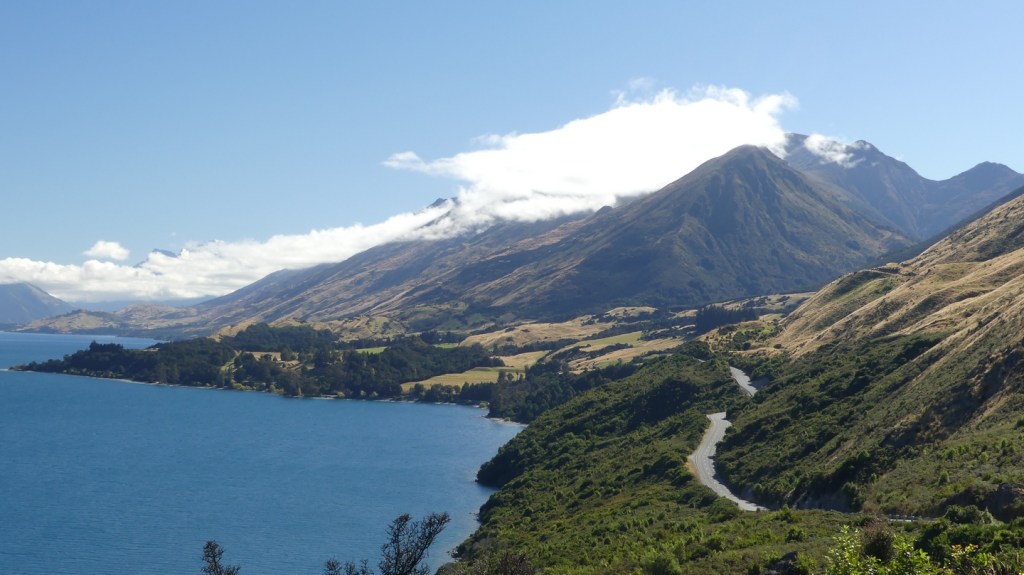
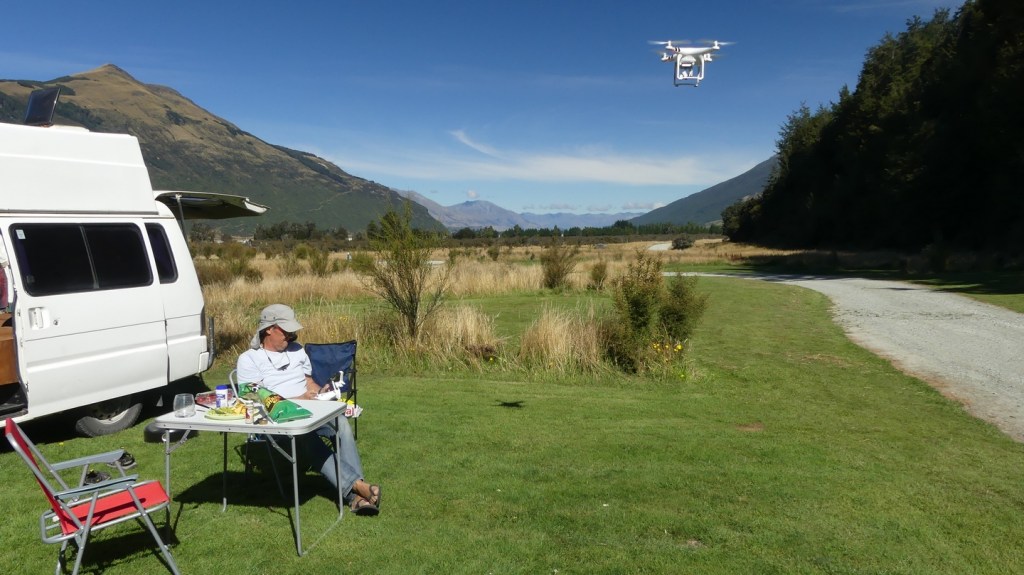
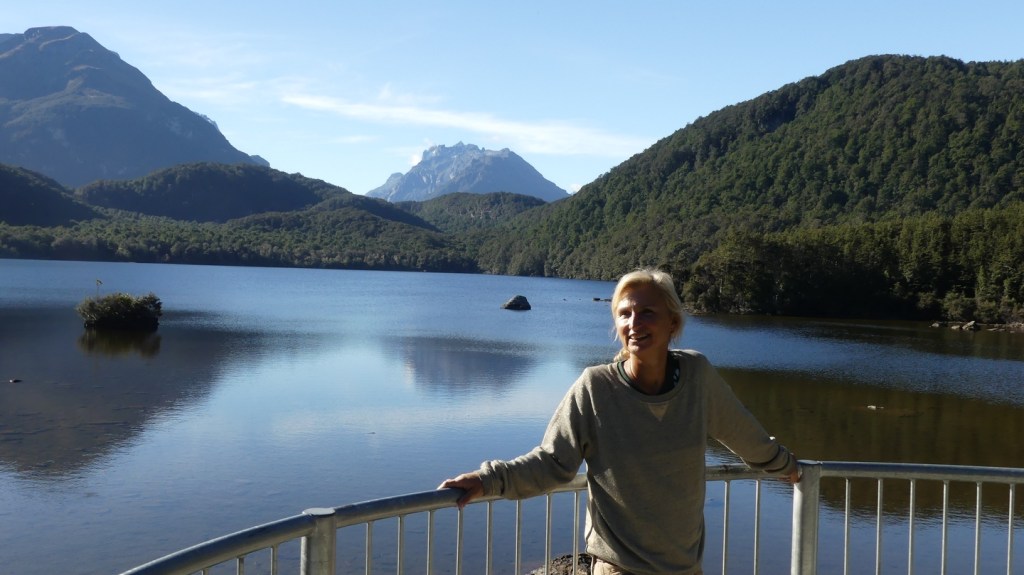
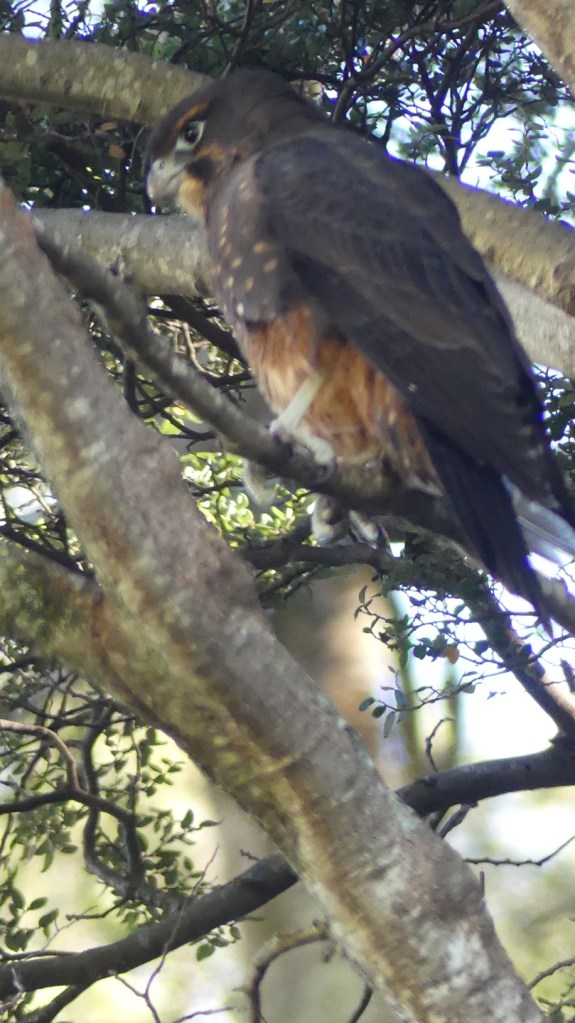
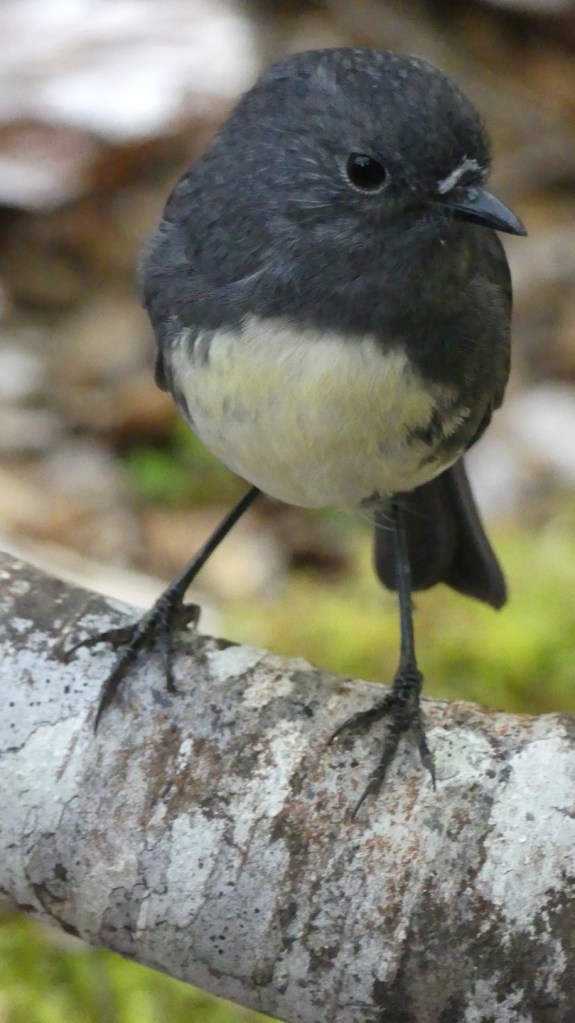
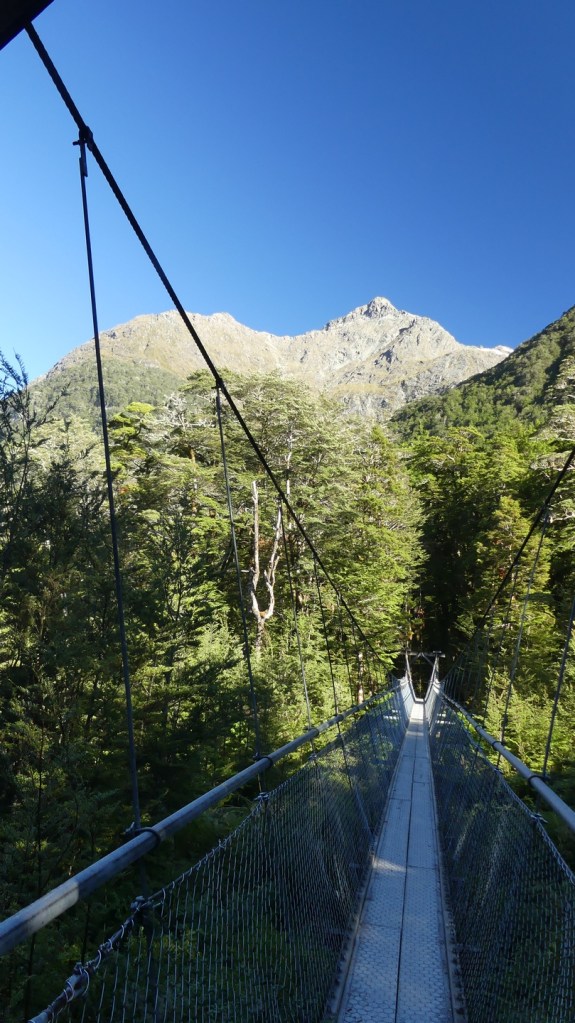
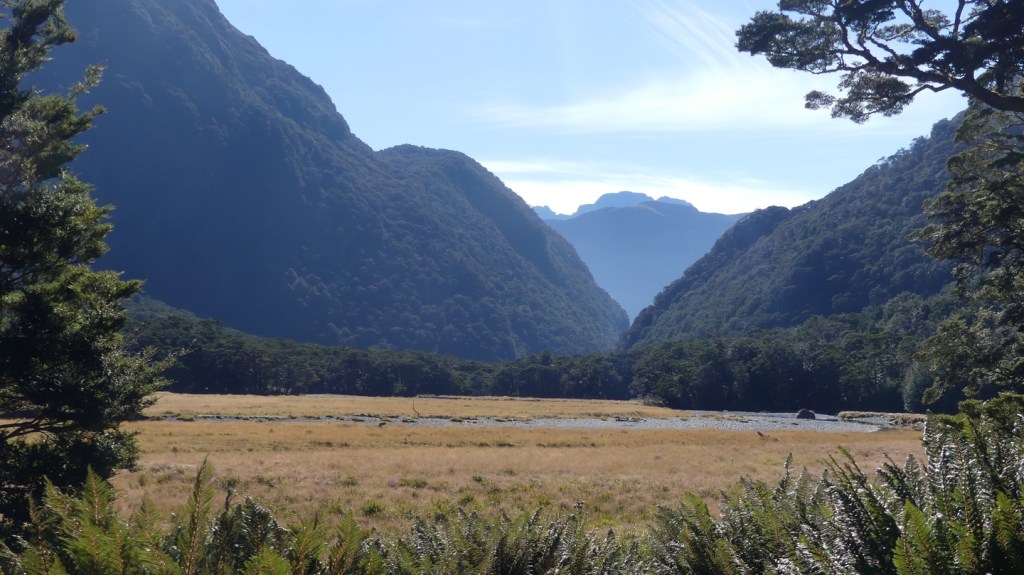
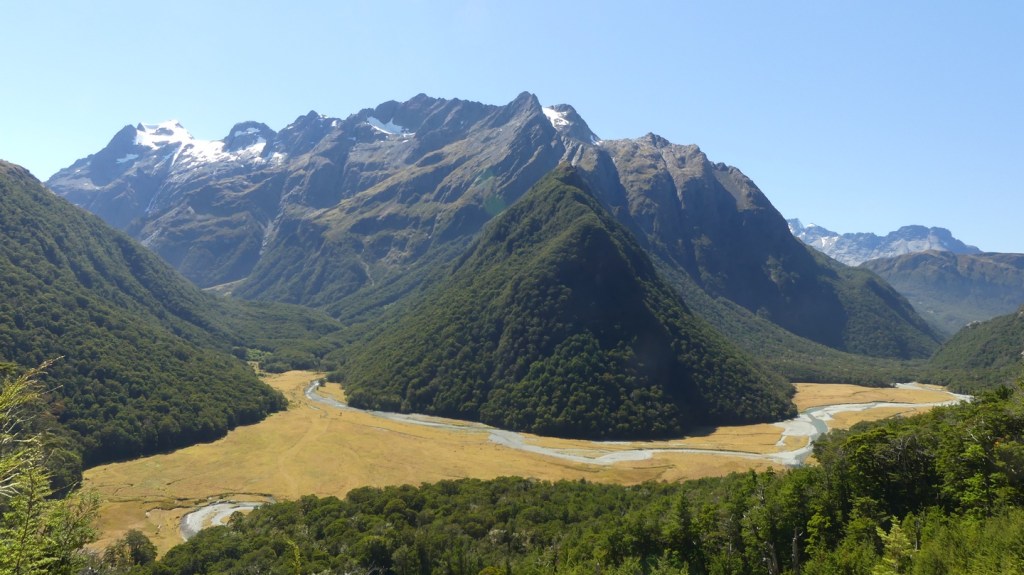
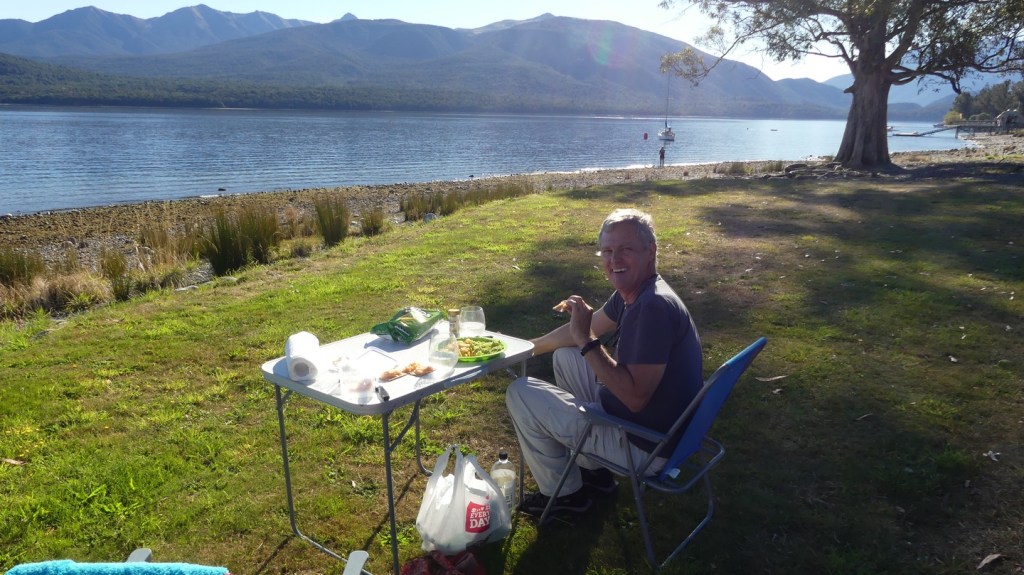
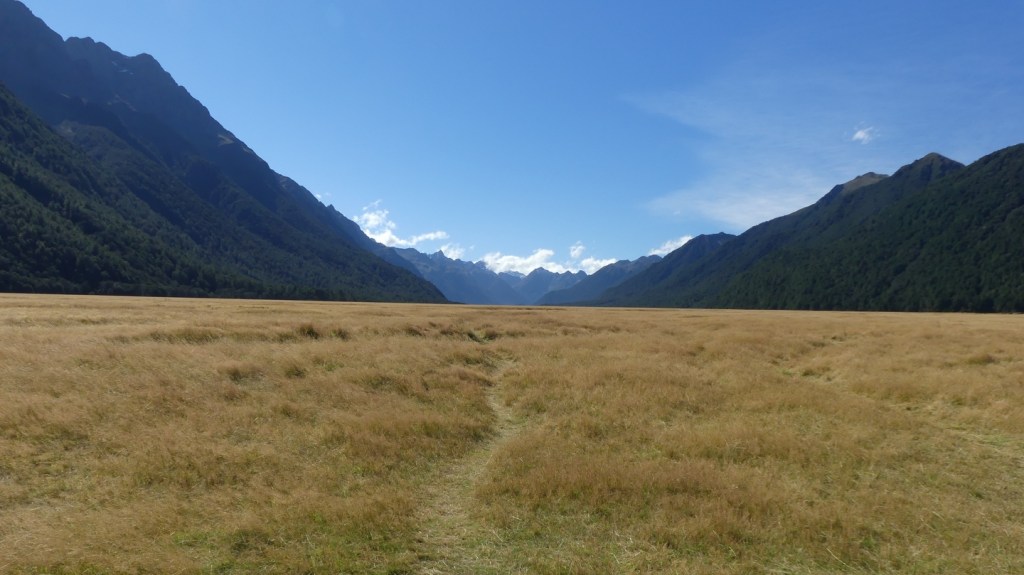
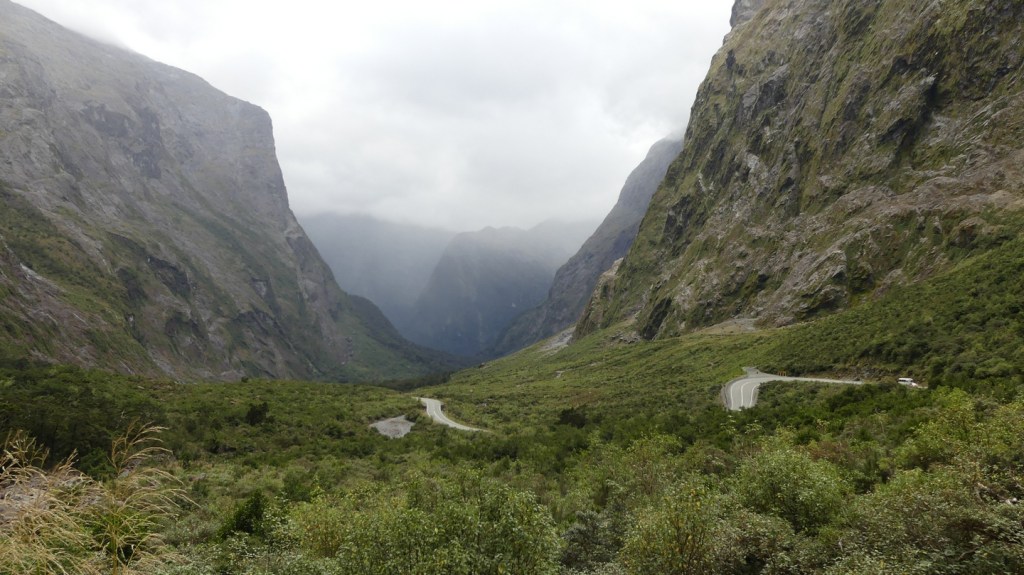
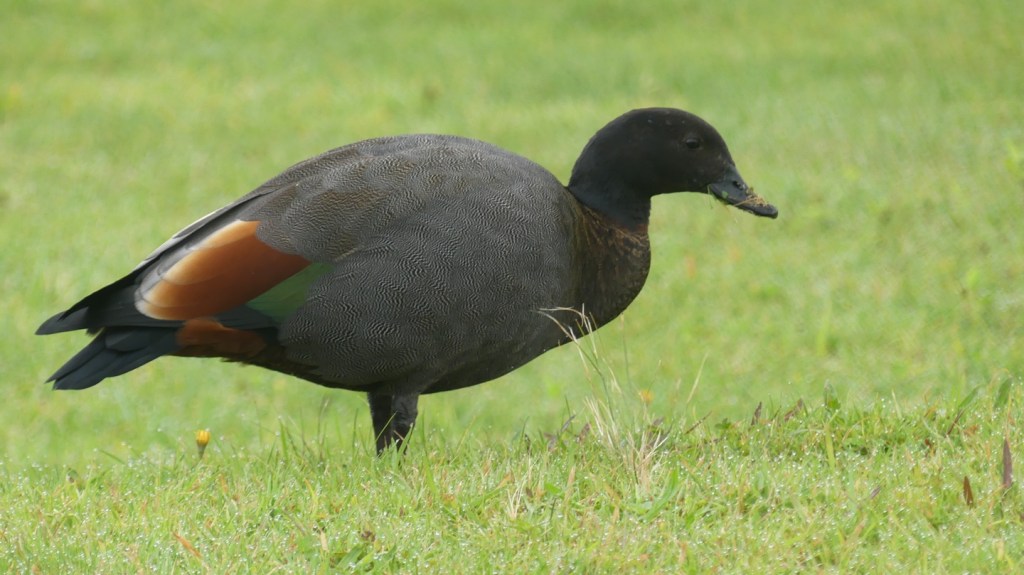
The start of our Rob Roy Valley walk, not so good weather but at least no rain. Mount Aspiring National Park is also part of the UNESCO heritage.Rob Roy Glacier with lots of clouds.We reached the lookout point after a 2,5 hour climb.More blue from glacial water.The NZ scaup or black teal. They are endemic to NZ. The maori name is papangoOn our way to Glenorchy we met some young french people and they were also impressed by the nature, “c’est un bijou”, she said. We could not agree more.The scenic road to Glenorchy next to Lake Wakatipu.Relaxing and playing with the drone at a DOC campsite before walking part of the Routeburn track (one of the Great Walks) the day after.Diamond lake, a 30min walk from the campsite.NZ falcon is endemic to NZ, can fly at speeds over 100km/h and catch a prey larger than itself. They are protected. This one was hiding in the trees next to our campsite.The NZ robin, Stefan’s favourite bird.Another suspension bridge to start out the Routeburn track over the Routeburn river. The track is 32KM long and there are 4 huts along the way. You can do the whole track in 2-4 days. We walked till the second hut, Routeburn Falls Hut, and then returned. It was a 6 hour beautiful walk but we were both happy when we reached the parking lot with Burnie.The whole track overlaps two national parks : Mount Aspiring National Park and Fiordland.View of the Routeburn river and the mountains Mt.Somnus (2293m)and Mt.Momus (2148m). I could not stop looking at this unbelievable scenery. Nature can really make me feel so happy!After all that walking it was time for a relaxing day near Lake Te Anau, the largest glacial lake of the South Island and on our way to Fiordland. A picknick with apple cider, crackers and smoked NZ salmon, fresh homemade guacamole and corn chips. Life is wonderful!It s a 2hr drive from Te Anau to Milford Sound along a scenic route. Eglinton Valley is the first stop.The clouds were setting in slowly….Hollyford valley. In the distance the road we had to conquer with Burnie :-).
Luckily we have made reservations at the Milford Sound Lodge since it was fully booked when we got there and it is the only campsite at Milford Sound.
In the next blog Milford Sound and our travels beyond.
Monday April 10th, we are back in Auckland ! What a wonderful journey (almost 7000KM) it has been through a beautiful country with lots of happy and relaxed people. I will try to give you some idea of this beauty although I can only say that many times reality is better than the pictures ! We are happy we could take our time and thus do a part of the many great walks as tramping is definitely the best way to see this country.
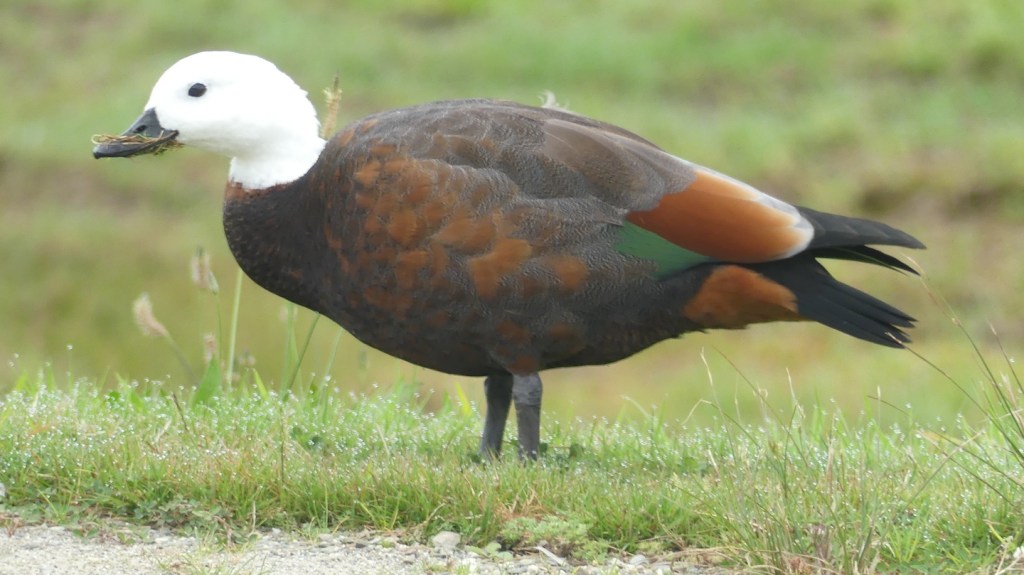
Just before leaving Lake Kaniere in Hokitika we saw this beautiful couple of paradise shellduck, this is the male.This is the female.They are endemic to New-Zealand and form long-term pair bonds.
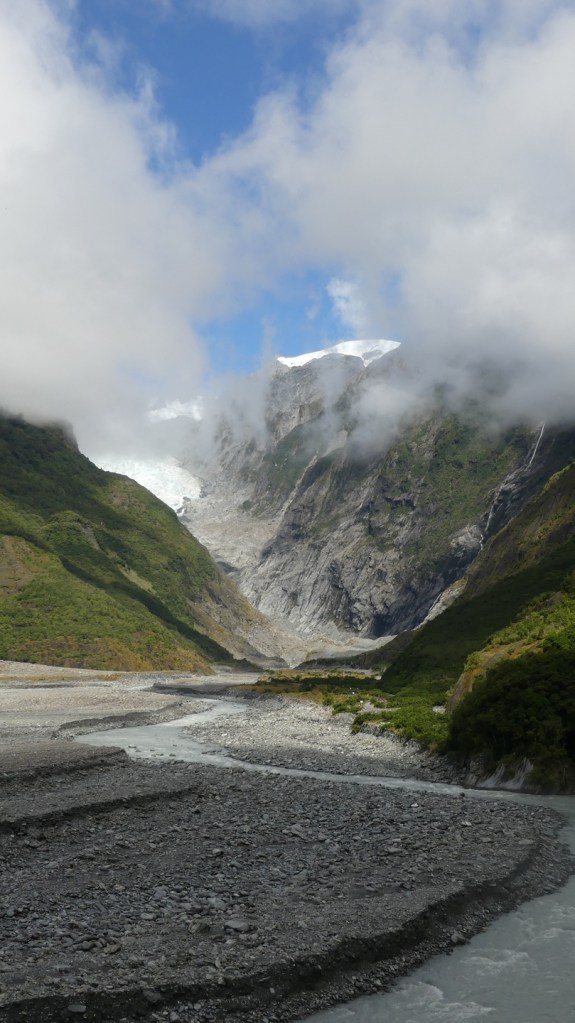
Te Wahipounamu was added to the list of World Heritage UNESCO sites in 1990. It covers 10% of NZ’s landmass. The glaciers (Franz Josef and Fox) form the connection between the coast and the highest peaks of the Southern Alps, MT.Cook (3724m).The area contains many of the natural features which contribute to New Zealand’s international reputation for superlative landscapes: its highest mountains, longest glaciers, tallest forests, wildest rivers and gorges, most rugged coastlines and deepest fiords and lakes.
Franz Josef Glacier in the back. It was named after the Austro-Hungarian emperor in 1865.
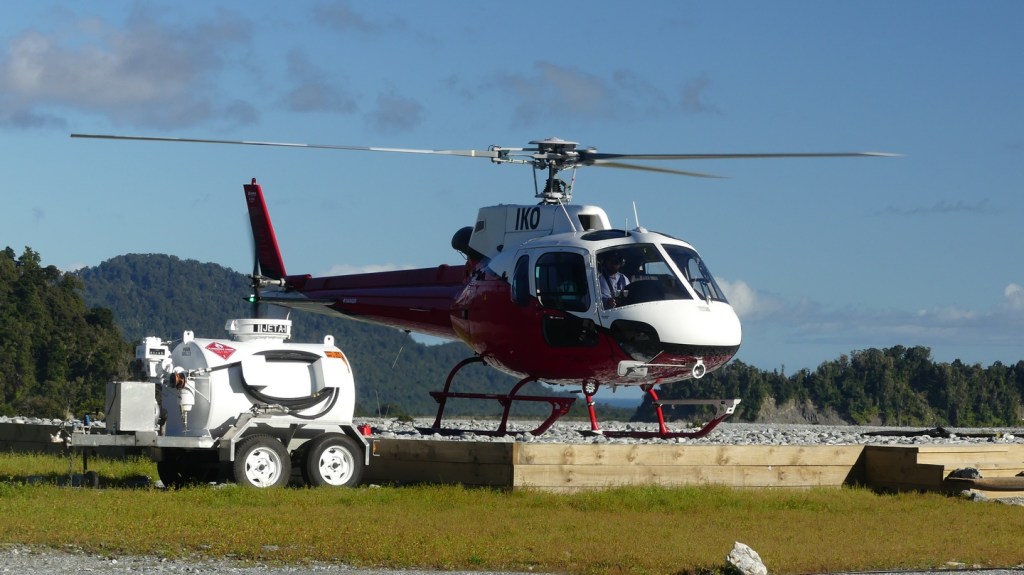
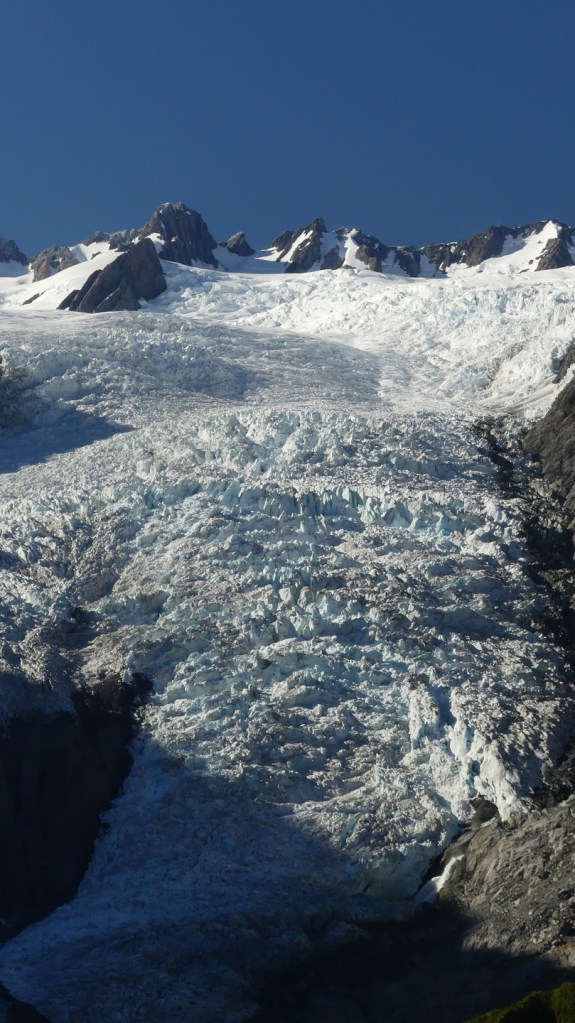
The Maori legend tells of the beautiful Hinehukatere who loved the mountains so much that she encouraged her lover Tawe to climb with her. He fell to his death and Hinehukatere was heart-broken.Her many, many tears flowed down the mountain and froze to form the glacier. Franz Josef glacier is known to Maori as “The Tears of Hinehukatere”. Since April 2012 all glacier walks require a helicopter flight past the unstable terminal face. This is exactly what we did !
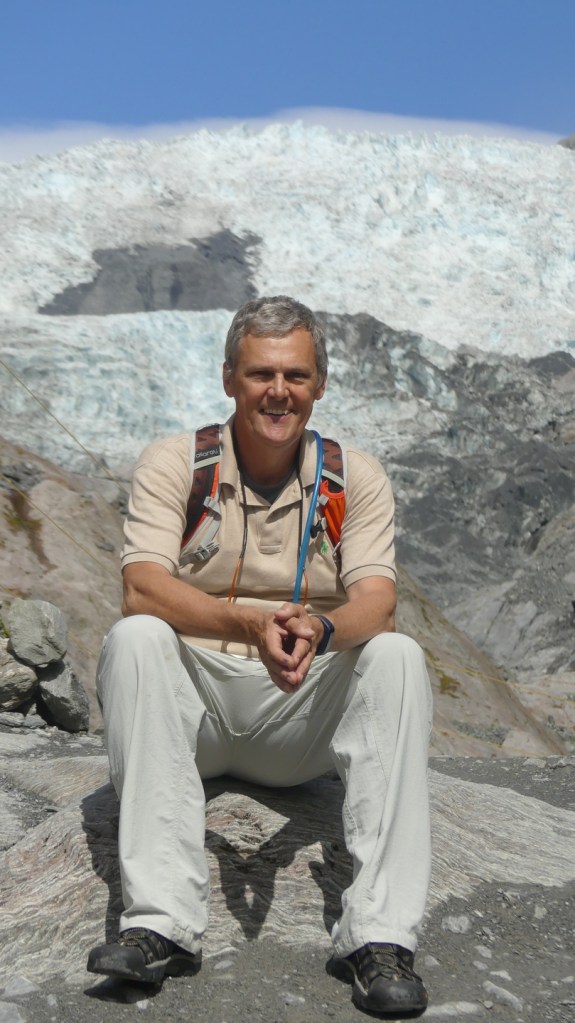
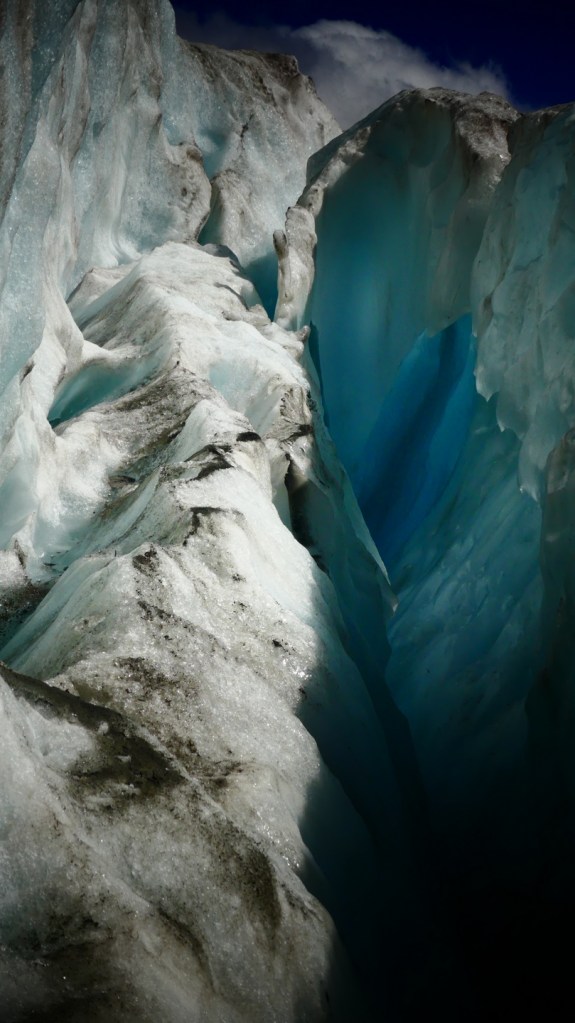
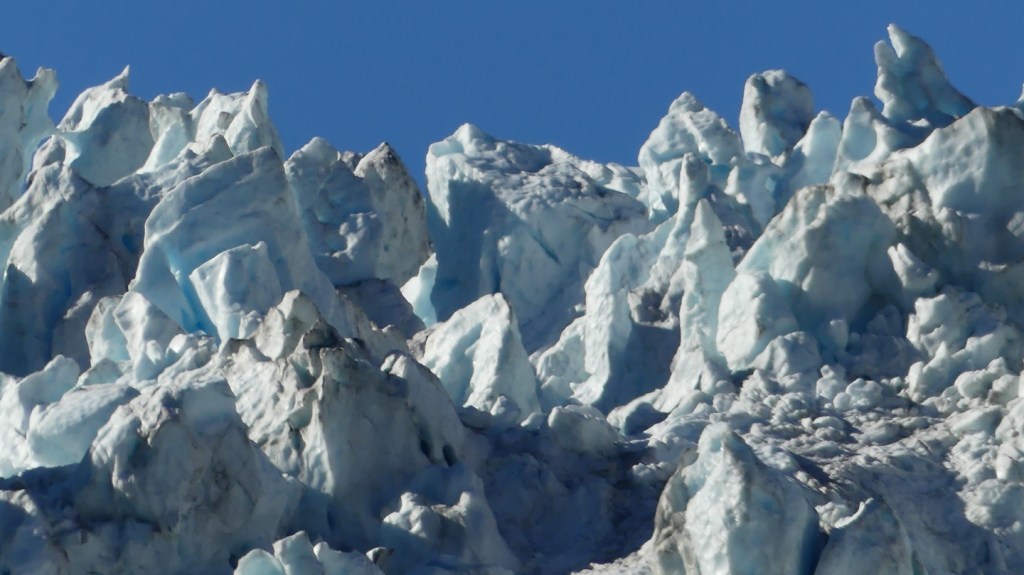
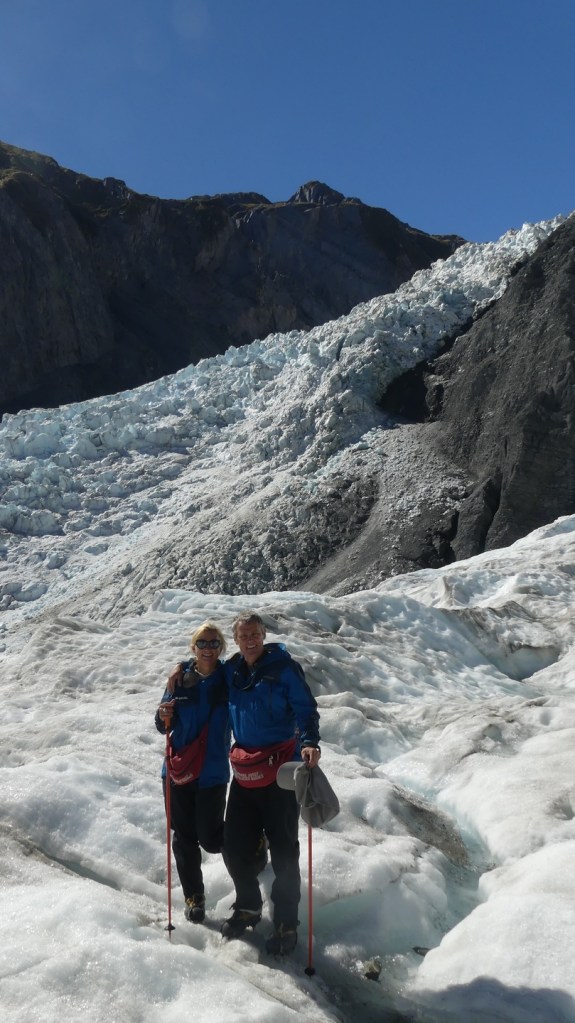
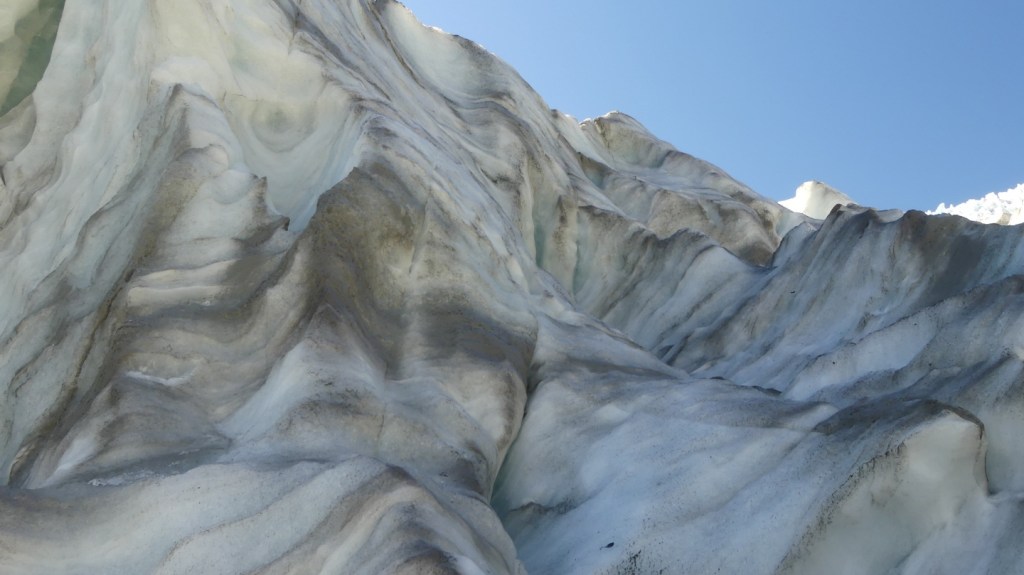
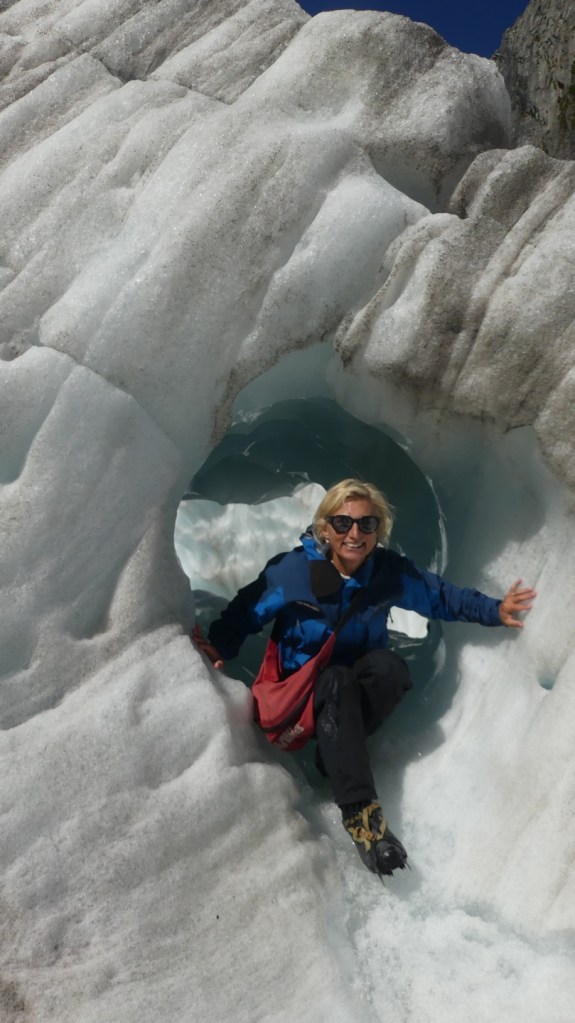
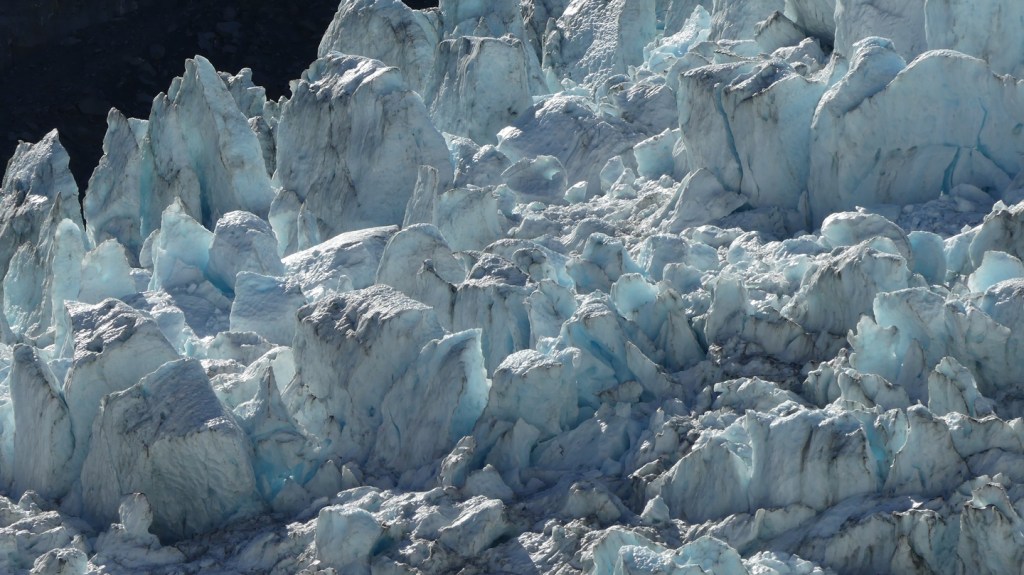
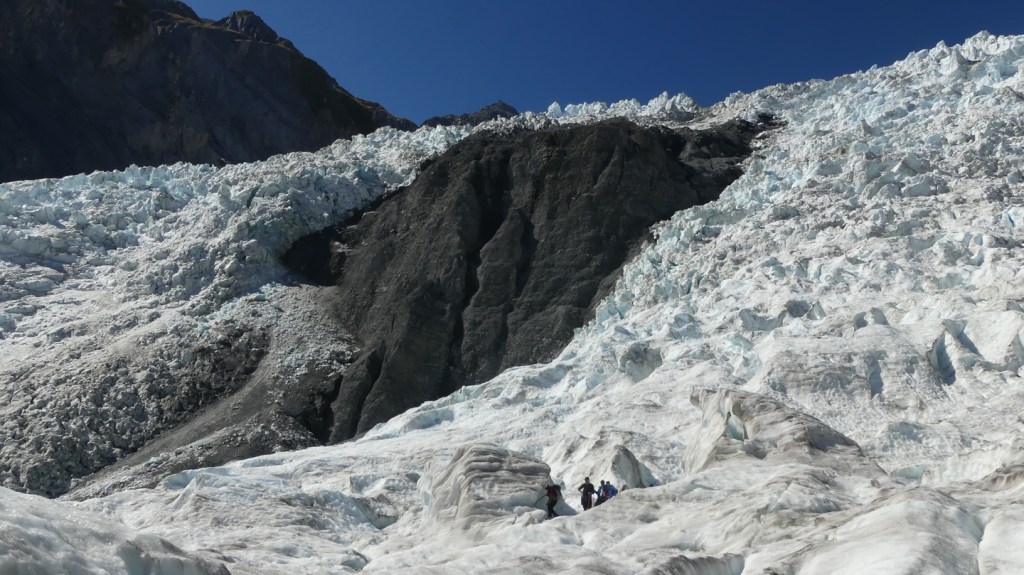
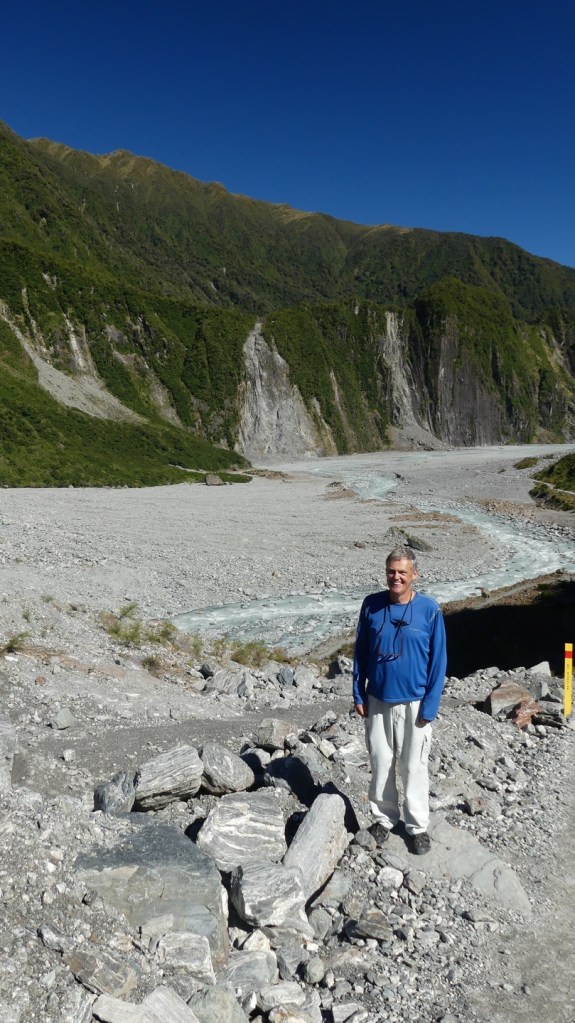
Stefan with Franz Josef Glacier in the back. The glacier is now 12km long but is rapidly shrinking since 2008.The helicopter taking us to the glacier. My first helicopter flight and I was so lucky I got to sit next to the pilot!The blue skies made it even more magical!Blue ice occurs when snow falls on a glacier is compressed, and becomes part of the glacier. Air bubbles are squeezed out and ice crystals enlarge, making the ice appear blue.Small amounts of regular ice appear to be white because of air bubbles inside them and also because small quantities of water appear to be colourless. In glaciers, the pressure causes the air bubbles to be squeezed out increasing the density of the created ice.The tour company gave us jackets,pants and the necessary gear, crampons and boots to enjoy our walk.Rock debris mixed with snow.The perfect spot to take a picture! The walks change almost daily because the glacier moves constantly.It was difficult to make a selection of all the pictures taken that day…NZ has many glaciers but most of them on the South Island. Franz Josef and Fox glacier are definitely the most popular ones.After we soaked in the hot pools we were ready for a great barbecued salmon and some wine. A perfect way to end a great day to remember !
The next day we drove to Fox glacier, only 24KM further. We did not go on to the glacier but made several small walks in the area.
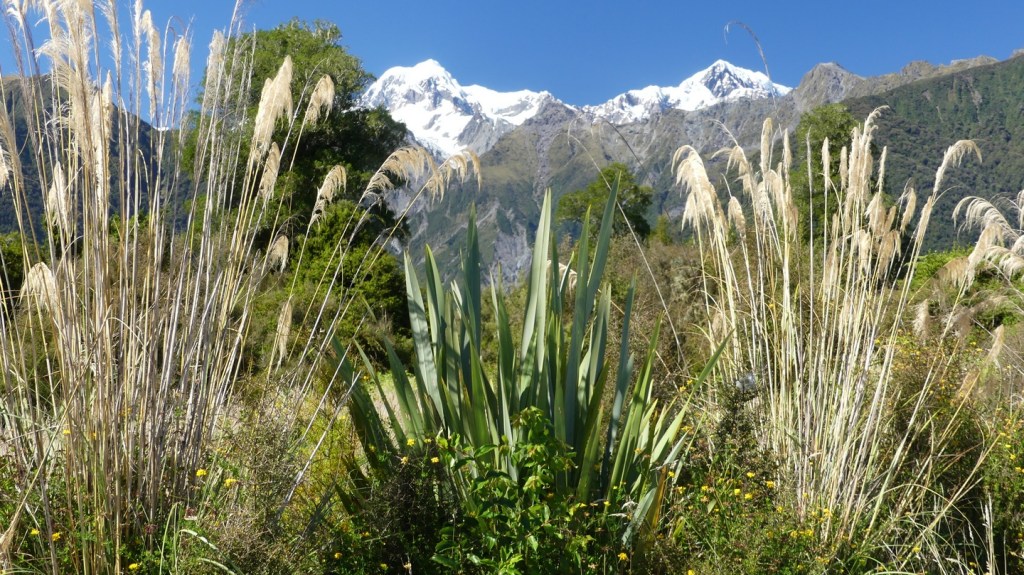
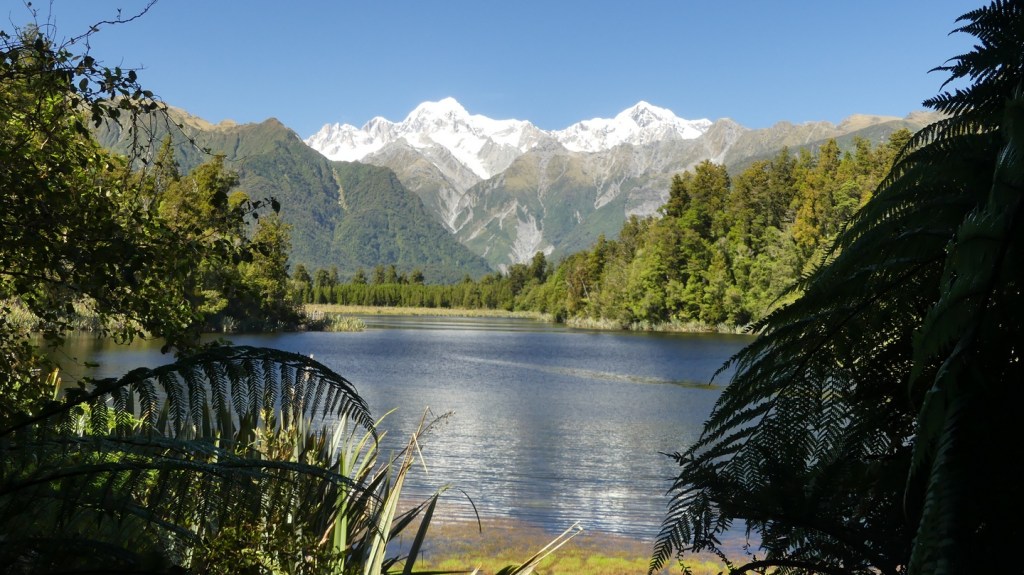
Fox Glacier is also receding – all of the glaciers here in New Zealand are. Some of it is natural depending on the weather conditions of each year. But the acceleration of the decline in size is increasing and scientists don’t think it has ever been as fast as it has been in recently. They’re convinced that climate change is the major cause. Since 1977, the Southern Alps of New Zealand have lost 34 per cent of their ice and snow cover. The smallest glaciers have lost about 12 metres of thickness in that time. Do not wait too long to go see them!The so typical native Toe Toe grass (Austroderia) for NZ and in the background the mountains Cook and Tasman.A walk around lake Matheson. The lake was formed by an iceberg when Fox Glacier retreated 14000 years ago.A picture of Matheson lake with Mt.Cook (3724m) and Mt.Tasman (3497m) in the back.
We continued our journey to Haast and Jackson Bay all the while stopping for little walks and enjoying the landscape.
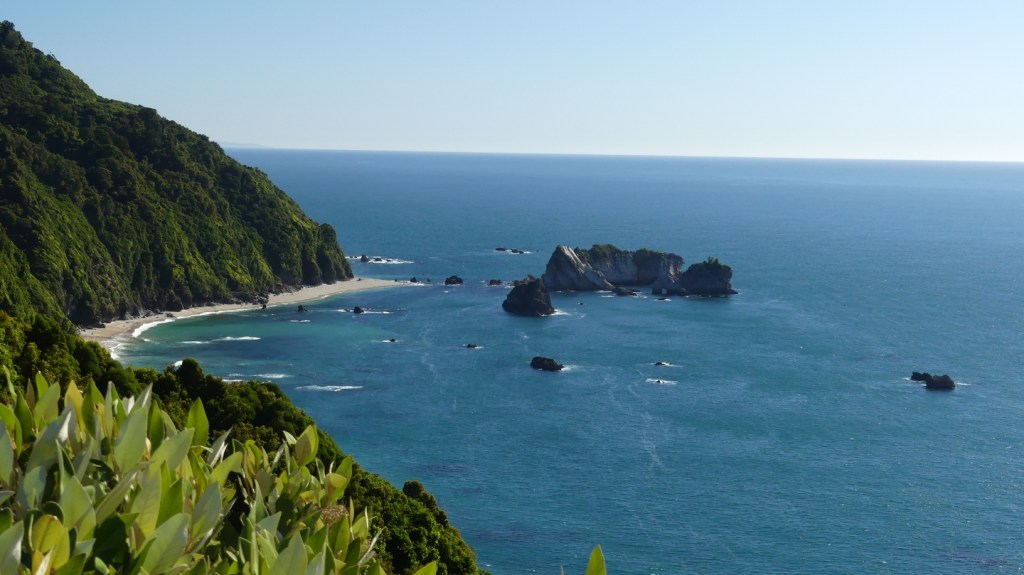
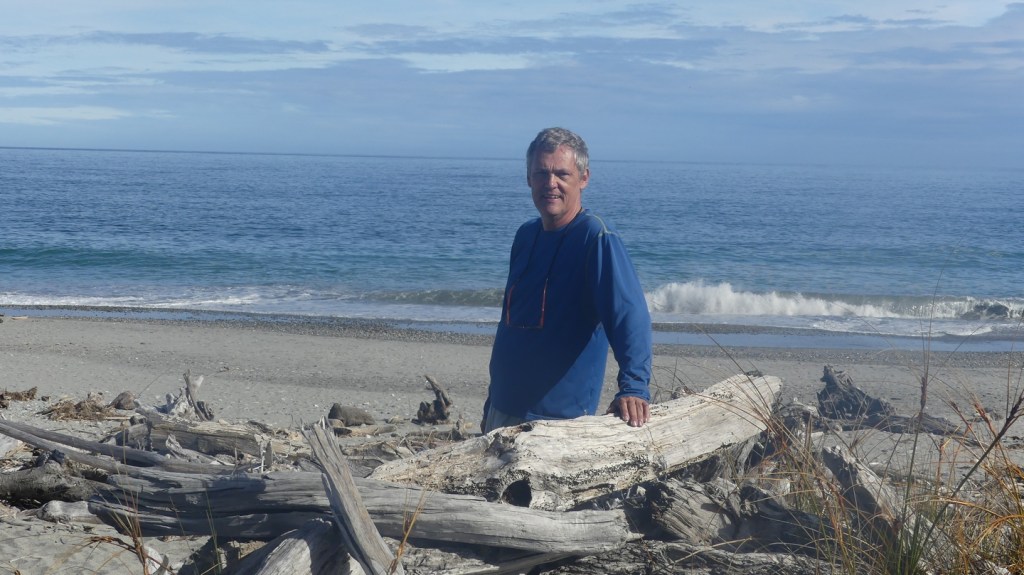
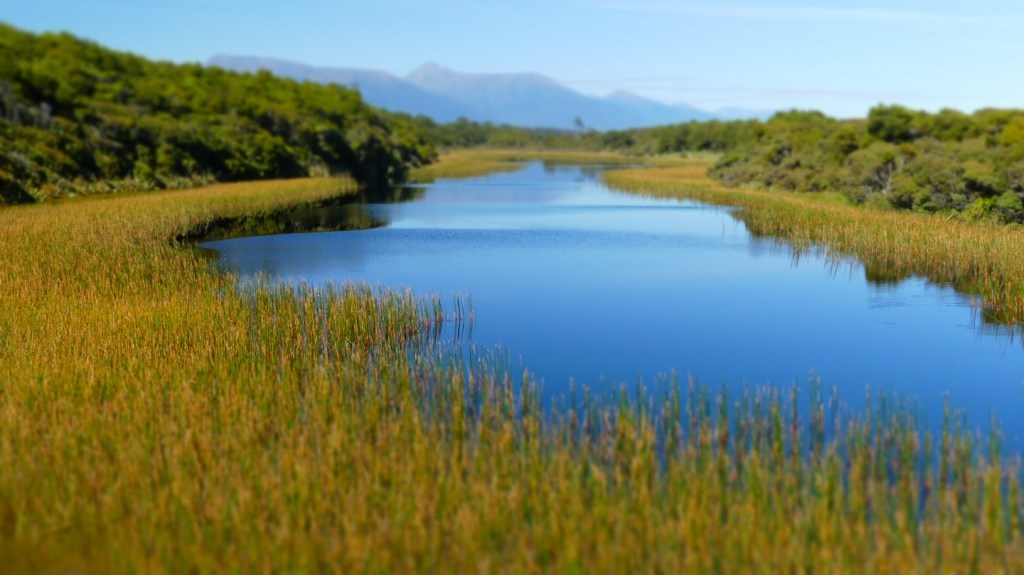
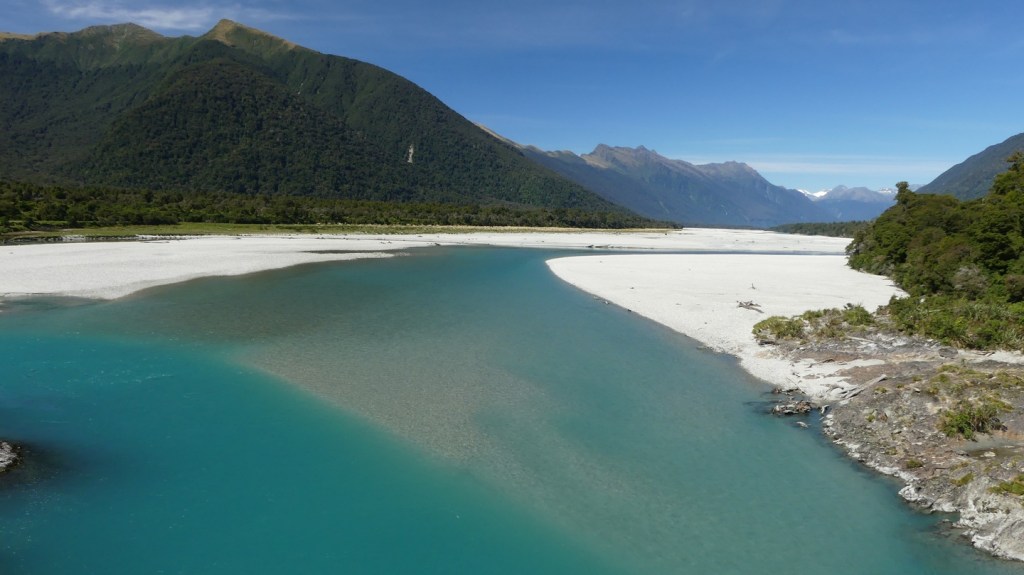
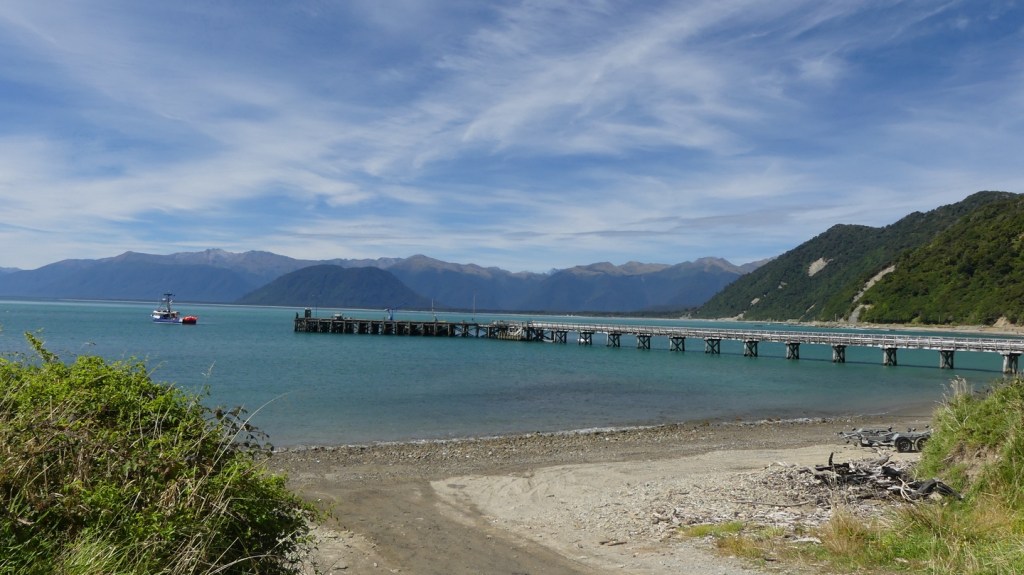
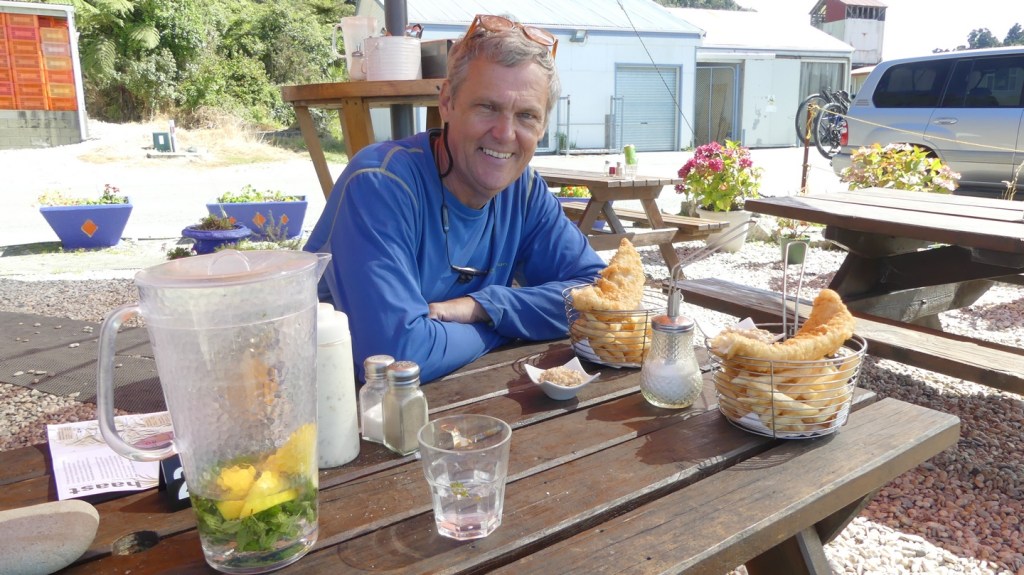
View into the Tasman Sea from Monro Beach.Monro Beach on our way to Haast. No picknicking on the beach because of the ferocious sandflies.Ship Creek.Glacial water, Arawata river, on our way to Jackson Bay.Jackson Bay is 50KM south of Haast and the land stops there. It used to be a sealing station. In 1875 immigrants tried to set up a town here but constant rain and rotted crops forced most of them leave.Jackson Bay is now a fishing village, so time for a good fish and chips at the Craypot.
After a night of “free camping” in Haast, nice location but infested with sandflies 😦 we drove direction Wanaka with more gorgeous views.
Nu we van het noorden tot aan het zuiden van NZ gereisd hebben, geef ik nog enkele indrukken.
Er wordt hier gul met gif omgegaan. In elk park vind je talloze vallen en vergif dozen om de allochtone dieren naar het eeuwige land te sturen. De ratten, de oppusums en de wezels zullen maar beter niet aan het snoep zitten dat hier overal in het woud ligt, en zoals vroeger de eieren of de jongeren van de autochtone beestjes eten. En de campagne heeft success: sinds de invoering ervan in 1957 is het aantal bedreigde diersoorten aan een flinke opmars bezig. Vooral de niet vliegende vogelsoorten zoals de Takahe, de Kiwi, de Kaka herpakken zich. Tegen 2050 zou Nieuw Zeeland zelfs door een ambitieus overheids programma volledig verlost moeten zijn van elk niet inheems-ongedierte. Je kan maar beter een Nieuw Zeelandse zandvlieg zijn dan een buitenlandse wesp.
Overal langs wandelwegen zie je vallen staan voor ratten of opossumsVoor elk wat wils
Ik versta niets van de marketing van de benzinestations hier: bijna in elk station kan je 6 cents / liter korting krijgen. Ofwel met je (gratis) kaart van het grootwarenhuis Countdown bij 2 grote merken, ofwel met een coupon voor andere merken die je krijgt bij het winkelen in de andere grootwarenhuizen. Je moet wel minimum 40 liter tanken om de korting te krijgen, en ze ronden af per 10 liter: 59 liter geeft je 50 x 6 c korting, dus 3 NZD (2 euro). Maar je kan ook je korting opsparen, dan krijg je 12 of 18 cents als je telkens minimum 40 liter tankt. Of als je voor 200NZD koopt krijg je 10 cents korting. Ook de stationsbedienden kunnen het niet echt goed uitleggen… Enfin, ik snap niet waarom er geen enkel tankstation is dat gewoon 6 cents korting geeft, zonder dat een kaart of coupon nodig is. Terloops gezegd: we tankten voor 1,03NZD/liter diesel in Auckland, maar hier in Invercargill is het goedkoopste tankstation 1,33 NZD/liter. Ik denk dat er nog wat speling op zit …
We hebben met Burnie al ongeveer 100 km gedaan op metal roads, dat zijn niet verharde wegen. In de verlaten gebieden loont het niet om overal asfalt te leggen, en dan schakelt de weg over op zand. Op onze laatste trip moesten we 30 km over wasbord weg, waar het wegdek als een golfplaten dak is, maar met golfjes van zo een 5 cm diep. Na wat geexperimenteer blijkt dat je er best over rijdt ofwel aan 30km/uur, ofwel aan 60km/uur (als er geen grote putten zijn!). Het maakt niet veel verschil: onze Burnie rammelt dan aan alle kanten, en zelfs de sleutelbos valt dan uit het stuurcontact! Maar dat houdt onzen Burnie niet tegen, hij heeft dat niet vandoen eens hij gestart is. Ik vraag me zelf af of we wel een sleutel nodig hebben, deze is zodanig verweerd dat ik denk dat een schroevendraaier hem ook wel zou starten. Niet dat ik dat ga proberen hoor. Hier leggen ze uit hoe zo een wasbord weg onstaat.
Op weg naar een wandeling (Rob Roy walk) via een metal road, kwamen we 9 forden tegen……Een ford is een kruising van een beekje met de weg, zonder brug. Naargelang de recente neerslag kan dit zeer gemakkelijk zijn (zoals hier), ofwel voor een onoverbrugbaar obstakel zorgen. Terugkeren is dan de enige uitweg.
Zeer bizar: zeer weinig kippen hier al gezien. Deze twee bij onze slaapplaats aan de suspension bridge van Clifden vormden de uitzondering.Is dit de voor of achterkant van een auto?‘s nachts kan het al koud zijn. Soms slaap ik zelfs met mijn kousen aan, en ‘s morgens schiet ik dan vlug in mijn sletsen om naar de douches te gaan. De sandalen zijn voor het betere stapwerk.Zie je hem?Invercargill Southland museum and Art Gallery wc’s: hopelijk is het bezoek aan de WC’s voor een kleine boodschap
March 21st, we are in the library of Invercargill. We just went to Stirling Point (Bluff), the most southern point on the island. I had Bluff oysters and they were indeed delicious! It is a NZ delicacy, harvested from March to August in the Foveaux Strait here in Bluff. We are lucky to be here at the right time. Tomorrow we will drive to the Catlins and hopefully see some penguins. It is cold here, 12 degrees Celsius but it is not raining.
Travelling on the South island is like driving from one national park to another. From the 4.7million people living in NZ, 76% live on the North Island. On average there is less than 15 people per square kilometer in NZ (contrast this with Belgium where there are 892 people per square kilometer). Their conservations efforts are really incredible. A lot of indigenous species were lost both by Maoris and European settlers hunting and farming, but they managed to change their behaviour after realising the disastrous effect on flora and fauna. The NZ Department of Conservation manages about 30% of the NZ land as parks. There are 14 national parks in NZ and 31 marine reserves. Besides these there are many regional protected areas.
Cape Foulwind, named by Captain James Cook in 1770 when his ship Endeavour was blown offshore from this point.The Cape Foulwind Walkway leads to Tauranga Bay,where there is a fur seal colony.Fur seal or Kekeno. They were at the brink of extinction in the 1800’s when Europeans hunted them for the meat and their pelts. In 1978 they were fully protected by the Marine Mammals Protection Act, and they have continued to grow in numbers ever since.Pancake rock in Punakaiki.
Pancake rock is a very popular tourist destination, so we could not resist.The pancake-layering of the limestone is created by immense pressure on alternating hard and soft layers of marine creatures and plant sediments.Hokatika Gorge. The turquoise colour of the water is caused by the combination of rock “flour”(fine powder of rock), glacial and river water.Dorothy Falls in Hokitika.Lake Kaniere in the evening.Lake Kaniere early morning.The Kaniere Water Race Walkway, following a channel that used to supply water to the gold mining operations. In 1864, Hokitika was the centre of the West Coast gold rush. We hiked the 20KM (10KM one way) walkway.
The next day we travelled to Franz Joseph Glacier where we did a Heli-hike on the glacier. More on that in the next blog.
March 13th, we are in Queenstown and it is cloudy. We are planning to do part of the Routeburn Track tomorrow. This is one of the 8 Great Walks in NZ, is 32KM long and takes about 3-4 days. We will only do one day and see if we can make it to the first hut and then return, because these walks are not a loop.
In the meantime some pictures of our walks in Abel Tasman National Park, the smallest but very pretty National park of NZ. Abel Tasman (a Dutchman) set foot here in 1642. The park was opened in 1942. We walked two parts of the Abel Tasman Coast Track, which is 60KM long and also one of the Great Walks of NZ.
The park is known for its golden beaches …and its beautiful rocky formations, but unfortunately also for the many sandflies.Too bad I did not bring my bathing suit to go for a swim!Golden Bay.The coastal track includes some tidal river crossings that can only be done at low tide. As we were a bit too early to cross, we relaxed and ate our lunch while watching the adventurous trying to find a shallow path across.View of a river estuary from Gibbs Hill.
From Abel Tasman we continued north to Cape Farewell. It is the most notherly point on the South Island and named by Captain James Cook in 1770 because this was the last land seen by his crew as they departed to their homeland.
We made a beautifull walk of 3 hours along the beach with lots of driftwood, wetlands and dunes.
Oystercatchers.… dreamcatchers …On our way to Wharariki Beach near Farewell Spit.sand everywhere…Much of the scenery made me think of the Hobbit movie.Wharariki Beach.On our way back to Nelson we had the famous green-lipped mussels with garlic bread at the Mussel Inn. Yummy but I still prefer our little black ones.
From Nelson we went to St.Arnaud and stayed two nights at the Nelson Lakes.
Rotoiti LakeThe longest swing bridge of NZ, 110m, over the Buller River.A beautiful DOC (Department of Conservation) campsite but we could only sit outside when covered with DEET. The only pest on the west coast of the South islands are the sandflies, which bite ferociously.
As much as I love the nature and being surrounded by it, the sandflies make it sometimes very difficult to endure being outside. James Cook was one of the first europeans to record his encounter with the sandfly as follows: “The most mischievous animal here is the small black sandfly, which are exceedingly numerous, wherever they light they cause a swelling and such intolerable itching that it is not possible to refrain from scratching and at last ends in ulcers like the small pox”. It is only the females that bite and suck blood which helps them to produce eggs. The males are vegetarian. After some time you become used to it…a little..:-)
The fantail or by its Maori name Piwakawaka. They are not shy and constantly fly around trying to catch insects disturbed by hikers.The New Zealand robin or toutouwai is only found in New Zealand.
In the next blog I will report about our trip from Westport to Franz Josef Glacier.
We are today March 11th, sitting in Burnie in a carpark in Wanaka town with free wi-fi. The weather is cloudy and thus time to do an update of our travels on the South Island of NZ.
We took the ferry in Wellinton on February 22nd and drove from Picton to Nelson, then up to Cape Farewell with a stop in Abel Tasman National Park. Then back to Nelson, St.Arnaud with a visit to the Nelson Lakes. From there on to the Westport, Punakaki, Hokitika, Franz Josef, Fox Glacier to Jackson Bay. Back to Haast over the pass to Wanaka. The coming weeks we will travel to Queenstown, Milford Sound down to Invercargill and make our way back up along the East Coast.
As promised some more pictures from our visit to Napier.
Lots of 1900’s cars in Napier during the Art Deco WE.Andy took us along for a guided tour from Napier. Thank you Andy and Sue for letting us stay 3 days in your beautiful house!The whole town was in Great Gatsby style !…in the rain but..also some sunshinePouring rain on our first swingbridge in Waiohine Gorge.A KaKa bird eating away on a toast he managed to steal from the plates of a cafe guest in Pukaha Mount Bruce National Wildlife Centre.Stefan reading the manual of my camera…Takahe, a flightless bird, looks a lot like its cousin the Pukeko.We are in Kiwi Country ! We saw the Kiwi bird at the Pukaha centre where they protect the Kiwi by taking the eggs and incubating them. This is called Operation Nest Egg where eggs and chicks are protected from predators. The Kiwi is also a flightless bird, with hair-like feathers, strong legs and no tail. Kiwis are mostly nocturnal so very difficult to spot during the day.There are 5 species and all are threatened with extinction.The parliament buildings in Wellington, with the Beehive that houses the Cabinet and the offices of its ministers. We were able to get a free guided tour of the buidlings.View over Wellington from Mount Victoria.We also visited Weta Cave where the movies Lord Of the Ring, Avatar, Great Adventures of TinTin are digitally mastered. It was a learning experience to see how much craftsmanship there is involved in these creations.The Interislander ferry waiting for us to come aboard at 8AMIt was a beautfiul day crossing the Cook Strait.Views on the Queen Charlotte drive to Nelson.Views over Pelorus Sound.On our way to Abel Tasman National Park.
On our way to Abel Tasman we stopped to admire Rawhiti Cave.Rawhiti Cave, also known as Manson Cave, is 40m wide and 20m tall. The ceiling is densely covered in stalactites which become increasingly finer deeper down into the cave.
More pictures in the next blog from beautiful Abel Tasman and the West Coast.
Een goede drie weken na mijn eerste kennismaking met NZ ben ik klaar om een eerste terugblik op het land, zijn inwoners en zijn gewoonten.
De mensen zijn heel vriendelijk en behulpzaam, maar ik moet opmerken dat ik dit reeds voor vele landen die we bezochten heb gezegd. Ligt het aan het warm klimaat, of merk ik dit gewoon meer op dan in België? Ik denk toch dat het aan de mensen ligt, ze verwelkomen je gelijk waar met een groet en een vraag hoe het gaat en of ze kunnen helpen. En “no worries” sluit meestal elke conversatie af. Toch mooi he, zonder zorgen de wereld in worden gestuurd?
De natuur is mooi en heel verschillend van wat we gewoon zijn in Europa: de bossen zijn veelal tropisch regenwoud, wat voor een soort voorhistorische plantengroei zorgt met metershoge varens en enorme woudreuzen (kauri). Toch is de houtindustrie alomtegenwoordig: de helft van de vrachtwagens op de landelijke wegen vervoeren gevelde boomstammen en overal zie je gerooide dennenbossen die terug aangeplant zijn met jonge boompjes. Er schiet nog zowat 20% over van de bossen die het eiland heel lang terug (pre 1800) volledig bedekten en door de ingeweken Europeanen werden geveld om plaats te maken voor weiland en akkers. Toch is dit nog een heel groen land, met veel regionale en nationale parken.
Er wordt heel veel geld in toerisme gestoken hier. De parken hebben allemaal zeer goed bewegwijzerde paden, die regelmatig onderhouden worden. Om de eeuwenoude kauri reuzebomen te beschermen tegen een oprukkende schimmel, staan aan het begin en het einde, en veelal ook midden in het bos een stand om je schoenen te ontdoen van modder, en in te spuiten met een ontsmettend middel. Op de drukke paden staan zelf vrijwilligers die deze ontsmettingsposten bemannen en je helpen om te ontsmetten. Dit project moet heel veel geld kosten, maar dient om het land en zijn fauna te bewaren voor volgende generaties. Ook vind je heel veel openbare toiletten langs de wegen, in de steden of langs de wandelpaden in het midden van het bos.
Je kan op twee manieren kamperen: in privé of officiële kampeerplaatsen die variërend zijn uitgerust met toiletten, douches, keuken, wasplaats en wifi. Of je kan overal wild kamperen tenzij het expliciet verboden is. Dan moet je echter over een “self contained” campervan beschikken: je moet kunnen 3 dagen op een plaats blijven zonder iets nodig te hebben of iets achter te laten in de natuur. Dit vereist aldus voor twee personen: een toilet/porta potti, 24 l vers water, opvang voor al het vuil water, een wasbak met stromend water en een vuilbak met deksel.
Hierover wil ik wel een beetje uitweiden: onze Burnie was niet self contained, maar hij leek er dichtbij. We hadden genoeg vers water, een wasbak en een porta potti. We kochten in het begin een vuilbak dus was het enkel nog het grijs water dat moest opgevangen worden in plaats van het door een gat in de vloer op de ondergrond te laten lopen. Ik las de informatie op de website van de NZ camper association, en het leek allemaal redelijk simpel. Dus ben ik naar de Miter10 getrokken om het nodige materiaal te kopen: afvoer flexibel van 25 mm doormeter en 3 meter lang, een afsluitkraan, een plastieken container van 25 liter, een ventialtiebuis van 15 mm. De afvoer moet met een N boog gebeuren om een reukstop te vormen, en indien de wateropvang kleiner is dan de vers water hoeveelheid moet er een monitoring zijn. Dit heb ik gemaakt door de verluchting van de grijswater tank omhoog te laten lopen tot deze boven het wasbakje, zodat dit niet meer wegloopt als de opvang container vol is. Ook moet de porta potti op elk moment bruikbaar zijn (op dit moment nog geen wet, maar binnenkort wel) en genoeg elleboogruimte hebben voor het gebruik. Onze Burnie heeft genoeg plaats, maar de vele minivans (vb Renault Espace) die nu nog gecertifiëerd zijn, zullen in de toekomst niet meer ge(her)certifieerd kunnen worden want als het bed is opgemaakt is er geen plaats meer voor de porta-potti. De bijkomende verkoopstroef van een self contained van, en het voordeel om overal te kunnen kamperen zorgden ervoor dat ik in Wellington een inspectie aanvroeg bij een inspecteur. De initiële inspectie moet gedaan worden door twee inspecteurs die hiervoor geen geld ontvangen, en het betalen van 55 NZD voor de kampeerassociatie. Helaas plattekaas, het is njet geworden: de zeer vriendelijke heren waren streng maar rechtvaardig. In tegenstelling tot de installatie getoond op het filmpje van ZigZag – duitse vrienden van Polynesie – liep het allesbehalve van een leien dakje. Het hangt duidelijk af wie de inspecteurs zijn en hoe streng ze zijn. Mijn inspecteurs maakten de volgende – terechte – opmerkingen: er is een darm met douchekop vroeger geinstalleerd geweest en nog steeds aanwezig, maar geen voorziening om het water op te vangen. De aanvoerleidingen zijn uitgevoerd in tuinslang, dit moet niet doorzichtige darm van levensmiddelen kwaliteit zijn, de afvoerleiding is wel 25mm, maar niet uitgevoerd in verstevigd plastiek, de afsluitkraan was bedienbaar van binnen in de auto, dit moet enkel van buitenaf kunnen. Er moet een afsluitdop op de afvoerdarm zitten om eventuele restanten van lekkend grijs water tegen te houden. Dit alles zorgde ervoor dat mijn investering van ongeveer 300 NZD niets opgeleverd heeft.
Mijn ontgoocheling was zo groot dat ik het project opgaf, maar nu er enkele dagen over gegaan zijn keert de goesting terug om het mischien nog eens te proberen. Ik ben er immers zo dicht bij… nog één bezoekje aan Miter10…
Nog enkele lossen bedenkingen die me te binnen schieten:
in elk openbaar toilet is er wc papier aanwezig en zeep in de zeephouder! Overal hangen er in de wc’s posters die je vragen om je handen te wassen.
de openbare bibiotheken zijn 6 of 7 dagen per week open en bieden gratis electriciteit en internet. Meestal is er ook een cafe in de bib.
de Nieuw zeelanders houden van hun koffie: bijna elk dorp heeft een cafe waar er een espresso machine staat, en er zijn tientallen soorten van koffies te bestellen: van flat white tot tall black en alles ertussenin.
heel veel mensen lopen op hun blote voeten rond
op publieke evenementen vind je een standje met gratis zonnecreme. Ook al is het soms niet echt heet, de zon kan hier snel zijn schadelijk werk doen.
NZ draagt de natuur in haar hart, maar in bijna alle grootwarenhuizen zijn ze heel gul met de plastieken zakjes.
bijna alle musea zijn gratis toegankelijk, maar de parking in de grootsteden is dan weer duur. In kleine steden is het dan weer gratis parkeren.
Het rijden op de wegen is een plezier: zeer mooi onderhouden en goed onderhouden. Bijna geen autostrades of drievaksbanen, maar brede wegen met duidelijke markering. Heel veel ronde punten, en met veel pijltjes van welke kant je moet uitrijden. Ook hebben grote ronde punten voorsorteervakken. Waar dit in Engeland moeilijk rijden was, blijkt dit hier bijna altijd zichzelf uit te wijzen.
De NZ kunnen niet inhalen. Het moet een nachtmerrie zijn voor hen om in Europa te rijden. Komt het door hun relaxe natuur, of zijn het schrikkepuiten? Feit is dat de limiet overal in NZ 100km/uur is, en wij meestal tussen de 70 en 80 rijden. Toch gebeurt het dat er kilometerslang er een auto achter ons hangt, terwijl er ondertussen hele lange rechte stroken zonder tegenliggers onder onze wielen door schuiven. Pas op de inhaalsecties met drie rijstroken halen deze auto’s ons dan in. Ikzelf heb zelden een inhaalprobleem :-), maar hier is het aangenaam rondrijden zonder de druk om ergens op tijd te moeten zijn. Als ik in de bergen soms op de pechstrook vertraag om een sliert auto’s voor te laten, zijn ze wel dankbaar met een licht- of geluidssignaal.
Je kan maar beter opletten voor je de straat oversteekt als voetganger hier: ten eerste komen de auto’s van de verkeerde kant, en anderzijds hebben ze niet echt veel respect voor de zwakke weggebruiker op twee benen. Voor de twee wielers vragen ze om 1,5 m plaats te laten, maar blijkbaar moet je als voetganger maar je plan trekken.
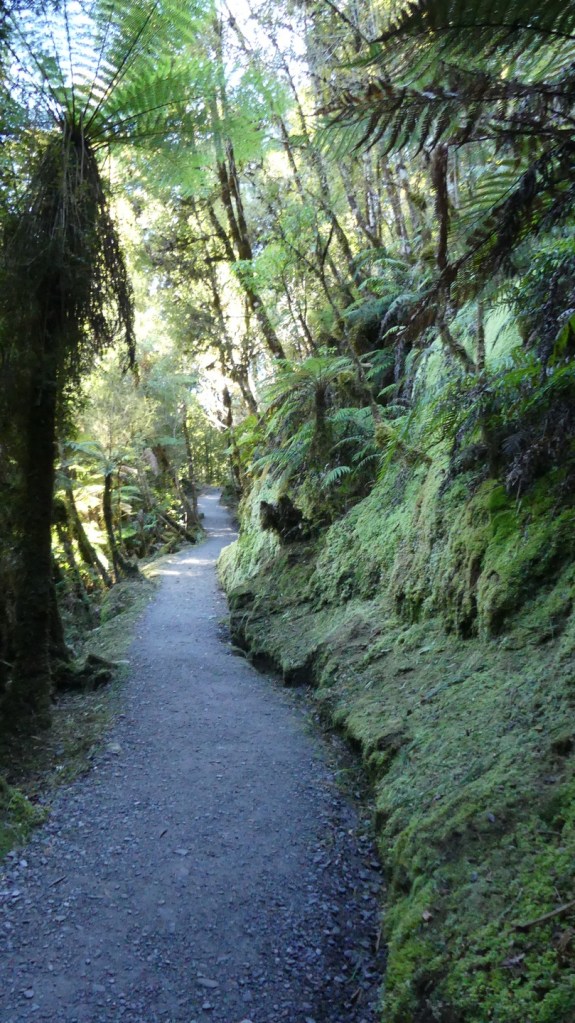
Je komt heel veel de voorhistorische naaldboom tegen in de bebouwde kom, en in de bossen de varens-op-een-stam (niet de wetenschappelijke benaming)
via de nummerplaat kan je op allerlei sites gedetaileerde informatie opvragen over een voertuig zoals type, bouwjaar, motor. Met een betalend rapport krijg je nog veel meer gegevens zoals datum van laatste inspectie, resultaat en nog meer. Heel handig als je op zoek bent naar een stuk voor je auto, of je een auto wil kopen, verkopen.
Gratis zonnecreme op openbare gebeurtenissenDe “varensboom”, tot 5 meter hoogDe zuinige spar, enig met kerstmis om de ballen goed te zien hangenleuke fietsenstalling in Napierbeestenboel: De tuatara, een soort van 20 miljoen jaar oud. Heeft nog naast de velociraptor geleefd, maar hield zich heel stil en heeft zo kunnen overleven…ondertussen in de supermarktEen nieuwe slave clutch cylinder voor Burnie, maar de verkeerde… Spiegelbeeld versie gewenst (zie verder in de tekst)Overal in de parken vind je nette toiletten, deze waren gloednieuwHelaas, in alle parken geldt dit verbod
Nog wat Burnie nieuws. Hij heeft wat last van ouderdomsverschijnselen de laatste tijd. Eerst was het een probleem met de hydraulische koppeling. Tot voor Burnie wist ik niet eens dat er een hydralische koppeling bestond, maar ik leer snel bij… Hij verloor olie langs de clutch slave cylinder wat ervoor zorgde dat bij koude motor de ontkoppeling niet werkte. Nogal vervelend: je wil remmen, dus druk je de koppelingspedaal in, maar hij blijft vooruit gaan… Daarom eerst een kleine beetje gas geven, de versnellingspook naar neutraal zonder te ontkoppelen en dan pas remmen. Niet echt goed voor het hart. Dus op zoek naar een mechanicien. We kregen mondelinge bijstand van 2 garagisten, ik kocht het wisselstuk (cruisers instinct: zorg eerst dat je het stuk hebt, en kijk later hoe je het gemonteerd krijgt) en zocht dan een mechanicien in de volgende stopplaats die het wou monteren. Het bleek evenwel het verkeerde stuk (zie foto) en een andere garagist heeft het juiste stuk besteld en gemonteerd. Prijs 140NZD (ongeveer 100 EUR) daar kon ik mee leven, zeker omdat ik het verkeerde stuk terug kon brengen naar de winkel.
Dit was nog maar net achter de rug of Burnie startte niet langer vlot, maar liet een diep gereutel horen in de plaats. Ik had mijn geld al ingezet op de batterij, maar het bleek de startmotor te zijn. Nieuw van Mazda voor 550 NZD (ai), maar wij hebben hem gevonden voor 80NZD bij een tweedehands autoonderdelen winkel (met 3 maand garantie: wet in NZ). Met montage ten belope van 70NZD. Mij hoor je niet klagen over de bereidwilligheid van garagisten om een passant dezelfde dag of de volgende uit de nood te helpen..
Burnie was weer als nieuw toen hij last kreeg van flatulatus (zoals zijn eigenaar…). Het bleek een losgekomen pijp te zijn aan de uitlaat, gevolg van de vele kilometers op gravé. De diagnose was streng: nieuwe uitlaat want lapmiddeltjes gingen het niet lang uithouden. Deze keer was het iets duurder: 240NZD met plaatsing. Opnieuw waren we dezelfde dag terug in business, want ze hebben ons voorgenomen. Al bijal hebben we een volle dag ‘verloren’ met Burnie die van garage tot garage sukkelde.
En tenslotte het verhaal van ‘self containment’: inderdaad, Ilse had me goed ingeschat dat ik het er niet bij zou laten nu we zo dicht bij ons doel waren. Na een sleutel sessie op de parking van de lokale Bunnings-doe-het-zelve werd de doucheslang verwijderd, de aanvoer waterslang vervangen door een voedselveilig exemplaar, de afvoerslang vervangen door een niet kinkend exemplaar met een afsluiter op het einde en een stop. En we vonden een lokaal inspector echtpaar die ons op korte termijn wou helpen. Ze keken, inspecteerden, evalueerden … en zagen dat het goed was. Ik heb enkel de aanvoer leiding van water ondoorzichtbaar hoeven te maken met zwarte tape. Nota aan andere doe het zelvers die een wagen self contained willen maken: als we geen gordijntjes hadden gehad dan was het niet gelukt, want de redenering gaat dat je enkel in privacy van een porta potty gebruik wil/kan maken. Deze vereiste vind je ook niet op het web, allez tot deze blogpost dan.
Ja hoor, de self contained sticker hangt erop, de inspectors waren echt hartelijke mensen!





 Sanuk 2014-2018 travel stories