Today, wednesday,July 6th, we are in Taiohae Bay on Nuku Hiva since saturday. We continue to be charmed by the Marquesas and its people. Nuku Hiva is the second largest island of French Polynesia after Tahiti. It is the administrative capital of the Marquesas islands. Today about 10.000 people live in the Marquesas. In the 18th century population was at 78.000 but western diseases such as measles and smallpox reduced the population to 4000 at the beginning of the 20th century.
The bulk of the Marquesas Islands are of volcanic origin, created by the Marquesas hotspot that underlies the Pacific Plate. The Marquesas islands group is one of the most remote in the world. We arrived after our passage in Hiva Oa, then sailed to Tahuata, from there to Fatu Hiva and then back to Hiva Oa. From Hiva Oa we did a night sail to Nuku Hiva, where we are now.We will visit a couple more bays here and then sail to Ua Pou.
We arrived on Nuku Hiva at 9 AM after a night sail from Hiva Oa. It was another beautiful view ! When we took Flipper to the dock it was immediately clear that this was a more commercial island. There were a couple of restaurants, 2 stores and the supermarkets carry a lot of “gourmet food” such as lots of frozen vegetables (a nice change from canned food), Belgian chocolate, frozen lamb, Rocquefort cheese , “President” real butter and “Bonne Maman” jelly! During our discovery walk of the town we were invited for a festive dinner (at 6.30 PM) and traditional dance in preparation for the festivities of July 14th (Bastille Day). We met with Ann and Yvan from Kruibeke (Belgium) from the yacht Vaguebond. We were lucky to have just met them since the next day they were already off to the Tuamotus Islands. So far we have met only one other Belgian boat…We had a great evening ! The drums were fantastic and the dancers even better! I had steak and french fries for dinner with a glass of red wine!! It tasted soooo goood :-)). Yesterday Stefan figured out what the problem was with our batteries AND FIXED it !!! I continue to be amazed in how good he is in fixing all our problems…I love it ! We also had a nice 2 hour hike in the late afternoon and picked up part 1 of our laundry. Today we had lunch at Keikahahuni restaurant, I had “poisson cru” (raw fish) and Stefan had fettucine in a creamy sauce with fish, we enjoyed the peace and quiet of the restaurant, only accompanied by 3 kittens waiting for leftovers (which there were not). Tomorrow we will pick up part 2 of the laundry, get diesel and leave for supposedly one of the most beautiful bays, Hakatea, just next door.
Traditional dance for the 14th of July festivities.The drums were fantastic !
Taiohae bay on Nuku Hiva.Sanuk captain, with Taiohae bay in the background.Notre Dame Cathedral on Taiohae, opened in 1977.Inside the cathedral.At the Temehea tohua site (ancient ceremonial meeting site) along the seafront with sculptures carved by artists from the island.View down in the Bay of Virgins on Fatu Hiva.The Bay of Virgins on Fatu Hiva.Walk to the Vai ‘e’enui falls. The scenery is just gorgeous!Refreshing shower and swim at the Vai’e’enui falls.Sunset at Puamau bay.Main street, Puamau.On our way to the Me’ae Te i’i pona site, a well restored ceremonial site of the Na’iki tribe.This is the statue of the priestess Tau’a pepe who died giving birth to a male child. The statue is carved by her husband.
On our return we met Sevrin who was going to cut coconuts for copra. He would show us how this was done. Again the scenery was just beautiful.On the left dried coconut meat which is gathered for the coconut oil industry in Tahiti. Monoi oil is made from coconut oil.Sevrin is showing us how he cuts the meat out of the coconut.Sevrin slashing the coconut open. He invited us to his home to give us grapefruits, lemons and “pommes cythere”, a kind of sweet apple. We took the family for a visit on our boat, which they loved !Sanuk in Puamau Bay on Hiva Oa.
In the bay of Hanavave (population 311), we found usable internet on the boat! Hence, by popular request here are some impressions of our visit to the Marquesas so far. We had to severely downres the pictures in order to be able to upload with the bandwidth challenged connection.
A perfect sailing day during our crossing. Blue skies and some wind so we can use the Code Zero sail. This is one of the last pictures of a complete sail, soon after we had two halves…Stefan preparing beef stew in the middel of the pacific with 28 degrees celsius ! No french fries and no belgian beer though.Finally after 22 days of sailing Hiva Oa on the horizon ! Great to see. The GPS did it again.The last resting place of Jacques Brel on Hiva Oa. Brel died in 1978 from cancer. He was loved by the Marquesan people.Resting place of Paul Gauguin who died here in 1903 from syfillis. Though he loved the young girls (13-14 years), he was not so loved by the Marquesan people.Superb view from the cemetary.Walking the streets in Atuona, Hiva Oa.Taahuku bay on Hiva Oa. This is the check-in place and usually very crowed (Stern anchor hell)Walking in the town of Vaitahu on the island of Tahuata. In 1774, Captain James Cook landed here, and it was here that Admiral Dupetit-Thouars signed the treaty of annexation of the Marquesas to France, in 1842.Ilse in an outrigger canoe. This is a type of canoe featuring one or more lateral support floats known as outriggers, which are fastened to one or both sides of the main hull. They are an important part of the polynesian heritage. This particular one features a pretty tourist. (dixit Stefan)One of our hikes out of Vaitahu.Very sweet, juicy and big grapefruits everywhere in the Marquesas. The peel is thumb-thick, but if you leave it alone, it becomes yellow and thin like we know it in Belgium.The beautiful catholic church in Vaitahu made of ships discarded ballast stones. There are no windows in the church except for the stained glass.
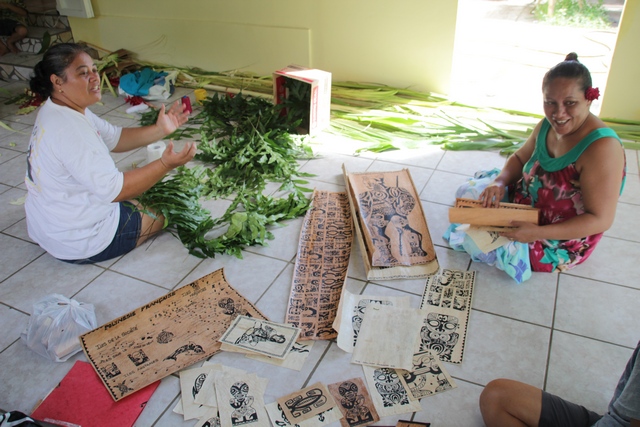
Stefan after trading fuel for fruits. We ate a lot of bananas the next 10 days !Getting the breadfruit and pig out of the ground oven during the festivities at the inauguration of the new sportshall.The pig is unwrapped from the banana leaves and put in wooden serving trays. All the women are wearing flowers.Hiking on Tahuata.Lots of coconut trees. Tourism and copra (dried coconut meat), are the most important economies of French Polynesia.Hiking path on Tahuata.Drying coconut meat seen everywhere on the islands.Walking the queens path in the town of Hapatoni on Tahuata island.Hapatoni on Tahuata Island.Snorkeling in Hana Tefau bay on Tahuata.Outrigger canoe on the beach of Hapatoni Bay.Omoa’s sea front on Fatu Hiva.Main street in Omoa.Buying tapa cloth in Omoa. Tapa is a barkcloth made in the islands of the Pacific Ocean. In the Marquesas only a couple villages still have tapa . In former times the cloth was primarily used for clothing, but now cotton and other textiles have replaced it.School dance in Omoa for first grade. They learn to swing those hips at an early age.Election of young miss Omoa (population 300). All dresses were made from plants and flowers (by the mothers and aunts).
Today, Thursday June 16th, we have been little over one week in the Marquesas after a passage of 22 days from the Galapagos. It was 6.30 PM when we dropped our anchor in Taahuku bay on Hiva Oa. We anchored temporarily outside the bay because there were too many boats and it was already dark.We immediately smelled
the scent of many flowers, the scenery of steep green mountains dropping in the sea was just gorgeous. We were happy we could finally sleep together again! Although the passage went fine I would not like to do it again!
We only stayed 2 nights in the bay because there was just not enough room for all the boats. We were anchored in between 2 yachts with a stern anchor and thus had to do the same. As the wind was coming from all directions it pulled hard on the rope of the stern anchor and at 7 AM we heard it snap! Stefan fixed it , but at 9 PM we noticed the stern anchor was loose and we were drifting closer to our neighbour. Again Stefan had to go out with Flipper and fix it! We did not sleep well 2 nights in a row. Luckily during the two days we were able to check in at immigration. The check in was only one piece of paper and free. What a nice difference from South America! We visited the town of Atuona and the cemetary with the graves from Paul Gauguin and Jacques Brel. They are burried amidst beautifull and peacefull scenery. We were able to buy fresh butter, cream, french bread, frozen lamb and frozen vegetables in a small grocery store, all expensive but at least some change from the c
hiken, fish and rice we had been eating!
We left Hiva Oe on saturday morning and sailed with sun and wind to Tahuata, Hana Moe Noa Bay. Moe Noa means “long sleep” exactly what I needed now. The scenery all along the trip was really superb. Huge steep, green covered clffs that rise out of deep blue water! After barely 2 hours of sailing we arrived in the bay, there were 4 other boats, it was stunning. A white sandy beach with palm trees at the end and on both sides of the bay mountains with green grass, shrubs and palm trees. This was like paradise. We went snorkeling and walked on the beach, enjoyed the beautifull sunset and had a great dinner with lamb on the barbecue. This was perfect! We stayed two days and then visited two more bays on the island. So close to each other but completely different scenery. Resolution Bay (also called Baie de Putain by the french, you can surely find the story behind this on internet as it is too long to tell here) with the town of Vaitahu and Hapatoni Bay with the towns of Tefau and Hapatoni. We hiked in both bays and the views are really breathtaking. The nature is so pure. Very few cars and not so many people. The people are friendly, they all speak french with an accent, but they are reserved. We traded 15 liters gasoline for a bag of grapefruits, two huge stalks of bananas, papaya, pineapple, oranges and coconut. We are eating lots of bananas these days and banana cake! After the snorkeling this morning we left Tahuata to go back to Hiva Oa because we have to get to a bank to get dollars changed in French Polynesian francs. There are only two banks in the Marquesas, on Hiva Oa and on Nuku Hiva which we will visit later. So tonight we are again anchored right outside the bay of Taahuku. We are not alone as the huge cargo-passenger ship Aranui 5 is docked inside the harbour. It comes once every three weeks with tourists and supplies. Hopefully we can leave by noon tomorrow for another bay and more beautifull scenery!
Before we leave just a quick picture blog about our adventures in Ecuador. It already seems so long ago….
The black marker line indicates how we traveled clockwise through Ecuador. From Bahia on the far left (circle) to Quito then on to Banos. In Banos we took the bus to Lago Agrio to do our trip in the Amazone. From their back to Banos, then Alausi, Cuenca (where we felt the earthquake), then to Guayaquil, Manta en by taxi back to Bahia.
After leaving Quito (without Stefan’s IPhone) we went to Banos.
The market in Otavalo, just outside Quito. She only agreed to have her picture taken because I bought a scarve. This is a typical Ecuadorian outfit, white blouse with embroiderie, gold necklaces, colored bracelet, long wool skirt and scarve draped around the shoulders.Eating 2$ lunch in the mercado at Ottavalo.We did a mountainbike ride in Banos, the easy way. It was all downhill and we came back in the back of a truck with our bicycles 🙂Lots of waterfalls around Banos.Coming back from school….On our way to the hot water baths we passed this huge cemetary, in a beautiful location, surrounded by mountains. (Stefan says: some crypts have electric lighting inside, see wire)Going for the calories before our camping trip to the Amazone…
The boat in which we traveled in the Amazone. We traveled through the Cuyabeno wildlife reserve.Camping was very basic and good it did not rain the whole time ! I was happy this was only for 3 nights !Stefan together with Barry (Australia) and Raoul (Honduras), our companions on the trip.One of the many monkey species in the Amazone. It is one of the animals you definitely see the most.The Toucan ! You do not see them very often up close but you can hear them a lot. This was the best picture I could take.Lots of turtles that are now being bred in captivity to increase their population.There are many macaws in the Amazone but you can never come very close. This was one living with local indians.
The Capybara, the largest rodent in the world. This is a baby.A sad monkey captivated by an indigenous family. They keep it as a pet.Nobody home, they were probably gone fishing. This is a hut on the side of the river.Typical hut along the Cuyabeno river.Another type of monkey.More bird wildlife but I could not figure out what kind it was…Small village along the Cuyabeno river.Upon our return, we spent half a day in the warm water baths in Banos. It felt great after our camping days in the Amazone !!!Train ride in the Andes, El nariz del diablo.In front of El nariz del diablo…The train ride only lasted one hour each way but the views were beautiful. We did have a lot of fog going but on our return the clouds had lifted somewhat.Finally some blue skies in Cuenca. The Catedral Metropolitana de la Inmaculada Concepción was only finished in 1885.Typical street in Cuenca. Cuenca is a UNESCO world heritage site and lies at an altitude of 2500M.The blue and white domes from the New Cathedral are a landmark for Cuenca. At its inauguration in 1885, the newly constructed Cathedral could accommodate 9,000 out of Cuenca’s 10,000 inhabitants at that time. Today there are about 500.000 people living in Cuenca.Lots of beautiful churches in Cuenca to visit…Church of Santo Domingo.Belgian cafe in Cuenca…In the corner of the square I had a localy brewed beer made by a Belgian from Ghent 🙂Ingapirca, just outside Cuenca. These are the largest known Inca ruins in Ecuador.
We found some good restaurants in Cuenca and even tasted a roasted cavia (Cuy in Spanish), it was yummi. After the earthquake we wanted to go as quickly as possible back to our boat since we had no news and Bahia was close to the epicentre of the earthquake. We took the bus to Guyaquil, stayed their for one night and then took a bus to Manta from where we had to take a taxi since there were no buses due to the earthquake. The devastation in Bahia was enormous but we were lucky there had not been a tsunami and thus nothing happened to the boat.
We decided to leave asap to the Galapagos as there was nothing for us left to do in Bahia without internet.
Red footed boobie, welcoming us to the Galapagos. He stayed the night on the boat.
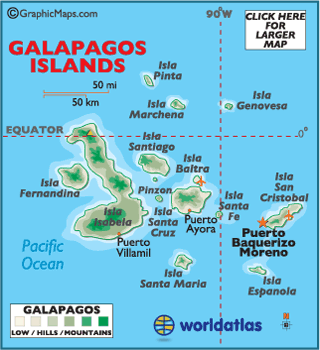
Friday, May 13th, on Santa Cruz Island, we have checked in at our last island of the Galapagos. The paperwork to travel with your boat in the Galapagos is significant, as is the cost to go to between harbours (45$)! Everything on the islands is expensive: foodstores, restaurants and tours with the mandatory park guide. But this is definitely one of the highlights of our tour in Ecuador. It is incredible how the animals let you come close and are not afraid of humans. We visited 3 islands: San Cristobal where we picked up Meliena at the airport, then on to Isabela where we put Meliena back on the airplane and lastly Santa Cruz mainly for provisioning to do the “puddlejump”.
I will give an overview of what we have done in the Galapagos through my pictures.
We arrived in Puerto Baquerizo Moreno where we had to fend off the sea lions from our boat. Then we sailed to Puerto Villamil and now we are in Puerto Ayora getting ready to leave for the Marquesas.
The Galapagos were discovered in 1535 by Tomas de Berlanga. Until the 19th century the islands were used as hideout for pirates who robbed the spanish galleons carrying gold and silver from South America, back to Spain. The islands became famous around the world after the survey ship HMS Beagle, arrived in the Galapagos in 1835. On board was a young naturalist named Charles Darwin.The islands became Ecuador’s first national park in 1959, and these now aggressively-protected islands and the surrounding marine reserve were both declared World Heritage sites. We will have stayed almost 3 weeks here and must say a minimum is 7-10days if you can do a cruise between the islands.
Yellow Warbler.Daily visitors on the boat. We had to put up a construction to keep them off the boat because they do not smell so great and leave dirty stains …The male Darwin Finch. There are 13 species of finch on the Galapagos, collectively known as “Darwin Finches”.The Sally Lightfoot crab, Grapsus Grapsus (Latin name). The name comes from their ability to walk on water when they go fron one rock to another. (San Cristobal Island)Darwin statue on San Cristobal island, it is the island where Darwin first went ashore in 1835.We went with our bicycles to El Junco lake, a crater lake of fresh water on San Cristobal. The ride was not as easy as expected, all uphill ! Going back was easy though :-).Stefan and Meliena on San Cristobal island.Sea Lions rule on San Cristobal. They are everywhere, it is the local stray “dog”.The blue footed boobie. The name comes from the Spanish word ‘bobo’ meaning fool or clown. In the Galapagos live three kinds of boobies : the blue footed, the red footed and the nazca boobie. (Punta Pitt, San Cristobal Island)Courtship from the blue footed boobie. They always lay 2 eggs but in 90% of the cases only the first chick to hatch survives. The second one most of the time starves. Survival of the fittest ! (Punta Pitt, San Cristobal Island)Red Footed boobies at Punta Pitt on San Cristobal Island.Scenery of our walk at Punta Pitt. (San Cristobal island)Kicker Rock seen through a cave near San Cristobal island. Spanish name is Leon dormido, it is a remainder of a lava cone, split in two.The newly (2015) paved road from the harbour into town.Isabela Island, Los Tunneles where we snorkeled with the Galapagos penguins, sea lions, and even sharks. Taken with our underwater camera.Meliena with the penguins and a blue footed boobie. These penguins only live on the Galapagos and stay here all year long.(Isabela Island)Meliena on the boat, on our way to Punta Pitt. (San Cristobal island)Dolphins jumping out of the water when we returned from our trip to Punta Pitt. (San Cristobal island)Flamingos getting ready for the evening on Isabela Island.A 100 year old tortoise after a long day… Don’t worry, he is still alive! The Galápagos giant tortoise is the largest living species of tortoise. Galápagos tortoises can weigh up to 417 kg. Today, giant tortoises exist only on the Galápagos and on Aldabra in the Indian Ocean, 700 km east of Tanzania. Tortoise numbers declined from over 250,000 in the 16th century to a low of around 3,000 in the 1970s. Conservation efforts beginning in the 20th century, have resulted in thousands of juveniles being released onto their ancestral home islands, and the total number of the species is estimated to have exceeded 19,000 at the start of the 21st century.Tortoise on our bicycle trip to the Wall of Tears on Isabela island.Meliena and myself in front of the Wall of Tears. El Muro de las Lágrimas was constructed between 1945 and 1959 by Ecuadorian prisoners shipped to the island. The wall is about 25 m tall and has apparently been the cause of thousands of deaths during its construction.(Isabela Island)View on top of the hill at Isabela Island. The harbour is in the background.Tortoise slowly crossing the road to the Wall of Tears on Isabela Island.The marine iguana is an iguana found only on the Galápagos Islands that has the ability, unique among modern lizards, to forage in the sea, making it a marine reptile. The iguana can dive over 9 m deep. They can be found on the rocks to warm up from the cold water.The Striated Heron. He is focussing to catch a fish, but he missed.On the Sierra Negra volcano that rises to an altitude of 1124m. In the back the huge crater. (Isabela Island)In front of the crater of the Sierra Negra volcano. It is one of the most active of the Galapagos volcanoes with the most recent historic eruption in October 2005The volcano has the largest caldera of all of the Galapagos volcanoes, with dimensions of 7.2 x 9.3 km. The caldera is also the shallowest of the Isabela volcanoes at only 100m.Meliena in front of the large caldera of the Sierra Negra volcano. It was a beautiful hike from 8 AM to 1 PM. (Isabela Island)Los Tuneles on Isabela Island. A series of lava flows have created hundreds of arches and tunnels, both above and below the water.Los Tuneles on Isabela island.The airport waiting hall on Isabela Island. We were the only ones waiting for the plane that day. One week was too short but we were happy we got at least that! 🙂 We will see each other again in November in Boston!
Today, May 15th, all the laundry is done, we have the tanks filled with diesel. We still have some food shopping to do and then we can leave for the Marquesas on May 17th. We think it will take about 25-30 days of sailing….
Sunday, April 3rd, La Mitad del mundo. We arrived on the equator around 10.30 AM and hardly any tourist was there. It was cloudy but no rain. Zero degrees latitude is the line designating the Equator and divides the Earth into two equal hemispheres (north and south) as defined by Wikipedia. Gent latitude is 51.0543° N. I never used to care about latitude and longitude but now that we are sailing we have to record the position of the boat in our log book and so when we left Panama I could follow how we were slowly but surely creeping to the zero degrees latitude. I remember we crossed the equator at 4.19 AM (do not remember the day and I have the logbook not at hand)on my shift, the sea was flat as a lake and it was a little foggy, it was an eerie feeling and we were only crossing an imaginary line.
Low clouds over the surrounding mountains.0 latitude was first measured in 1736 on a geodesic mission to the equator. The mission was lead by the French (together with Spanish) who left in May 1735 and arrived in Ecuador in June 1736! They completed the measurements in 1739. They were real adventurers and incredible scientists.The method used to measure the circumference of the earth at the equator is triangulation. Triangulation is a surveying technique in which a region is divided into a series of triangles based on a line of known length so that accurate measurements of distances and directions may be made with trigonometry. If you ever wondered what cosinus and sinus were used for…
After enjoying the different pavillions we enjoyed the performance of some folk dances in traditional clothing.
Traditional folk dancing.
We had fun watching and listening to the Andean tunes.
Right next to the village are the headquarters of the UNASUR, Unión de Naciones Suramericanas, unifying 12 countries.Former Argentine President Néstor Kirchner was unanimously elected the first Secretary General of UNASUR for a two-year term.Stefan had to try one of these sweets, no ice-cream but a kind of marshmallowy substance.We visited also a small museum next to the village, Museo Solar Inti Nan, which is more exactly situated on the equator. We had fun and it was a perfect way to end our visit.
Although very touristy we really enjoyed our day at La Mitad del mundo !
Friday, April 1, 2016, we took the bus in Bahia de Caraquez at 8 AM in the morning, packed with a minimum of clothes but hopefully sufficient for the 2-3 weeks we will be away in the different climates of Ecuador and Peru. I do not like packing suitcases with this limitation…The bus ride of 9 hours was uneventfull and I slept a good part of the way. When we were getting closer to Quito it started to rain, when we arrived in Quito it was pouring water, cold and dark ! Oh well, hopefully for not too long. We managed to find a bus going in the direction of our hotel (25 cents) and only had to walk a couple blocks. After we asked several times we found it ! Strange, the doors were closed and it was only 7 PM. We knocked loud on the door and sure enough somebody came and opened the door. It was the entrance of a store, restaurant and the Bed and Breakfast was in the back. We were disappointed by the size of the room and two separate beds and the bathroom was down the hall…But, it is only for sleeping (says Stefan) so no complaints 🙂
Saturday, April 2, 2016, we got up early and had a vegatarian breakfast and immediately left for a visti of Quito historic centre. It was cloudy but it did not rain. They told us the mornings were usually dry ! It is the rainy season till May and apparently because of El Nino it rains more than normal. Temperatures are only around 17-18 degrees celsius which is much colder than we are used to ! When we got to Quito there were even some blue patches in the sky. The historic center of Quito is a UNESCO world heritage site.
Basilica del voto NacionalThe garden inside the San Francisco abbey.The church of San Francisco was built in 1550.The garden in San Francisco Abbey. Pope Franciscus visited Quito in July of 2015.Santa Domingo IglesiaEl RondaPlaza San Franciscochurch of San FranciscoView of the cathedral of Quito. Construction started in 1562 and completed in 1806!Flag of Ecuador at the Grand Plaza. The president of Ecuador, Rafael Correa is married to a Belgian whom he met at the catholic university of Leuven (UCL) where he studied Economics. He is president since 2006.Strawberry pie on the Grand Plaza. Ecuadorians are small and like lots of sweets.Iglesia de la Compania is a Jesuit church built in 1605 in baroque style and completed in 1765. You are not allowed to take pictures inside.La Compania church in Quito. Picture taken from the internet. The church is heavily decorated with leaf gold and gilded plaster and a perfect example of Spanish baroque.
We ended our visit of Quito in the pouring rain but decided to go to La Capilla de l’Hombre (the chapel of man) from a famous Ecuadorian painter, Oswaldo Guayasamin, in one of the suburbs of Quito, Bellavista. I had never heard of the artist but I really liked his art. Today in El Mitad del Mundo there was a small pavillion dedicated to him with some more artwork, more of this in my blog tomorrow.
Self portrait.El Condor y el Toro is one of the most famous works of Guayasamin. It is a ritual fight in which a condor is tied to a bull’s neck. If the condor wins the fight it means good fortune for the coming year (harvest). This ritual is apparently still done in Peru but not till the condor dies.Guayasamin saw injustice in the world and fought against it through his art. As an indigenous Ecuadorian from a modest family he experienced injustice himself. You can find more pictures of his art on the internet.
It was a perfect ending of the day, unfortunately in the pouring rain. Happy to arrive back in our little hotel room :-).
Today, March 29th, we are safely on a mooring in Bahia de Caraquez in Ecuador. We arrived here after 5 and a half days of sailing from Las Perlas in Panama. More about the sail in my next blog. I still have not mentioned anything about the three islands we visited in Las Perlas.
On March 16th, Wednesday, we left Isla Taboga at 9 AM to sail to the first island in Las Perlas being Isla Contadora. We got there just in time before the sunset at 6 PM. It was a great day sailing. We did not have a lot of wind all the time and so motor sailed for about one hour when the wind dropped to less than 3 KTS. At times it felt like we were sailing on a lake ! The sea was so calm. Contadora was the island where the Spanish counted the pearls that were harvested from the other islands in the archipelago. The islands produced pearls of many colors and sizes, and during the many years when pearls were harvested from the waters around the islands, the natives would converge to Contadora to count their pearls and sell them to the Spaniards. Early last century there was an underwater epidemic which killed most of the pearl oysters. I was hoping to be able to buy some pearls but no shops to be found on the island. We did make a tour after a rough landing with flipper through the surf and I was thrown out into the water (luckily no harm done only wet shorts and t-shirt and a bruise on my behind). There are lots of beautiful vacation homes from rich panamians spending their WE and holidays on the island. While we were there, there was not a lot of action. The hotel right on the beach had good internet and so we decided to have a drink there to get the password. A small pineapple juice cost us 4.5 USD but at least we could use their internet from the boat :-). The only problem now was getting back to the boat with Flipper through the surf… we managed fairly well, waiting until the waves were not too high…patience is very important when travelling with a boat :-).
We bought a fish (corvina)from the fishermen who came by our boat. We paid 10USD which is a lot but at least he also cleaned the fish ! We had fish for 2 days.A new toy for when you get bored with the jet ski, It is called Flyboarding….The landing strip on the island was right next to a house ! Several flights fly in daily from Panama city.View of the villas and motor yachts on isla Contadora.The hotel were we had our drink and from where we could enjoy the internet. The beach was called Cacique beach.
March 19th, Saturday, we decided to leave before all the vacationing Panamanians would arrive. At noon we decided to sail to Isla Pedro Gonzalez. We had heard that we would be able to “beach” the boat there since there was a nice stretch of sand without rocks. Since we are in the Pacific the tide difference is not the 30 cm we were used to but now it is about 2-3 meters ! So it is very important you know if you are anchoring at high tide or low tide ! We arrived at 5.30 PM but noticed that on the place where we should have been able to beach the boat they had now build a new marina ! The docks were empty except for one large motor yacht but were almost ready to be used. On the other side they were constructing a dock for fueling (we later found out) and so we turned and anchored on the other side of the village. Clearly lots of development is going on in the islands.
The village of Pedro Gonzalez.Roosters on the right side of the street all tied to a stone. They must have regular cockfights.A beautiful example, no feathers on the legs.Stefan in one of the streets of San Pedro Gonzalez.Sanuk in the background.Another beautiful rooster, ready for a fight.
The roosters made me think of the book I read from Gabriel Garcia Marquez, No one writes to the colonel,
It is the story of a poor, veteran colonel and his wife living in Colombia during the years of La Violencia (1948-1958) . The colonel desperately tries to sell the rooster, their inheritance from their only son who is now dead. He is caught between either feeding the rooster and traning for a cockfight or selling the rooster to have money to eat for themselves. I really enjoyed reading the book.
We walked through the town wanting to go to the other side of the island but were stopped at a construction site. The men did not want to let us walk any furhter as this was now private property. The development was called “Pearl Island”, the construction workers had t-shirts and caps with the logo and name, and they were serious we were not to pass. I looked it up on the internet and sure enough a huge luxurious development with a Ritz Carlton is being built in the future. Times are changing…
We left Isla Pedro Gonzalez on March 20th, sunday at noon not sure where we would get before sunset. We just made it to Punta Coco Beach, the southern tip of Isla Del Rey. I was happy we could just anchor with the last bit of light. We noticed a boat from the police or naval authorities but did not think much of it. But 10 minutes later they were at our boat asking us to leave immediately as there was a prison and obviously they did not want us anchored there. In the mean time it had turned dark! We pleaded with them if we could not stay just one night and then leave early in the morning but they were firm, we had to go to the next village and anchor there. So back to the anchor routine, I was getting bitten by no-see-ums and thus was kind of happy we left. Only now we had to find an anchor spot in the dark…20 minutes later we anchored at Rio Cacique in 6 meters and sand bottom. Another yacht was anchored further in the bay. It was 7.30 PM by the time we could start preparing dinner…Rio Cacique was a nice little bay. We went with Flipper up the river an hour before high tide and turned off the motor letting the tide do its work.
Stefan on the river with low tide.
I could identify this bird. Dad any idea what this is ?Spotting birds on Rio Cacique at low tide.
With Flipper through the mangroves on Rio Cacique.Clearly low tide, an hour later this was a river.A white egret.
On March 22nd, we decided to “beach” Sanuk with the early high tide at 4.40 AM so we would be able to clean the bottom and Stefan could change the zinks.
At 6 AM Sanuk was sitting on the beach !A strange sight to have the boat on the sand.View from the boat of the retreating sea. We have time till about 1 PM to have all the work done.
We were done with all the work by noon and now had to wait till the water did its work and got the boat back out of the sand. This was not such an easy process as we first thought it would be. The tide wanted to push the boat higher on the beach while we tried to keep the boat away from the beach. On top of that the current was not working with us either. Afther some running back and forth with a second anchor and trying to keep the boat afloat away from the beach we finally made it back into the water but it was definitely not an easy exercise. We were both very happy to be back at anchor by about 3 PM. We prepared the two mackerels and put them in the freezer ready to be eaten while sailing to Ecuador.
Two mackerels we bought for 2 USD and 2 colas.
We left Rio Cacique at 10.30 AM on Wednesday, March 23rd for about 636 NM to Bahia de Caraquez in Ecuador.
Sunday, March 14th, we are anchored in Balboa yacht club and decide to go with the watertaxi to land with Jacques and Annet who are taking a taxi to go to Panama city. We need to find an ATM machine since we have no USD left and check the price of the diesel for the boat. We were walking in the direction of the centre of Balboa in some run down neighbourhood when a woman told us we should not walk there without security. She went to get two policemen to go with us to the nearest ATM machine. The police called a police car and after 5 minutes we were taken by the police car to the nearest ATM. 🙂
Going in the police car.Now Stefan has to get in….
They wanted to take us back to the marina but we politely declined and walked back along the main road. We got diesel at 1.74USD for a gallon and left for Isla Taboga, which is about 2 hours of motoring, there was no wind and we were still in the canal.
Leaving Panama city behind.Lange Wapper, a Belgian dredging ship is passing us on port side.We arrive at Isla Taboga at 4.15 PM. We see lots of seagulls, pelicans and boobies all diving in the water to get some fish.A lot more seagulls on the Pacific side…Sanuk is the 3rd boat from the left.Flipper moored at the floating dock with his new blue jacket.Arriving on Isla Taboga.View from the church on the centre plaza.A black vulture on one of the rooftops.Iglesia San Pedro was built in 1550 and apparently the second oldest church in the western hemisphere.Stefan at the altar while 3 people were praying out loud.The pelicans were everywhere.View on Panama Bay from the top of Taboga island (370 M). A walk of an hour which we did in 40 minutes because it was getting dark.
A colibri taking a rest on our boat.
Friday March 12th, early in the morning, after not such a good night sleep we are taking care of the final preparations for the transit. Jacques and Annet will be arriving around noon as well as our professional line handler and the fenders and extra lines. We clear the bill from the marina, David brings back Flipper with a new jacket and a rain catcher. It all looks good. At 1.30PM we leave Shelter Bay Marina for the “flats” where we will have to anchor to wait till the advisor comes aboard, this should be around 5 PM. There are 5 boats from the marina transiting the canal today and tomorrow.
Leaving Shelter Bay Marina to go to the flats.Huge fenders are on board.Our first advisor is the one on the right with blue t-shirt. He will go with us till we arrive at the Gatun Lake.Jacques and Annet from SV Panache, helping us out as line handlers.James, professional line handler, is last year student Electrical Engineer.
Finally we can leave for the canal at 6.15 PM, it is getting dark.
The Africaborg is the boat we will have in front of us in the locks. We will be tied to a yacht and another catamaran.Slowly going into the lock together with a yacht and catamaran.
Before going into the locks we are being tied on starboard to a yacht and catamaran. The yacht was in the middle which was not a good choice ! As we had more engine power we could steer better and soon enough the advisor on board of the yacht gave Stefan the go ahead to steer for the 3 boats. This was not so easy since we were not in the middle. But Stefan did a wonderful job together with the line handlers.
Line handler Jacques, in the locks behind the Africaborg.
We arrived in Gatun Lake at 9.30 PM where we had to anchor. Normally they go to a mooring but this is where they are now working on the new canal. The advisor had his dinner in the locks and left the boat once we were anchored. We had dinner after we were anchored, pineapple for desert and a cup of tea before going to bed. Tomorrow is another long day !
Saturday, March 13th 2016, upat 7.30 AM as the advisor could come as of 8 AM. Pancakes, bacon and orange juice for breakfast. Unfortunately the advisor did not turn up until 12 !
Frank our second advisor.
He was checking when we got a spot and apparently this would only be at 6 PM ! We still had to go 28 NM in the canal. He would try to get us in at 5 PM, so we were all happy. We had to motor at a speed of about 6 KTS to get in time at the locks which was a little frustrating since we had been waiting for so long. After half an hour it was clear the yacht could not keep up that speed and would never make it in time for the 5 PM passage. So back to 6 PM 😦
On our way to the canal, passing under the Puente Centenario.We arrived too early at the locks and at first had to motor around but Stefan proposed to moore on the buoy. Much better !The new bridge they are building as part of the new canal.This time we were in front of the big ship and the yacht went all by itself tied on four sides.
It is dark by the time we get through the Miraflores locks. We finally arrive at Balboa Yacht club to anchor at 8.30PM, another long day.
The day after, we are now in the Pacific ! So happy the transit is done !
The passage was really impressive although it was a lot of waiting during those two days. But to think that these immense locks were built in 1914 (when the canal was opened) is incredible. The French started building the canal in 1881 but after 25.000 workers died from yellow fever, malaria and dysenterie and the French went bankrupt, the Americans took over in 1904. The canal was finished in August 1914, at a cost of 375 Mio USD. The average toll to go through the canal is 50.000USD for our boat it was 800 USD, with agent fees, paperwork etc it came to 1500USD. Happy I do not have to go back 🙂








 Sanuk 2014-2018 travel stories