Today, saturday, July 17th, we are at Hakahau Bay on Ua Pou getting ready to end our beautiful time at the Marquesas and sail to the Tuamotus. We arrived here on July 13th after a difficult sailing trip from Nuku Hiva, with lots of squals, wind, sun and rain but we learned a lot.
Still sailing in the sun but you see from afar what is coming towards you. Winds pick up to 7 beaufort and lots of water are dumped on the boat but it only lasts 5-10 minutes.We had several of those and thus it was a day of active sailing!Sailing to Ua Pou with Hatiheu in the background.Sanuk at Hakahau Bay on Ua Pou.
We arrived just in time for the 14th of july celebrations and enjoyed the free bar from 10 AM till 12 (lunch) with the marquesians. Stefan and I enjoyed people watching while they were singing, playing the ukulele, dancing and enjoying being with their friends and family.
Almost all the women had flowers in their hair.Always smiling…
Children who were at camp joined in the singing.The local band having fun playing the ukulele and singing.Not only flowers are everywhere but also tatoos…All the little cafes were beautifully decorated…
Before leaving Nuku Hiva we enjoyed two more bays on Nuku Hiva, Hakatea and Anaho Bay. We saw more traditional dancing at Taiohae Bay and had lunch at the home of Monette and Mathias. We hiked to Vaipo waterfall from Hakatea.We had lunch at restaurant Chez Yvonne in Hatiheu Bay after a hike from Anaho Bay and met with world travellers Jacques and Michelle.
Hakatea Bay on Nuku Hiva.Sanuk in Hakatea Bay.Manta ray (Manta Birostris)in Hakatea bay. We saw 6 of them around the boat. They are huge, friendly creatures. At Bora Bora we will be able to swim with them…They can reach up to 7m in width.Local in an outrigger canoe in Hakatea bay.Hiking to Vaipo waterfall.Little chapel on our way to Vaipo waterfall.Nicolas and Jean-Pierre hiked a part of the way with us to the waterfall.Vaipo waterfall, free fall cascade of over 300meter. Apparently the third highest waterfall in the world.Vaipo waterfall hiding behind the rockformations. Actually we were off limits terrain as there were warnings for falling rocks. For Stefan this was a good reason to continue…At Vaipo waterfall.Finally made it to Vaipo waterfall.We had a wonderful lunch at Monette and Matthias house in Hakatea bay.Getting Flipper back after lunch at low tide.More traditional dancing at Taiohae bay.
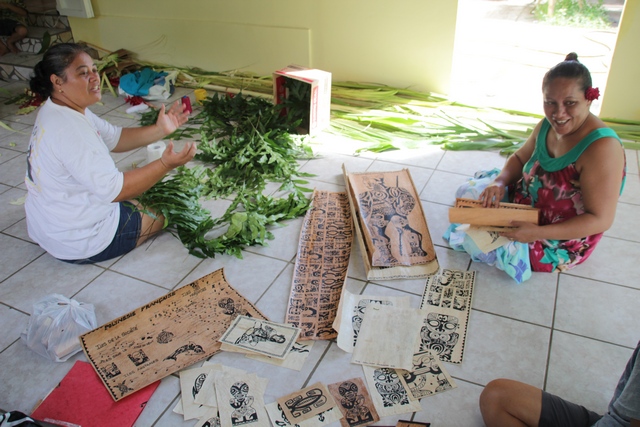
Anaho bay on Nuku Hiva.Beach on Anaho bay.Childrens camp, weaving clothes for a traditional dance performance for their parents.Hiking to Hatiheu with a view on Anaho Bay.Lots of mud but also beautiful scenery on our walk to Hatiheu.We arrived at Hatiheu just before a downpour !With Jacques and Michelle at famous restaurant Chez Yvonne in Hatiheu.
Today, wednesday,July 6th, we are in Taiohae Bay on Nuku Hiva since saturday. We continue to be charmed by the Marquesas and its people. Nuku Hiva is the second largest island of French Polynesia after Tahiti. It is the administrative capital of the Marquesas islands. Today about 10.000 people live in the Marquesas. In the 18th century population was at 78.000 but western diseases such as measles and smallpox reduced the population to 4000 at the beginning of the 20th century.
The bulk of the Marquesas Islands are of volcanic origin, created by the Marquesas hotspot that underlies the Pacific Plate. The Marquesas islands group is one of the most remote in the world. We arrived after our passage in Hiva Oa, then sailed to Tahuata, from there to Fatu Hiva and then back to Hiva Oa. From Hiva Oa we did a night sail to Nuku Hiva, where we are now.We will visit a couple more bays here and then sail to Ua Pou.
We arrived on Nuku Hiva at 9 AM after a night sail from Hiva Oa. It was another beautiful view ! When we took Flipper to the dock it was immediately clear that this was a more commercial island. There were a couple of restaurants, 2 stores and the supermarkets carry a lot of “gourmet food” such as lots of frozen vegetables (a nice change from canned food), Belgian chocolate, frozen lamb, Rocquefort cheese , “President” real butter and “Bonne Maman” jelly! During our discovery walk of the town we were invited for a festive dinner (at 6.30 PM) and traditional dance in preparation for the festivities of July 14th (Bastille Day). We met with Ann and Yvan from Kruibeke (Belgium) from the yacht Vaguebond. We were lucky to have just met them since the next day they were already off to the Tuamotus Islands. So far we have met only one other Belgian boat…We had a great evening ! The drums were fantastic and the dancers even better! I had steak and french fries for dinner with a glass of red wine!! It tasted soooo goood :-)). Yesterday Stefan figured out what the problem was with our batteries AND FIXED it !!! I continue to be amazed in how good he is in fixing all our problems…I love it ! We also had a nice 2 hour hike in the late afternoon and picked up part 1 of our laundry. Today we had lunch at Keikahahuni restaurant, I had “poisson cru” (raw fish) and Stefan had fettucine in a creamy sauce with fish, we enjoyed the peace and quiet of the restaurant, only accompanied by 3 kittens waiting for leftovers (which there were not). Tomorrow we will pick up part 2 of the laundry, get diesel and leave for supposedly one of the most beautiful bays, Hakatea, just next door.
Traditional dance for the 14th of July festivities.The drums were fantastic !
Taiohae bay on Nuku Hiva.Sanuk captain, with Taiohae bay in the background.Notre Dame Cathedral on Taiohae, opened in 1977.Inside the cathedral.At the Temehea tohua site (ancient ceremonial meeting site) along the seafront with sculptures carved by artists from the island.View down in the Bay of Virgins on Fatu Hiva.The Bay of Virgins on Fatu Hiva.Walk to the Vai ‘e’enui falls. The scenery is just gorgeous!Refreshing shower and swim at the Vai’e’enui falls.Sunset at Puamau bay.Main street, Puamau.On our way to the Me’ae Te i’i pona site, a well restored ceremonial site of the Na’iki tribe.This is the statue of the priestess Tau’a pepe who died giving birth to a male child. The statue is carved by her husband.
On our return we met Sevrin who was going to cut coconuts for copra. He would show us how this was done. Again the scenery was just beautiful.On the left dried coconut meat which is gathered for the coconut oil industry in Tahiti. Monoi oil is made from coconut oil.Sevrin is showing us how he cuts the meat out of the coconut.Sevrin slashing the coconut open. He invited us to his home to give us grapefruits, lemons and “pommes cythere”, a kind of sweet apple. We took the family for a visit on our boat, which they loved !Sanuk in Puamau Bay on Hiva Oa.
Na ons bezoek aan Hanavave op Fatu Hiva zijn we vertrokken voor een dagoversteek naar ons als eerste aangedane eiland Hiva Oa, maar dan aan de achterkant deze keer (NE) , in een niet beschutte baai Pouamau. Niet beschut wil zeggen dat de wind en de golven normaal recht de baai inkomen, en een gevaar vormen om de boot op het strand en de rotsen te drijven. Maar nu waren de weersvoorspellingen zeer goed voor de komende dagen, en daarom lagen we in een grote maar anders verlaten baai zonder wind, en met weinig deining.
Tiki site Me’ae Te i’ipona op Hiva Oa
We bezochten hier de meest gekende Tiki beelden van de markiezen. Na een korte wandeling door de enige straat van het dorp kwamen we op een gemaaid stuk grond langs de weg, waarop de beelden stonden. Op ons na was er niemand, en we genoten van de invloed van de geesten op deze plek. We schudden twee pompelmoezen uit een boom en aten deze heerlijke dorstlessende vruchten op. Kort daarna kwam er een ruiter het pad op en we volgden hem naar zijn ‘werk’: in de kokos plantage haalde hij kokosvlees vanuit de noten, en nam het in zakken mee naar huis om te laten drogen. Na een drietal dagen heeft hij Copra, wat hij verkoopt als inkomen.
Cocos vlees uithalen om gedroogd als copra te verkopen
We gingen met hem mee tot bij zijn huis, waar hij wat andere vruchten uit de bomen haalde: pompelmoezen, twee zuurzakken , citroenen, karambollen (sterfruit), een tros bananen en veel pommes cither. In ruil gaf ik hem wat benzine en namen we hem mee met zijn vriendin, kindje en neefje naar de boot. De kinderen en zijn vrouw hadden nog nooit op een zeilschip gezeten en vonden het geweldig. (Tot de kleinste er grijs begon uit te zien, en we hen allemaal terug naar de kant brachten voor ze echt zeeziek werden).
Sevrin en Lisa, zoontje en neefje op de boot
De volgende dag zijn we verhuist naar de baai ernaast, die wel beschut is: Hanaipa baai. Onderweg merkte Ilse een raar geluid, nl de waterpomp was continu aan het werken. Het bleek dat er een lek was waardoor onze 600L voorraad zoet water in de bilge (onderste deel van de boot) gepompt was. Ik heb de electriciteit van de pomp afgelegd, en eens we geankerd waren, gekeken wat er aan de hand was: een darm was losgekomen waardoor het water onder druk zich een weg zocht naar buiten. Om de darm terug en beter te bevestigen heb ik wel de pomp met drukvat moeten demonteren, maar het viel allemaal best mee. Na een halve dag sleutelen konden we terug water maken om onze voorraad aan te vullen.
De waterpomp, met achteraan de losgekomen aansluiting
We hebben wel nog een ander probleem dat we hopen op onze volgende stopplaats op te lossen: onze batterijen worden niet goed meer opgeladen, meer hierover verder.
We hebben nog een mooie wandeling genaakt in de dorpsstraat: vanaan het strand gaat de betonbaan omhoog de de vallei in. Er is maar een straat, en ze is fotogeniek. Het valt op dat de Markiezanen veel werk maken om hun tuin en buurt mooi te onderhouden. Elke morgen zien we talloze rookkolommen die aangeven dat er bladeren worden verbrand (Hier mag dit nog). Ook in de palmboom bossen wordt de grond opgeruimd en gemaaid, kwestie van de kokosnoten gemakkelijk te vinden, maar toch wel een stevige karwei.
Stefaantje zag eens pompelmoezen liggen, als peren zo grootDe hoofd- en tevens enige weg van het dorp
Na een paar dagen zijn we dan s’avonds om 18:00 uur vertrokken voor een nachttocht naar ons volgende eiland: Nuku Hiva, zo een 80Nm weg. Er was geen maan en dus was het varen in het donker, gelukkig met een matige golfslag en een eerder stevige wind. We waren daarom sneller dan verwacht bij het eiland Nuku Hiva, zo rond 9:00 uur s’ochtends. Onze eerste meerplaats, de Taiohae baai, is zeer groot en er liggen slechts een twintigtal boten (dus geen nood voor een hekanker ;-). Ik had via email een afspraak gemaakt met Kevin van Nuku Hiva yacht services, en hij is de volgende dag gekomen naar de boot om de problemen met onze batterijen mee na te kijken.
Opgelet, technisch stuk komt eraan. Ik had mijn huiswerk goed gemaakt, en wist waar alles lag, had alle handleidingen nog eens gelezen, en had de batterijen nagemeten. Na een uurtje stelde ik vast dat Kevin mijn mening deelde: de originele dubbele Lagoon batterijladers waren de boosdoeners. De ene werkte niet meer, en de andere sloeg om de haverklap af om daarna terug tot leven te komen. Geen wonder dat het zo lang duurde om de batterijen te laden met de generator: we hadden slechts een rendement van 30%. Gelukkig zit er reeds een Mastervolt combi inverter-lader op de boot die tot nu toe enkel voor inverter gebruikt werd. Dus heb ik de leiding van de Lagoon lader verlegd van het motorcompartiment naar onder het bezoekersbed. Dat klinkt gemakkelijker gezegd dan gedaan, want om in de technische holle ruimte van de boot te geraken heb ik de kast van de ex-ijsmaker moeten uithalen, en om een draad uit een bundel te halen van zo een 50-tal andere draden loopt het zweet gauw van het lijf. (Zeker bij 30 C) Maar de aanhouder wint, en het resultaat maakte me blij: alles werkte zoals verwacht. Ook heb ik een aantal aansluitingen aan de batterijen veranderd, zodat de batterij-uitlezer (shunt) nu correct registreerd. Dit was een probleem dat er al was van de vorige eigenaar en zorgde dat de batterij uitlezer nooit correcte informatie gaf over hoeveel capaciteit er verbruikt was, en hoeveel de batterij geladen was. Ik ben dus een gelukkige jongen: problemen verholpen, extra mogelijkheden bij, en dit alles voor bijna geen geld (75 $ experten advies), want mijn tijd en werk reken ik niet aan…
tijdelijk kast van de ex-ijsmaker verwijderd om toegang te hebben tot technische ruimteDe batterijen met erboven de groene shunt (uitlezer van verbruik)
Dus nu zijn we klaar om morgen te gaan tanken, en dan vertrekken we naar een nabijgelegen baai der koningen, alwaar ons een der mooiste watervallen van de wereld staat te wachten (allez, volgens de boekskes)
In the bay of Hanavave (population 311), we found usable internet on the boat! Hence, by popular request here are some impressions of our visit to the Marquesas so far. We had to severely downres the pictures in order to be able to upload with the bandwidth challenged connection.
A perfect sailing day during our crossing. Blue skies and some wind so we can use the Code Zero sail. This is one of the last pictures of a complete sail, soon after we had two halves…Stefan preparing beef stew in the middel of the pacific with 28 degrees celsius ! No french fries and no belgian beer though.Finally after 22 days of sailing Hiva Oa on the horizon ! Great to see. The GPS did it again.The last resting place of Jacques Brel on Hiva Oa. Brel died in 1978 from cancer. He was loved by the Marquesan people.Resting place of Paul Gauguin who died here in 1903 from syfillis. Though he loved the young girls (13-14 years), he was not so loved by the Marquesan people.Superb view from the cemetary.Walking the streets in Atuona, Hiva Oa.Taahuku bay on Hiva Oa. This is the check-in place and usually very crowed (Stern anchor hell)Walking in the town of Vaitahu on the island of Tahuata. In 1774, Captain James Cook landed here, and it was here that Admiral Dupetit-Thouars signed the treaty of annexation of the Marquesas to France, in 1842.Ilse in an outrigger canoe. This is a type of canoe featuring one or more lateral support floats known as outriggers, which are fastened to one or both sides of the main hull. They are an important part of the polynesian heritage. This particular one features a pretty tourist. (dixit Stefan)One of our hikes out of Vaitahu.Very sweet, juicy and big grapefruits everywhere in the Marquesas. The peel is thumb-thick, but if you leave it alone, it becomes yellow and thin like we know it in Belgium.The beautiful catholic church in Vaitahu made of ships discarded ballast stones. There are no windows in the church except for the stained glass.
Stefan after trading fuel for fruits. We ate a lot of bananas the next 10 days !Getting the breadfruit and pig out of the ground oven during the festivities at the inauguration of the new sportshall.The pig is unwrapped from the banana leaves and put in wooden serving trays. All the women are wearing flowers.Hiking on Tahuata.Lots of coconut trees. Tourism and copra (dried coconut meat), are the most important economies of French Polynesia.Hiking path on Tahuata.Drying coconut meat seen everywhere on the islands.Walking the queens path in the town of Hapatoni on Tahuata island.Hapatoni on Tahuata Island.Snorkeling in Hana Tefau bay on Tahuata.Outrigger canoe on the beach of Hapatoni Bay.Omoa’s sea front on Fatu Hiva.Main street in Omoa.Buying tapa cloth in Omoa. Tapa is a barkcloth made in the islands of the Pacific Ocean. In the Marquesas only a couple villages still have tapa . In former times the cloth was primarily used for clothing, but now cotton and other textiles have replaced it.School dance in Omoa for first grade. They learn to swing those hips at an early age.Election of young miss Omoa (population 300). All dresses were made from plants and flowers (by the mothers and aunts).
We zijn onderweg naar het eiland Fatu Hiva , zo een 60 nm ver weg, of met de huidige wind en golven zo een 10 uur varen. We zijn deze morgen om 7:00 vertrokken en hopelijk geraken we er voor het donker. Het zou een heel mooie ankerplaats moeten zijn, met indrukwekkende steile rotswanden. Dit was het eerste eiland dat we tegenkwamen na de Galapagos, maar we hebben het aan bakboord laten liggen omdat we er niet konden inchecken, nu moeten we dus scherp aan de wind ernaartoe varen, langzaam met veel bokkensprongen van Sanuk vanwege de golven van ik schat zo een 3 meter die van linksvoor komen.
We hebben ondertussen al wat van de Markiezen gezien. Na een Desastreuze nacht in de Atuona baai op Hiva Oa vanwege ons stern anker dat we niet vertrouwden en daarom om het uur nakeken zijn we naar het nabij gelegen Tahuata gevaren waar er prachtige baaien en stranden waren. Tot gisteren lagen We voor het dorp vaitapu, waar het lastig aan land komen is. Er is geen haven en door de grote golven moeten we flipper aan een boeitje weg van de kade leggen, dus ik zet Ilse af, speel alles behalve mijn onderbroek uit, vaar naar een meerboeitje, leg flipper vast en zwem terug naar de kade. (In omgekeerde volgorde bij het vertrekken) We hebben hier ook de bevolking een beetje leren kennen, en we waren uitgenodigd op het dorpsfeest voor de feestelijke inzegening van de nieuwe polyvalente sportzaal. Daarna was er een feestmaaltijd voor de president van frans polynesie (!) met zijn gevolg (een 20 tal) en het gewone volk. Er waren 6 varkens gekookt in een zand oven en veel ander lekkers. Ik herkende een stoofpotje van inktvis met kokosmelk, geitestoofpot, kip en vele vruchten geleien met kokos. Er waren zo een 80 tal mensen van het dorp, en iedereen bediende zich en at met zijn handen. Ik voelde me direct thuis. Er was wel geen bier, laat staan Orvelo, wegens te duur. We moesten het stellen met limonade. De plaats was idyllisch, aan het keienstrand met woest brekende golven onder een warme zon. Waar dit in België tot in de vroege uurtjes zou geduurd hebben, was het hier evenwel na een uurtje of twee gedaan. We spraken af met twee families om de volgende dag, na de mis, eens langs te gaan.
De mis was kort maar mooi met gezang en teksten in het markesisch, een bizar taaltje dat me wat doet denken aan de ‘pe-ta-paal’ van mijn jeugd, een zelf verzonnen taaltje waarbij je na elke klinker deze herhaald, voorafgegaan door een’ p’. Gepesnapapt?
Frans is hier de tweede taal en iedereen kent dit, al moeten ze soms wel eens nadenken voor ze het juiste woord vinden. Dus na de mis zijn we bij Nathalie gegaan, om eens naar haar wasmachine te kijken, deze was gestopt met werken. (Er wordt gekocht in Haïti, het komt met de boot aan, maar er is geen dienst na verloop op de eilanden, zelfs geen electrieker) Ik had de motor kunnen vervangen uit een oud wisselstukken exemplaar, maar het mocht niet baten, de trommel draaide slechts in één richting. Waarschijnlijk de condensator die ook stuk was? We aten nog wat kip van het feest van de vorige dag, en Nathalie vertelde wat van het leven in het dorp. Niet gemakkelijk, want geen werk te vinden op het eiland. Het huis was in elk geval niets van luxe, geen bril op de wc, douche werkte niet meer, zeer rommelig, niet proper, anders dat wat men er zich van buitenaf zou van voorstellen. Nathalie was moeder van 8 kinderen, zag er 65 jaar uit maar had de gezegende leeftijd van… 55. De meeste van haar kinderen woonden in Papeete, maar hadden geen werk, drie zonen zaten in het Franse leger. Ilse en ik hebben er toch eens bij stilgestaan hoe goed wij (en bij uitbreiding de Belgen) het wel hebben. De meeste mensen verdienen geld op de eilanden door de verkoop van gedroogd kokos vlees (copra) en Moni vruchten voor gebruik in de cosmetische sector. Elk stuk land is eigendom van een familie, en om beurten kan een gezin oogsten. Ook vissen is een bron van inkomen en voedsel, en soms koopt een toerist eens een kunstwerkje. Ze maken hier mooie gesculpteerde beeldjes uit hout en beenderen, versierde wandelstokken, speren en roeispanen. Ook sieraden met kleurrijke bessen.
Bij wet mag een buitenlander geen grond bezitten. Daaraan is dus geen gebrek voor Markiezanen want op het eiland van 20 km2 woonden maar 600 mensen. Qua wilde dieren zijn er hier wilde varkens, geiten en paarden waarop er al eens gejaagd wordt. Qua huisdieren de alomtegenwoordige magere hond, zeer weinig poezen. We zagen ook graatmagere varkens en geitjes in een weide, en de occasionele koe en stier.
Ik heb hier 15l benzine geruild voor fruit: 2 takken bananen met elk zo een 10 trossen aan, 15 reuze pompelmoezen, 3 appelsienen, 2 kokosnoten, één kleine ananas. We hebben veel bananenbrood gemaakt, nog meer rauwe bananen gegeten, veel bananen weggegeven,en nu zijn we er een 20 tal aan het drogen in de zon. Ik heb er deze morgen nog een dertig tal overrijpe in de zee gekieperd… Moeke zal wat doen als ze dit leest!
Ach ja nog een weetje, het loopt overal vol van de kippen, maar momenteel kunnen we nergens eieren vinden… Als de vrachtboot in de haven loopt, is het de volgende dag overvloed in de winkel: we hebben terug aardappelen, ajuin, wortelen en diepvriesgroenten ( ingevoerd vanuit… Ardooie)
Ondertussen is het 12:30 en zegt de gps dat we rond 17:00 uur zouden moeten aankomen. We hebben een pakje mee van Valentine voor Joëlle in het dorp, een zakje met bloemenknoppen waarmee ze bloemenkransen maken.
En tenslotte als uitsmijter. We zijn niet zeker van het uur hier in de Markiezen, we waren te vroeg voor de mis, en we twijfelen in welke uurzone we zitten. Alhoewel Ilse haar uurwerk blijft dragen (omdat ik niet georganiseerd ben zegt ze), staat het dus wellicht verkeerd…
Ps, bij het overlopen van de e-mails zag ik dat een van mijn laatste blog posts een verkeerd e-mail adres had. Dus weten jullie niet dat we ons oranje super zeil voor wind vanachter moeten missen: we gingen gezapig door op een niet al te hobbelige zee met een matige 10 knopen wind, tot we tot ons afgrijzen en scheurend geluid hoorden. Ons oranje zeil hing in twee stukken: één helft nog aan de mast, de andere helft aan de schoot. Dit zal een serieus werkje worden voor een zeilmaker in Tahiti. Vandaar dat we de twee laatste dagen niet meer recht op ons doel afgingen maar zijn beginnen zwalpen… We weten nog niet waarom het zeil gescheurd is, misschien te veel stress gezet bij het oprollen?
Today, Thursday June 16th, we have been little over one week in the Marquesas after a passage of 22 days from the Galapagos. It was 6.30 PM when we dropped our anchor in Taahuku bay on Hiva Oa. We anchored temporarily outside the bay because there were too many boats and it was already dark.We immediately smelled
the scent of many flowers, the scenery of steep green mountains dropping in the sea was just gorgeous. We were happy we could finally sleep together again! Although the passage went fine I would not like to do it again!
We only stayed 2 nights in the bay because there was just not enough room for all the boats. We were anchored in between 2 yachts with a stern anchor and thus had to do the same. As the wind was coming from all directions it pulled hard on the rope of the stern anchor and at 7 AM we heard it snap! Stefan fixed it , but at 9 PM we noticed the stern anchor was loose and we were drifting closer to our neighbour. Again Stefan had to go out with Flipper and fix it! We did not sleep well 2 nights in a row. Luckily during the two days we were able to check in at immigration. The check in was only one piece of paper and free. What a nice difference from South America! We visited the town of Atuona and the cemetary with the graves from Paul Gauguin and Jacques Brel. They are burried amidst beautifull and peacefull scenery. We were able to buy fresh butter, cream, french bread, frozen lamb and frozen vegetables in a small grocery store, all expensive but at least some change from the c
hiken, fish and rice we had been eating!
We left Hiva Oe on saturday morning and sailed with sun and wind to Tahuata, Hana Moe Noa Bay. Moe Noa means “long sleep” exactly what I needed now. The scenery all along the trip was really superb. Huge steep, green covered clffs that rise out of deep blue water! After barely 2 hours of sailing we arrived in the bay, there were 4 other boats, it was stunning. A white sandy beach with palm trees at the end and on both sides of the bay mountains with green grass, shrubs and palm trees. This was like paradise. We went snorkeling and walked on the beach, enjoyed the beautifull sunset and had a great dinner with lamb on the barbecue. This was perfect! We stayed two days and then visited two more bays on the island. So close to each other but completely different scenery. Resolution Bay (also called Baie de Putain by the french, you can surely find the story behind this on internet as it is too long to tell here) with the town of Vaitahu and Hapatoni Bay with the towns of Tefau and Hapatoni. We hiked in both bays and the views are really breathtaking. The nature is so pure. Very few cars and not so many people. The people are friendly, they all speak french with an accent, but they are reserved. We traded 15 liters gasoline for a bag of grapefruits, two huge stalks of bananas, papaya, pineapple, oranges and coconut. We are eating lots of bananas these days and banana cake! After the snorkeling this morning we left Tahuata to go back to Hiva Oa because we have to get to a bank to get dollars changed in French Polynesian francs. There are only two banks in the Marquesas, on Hiva Oa and on Nuku Hiva which we will visit later. So tonight we are again anchored right outside the bay of Taahuku. We are not alone as the huge cargo-passenger ship Aranui 5 is docked inside the harbour. It comes once every three weeks with tourists and supplies. Hopefully we can leave by noon tomorrow for another bay and more beautifull scenery!
We zijn aangekomen in de markiezen eilanden, meer bepaald in de baai van het dorpje Atuona op het eiland Hiva Oa. Het was nog spannend op het einde, want het werd pas op de laatste dag op zee mogelijk om te zien dat we met daglicht nog ons doel zouden bereiken, indien de wind sterk bleef waaien, en dan nog zou het naar zonsondergang toe gaan. Het alternatief was om de snelheid zo sterk mogelijk te minderen en een nachtje langer op zee te blijven en pas de volgende ochtend de baai binnen te lopen. We besloten om alle zeilen bij te zetten en ook de motor mee te laten helpen. Het is gelukt, net bij zonsondergang liepen we de baai binnen, waar nog een 20 tal andere zeilboten lagen. Dus hebben we ons net buiten de baai geankerd, geslapen op een ietwat wiebelende boot, en de volgende morgen ons verlegd in de beschutte baai zelf. Het was de eerste keer in 22 nachten dat we naast elkaar in bed lagen (om te slapen 😃) en dat was leuk! Na het herankeren zijn we per auto stop naar de gendarmerie geweest (het dorp ligt zo een km of 3 van de baai), waar we op 15 minuten terug buiten waren: 1 blad invullen en paspoorten afgeven waren goed om onze boot 1,5 jaar hier te laten, en wijzelf zo lang we willen (maar we mogen hier niet werken) kost: 0 Xpf (frans polynesian franc 100xpf =0,8€), een verademing na de dure papperasserie van Panama en Ecuador. Maar voor de rest is alles hier wel duur, vb 339xpf voor 6 kiri kaasjes. Enfin, dat wisten we op voorhand, en gelukkig is er hier veel meer keus dan in Ecuador. Maar pas in Tahiti wacht ons een echte Carrefour, nu moeten we het nog stellen met de profi’s. Het was trouwens tijd dat we er waren: de eieren, koffie, aardappelen, wc papier, afwasmiddel, boter, koekjes waren op…
Gelukkig dat we in de winkel onze cc konden gebruiken, want we hebben nog geen geld kunnen afhalen bij de atm, onze 2 kaarten gaven een fout, vandaag proberen we opnieuw bij een andere atm, en met onze andere kaarten als backup.
Ook was het de eerste keer dat ik een tweede anker moest gebruiken om onze draaicirkel te beperken: met flipper varen we achter de boot en gooien een anker met een korte ketting en een lang touw uit, die we dan achteraan de boot vastmaken. Zo kunnen er meer boten in een kleine baai liggen. Het was mijn eerste keer dat ik dit stern anker techniek gebruikte, en ik zal het geweten hebben want eerst hield het anker niet want het bleek op een ijzeren plaat te liggen ipv in zand, en toen het wel goed vast lag in het ondiepe gedeelte van de baai (2m), is het touw deze morgen om 7 uur geknapt. Gans de nacht was alles vlot verlopen en gaf de iPad app’anker alarm’ aan dat we mooi bleven liggen op onze plaats, tot ik dus deze morgen een geluid hoorde alsof er een boomstam tegen de boot was gebotst, aan dek gekomen kon ik echter niets vinden, tot mijn oog viel op het einde ankertouw dat nog aan de boot haak bengelde. Dat was de oorzaak van het geluid! Dus ik snel in onze flipper, naar de boei die de plaats van ons anker aangaf, en het touw opgedoken. Terug aan elkaar geknoopt en we liggen weer vredig in de baai… Weer een ervaring rijker alhoewel ik nog niet zeker ben waarom het geknapt is, na overleg met mijn buren, een Deens koppel en een Nieuw Zeelander denk ik dat ik het touw te strak had gespannen. De boot moet blijkbaar een beetje kunnen bewegen. We zullen zien.
Internet is hier blijkbaar een ramp, we hebben nog niets gevonden waar we onze mail kunnen ophalen of een fotootje kunnen uploaden. Vandaag gaan we terug op zoek in het dorp.
Ok, we zijn net terug van het dorp, en het internet was nergens te vinden. Het zal tot in de tuamotos of de genootschapseilanden wachten worden vooraleer we een foto kunnen oploaden naar de blog, of onze emails lezen. (Enkel sanuk@decuypere.org kunnen we altijd via satteliet zelf downloaden)
Ook geld afhalen via onze gebruikelijke credit cards zal moeten wachten tot we internet connectie hebben en eens met de bank kunnen overleggen. Maar we trekken onze plan wel.
In grote lijnen ziet ons bezoekplan van de Markiezeneilanden er als volgt uit: eerst Puamau baai nog op HIva Oa, dan gaan we naar Fatu Hiva, daarna Tahuata, gevolgd door Ua Huka, Nuku Hiva en Ua Pou. Daarna, en dat is waarschijnlijk rond begin Juli vertrekken we naar de Tuamotos.
Maar vandaag en tot dinsdag zijn we dus in Hiva Oa, en we hebben het graf van Jaques Brel en Paul Gaugin bezocht op het lokale kerkhof. Beiden zijn hier gestorven (Respectievelijk in 1978 en 1903) en dat mochten we niet missen. Verder is hier in het dorp niet veel meer te zien, de natuur is heel groen, de bergen ruw en steil, de mensen nogal gesloten. Zoals reeds vermeld gaan we dinsdag morgen vroeg vetrekken naar de andere kant van het eiland, om de reuze tiki beelden te gaan bekijken. Dat zal misschien wat vechten tegen de wind worden, maar het zou de moeite moeten lonen.
Het weer is hier wisselvallig, vannacht en deze morgen was het aan het gieten, ik heb van de gelegenheid gebruik gemaakt om de romp van de boot te kuisen, het was nodig want tijdens de overtocht hadden zich gooseneck barnacles (ganzenek mossels) aan de romp vastgehec5ht juist boven de waterlijn, en nu waren ze aan het groeien geslagen. Maar niet voor lang dus. Het water was warmer dan de regen, en met een plastieken steekmes en een stijve borstel heb ik ze van de romp kunnen verwijderen. Grappig, ze zien eruit als groene spermazotoieden, een klein zwart kopje met een lange groene staart. Maar wel hardnekkige kereltjes…
De ankerplaats in de baai is dan weer niet zo goed voor het hart, telkens we terugkomen van een wandeling naar het dorp vinden we dat we te dicht liggen bij een buur, deze avond rond 16:30 hebben we nog maar eens geherankerd en meer ketting gestoken. We vonden dat we te dicht bij onze Deense achterbuur lagen. Sindsdien zijn we continu bezig met inschatten van afstanden telkens als de wind draait. En nu het donker geworden is, is dit nog moeilijker. Hopelijk moeten we deze nacht niet in allerijl beginnen met heranker manouvres uit te voeren. Enfin, ik hou jullie op de hoogte.
Before we leave just a quick picture blog about our adventures in Ecuador. It already seems so long ago….
The black marker line indicates how we traveled clockwise through Ecuador. From Bahia on the far left (circle) to Quito then on to Banos. In Banos we took the bus to Lago Agrio to do our trip in the Amazone. From their back to Banos, then Alausi, Cuenca (where we felt the earthquake), then to Guayaquil, Manta en by taxi back to Bahia.
After leaving Quito (without Stefan’s IPhone) we went to Banos.
The market in Otavalo, just outside Quito. She only agreed to have her picture taken because I bought a scarve. This is a typical Ecuadorian outfit, white blouse with embroiderie, gold necklaces, colored bracelet, long wool skirt and scarve draped around the shoulders.Eating 2$ lunch in the mercado at Ottavalo.We did a mountainbike ride in Banos, the easy way. It was all downhill and we came back in the back of a truck with our bicycles 🙂Lots of waterfalls around Banos.Coming back from school….On our way to the hot water baths we passed this huge cemetary, in a beautiful location, surrounded by mountains. (Stefan says: some crypts have electric lighting inside, see wire)Going for the calories before our camping trip to the Amazone…
The boat in which we traveled in the Amazone. We traveled through the Cuyabeno wildlife reserve.Camping was very basic and good it did not rain the whole time ! I was happy this was only for 3 nights !Stefan together with Barry (Australia) and Raoul (Honduras), our companions on the trip.One of the many monkey species in the Amazone. It is one of the animals you definitely see the most.The Toucan ! You do not see them very often up close but you can hear them a lot. This was the best picture I could take.Lots of turtles that are now being bred in captivity to increase their population.There are many macaws in the Amazone but you can never come very close. This was one living with local indians.
The Capybara, the largest rodent in the world. This is a baby.A sad monkey captivated by an indigenous family. They keep it as a pet.Nobody home, they were probably gone fishing. This is a hut on the side of the river.Typical hut along the Cuyabeno river.Another type of monkey.More bird wildlife but I could not figure out what kind it was…Small village along the Cuyabeno river.Upon our return, we spent half a day in the warm water baths in Banos. It felt great after our camping days in the Amazone !!!Train ride in the Andes, El nariz del diablo.In front of El nariz del diablo…The train ride only lasted one hour each way but the views were beautiful. We did have a lot of fog going but on our return the clouds had lifted somewhat.Finally some blue skies in Cuenca. The Catedral Metropolitana de la Inmaculada Concepción was only finished in 1885.Typical street in Cuenca. Cuenca is a UNESCO world heritage site and lies at an altitude of 2500M.The blue and white domes from the New Cathedral are a landmark for Cuenca. At its inauguration in 1885, the newly constructed Cathedral could accommodate 9,000 out of Cuenca’s 10,000 inhabitants at that time. Today there are about 500.000 people living in Cuenca.Lots of beautiful churches in Cuenca to visit…Church of Santo Domingo.Belgian cafe in Cuenca…In the corner of the square I had a localy brewed beer made by a Belgian from Ghent 🙂Ingapirca, just outside Cuenca. These are the largest known Inca ruins in Ecuador.
We found some good restaurants in Cuenca and even tasted a roasted cavia (Cuy in Spanish), it was yummi. After the earthquake we wanted to go as quickly as possible back to our boat since we had no news and Bahia was close to the epicentre of the earthquake. We took the bus to Guyaquil, stayed their for one night and then took a bus to Manta from where we had to take a taxi since there were no buses due to the earthquake. The devastation in Bahia was enormous but we were lucky there had not been a tsunami and thus nothing happened to the boat.
We decided to leave asap to the Galapagos as there was nothing for us left to do in Bahia without internet.
Red footed boobie, welcoming us to the Galapagos. He stayed the night on the boat.
Friday, May 13th, on Santa Cruz Island, we have checked in at our last island of the Galapagos. The paperwork to travel with your boat in the Galapagos is significant, as is the cost to go to between harbours (45$)! Everything on the islands is expensive: foodstores, restaurants and tours with the mandatory park guide. But this is definitely one of the highlights of our tour in Ecuador. It is incredible how the animals let you come close and are not afraid of humans. We visited 3 islands: San Cristobal where we picked up Meliena at the airport, then on to Isabela where we put Meliena back on the airplane and lastly Santa Cruz mainly for provisioning to do the “puddlejump”.
I will give an overview of what we have done in the Galapagos through my pictures.
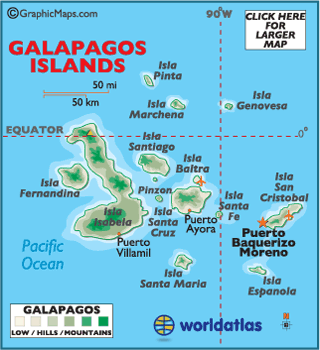
We arrived in Puerto Baquerizo Moreno where we had to fend off the sea lions from our boat. Then we sailed to Puerto Villamil and now we are in Puerto Ayora getting ready to leave for the Marquesas.
The Galapagos were discovered in 1535 by Tomas de Berlanga. Until the 19th century the islands were used as hideout for pirates who robbed the spanish galleons carrying gold and silver from South America, back to Spain. The islands became famous around the world after the survey ship HMS Beagle, arrived in the Galapagos in 1835. On board was a young naturalist named Charles Darwin.The islands became Ecuador’s first national park in 1959, and these now aggressively-protected islands and the surrounding marine reserve were both declared World Heritage sites. We will have stayed almost 3 weeks here and must say a minimum is 7-10days if you can do a cruise between the islands.
Yellow Warbler.Daily visitors on the boat. We had to put up a construction to keep them off the boat because they do not smell so great and leave dirty stains …The male Darwin Finch. There are 13 species of finch on the Galapagos, collectively known as “Darwin Finches”.The Sally Lightfoot crab, Grapsus Grapsus (Latin name). The name comes from their ability to walk on water when they go fron one rock to another. (San Cristobal Island)Darwin statue on San Cristobal island, it is the island where Darwin first went ashore in 1835.We went with our bicycles to El Junco lake, a crater lake of fresh water on San Cristobal. The ride was not as easy as expected, all uphill ! Going back was easy though :-).Stefan and Meliena on San Cristobal island.Sea Lions rule on San Cristobal. They are everywhere, it is the local stray “dog”.The blue footed boobie. The name comes from the Spanish word ‘bobo’ meaning fool or clown. In the Galapagos live three kinds of boobies : the blue footed, the red footed and the nazca boobie. (Punta Pitt, San Cristobal Island)Courtship from the blue footed boobie. They always lay 2 eggs but in 90% of the cases only the first chick to hatch survives. The second one most of the time starves. Survival of the fittest ! (Punta Pitt, San Cristobal Island)Red Footed boobies at Punta Pitt on San Cristobal Island.Scenery of our walk at Punta Pitt. (San Cristobal island)Kicker Rock seen through a cave near San Cristobal island. Spanish name is Leon dormido, it is a remainder of a lava cone, split in two.The newly (2015) paved road from the harbour into town.Isabela Island, Los Tunneles where we snorkeled with the Galapagos penguins, sea lions, and even sharks. Taken with our underwater camera.Meliena with the penguins and a blue footed boobie. These penguins only live on the Galapagos and stay here all year long.(Isabela Island)Meliena on the boat, on our way to Punta Pitt. (San Cristobal island)Dolphins jumping out of the water when we returned from our trip to Punta Pitt. (San Cristobal island)Flamingos getting ready for the evening on Isabela Island.A 100 year old tortoise after a long day… Don’t worry, he is still alive! The Galápagos giant tortoise is the largest living species of tortoise. Galápagos tortoises can weigh up to 417 kg. Today, giant tortoises exist only on the Galápagos and on Aldabra in the Indian Ocean, 700 km east of Tanzania. Tortoise numbers declined from over 250,000 in the 16th century to a low of around 3,000 in the 1970s. Conservation efforts beginning in the 20th century, have resulted in thousands of juveniles being released onto their ancestral home islands, and the total number of the species is estimated to have exceeded 19,000 at the start of the 21st century.Tortoise on our bicycle trip to the Wall of Tears on Isabela island.Meliena and myself in front of the Wall of Tears. El Muro de las Lágrimas was constructed between 1945 and 1959 by Ecuadorian prisoners shipped to the island. The wall is about 25 m tall and has apparently been the cause of thousands of deaths during its construction.(Isabela Island)View on top of the hill at Isabela Island. The harbour is in the background.Tortoise slowly crossing the road to the Wall of Tears on Isabela Island.The marine iguana is an iguana found only on the Galápagos Islands that has the ability, unique among modern lizards, to forage in the sea, making it a marine reptile. The iguana can dive over 9 m deep. They can be found on the rocks to warm up from the cold water.The Striated Heron. He is focussing to catch a fish, but he missed.On the Sierra Negra volcano that rises to an altitude of 1124m. In the back the huge crater. (Isabela Island)In front of the crater of the Sierra Negra volcano. It is one of the most active of the Galapagos volcanoes with the most recent historic eruption in October 2005The volcano has the largest caldera of all of the Galapagos volcanoes, with dimensions of 7.2 x 9.3 km. The caldera is also the shallowest of the Isabela volcanoes at only 100m.Meliena in front of the large caldera of the Sierra Negra volcano. It was a beautiful hike from 8 AM to 1 PM. (Isabela Island)Los Tuneles on Isabela Island. A series of lava flows have created hundreds of arches and tunnels, both above and below the water.Los Tuneles on Isabela island.The airport waiting hall on Isabela Island. We were the only ones waiting for the plane that day. One week was too short but we were happy we got at least that! 🙂 We will see each other again in November in Boston!
Today, May 15th, all the laundry is done, we have the tanks filled with diesel. We still have some food shopping to do and then we can leave for the Marquesas on May 17th. We think it will take about 25-30 days of sailing….
Na ons bezoek aan Quito, regenachtig en bewogen vanwege mijn iPhone die verdwenen is, trokken we verder naar het zuidelijker gelegen Banos. Dit is een stadje gelegen naast een rivier tussen twee bergketens. We logeerden in een leuk hotel (Floresta Hotel) en alles is op wandelafstand. Toen we op het marktplein met elkaar aan het praten waren, werden we aangesproken door een vlaams koppel Roos en Eddy (wonende te Asper) die van hun pensioen/vakantie genoten door verre reizen te maken. We praatten wat bij in een koffiehuis en het klikte meteen. We hebben samen met hen een wandeling gemaakt naar een waterval, maar dat bleek uiteindelijk meer een wateruitschuiver te zijn, zo ongeveer een meter hoog. Wel veel debiet, dat wel. Maar het plezier zat hem in de wandeling en de kompanie. Eddy, huisarts, kende zelfs onze buur Rik Joos (reumatoloog) van de Kerkkouterrede in Destelbergen. De wereld is klein!
De volgende dag zijn we vertrokken met de bus voor een vierdaagse reis in het Amazonegebied. Dat was niet goedkoop en een beetje een gok, maar we wouden iets buiten het gewone, dus werd het een trip met een kano en alles nodig om vier dagen (drie nachten) te kamperen in de jungle. Ons vertrekpunt lag in Lago Agrio, en de voormiddag was besteed aan het klaarmaken van de boot, zijn bestuurders en het materiaal. Daarna vertrokken we in de lange kano, op de rivier die onze gezel zou blijven voor de volgende vier dagen, dit is namelijk de enige manier voor de mens om door het Amazonegebied te reizen: de vaste grond is dicht begroeid en wisselt af tussen moeras, modder, rivieren en vaste grond. Langs de rivier zie je ook relatief veel wilde dieren. De rivier is een snelstromend bruin water, variërend van 0,5 tot 8 meter diep, afhankelijk van de breedte. Waar het in het begin allemaal nogal nauw was, zo’n 5 meter, met op vele plaatsen boomstammen die op het oppervlak lagen en waar we overheen vaarden, veranderde dat steeds meer tot een wijde stroom waar zandbanken en ondieptes de zaak interessant hielden voor onze stuurman. Gelukkig had onze stevige polyester kano maar een 30 cm nodig om ergens overheen te geraken.
zicht op de kano vanuit het verlaten eco hotel.
We zagen apenfamilies, heel veel vogels met als uitschieters toucans (helaas niet van dichtbij), rivierdolfijnen (terug niet zo heel duidelijk, want ze vertikten het om eens uit het bruine water te springen), kleine schildpadjes, en riviervis. Op sommige plaatsen zitten er Piranhja’s, en je weet dat best vooraleer je een duik in de rivier neemt. Na onze eerste nacht in het oerwoud, voor het ontbijt sprong onze gids bij wijze van verfrissing even vanuit de kano in de rivier, en het viel me op dat hij bijzonder vlot en snel terug in de kano zat. Ik was net van plan om zijn voorbeeld te volgen, toen hij me twee schaafwondjes op zijn torso toonde, waar de super scherpe tanden van de piranjha’s een laagje vel hadden afgeschraapt. Blijkbaar had hij zich vergist van veilige zwemlocatie, en maar goed dat ik zijn voorbeeld niet gevolgd ben, want als je wat meer tijd nodig hebt om uit het water te geraken kan ik me inbeelden dat je er wat meer bij inschiet dan wat vel…
De tocht bracht ons langs mooie natuur en vele gemeenschappen van amazone indianen. Iedereen leeft langs de waterweg, en we hebben ook nog een tweetal dorpen bezocht. Deze gemeenschappen zijn voor een heel groot deel op zichzelf aangewezen: ze hebben eigen scholen en organiseren zelf het gemeenschapsleven. Het gaat er heel relax aan toe, en het valt op hoeveel kinderen er zijn. Naast het telen van landbouwproducten voor eigen gebruik (bananen, yuka wortelen, mais) drogen ze ook cacao bonen om te verkopen. De vrouwen maken ook sieraden die ze zelf dragen en ook doorverkopen op de markt, zowel aan Ecuadorianen als aan buitenlanders. Toch kan je er niet naast kijken dat er geen hoge levensstandaard is, we aten in een huis van een familie die afwezig was, en dan zie je dat het huis enkel bestaat uit een houten platform ongeveer een meter boven de grond, met daarboven een bananenbladeren dak. Sommige vertrekken hebben een houten muur (keuken en kamer), maar de living is open aan alle zijden. Van een kastje of een deur is geen sprake. Onder het platform leven de honden en eenden. De kippen lopen vrij rond in het huis…
En af en toe kwamen we ook mislukte projecten tegen. Zo zagen we een leegstaande nieuwe school en een eco hotel dat ingepakt was, wachtend op toeristen. Een foutje bij de inschatting van de bereidheid van toeristen om ver in de jungle te reizen.
We hebben ook een wandeling gemaakt van een tweetal uren in het oerwoud vertrekkend van de stroom via een uitgehouwen pad op vaste grond tot aan een groot meer. Je hoort heel veel, maar de dieren zijn meesters in het zich verschuilen. Soms kom je wel langs oorverdovende zagerijen: krekels die samen om ter luidst hun boodschap verkondigen.
Deze tocht was interessant, maar toch niet zonder zijn negatieve kanten. Om andere reizigers een goed idee te geven van wat ze kopen voor hun geld, heb ik een uitgebreid engelstalig verslag geschreven dat je hier kan lezen. Opgelet, het benadrukt nogal de negatieve kanten om als waarschuwing over de organisatie voor anderen te dienen , alhoewel waarheidsgetrouw hebben we ons meestal wel geamuseerd.
De met uitroeing bedreigde schilpadjes worden nu door de indianen gekweekt en beschermd.een typische woning/hut langs het waterde vergaderplaats in het dorp, met de open schuur erachter, waar we geslapen hebbenKevin, de gids in spe van het dorpDie vogel eet zoveel vis dat zijn bek niet meer toukan






 Sanuk 2014-2018 travel stories