travel advisory for Marco Polo Tours, Lago Agrio

Voor onze blog lezers: dit is een speciale blog die dienst doet als klachtenbrief

April 2016

Quick Summary:

My wife and myself had a bad experience that I wish to share so other people can avoid this. So:

  • Avoid Marco Polo Tours (marcopolotour.com) in Lago Agrio with owner Ivan LLori
  • Avoid Murillo Quiroz Freddy Rogelio (Freddy) of Extremos San Limites Aventur / Rutas Doradas Expeditiones in Banos

Freddy will sell you what you want to hear, at a commision and then be unavailable for backing up what he sold.
Ivan is not true to his word, overcharged us, and is not a pleasant person to have with you on a trip.

ilse1 (10)
Wildlife along the river
ilse1 (9)
myself, Barry and Raoul. Ilse is taking the picture. We just finished dinner around the fire.
ilse1 (8)
Our camp, underneath the large plasic tarp are four tents for two persons.
ilse1 (23)
Our canou at the deserted hotel. Ivan is in the canou.

The long story:

My wife Ilse and myself, Stefan, wanted to see the Amazon and the indigenous people in a personal way, instead of being part of a
big group. While Ilse speaks relatively good spanish, I am an absolute beginner that has to use my French knowledge to try to understand the language.
So to us it was important to have an individual tour, and an english speaking guide. Further we wished to have a pleasant 4 day / 3 nights
travel experience in the amazon jungle, camping in tents along the way while visiting remote sites. We were willing to pay a correct premium price for this custom made trip.

We sat down with Freddy Rogelio of Extremos San Limites Aventur in Banos for a couple of hours, while he took us through the available options and confered with his organizer (Ivan LLori) in Lagro Agrio. Together, they proposed a 4 day tour that would take us to the Yasuni NP, where we would meet the indigenous people, at a cost of 1000 USD for the two of us.
Of this, we payed 300USD to Freddy up front.
This was to be an individual tour, with an english speaking licenced guide, and a crew of four other support people. The price was steep, but this was because of the expense involved in a private tour, where all the support material had to be carried along (tents, cooking material, food) in the boat.

We left the next evening on a night bus Banos-Lago Agrio, included in the trip. When we got to Lago Agrio at 5:30, we waited in the
bus station to be picked up, which happened after half an hour, since the bus was a bit early. We were taken by a woman,
(who turned out to be Ivan’s wife) and a cab driver to the office of Marco Polo Tours where we had to wait till 7:00 to get breakfast in a nearby hotel.
Strangely enough, the breakfast price was not included in the tour package. We found this odd, given the price we payed, and told the woman so. She said that was the way it was.
We stated very clearly to her (in spanish) that we were paying for a personal tour, with a licenced english speaking guide, and the woman confirmed this explitly (Si, no problemo). This turned out to be a complete and deliberate lie. Feeling a bit at unease by the initial experience, we asked if we could pay 500USD of the remaining sum of 700 USD before the start of the trip, and 200 USD at the end, but after calling back and forth between Ivan and his wife, this was not possible, since he had bought all the supplies already. Reluctantly, we payed the whole sum.
We had trouble with getting money from the ATM, but they were very helpful to let us call our US bank credit card helpline, and drove us to several ATMs in the city. In the end we were able to retrieve money from the ATM, and payed.
We squeezed in the back of the taxi truck with our backpacks, and two other persons, for what we thought was a short ride. In the front was the cab driver and Ivan’s daughter with a 20 week old baby (She turned out to be just hitching a ride, since we never saw her on the rest of the trip).  In the back were Ilse, myself, our daypacks, Ivan’s wife and another person (!) Needless to say it was very cramped. The ride lasted an hour, with a stop at a gas station to fill two large diesel containers, and two short stops in town for something. It was sweltering hot in the truck, and we were very happy to get there, since we were cramped with our backpack on our knees.
When we arrived at the departure point we met our team. Well this is to say we saw a long canoe, with two persons on board. Everybody ignored us, which we found rude. A person in the canou was shouting orders to the other helpers as they were loading the canou with the stuff from the taxi truck.
Finally, as everything was loaded, the person in the canou said in Spanish: I am here to make sure that the others do everything correct, I cannot walk because of my leg injuries, but you will have no trouble from me. Since they failed to introduce themselves, we did so, and asked for everybody’s name. There was the handicapped man, Ivan, the canou driver Martin, the cook Maria, some silent person and the spanish speaking guide Javier, who assured us that his english speaking friend would come on board soon.
We left around 1 pm and left for a lodge where we would have lunch. Along the way, we enjoyed the beautiful nature and made frequent stops to identify and point out the wildlife. Just before our stop, the silent guy left the boat: it turned out we were giving him a ride to a lodge.
When we informed about what would happen that day, Ivan explained that it was impossible to go to the Yasuni NP with just 4 days, and that we would visit the Cuyabeno NP instead. When we explained that Freddy in Banos had promised us a circle tour, (I.e. not going out on a river and coming back the same way) Ivan did not agree and explained that the return leg would then be on the ‘petrol exploration’ river, where there was no wildlife to be seen. He proposed instead a special tour to Cuyabeno indiginous people with a visit to a shaman (village chief) and a drink of the indigenous special brew. He said that he would of course take us to wherever we wanted to go, since we were the paying guests (as if we had knowledge of where to go).
The lunch was simple but good, and after an hour we got back into the boat. Suddenly two more men with backpacks climbed in the canou, and I politedly inquired who they might be. They turned out to be two extra tourists, going along for the ride. After assuring the two men that this was not personal, I objected to Ivan, who said that it is impossible to do this tour with only two guests. I asked the new guys, Barry (from Australia) and Raoul (a biologist from Hunduras) how much they payed, and it was about half of the price we payed (But admittedly they did not have to pay an intermediate sales person). So here we were, in the middle of the jungle, the trip payed up, and an organiser who said (in spanish) “it is what it is”. Ilse and I decided to go along, and complain afterwards asking for a partial refund.
Luckily, Barry and Raoul turned out to be two friendly and interesting guys, who added to our enjoyement of the tour.
That evening, about an hour before nightfall, Ivan started looking for a place to camp. We found one, but after Javier had cleared the area with a machette, Ivan found it too small. So we searched for another site, and by the time they were ready to put up the tents, it was getting dark. The tents turned out to be a mix a four relatively new (10 years?) 2-person tents, and an old 4 person tent. None of the tents had a outside rainshield cover, one had a torn mosquito net, there were no pickets, and the fiberglass rods for the small tents had seen better days, as some were split from too much tension. To their credit, Martin and Javier did a good job of setting up the tents (it seemed to be their first time too), and put all the tents underneath a giant plastic sheet that they supported by sticks cut in the jungle. All of this happened under the ‘guidance’ from Ivan, who stayed in the canou while he helped Maria, the cook. I might add they finished in the pitch black.
We built a fire, and ate our dinner while sitting around the fire on the boat benches.
We slept ok, and the next morning awakened to sound of waterdrops on the plastic sheet. It turned out to be the remainder of rain and the dew that was dripping from the trees, making it sound worse that it actually was. This is the rain forest, after all.
The next morning, I saw that our guide took a dip in the murky brown river, and was in and out very quickly. I was just about to do the same when he stopped me. He showed me two bleeding skin patches on his torso, caused by hungry piranhia’s. I wisely took a cooking pot and got some water from the river to wash me instead…
That second day, we enjoyed the amazon jungle, and made frequent stops along the way to look at the wildlife (Birds, turtles, monkeys, dolphins. In the late afternoon, we visited a large indigenous community, and found that they had a covered raised platform, which would be ideal for the night. We asked Ivan if we could sleep there, and he made the necessary arrangements with the village chief.
Dinner was served on a nearby river sandbank, where we had the opportunity to swim, relax and learn how to fish like the locals. While Ivan, Maria, Martin stayed to sleep on the river island, we went to the village where Javier had pitched our tents on the platform. It was the end of a nice day.
The following morning, we waited till around 9am before Martin came with the canou to fetch us and the tents. Then it was back to the sandbank, where Maria still had to start the breakfast. There was no schedule to the days of Ivan, so it was always a wait and see thing.
After cleanup of the kitchen, we left for another nice day. The son of the village chief went with us, to guide us on a walk through the jungle. The canou dropped us off at the start of a path, and then went to the endpoint of the walk to pick us back up. The two hour walk was very nice, and showed us another side of the rainforest, from the ground instead of from a waterbound canou. Unfortunatly we did not see any wildlife, only heard the sounds of birds and monkeys.
The walk ended at a lake, where we took the canou to visit a nice but empty jungle hotel, that was all locked up. Sadly, this splendid accomodation, owned by the indigenous people, was too far of the beaten path to attract tourists, and so it was boarded up. After a while, we took the canou and left the lake through an overflow channel, which took us on a beautiful trip through dense vegetation. A tough job for Martin the driver (lifting the motor over many submerged branches) and Javier, guiding the long boat from the front, often by paddling the bow in the right direction. A highlight of the day!
We made one stop in another village, where we enjoyed a visit to the house of the village elder, who had a Capybari couple with a young in captivity, a parrot and a monkey. We bought some souvenirs and returned to Ivan, who as always remained in the canou (Because of his handicap which made it very difficult for him to walk)
The last night we spent on a wet sandbank, where we arrived a half hour before dark. You would think Ivan knows that he needed at least 1,5 hour to set up camp, but alas. It started raining, so Maria had to cook in the rain… Luckily it stopped soon after, and we were able to eat in the open, and not underneath the low ceiling of the plastic sheet. Ivan did not show himself that evening, and maybe that was good, because our patience with him was wearing thin. Lots and lots of promises, but little actual delivery. The visit to the shaman did not materialize, nor the indigenous drink. For example, we had lunch in a wooden house of an indigenous family along the water, but they were off to the jungle. We almost landed twice at a village, but turned away just before mooring because Ivan did not like it.
Ivan had suddenly revealed just before the last camp that there was a way to avoid the 8 hour return trip by canou along the same way, by taking a two hour bus ride (Ivan would still have to make the 8 hour canou ride). We said that was a good idea (why bring it up so late?) and would take that opportunity. The next morning, Ivan said we would have to take the long 8 hour ride anyway, since he was low on gas, and would not have enough to take us to the bus and then make the return trip himself. We rebeled, and told Ivan not to be such a cheap shot and buy some gas along the way, since every house has gas available.
Ivan did also not want to eat with an indigenous family, since they would expect him to share the food with them (and he wanted to avoid the expense of that)
All of this is a bit hard to stomach if you have payed a lot of money for the trip…
So on the last day, after our bus ride we arrived back around noon at the office in Lagro Agrio, where we picked up our luggage. Unfortunately for Barry, his backpack which was laying in the unprotected office had dissappeared. Probably because of a mixup with another group that had their luggage collected by a third person, but it goes to show that there was no adequate control in the office. I hope he got it back, since there we a lot of valuables in it. [Update: he emailed us that some other group had taken his backpack by mistake and was able to chase them down and recover his pack ]

We explained to Ivans wife that we wanted a refund of 200 USD pp, which would bring us in line with the price Barry and Raoul had payed, and she was sympathetic and confered by GSM with Ivan, on his way with the canou. We had to wait till Ivan showed up. Once he did, Ivan’s wife changed character and flatly denied that at the start of the trip she had confirmed that we were going on a private tour with an english speaking guide.
To make a long story short, Ivan blamed Freddy (the Banos seller), and Freddy blamed Ivan. Both said we had to resolve our issue with the other one.
I told Ivan and Freddy that my only recourse was to publish this on the internet, but that elicited no reaction. So that is exactly what I have done here.

Looking back on this adventure, don’t think that we did not have a good time. After all, the nature is splendid, the 3 support people made the best of the given situation and were very friendly, and Barry and Raoul turned out to be very nice people.
Our only quarrel was with Ivan as a person and an organiser, and the price of the trip.

In conclusion,
– Do not trust the sales guy Freddy in Banos, he is totally untrustworthy about knowing and delivering what he sells. Maybe he is ok with air rides, canyoning or waterfall visits, but clearly not multi day trips for which he uses Marco Polo Tours. When we got back to Banos, he was conveniently on a trip, and in order to talk with him, we had to buy the boys in the ‘office’ 2 USD cell minutes…
– Do not use the marco polo tours travel agency in Lago Agrio because Ivan is not a nice person to be around, is not a good organizer and overpromises and under delivers.

You can reach me on stefan@decuypere.org if you want more information. Please be advised that I am traveling and may not be able to answer right away.

zondag 17 april dag na de aardbeving in Ecuador

Alles is hier in Cuenca ok, Ilse en ik hebben geen last gehad van de aardbeving. We zaten op restaurant de lokale specialiteit te verorberen (cavia aan ‘t spit) toen we de vloer voelden beven. Het bleef duren (40 seconden) en ik zei tegen Ilse: dit is een aardbeving, raar he. Aan de muur waren de schilderijen licht aan het schommelen, maar anders was er geen indicatie van de ernst van de aardbeving in de rest van het land. In Cuenca was er in elk geval op de korte weg van restaurant naar hotel niets speciaals te bespeuren.

Vandaag reizen we naar Guayaquil met de bus, als dit gaat. We gaan richting epicentrum, dus het kan zijn dat we onderweg wat problemen ondervinden. Geen nieuws van de boot, maar die ligt in een riviermondig, dus dat zal wel loslopen. Dinsdag zijn we weer op ons sanoekske. Meer nieuws dan.


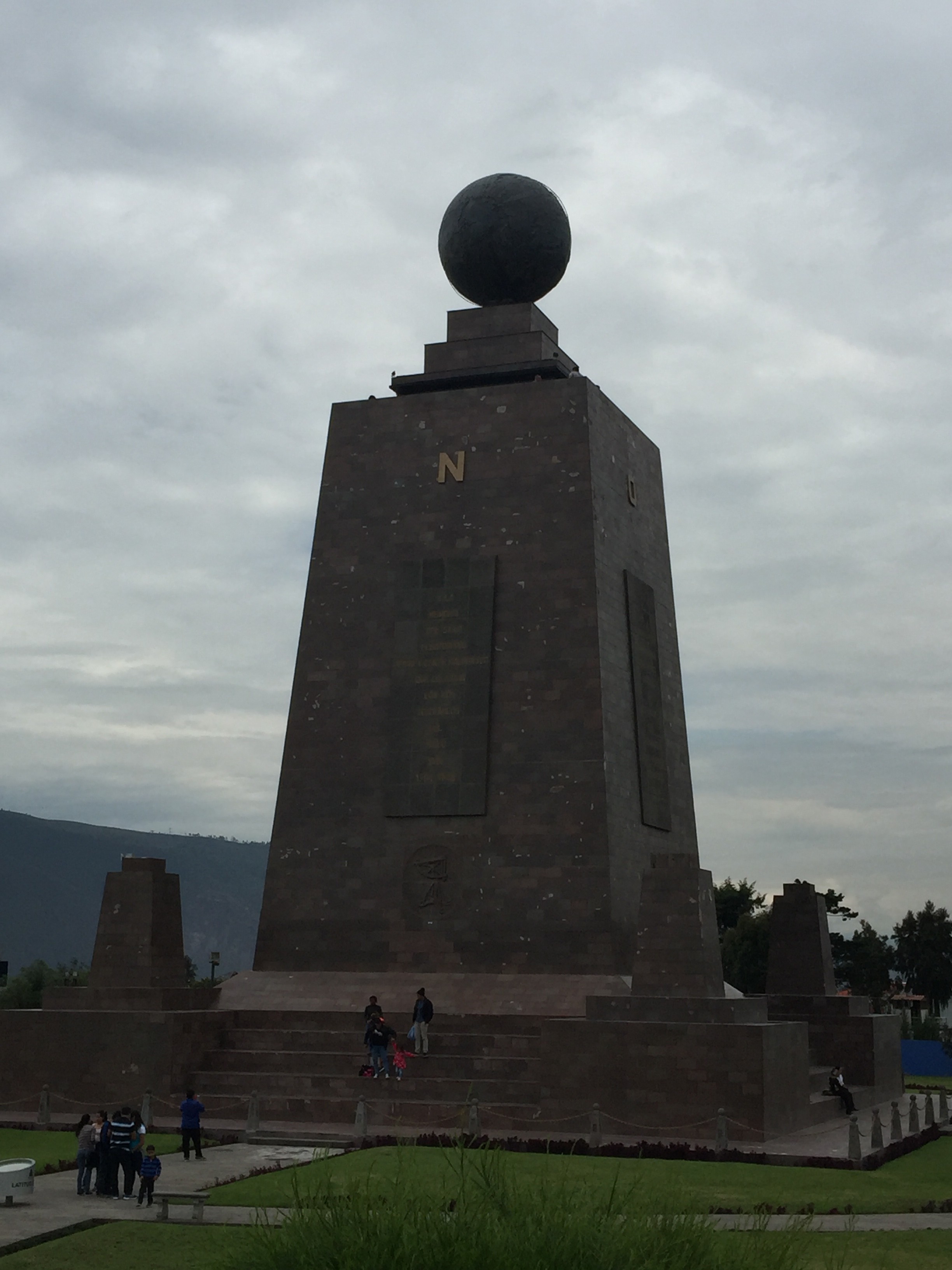
Latitude 0 degrees, La Mitad del mundo, a geodesic mission.

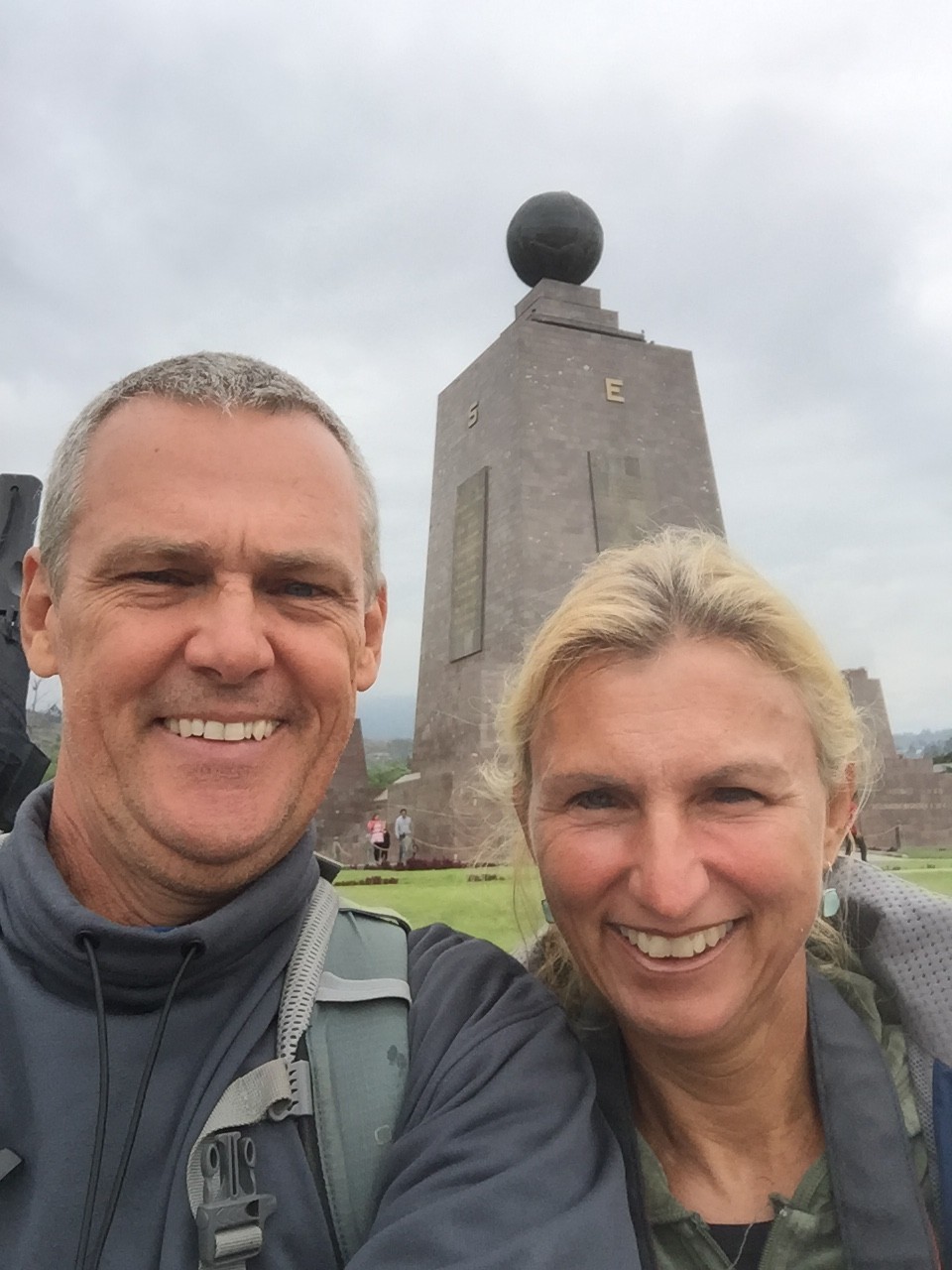
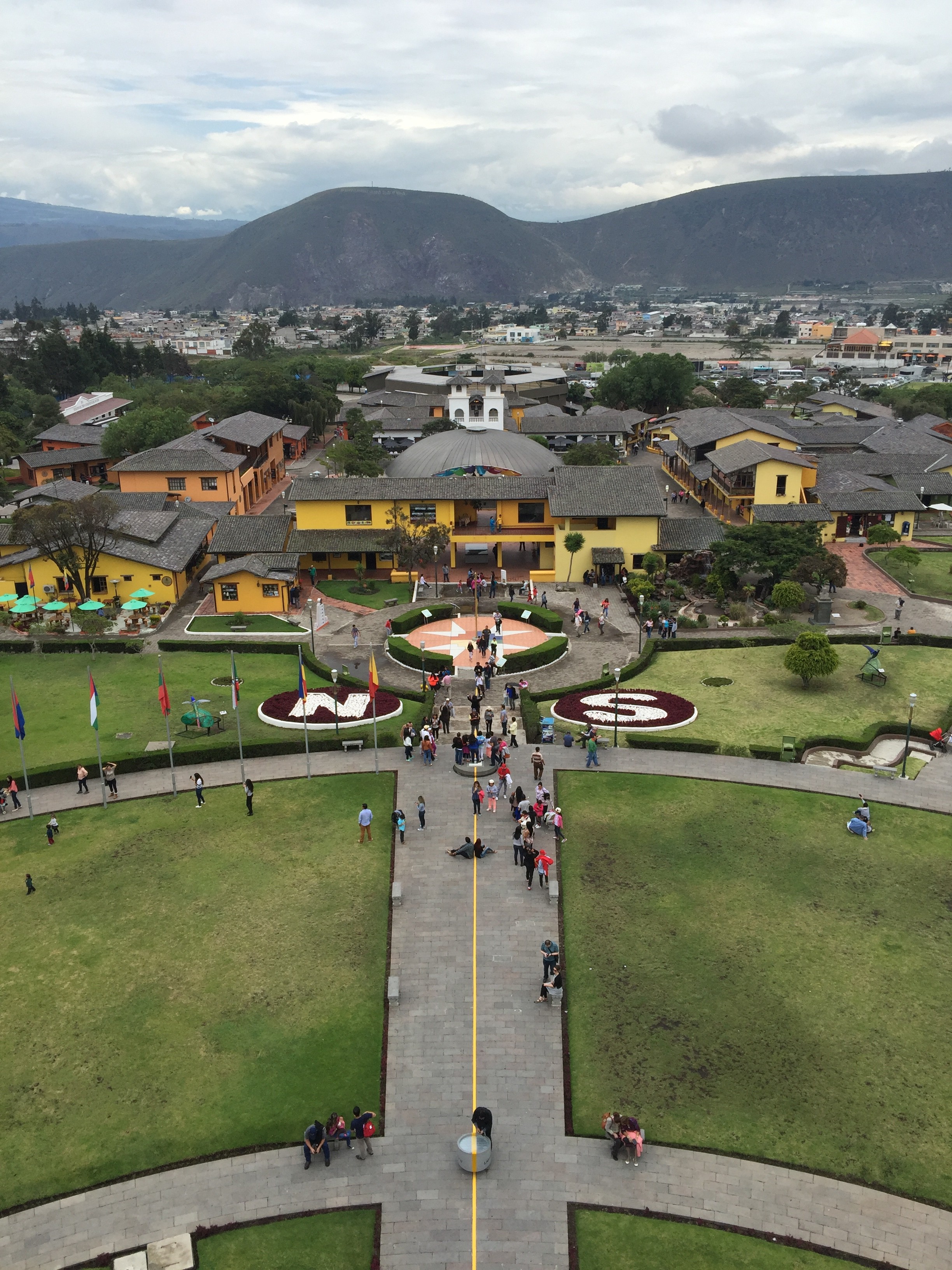
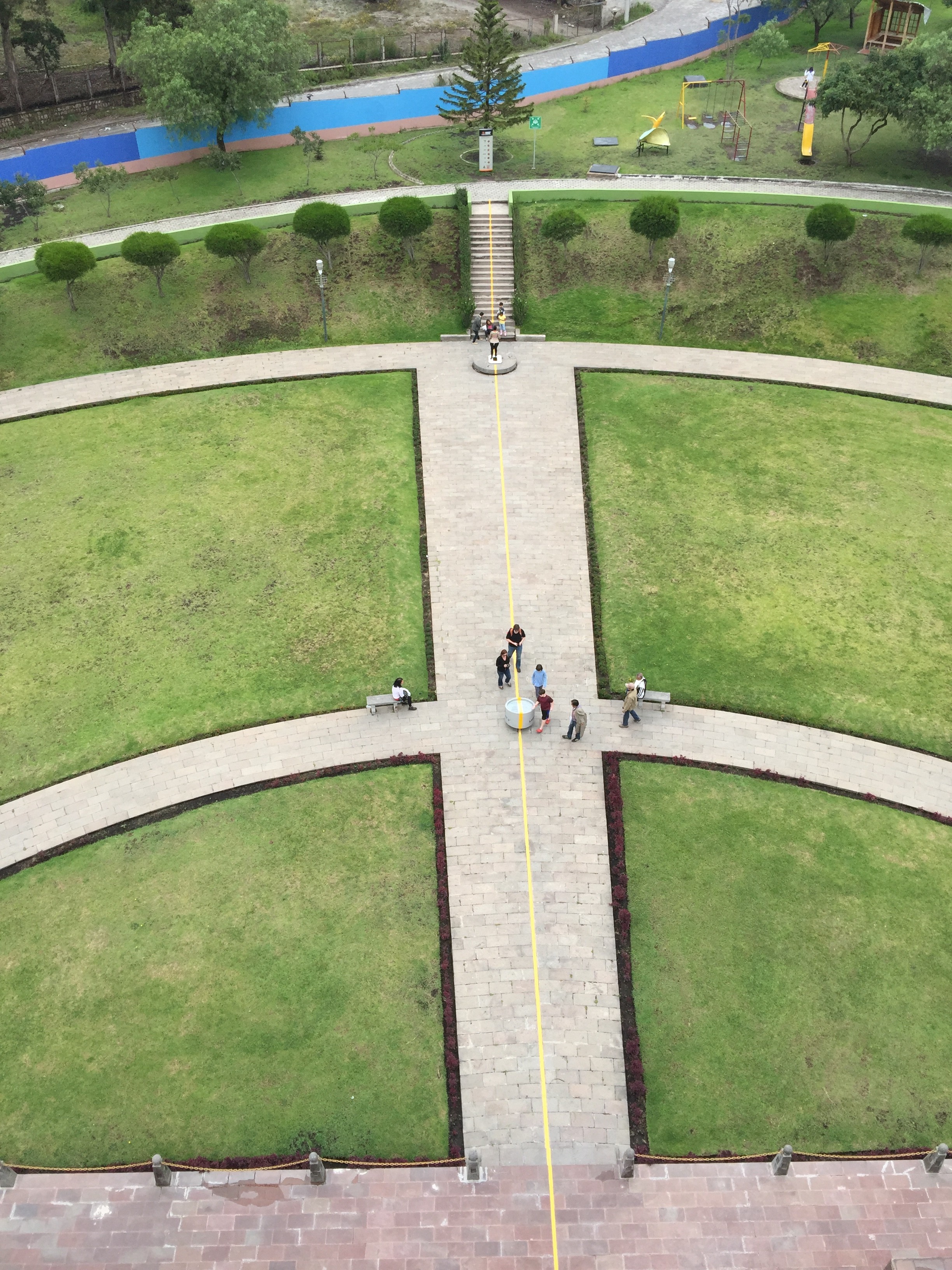
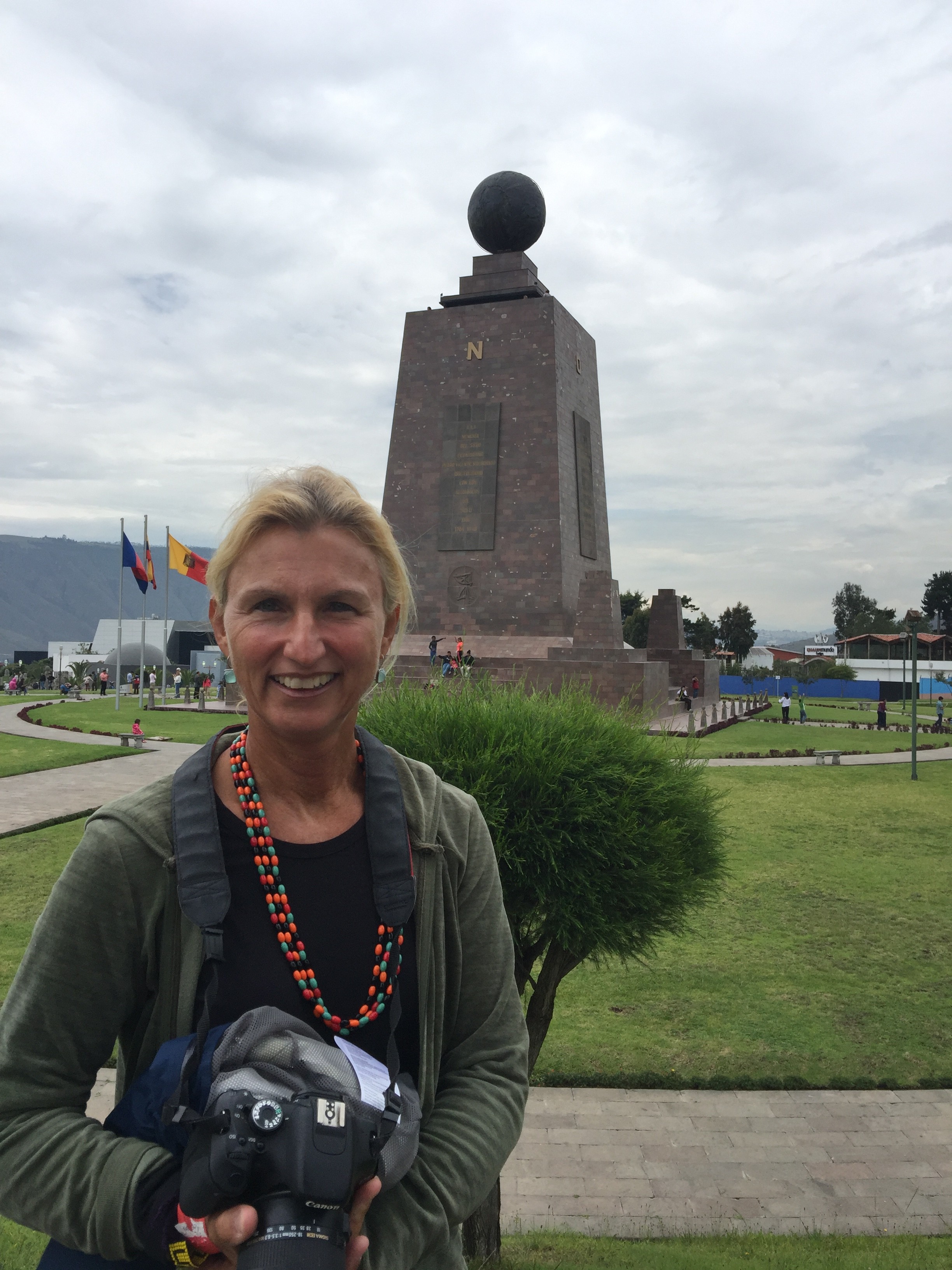
Sunday, April 3rd, La Mitad del mundo. We arrived on the equator around 10.30 AM and hardly any tourist was there. It was cloudy but no rain. Zero degrees latitude is the line designating the Equator and divides the Earth into two equal hemispheres (north and south) as defined by Wikipedia. Gent latitude is 51.0543° N. I never used to care about latitude and longitude but now that we are sailing we have to record the position of the boat in our log book and so when we left Panama I could follow how we were slowly but surely creeping to the zero degrees latitude. I remember we crossed the equator at 4.19 AM (do not remember the day and I have the logbook not at hand)on my shift, the sea was flat as a lake and it was a little foggy, it was an eerie feeling and we were only crossing an imaginary line.

IMG_2732
Low clouds over the surrounding mountains.
IMG_2735
0 latitude was first measured in 1736 on a geodesic mission to the equator. The mission was lead by the French (together with Spanish) who left in May 1735 and arrived in Ecuador in June 1736! They completed the measurements in 1739. They were real adventurers and incredible scientists.
IMG_2745
The method used to measure the circumference of the earth at the equator is triangulation. Triangulation is a surveying technique in which a region is divided into a series of triangles based on a line of known length so that accurate measurements of distances and directions may be made with trigonometry. If you ever wondered what cosinus and sinus were used for…

IMG_2753

After enjoying the different pavillions we enjoyed the performance of some folk dances in traditional clothing.

IMG_2808
Traditional folk dancing.

IMG_2793

IMG_2758
We had fun watching and listening to the Andean tunes.

IMG_2777 IMG_2754

het indrukwekkende hoofdkwartier van UnaSur
Right next to the village are the headquarters of the UNASUR, Unión de Naciones Suramericanas, unifying 12 countries.
De eerste voorzitter van de unie van de zuid amerikaanse naties
Former Argentine President Néstor Kirchner was unanimously elected the first Secretary General of UNASUR for a two-year term.
Namaak ijsje, een soort van schuim
Stefan had to try one of these sweets, no ice-cream but a kind of marshmallowy substance.
IMG_3962
We visited also a small museum next to the village, Museo Solar Inti Nan, which is more exactly situated on the equator. We had fun and it was a perfect way to end our visit.

Although very touristy we really enjoyed our day at La Mitad del mundo !


5 april 2016, Quito en reis naar Baños (zoek mijn iPhone)

Vandaag stond enkel een busreis naar  Baños gepland van een drie tal uren bus, met een namiddag activiteit ter plaatse. Het liep echter anders.

We waren op weg naar het grote busstation met onze valiesjes en elk onze rugzak. Bij het instappen op de Metrobus was er wat volk, en onverklaarbaar werd er wat geduwd om op de bus te geraken. Toen ik mijn iPhone niet langer tegen mijn dijbeen voelde, viel mijn frank.

In een reflex greep ik de vrouw van een jaar of 30 vast die verantwoordelijk was geweest voor het geduw. Ik schreeuwde dat ik bestolen was, en stond schrijlings op de ingang zodat de bus niet kon vertrekken. Helaas was er op haar persoon of in haar tas geen iPhone te vinden, en moesten we de bus laten vertrekken. Met veel kabaal protesteerde de vrouw dat ik haar pols hard vasthield, maar ik was niet van plan om haar te laten gaan. Tegen de volgende halte was de transit politie gearriveerd, en konden we de feiten reconstrueren: de vrouw zorgde voor de commotie en het stelen van de iPhone, maar gaf die dan door aan een of meerdere handlangers. Via de ‘find my iPhone’ app op de iPhone van een politieman kon ik mijn iPhone vergrendelen, maar zag ik ook dat deze reeds was uitgezet.

We hebben aangifte van diefstal gedaan bij de toeristische politie – enkel voor verzekeringsredenen – en hebben daarna in de stad nog rondgewandeld op zoek naar een nieuwe iPhone. Dit bleek me echter wat te duur, dus gaan we Meliena die ons in de Galapagos eilanden gaat bezoeken er eentje laten meebrengen vanuit de states.

In de avond kreeg ik een mail van Apple dat mijn iPhone was aangezet en onmiddellijk geblokkeerd was geworden. Ik heb een email met de locatie naar de toeristische politie gestuurd, maar wacht nog op antwoord. Hopelijk vinden ze de waardeloze iPhone (voor iedereen behalve ik) en kan ik hem gaan ophalen.

Maar we hebben niet op deze email gewacht om de bus te nemen naar Baños, en na een drietal uurtjes zijn we in dit leuke toeristische stadje aangekomen. Onderweg werd de tijd gedood door het kijken naar de franse film Intouchables, weliswaar spaans gesproken en ondertiteld.

Nu zitten we in hotel La Floresta, een aangenaam hotel met ruime kamers 😉

Lessen geleerd vandaag:

  • er zijn stoute mensen op de wereld
  • Er zijn ook heel veel goede Ecuadorianen, die belangeloos bij ons bleven om te helpen met vertalen en te getuigen aan de politie.
  • iPhone vanaf nu bijhouden rond mijn nek, of in zo een belachelijk heuptasje
  • regelmatig backup doen van iPhone (gedaan), zodat een nieuwe gemakkelijk terug te brengen is tot een kopie van de oude.
  • benieuwd hoe ik er het van zal afbrengen, twee maand zonder iPhone
  • er is enorm veel politie op straat in Ecuador, helaas nog niet genoeg.
  • een iPhone is het einde van de wereld niet.

Geen foto bij deze blog, wegens geen fototoestel…

3 april 2016, Mitad del mundo, Quito, Ecuador

Vandaag gaan we  nog eens onze evenaarskruising overdoen. Omdat ik vorig keer op de boot aan het slapen was en we geen foto hebben van de gps uitlezing, gaan we per bus naar een randstadje, zo’n 20 km van Quito centrum waar ze er een heel toeristendorp rond gebouwd hebben.

Ons hotel geeft de zondag geen ontbijt, dus gaan we eerst in een ander hotel ontbijten. Daarna is het per express bus naar het busstation (2x 25 cents), waar we een andere bus nemen naar onze eindbestemming (2 x 40 cents).

Op straat ga je nooit verhongeren , Hier wordt versgeperst fruitsap verkocht

Er stonden geen wachtrijen aan de ingang, dus dit ging vlot en we kozen voor full attraction option (2 x 7,5 $). Alhoewel de ganse opzet voor honderd percent op toeristen in gericht, viel de sfeer en de beleving enorm mee. Misschien kwam dit ook omdat het niet regende.

Op de brede toegangslaan stonden er kleine paviljoentjes, elk geweid aan één thema. Zo zagen we een miniatuur van de stad Quito,

een paviljoen die la capilla del hombre aanprijsde (zie verslag gisteren),

een paviljoen over Francia omdat Frankrijk de eerste en tweede opmetingen van de evenaar deed,

IMG_3910een planetarium en tenslotte de grote toren op de evenaar met vanbinnen nog een tentoonstelling over Ecuador.

Ook zagen we een aantal voorstellingen van Equadoriaanse dansen wat tot mijn verwondering zeer sterk aanleunde bij de Inka muziek en dansen zoals we die in Belgie kennen.

Your browser does not support the video tag.

In mitad del mondo waren opvallend veel Equadorianen, maar daarna gingen we ernaast naar een andere tentoonstelling over de evenaar, en daar waren alleen buitenlanders. Het was er echter niet minder leuk om. We zagen hoe koppensnellers koppen verkleinen, een paar exibities over de inheemse indianen, en de echte evenaar, volgens de gps (die van de Mitad del mondo zaten er een 300 m naast)

Ook is Quito de vestigingsplaats van de UnaSur, een organisatie gelijkaardig aan de EEG, maar dan voor zuid-Amerikaanse Naties. Het hoofdgebouw heeft zicht over het midden van de wereld…

Namaak ijsje, een soort van schuim
Namaak ijsje, een soort van schuim. Was wel lekker.

Quito in the rain and the cold

Friday, April 1, 2016, we took the bus in Bahia de Caraquez at 8 AM in the morning, packed with a minimum of clothes but hopefully sufficient for the 2-3 weeks we will be away in the different climates of Ecuador and Peru. I do not like packing suitcases with this limitation…The bus ride of 9 hours was uneventfull and I slept a good part of the way. When we were getting closer to Quito it started to rain, when we arrived in Quito it was pouring water, cold and dark ! Oh well, hopefully for not too long. We managed to find a bus going in the direction of our hotel (25 cents) and only had to walk a couple blocks. After we asked several times we found it ! Strange, the doors were closed and it was only 7 PM. We knocked loud on the door and sure enough somebody came and opened the door. It was the entrance of a store, restaurant and the Bed and Breakfast was in the back. We were disappointed by the size of the room and two separate beds  and the bathroom was down the hall…But, it is only for sleeping (says Stefan) so no complaints 🙂

Saturday, April 2, 2016, we got up early and had a vegatarian breakfast and immediately left for a visti of Quito historic centre. It was cloudy but it did not rain. They told us the mornings were usually dry ! It is the rainy season till May and apparently because of El Nino it rains more than normal. Temperatures are only around 17-18 degrees celsius which is much colder than we are used to ! When we got to Quito there were even some blue patches in the sky. The historic center of Quito is a UNESCO world heritage site.

Basilica del voto National
Basilica del voto Nacional
San Francisco klooster binnentuin
The garden inside the San Francisco abbey.
San Francisco klooster binnentuin
The church of San Francisco was built in 1550.
San Francisco klooster binnentuin
The garden in San Francisco Abbey. Pope Franciscus visited Quito in July of 2015.
Santa Domingo Iglesia
El Ronda
El Ronda
Plaza San Francisco
Plaza San Francisco
kerk van San Francisco
church of San Francisco
IMG_2727
View of the cathedral of Quito. Construction started in 1562 and completed in 1806!
Behalve het logo is de vlag identiek aan deze van Colombia
Flag of Ecuador at the Grand Plaza. The president of Ecuador, Rafael Correa is married to a Belgian whom he met at the catholic university of Leuven (UCL) where he studied Economics. He is president since 2006.
Alles van eten is te koop op straat
Strawberry pie on the Grand Plaza. Ecuadorians are small and like lots of sweets.
IMG_3891
Iglesia de la Compania is a Jesuit church built in 1605 in baroque style and completed in 1765. You are not allowed to take pictures inside.
La Compania church in Quito. Picture taken from the internet. The church is heavily decorated with leaf gold and gilded plaster and a perfect example of Spanish baroque.

We ended our visit of Quito in the pouring rain but decided to go to La Capilla de l’Hombre (the chapel of man) from a famous Ecuadorian painter, Oswaldo Guayasamin, in one of the suburbs of Quito, Bellavista. I had never heard of the artist but I really liked his art. Today in El Mitad del Mundo there was a small pavillion dedicated to him with some more artwork, more of this in my blog tomorrow.

zelfportret
Self portrait.
toro et condor
El Condor y el Toro is one of the most famous works of Guayasamin. It is a ritual fight in which a condor is tied to a bull’s neck. If the condor wins the fight it means good fortune for the coming year (harvest). This ritual is apparently still done in Peru but not till the condor dies.
IMG_3895
Guayasamin saw injustice in the world and fought against it through his art. As an indigenous Ecuadorian from a modest family he experienced injustice himself. You can find more pictures of his art on the internet.

It was a perfect ending of the day, unfortunately in the pouring rain. Happy to arrive back  in our little hotel room :-).

2 april 2016 Quito, Ecuador

We zijn in een klein hostelletje in Quito ingechecked (Sakti) op aanraden van 2 cruisers die we in Bahia de Caraquez tegenkwamen, maar het is ons wat te klein. De kamer is net groot genoeg voor twee individuele bedjes (!), een klein kastje en een klein tafeltje. Onze prive badkamer is op de gang.. Dus zijn we niet geneigd hier veel tijd in te spenderen. Het ontbijt is vegetarisch (dat wisten we op voorhand) maar stelt niets voor, ondanks de lovende woorden en aanbevelingen van de cruisers. Moet ik hieruit afleiden dat de meeste cruisers niet veel gewoon zijn?

(Hieronder volgt een experiment, het kan zijn dat dit wat tijd vraagt om te laden. Laten jullie me weten als dit niet werkt?)

This slideshow requires JavaScript.


Enfin, we waren reeds om 9:00 uur te voet onderweg naar de oude stadskern van Quito. Na een korte wandeling kwamen we voorbij de oudste sterrenwacht van Zuid-America, en daarna een hele resem kathedralen/kerken/kloosters die op weg naar of in de oude stadskern liggen. Helaas was de hemel vandaag sterk bewolkt en hing er regen in de lucht. Vanaf de middag was het zover en moesten we in regenponcho rondwandelen, wat de stad minder aangenaam maakte om te bezoeken. Toch hebben we de vele straatjes doorlopen, en een mooi bezoek gebracht aan de voornaamste bezienswaardigheden. Wel bizar dat het heel hoog aangeschreven Musea National de Cultura gesloten was voor renovatie, zonder uitzicht op een heropening of een alternatieve tentoonstellings plaats. Maar als  meevaller bij het zoeken naar de ingang van het museum kwamen we wel een traditionele dansschool tegen waar net een demonstratie van de nieuwe lichting aan de gang was.

This slideshow requires JavaScript.

Tegen 16:00 uur hebben we dan tenslotte nog een taxi genomen naar La Capilla del Hombre (de kapel van de man), een modern project van de nabestaanden van Equadoriaanse grote kunstenaar Guayasamin. Het nieuwe moderne gebouw huisde een geslaagde sobere expositie van indrukwekkende, zij het meestal naargeestige, schilderijen. Jammer was wel dat het gebouw, (ontworpen door zijn neef), regenwater binnenliet dat het een lieve lust was. De toezichtploeg moest dwijlen als bijbaan…
Al en al een geslaagde dag, alleen jammer van de vele regen.

This slideshow requires JavaScript.

1 april 2016, Quito Equador

We zijn vandaag met de bus van Bahia naar Quito getrokken. Deze morgen vertrokken om 8:00 uur met de executivo bus, en we kwamen aan rond 18:00 uur.  De bus was 11 $ per persoon, en onderweg hebben we voor 4$ gegeten (Ilse) en 8$ (Stefan, ik kon het niet laten om van alle venters iets te kopen om te proeven). In Quito zijn we met het openbaar vervoer vlot naar ons hotel gegaan (0,25 cents/persoon), bus in een eigen bedding, sneller dan de taxi .

IMG_3846
De Reina del Camino bracht ons veilig naar Quito, de hoofdstad van Ecuador
IMG_3848
Vlak na het vertrek, de kweekvijvers voor garnalen in de Chone rivier
IMG_3862
We hadden ze gemist in Colombia, maar hier staan ze ook, de reuze palmbomen
IMG_3854
Zoals een gewone palmboom, maar dan twee keer zo hoog

Gisteren waren we met de fiets onze busticketjes gaan halen, zo een drie kilometer fietsen langs de Chaco rivier tot aan de terminus.
Bij de terugkeer in Bahia zijn we nog het museum van de oudheid in Bahia gaan bezoeken. Het was mooier en groter dan verwacht, met een prachtige collectie voorwerpen van de eerste beschavingen in Ecuador.

IMG_3836
Geen idee wie dit is, maar dit soort standbeeldjes zie je overal langs de weg
IMG_3837
eerbetoon aan een of andere lokale generaal van de luchtmacht
IMG_3839
De Chone rivier, verder weg van de zee maar nog steeds onderhevig aan getijden
IMG_3844
Bezoek aan het oudheidkundig museum van Bahia de Caraquez, met onze gids. Het was echter streng verboden om foto’s van de voorwerpen te maken

IMG_3838

IMG_3840

The Las Perlas Archipelago in Panama

Today, March 29th, we are safely on a mooring in Bahia de Caraquez in Ecuador. We arrived here after 5 and a half days of sailing from Las Perlas in Panama. More about the sail in my next blog. I still have not mentioned anything about the three islands we visited in Las Perlas.

On March 16th, Wednesday, we left Isla Taboga at 9 AM to sail to the first island in Las Perlas being Isla Contadora. We got there just in time before the sunset at 6 PM. It was a great day sailing. We did not have a lot of wind all the time and so motor sailed for about one hour when the wind dropped to less than 3 KTS. At times it felt like we were sailing on a lake ! The sea was so calm. Contadora was the island where the Spanish counted the pearls that were harvested from the other islands in the archipelago. The islands produced pearls of many colors and sizes, and during the many years when pearls were harvested from the waters around the islands, the natives would converge to Contadora to count their pearls and sell them to the Spaniards. Early last century there was an underwater epidemic which killed most of the pearl oysters. I was hoping to be able to buy some pearls but no shops to be found on the island. We did make a tour after a rough landing with flipper through the surf and I was thrown out into the water (luckily no harm done only wet shorts and t-shirt and a bruise on my behind). There are lots of beautiful vacation homes from rich panamians spending their WE and holidays on the island. While we were there, there was not a lot of action. The hotel right on the beach had good internet and so we decided to have a drink there to get the password. A small pineapple juice cost us 4.5 USD but at least we could use their internet from the boat :-). The only problem now was getting back to the boat with Flipper through the surf… we managed fairly well, waiting until the waves were not too high…patience is very important when travelling with a boat :-).

IMG_2461
We bought a fish (corvina)from the fishermen who came by our boat. We paid 10USD which is a lot but at least he also cleaned the fish ! We had fish for 2 days.
IMG_2469
A new toy for when you get bored with the jet ski, It is called Flyboarding….
IMG_2476
The landing strip on the island was right next to a house ! Several flights fly in daily from Panama city.
IMG_2463
View of the villas and motor yachts on isla Contadora.
IMG_2479
The hotel were we had our drink and from where we could enjoy the internet. The beach was called Cacique beach.

March 19th, Saturday, we decided to leave before all the vacationing Panamanians would arrive. At noon we decided to sail to Isla Pedro Gonzalez. We had heard that we would be able to “beach” the boat there since there was a nice stretch of sand without rocks. Since we are in the Pacific the tide difference is not the 30 cm we were used to but now it is about 2-3 meters ! So it is very important you know if you are anchoring at high tide or low tide ! We arrived at 5.30 PM but noticed that on the place where we should have been able to beach the boat they had now build a new marina ! The docks were empty except for one large motor yacht but were almost ready to be used. On the other side they were constructing a dock for fueling (we later found out) and so we turned and anchored on the other side of the village. Clearly lots of development is going on in the islands.

IMG_2485
The village of Pedro Gonzalez.
IMG_2503
Roosters on the right side of the street all tied to a stone. They must have regular cockfights.
IMG_2504
A beautiful example, no feathers on the legs.
IMG_2506
Stefan in one of the streets of San Pedro Gonzalez.
IMG_2518
Sanuk in the background.
IMG_2514
Another beautiful rooster, ready for a fight.

The roosters made me think of the book I read from Gabriel Garcia Marquez, No one writes to the colonel,

It is the story of a poor, veteran colonel and his wife living in Colombia during the years of La Violencia (1948-1958) . The colonel desperately tries to sell the rooster, their inheritance from their only son who is now dead. He is caught between either feeding the rooster and traning for a cockfight or selling the rooster to have money to eat for themselves. I really enjoyed reading the book.

We walked through the town wanting to go to the other side of the island but were stopped at a construction site. The men did not want to let us walk any furhter as this was now private property. The development was called “Pearl Island”, the construction workers had t-shirts and caps with the logo and name, and they were serious we were not to pass. I looked it up on the internet and sure enough a huge luxurious development with a Ritz Carlton is being built in the future. Times are changing…

We left Isla Pedro Gonzalez on March 20th, sunday at noon not sure where we would get before sunset. We just made it to Punta Coco Beach, the southern tip of Isla Del Rey. I was happy we could just anchor with the last bit of light. We noticed a boat from the police or naval authorities but did not think much of it. But 10 minutes later they were at our boat asking us to leave immediately as there was a prison and obviously they did not want us anchored there. In the mean time it had turned dark! We pleaded with them if we could not stay just one night and then leave early in the morning but they were firm, we had to go to the next village and anchor there. So back to the anchor routine, I was getting bitten by no-see-ums and thus was kind of happy we left. Only now we had to find an anchor spot in the dark…20 minutes later we anchored at Rio Cacique in 6 meters and sand bottom. Another yacht was anchored further in the bay. It was 7.30 PM by the time we could start preparing dinner…Rio Cacique was a nice little bay. We went with Flipper up the river an hour before high tide and turned off the motor letting the tide do its work.

IMG_2604
Stefan on the river with low tide.


vogelkrop
I could identify this bird. Dad any idea what this is ?
IMG_3727
Spotting birds on Rio Cacique at low tide.


IMG_2631
With Flipper through the mangroves on Rio Cacique.
IMG_2618
Clearly low tide, an hour later this was a river.
IMG_2625
A white egret.

On March 22nd, we decided to “beach” Sanuk with the early high tide at 4.40 AM so we would be able to clean the bottom and Stefan could change the zinks.

IMG_2634
At 6 AM Sanuk was sitting on the beach !
IMG_2636
A strange sight to have the boat on the sand.
IMG_3787
View from the boat of the retreating sea. We have time till about 1 PM to have all the work done.

We were done with all the work by noon and now had to wait till the water did its work and got the boat back out of the sand. This was not such an easy process as we first thought it would be. The tide wanted to push the boat higher on the beach while we tried to keep the boat away from the beach. On top of that the current was not working with us either. Afther some running back and forth with a second anchor and trying to keep the boat afloat away from the beach we finally made it back into the water but it was definitely not an easy exercise. We were both very happy to be back at anchor by about 3 PM. We prepared the two mackerels and put them in the freezer ready to be eaten while sailing to Ecuador.

IMG_3789
Two mackerels we bought for 2 USD and 2 colas.

We left Rio Cacique at 10.30 AM on Wednesday, March 23rd for about 636 NM to Bahia de Caraquez in Ecuador.

29 maart Puerto Amistad, Bahia de Caraquez, Ecuador

Hier liggen we dan, geankerd op de rivier de Chone, aan de rand van het stadje Amistad in Ecuador, na 5 dagen op zee. We hadden een aangename en gemakkelijke tocht, met winden die varieerden van geen wind (Ilse) tot veel winden (Stefan), nee ik bedoel van geen wind tot maximum 20 knopen, op een zeer rustige zee, met golven van maximaal 1 meter. We hebben soms de motor moeten laten draaien, vooral s’nachts, maar in het algemeen zou ik zeggen 80% op zeilkracht. Tijdens onze wachten, elk om beurt 3 uur, hebben we niet veel boten gezien. Dicht bij Panama een paar, en dan dicht bij Ecuador ook terug een 5-tal. Ook eens een helicopter, raar, midden op zee een helicopter laag zien overvliegen. Ik heb eens gezwaaid, maar geen antwoord. Waarschijnlijk controle op drugssmokkel, en daarvoor vaarden we in de verkeerde richting.

De stille oceaan (Pacific Ocean) doet voorlopig haar naam alle eer aan. Wat een verschil met de Caraïbische zee die zoveel heviger is!
We hebben wat zeeleven gezien, maar niet spectaculair, een groepje dolfijnen die regelmatig uit het water sprongen, Ilse zag een groep van 9 kleine walvisjes of uit de kluiten gewassen dolfijnen, en de laatste 3 nachten hadden we het gezelschap van een 3 a 7 tal meeuwen met OCD, deze vlogen een meter of 2 voor de boot, dan doken ze links of rechts tot achter de boot om dan terug naar voor te komen. Tegen het dagen van het licht waren ze weg. Ook zagen we nog een Bonito toen we onze vislijn ophaalden. Lekker visje, maar donker vlees. Niet dat we racistisch doen hoor, want het smaakt even lekker.
Onderweg heb ik de olie van de generator vervangen, en de oliefilter. Ook ging ik de dieselfilter vervangen, maar ik kreeg de oude er niet afgedraaid. Hier eens op het internet zoeken naar een mogelijke oplossing.
Oh, ja ik vergat het bijna, op 27 maart om 4:18 tijdens Ilse haar wachtbeurt stonden er allemaal nulletjes op de GPS voor de breedtegraad. Dat betekent dat we op de evenaar zaten. Vermits het s’nachts was en donker hebben we de grote lijn in het water niet kunnen zien… Nu liggen we net eronder, op 1 graad zuid.
Op de 4de dag was er nog een verassing. Na een nachtje de bakboord motor te hebben gedraaid, keek ik eens in het ruim van de bakboord motor. (Daarvoor moet ik eerst de 3 stalen val-niet-overboord-draden loskoppelen, dan het luik open, dan 2 isolerende houten panelen verwijderen) Tot mijn verbazing stond er 40 cm water in het ruim! Gelukkig was dit niveau nog onder de motor zelf, zodat er geen schade was aan de motor. Als veiligheid tegen zinken zijn de motorruimtes en de twee voorwaartse opslagruimtes volledig afgesloten van de leefrompen. Ik heb dit water weggepompt en ging op zoek naar de oorzaak in mijn redelijk uitgebreide bibliotheek van technische boeken. Het water bleek uit een klein darmpje te komen die aangesloten was op een siphon break (een voorziening in de afvoer van het koelwater om te voorkomen dat er door tegendruk van golven de motor zou vollopen met zeewater). De klep die ervoor zorgt dat er lucht naar binnen kan en geen water naar buiten, zat verstopt door zout waardoor er continue water in het motorruim werd gepompt. Gelukkig in kleine mate. Na dit even te hebben gekuist was alles terug in orde, een gemakkelijke klus.
Ik denk dat ik vanaf nu toch iets meer checks ga doen voor en na het langdurig gebruiken van de motor…

IMG_3792
zwaluw komt evenuitrusten

Het binnenkomen naar de ligplaats was nog iets speciaals. De meerboeien liggen op de monding van een rivier, en daarom kan je alleen met hoogtij de rivier op. Ook al waren er op zee geen golven, daar waar de rivier uitmondt in de zee (in het engels een bar geheten, ik was direct geïnteresseerd) was er een wilde brekende surf. Daarom kan je enkel binnenvaren met een gids aan boord, een pilot.

onze piloot/gids door de wilde monding van de rio Chone
Qgosto, onze piloot/gids door de wilde monding van de rio Chone

Het bleek een zeer vriendelijke en gemoedelijke ecuadoriaan te zijn die ons liet zig-zaggen door onzichtbare zandbanken, om soms opgehoffen door grote golven binnen te stomen. Minimum diepte onder onze zeer bescheiden kieltjes (1,3m) was 1 meter. Wij konden binnen om 1 uur voor hoogtij, maar jachten die een diepere kiel hebben (2 meter) moeten soms wachten tot juist na hoogtij. En als er op zee een grote golfslag is kan je de ligplaats niet in of uit, dan moet je wachten op beter weer…
Maar we zijn hier nog niet weg, we zijn van plan om wat te reizen in het binnenland van Ecuador en Peru en zo rond eind april te vertrekken naar de Galapagos eilanden, waar we Meliena voor een weekje als gast zullen hebben.

IMG_2672
Sanuk geankered op de rivier, rechts
IMG_2670
Bahia de Caraquez. Links de zee
IMG_2665
De rio Chone, met Sanuk voor de nieuwe brug (2010)
IMG_2658
We beklommen meteen het hoogste punt, namelijk het kruis van waaruit we de overzichts foto’s konden nemen
Spitsuur in het rustige Bahia

Morgen kunnen we inchecken, maar deze avond mochten we al even van boord naar het stadje. We hebben onze eerste emails opgehaald in 5 dagen, en vernamen zo het nieuws van de 2 terroristische aanslagen in Belgie. Het lijkt erop dat het leven hier een stuk veiliger is… Ik wens mijn nicht Joke en haar zoon Michiel die aan de incheckbalie stonden van Zaventem op het moment van de aanslag een voorspoedig herstel toe van een lichte knieblessure, maar vooral van de zware psychologische schok die dit zal teweegbrengen. Ik hoop dat ze zich nog veilig zullen kunnen voelen in drukke openbare ruimtes. Wat een gebeurtenissen in Europa sinds we zijn vertrokken vorig jaar! Wij zijn blij dat we hier niet geraakt worden door de stress en doemsfeer die zo een lafhartige daad met zich meebrengt. Mijn gemeend meeleven met alle Belgen.