Before we leave just a quick picture blog about our adventures in Ecuador. It already seems so long ago….
The black marker line indicates how we traveled clockwise through Ecuador. From Bahia on the far left (circle) to Quito then on to Banos. In Banos we took the bus to Lago Agrio to do our trip in the Amazone. From their back to Banos, then Alausi, Cuenca (where we felt the earthquake), then to Guayaquil, Manta en by taxi back to Bahia.
After leaving Quito (without Stefan’s IPhone) we went to Banos.
The market in Otavalo, just outside Quito. She only agreed to have her picture taken because I bought a scarve. This is a typical Ecuadorian outfit, white blouse with embroiderie, gold necklaces, colored bracelet, long wool skirt and scarve draped around the shoulders.Eating 2$ lunch in the mercado at Ottavalo.We did a mountainbike ride in Banos, the easy way. It was all downhill and we came back in the back of a truck with our bicycles 🙂Lots of waterfalls around Banos.Coming back from school….On our way to the hot water baths we passed this huge cemetary, in a beautiful location, surrounded by mountains. (Stefan says: some crypts have electric lighting inside, see wire)Going for the calories before our camping trip to the Amazone…
The boat in which we traveled in the Amazone. We traveled through the Cuyabeno wildlife reserve.Camping was very basic and good it did not rain the whole time ! I was happy this was only for 3 nights !Stefan together with Barry (Australia) and Raoul (Honduras), our companions on the trip.One of the many monkey species in the Amazone. It is one of the animals you definitely see the most.The Toucan ! You do not see them very often up close but you can hear them a lot. This was the best picture I could take.Lots of turtles that are now being bred in captivity to increase their population.There are many macaws in the Amazone but you can never come very close. This was one living with local indians.
The Capybara, the largest rodent in the world. This is a baby.A sad monkey captivated by an indigenous family. They keep it as a pet.Nobody home, they were probably gone fishing. This is a hut on the side of the river.Typical hut along the Cuyabeno river.Another type of monkey.More bird wildlife but I could not figure out what kind it was…Small village along the Cuyabeno river.Upon our return, we spent half a day in the warm water baths in Banos. It felt great after our camping days in the Amazone !!!Train ride in the Andes, El nariz del diablo.In front of El nariz del diablo…The train ride only lasted one hour each way but the views were beautiful. We did have a lot of fog going but on our return the clouds had lifted somewhat.Finally some blue skies in Cuenca. The Catedral Metropolitana de la Inmaculada Concepción was only finished in 1885.Typical street in Cuenca. Cuenca is a UNESCO world heritage site and lies at an altitude of 2500M.The blue and white domes from the New Cathedral are a landmark for Cuenca. At its inauguration in 1885, the newly constructed Cathedral could accommodate 9,000 out of Cuenca’s 10,000 inhabitants at that time. Today there are about 500.000 people living in Cuenca.Lots of beautiful churches in Cuenca to visit…Church of Santo Domingo.Belgian cafe in Cuenca…In the corner of the square I had a localy brewed beer made by a Belgian from Ghent 🙂Ingapirca, just outside Cuenca. These are the largest known Inca ruins in Ecuador.
We found some good restaurants in Cuenca and even tasted a roasted cavia (Cuy in Spanish), it was yummi. After the earthquake we wanted to go as quickly as possible back to our boat since we had no news and Bahia was close to the epicentre of the earthquake. We took the bus to Guyaquil, stayed their for one night and then took a bus to Manta from where we had to take a taxi since there were no buses due to the earthquake. The devastation in Bahia was enormous but we were lucky there had not been a tsunami and thus nothing happened to the boat.
We decided to leave asap to the Galapagos as there was nothing for us left to do in Bahia without internet.
Red footed boobie, welcoming us to the Galapagos. He stayed the night on the boat.
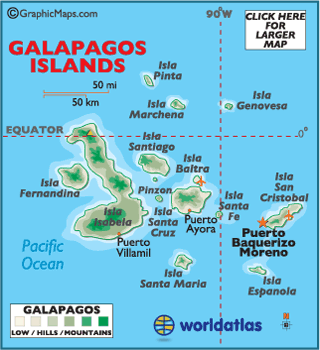
Friday, May 13th, on Santa Cruz Island, we have checked in at our last island of the Galapagos. The paperwork to travel with your boat in the Galapagos is significant, as is the cost to go to between harbours (45$)! Everything on the islands is expensive: foodstores, restaurants and tours with the mandatory park guide. But this is definitely one of the highlights of our tour in Ecuador. It is incredible how the animals let you come close and are not afraid of humans. We visited 3 islands: San Cristobal where we picked up Meliena at the airport, then on to Isabela where we put Meliena back on the airplane and lastly Santa Cruz mainly for provisioning to do the “puddlejump”.
I will give an overview of what we have done in the Galapagos through my pictures.
We arrived in Puerto Baquerizo Moreno where we had to fend off the sea lions from our boat. Then we sailed to Puerto Villamil and now we are in Puerto Ayora getting ready to leave for the Marquesas.
The Galapagos were discovered in 1535 by Tomas de Berlanga. Until the 19th century the islands were used as hideout for pirates who robbed the spanish galleons carrying gold and silver from South America, back to Spain. The islands became famous around the world after the survey ship HMS Beagle, arrived in the Galapagos in 1835. On board was a young naturalist named Charles Darwin.The islands became Ecuador’s first national park in 1959, and these now aggressively-protected islands and the surrounding marine reserve were both declared World Heritage sites. We will have stayed almost 3 weeks here and must say a minimum is 7-10days if you can do a cruise between the islands.
Yellow Warbler.Daily visitors on the boat. We had to put up a construction to keep them off the boat because they do not smell so great and leave dirty stains …The male Darwin Finch. There are 13 species of finch on the Galapagos, collectively known as “Darwin Finches”.The Sally Lightfoot crab, Grapsus Grapsus (Latin name). The name comes from their ability to walk on water when they go fron one rock to another. (San Cristobal Island)Darwin statue on San Cristobal island, it is the island where Darwin first went ashore in 1835.We went with our bicycles to El Junco lake, a crater lake of fresh water on San Cristobal. The ride was not as easy as expected, all uphill ! Going back was easy though :-).Stefan and Meliena on San Cristobal island.Sea Lions rule on San Cristobal. They are everywhere, it is the local stray “dog”.The blue footed boobie. The name comes from the Spanish word ‘bobo’ meaning fool or clown. In the Galapagos live three kinds of boobies : the blue footed, the red footed and the nazca boobie. (Punta Pitt, San Cristobal Island)Courtship from the blue footed boobie. They always lay 2 eggs but in 90% of the cases only the first chick to hatch survives. The second one most of the time starves. Survival of the fittest ! (Punta Pitt, San Cristobal Island)Red Footed boobies at Punta Pitt on San Cristobal Island.Scenery of our walk at Punta Pitt. (San Cristobal island)Kicker Rock seen through a cave near San Cristobal island. Spanish name is Leon dormido, it is a remainder of a lava cone, split in two.The newly (2015) paved road from the harbour into town.Isabela Island, Los Tunneles where we snorkeled with the Galapagos penguins, sea lions, and even sharks. Taken with our underwater camera.Meliena with the penguins and a blue footed boobie. These penguins only live on the Galapagos and stay here all year long.(Isabela Island)Meliena on the boat, on our way to Punta Pitt. (San Cristobal island)Dolphins jumping out of the water when we returned from our trip to Punta Pitt. (San Cristobal island)Flamingos getting ready for the evening on Isabela Island.A 100 year old tortoise after a long day… Don’t worry, he is still alive! The Galápagos giant tortoise is the largest living species of tortoise. Galápagos tortoises can weigh up to 417 kg. Today, giant tortoises exist only on the Galápagos and on Aldabra in the Indian Ocean, 700 km east of Tanzania. Tortoise numbers declined from over 250,000 in the 16th century to a low of around 3,000 in the 1970s. Conservation efforts beginning in the 20th century, have resulted in thousands of juveniles being released onto their ancestral home islands, and the total number of the species is estimated to have exceeded 19,000 at the start of the 21st century.Tortoise on our bicycle trip to the Wall of Tears on Isabela island.Meliena and myself in front of the Wall of Tears. El Muro de las Lágrimas was constructed between 1945 and 1959 by Ecuadorian prisoners shipped to the island. The wall is about 25 m tall and has apparently been the cause of thousands of deaths during its construction.(Isabela Island)View on top of the hill at Isabela Island. The harbour is in the background.Tortoise slowly crossing the road to the Wall of Tears on Isabela Island.The marine iguana is an iguana found only on the Galápagos Islands that has the ability, unique among modern lizards, to forage in the sea, making it a marine reptile. The iguana can dive over 9 m deep. They can be found on the rocks to warm up from the cold water.The Striated Heron. He is focussing to catch a fish, but he missed.On the Sierra Negra volcano that rises to an altitude of 1124m. In the back the huge crater. (Isabela Island)In front of the crater of the Sierra Negra volcano. It is one of the most active of the Galapagos volcanoes with the most recent historic eruption in October 2005The volcano has the largest caldera of all of the Galapagos volcanoes, with dimensions of 7.2 x 9.3 km. The caldera is also the shallowest of the Isabela volcanoes at only 100m.Meliena in front of the large caldera of the Sierra Negra volcano. It was a beautiful hike from 8 AM to 1 PM. (Isabela Island)Los Tuneles on Isabela Island. A series of lava flows have created hundreds of arches and tunnels, both above and below the water.Los Tuneles on Isabela island.The airport waiting hall on Isabela Island. We were the only ones waiting for the plane that day. One week was too short but we were happy we got at least that! 🙂 We will see each other again in November in Boston!
Today, May 15th, all the laundry is done, we have the tanks filled with diesel. We still have some food shopping to do and then we can leave for the Marquesas on May 17th. We think it will take about 25-30 days of sailing….
Na ons bezoek aan Quito, regenachtig en bewogen vanwege mijn iPhone die verdwenen is, trokken we verder naar het zuidelijker gelegen Banos. Dit is een stadje gelegen naast een rivier tussen twee bergketens. We logeerden in een leuk hotel (Floresta Hotel) en alles is op wandelafstand. Toen we op het marktplein met elkaar aan het praten waren, werden we aangesproken door een vlaams koppel Roos en Eddy (wonende te Asper) die van hun pensioen/vakantie genoten door verre reizen te maken. We praatten wat bij in een koffiehuis en het klikte meteen. We hebben samen met hen een wandeling gemaakt naar een waterval, maar dat bleek uiteindelijk meer een wateruitschuiver te zijn, zo ongeveer een meter hoog. Wel veel debiet, dat wel. Maar het plezier zat hem in de wandeling en de kompanie. Eddy, huisarts, kende zelfs onze buur Rik Joos (reumatoloog) van de Kerkkouterrede in Destelbergen. De wereld is klein!
De volgende dag zijn we vertrokken met de bus voor een vierdaagse reis in het Amazonegebied. Dat was niet goedkoop en een beetje een gok, maar we wouden iets buiten het gewone, dus werd het een trip met een kano en alles nodig om vier dagen (drie nachten) te kamperen in de jungle. Ons vertrekpunt lag in Lago Agrio, en de voormiddag was besteed aan het klaarmaken van de boot, zijn bestuurders en het materiaal. Daarna vertrokken we in de lange kano, op de rivier die onze gezel zou blijven voor de volgende vier dagen, dit is namelijk de enige manier voor de mens om door het Amazonegebied te reizen: de vaste grond is dicht begroeid en wisselt af tussen moeras, modder, rivieren en vaste grond. Langs de rivier zie je ook relatief veel wilde dieren. De rivier is een snelstromend bruin water, variërend van 0,5 tot 8 meter diep, afhankelijk van de breedte. Waar het in het begin allemaal nogal nauw was, zo’n 5 meter, met op vele plaatsen boomstammen die op het oppervlak lagen en waar we overheen vaarden, veranderde dat steeds meer tot een wijde stroom waar zandbanken en ondieptes de zaak interessant hielden voor onze stuurman. Gelukkig had onze stevige polyester kano maar een 30 cm nodig om ergens overheen te geraken.
zicht op de kano vanuit het verlaten eco hotel.
We zagen apenfamilies, heel veel vogels met als uitschieters toucans (helaas niet van dichtbij), rivierdolfijnen (terug niet zo heel duidelijk, want ze vertikten het om eens uit het bruine water te springen), kleine schildpadjes, en riviervis. Op sommige plaatsen zitten er Piranhja’s, en je weet dat best vooraleer je een duik in de rivier neemt. Na onze eerste nacht in het oerwoud, voor het ontbijt sprong onze gids bij wijze van verfrissing even vanuit de kano in de rivier, en het viel me op dat hij bijzonder vlot en snel terug in de kano zat. Ik was net van plan om zijn voorbeeld te volgen, toen hij me twee schaafwondjes op zijn torso toonde, waar de super scherpe tanden van de piranjha’s een laagje vel hadden afgeschraapt. Blijkbaar had hij zich vergist van veilige zwemlocatie, en maar goed dat ik zijn voorbeeld niet gevolgd ben, want als je wat meer tijd nodig hebt om uit het water te geraken kan ik me inbeelden dat je er wat meer bij inschiet dan wat vel…
De tocht bracht ons langs mooie natuur en vele gemeenschappen van amazone indianen. Iedereen leeft langs de waterweg, en we hebben ook nog een tweetal dorpen bezocht. Deze gemeenschappen zijn voor een heel groot deel op zichzelf aangewezen: ze hebben eigen scholen en organiseren zelf het gemeenschapsleven. Het gaat er heel relax aan toe, en het valt op hoeveel kinderen er zijn. Naast het telen van landbouwproducten voor eigen gebruik (bananen, yuka wortelen, mais) drogen ze ook cacao bonen om te verkopen. De vrouwen maken ook sieraden die ze zelf dragen en ook doorverkopen op de markt, zowel aan Ecuadorianen als aan buitenlanders. Toch kan je er niet naast kijken dat er geen hoge levensstandaard is, we aten in een huis van een familie die afwezig was, en dan zie je dat het huis enkel bestaat uit een houten platform ongeveer een meter boven de grond, met daarboven een bananenbladeren dak. Sommige vertrekken hebben een houten muur (keuken en kamer), maar de living is open aan alle zijden. Van een kastje of een deur is geen sprake. Onder het platform leven de honden en eenden. De kippen lopen vrij rond in het huis…
En af en toe kwamen we ook mislukte projecten tegen. Zo zagen we een leegstaande nieuwe school en een eco hotel dat ingepakt was, wachtend op toeristen. Een foutje bij de inschatting van de bereidheid van toeristen om ver in de jungle te reizen.
We hebben ook een wandeling gemaakt van een tweetal uren in het oerwoud vertrekkend van de stroom via een uitgehouwen pad op vaste grond tot aan een groot meer. Je hoort heel veel, maar de dieren zijn meesters in het zich verschuilen. Soms kom je wel langs oorverdovende zagerijen: krekels die samen om ter luidst hun boodschap verkondigen.
Deze tocht was interessant, maar toch niet zonder zijn negatieve kanten. Om andere reizigers een goed idee te geven van wat ze kopen voor hun geld, heb ik een uitgebreid engelstalig verslag geschreven dat je hier kan lezen. Opgelet, het benadrukt nogal de negatieve kanten om als waarschuwing over de organisatie voor anderen te dienen , alhoewel waarheidsgetrouw hebben we ons meestal wel geamuseerd.
De met uitroeing bedreigde schilpadjes worden nu door de indianen gekweekt en beschermd.een typische woning/hut langs het waterde vergaderplaats in het dorp, met de open schuur erachter, waar we geslapen hebbenKevin, de gids in spe van het dorpDie vogel eet zoveel vis dat zijn bek niet meer toukan
Voor onze blog lezers: dit is een speciale blog die dienst doet als klachtenbrief
April 2016
Quick Summary:
My wife and myself had a bad experience that I wish to share so other people can avoid this. So:
Avoid Marco Polo Tours (marcopolotour.com) in Lago Agrio with owner Ivan LLori
Avoid Murillo Quiroz Freddy Rogelio (Freddy) of Extremos San Limites Aventur / Rutas Doradas Expeditiones in Banos
Freddy will sell you what you want to hear, at a commision and then be unavailable for backing up what he sold.
Ivan is not true to his word, overcharged us, and is not a pleasant person to have with you on a trip.
Wildlife along the rivermyself, Barry and Raoul. Ilse is taking the picture. We just finished dinner around the fire.Our camp, underneath the large plasic tarp are four tents for two persons.Our canou at the deserted hotel. Ivan is in the canou.
The long story:
My wife Ilse and myself, Stefan, wanted to see the Amazon and the indigenous people in a personal way, instead of being part of a
big group. While Ilse speaks relatively good spanish, I am an absolute beginner that has to use my French knowledge to try to understand the language.
So to us it was important to have an individual tour, and an english speaking guide. Further we wished to have a pleasant 4 day / 3 nights
travel experience in the amazon jungle, camping in tents along the way while visiting remote sites. We were willing to pay a correct premium price for this custom made trip.
We sat down with Freddy Rogelio of Extremos San Limites Aventur in Banos for a couple of hours, while he took us through the available options and confered with his organizer (Ivan LLori) in Lagro Agrio. Together, they proposed a 4 day tour that would take us to the Yasuni NP, where we would meet the indigenous people, at a cost of 1000 USD for the two of us.
Of this, we payed 300USD to Freddy up front.
This was to be an individual tour, with an english speaking licenced guide, and a crew of four other support people. The price was steep, but this was because of the expense involved in a private tour, where all the support material had to be carried along (tents, cooking material, food) in the boat.
We left the next evening on a night bus Banos-Lago Agrio, included in the trip. When we got to Lago Agrio at 5:30, we waited in the
bus station to be picked up, which happened after half an hour, since the bus was a bit early. We were taken by a woman,
(who turned out to be Ivan’s wife) and a cab driver to the office of Marco Polo Tours where we had to wait till 7:00 to get breakfast in a nearby hotel.
Strangely enough, the breakfast price was not included in the tour package. We found this odd, given the price we payed, and told the woman so. She said that was the way it was.
We stated very clearly to her (in spanish) that we were paying for a personal tour, with a licenced english speaking guide, and the woman confirmed this explitly (Si, no problemo). This turned out to be a complete and deliberate lie. Feeling a bit at unease by the initial experience, we asked if we could pay 500USD of the remaining sum of 700 USD before the start of the trip, and 200 USD at the end, but after calling back and forth between Ivan and his wife, this was not possible, since he had bought all the supplies already. Reluctantly, we payed the whole sum.
We had trouble with getting money from the ATM, but they were very helpful to let us call our US bank credit card helpline, and drove us to several ATMs in the city. In the end we were able to retrieve money from the ATM, and payed.
We squeezed in the back of the taxi truck with our backpacks, and two other persons, for what we thought was a short ride. In the front was the cab driver and Ivan’s daughter with a 20 week old baby (She turned out to be just hitching a ride, since we never saw her on the rest of the trip). In the back were Ilse, myself, our daypacks, Ivan’s wife and another person (!) Needless to say it was very cramped. The ride lasted an hour, with a stop at a gas station to fill two large diesel containers, and two short stops in town for something. It was sweltering hot in the truck, and we were very happy to get there, since we were cramped with our backpack on our knees.
When we arrived at the departure point we met our team. Well this is to say we saw a long canoe, with two persons on board. Everybody ignored us, which we found rude. A person in the canou was shouting orders to the other helpers as they were loading the canou with the stuff from the taxi truck.
Finally, as everything was loaded, the person in the canou said in Spanish: I am here to make sure that the others do everything correct, I cannot walk because of my leg injuries, but you will have no trouble from me. Since they failed to introduce themselves, we did so, and asked for everybody’s name. There was the handicapped man, Ivan, the canou driver Martin, the cook Maria, some silent person and the spanish speaking guide Javier, who assured us that his english speaking friend would come on board soon.
We left around 1 pm and left for a lodge where we would have lunch. Along the way, we enjoyed the beautiful nature and made frequent stops to identify and point out the wildlife. Just before our stop, the silent guy left the boat: it turned out we were giving him a ride to a lodge.
When we informed about what would happen that day, Ivan explained that it was impossible to go to the Yasuni NP with just 4 days, and that we would visit the Cuyabeno NP instead. When we explained that Freddy in Banos had promised us a circle tour, (I.e. not going out on a river and coming back the same way) Ivan did not agree and explained that the return leg would then be on the ‘petrol exploration’ river, where there was no wildlife to be seen. He proposed instead a special tour to Cuyabeno indiginous people with a visit to a shaman (village chief) and a drink of the indigenous special brew. He said that he would of course take us to wherever we wanted to go, since we were the paying guests (as if we had knowledge of where to go).
The lunch was simple but good, and after an hour we got back into the boat. Suddenly two more men with backpacks climbed in the canou, and I politedly inquired who they might be. They turned out to be two extra tourists, going along for the ride. After assuring the two men that this was not personal, I objected to Ivan, who said that it is impossible to do this tour with only two guests. I asked the new guys, Barry (from Australia) and Raoul (a biologist from Hunduras) how much they payed, and it was about half of the price we payed (But admittedly they did not have to pay an intermediate sales person). So here we were, in the middle of the jungle, the trip payed up, and an organiser who said (in spanish) “it is what it is”. Ilse and I decided to go along, and complain afterwards asking for a partial refund.
Luckily, Barry and Raoul turned out to be two friendly and interesting guys, who added to our enjoyement of the tour.
That evening, about an hour before nightfall, Ivan started looking for a place to camp. We found one, but after Javier had cleared the area with a machette, Ivan found it too small. So we searched for another site, and by the time they were ready to put up the tents, it was getting dark. The tents turned out to be a mix a four relatively new (10 years?) 2-person tents, and an old 4 person tent. None of the tents had a outside rainshield cover, one had a torn mosquito net, there were no pickets, and the fiberglass rods for the small tents had seen better days, as some were split from too much tension. To their credit, Martin and Javier did a good job of setting up the tents (it seemed to be their first time too), and put all the tents underneath a giant plastic sheet that they supported by sticks cut in the jungle. All of this happened under the ‘guidance’ from Ivan, who stayed in the canou while he helped Maria, the cook. I might add they finished in the pitch black.
We built a fire, and ate our dinner while sitting around the fire on the boat benches.
We slept ok, and the next morning awakened to sound of waterdrops on the plastic sheet. It turned out to be the remainder of rain and the dew that was dripping from the trees, making it sound worse that it actually was. This is the rain forest, after all.
The next morning, I saw that our guide took a dip in the murky brown river, and was in and out very quickly. I was just about to do the same when he stopped me. He showed me two bleeding skin patches on his torso, caused by hungry piranhia’s. I wisely took a cooking pot and got some water from the river to wash me instead…
That second day, we enjoyed the amazon jungle, and made frequent stops along the way to look at the wildlife (Birds, turtles, monkeys, dolphins. In the late afternoon, we visited a large indigenous community, and found that they had a covered raised platform, which would be ideal for the night. We asked Ivan if we could sleep there, and he made the necessary arrangements with the village chief.
Dinner was served on a nearby river sandbank, where we had the opportunity to swim, relax and learn how to fish like the locals. While Ivan, Maria, Martin stayed to sleep on the river island, we went to the village where Javier had pitched our tents on the platform. It was the end of a nice day.
The following morning, we waited till around 9am before Martin came with the canou to fetch us and the tents. Then it was back to the sandbank, where Maria still had to start the breakfast. There was no schedule to the days of Ivan, so it was always a wait and see thing.
After cleanup of the kitchen, we left for another nice day. The son of the village chief went with us, to guide us on a walk through the jungle. The canou dropped us off at the start of a path, and then went to the endpoint of the walk to pick us back up. The two hour walk was very nice, and showed us another side of the rainforest, from the ground instead of from a waterbound canou. Unfortunatly we did not see any wildlife, only heard the sounds of birds and monkeys.
The walk ended at a lake, where we took the canou to visit a nice but empty jungle hotel, that was all locked up. Sadly, this splendid accomodation, owned by the indigenous people, was too far of the beaten path to attract tourists, and so it was boarded up. After a while, we took the canou and left the lake through an overflow channel, which took us on a beautiful trip through dense vegetation. A tough job for Martin the driver (lifting the motor over many submerged branches) and Javier, guiding the long boat from the front, often by paddling the bow in the right direction. A highlight of the day!
We made one stop in another village, where we enjoyed a visit to the house of the village elder, who had a Capybari couple with a young in captivity, a parrot and a monkey. We bought some souvenirs and returned to Ivan, who as always remained in the canou (Because of his handicap which made it very difficult for him to walk)
The last night we spent on a wet sandbank, where we arrived a half hour before dark. You would think Ivan knows that he needed at least 1,5 hour to set up camp, but alas. It started raining, so Maria had to cook in the rain… Luckily it stopped soon after, and we were able to eat in the open, and not underneath the low ceiling of the plastic sheet. Ivan did not show himself that evening, and maybe that was good, because our patience with him was wearing thin. Lots and lots of promises, but little actual delivery. The visit to the shaman did not materialize, nor the indigenous drink. For example, we had lunch in a wooden house of an indigenous family along the water, but they were off to the jungle. We almost landed twice at a village, but turned away just before mooring because Ivan did not like it.
Ivan had suddenly revealed just before the last camp that there was a way to avoid the 8 hour return trip by canou along the same way, by taking a two hour bus ride (Ivan would still have to make the 8 hour canou ride). We said that was a good idea (why bring it up so late?) and would take that opportunity. The next morning, Ivan said we would have to take the long 8 hour ride anyway, since he was low on gas, and would not have enough to take us to the bus and then make the return trip himself. We rebeled, and told Ivan not to be such a cheap shot and buy some gas along the way, since every house has gas available.
Ivan did also not want to eat with an indigenous family, since they would expect him to share the food with them (and he wanted to avoid the expense of that)
All of this is a bit hard to stomach if you have payed a lot of money for the trip…
So on the last day, after our bus ride we arrived back around noon at the office in Lagro Agrio, where we picked up our luggage. Unfortunately for Barry, his backpack which was laying in the unprotected office had dissappeared. Probably because of a mixup with another group that had their luggage collected by a third person, but it goes to show that there was no adequate control in the office. I hope he got it back, since there we a lot of valuables in it. [Update: he emailed us that some other group had taken his backpack by mistake and was able to chase them down and recover his pack ]
We explained to Ivans wife that we wanted a refund of 200 USD pp, which would bring us in line with the price Barry and Raoul had payed, and she was sympathetic and confered by GSM with Ivan, on his way with the canou. We had to wait till Ivan showed up. Once he did, Ivan’s wife changed character and flatly denied that at the start of the trip she had confirmed that we were going on a private tour with an english speaking guide.
To make a long story short, Ivan blamed Freddy (the Banos seller), and Freddy blamed Ivan. Both said we had to resolve our issue with the other one.
I told Ivan and Freddy that my only recourse was to publish this on the internet, but that elicited no reaction. So that is exactly what I have done here.
Looking back on this adventure, don’t think that we did not have a good time. After all, the nature is splendid, the 3 support people made the best of the given situation and were very friendly, and Barry and Raoul turned out to be very nice people.
Our only quarrel was with Ivan as a person and an organiser, and the price of the trip.
In conclusion,
– Do not trust the sales guy Freddy in Banos, he is totally untrustworthy about knowing and delivering what he sells. Maybe he is ok with air rides, canyoning or waterfall visits, but clearly not multi day trips for which he uses Marco Polo Tours. When we got back to Banos, he was conveniently on a trip, and in order to talk with him, we had to buy the boys in the ‘office’ 2 USD cell minutes…
– Do not use the marco polo tours travel agency in Lago Agrio because Ivan is not a nice person to be around, is not a good organizer and overpromises and under delivers.
You can reach me on stefan@decuypere.org if you want more information. Please be advised that I am traveling and may not be able to answer right away.
Alles is hier in Cuenca ok, Ilse en ik hebben geen last gehad van de aardbeving. We zaten op restaurant de lokale specialiteit te verorberen (cavia aan ‘t spit) toen we de vloer voelden beven. Het bleef duren (40 seconden) en ik zei tegen Ilse: dit is een aardbeving, raar he. Aan de muur waren de schilderijen licht aan het schommelen, maar anders was er geen indicatie van de ernst van de aardbeving in de rest van het land. In Cuenca was er in elk geval op de korte weg van restaurant naar hotel niets speciaals te bespeuren.
Vandaag reizen we naar Guayaquil met de bus, als dit gaat. We gaan richting epicentrum, dus het kan zijn dat we onderweg wat problemen ondervinden. Geen nieuws van de boot, maar die ligt in een riviermondig, dus dat zal wel loslopen. Dinsdag zijn we weer op ons sanoekske. Meer nieuws dan.
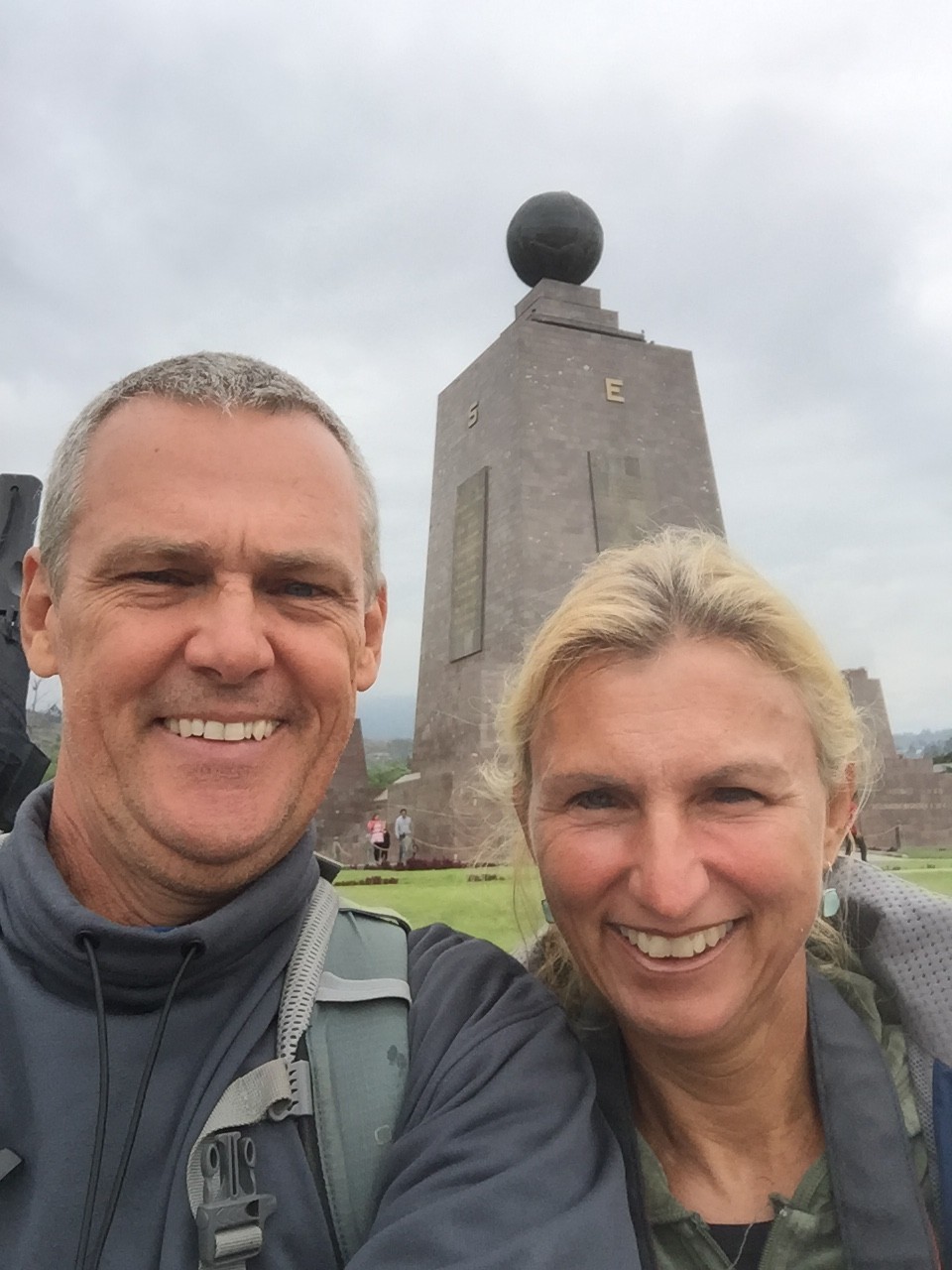
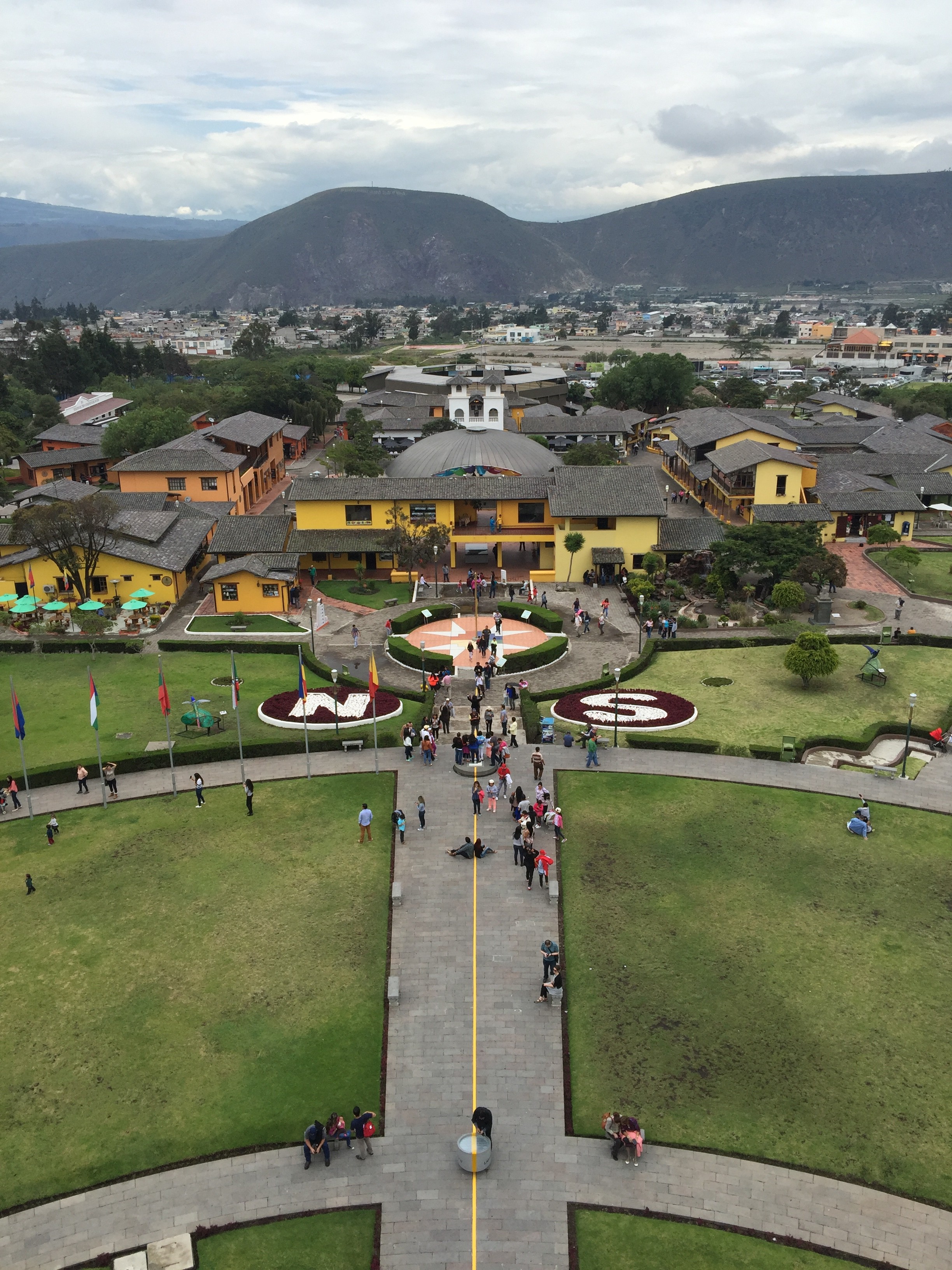
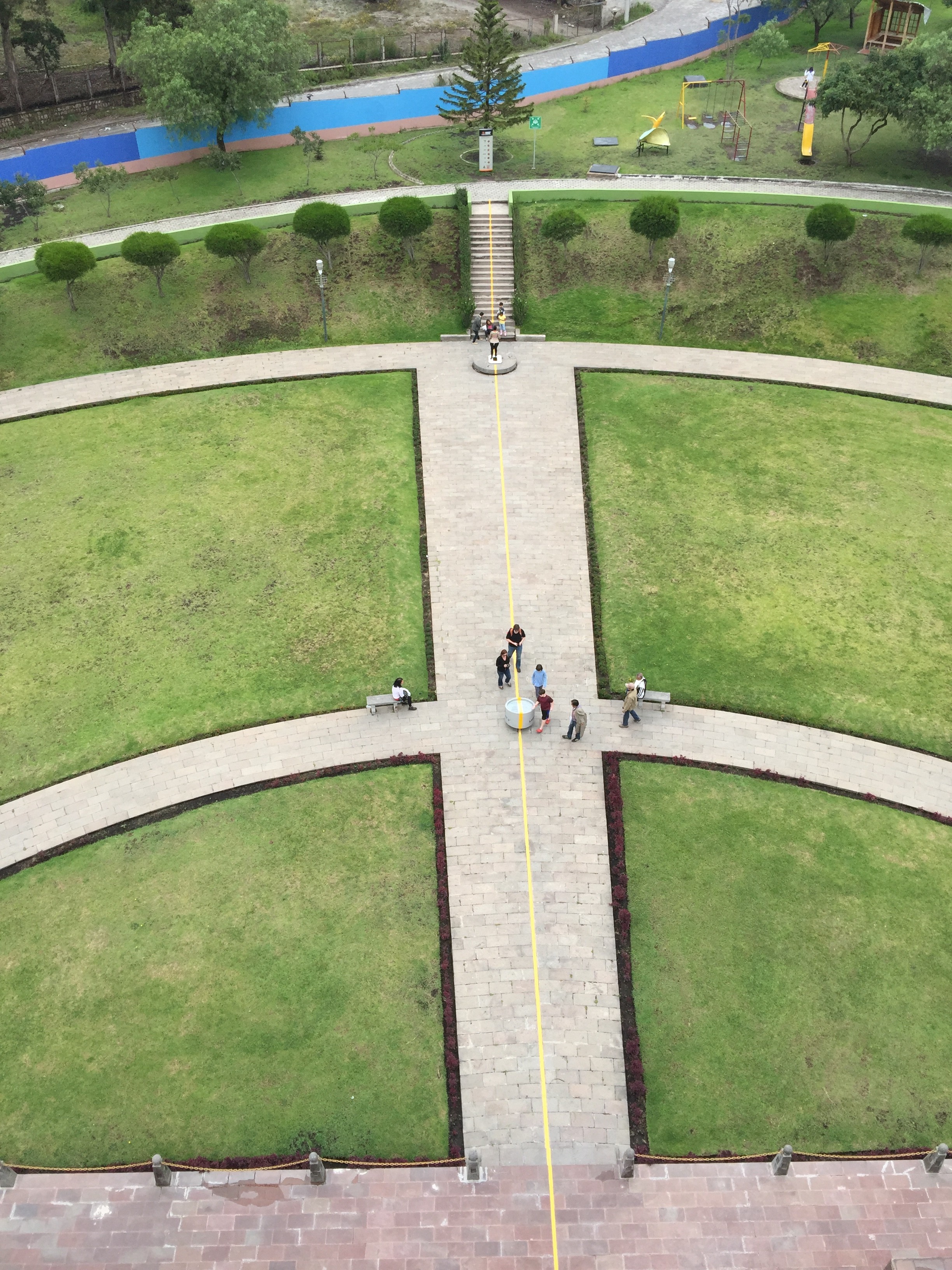
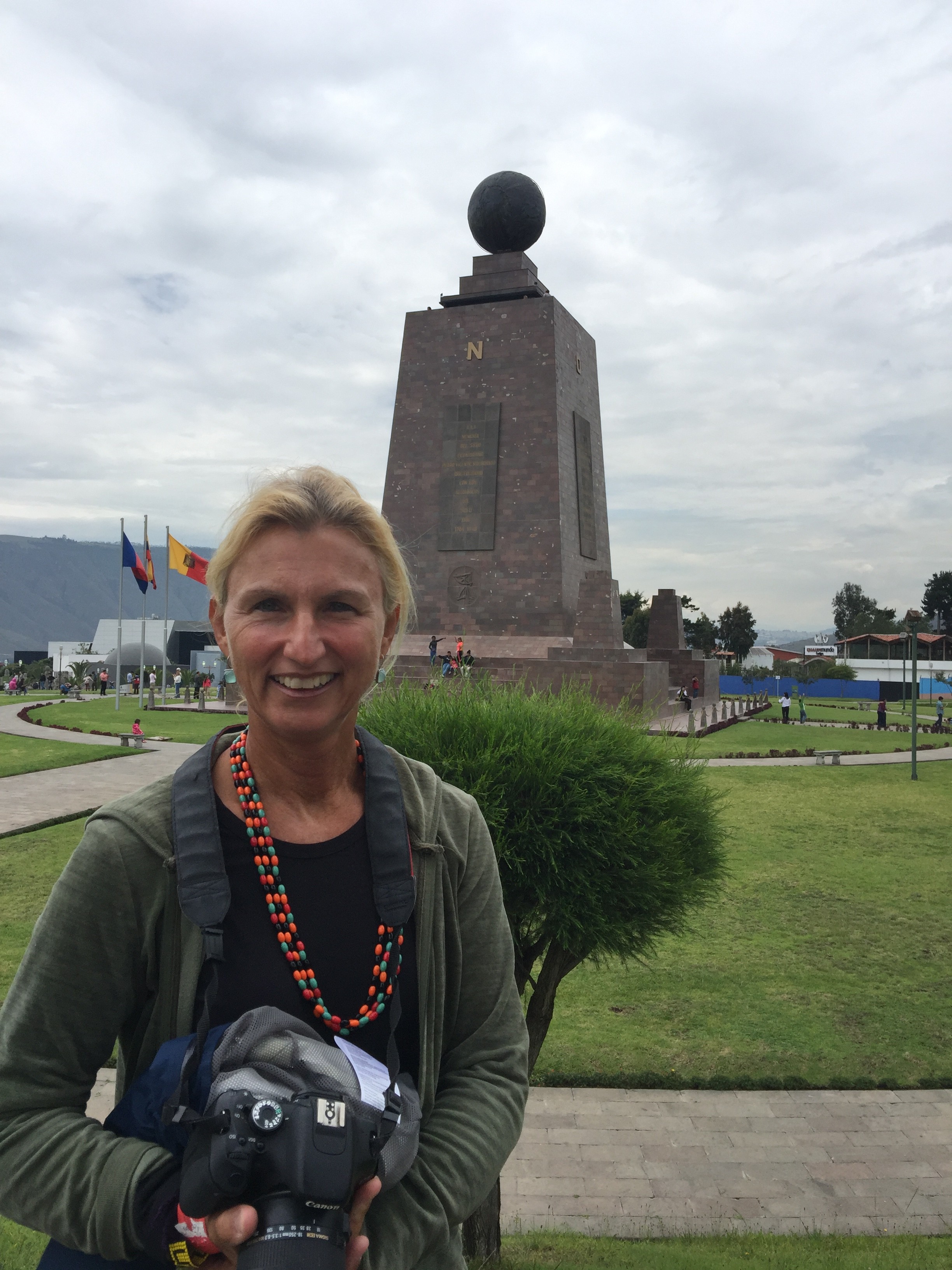
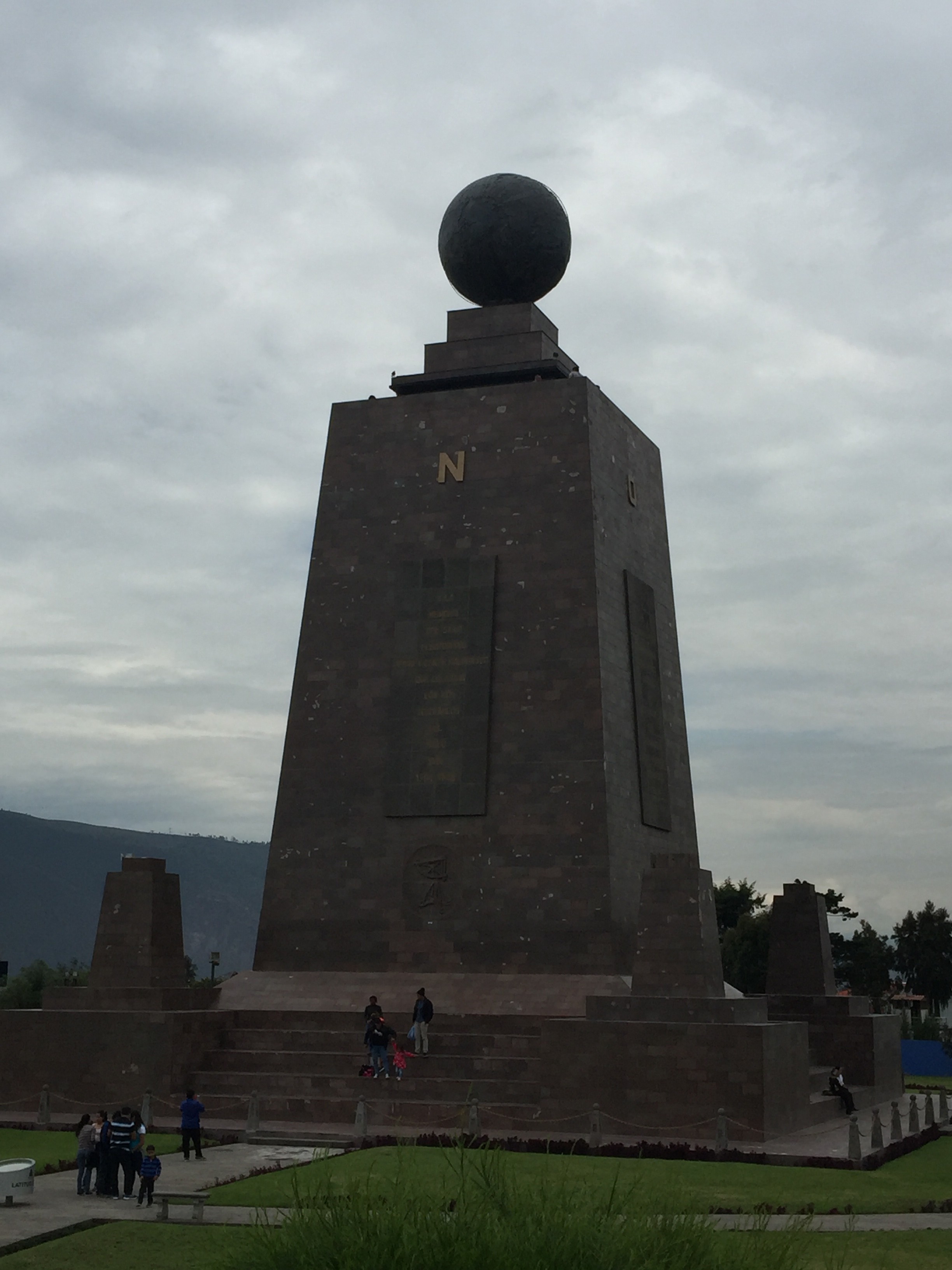
Sunday, April 3rd, La Mitad del mundo. We arrived on the equator around 10.30 AM and hardly any tourist was there. It was cloudy but no rain. Zero degrees latitude is the line designating the Equator and divides the Earth into two equal hemispheres (north and south) as defined by Wikipedia. Gent latitude is 51.0543° N. I never used to care about latitude and longitude but now that we are sailing we have to record the position of the boat in our log book and so when we left Panama I could follow how we were slowly but surely creeping to the zero degrees latitude. I remember we crossed the equator at 4.19 AM (do not remember the day and I have the logbook not at hand)on my shift, the sea was flat as a lake and it was a little foggy, it was an eerie feeling and we were only crossing an imaginary line.
Low clouds over the surrounding mountains.0 latitude was first measured in 1736 on a geodesic mission to the equator. The mission was lead by the French (together with Spanish) who left in May 1735 and arrived in Ecuador in June 1736! They completed the measurements in 1739. They were real adventurers and incredible scientists.The method used to measure the circumference of the earth at the equator is triangulation. Triangulation is a surveying technique in which a region is divided into a series of triangles based on a line of known length so that accurate measurements of distances and directions may be made with trigonometry. If you ever wondered what cosinus and sinus were used for…
After enjoying the different pavillions we enjoyed the performance of some folk dances in traditional clothing.
Traditional folk dancing.
We had fun watching and listening to the Andean tunes.
Right next to the village are the headquarters of the UNASUR, Unión de Naciones Suramericanas, unifying 12 countries.Former Argentine President Néstor Kirchner was unanimously elected the first Secretary General of UNASUR for a two-year term.Stefan had to try one of these sweets, no ice-cream but a kind of marshmallowy substance.We visited also a small museum next to the village, Museo Solar Inti Nan, which is more exactly situated on the equator. We had fun and it was a perfect way to end our visit.
Although very touristy we really enjoyed our day at La Mitad del mundo !
Vandaag stond enkel een busreis naar Baños gepland van een drie tal uren bus, met een namiddag activiteit ter plaatse. Het liep echter anders.
We waren op weg naar het grote busstation met onze valiesjes en elk onze rugzak. Bij het instappen op de Metrobus was er wat volk, en onverklaarbaar werd er wat geduwd om op de bus te geraken. Toen ik mijn iPhone niet langer tegen mijn dijbeen voelde, viel mijn frank.
In een reflex greep ik de vrouw van een jaar of 30 vast die verantwoordelijk was geweest voor het geduw. Ik schreeuwde dat ik bestolen was, en stond schrijlings op de ingang zodat de bus niet kon vertrekken. Helaas was er op haar persoon of in haar tas geen iPhone te vinden, en moesten we de bus laten vertrekken. Met veel kabaal protesteerde de vrouw dat ik haar pols hard vasthield, maar ik was niet van plan om haar te laten gaan. Tegen de volgende halte was de transit politie gearriveerd, en konden we de feiten reconstrueren: de vrouw zorgde voor de commotie en het stelen van de iPhone, maar gaf die dan door aan een of meerdere handlangers. Via de ‘find my iPhone’ app op de iPhone van een politieman kon ik mijn iPhone vergrendelen, maar zag ik ook dat deze reeds was uitgezet.
We hebben aangifte van diefstal gedaan bij de toeristische politie – enkel voor verzekeringsredenen – en hebben daarna in de stad nog rondgewandeld op zoek naar een nieuwe iPhone. Dit bleek me echter wat te duur, dus gaan we Meliena die ons in de Galapagos eilanden gaat bezoeken er eentje laten meebrengen vanuit de states.
In de avond kreeg ik een mail van Apple dat mijn iPhone was aangezet en onmiddellijk geblokkeerd was geworden. Ik heb een email met de locatie naar de toeristische politie gestuurd, maar wacht nog op antwoord. Hopelijk vinden ze de waardeloze iPhone (voor iedereen behalve ik) en kan ik hem gaan ophalen.
Maar we hebben niet op deze email gewacht om de bus te nemen naar Baños, en na een drietal uurtjes zijn we in dit leuke toeristische stadje aangekomen. Onderweg werd de tijd gedood door het kijken naar de franse film Intouchables, weliswaar spaans gesproken en ondertiteld.
Nu zitten we in hotel La Floresta, een aangenaam hotel met ruime kamers 😉
Lessen geleerd vandaag:
er zijn stoute mensen op de wereld
Er zijn ook heel veel goede Ecuadorianen, die belangeloos bij ons bleven om te helpen met vertalen en te getuigen aan de politie.
iPhone vanaf nu bijhouden rond mijn nek, of in zo een belachelijk heuptasje
regelmatig backup doen van iPhone (gedaan), zodat een nieuwe gemakkelijk terug te brengen is tot een kopie van de oude.
benieuwd hoe ik er het van zal afbrengen, twee maand zonder iPhone
er is enorm veel politie op straat in Ecuador, helaas nog niet genoeg.
Vandaag gaan we nog eens onze evenaarskruising overdoen. Omdat ik vorig keer op de boot aan het slapen was en we geen foto hebben van de gps uitlezing, gaan we per bus naar een randstadje, zo’n 20 km van Quito centrum waar ze er een heel toeristendorp rond gebouwd hebben.
Ons hotel geeft de zondag geen ontbijt, dus gaan we eerst in een ander hotel ontbijten. Daarna is het per express bus naar het busstation (2x 25 cents), waar we een andere bus nemen naar onze eindbestemming (2 x 40 cents).
Op straat ga je nooit verhongeren , Hier wordt versgeperst fruitsap verkocht
Er stonden geen wachtrijen aan de ingang, dus dit ging vlot en we kozen voor full attraction option (2 x 7,5 $). Alhoewel de ganse opzet voor honderd percent op toeristen in gericht, viel de sfeer en de beleving enorm mee. Misschien kwam dit ook omdat het niet regende.
Op de brede toegangslaan stonden er kleine paviljoentjes, elk geweid aan één thema. Zo zagen we een miniatuur van de stad Quito,
een paviljoen die la capilla del hombre aanprijsde (zie verslag gisteren),
paviljoen
portretvan kunstenaar
een paviljoen over Francia omdat Frankrijk de eerste en tweede opmetingen van de evenaar deed,
een planetarium en tenslotte de grote toren op de evenaar met vanbinnen nog een tentoonstelling over Ecuador.
Ook zagen we een aantal voorstellingen van Equadoriaanse dansen wat tot mijn verwondering zeer sterk aanleunde bij de Inka muziek en dansen zoals we die in Belgie kennen.
Your browser does not support the video tag.
In mitad del mondo waren opvallend veel Equadorianen, maar daarna gingen we ernaast naar een andere tentoonstelling over de evenaar, en daar waren alleen buitenlanders. Het was er echter niet minder leuk om. We zagen hoe koppensnellers koppen verkleinen, een paar exibities over de inheemse indianen, en de echte evenaar, volgens de gps (die van de Mitad del mondo zaten er een 300 m naast)
Dans door gemaskerde man
Een angstaanjagend masker
Foto pose voor de dans begint
authentiek geweven figuren, zonder patronen gemaakt
Ook is Quito de vestigingsplaats van de UnaSur, een organisatie gelijkaardig aan de EEG, maar dan voor zuid-Amerikaanse Naties. Het hoofdgebouw heeft zicht over het midden van de wereld…
De eerste voorzitter van de unie van de zuid amerikaanse naties
De leden van Unasur, 12 zuid amerikaanse lidstaten
selfie van een reflecterende onderkant van het gebouw
het indrukwekkende hoofdkwartier van UnaSur
Namaak ijsje, een soort van schuim. Was wel lekker.
Friday, April 1, 2016, we took the bus in Bahia de Caraquez at 8 AM in the morning, packed with a minimum of clothes but hopefully sufficient for the 2-3 weeks we will be away in the different climates of Ecuador and Peru. I do not like packing suitcases with this limitation…The bus ride of 9 hours was uneventfull and I slept a good part of the way. When we were getting closer to Quito it started to rain, when we arrived in Quito it was pouring water, cold and dark ! Oh well, hopefully for not too long. We managed to find a bus going in the direction of our hotel (25 cents) and only had to walk a couple blocks. After we asked several times we found it ! Strange, the doors were closed and it was only 7 PM. We knocked loud on the door and sure enough somebody came and opened the door. It was the entrance of a store, restaurant and the Bed and Breakfast was in the back. We were disappointed by the size of the room and two separate beds and the bathroom was down the hall…But, it is only for sleeping (says Stefan) so no complaints 🙂
Saturday, April 2, 2016, we got up early and had a vegatarian breakfast and immediately left for a visti of Quito historic centre. It was cloudy but it did not rain. They told us the mornings were usually dry ! It is the rainy season till May and apparently because of El Nino it rains more than normal. Temperatures are only around 17-18 degrees celsius which is much colder than we are used to ! When we got to Quito there were even some blue patches in the sky. The historic center of Quito is a UNESCO world heritage site.
Basilica del voto NacionalThe garden inside the San Francisco abbey.The church of San Francisco was built in 1550.The garden in San Francisco Abbey. Pope Franciscus visited Quito in July of 2015.Santa Domingo IglesiaEl RondaPlaza San Franciscochurch of San FranciscoView of the cathedral of Quito. Construction started in 1562 and completed in 1806!Flag of Ecuador at the Grand Plaza. The president of Ecuador, Rafael Correa is married to a Belgian whom he met at the catholic university of Leuven (UCL) where he studied Economics. He is president since 2006.Strawberry pie on the Grand Plaza. Ecuadorians are small and like lots of sweets.Iglesia de la Compania is a Jesuit church built in 1605 in baroque style and completed in 1765. You are not allowed to take pictures inside.La Compania church in Quito. Picture taken from the internet. The church is heavily decorated with leaf gold and gilded plaster and a perfect example of Spanish baroque.
We ended our visit of Quito in the pouring rain but decided to go to La Capilla de l’Hombre (the chapel of man) from a famous Ecuadorian painter, Oswaldo Guayasamin, in one of the suburbs of Quito, Bellavista. I had never heard of the artist but I really liked his art. Today in El Mitad del Mundo there was a small pavillion dedicated to him with some more artwork, more of this in my blog tomorrow.
Self portrait.El Condor y el Toro is one of the most famous works of Guayasamin. It is a ritual fight in which a condor is tied to a bull’s neck. If the condor wins the fight it means good fortune for the coming year (harvest). This ritual is apparently still done in Peru but not till the condor dies.Guayasamin saw injustice in the world and fought against it through his art. As an indigenous Ecuadorian from a modest family he experienced injustice himself. You can find more pictures of his art on the internet.
It was a perfect ending of the day, unfortunately in the pouring rain. Happy to arrive back in our little hotel room :-).
We zijn in een klein hostelletje in Quito ingechecked (Sakti) op aanraden van 2 cruisers die we in Bahia de Caraquez tegenkwamen, maar het is ons wat te klein. De kamer is net groot genoeg voor twee individuele bedjes (!), een klein kastje en een klein tafeltje. Onze prive badkamer is op de gang.. Dus zijn we niet geneigd hier veel tijd in te spenderen. Het ontbijt is vegetarisch (dat wisten we op voorhand) maar stelt niets voor, ondanks de lovende woorden en aanbevelingen van de cruisers. Moet ik hieruit afleiden dat de meeste cruisers niet veel gewoon zijn?
(Hieronder volgt een experiment, het kan zijn dat dit wat tijd vraagt om te laden. Laten jullie me weten als dit niet werkt?)
This slideshow requires JavaScript.
Enfin, we waren reeds om 9:00 uur te voet onderweg naar de oude stadskern van Quito. Na een korte wandeling kwamen we voorbij de oudste sterrenwacht van Zuid-America, en daarna een hele resem kathedralen/kerken/kloosters die op weg naar of in de oude stadskern liggen. Helaas was de hemel vandaag sterk bewolkt en hing er regen in de lucht. Vanaf de middag was het zover en moesten we in regenponcho rondwandelen, wat de stad minder aangenaam maakte om te bezoeken. Toch hebben we de vele straatjes doorlopen, en een mooi bezoek gebracht aan de voornaamste bezienswaardigheden. Wel bizar dat het heel hoog aangeschreven Musea National de Cultura gesloten was voor renovatie, zonder uitzicht op een heropening of een alternatieve tentoonstellings plaats. Maar als meevaller bij het zoeken naar de ingang van het museum kwamen we wel een traditionele dansschool tegen waar net een demonstratie van de nieuwe lichting aan de gang was.
This slideshow requires JavaScript.
Tegen 16:00 uur hebben we dan tenslotte nog een taxi genomen naar La Capilla del Hombre (de kapel van de man), een modern project van de nabestaanden van Equadoriaanse grote kunstenaar Guayasamin. Het nieuwe moderne gebouw huisde een geslaagde sobere expositie van indrukwekkende, zij het meestal naargeestige, schilderijen. Jammer was wel dat het gebouw, (ontworpen door zijn neef), regenwater binnenliet dat het een lieve lust was. De toezichtploeg moest dwijlen als bijbaan…
Al en al een geslaagde dag, alleen jammer van de vele regen.






 Sanuk 2014-2018 travel stories